
As summer ends every year, it’s applesauce season at our house.
My energetic and talented wife orders the apples from a local orchard weeks in advance. She anxiously awaits the phone call advising that they are ready.
When that call comes, the well-organized plan unfolds to perfection as it has for years. A bushel of Ginger Gold apples is retrieved, and the former kindergarten teacher gets to work.
Everything is ready for the applesauce assault. For one warm morning near summer’s end, our galley kitchen resembles an assembly line.
Of course, I’m a partner in the endeavor, but Neva is in charge. She checks the apples’ ripeness once she returns home, and usually within a day or two, they are ready to be worked up.
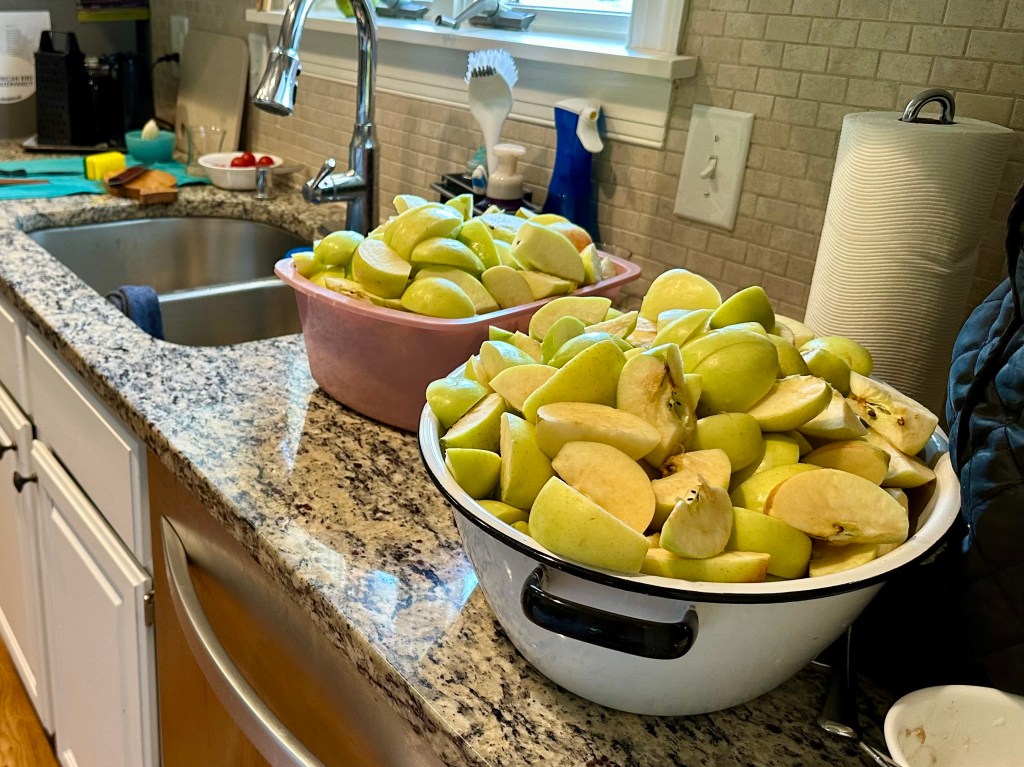
The entire process is an extravaganza. The plastic containers are washed and ready to accept their sweet-tart contents. The mixing bowls stand clean and shiny, ready to share in their next-to-last role in the annual making of the tangy applesauce.
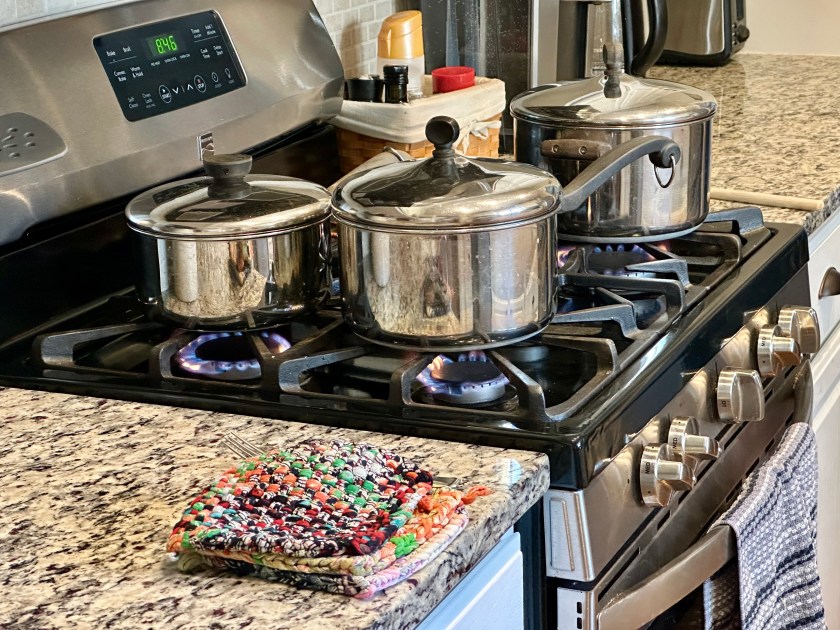
First, though, the apples are washed, sliced, and placed in bowls until they are mounded high. Kettles sit on stovetop burners, their contents steaming away at a low boil.
The apple slices are added in and cooked until their flesh is soft but not mushy. That’s where I enter the picture.
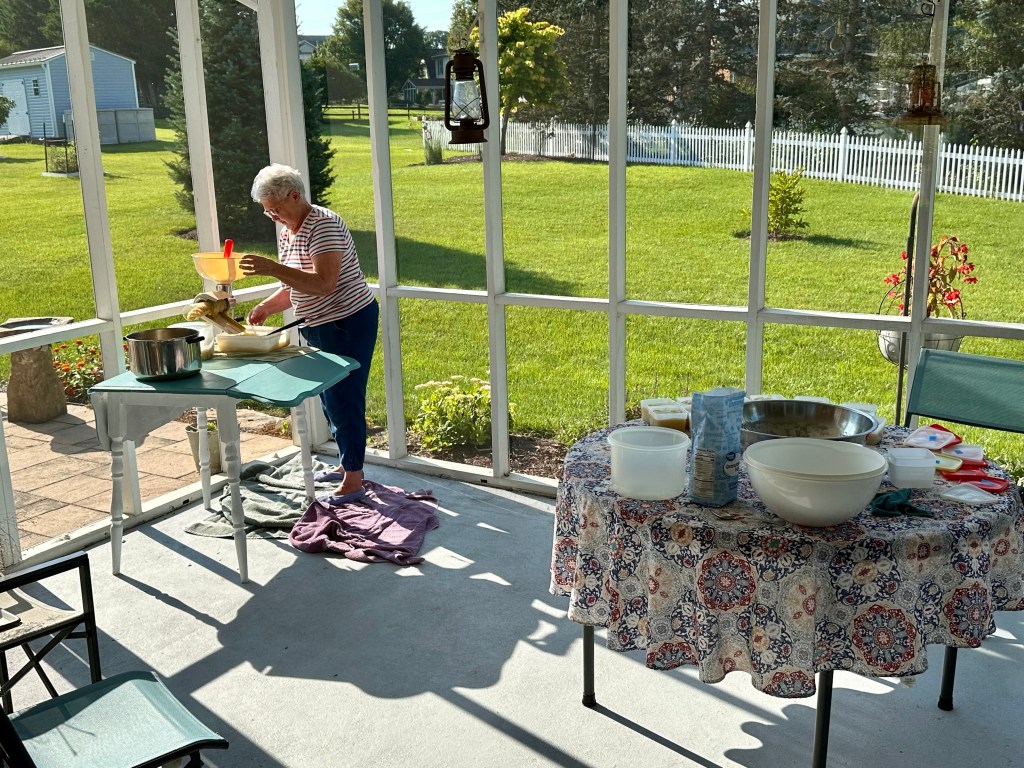
The apples are transferred to a smaller container and carefully carried to the screened-in back porch. Because we start the process early in the morning, the porch is cooler than it is later in the day. Plus, cranking steaming hot cooked apples can be a messy project, especially with a male septuagenarian as the manual laborer.
The hand-cranked Victorio strainer is already affixed to the old painted drop-leaf table. The peeler’s top container is filled with the cooked apple slices, and I crank away. It’s important to turn the crank at just the right speed to avoid any splatter or mishap.
The apples are pushed into an opening at the top of the cylinder where blades separate the skin from the apple’s flesh as the handle is cranked. The skins follow a conical tunnel into another bowl while the finally cut apple flesh slides and oozes through a sieve into a different container.
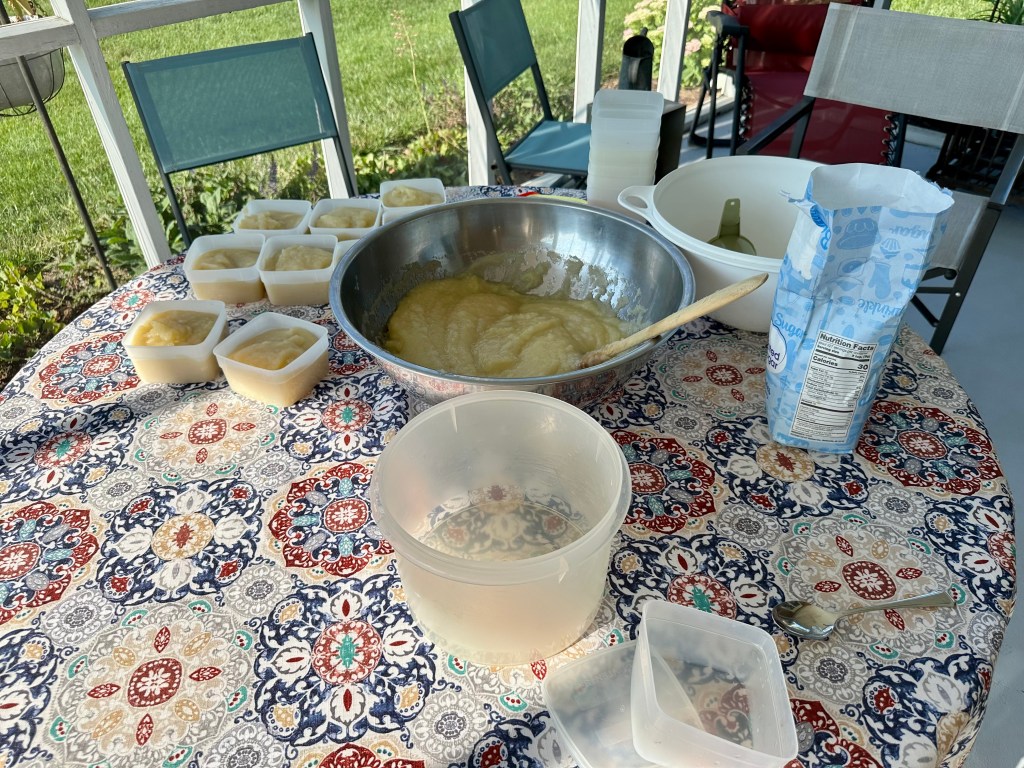
That’s the good stuff, the critical ingredient to make applesauce. Once the container is full, the contents are emptied into one of the larger bowls, and granulated sugar is sprinkled in to cut the tartness.
An old-fashioned wooden spoon stirs the sugar into the applesauce, and occasional taste tests ensure it’s just right. The entire process is repeated until the last slice of apple disappears.
Including the preparation and cleanup, the entire production takes up most of the morning. But it’s oh so worth it.
The quarts and pints hold a sweet-tart treat that, if rationed diligently, will last through the winter. Applesauce complements any meal.
When the grandkids ask for more, Nana knows all the sweaty effort was worth it.
© Bruce Stambaugh 2026


You must be logged in to post a comment.