My wife and I spent the morning of our 55th wedding anniversary birding. That’s about as exciting as it gets for septegenarian celebrations.
Though spring bird migration had been ongoing for a month, the early warblers were only now beginning to be seen and heard in Virginia’s Shenandoah Valley. I wanted to see and literally hear those lovely, high-pitched songs. I know the term “literally” is overused, but this was my first bird outing with hearing aids.
I’m a very curious person, and I wanted to hear what I was missing in my latter years. Previously, I had to depend on the ears of younger birders to know, for example, that a Cape May Warbler was near. The bird’s thin, high-pitched “see, see, see, see” call was beyond my perception.
I knew March 27 was too early for the Cape May. But equipped with my hearing aids, perhaps I could catch the calls of other early-arriving warblers. So, off we went to a noted birding hotspot in Augusta County, Virginia, Bells Lane.
My wife occasionally accompanies me on my birding adventures, but she wouldn’t call herself an avid birder. I appreciate her company and enjoy showing her a particular species when I spot one.
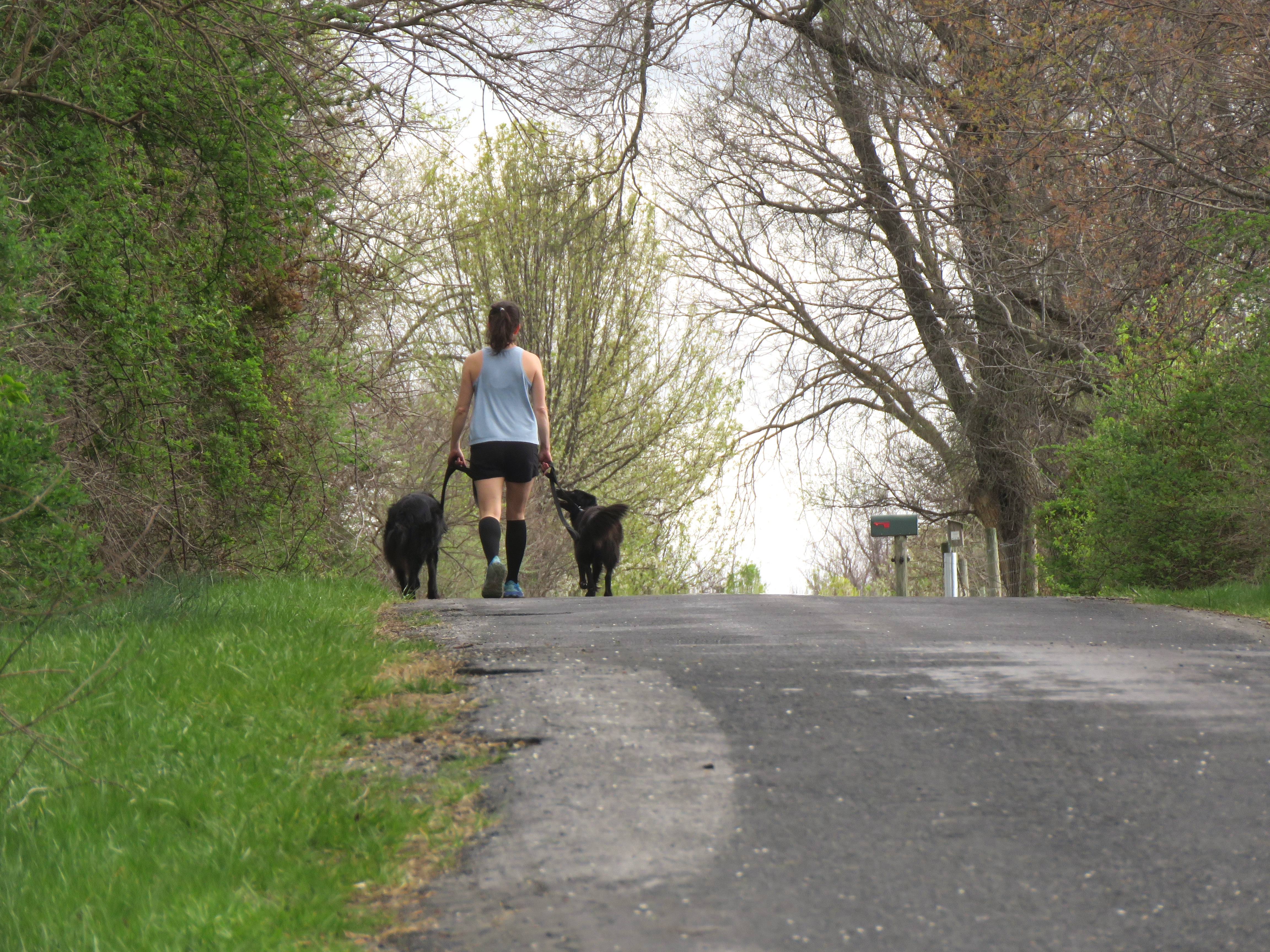
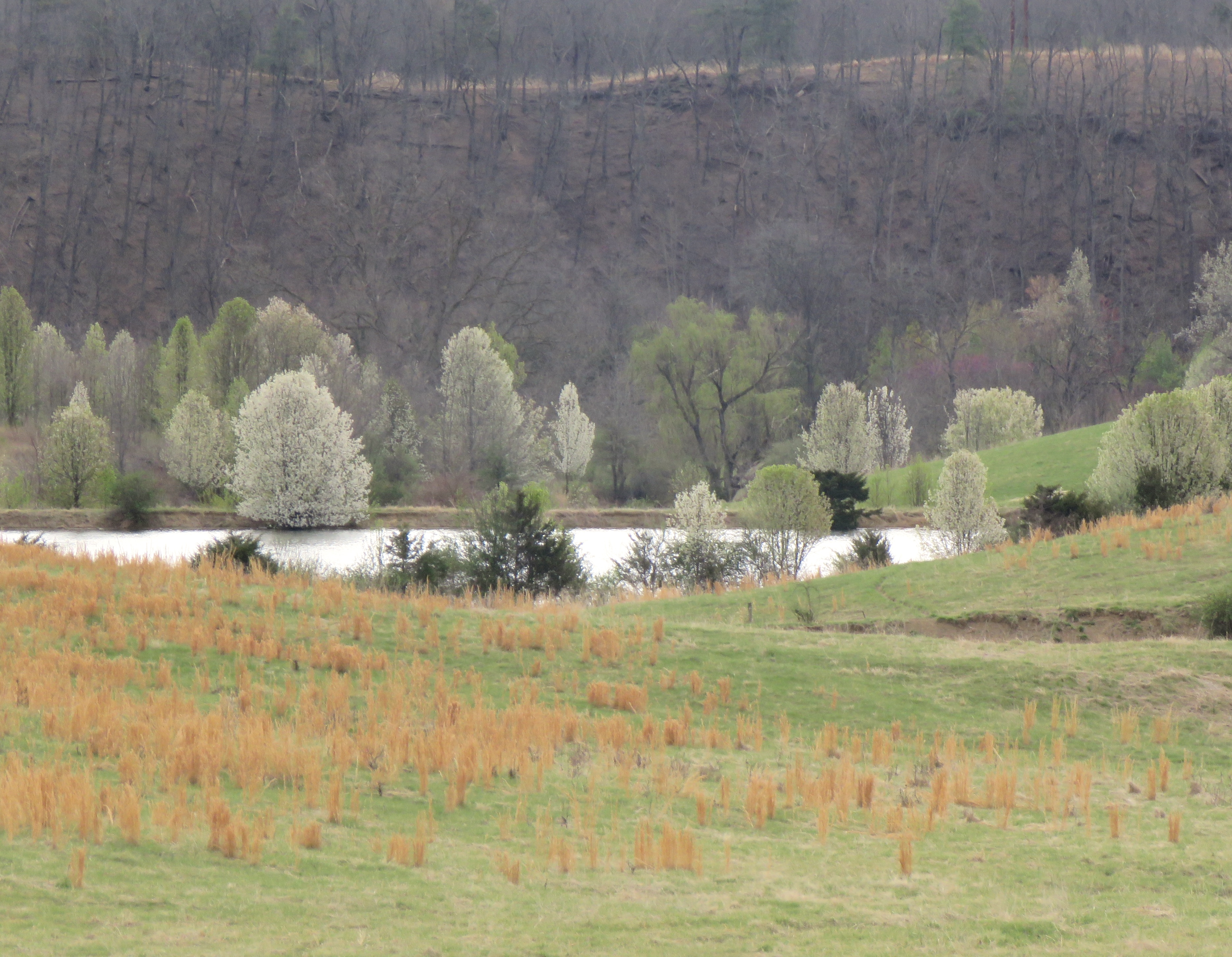
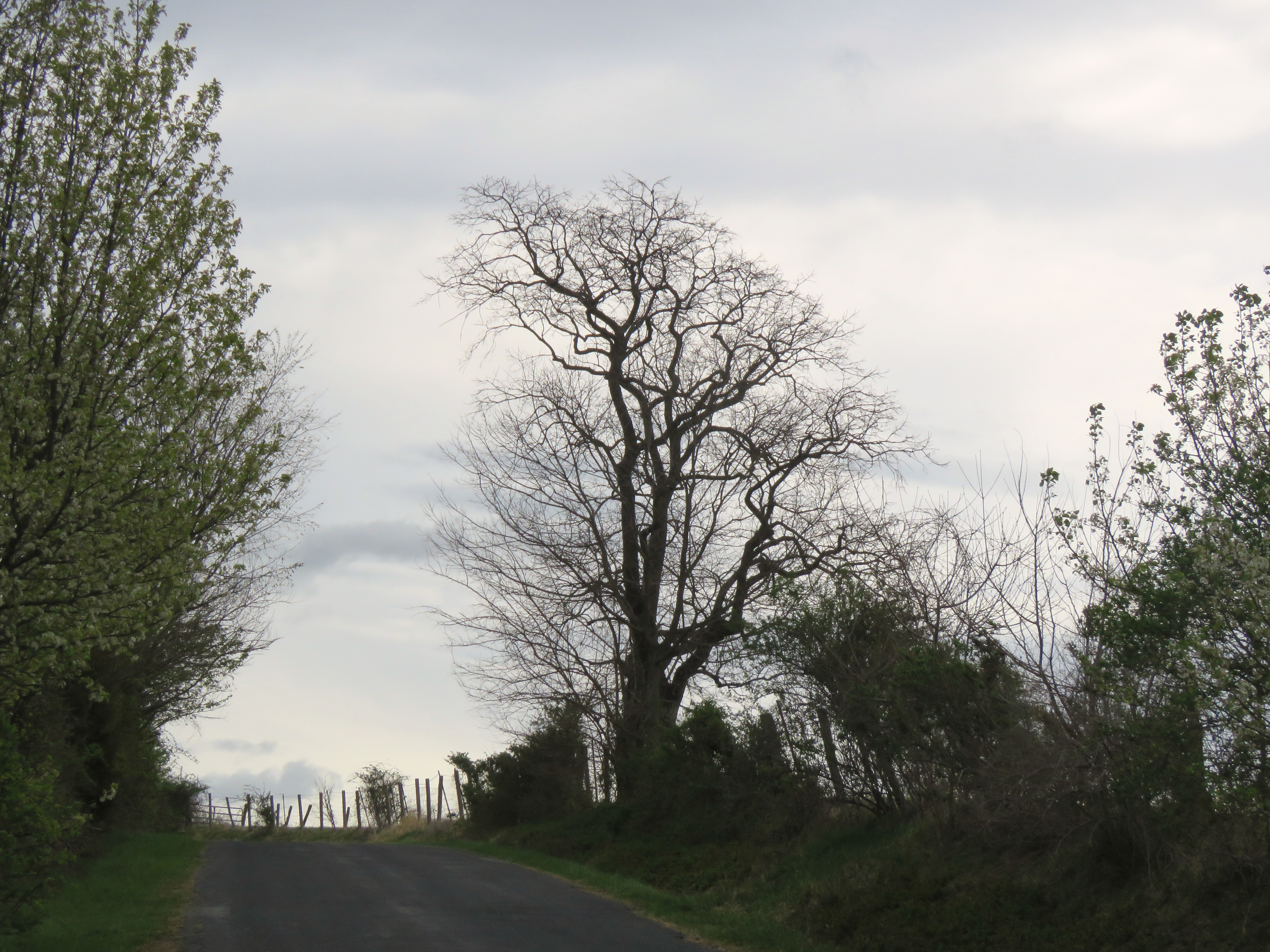
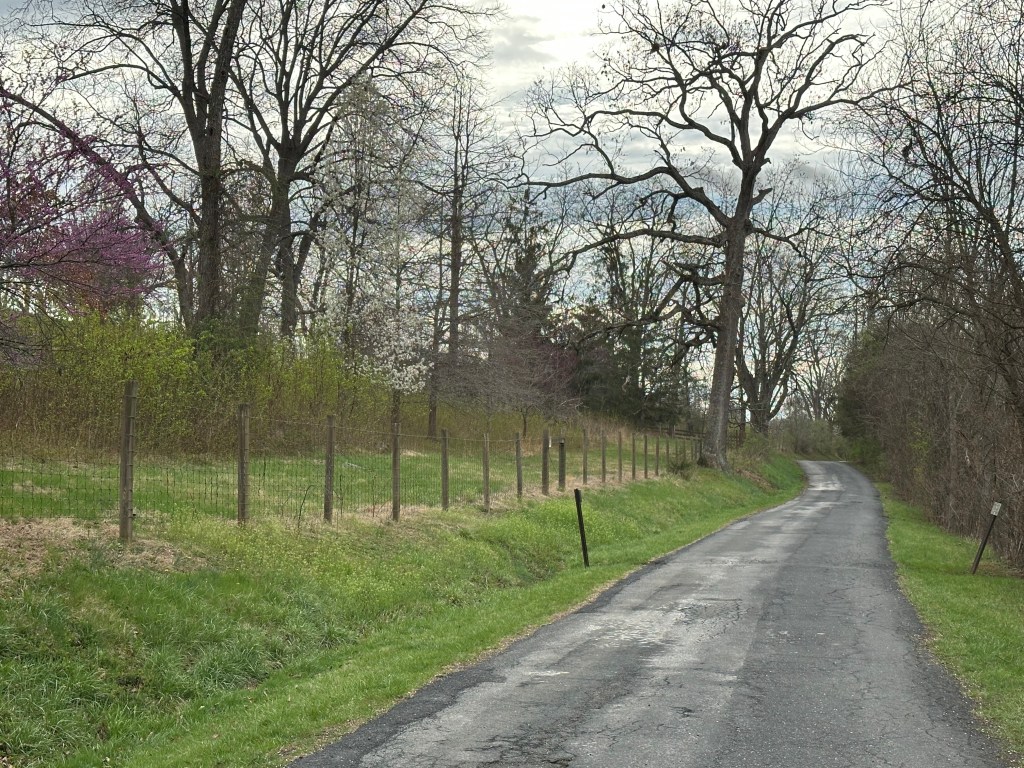
Even though Bells Lane is in the city limits of Staunton, its geography and topography shout country. The narrow road meanders up, down, and around hills and valleys from a US highway to a state road. From its zenith, traffic buzzes north and south along I-81, though the noise barely reaches the beloved birding location.
With its proximity to the city, people use Bells Lane for other reasons. With only a handful of residents along its winding two-mile stretch, the narrow pavement is a safe place to jog, bike, or walk your dog, in addition to birdwatching.
When I pulled off the main highway onto Bells Lane, I opened the moon roof and lowered the windows, and drove at a snail’s pace. The air was cool, but fresh with the scent of apple blossoms and birdsong. I smiled with great pleasure at hearing multiple birds singing, and used the popular Merlin app on my iPhone to confirm my suspicions.
Birders are happy with such technological advances that can affirm or alert you to nearby birds. However, the combination of common sense and location tempers emotions when a rare bird is indicated.
Using their amazing ability to imitate other birds, Northern Mockingbirds are notorious for setting off frenzied searches for birds that aren’t there. I almost got caught doing that this time.
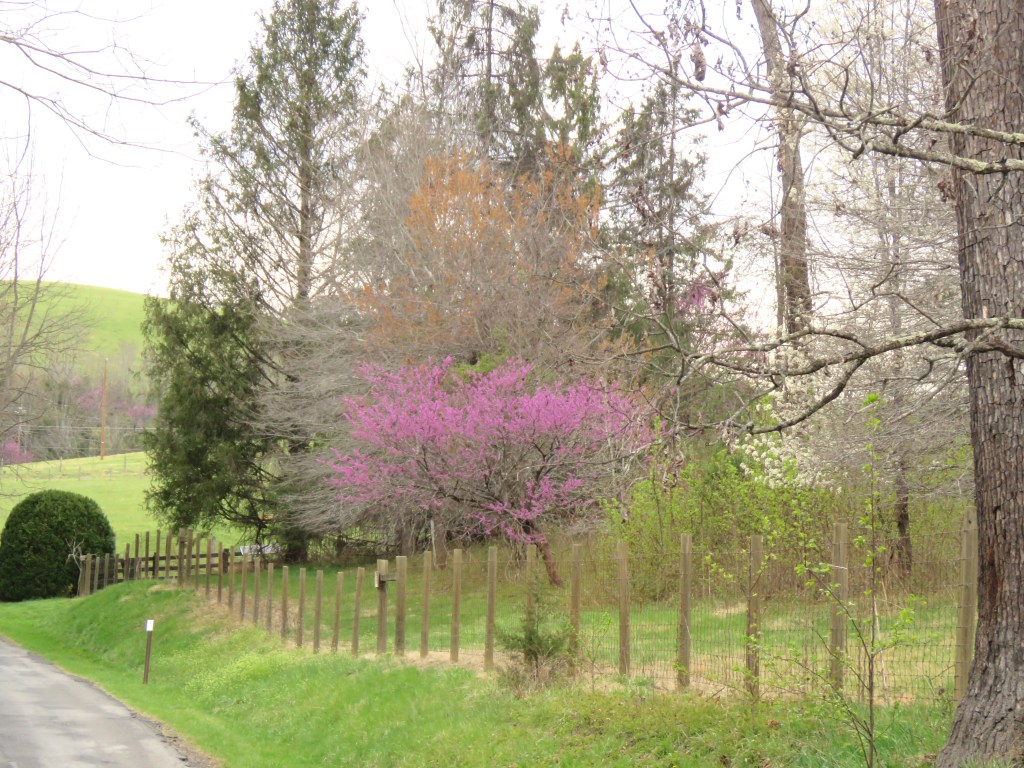
In the thicket of blooming redbuds and serviceberry bushes and old-growth trees, I caught a quick glimpse of a yellow and black bird zipping through the understory. An oriole, I thought, but which one? I didn’t see it long enough to identify it.
Much later on at the summit of Bells Lane, Merlin showed a Scott’s Oriole. I had never seen one, and wondered if that’s what I saw a half hour ago. That was unlikely, since a Scott’s Oriole’s territory is the southwestern United States.
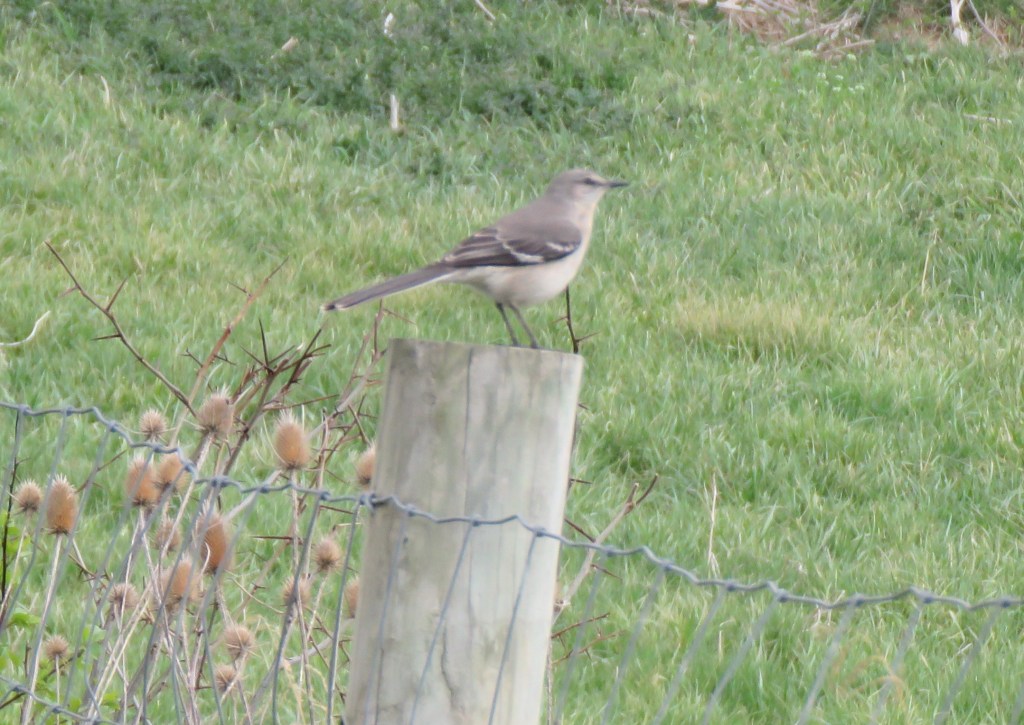
Then I saw it. A Northern Mockingbird sat atop a fence post, demonstrating its wide repertoire of songs. I immediately discounted the Scott’s Oriole sighting, but wondered how in the world the mockingbird knew the oriole’s song if it had never heard it.
We saw several Northern Mockingbirds as we wound our way along the bumpy road, with horse and cattle farms dominating the rolling landscape. At one stop, I could only see the top of what appeared to be a rather large house, well situated behind a wooded hillside.
Between the road and the house, birdsongs rang out as clear as day. I stood in awe and joy at being present in that moment, finally able to hear those glorious songs so well.
The underrated Field Sparrows dominated the avian chorus. Unfortunately, I couldn’t locate even one of the birds, though they had to be close to me. That’s the disadvantage of birding alone. My wife enjoyed the bird cacophony while reading in the SUV.
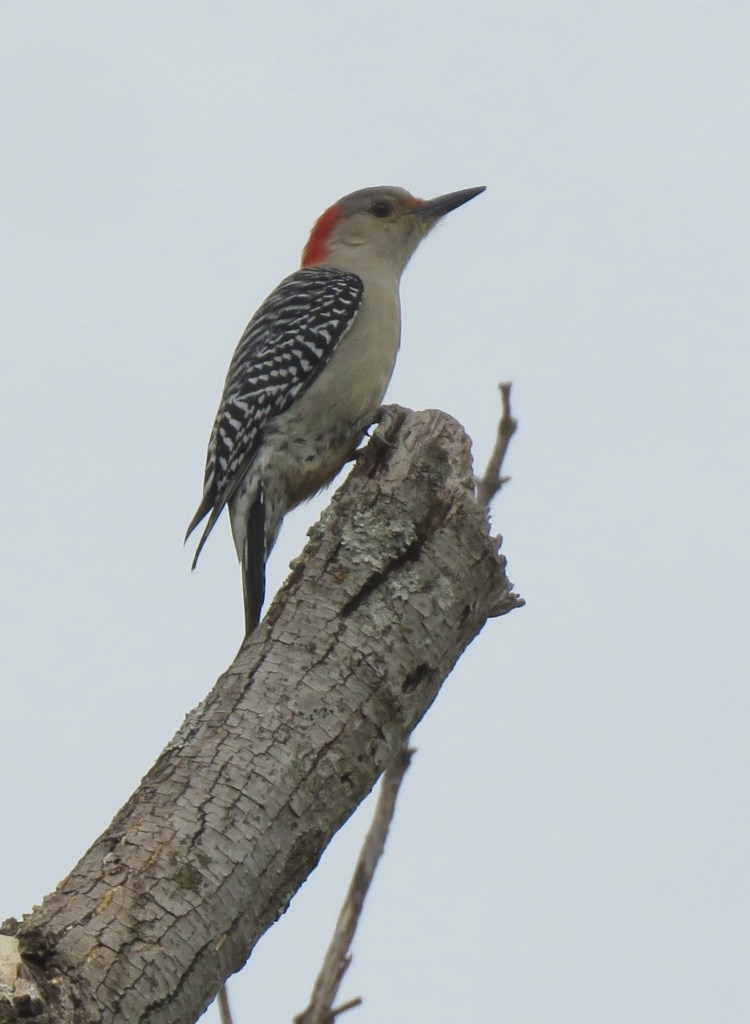
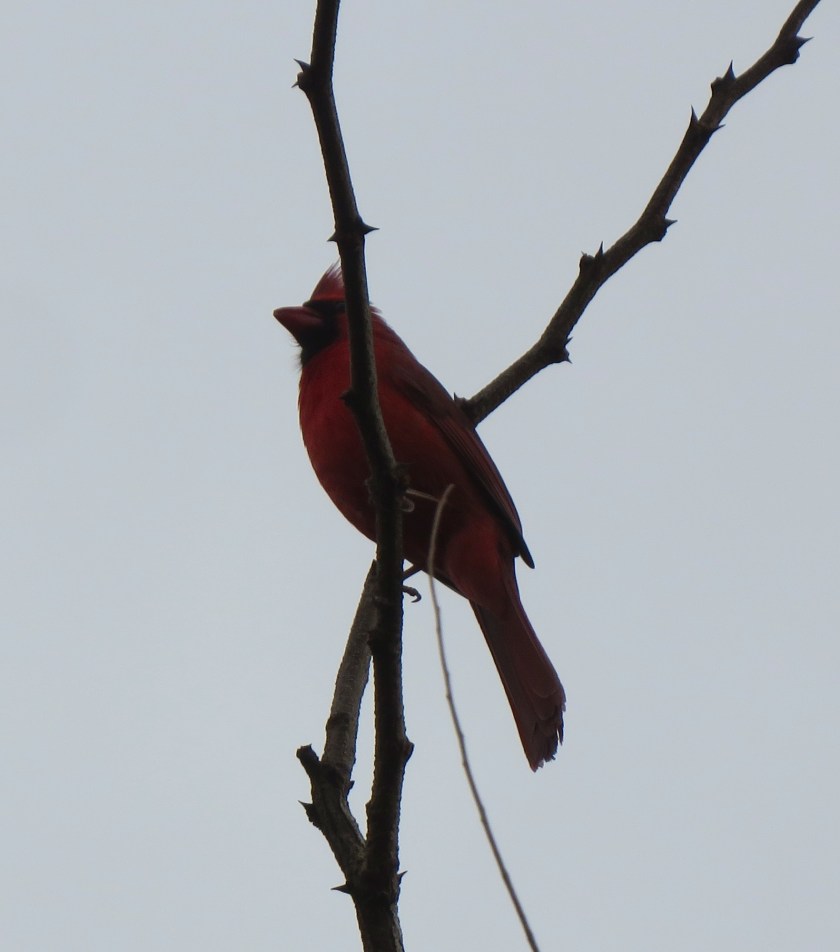
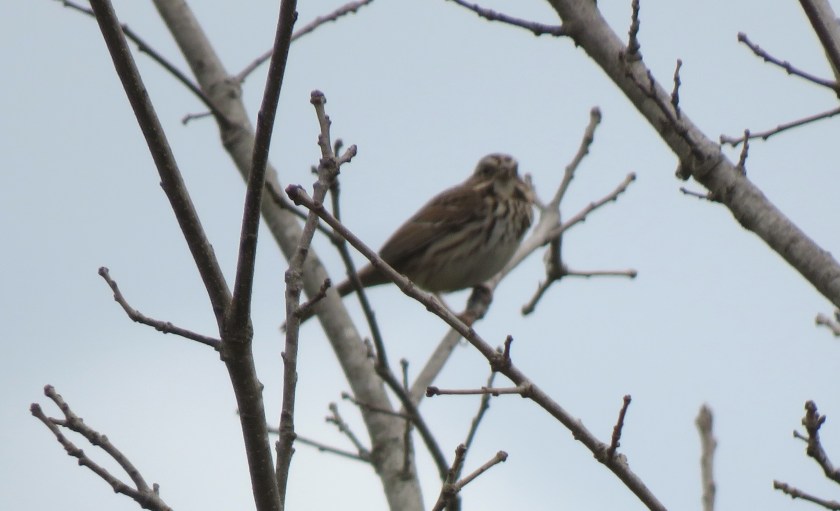
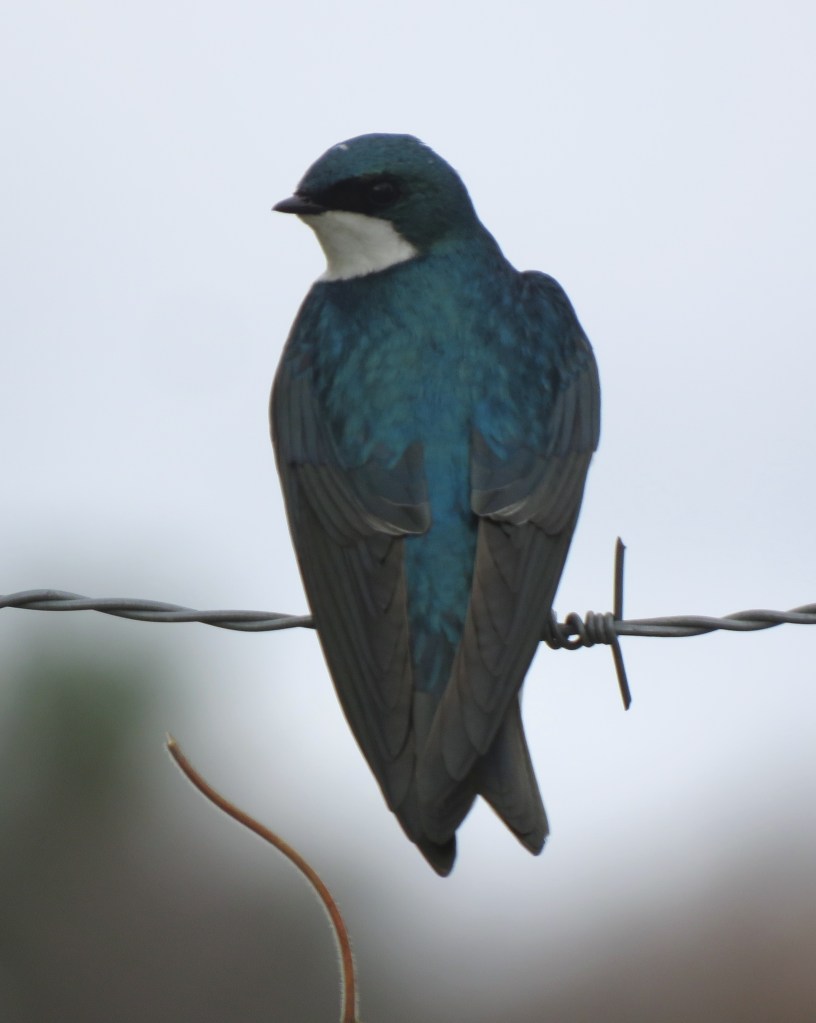
The low, gray clouds made photographing birds difficult.
Several times, I parked the vehicle and walked along the roadway. I met another birder who advised me that a flock of Ruby-Crowned Kinglets was foraging for insects 50 yards ahead on the left side of the road, where the underbrush thickened.
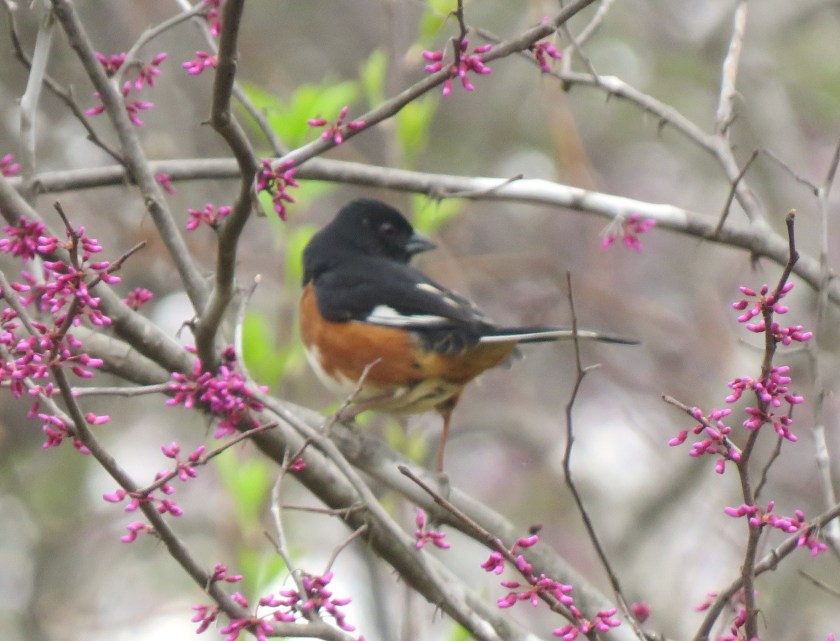
I quickened my pace, only to be stopped by the luxurious liquid sound of an Eastern Towhee. It was a male. The black hood with rusty sides and a white streak down its chest provided protective camouflage as it kicked and scratched among the dead leaves on the forest floor. I finally got a clear shot of it.
Farther up the road, I must have found a stray of the Ruby-crowned Kinglets. The lone bird flitted from limb to limb over my head, devouring insects.
Merlin showed a Pine Warbler calling, but I couldn’t find it. Pine Warblers are often among the first of their species to migrate back north after overwintering in the warmer southern states.
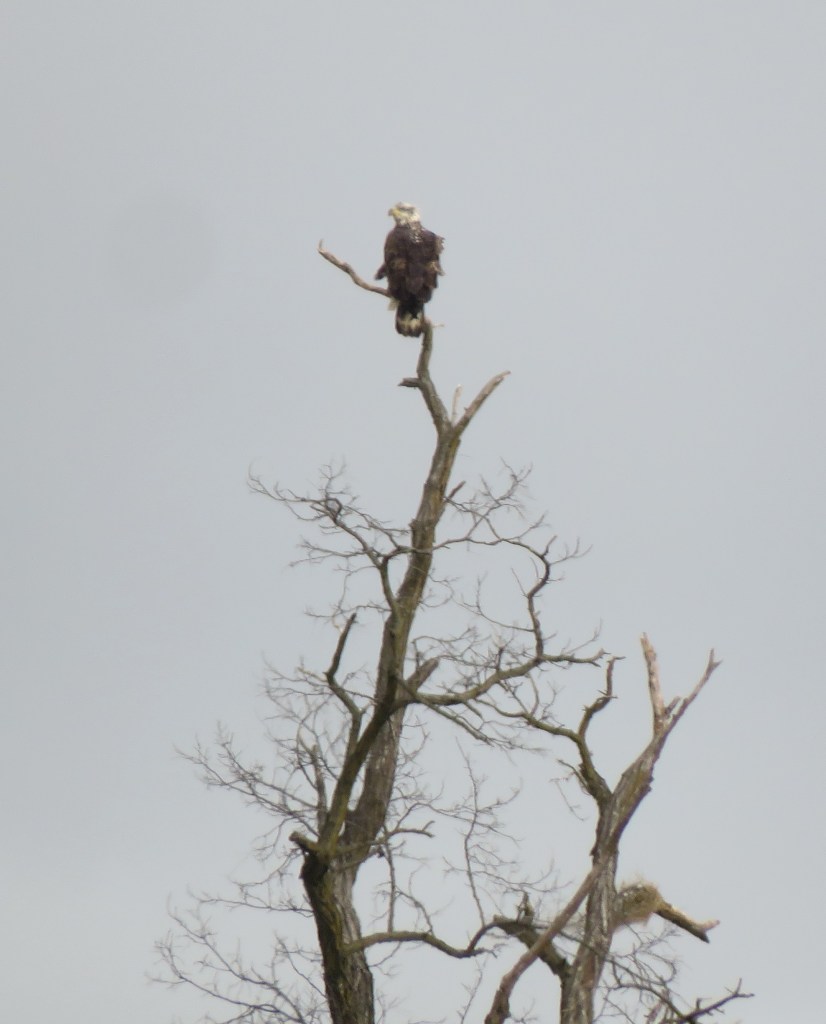
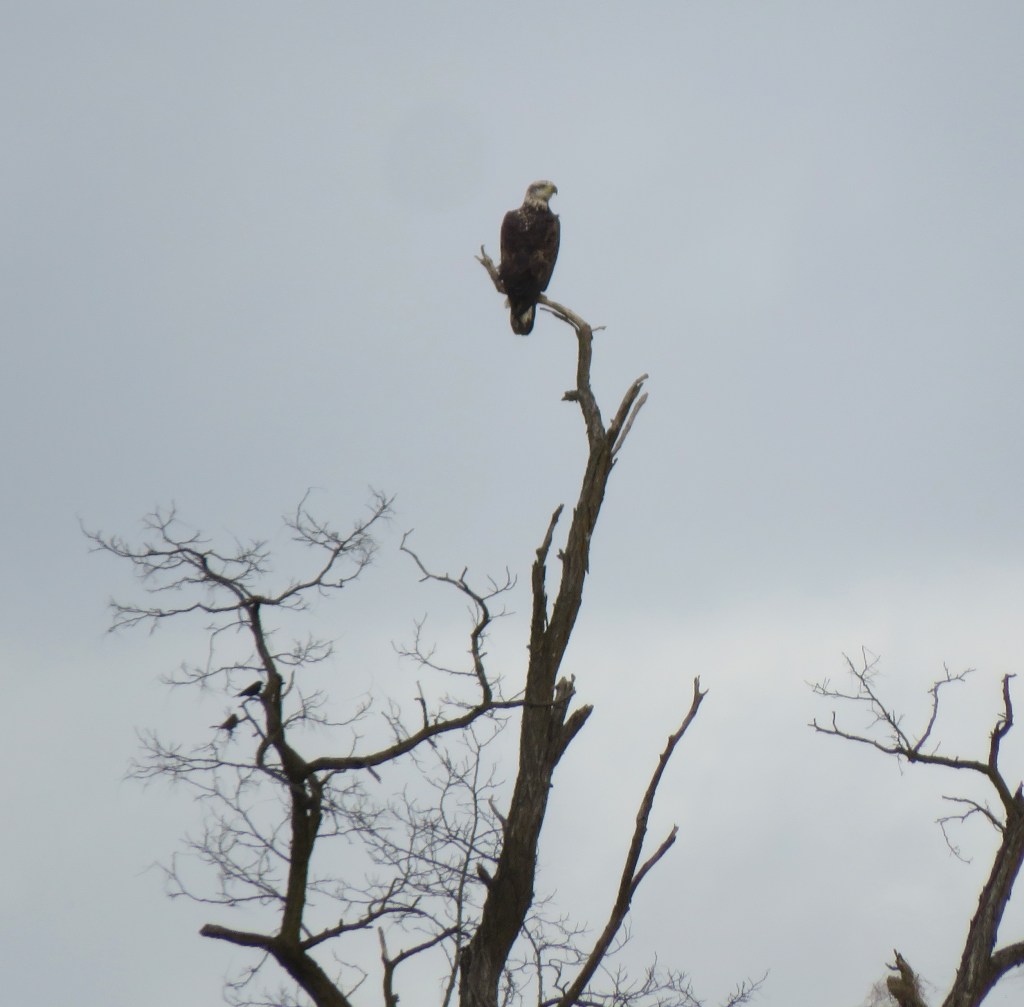
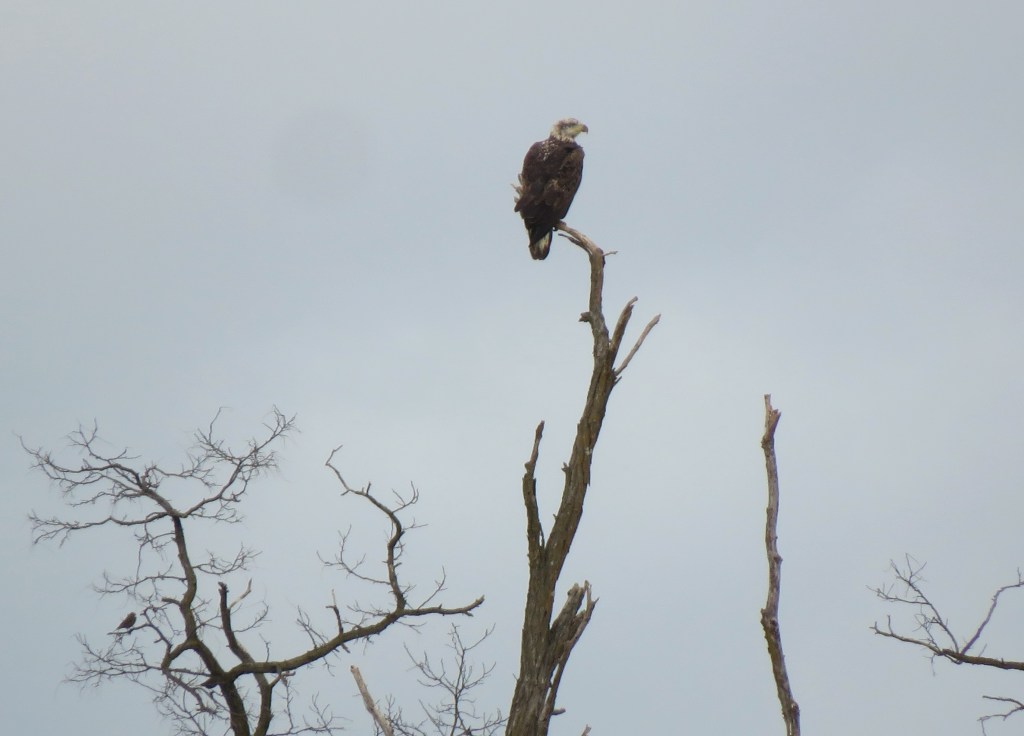
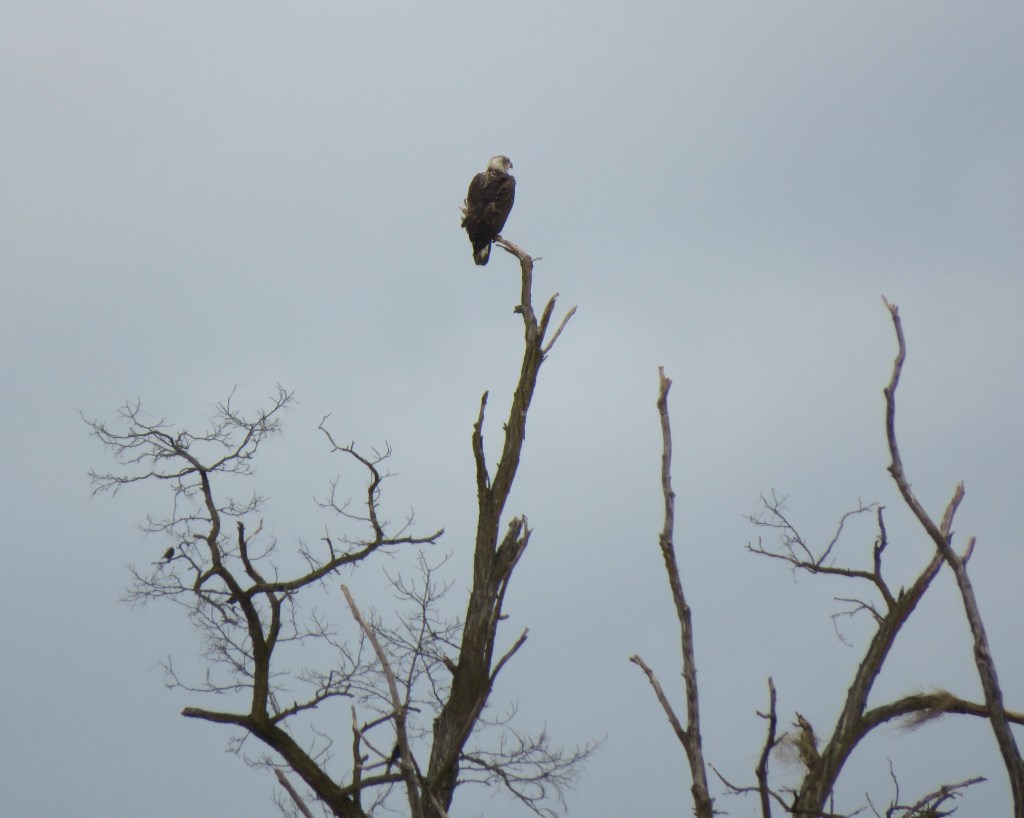
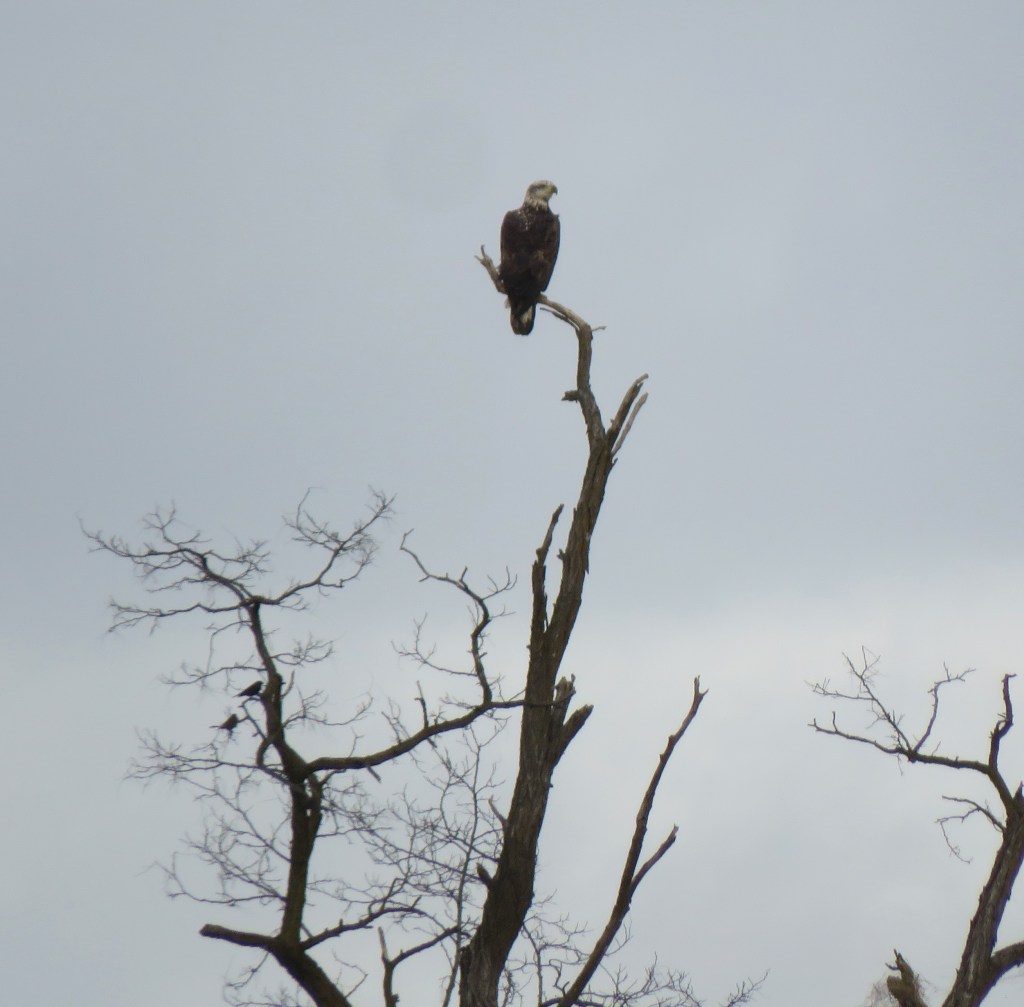
The young Bald Eagle on its perch. Photos by Bruce Stambaugh
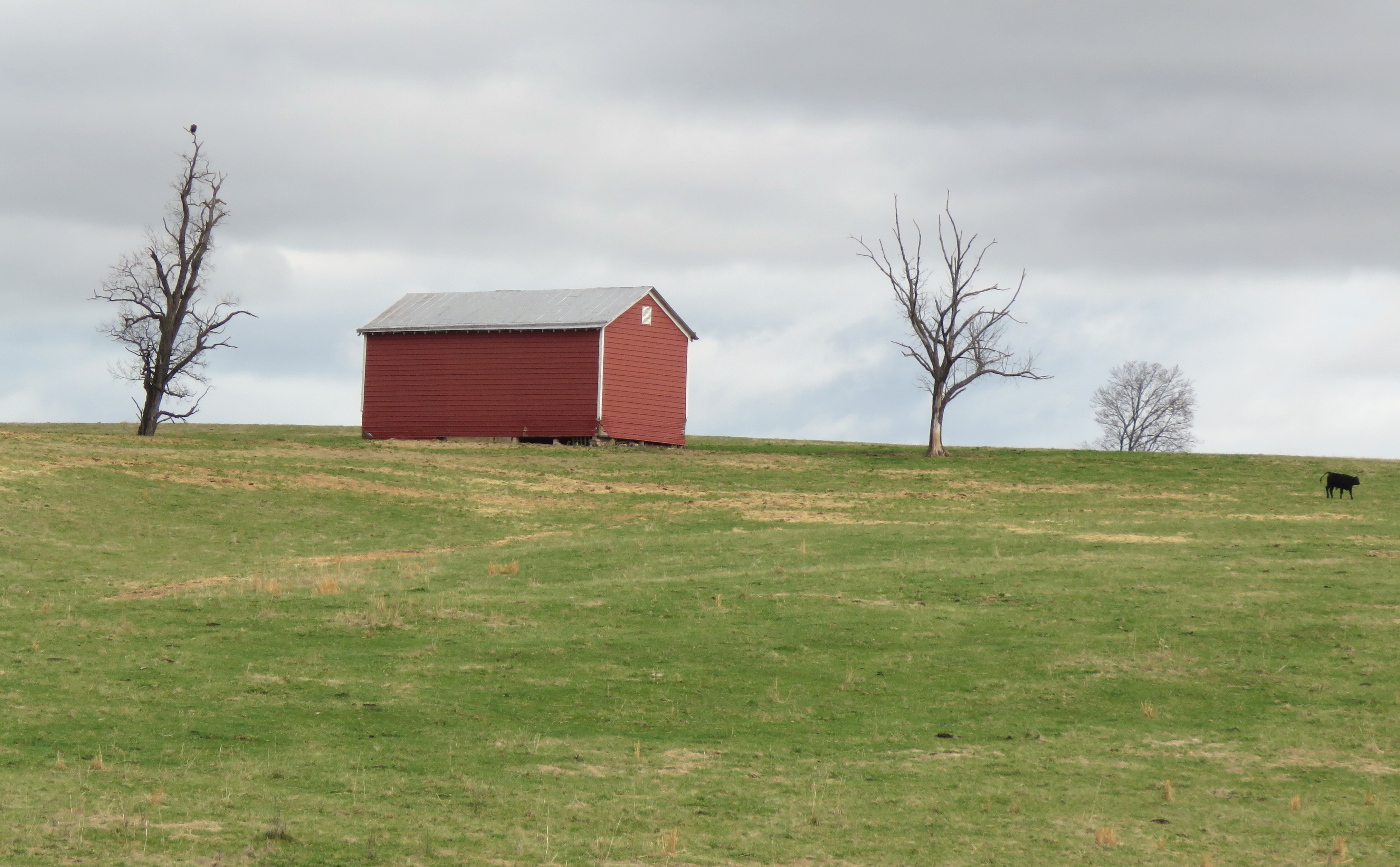
As we reached the halfway point, we were at the summit of the ridge. A line of black Angus steers lumbered away from a small red barn down the pasture toward the road.
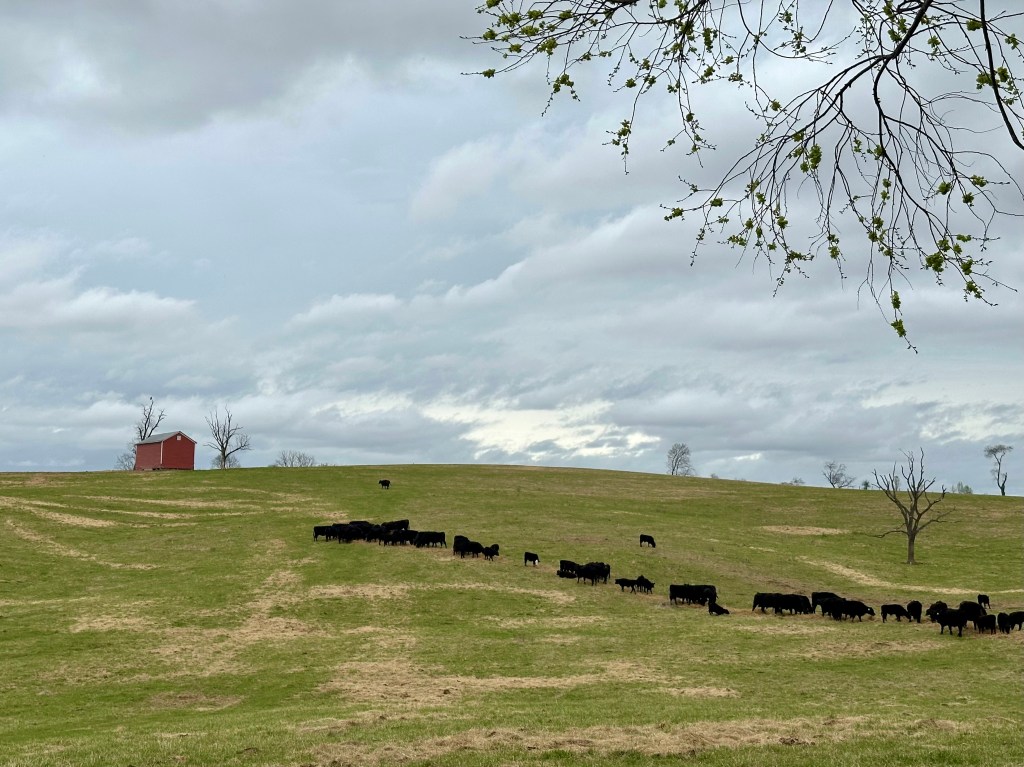
A snag of a tree stood just beyond the barn, and at the highest perch was a subadult Bald Eagle. Patches of white feathers against black revealed its age. It wasn’t a warbler, but I was thrilled to see it. The proud bird sat perfectly still, overseeing the valleys to its east and west.
Notorious for roosting in one location for hours on end, the young Eagle seemed oblivious to the cattle, the American Crows flying in the distance, and to me. I snapped away before retreating to my SUV.
The forecasted rain began to fall, gently at first and then more steadily. Our morning of birding had come to an end with perfect timing.
We headed back into town for lunch, having heard and or seen 43 bird species in a little over two hours. I anticipated warblers, but saw an eagle instead. It was an unexpected gift on our anniversary morning.
© Bruce Stambaugh 2026

 Roadkill Crossing