The Defining Spot

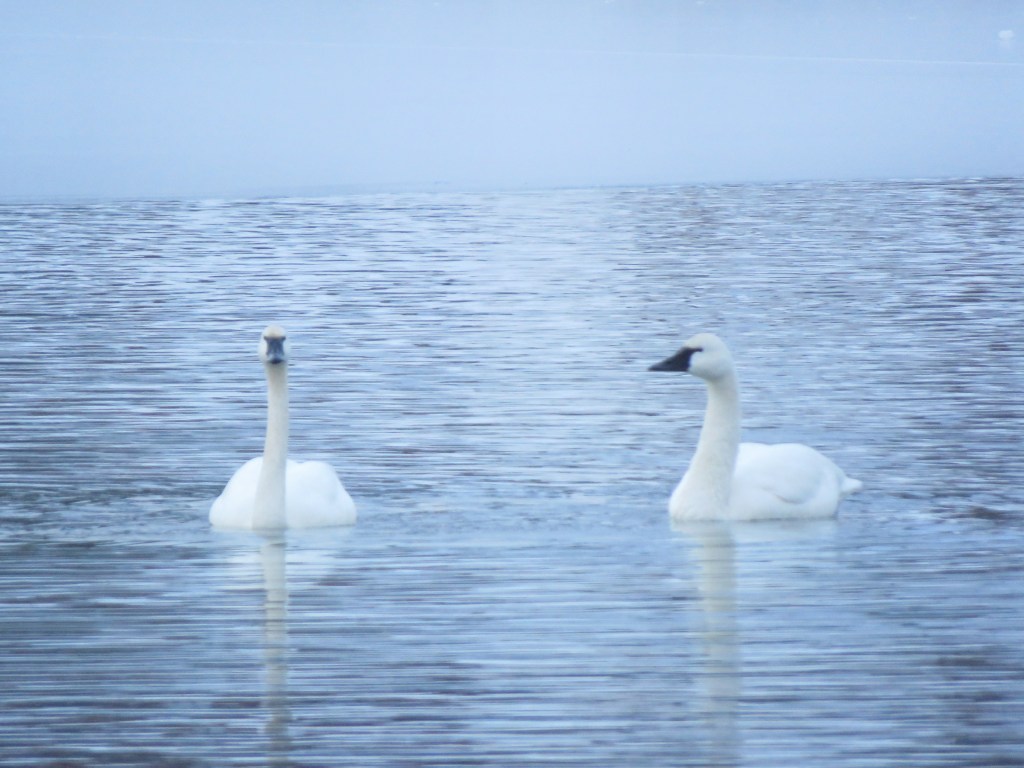
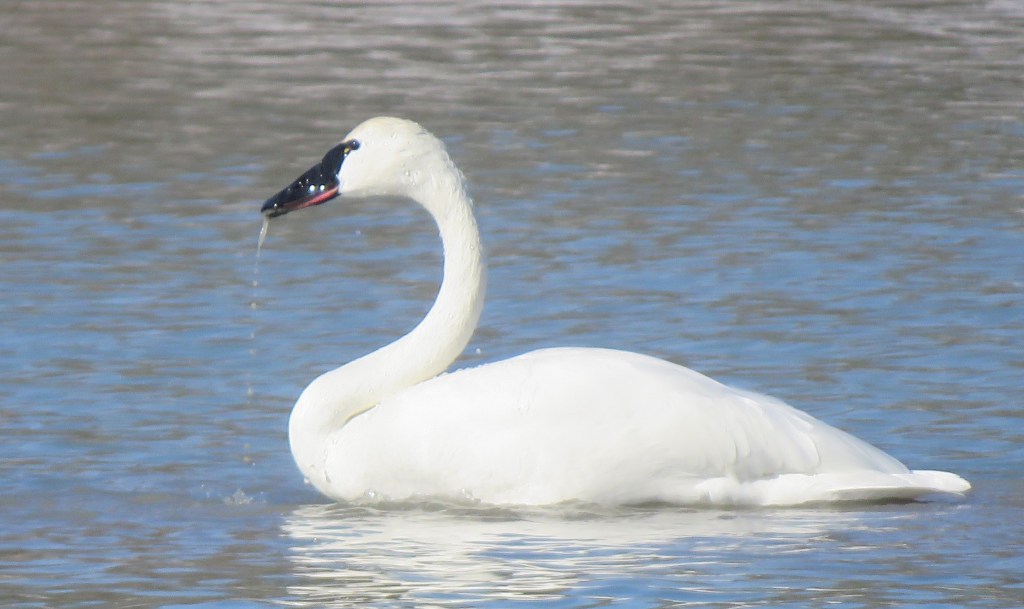
A Tundra Swan. Photo by Bruce Stambaugh

This is an adult Tundra Swan. Tundra Swans can easily be confused with the larger Trumpeter Swans, especially since they often overlap in the winter migration locations.

Unless the two species appear together, it is hard to tell them apart. Adult birds are both white and have black bills. However, the bills of Trumpeter Swans are much larger, as are their bodies. Trumpeter Swans are the heaviest native North American bird.

There is one distinctive way to tell the difference between the two impressive birds. Tundra Swans sometimes have a small yellow spot at the base of the bill below the eye.
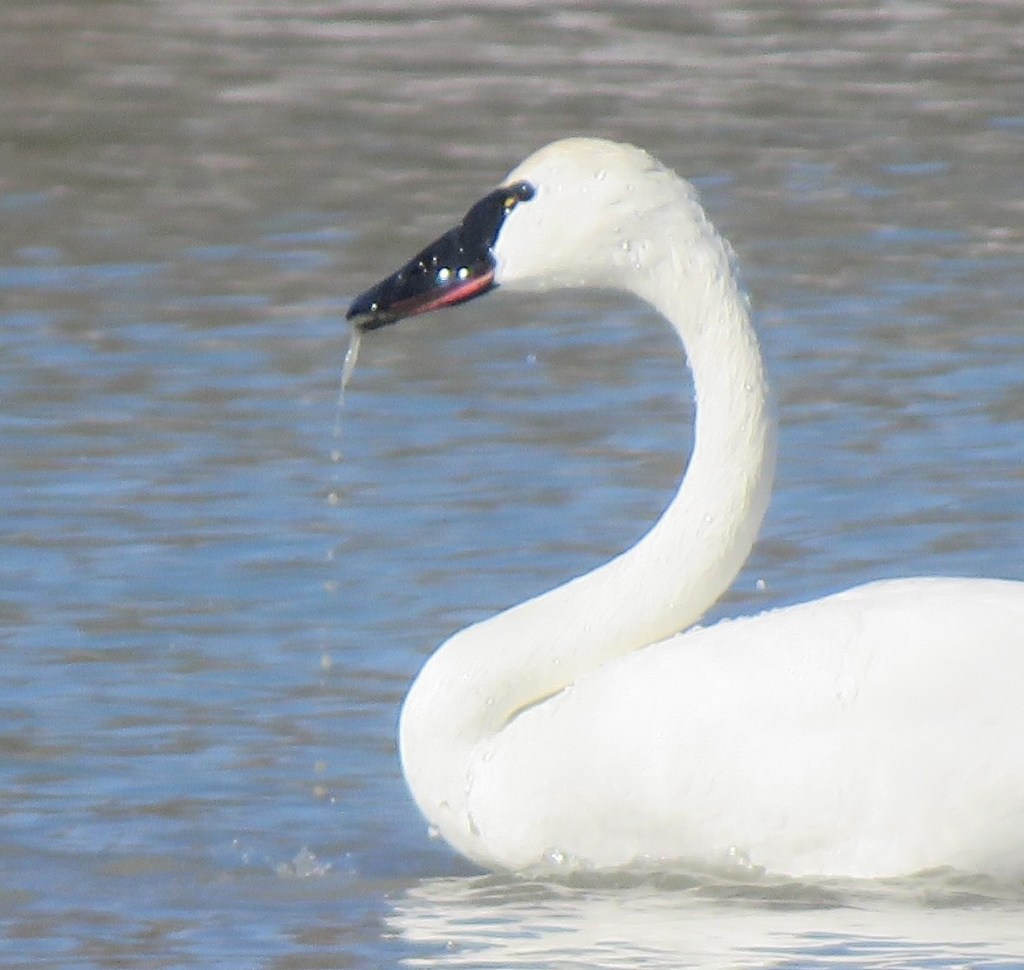
Note the small yellow spot just below the swan’s eye.

The problem is that not all Tundra Swans have this identifying mark. So, relying on expert birders to help make a defining identification is recommended. Using a reliable birding field guide should also help.

I hope you get to see both Tundra and Trumpeter Swans. If you do, I also hope they are together so you can tell them apart more easily.

© Bruce Stambaugh 2026
The Grace of Swans

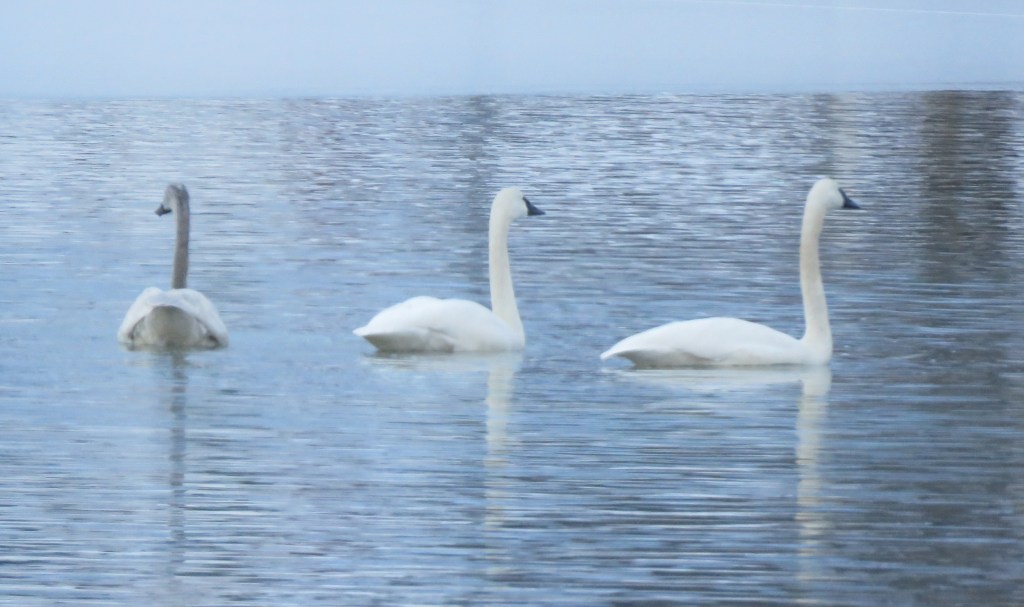
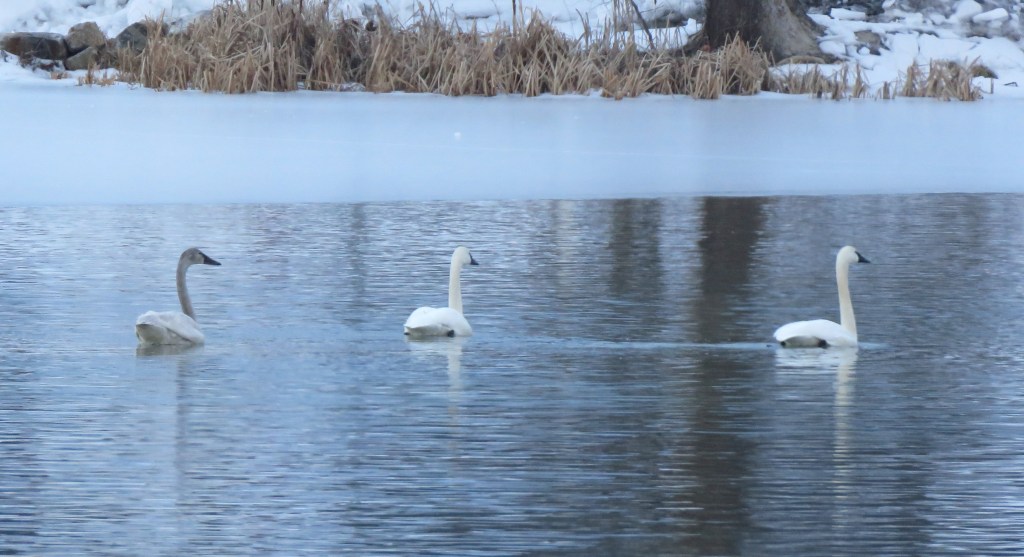
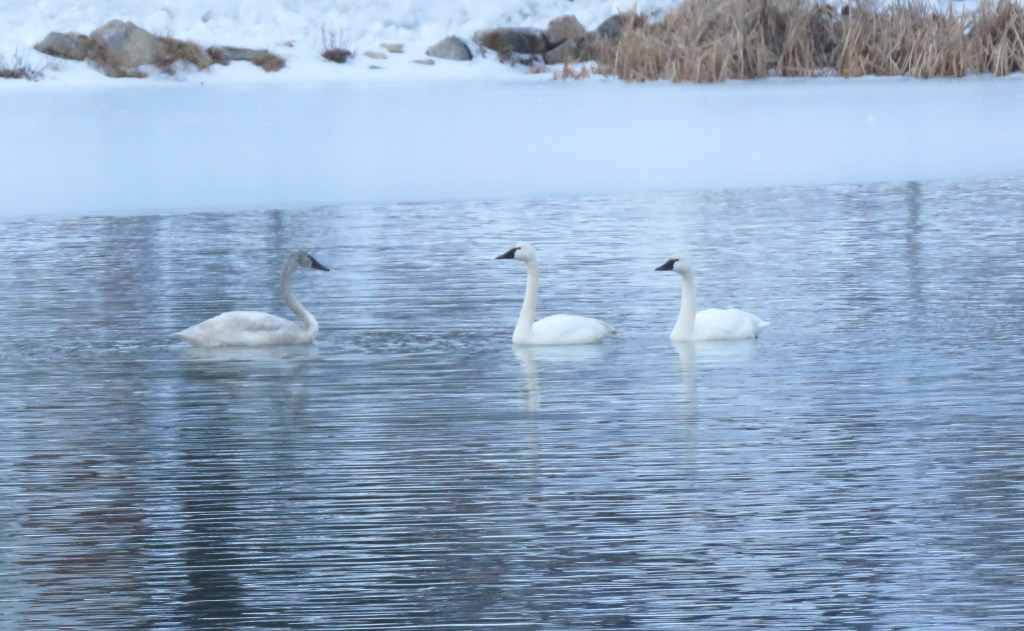
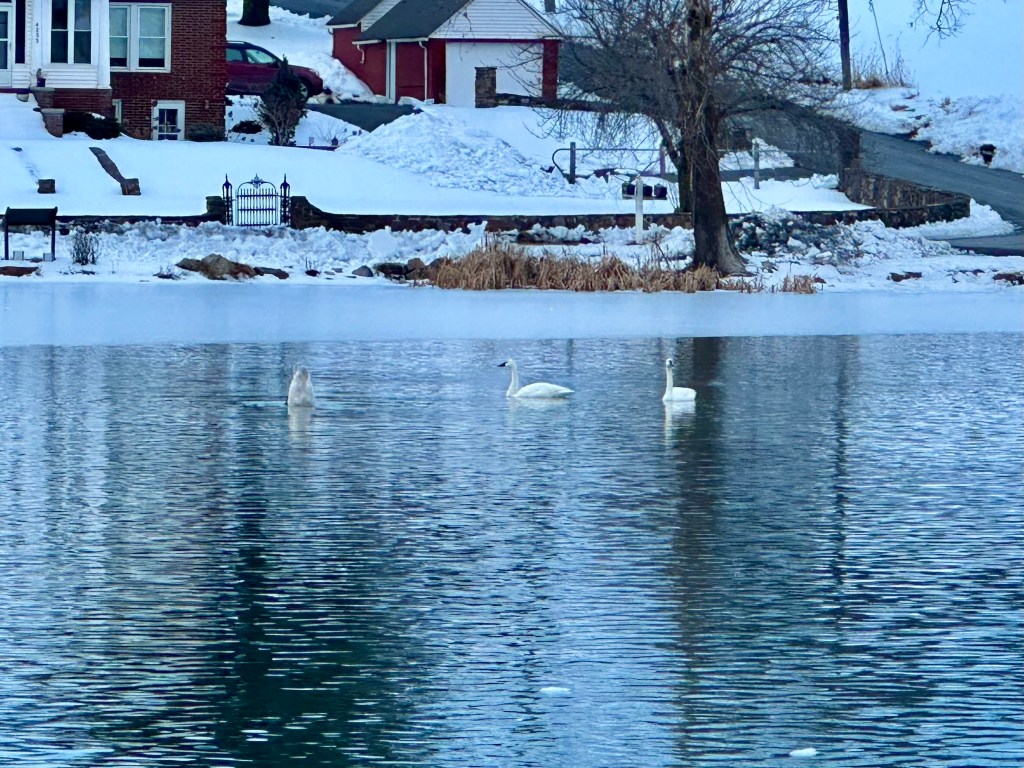
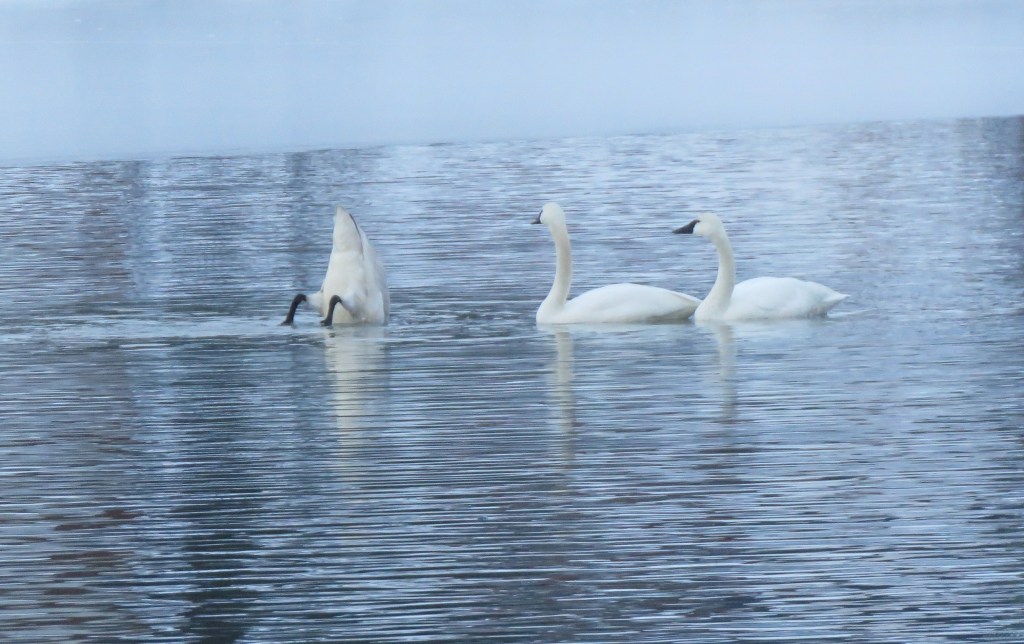
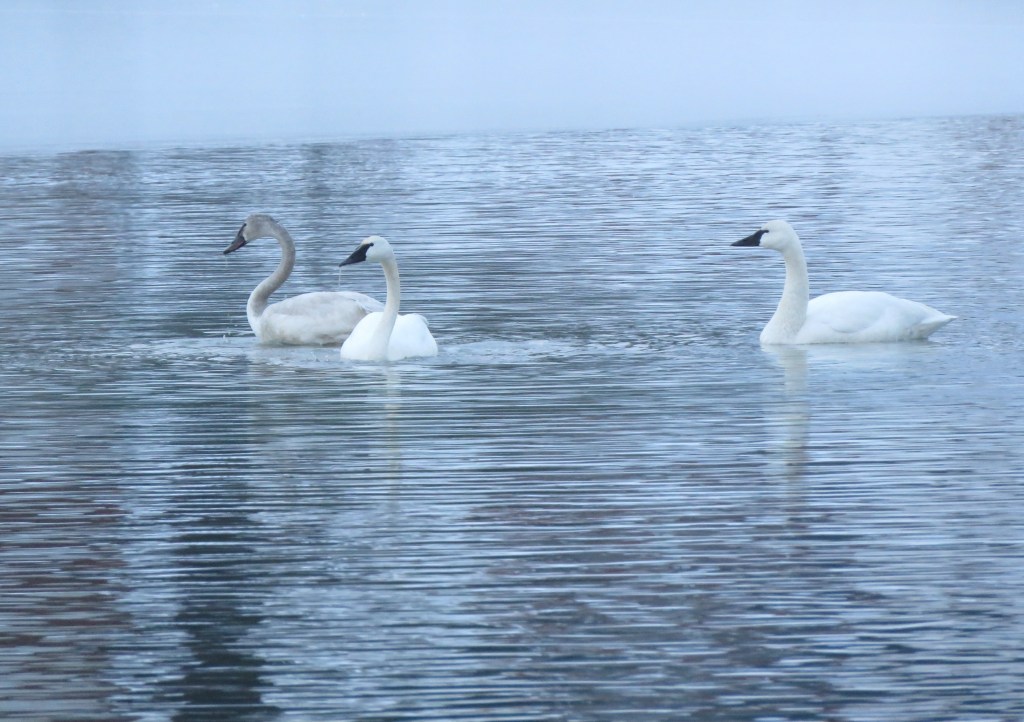
The trio of graceful Tundra Swans on Silver Lake. Photo by Bruce Stambaugh

We were about ready for dinner when a text from a birding group reported three Tundra Swans at Silver Lake. My wife turned off the stove burner, we dressed for the super cold weather, and out the door we went.

Located on the north edge of the small town of Dayton, Virginia, Silver Lake is a few minutes’ drive from our home. I approached the drive from the north, which afforded a full view of the lake.

A flock of dark colored ducks floated near the lake’s shallow north end. Fortunately, no vehicles approached from either direction. I slowed and soon spotted the large white swans in the middle of the lake.

Because it has been so cold for so long after the six inches of snow and sleet, there was little room to pull over for photos. However, I managed to pull on the ridge of plowed snow along the road so I wasn’t blocking the southbound lane.

The Tundra Swans were about 30 yards away. The two adults and one juvenile swam gracefully on the placid water. The young one kept feeding by tipping its head into the water and foraging on the underwater vegetation.

Their closeness let me capture a few decent photos with both my camera and my iPhone before the light faded further. Given the precarious position of my SUV, I didn’t want to linger long.

Satisfied with the photos, we headed home, turned on the stove’s burner, and enjoyed a steaming bowl of soup. It completed a satisfying evening.

The juvenile Tundra Swan dipped into the water to feed several times. Photo by Bruce Stambaugh

© Bruce Stambaugh 2026

Bay Photos by Donna

Wildlife Photos From The Chesapeake Bay Region

ROAD TO NARA

Culture and Communities at the Heart Of India

K Hertzler Art

Artist and nature journalist in the Shenandoah Valley of Virginia.

Maria Vincent Robinson

Photographer Of Life and moments

Gabriele Romano

Personal Blog

Jennifer Murch

Art is the only way to run away without leaving home. -Twyla Tharp

Roadkill Crossing

Writing generated from the rural life

ANJOLI ROY

writer. teacher. podcast cohost.

Casa Alterna

El amor cruza fronteras / Love crosses borders