Is prostate cancer
appropriate for haiku,
and is it for me?
Bruce Stambaugh
March 11, 2011
Is prostate cancer
appropriate for haiku,
and is it for me?
Bruce Stambaugh
March 11, 2011
By Bruce Stambaugh
Avid birders love to do Big Days. Big Days are when a group of dedicated birders sets a goal of seeing as many bird species as possible in a span of 24 hours.
I had a big day recently, too. My big day was a kaleidoscope of activities, some bright and cheery, others light and muted, and a few dark and fearsome. Knowing that this day’s lively landscape would also be an emotional roller coaster, my faithful wife held my hand all along the adventuresome path.
My shifting pattern of colors didn’t involve any feathers, however. Rather, the palette I experienced involved people and their comparative connectedness to me.
After breakfast, my wife and I headed into Berlin, Ohio considered by default the center of the largest Amish population in the world. I surprised Neva with a brief stop at the local coffee shop for mochas. She got decaf, but I needed some caffeine to get me through the day’s busy agenda.
Slurping our coffee, we headed up the stairs to our financial advisor. He wanted us to make some tweaks in some of our monetary investments. But you can only do so much with a $1.95.
From Ohio’s Amish Country, we were off to my hometown, Canton, to see my urologist for a consultation. The previous week I had had a biopsy for prostate cancer. This meeting alone would have qualified as it’s own big day.
But being the thrifty couple that we are, we packed the day with a purposeful assortment of activities and conversations. My good doctor got right to the point. He spent more than an hour with us, mostly reviewing the several choices for treating my cancer.
While the kindly doctor clearly itemized the wide range of options and their side effects for me, Neva furiously took notes. All the while my head swam. We set a follow-up date for deciding which procedure would be best for me, and we were off to our next encounter.
The timing couldn’t have been better. Neva and I each got a one-hour massage. I could actually feel the tension ooze out of my body, and my mind stopped racing about what I had just heard and anticipating what was to come for me.
I had a brief but important business appointment just down the road. With my mind clearer, the meeting went well.
From there, we delivered some furniture we no longer needed to one of Neva’s cousins, who lived just a few miles away. We made our delivery, visited a little and were off to our next rendezvous, dinner with my older brother and his wife.
The date with Craig and Shirley was well-timed, too. A year and a half earlier, Craig had had prostate surgery similar to what my doctor recommended for me. Over absolutely marvelous entrees, we casually discussed my brother’s procedure and other various maladies that seem to be dominating baby boomer lives more and more.
We skipped dessert, and walked a few hundred steps to our son and daughter-in-law’s lovely New York style loft on the square of Wooster, Ohio of all places. Craig and Shirley, whose youngest daughter lives in New York City, were mightily impressed with the stylish apartment and its accompanying minimalist furnishings.
On the 20-minute drive home, the color wheel of events of my big day flashed before me. So did the fear and uncertainty of what lies ahead. But given the loving and colorful characters who surround me, I know all will be well no matter what.

By Bruce Stambaugh
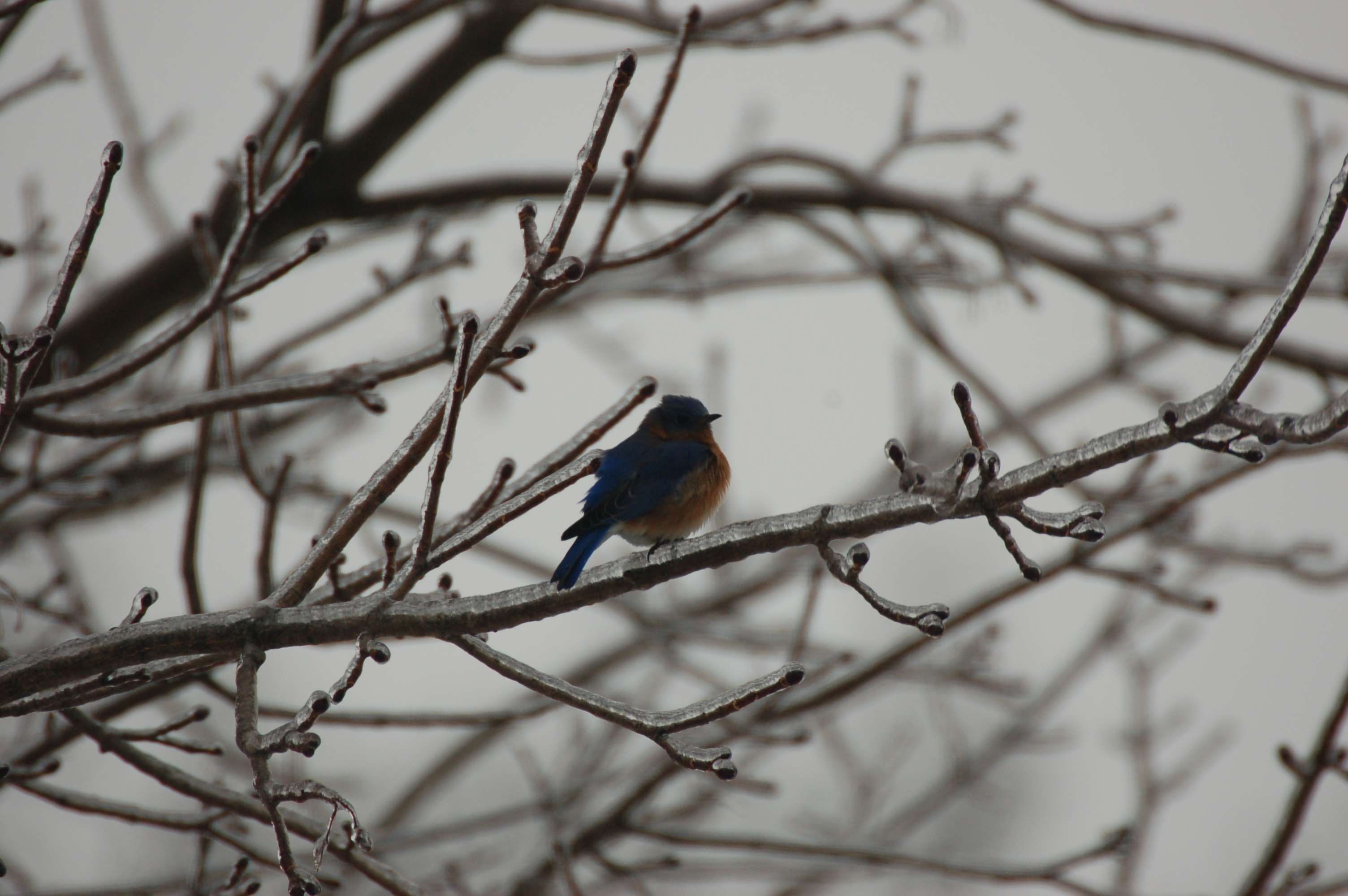
As I write this, I’m looking out the ice-splattered window watching it snow an inch an hour. The trees are once again encrusted with a layer

of crystal clear, weighty ice. The poor boughs of the evergreens are again bowed to the ground.
The rest of the landscape is covered with inches of yet more snow. Fierce, brisk northwest winds stymied the snowplow operators and sent them back to the garage in disgust and for safety’s sake.
I am always glad when the calendar flips to March. To me, March is a Jekyll and Hyde month, the last of winter, and the first of spring.
In truth, March in northeast Ohio is the month with the potential for all four seasons. It doesn’t always work out that way of course.
When the calendar reads March, I know winter’s icy grip is loosening, if only by time. If we are patient, though, spring will eventually win out.
Tired of winter and ready for spring, I opened my digital photo files and reviewed recent March memories. The visual variety brought a smile to my face even as noisy gusts whipped the snow outside harder still.

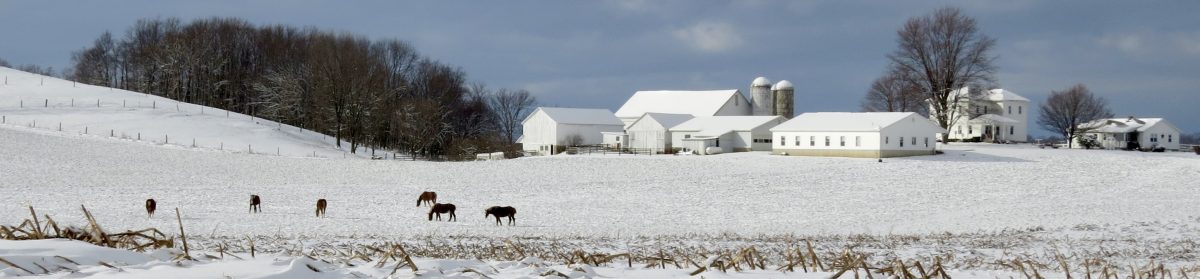
The first pictures showed exactly what the day at hand already had. Snow blanketed the landscape, but the sky was clear. The next few days revealed similar scenes. The snow remained, but so did the sunny skies. Horses romped in the snow and the days ended with picturesque sunsets.
By the middle of the month the deep snow cover gradually melted down, and green, grassy patches peeked through. People went jacketless and our first crocus bloomed on St. Patrick’s Day. The lovely lavender petals contrasted nicely with the spiky green leaves and the rich, brown ground of the flowerbed.
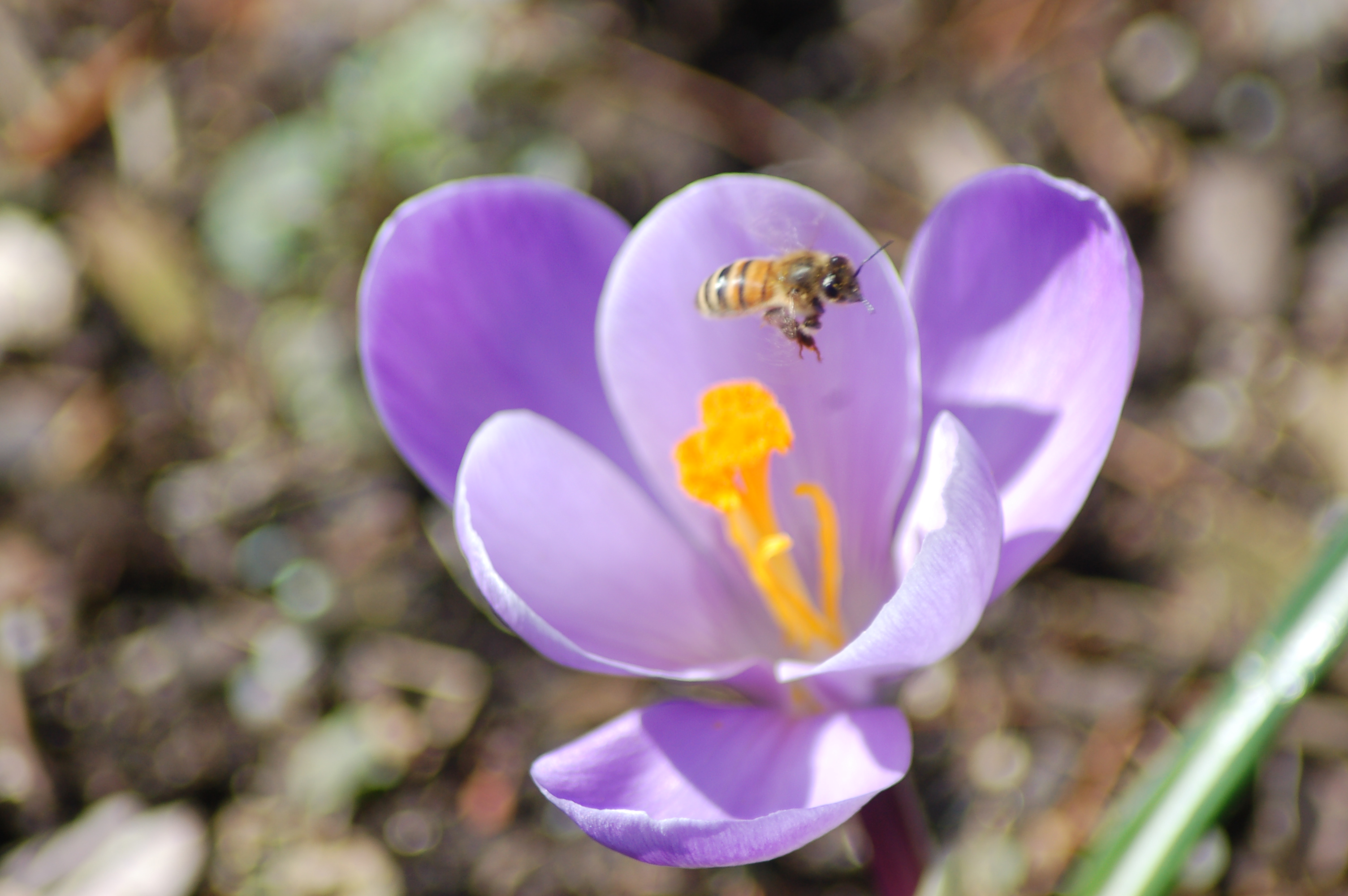
The next day, I photographed a honeybee gorging pollen. This scene really instilled hope.
There were more flashy sunsets and a picture of a thin crescent moon that looked just like a smiley face grinning at us in the early evening sky. We had one like that last month, too, but it was too cold to enjoy from the out of doors.
A couple of days later the frogs from my little garden pond emerged to bask in the warmth of the bright sunshine. And more flowers bloomed equally vibrant.
Just when you begin to fall in love with March, she can deliver some nasty punches. Tornado season begins in earnest and in the past we have had some powerful thunderstorms in March. They often are followed by cold and snow. A friend used to say that it always snowed during regional basketball tournament time.
Sure enough, five days after the frogs contentedly sunned themselves, our first daffodils showed their pretty yellow faces. The next day they drooped sadly, covered in heavy wet snow.

If there is an upside to such an early spring snow, it’s in the comfort that it won’t last long. As proof, my Amish neighbor was plowing his long field one row at a time at month’s end.

A sudden windy gust awakened me from my vernal dreaming. It was then that I noticed a familiar but long absent resonance. In the middle of this latest blizzard, a Song Sparrow sang as if the daffodils and crocuses already were blooming.
That subtle sound of music renewed fervent hope that winter and spring would soon change places.

By Bruce Stambaugh
For two consecutive nights, I sat with hundreds of others in a College of Wooster, Wooster, Ohio performance hall and listened to real experts share about urgent current events in the world.
The first evening, the speaker was an Iranian journalist who told his story of being arrested and tortured in Iran for reporting newsworthy events. The country’s autocratic leadership didn’t take kindly to him telling the world what was happening.
The next evening, two career diplomats from Egypt took the same stage and mesmerized an even larger crowd with Egyptian political history and their observations on the unfolding events in their home country. They were ecstatic that the mostly peaceful revolution had succeeded, and were nearly giddy about the country’s potential to finally embrace democracy.
All the while in our democratic nation’s capital, Congress raucously debated the necessity and wisdom of spending federal dollars on programs to feed and educate children. This version of democracy in action numbed me.
Amid all this critical confusion, a ludicrous verbal war had broken out between two states. Maine and Pennsylvania were at loggerheads over the origin of the Whoopie pie, of all things.
If you are not familiar with this delectable snack, Whoopie pies look like two cookies held together on their bottom sides with white frosting. They look that way because that’s what they are.
Things got serious between Maine and Pennsylvania.
When a Maine legislator introduced legislation to make the delicious treat the state dessert, the keystone state took it personally. Pennsylvania’s tourism bureau set up an online petition for people to sign. It was titled “Save Our Whoopie” as if Maine was going to round them all up for themselves.
The original Whoopie pies were chocolate, and most still are. But other flavors and colors have found their way into recipes, like pumpkin, red velvet, and carrot. I even saw some pink ones in honor of Valentine’s Day. The filling is generally sugary vanilla icing, although alternatives could be whipped cream, ice cream and marshmallow cream, which is Maine’s claim to fame. In some areas, they are known as Chocolate Gobs.
Most Whoopie pies are the size of hamburger buns. Others are more bite sized.
Things got so testy about where and how the first Whoopie pie was made that major metropolitan newspapers picked up on the story. It probably was a nice diversion from all the nasty news they had to report.
The tone of the rhetoric between Maine and Pennsylvania nearly matched that of the sound bite D. C. politicians. This was more than just a publicity stunt. Why couldn’t both states have the same dessert as their state’s favorite? After all, seven states claim the Cardinal as their state bird, and I have not seen any feathers fly over those duplicate designations.
In all the Whoopie pie war reporting, never once did I either hear or see anything about how popular Whoopie pies were here in the world’s largest Amish population. Here, the delectable treats show up regularly at family gatherings, reunions, at picnics and in school lunch boxes.
I thought it admirable that our own plain people paid little heed to this confectionery war. They had better, more productive things to do.
As for Egypt, Iran, Congress and all the others, we’ll have to hope for the best. While Maine and Pennsylvania make whoopee over their Whoopie pies, I think I’ll just enjoy mine.

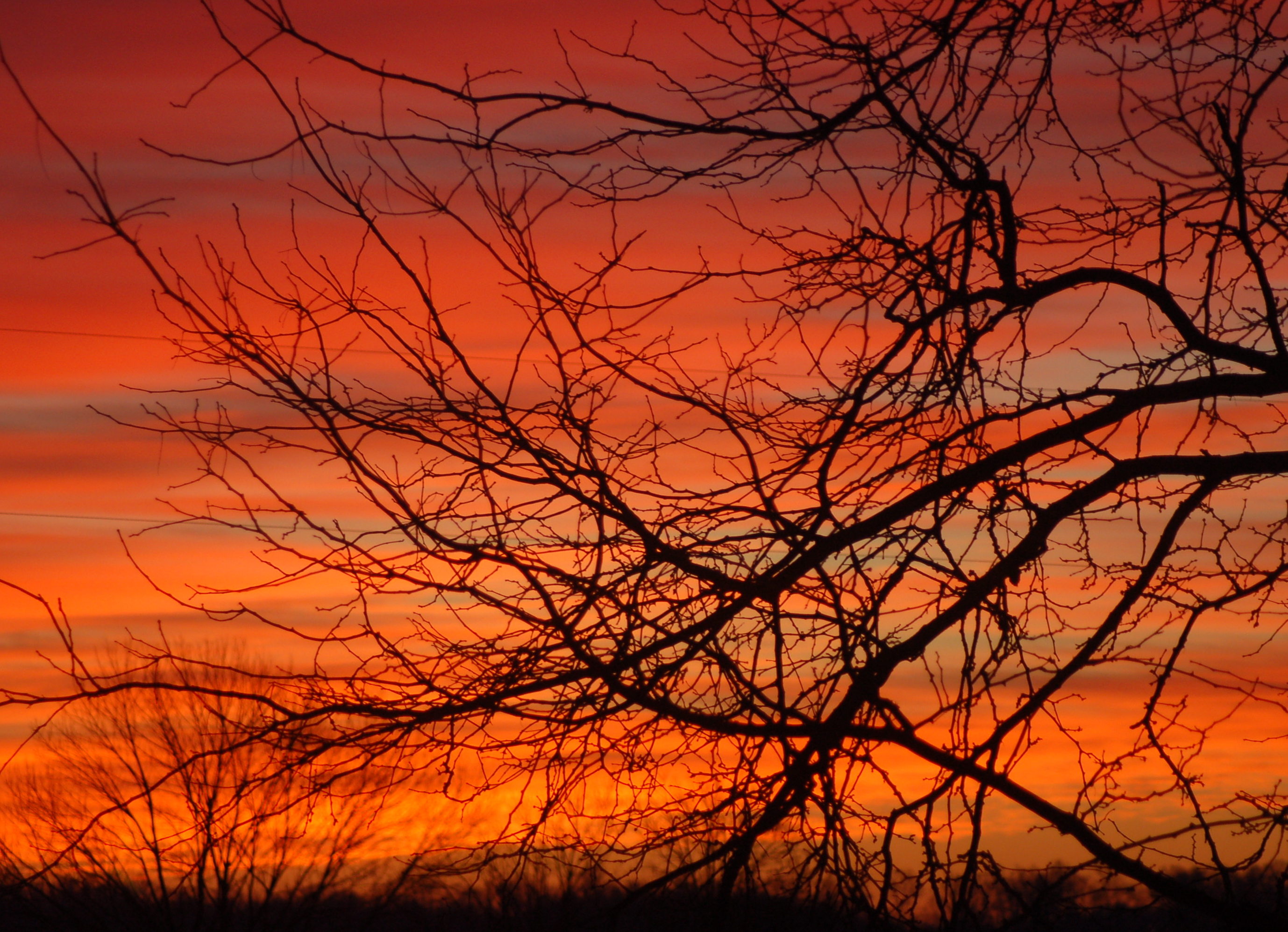
Mackerel clouds sail
above the gilded sunset,
trees silhouetted.
Bruce Stambaugh
Feb. 21, 2011
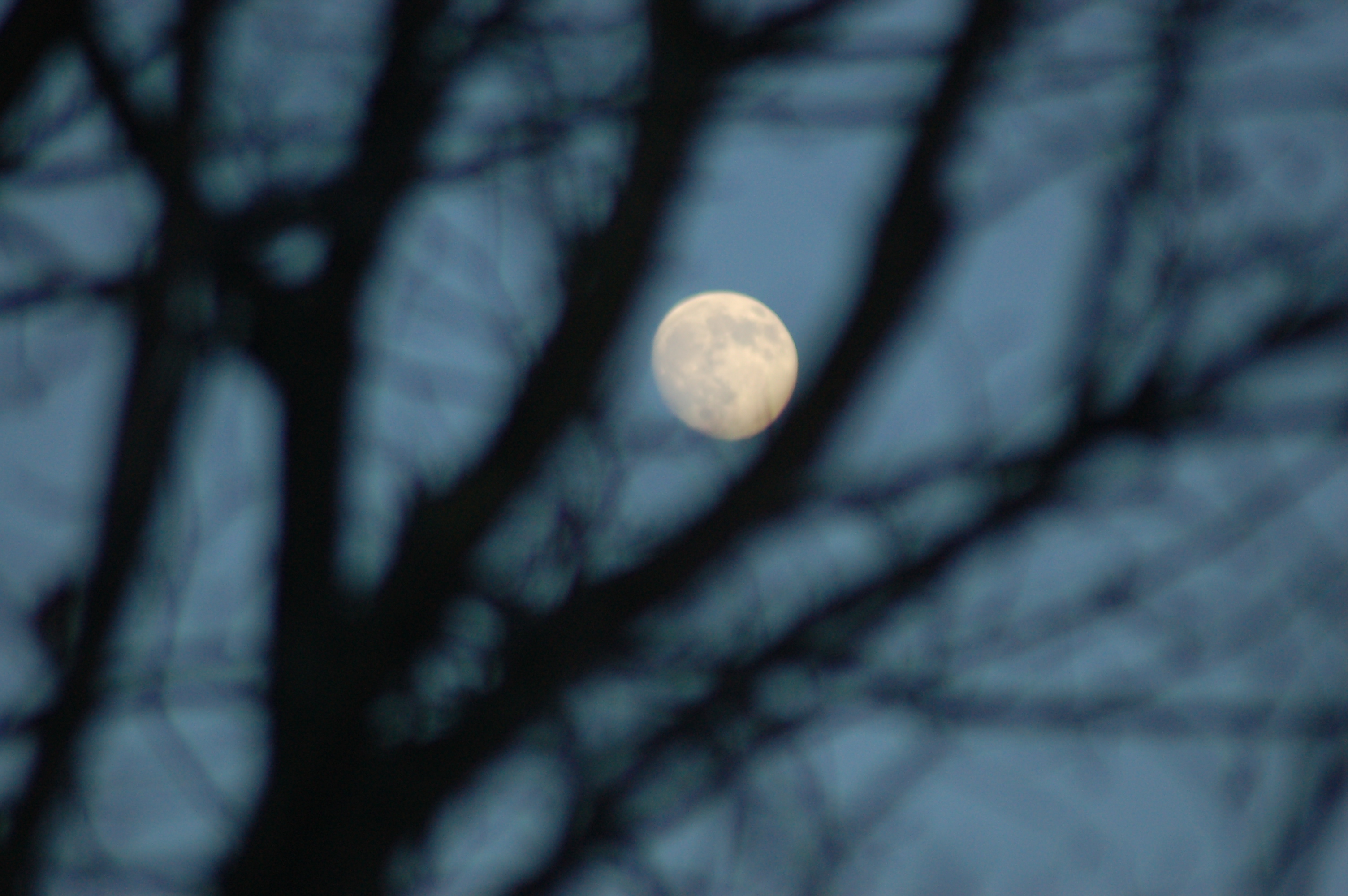
The icy landscape
glistened the pearly soft light
of the cold full moon.
Bruce Stambaugh
Feb. 20, 2011

By Bruce Stambaugh
Some people might think that breakfast is for the birds. I’m not one of them. I never miss breakfast.
Breakfast is one of my necessary routines. I’m not much of a cook, but, despite the fact that I am a man, I can certainly pour cereal into a bowl and juice into a glass. Along with some fruit, that is my usual morning feast, day in and day out.
I seldom dine alone. If the backyard birds are feeding, I often stand at the kitchen window and enjoy my morning meal as my feathered friends peck at theirs. This particular morning, I was seated at the breakfast bar, where I can still view the hanging feeders.
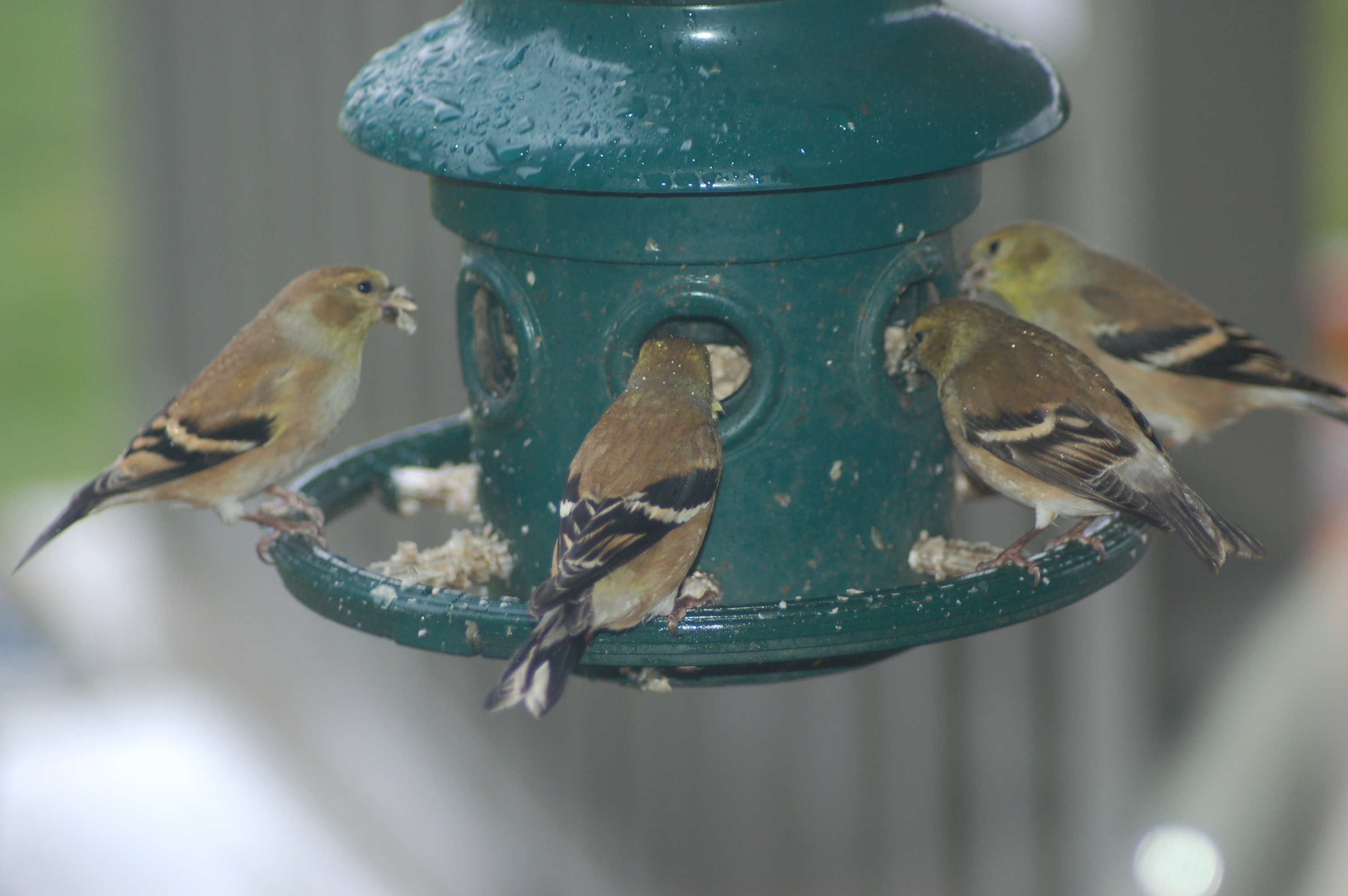
I had just begun to crunch my mini-wheats when I heard the flock of birds outside the window take flight. The Mourning Doves were especially noticeable, with their thrashing wings and eerie, frightened call.
Clearly they had been startled. My first inclination was to blame the local Cooper’s Hawk. The feisty bird of prey makes frequent surprise raids on neighborhood feeders.
I suspected that the small hawk was after its breakfast as well. I checked the ground around the feeders. The ice-covered snow was void of any birds. A lone Mourning Dove sat frozen in fear next to the hopper feeder on the old porcelain-topped table beside the back porch. That told me to keep searching for the hawk.
I scoured the stately sugar maple where the hawk had been known to perch, waiting for any unsuspecting songbird. The dormant tree branches were bare.
I quickly scanned the row of white pines. No hawk visible there either. I headed to the front window, thinking the Cooper’s Hawk may have tried the feeders in the front yard. There it was.
The Cooper’s Hawk sat on the snow about 20 yards beyond the Colorado blue spruce that shelters the feeders. Beneath the hawk was what looked to be a Mourning Dove. Feathers from the hawk’s victim were scattered in a broad circle around the hunter and the hunted.
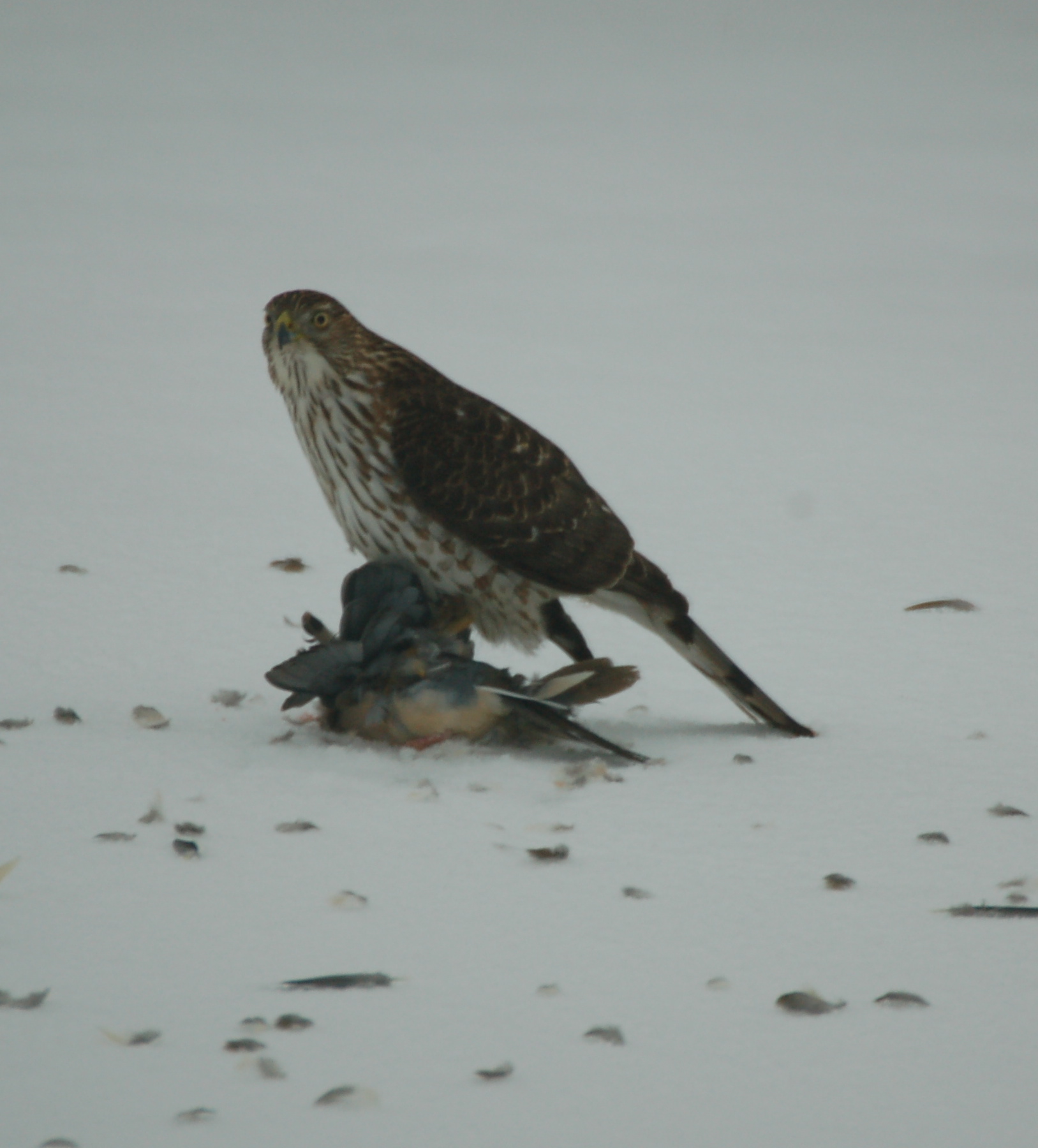
The Cooper’s Hawk kept looking around, wary of any predators that might try to steal its avian granola. I put the long lens on my camera as rapidly as I could, and shot several pictures.
All the while, the hawk squeezed its prey with its sharp talons. At one point, it shook loose some feathers that had stuck in its equally sharp bill. From time to time, the wounded Mourning Dove would wiggle its tail in a futile attempt to escape.
Between camera clicks, the hawk flew west with its catch. I rushed to the sliding glass door that leads to the back porch. There, beneath one of the pines at the edge of our property, the hawk sat with the dove still tightly clenched and pressed to the cold ground.
Before I could raise my camera, the accipiter launched low to the south with its catch and was instantly out of sight. I wondered if it had sought refuge in the pines or continued into the small deciduous woods on the other side of the neighbor’s.
Either way, the crafty hawk was likely enjoying its fresh, nourishing breakfast. I returned to mine, sorry for the dove, but glad I had been witness to the way the biological world really works.
By Bruce Stambaugh
On a dark, chilly November night several years ago, an emergency medical technician arrived on the scene of a car verses buggy accident at a rural intersection. Unlike the car’s passengers, the older Amish man driving the lantern-lit buggy was uninjured.
As the scene cleared, the first responder asked the Amish man how far he had to go to call for help. With a toothless grin, the Amish man reached into his denim jacket and flopped opened a cell phone.
In the early days of cell phones, when even the EMT didn’t have one, that scenario might have been rare in Amish country. It isn’t any longer. As contradictory as is it may sound, Amish have and use telephones. They use them to converse, to fax, for GPS, to text, and on rare occasions, to access the Internet.
Of course, like many of other Amish lifestyle “rules,” there are many variables in the Amish – phone connection. Church leadership metes out phone use guidelines for Amish. Those rules and their application vary greatly. It all depends on which church and which order of Amish as to what the rules may allow. The rules about phone use, like other lifestyle guidelines, even differ from church to church within the same order of Amish.

The orders of Amish, if placed on a continuum, would range from New Order on the left to the Swartzentruber’s on the right. In other words, from the most progressive to the most conservative, with those terms being used in the religious sense, not politically. In between are the most numerous, the Old Order Amish that people describe when they refer to the sect.
The extremes of phone use by Amish would range from members of one church group permitted to have landline phones in their residence to others that are permitted no phones at all. Again, their individual church leaders determine how and where Amish use phones. This may seem strange or even unfair to those unfamiliar with the Amish, and sometimes to those who even live among them. But simply put, that’s just the way it is.
Driving down any highway in Amish country will reveal which families and businesses are not permitted to have landline phones in their buildings. Near the edge of the road, travelers will see small buildings about the size and shape of the old-fashioned phone booths with a door and usually a window for light.
They look like phone booths because that is exactly what they are. Enclosing the phone in a small structure protects the person using the phone from any inclement weather and provides privacy. The homemade phone booths are usually locked to prevent any vandalism or misuse.

Such phone booths could be used by a single family or business, or by multiple families. Each family or business would have its own voicemail extension. The phones are not answered live.
Some churches require that phone booths be so many feet from the home or business. Some even require the phone to be across the road, so as not to be too convenient, thus reducing the possibility of casual use. Some Amish, especially the New Order sect, would allow a landline in their home.
In many churches, phones for calling out and faxing are permitted in the business, but not in the home. Incoming calls go directly to voice mail. This rule is economically weighted. The successes of cottage industries, which have boomed among the Amish in the last two decades, are critical to the welfare of the Amish community. Only about 10 percent of the Amish population farms today. The rest either have their own businesses or work at other local businesses.
Of course, any discussion about Amish and the use of phones would be incomplete without mentioning the ubiquitous cell phones. Cell phones are actually more widely accepted among the Amish leaders than landlines, simply because they are not literally tied to the public utility grid.
Cell phones have proven to be an efficient tool when it comes to doing business, regardless of the trade or product produce. Generally speaking, a common rule for cell phones is that they are turned off in the residence. Another rule stipulates that the phones cannot access the Internet or e-mail.
Because they are not yet church members, none of the rules apply to Amish youth, unless of course their parents say they cannot use them. Just like their non-Amish peers everywhere, texting and using cell phones to take pictures are typical for today’s Amish teenagers regardless of which church order their parents may belong.
In the 21st century, phones are one technology the Amish have embraced. Clearly though, the difference between them using the phone compared to the rest of society is in the details. For those instructions, the Amish look to their respective church leadership.
By Bruce Stambaugh
Weather is one of my favorite hobbies. Living in Ohio’s Amish Country affords me plenty of climatological variety to enjoy.
That is especially true in the winter. We never know what winter will bring here when it comes to weather. It could be mild. It could be cold. It could be dry. We could be buried in snow. And all of those scenarios could happen in the same winter season.
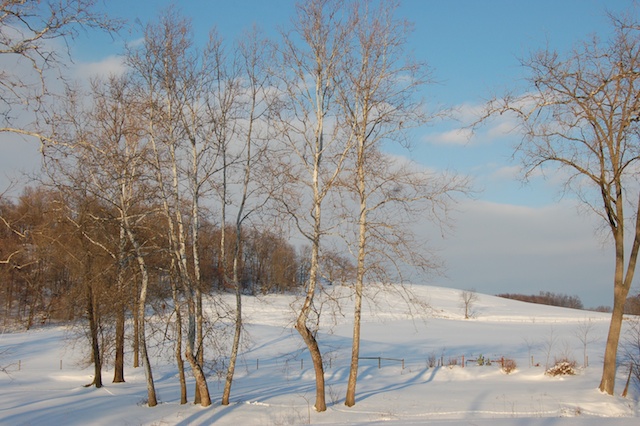
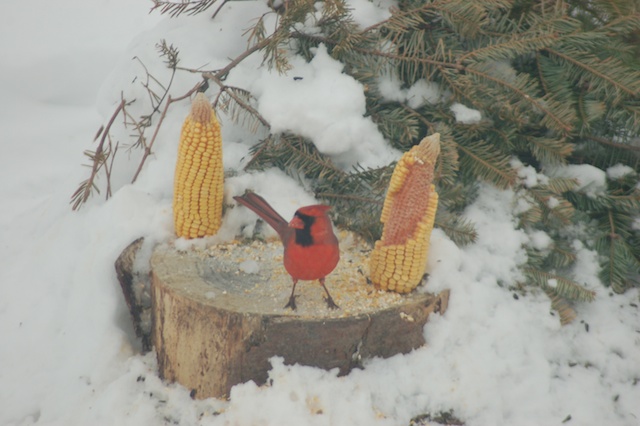
I especially like an occasional heavy snow. I love the beauty, the peacefulness, the serenity an abundant snowfall brings. The landscape comes alive, green pine boughs heavy laden with a snowy burden, fire engine red Cardinals searching for seeds, chestnut horses romping in the white, fluffy playground, children bundled up to build snowmen.
Of course, such a snow causes headaches for travel and unwanted expenses for municipalities expected to clean every last flake from the roadways. Tow truck drivers, on the other hand, revel in the bounty of pulling vehicle after vehicle out of ditches.
For my part, the good far outweighs the bad when it comes to snow. I can’t say the same thing about an ice storm, however.
Our most recent experience with a widespread ice event is example enough. Ice-coated trees crashed onto power lines and highways. I both pitied and admired the road and utility workers who braved the dangerous elements trying to restore order out of the icy chaos.
Stores lost valuable business. Schools altered schedules, academic and extracurricular alike. People who lost power and didn’t have access to a generator had to wait it out, sometimes for days.

Eventually, though, some good managed to find its way through the gloom and dismay of the ubiquitous ice. Ice-coated branches sparkled, even from nighttime’s artificial light.
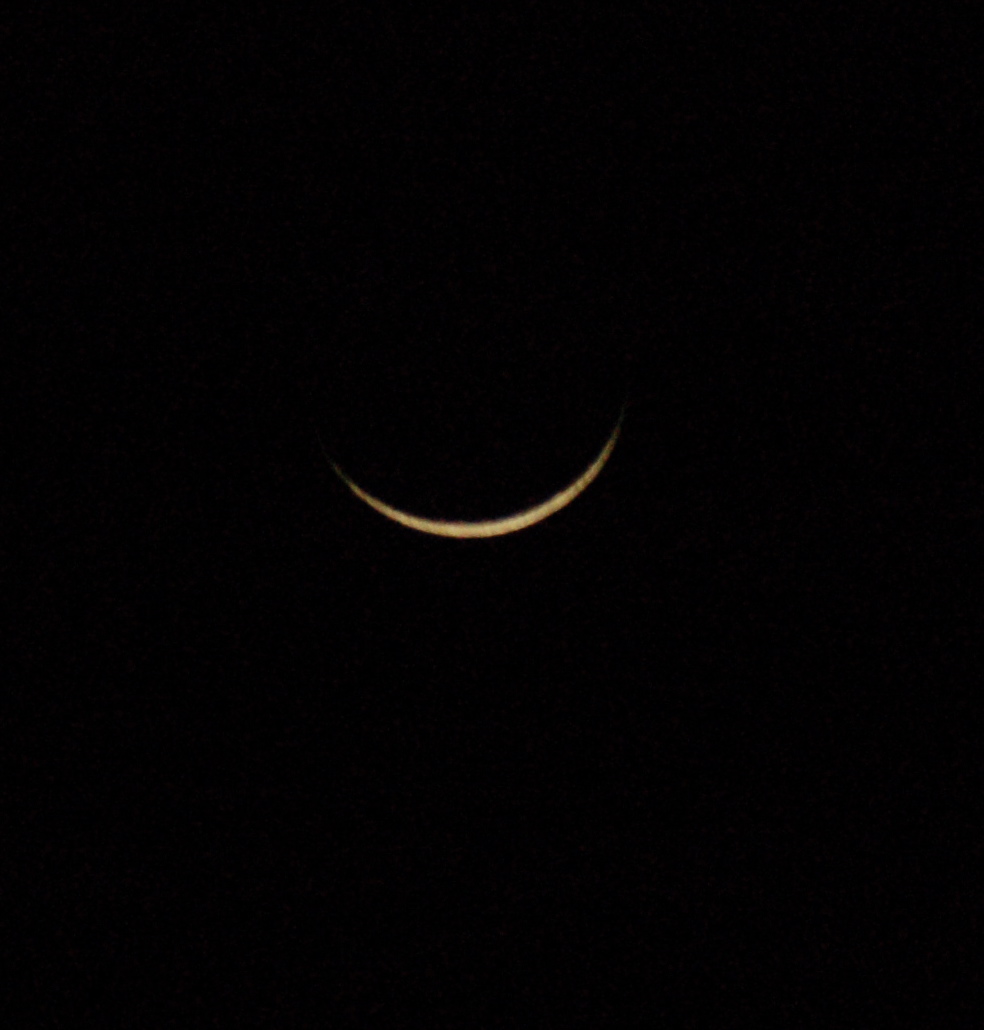
But often it takes us awhile to see the glimmering light of an ice storm. The most obvious benefits came in the first light of day. Once the clouds diminished, the low angled rays of sunrise and later sunsets ricocheted across the icy landscape. Even the light of a thin crescent moon slid its tiny light across the shiny, slippery iced-over acres of fallow fields.
The light came in other natural forms, too. A kind neighbor sauntered over to sprinkle calcium on the inch thick, hard blanket of ice that covered the walk and parking pad. After a few minutes, he began chipping the icy glaze just because it needed to be done. I joined him, and a congenial conversation brightened the otherwise dull day.
A township resident called to say that he and his neighbors had cleaned up the downed tree limbs save the one they couldn’t reach that still dangled above the roadway. The lone highway worker would not have to clear that section of the road of debris thanks to their thoughtfulness and commitment to doing the obvious for safety sake. Why wait on paid personnel when a volunteer effort gets the job done just as well?
As we saw again last week, an ice storm can be devastating. Urban and rural commerce and individual residents alike suffer the cold consequences.
Conversely, an ice storm can also be a bright ray of sunshine in an otherwise dismal winter. I enjoyed the enhanced scenery and the visit of the friendly neighbor.
However, having experienced this most recent icy incident and the one in late 2004, the next one can wait awhile as far as I’m concerned. That weather is a bit too extreme, even for me.

Super Bowl Sunday
neighborhood Amish youth hold
an evening hymn sing.
Bruce Stambaugh
Feb. 6, 2011
Wildlife Photos From The Chesapeake Bay Region
Culture and Communities at the Heart Of India
Artist and nature journalist in the Shenandoah Valley of Virginia.
Photographer Of Life and moments
Personal Blog
Art is the only way to run away without leaving home. -Twyla Tharp
Writing generated from the rural life
writer. teacher. podcast cohost.
El amor cruza fronteras / Love crosses borders
 Roadkill Crossing
You must be logged in to post a comment.