Enjoying the beauty of the first snow

Snowy lane by Bruce Stambaugh
The first snow of the season decorated the long, steep lane to the cottage.

By Bruce Stambaugh

We awoke on the first Saturday of November to a skiff of snow on the roofs, grassy areas and glued to the trees. The driveway and the road in front of our house were just wet.

Since the temperature hovered right at 32 degrees Fahrenheit, I figured we probably had had more than the dusting that remained. Not one to quibble with the weather, I simply inhaled the beauty as a drab dawn broke.

My wife and I were ready to head for our cottage for a post-election weekend retreat with some friends. After the tiresome multimedia blasts of campaign negativity, we needed a quiet place, and the cottage was it.

Just a few minutes down the road, we caught up to the menacingly low clouds that were still spitting snow. During the 75-minute trip, we were amazed at just how spotty the snow was. We drove in and out of the white stuff several times.

In some places, the snow was two or three inches deep. In most, the ground was bare. The snow had fallen in various depths in a long, narrow band stretching northwest to southeast from Lake Erie to the Ohio River.

When we pulled onto the long steep lane that leads to our cottage, an inch of fresh, fluffy snow welcomed us. Initially the lane goes uphill. At the summit, the road dives into the woods, and quickly curves right, down a steep, straight slope.

Just as I began the decline, the car stopped out of respect. It couldn’t crush the beauty before us, not at least until I had taken some pictures of the virgin snow.

The limestone on the lane must have been warm enough to melt the snow on impact. Everyplace else, the snow stuck undisturbed, beautiful, mesmerizing.

Snowy woods by Bruce Stambaugh
The snow cover made everything appear black and white.

With the concealed sun unable to lessen the early winter grip on the landscape, the panoramic scene seemed basic black and white. The only variation came in the clay colored clouds.

I snapped a few photos and returned to the vehicle. I guided it ever so slowly down the straight slope, around the hard left-hand curve, under slow laden white pine bows, toward the lake that reflected the steely sky.

We made the final zigzag up the lane and into the drive to the cottage. This last leg of the trip adds a faux remoteness to the location. I had brought along a leaf blower to dispense with any remaining natural litter on the cottage deck. I should have tossed in the snow shovel instead.

The combination of the snow and the cabin’s chill called for a fire in the impressive sandstone fireplace. I obediently responded.

Snowy scene by Bruce Stambaugh
The snow created picturesque scenes all around our cottage.

With the fire underway, I cranked up the chain saw and headed out into the morning sharpness. Each time I exhaled my glasses steamed up.

There is something about snow, especially the season’s first, that exhilarates me. I have to plunge headlong into it.

The chain saw, which had not run in months, must have liked the snow, too. It purred right along, and the two of us accomplished our woodcutting goal in less than an hour.

The snow was still in place when our friends arrived late morning. They wore the same smiles as my wife and I. I don’t know if it was the snow, the blazing fire, the setting or the combination there of.

No matter how long you live where it snows, there is just something extra special about that first snowfall. This one was breathtaking.
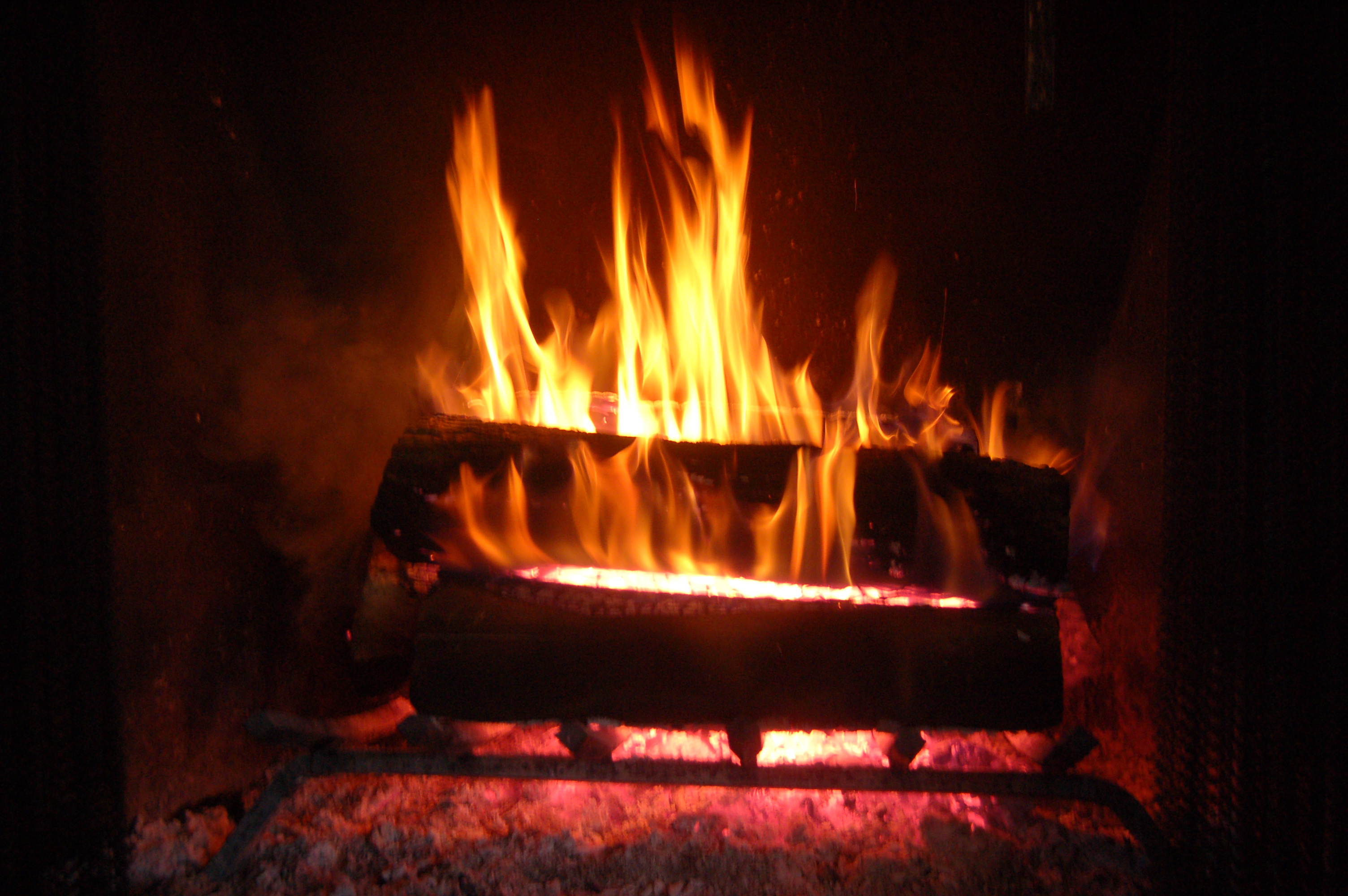
Roaring fire by Bruce Stambaugh
A warming fire is always welcome on a cold, snowy day.

Quaking aspen haiku

Against lazy clouds
and sapphire sky, emeralds
silently quiver.

Bruce Stambaugh
August 18, 2010

In appreciation of Mother Earth

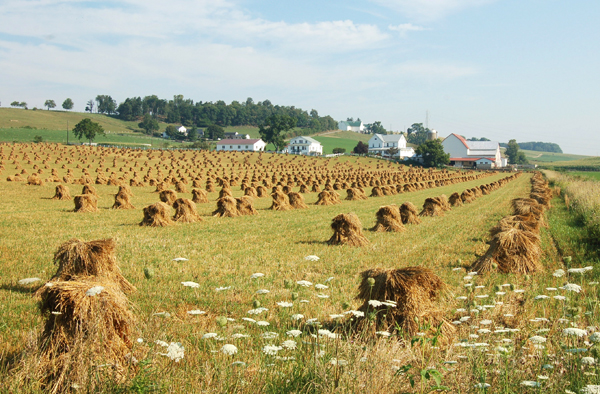
Oat shocks by Bruce Stambaugh
Oat shocks near Mt. Hope, Ohio.

By Bruce Stambaugh

The deep orange crescent moon sat just above the tree line on the dusky horizon. Fanned out high over its tip, Saturn, Mars and Venus sparkled in the late evening sky.

Lightening flashed suddenly and silently interrupting the cloudless scene. Radar indicated the thunderstorm 120 miles southeast near Parkersburg, West Virginia.

The next morning, this natural display of awe and beauty was enthusiastically discussed among those who know the value of such a free show. They were gathered in the shade of a vendor’s tent at the annual Family Farm Field Day event.

Storm approaches by Bruce Stambaugh
A severe thunderstorm near Mt. Hope, Ohio.

It was more than appropriate and not the least bit ironic that such talk should take place at an educational affair celebrating the goodness of the land. These were people who knew the importance of Mother Earth, who knew how to care for her, appreciate her, and affirm her, even profit from her without rendering her useless or sterile.

The venue was as uplifting as the conversation about the storm. Hundreds of black buggies stood side by side against the woods, their unhitched horses now shaded.

Buggies at a hitching rail in Mt. Hope, Ohio
Buggies lined up at a hitching rail in Mt. Hope, Ohio.

Cars, vans and pickup trucks entered at the east gate. Along the drive, dozens of bicycles leaned against chain link fencing that separated yards from right of way and kept children from wandering into the long, graveled lane.

In between these contrasting parking lots, thousands of people milled beneath several large tents searching for information on how to better care for the earth. The slight bluff on which the action took place created a symbolic subliminal significance of man and land over that of man and mobility.

Though most were dressed in homemade denim with suspenders or pastel dresses with coverings and spoke a language I should have learned long ago, I was both at home and in harmony with them. We were all there for the same reason, to learn more about caring for and nurturing the land that provides us sustenance and shelter.

Jr. Burkholder farm by Bruce Stambaugh
A farmstead in Holmes County, Ohio.

Besides the vendors’ displays, tents for keynote speakers, farmsteads and homemakers were erected in a huge horseshoe pattern around the pastured plateau. Of course, there were food tents, too. I couldn’t decide which I liked best, the sugar and cinnamon hot soft pretzel or the salty sweet kettle corn.

With the hot summer sun beating down, shade was at a premium for those seeking relief. That did not deter them from exploring the inescapable interconnection between humankind and our responsibility of caring for the environment.

To be sure, that is serious business. But it was nice to see it presented in such fun and informative ways for multiple generations. To the point, bird, butterfly and nature walks were filled to overflowing.

A billowing cloud by Bruce Stambaugh
A storm cloud builds.

But what was really special for me was the dialogue on the previous night’s celestial display. Some of us saw what is erroneously called “heat lightening.”

From the backside of the storm, which is always the safest and prettiest angle, others
saw huge, billowing columns sail through the darkening sky. The higher they rose, the more the lightening sizzled in and out of them, brightly illuminating the swelling clouds.

One in the group had actually been under the building storm and arrived home in time to also watch the stunning electrical display. To hear that enthusiasm, plus see the genuine, cross-generational interest in caring for the ecosystem by so many people stirred my soul.

I left thoroughly uplifted, and with one large bag of kettle corn to go.

In search of the elusive morels

morels
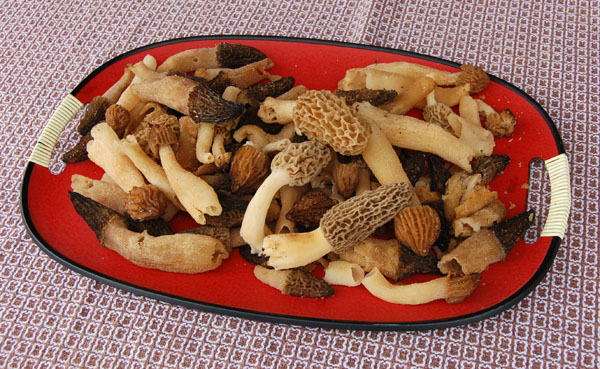
We found this nice assortment of morels "in the woods."

By Bruce Stambaugh

This time of year, where two or more are gathered together in the world’s largest Amish population, there is certain to be a conversation about mushrooms.

Not just any old mushrooms either. We’re talking morel mushrooms, commonly referred to as sponge mushrooms. They can be gray, yellow, brown and even black. Regardless of hue, they’re all good as far as I’m concerned.

After all, once you taste your first morel, you’ll realize they are better than ice cream. That might be because they are harder to find than ice cream. You can’t just go to your local grocery story and buy a pound of nicely packaged morels. Finding them takes effort.

Instead of talking about finding mushrooms, a friend, my son and I put our words into action. We went in search of the elusive, edible fungus. Everyone has their favorite spot to hunt mushrooms. Usually, it boils down to where they were found in previous years. In our case, we headed up a steep hill and into the woods. For the record, it’s a morel sin to ask exactly what woods.

We walked carefully over the spoil bank where my foody son picked wild garlic, across a lane, and down a slope to a deer stand that guarded a placid, clear stream. However, at some point prior to our arrival, the creek had been angry. Rocky, silted debris littered the grassy flats where I had found the largest mushrooms last year. Pretty pink lady’s slippers took their place.

We gingerly made our way through the tangles of downed trees, briars and undergrowth. We headed back up hill, into large sandstone boulders covered with delicately textured lichens and mosses. The last of the spring beauties still blossomed here and there in the sunlit woods, still without its canopy.

The woods grew thicker, the trees taller, and the forest floor more densely laden with last year’s leaves. Emerald patches of new life broke the brownish camouflage. May Apples, lovely lily of the valley and occasional flowering trilliums made refreshing appearances.

I wandered ahead of the others until a pair of unidentified birds winged overhead. Without binoculars, I struggled to identify them against the late afternoon sun. The birds flew off, one after the other.

I looked down, and there against an ancient and fallen, moss-covered elm was my first morel of the season. Before I bent to pick it, I looked all around for others. Mushrooms seldom sprout solo. But this decent gray was the exception.

I hollered to my partners, who were out of sight but within earshot. My shout was promptly returned. They were less than 100 feet away, on hands and knees carefully scouring for mushrooms.

I circled around and joined them. I sat on the leafy debris carpet, straining to find more. Soon I spotted one, but when I reached to pick it my son shouted again. My hand was about to crush another mushroom. That’s how hard these little fellows were to see.

As the even sun faded, woodpeckers still hammered out their territories. After three hours, we heeded their reverberating warnings and retraced our steps. In all that time, we had covered less than a mile.

But the season’s first mess of mushrooms was in hand. Not many, but enough for a luscious meal of the hearty, flavorful morels. Just one taste of these sautéed morsels made all the effort worth it. I tell myself that every spring when the talk of hunting mushrooms in Ohio begins anew.

Bay Photos by Donna

Wildlife photos from the Chesapeake Bay region

ROAD TO NARA

Culture and Communities at the Heart Of India

K Hertzler Art

Artist and nature journalist in the Shenandoah Valley of Virginia.

Maria Vincent Robinson

Photographer Of Life and moments

Gabriele Romano

Personal Blog

Jennifer Murch

Art is the only way to run away without leaving home. -Twyla Tharp

Roadkill Crossing

Writing generated from the rural life

ANJOLI ROY

writer. teacher. podcast cohost.

Casa Alterna

El amor cruza fronteras / Love crosses borders