The trellises worked: A tomato success story

Brandywine tomatoes by Bruce Stambaugh
Red Brandywines ripening in the shade of the tomato trellis.
Tomatoes ripening on the vine by Bruce Stambaugh
Tomatoes ripening on the vine.

How did our tomatoes grow this year? They did quite well, thank you very much, and little thanks to me. My wife did most of the work. I just took the pictures and enjoyed the bounty.

As you may recall, we tried something different this year. Tired of the weighty tomatoes collapsing the stakes and metal cages we “secured” them with, my wife found a plan for tomato trellises. Our son, who has become quite the food guru, lives in a loft in Wooster, Ohio, 16 miles north of us. He and his wife have no outdoor space for growing the vegetables and herbs that he loves to use for his gourmet cooking. (See the May 27, 2010 post entitled “A beautiful morning well spent.”)

Amish farm Ohio by Bruce Stambaugh
The Amish farm on which our home is built.

Our house is built on an Amish farm four miles southwest of Mt. Hope and four miles northwest of Berlin, the unofficial capital of Ohio’s largest Amish population. In other words, we’re out in the country with Amish neighbors and farms all around. Since our son drives right by us every workday, he asked to join us in our limited gardening. After the drought of 1988, we gave up most gardening. My wife turned to flower gardening, which adds a multitude of color to our little acre and a half each growing season.
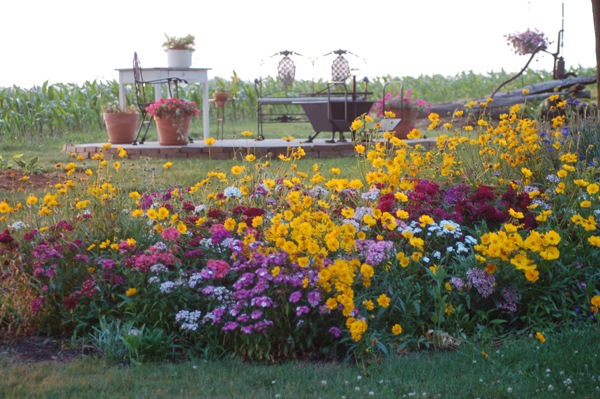
Wildflower garden by Bruce Stambaugh
The backyard wildflowers are only some of the beautiful flowers my wife cultivates each year.

The tomato trellis plans called for plenty of space, which required me to dig out more yard along the bricked garage wall at the south end of our home where we annually grow the tomatoes. We have discovered that the tomatoes seemed to thrive on the extra heat radiated by the bricks.

I dug out the grass by a couple of more feet, spaded the ground and added some horse manure the neighbor supplied when he fertilized the fields adjacent to our home. Our son, my wife and I erected a pair of the trellises on May 15. My wife purchased and planted a dozen heirloom tomato plants. Varieties included Hillbilly, Striped Zebra, Black Krim, Mortgage Lifters, Red Brandywine, Roma’s, and Old German. A friend from church also gave us an unknown variety. And several Yellow Pear tomato plants volunteered from last year’s crop.

Driving tomato stakes by Bruce Stambaugh
Our son drove 7 ft. stakes into the ground to form the support of the trellis.

We purchased seven foot oak stakes at a local nursery. The original plans called for eight-foot stakes, but the sevens were the best we could find without having some special ordered at a much-increased price. The main stakes were pounded into the ground, and the lateral ones were spaced and tied with garden twine.

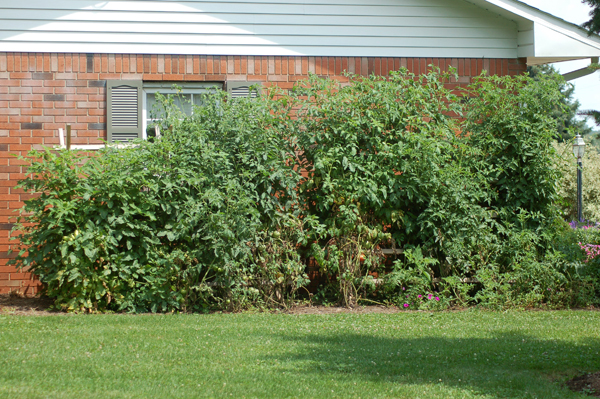
The plants seemed to grow slowly the first month. But once the summer heat and humidity really kicked in, the tomato plants boomed. My wife repeatedly tied the ever-increasing shoots as best she could. Still, the end result looked like a jungle.

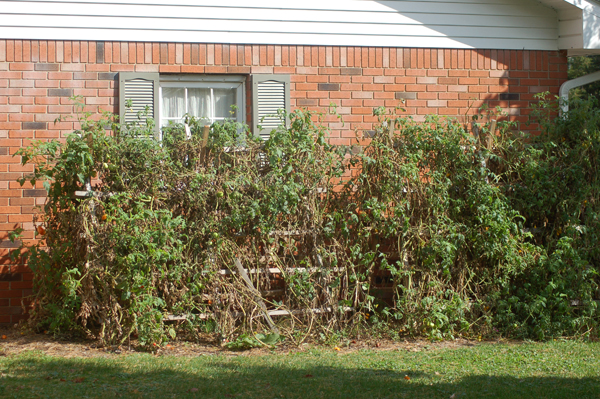
The plants are still producing, but with the peak of the season behind us, the plants production has slowed considerably. We did have to fight a bit of blight throughout the summer, but the plants continued to thrive. And we enjoyed their abundant production.
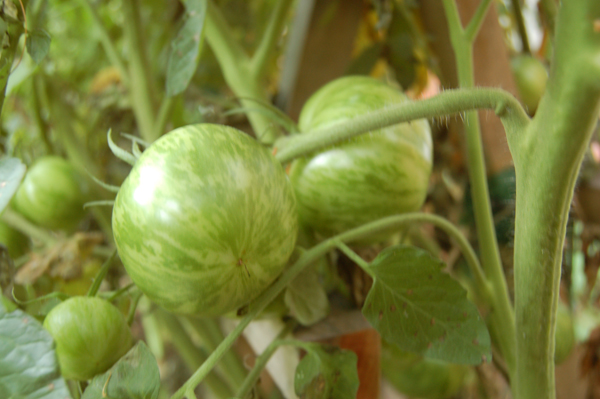
Green Zebra tomatoes by Bruce Stambaugh
Green Zebra tomatoes growing on the vine.

I especially enjoyed the Green Zebras and the Hillbilly. They were sweet and low on acid. Sprinkled with a little sea salt, they made many summer lunches on the back porch tasty and enjoyable.

My wife also made delectable tomato salads with slices and chunks of the different varieties offered on the same plate, sprinkled with fresh mozzarella cheese and virgin olive oil. Cuttings of fresh basil perfectly seasoned the offering.

Mixed tomatoes by Bruce Stambaugh
A plate of colorful heirloom tomatoes.
Sliced heirloom tomatoes by Bruce Stambaugh
Heirloom tomatoes ready to eat.
Canned tomato products by Bruce Stambaugh
Just some of the beautiful and delicious handy work of my wife.

Of course my industrious wife also canned whole tomatoes as well as chunked tomatoes, made tomato soup, and peach salsa. I did persuade her to reveal her delicious tomato soup recipe, which is as follows:

Tomato Soup

Group 1
14 qts. cut up tomatoes (preferably Roma’s)
14 stems of celery cut up
14 bay leaves
27 whole cloves
1 green pepper diced

Cook the above until all vegetables are soft. I use a roaster. Then put through a strainer. I let the initial liquid drain off before cranking the strainer handle. I can this for juice. Keep hot until ready to add group 2.

Group 2 (Note that any recipe with dairy products like butter and cream should be properly pressure canned.)
12 Tbsp. flour
1 # butter
6 tsp. salt
1 cup cream
16 Tbsp. sugar

Slowly cook group 2 to make a paste.

In a kettle/roaster bring the strained group 1 to a boil and add group 2. Stir often. Bring back to a slow boil. This is not a thick soup.

Put in jars, makes approx. 17 pints. Process in a water bath 30 min.

When ready to use put 1 jar in kettle with ½ jar milk and heat thoroughly.

Neva Stambaugh

Of course I tried to document the progress of the tomato growing and harvesting throughout the summer. Following is a sequence of how our tomatoes grew following the May 15, 2010 installation of the trellises.

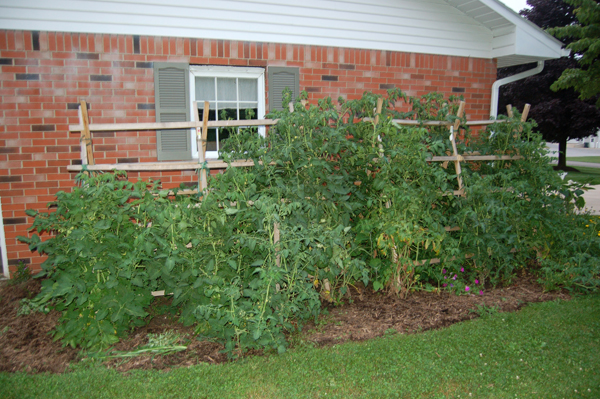
Tomatoes mid-June by Bruce Stambaugh
Tomatoes mid-July by Bruce Stambaugh
Tomatoes mid-July.
Tomatoes mid-August by Bruce Stambaugh
Tomatoes mid-August.
Tomatoes mid-Sept. by Bruce Stambaugh
Tomatoes mid-Sept., beginning to die out.
Tomato blossoms by Bruce Stambaugh
Tomatoes in blossom.
Green tomatoes by Bruce Stambaugh
Green tomatoes on the vine.
Ripe tomatoes by Bruce Stambaugh
Ready to pick.

By the way, after the first frost, the plan is to disassemble the trellises and store them for the winter. We also plan on extending the growing area yet again to allow more room to maneuver between the garage and the trellises.

We found several advantages to using the trellises. They were much more effective in cutting the loss of tomatoes to dry rot. Varmints, especially the four-legged variety, caused less damage, and the tomatoes were much easier to pick.

If you used trellises or have other options and suggestions, we would like to hear them. Please leave a message with your successes, ideas and lessons learned.

Enjoy your tomatoes while they last.

Bruce Stambaugh
Sept. 29, 2010
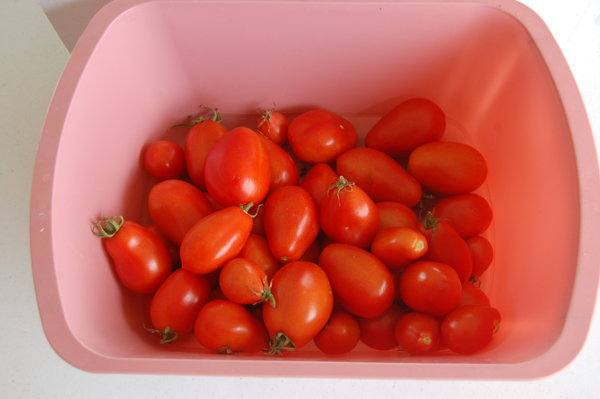
Roma tomatoes by Bruce Stambaugh
Roma tomatoes awaiting the canner.
Picked tomatoes by Bruce Stambaugh
A variety of heirloom tomatoes.

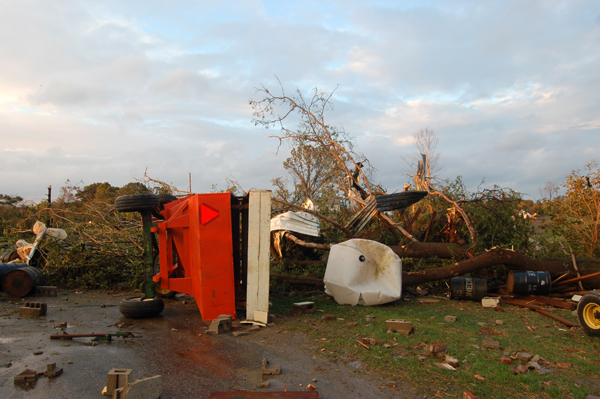
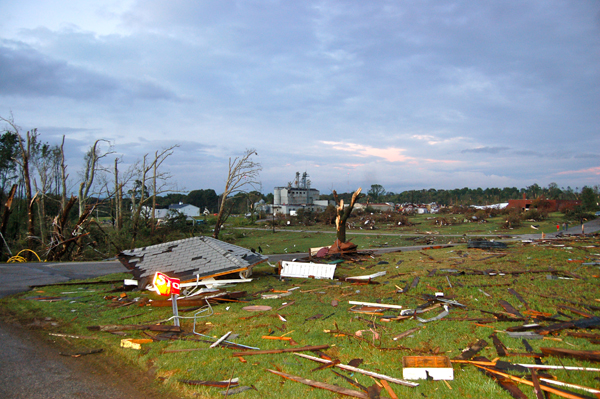
Tornadoes hit Ohio’s Amish country again

Secrest Garden by Bruce Stambaugh
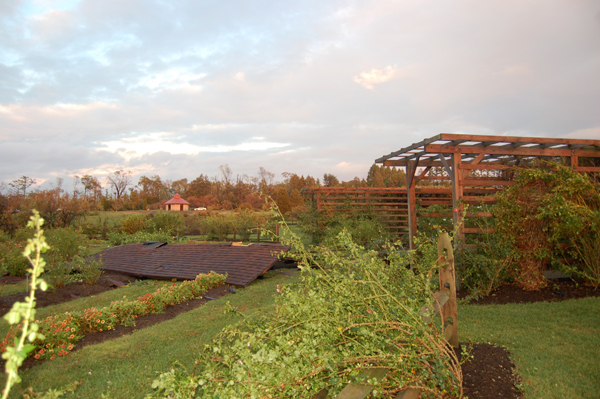
The entrance to the Secrest Garden and Arboretum after the tornado.

By Bruce Stambaugh

For the second time this summer, tornadoes caused significant damage in Ohio’s Amish country.

Shortly before 5:30 p.m. on Thursday, Sept. 16 a powerful tornado touched down on the south edge of Wooster, Ohio along Prairie Lane. The tornado, which the National Weather Service rated an EF2, proceeded east destroying businesses and homes, and crossed Madison Ave. onto the campus of the Ohio Agricultural Research and Development Center, a division of The Ohio State University.

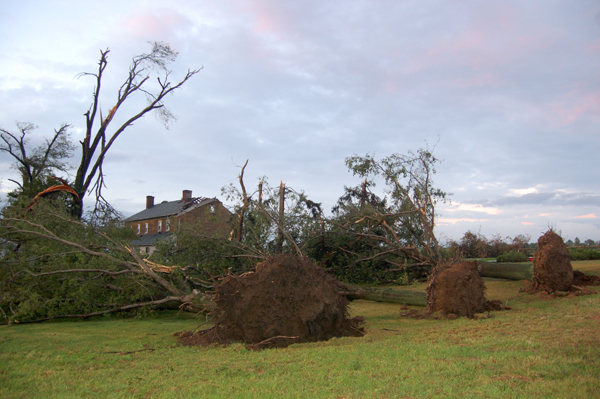
The tornado caused extensive damage to campus buildings, including some historical homes used as offices. It also destroyed the machine shop and heavily damaged parts of Secrest Garden and Arboretum, where many people love to walk and relax among the roses, ornamental shrubs and old age trees. The tornado clipped off dozens of the huge trees 20 to 30 feet above the ground.

The Wooster Twp. Fire chief reported that only one person was slightly injured. But she refused transport to the hospital.

The tornado continued on an east northeast path destroying and damaging several other homes and farm buildings. It did considerable damage to the Riceland Golf Course on U.S. 30 south of Orrville. Altogether, the NWS reported that the tornado was on the ground for 12 miles and reached wind speeds of 130 m.p.h. It left a path of destruction 200 yards wide.

Around 6 p.m., an EF1 tornado hit near the rural town of Farmerstown, Ohio in Holmes County about 25 miles south of Wooster. Several homes and barns were destroyed or damaged there. But again, no one was injured, although some farm animals had to be put down. The tornado was on the ground for three miles and reached a maximum speed of 100 m.p.h. It ranged from 50 to 75 yards wide.

As a Skywarn severe weather spotter for north central Holmes County, the Cleveland office of the National Weather Service asked me to photograph the damage at the OARDC. This was prior to knowing of the tornado in Holmes County. No tornado warning was issued for Holmes County.

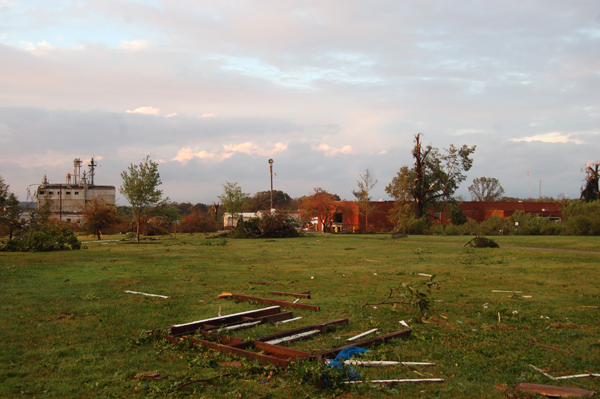
I arrived at the OARDC shortly before 7 p.m., which left me a little more than a half an hour to take pictures before dark. I shot as many pictures as I could, but due to darkness, was unable to make it entirely around the campus. As I walked back to my car, parked in the arboretum a half mile east of the damaged OARDC buildings, I cut through open fields. I found several places where debris had hit the ground, leaving large gouges in the fields and grass.

The first tornado of the summer hit Holmes County and continued into Tuscarawas County on June 5. The EF1 and EF2 tornado caused extensive damage along its 10 mile path.

A gallery of some of my shots at the OARDC is shown below. Information about the Farmerstown tornado can be found here: http://www.holmescountyjournal.com/.

brick house by Bruce Stambaugh
Trees were snapped and the old Rice House heavily damaged at the OARDC in Wooster, Ohio.
damaged OARDC building by Bruce Stambaugh
One of the many OARDC buildings destroyed by the tornado
View of damaged OARDC building by Bruce Stambaugh
Another view of the building shown above.
Debris and stripped trees at the OARDC by Bruce Stambaugh
Debris and stripped trees at the OARDC.
Large trees down by Bruce Stambaugh
The tornado toppled large trees on the OARDC campus.
The OARDC's machine shop was heavily damaged by the tornado.
Machine shop destroyed by Bruce Stambaugh
Following the tornado's path to the machine shop at the OARDC.
Damage at the OARDC by Bruce Stambaugh
Damaged farm equipment and trees at the OARDC.
More damage around the machine shop by Bruce Stambaugh
More damage around the machine shop at the OARDC.
Another destroyed building at the OARDC by Bruce Stambaugh
Another destroyed building at the OARDC.
Destroyed machine shop by Bruce Stambaugh
The destroyed machine shop at the OARDC.
Debris littered the OARDC campus by Bruce Stambaugh
Debris from the tornado littered the OARDC campus.
OARDC police station by Bruce Stambaugh
Damage was extensive at the building that housed the campus police station.
The agricultural engineer building by Bruce Stambaugh
The agricultural engineering building was destroyed.
Rose garden by Bruce Stambaugh
The OARDC rose garden was heavily damaged.

It’s beginning to look a lot like fall already

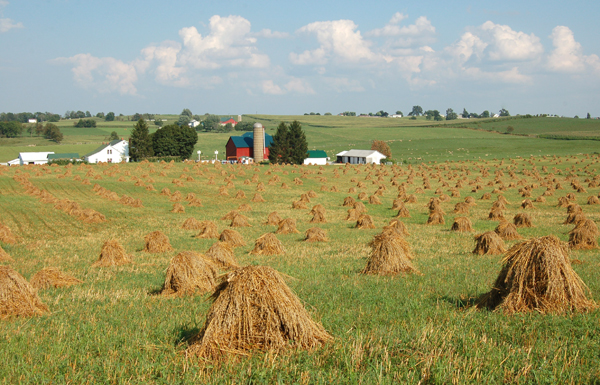
Oats shocks by Bruce Stambaugh
A field full of oats shocks before being gathered for the thrasher near Berlin, Ohio.

By Bruce Stambaugh

With Labor Day upon us, autumn will be right around the corner. In fact, if you look closely, signs of fall are already evident.

Some of the indicators are obvious, others more subtle. Some are predictable with still others seemingly a bit premature.

The days, often the nicest of the summer, have a sly, natural flaw. Day by day, minutes of daylight are silently subtracted from the previous day’s total. By month’s end, daily darkness will outnumber daylight once again.

The sun itself is moving more towards the center of the horizons at sunrise and sunset. Those driving true east and west running roads have already begun to frequently use their sun visors. The fall fogs, too, have clouded crisp mornings, the consequence of cool nights following warm days.

In the fields, the harvesting has begun. My Amish neighbors have long since gathered up the standing army of oats shocks and wheeled them off wagon load after wagon load to the thrasher.

Now it’s the corn’s turn. The field corn seems to have taken on drought status, drying up almost overnight. Brown has overtaken green as the predominant color in the standing sea. Smart farmers have already begun to cut their supply of silage to replenish the silos.

Fall webworms by Bruce Stambaugh
The homes of fall webworms shine in the sun.

In the woods and along highways, once glossy, emerald leaves have dulled and drooped. Some have already begun to drop without even changing color. Now and again a black walnut can be found standing stark naked, save for the cache of fall webworm nests it has involuntarily collected.

In the gardens, the picking of produce is a daily chore. Cucumbers, onions and tomatoes have hit their peek. Kitchens are cluttered with utensils for canning and freezing. The ripened fruits and vegetables that aren’t consumed at the dinner table find their way into jars and containers.

Even the sounds of the season have changed. Only a few American Robins continue to sing, and most likely they are sophomores practicing for next year’s prom. Instead of gathering nesting materials and snagging worms and insects, parent birds lead their fledglings to watering holes for liquid refreshment and necessary bathing.

Well-worn butterfly by Bruce Stambaugh
A well-worn tiger swallowtail butterfly took advantage of some wildflowers.

The volume and frequency of the cicada and katydid songs have lessoned considerably. Even the crickets have quieted down.

Butterfly on phlox by Bruce Stambaugh
A butterfly enjoys late blooming phlox.

Butterflies of all sizes and colors squeeze whatever nutrients they can out of the fading cornflowers and black-eyed susans. The humming birds, too, seem to sense an urgency to store up extra energy for their upcoming southern vacation travel.

Squirrels are in their glory, cutting as many beechnuts, hickory nuts and walnuts as they can. Thrifty creatures that they are, they also bury future meals for harder times ahead. Only they can’t always remember where they put their stash.

Next spring, when the saplings begin to appear, we will learn just how forgetful the squirrels were. But between now and then, many pleasant days lay ahead, and probably some less than desirable ones, too.

There is yet one more indicator that fall is knocking on our door. Campaign signs have already begun to litter urban, suburban and rural roadsides. They are as prolific and unsightly as the ugly webbed homes of the worms.

The obnoxious yet gaudy campaign posters are a human-induced reminder of what nature is about to bring. Autumn will be here before we know it, and there is little we can do about it except to enjoy the ever-changing colorful show.

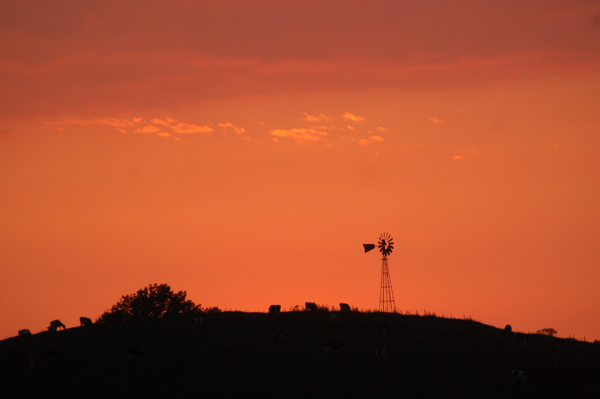
Cows grazed at sunset by Bruce Stambaugh
Cows grazed on a hillside at sunset.

A private woman has a very public life

Lucille Hastings by Bruce Stambaugh
Books have always played an integral part of Lucille Hastings' life.

By Bruce Stambaugh

For someone who relishes her privacy, Lucille Hastings of Big Prairie, Ohio has led a very public life.

Perhaps that seemingly contradictory situation is because of her love for life long learning. Hastings has had this instinctive drive to share what she learns. In short, contributing personally and professionally to the community at large has been a way of life.

That shouldn’t come as a surprise for someone who has her major life concepts down pat. Her life has revolved around her personal faith and church fellowship, service to others, which includes family, friends and the larger community.

Having lived on a farm for most of her life, she heartily reveres the land as a true gift from God. To accomplish and enjoy all that, she also believes in healthy personal lifestyles.

“I do water aerobics three times a week,” she said. “I need to watch my weight.”

Once she began her own well-researched and devised low carbohydrate diet a dozen years ago, Hastings lost 100 pounds. She has continued to be very careful about what she eats.

“Physical and emotional health are very important,” she related. Hastings said that as much for herself as for the benefit of others.

Hastings is fastidious about everything she does. But some things in life have been out of her control.

Hastings retired in 1992 from West Holmes Local Schools after serving 34 years as the library/media director in charge of the district’s libraries. Since then, she has continued as a part-time educational library/media consultant to the district.

“I retired because Jim retired,” she said, referring to her late husband. He died in 2000. “I miss Jim,” she said wistfully, “but I worked through it.” They had been married for 43 years.

She still lives on the Hastings family farm, which is rented out to an area farmer. The farm’s old barn was burned several years ago when a string of arson fires hit Holmes and surrounding counties.

Lover of the land that she is, Hastings said she marvels at how the agriculture around her has changed over the years. She has a great appreciation for her neighbors.

“The Amish have gradually moved into our area because the land was cheaper,” she said. “They are simply wonderful neighbors.”

With her background in library, it should come as no surprise that she considers herself a very organized person. She attributes that trait to enabling her to be of service to the larger community.

“Services like libraries, schools and churches happen because people make them happen,” Hastings said. “They just don’t happen by themselves.” Given her life long service to the surrounding community, Hastings clearly has done her best to improve those services for the community at large.

Here is a sampling of the many positions in which Hastings has served. She was president of the State Library Board of Ohio. She served on the Holmes County Library board for 16 years, 10 of which she was president. She was chairperson of the Ohio Reading Circle board for 16 years. That volunteer position allowed her to donate $350,000 worth of Reading Circle books to the county and local school libraries.

Hastings is a member of the Ohio Director of Agriculture’s 12-person advisory committee for administration of Ohio’s $25 million Clean Air/Clean Water Fund for Farmland Preservation.

She was the first woman president of the Holmes County Farm Bureau, and she is the only woman Sunday school teacher at her church. She has taught Sunday school for 60 years, and she is chairperson of the Mission Ministry at Ripley Church of Christ. She was a member of the Holmes County board of elections for eight years.

Hastings good works haven’t gone unnoticed. She has been dooly recognized for her many efforts. She received the Martha Holden Jennings Outstanding Teacher Award in 1974. She was inducted into the Ohio Women’s Hall of Fame in 2007. That same year Hastings received the Outstanding Alumni Award from Kent State University, where she received her Master of Arts Degree.

Hastings has two sons. Joel lives in Dallas, Texas, and Sidney resides in St. Louis, Missouri.

“I feel like I have been blessed,” she said. “I have had some unique opportunities.” And because she made the most of those chances, the community has reaped the benefits.

That’s what happens when life long learning is generously and graciously shared.

This article appeared in the Holmes Bargain Hunter, August 30, 2010.

Directions of a different sort

Buggies at Mt. Hope by Bruce Stambaugh
Buggies tied at a hitching rail in Mt. Hope in the heart of Ohio's Amish country.

By Bruce Stambaugh

Word to the wise. If you ask for directions in Holmes County, Ohio, you just might want to get a second or even third opinion. Better yet, use a map, atlas, a GPS or a combination of those geographical aides.

Here’s why. With three to four million visitors to our fine county every year, some of them get lost, or at least do not know exactly where they are. Shoot. Some might not even know where they want to go.

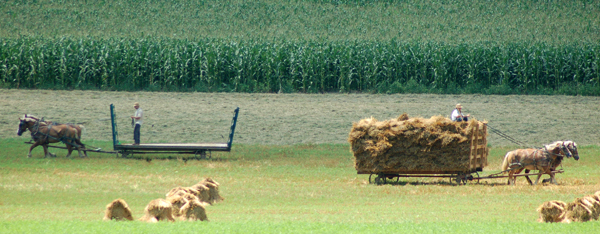
Coming and going by Bruce Stambaugh
Wagons come and go during the oats harvest in Holmes County, Ohio.

But given what I have observed and heard over the years, that’s not a problem either. The genial folks who live here will gladly offer some directional advice if asked.

Generally, the directions given answer the directions sought. But not always. Holmes County has its fair share of ornery characters.

Of course, I wouldn’t be one of them, though living where I do I certainly have had plenty of chances. While working outside, it is not uncommon for a car to slow on our busy highway and have either a passenger or the driver ask how to get to Berlin or Millersburg, or a specific business.

I try to be as succinct as possible, using landmarks and road numbers and the appropriate “turn right” or “turn left.” I like to end with what I have heard countless other locals finish their directional spiel. “Like we say in Holmes County, you can’t miss it.”

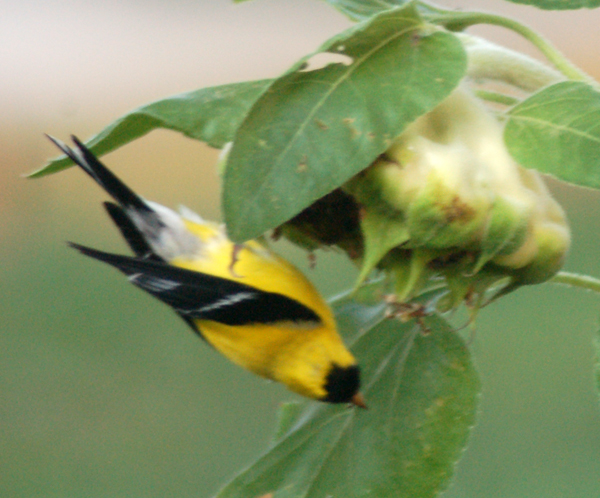
Goldfinch by Bruce Stambaugh
An American Goldfinch enjoys the fresh seeds of a volunteer sunflower. With its many habitats, birds are among the tourists who flock to Holmes County every year.

Meant as affable words of encouragement, too often I fear they are the deathblow to everything that preceded that comment. Since I never see the persons again, I can’t testify whether the colloquialism is true or not. But it could be worse, and sometimes is. The following antidotal incidents are completely true.

After a tourist inquired of a local where a certain person lived, the native immediately asked in all seriousness, “Do you know where the eight-sided barn used to be?” The point of reference had burned to the ground several years previous.

Here’s another. A tourist asked for directions to little unincorporated Saltillo, a cluster of homes at the diagonal crossroads of two county highways. These were the instructions. “You go up a long hill, over a small hump in the road, then it’s just a hop, skip and a jump from there.”

They get better. The state superintendent of public instruction, driving a state car with state license plates, stopped and asked for directions. Seeing the distinguished gentleman’s suit and tie and glancing at the plates, the unsuspecting superintendent got directions that took him far out of his way. Fortunately, he had a good sense of humor and understood the county’s suspicions towards state and federal officials.

A friend of mine was standing on the square in Millersburg when someone in a car going west asked directions to Berlin, five miles to the east. My friend sent them north to Wooster, east to Canton, south to Dover and west to Berlin, a distance of 96 miles.

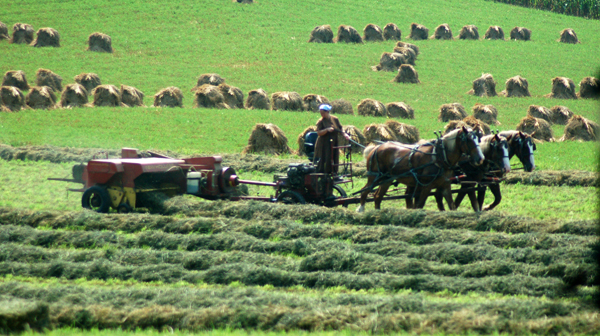
Baling hay by Bruce Stambaugh
Millions of tourist visit Holmes County's Amish country annually to see the Amish work in the fields.

The same friend was once asked for directions from Millersburg to Mohawk Dam in Coshocton County from someone from out of the area. The vehicle was pulling a fishing boat.

My friend figured someone was sending this poor fellow on a wild goose chase. Since the guy had driven this far, my friend figured he might as well complete the ruse. The proper directions were given and the man and his boat were on their way.

Mohawk Dam is a flood-control, dry dam. I’m sure they couldn’t have missed it.

August sunset by Bruce Stambaugh
A glowing August sunset in Holmes County's Amish country.

Vivian Miller offers compassion through cards and visits

By Bruce Stambaugh

After the doctor informed Vivian Miller, 68, four years ago that she had Parkinson’s disease, he asked how she felt about the diagnosis.

Miller didn’t flinch. She mustered up her usual pluck and said, “It’s not going to put me in a corner someplace.” Indeed it hasn’t.

In the time since, Miller has spent her life quietly helping others.

“It’s not about me,” she said modestly. “God uses me as an encouragement and support for others.”

Miller, who lives in Berlin, Ohio, intentionally looks for those in need, though she clearly tries to be subtle and discreet. If she finds out about someone with health or personal problems, Miller doesn’t hesitate to help, even if it’s simply by sending a homemade card.

She uses a software program to create personally appropriate cards. Miller often incorporates a picture of the person or herself into the card’s design.

Vivian Miller by Bruce Stambaugh
Vivian Miller enjoys making personalized cards for people.

When she was unable to go on a cruise with her Sunday School class, Miller knew what to do. Instead of being envious, she made a welcome home card for each member. On the front of the card was the picture of the cruise ship on which the group had sailed.

“I wanted them to have a special memento from their trip,” Miller said.

That statement pretty well sums up Miller’s approach to life. Her doctor told her she would do well with that positive attitude, and Miller has. Miller said it really boils down to a pretty fundamental formula.

“It’s about listening to others,” she said. “Everybody has a story, and all you need to do is listen.”

Miller retired as a deputy director in the Holmes County Treasurer’s office in 2006. She had also worked in the office at Rodhe’s IGA in Millersburg for several years.

“From my vantage point in the office, I would see the same people come into the store over and over,” she said. “They usually just wanted someone to talk to.”

“I try to see the goodness in people,” Miller said, “no matter what their situation is.”

Miller credits her term as a deaconess at Walnut Creek Mennonite Church with giving her the courage and opportunities to be in a helping mode. She did hospital visits and checked in on the less mobile.

Miller looks for every possible way to help and to meet new people. She even works at the polls at times to help expand her circle of friends.

Miller especially has sought out others who have been diagnosed with Parkinson’s disease. She explained that support, no matter what the issue, is critical for quality of life.

According to the National Institute of Health, Parkinson’s disease is a motor systems disorder, which is the result of the loss of dopamine-producing brain cells. The four primary symptoms of the disease are tremor or trembling in the hands, arms, legs, jaw and face.

Often times the onset of Parkinson’s is due to surgery or a head injury. In Miller’s case, she noticed the symptoms after a series of unrelated surgeries following her retirement.

For Miller, the disease has affected her left side. She discretely calms her left arm with her right hand and continues her conversation. That in itself is a physical sign of the inner awareness that Miller has. She is determined to share her compassion no matter what.

“Sometimes people seek me out,” Miller said, “and sometimes I go to them.”

Each situation is different, and Miller tries her best to be mindful of that. Miller just takes her illness in stride.

“Now it’s my turn to help,” she said. “Some of my best friends have come as the result of just being with families in need.”

Strident comforter that she is to others, Miller recognizes that she, too, needs support to do what she does. Miller credits her husband, Duane, and adult children, Valerie Gerber of Sugarcreek, and Scott Miller of Chapel Hill, North Carolina, with providing the emotional and physical uplifting that she needs to maintain her active and involved pace.

“Duane has been wonderful,” she said, “and Valerie calls me everyday.” Her son sent her a laptop computer while she had an extended stay in the hospital. In part, that gift is what led to Miller’s practice of designing, printing and sending the personalized cards.

“I have been blessed by everyone I have met,” Miller said. Most likely, the recipients of her kindness could say the same thing about her.

This article was initially published in the Holmes Bargain Hunter.

From every angle, August is golden

Golden sunset by Bruce Stambaugh
Hazy sunsets in Amish country are the norm in August.

By Bruce Stambaugh

These are what I call August’s golden days. If I only referenced orangey sunrises and the hazy, citrus sunsets, that moniker would apply.

August is so much more than lovely solar appearances and disappearances. It is always full of golden moments that make golden memories.

I realize my reflections are provincial. In a world full of disease, disaster, dismay and hostilities, not all would share my august perspectives. However, I cannot deny what I have observed and experienced in this transitional month in Amish country.

In calling August golden, I mean to take the broadest definition possible. Everywhere you turn, deep, rich yellows and golds appear. August is golden, too, in that it is good, providing success and satisfaction as the harvesting begins.

Mowing oats by Bruce Stambaugh
Mowing and stacking the oats into shocks is the first step in the harvesting process for the Amish.

August is usually a hot month in most of the northern hemisphere. Even the poor people in Moscow, Russia, where temperatures have seemed more like Dallas, Texas, have been especially suffering.

True to form, hot and humid have been the bywords in Ohio, too. Those who have had to work out in these blazing elements would argue for sizzling and sultry as better descriptors. But no matter how we describe the daily dog days of August, the benefits surely outweigh the negatives, no matter how muggy.

Coming and going by Bruce Stamabugh
One wagon heads to the barn while the other returns to the field to be loaded again.

My Amish neighbor’s circle of friends purposefully gathers the air-dried, ripened oat shocks wagonload after wagonload. Their water thermos got a workout, too. With their cooperative efforts, the impressive stand of honey-colored sheaves had disappeared by day’s end.

I always find it a miracle that once the sea of grain is cut and shocked, a carpet of bright green immediately replaces it. The hardy clover thrives all the more once it has the ground to itself.

There are other kinds of gold in August, too. The Incredible sweet corn arrives almost simultaneously with the transparent apples. It’s husking, cutting, cooking and freezing corn one day, making tartly sweet applesauce the next.

Ripe tomatoes by Bruce Stambaugh
Heirloom tomatoes ripen on the vine.

The growth of the heirloom tomato plants my wife and son planted in late May is so
prolific, the plant runners get tied daily. Their yellow, red and green-striped fruit add to the festivities.

House wren by Bruce Stambaugh
A house wren leaves the nest after feeding her brood.

The noisy tan house wrens worked frantically to satisfy their last brood of the summer. Their hungry youngsters consumed an amazing amount of worms, caterpillars and insects.

When the little ones began to greet their parents at the entrance to their birthplace, it’s nearly time for them to fly. In our case, the babies were there before church, but not when we got home. The grandsons and I found them learning to forage and hide in the brush pile under the pines near the hammock where other golden moments were made.

Monarch and swallowtail butterflies joined the goodness of the month as they enjoyed the nectar of the milkweed and wild and domestic flowers. Both the black and yellow-billed cuckoo birds announced their arrivals as the tent caterpillars hatched.

The much publicized but often under performing Perseid meteor showers still managed to send enough bright streaks though the new moon sky to extend the month’s goldenness 24/7.

Next week the full moon will strut its stuff, casting a golden glow across landscapes, rural and urban alike. Ready or not, summer vacation has yielded to elongated yellow buses and excited, golden voices of children beginning a new school year.

All things considered, August is a positively golden time of year.

Hammock fun by Bruce Stambaugh
Playing on a hammock in the cool shade serves as a diversion from the August heat and humidity.

The road to a fresh start

Mixed peppers by Bruce Stambaugh
Boxes of colorful peppers looked too good to resist.

By Bruce Stambaugh

You can find them nearly everywhere in Ohio’s Amish country. Seasonal roadside produce stands are one of the area’s mainstays.

But for probably a sundry of reasons, tourists and local residents alike often ignore these unsophisticated and sometimes spontaneous mini-markets. They shouldn’t. The goods offered provide lasting and tasteful memories of Ohio’s Amish country.

The produce stands offer excellent foodstuffs and canned goods at very fair prices. A bonus is that the products peddled are green, as in locally grown green.

“Locally grown fruits and vegetable are not only good for you,” says Leah Miller, director of the Small Farm Institute based in Coshocton, Ohio. “They also provide families who live on small farms with additional and needed income.”

Blessing Acres sign by Bruce Stambaugh
The sign to Blessing Acres produce stand says it all.

Blessing Acres Produce, a produce stand located about half way between Berlin and Mt. Hope, Ohio on Township Road 362 in Holmes County, is a prime example. Anna Miller and her children operate the 25-acre produce farm. Son, Abe, serves as the manager.

Definitely off the beaten path, the Miller family still has many repeat customers who have found this little Garden of Eden. Homemade signs direct traffic off of two parallel county roads to the business. As different items like beets, cucumbers, corn and tomatoes come ripe, they are added to the bottom of the sign. At times the chain of produce names reaches clear to the ground.

Their season conveniently starts about the time schools dismiss for the summer. Strawberries are their first main crop, and are always in high demand for their flavor, sweetness and freshness.

Those are some of the key customer benefits to buying from the roadside stands, according to the online Ohio Farm Fresh directory at http://www.ohiofarmfresh.com. Freshness, taste and nutrition are all reasons why purchasing from the seasonal stands makes sense. Of course, the farmers appreciate the cash flow, too.

Marion Steiner has operated the Kidron Road Greenhouse and Produce stand for 17 years with help from her 11 children. Located on Kidron Road just south of U.S. 250 in Wayne County, Steiner said a majority of her customers are local, but a few out-of-state people also stop in.

June Hammond of Wooster, Ohio  has been a regular throughout many growing seasons.

“I come here because the people are friendly, the prices reasonable, and the products are fresh,” Hammond said.

Just down the road at Raber’s Fresh Produce similar comments are offered by long-time, repeat customers. Raber’s is located on Kidron Road just south of Harrison Road.

Dave Guthrie drives all the way from Vermillion, Ohio to buy sweet corn simply because he says it tastes better than what he can buy at stores back home. Guthrie’s seven-year-old grandson, Joshua Snyder, came along for the ride, too.

Hold on tight by Bruce Stambaugh
Joshua Snyder held on tight to the cucumbers he selected.

“It’s pretty and it’s fun out here,” Snyder said. “I like looking around, especially seeing the horses and buggies, and the nice houses and fields.”

The youngster actually hit on another benefit to buying from countryside stands. The bucolic ambiance coupled with decent prices and fresh, tasty food that is also good for you adds up to a win-win situation.

Many of the produce stands also offer fresh, homemade baked goods and what Leah Miller calls “value-added products” like home-canned fruits, vegetables and jams and jellies.

Some of the stands like the one that young sisters Anna and Neva Miller manned pop up randomly. The girls brought excess green beans from their garden and set up shop opposite a local bulk food store north of Mt. Hope. It wasn’t long until they had to return home to replenish their supply.

There is yet one other important reason for stopping at a local produce stand. You just might make friends, like Scott Thomas of Fresno, Ohio has.

Thomas has been coming to Blessing Acres for years. He knows each family member by name, and you could tell by the smiles of family members that they are always glad to see him.

“They come down to my place and help me butcher hogs,” Thomas said. In turn, he lets family members hunt deer on his property.

Fresh, tasty, nutritious food and good friends are always a healthy combination. And in Ohio’s Amish country, all that can be found right along the road.

Roadside beans by Bruce Stambaugh
Anna and Neva Miller sold beans from their garden along the highway north of Mt. Hope, Ohio.

This story was first published in Ohio Amish Country magazine, August 2010.

Weatherwax lends a helping hand

By Bruce Stambaugh

Jill Weatherwax, 59, of Glenmont, Ohio likes to lend a helping hand whenever she can.

Weatherwax, who by day works at Rice-Chadwick Rubber Company in Killbuck, spends several evenings each month helping others feel better. She provides reflexology treatments for residents at area retirement and nursing homes.

Weatherwax has been offering her services to seniors for a dozen years now. In fact, she specifically focuses on the elderly for a personal reason.

“I got into this because I missed my grandparents, Bob and Sally Allison,” the petite woman said. “I felt a void without them around.”

Jill Weatherwax by Bruce Stambaugh
Jill Weatherwax provided reflexology treatments for Esther Miller, a resident of Walnut Hills Retirement Home in Walnut Creek, Ohio.

Weatherwax has easily filled the void all these years with her gentle touches. She is careful to differentiate what she does from that of massage therapy.

Reflexology is considered a complementary touch therapy. Weatherwax gently, but firmly, works with the hands and feet of senior residents at Majora Lane Nursing Home, Sycamore Run Nursing Home, both in Millersburg, and Walnut Hills Retirement Home, Walnut Creek.

Residents who receive her treatments report relief from pain, stiffness, and other maladies.

“I like it because I can sleep better,” Esther Miller said. Miller is a resident at Walnut Hills Retirement Home and said she looks forward to the helpful visits by Weatherwax.

Weatherwax said it is not unusual for residents to report such extended advantages to the reflexology treatments.

“Relaxing the hands and feet improves the circulation,” she said. “Consequently, the entire body is relaxed, which is why some people report being able to sleep better.”

Her visits, which are paid for by the facilities and offered to the residents free of charge, are regularly scheduled at each location. She said she visits Majora Lane twice a week, Sycamore Lane weekly, and Walnut Hills every other week. And she does so after completing her daytime shift at Rice-Chadwick, where she has worked for 33 years.

“I am on my feet for eight-hours a day,” Weatherwax said. “So I know how important taking care of your hands and feet is.”

Weatherwax, who is certified to offer the reflexology services, said that before she works on residents, she gives the facilities’ administrators the opportunity to experience her treatments. That way they know exactly what is happening when she is there, she said.

“After my grandparents passed on, I asked God to do something to help me fill the void,” she said. After the third time of having her own hands and feet treated by a reflexology therapist, she realized she could provide the same services.

She said she knew such services were not offered in the area. “People don’t want to handle other people’s feet,” she said. “But I feel called to do it.”

According to the Farber Family Foundation, reflexology is a unique method of using the thumb and fingers on reflex areas in the feet and hands that correspond to all of the glands, organs and part of the body to elicit areas of potential or actual disorder. Pressure applied to the reflex points promotes better blood flow and nerve impulses, along with other physiological benefits.

Weatherwax began at Majora Lane, and then reached out to the other retirement centers. She actually finds the sessions therapeutic herself.

“The therapy works both ways,” Weatherwax said. “I get to listen to them while I work on their hands and feet, and they get to listen to me.”

“You need to be in tune with the person you are working with,” she said. “You have to be compassionate for each situation. If not, you are going to hurt them.”

Weatherwax’s gentle touch, soft-spoken approach and years of experience help provide positive results for many area seniors. That’s what helping hands are meant to do.

This article first appeared in the Holmes Bargain Hunter, Millersburg, Ohio, August 2, 2010.

Lakeside, Ohio: A relaxing place to be

Cottages at Lakeside, Ohio by Bruce Stambaugh
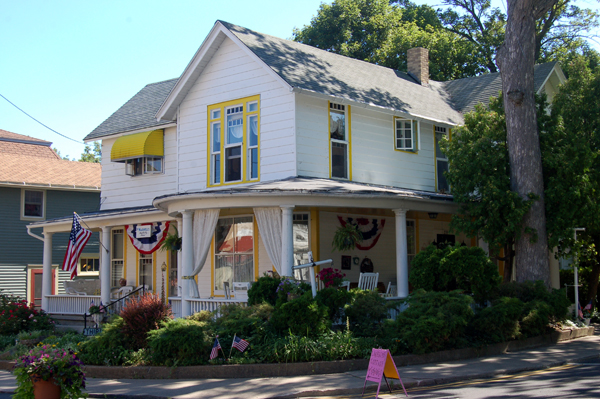
Cottages at Lakeside, Ohio.

By Bruce Stambaugh

Erik Beun of Berlin was typical of the many people from the Holmes County area who vacation at Lakeside, Ohio.

“It’s a relaxing place,” Beun said. Beun and his family were enjoying their sixth year at Lakeside. Beun also brought along his parents, Henry and Julie, for their first Lakeside experience.

Their family was emulating a scene seen thousands of times a year at Lakeside. They were tooling around the quaint village on bicycles. And why not? It’s an easy way to see Lakeside’s immaculate gardens, quaint old cottages, shady lakeside parks and amazing views of Lake Erie and its islands.

The Beun family by Bruce Stambaugh
Allison, Laura, Erik, Andrew, Henry and Julie Beun all enjoyed a bike ride around Lakeside.

Because Lakeside is a gated community during the summer months, it is a non-motorized vehicle friendly place. In fact, bicycles often go faster than cars. In part, that’s because once at Lakeside, the need for a car drops dramatically.

The place is so pretty, so quaint, so relaxing and the people so friendly there is no hurry to go anyplace. You are on vacation. Sit back, relax and enjoy. Many from the Holmes County area have done just that over the years.

Kent Miller of Millersburg started going to Lakeside with his parents when he was 10-years old. That was 1982. Now his son, Kyle, is 10, and has the same sort of fun that his father did.

Miller said the family likes Lakeside because it is “a safe haven for young families to go and relax for a week.” He said they particularly enjoy the amenities of doughnuts from The Patio Restaurant, and letting the kids shop at Marilyn’s, a store with an eclectic mix of clothing, candy and Lakeside souvenirs.

Shasta Mast, executive director of the Holmes County Chamber of Commerce, and her family have retreated to Lakeside for 15 years. She said the most difficult decisions she has to make while at Lakeside are what book to read and when to get ice cream.

Beach and dock at Lakeside, Ohio by Bruce Stambaugh
The small beach and Lakeside's extended dock entice swimmers and sun worshippers of all ages.

Like many other Lakesiders, Mast likes to read her book while sunning on Lakeside’s popular dock that juts out into Lake Erie. Others swim, with lifeguards provided during certain hours. Still others fish from the dock, while some simply choose to sit and watch the variety of boats sail or speed by. In the evening, the dock is crowded with sunset watchers with cameras at the ready.

Of course, the front porch is just as good for reading as the dock. It could be the house rented for the week, a bed and breakfast or the sweeping, screened porch of the historic Hotel Lakeside. They all provide peace, shade and plenty of congenial company.

fountain by Bruce Stambaugh
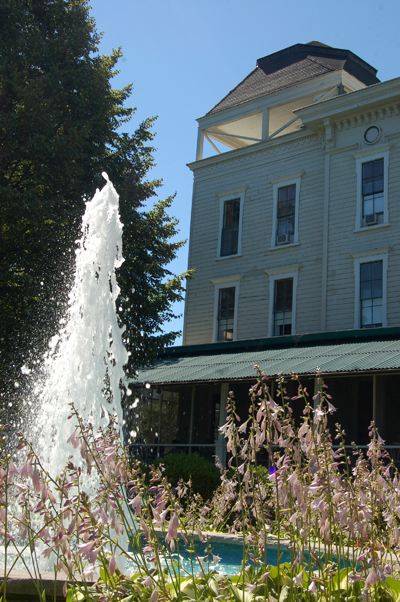
The fountain in front of Hotel Lakeside.

After all, Lakeside is the Chautauqua on Lake Erie, nurturing the body, mind and soul. That is what the Lakeside Association both promotes and provides for its visitors. Educational workshops, seminars, evening entertainment and worship can all be part of the Lakeside experience for children to adults.

Tennis, shuffleboard, miniature golf, running, walking and Frisbee are also available if exercise and competition are your game. There are businesses to spend your money if you want, and by the lines, a lot do. Specialty drinks, ice cream, homemade doughnuts, and Lakeside-specific clothing are all available.

Then, again, you can just adopt Erik Beun’s attitude and simply relax. That’s the Lakeside way.

Maxwell Hospitality House by Bruce Stambaugh
Maxwell Hospitality House, Lakeside, Ohio.

This article initially appeared in The Holmes County Journal, July 29, 2010.

Bay Photos by Donna

Wildlife photos from the Chesapeake Bay region

ROAD TO NARA

Culture and Communities at the Heart Of India

K Hertzler Art

Artist and nature journalist in the Shenandoah Valley of Virginia.

Maria Vincent Robinson

Photographer Of Life and moments

Gabriele Romano

Personal Blog

Jennifer Murch

Art is the only way to run away without leaving home. -Twyla Tharp

Roadkill Crossing

Writing generated from the rural life

ANJOLI ROY

writer. teacher. podcast cohost.

Casa Alterna

El amor cruza fronteras / Love crosses borders