
Our last full day in Maui became the best of the trip. They saved the best for last.
I signed up for a tour along the Road to Hana, which our daughter had recommended. Knowing it would be an all-day deal and the road would have many hairpin turns, my wife decided to stay at the hotel and rest. That form of travel isn’t her cup of tea.
The day became a win-win for both of us.
I rose early for our day-long adventure. Before boarding the bus, I ate some of the hotel’s boxed breakfast since we would leave before the breakfast buffet opened. Little did I know that the first stop would be 45 minutes away at a grocery store for another boxed breakfast provided by the bus company. We wouldn’t go hungry today.
Our bus driver, Sale (pronounced Sally), was our masterful guide. A native Hawaiian, he started sternly, giving us strict instructions about the dos and don’ts of riding on his bus. But by day’s end, his good-hearted nature tumbled out, embracing us all. He later confessed that he initially and intentionally controls things so everyone has an enjoyable, safe trip. It worked.
Our first actual stop was at the famous Ho’okipa Beach Park. Though I didn’t know it by name, I had seen photos of Hawaiian surfers riding rolling, blue-green waves to its white sandy shore.
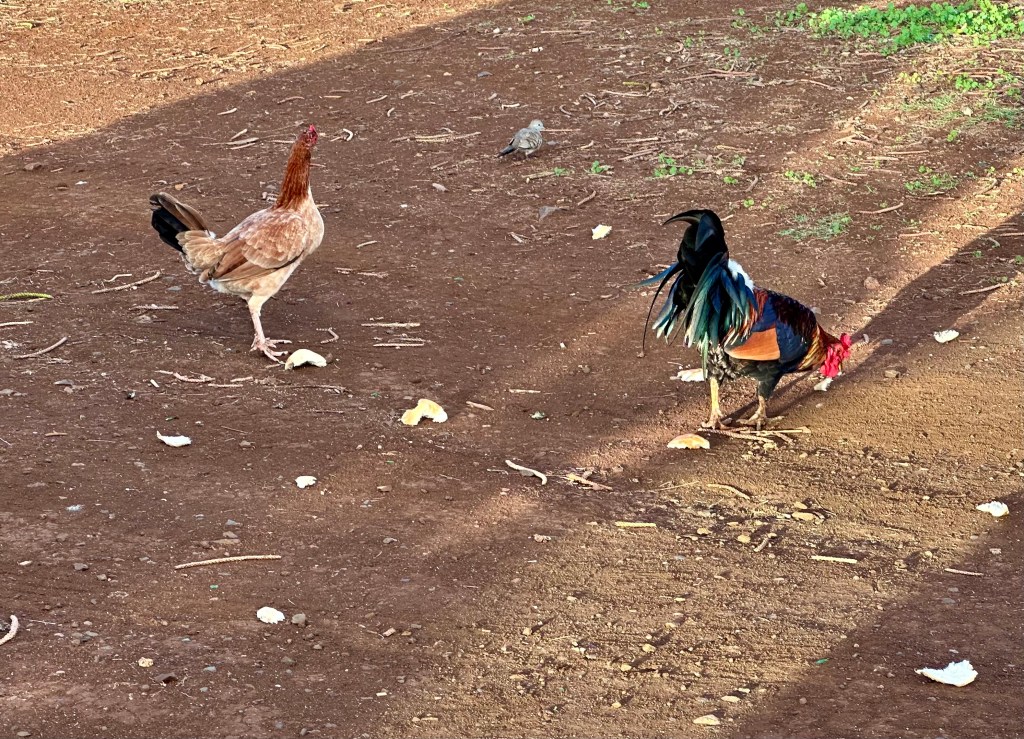
It was too early for the surfers, but not the ubiquitous roosters and chickens that roam the islands. They greeted us with their usual clucking. That didn’t spoil our view of the ocean’s relentless pounding of Maui’s gorgeous coastline.
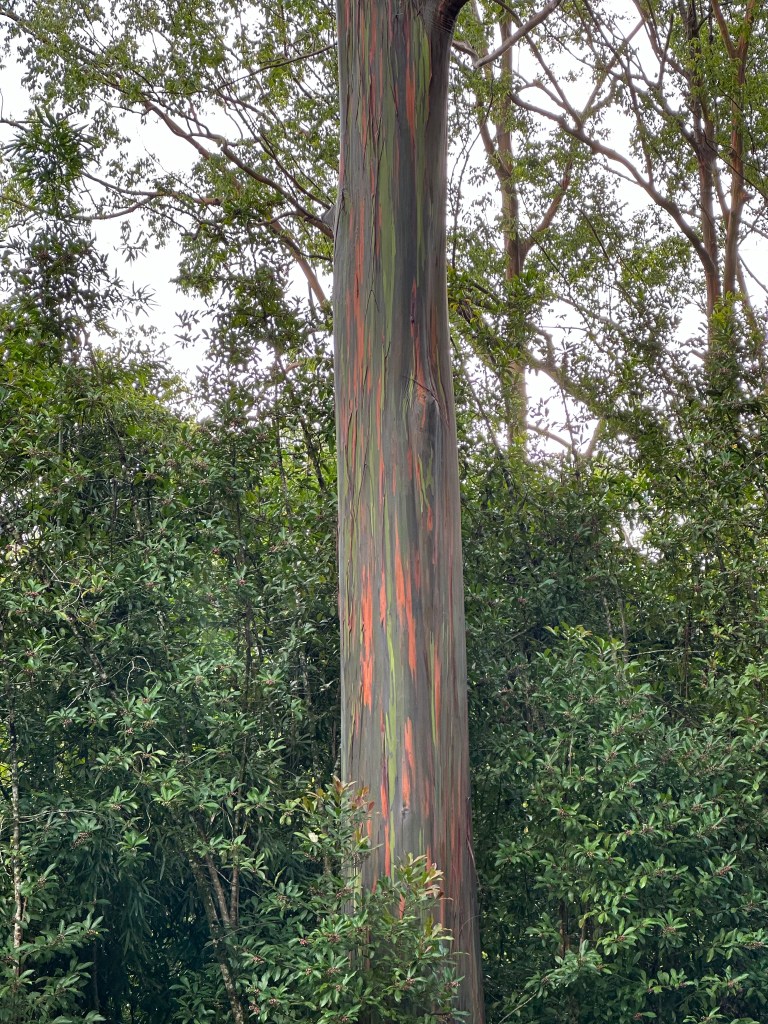
After that scenic stop, it was all twists and turns on the windy, narrow roadway. Sale pulled into a small pullout and introduced us to the Rainbow Eucalyptus tree. The peeling bark revealed the surprise of the trunk’s pastel colors.
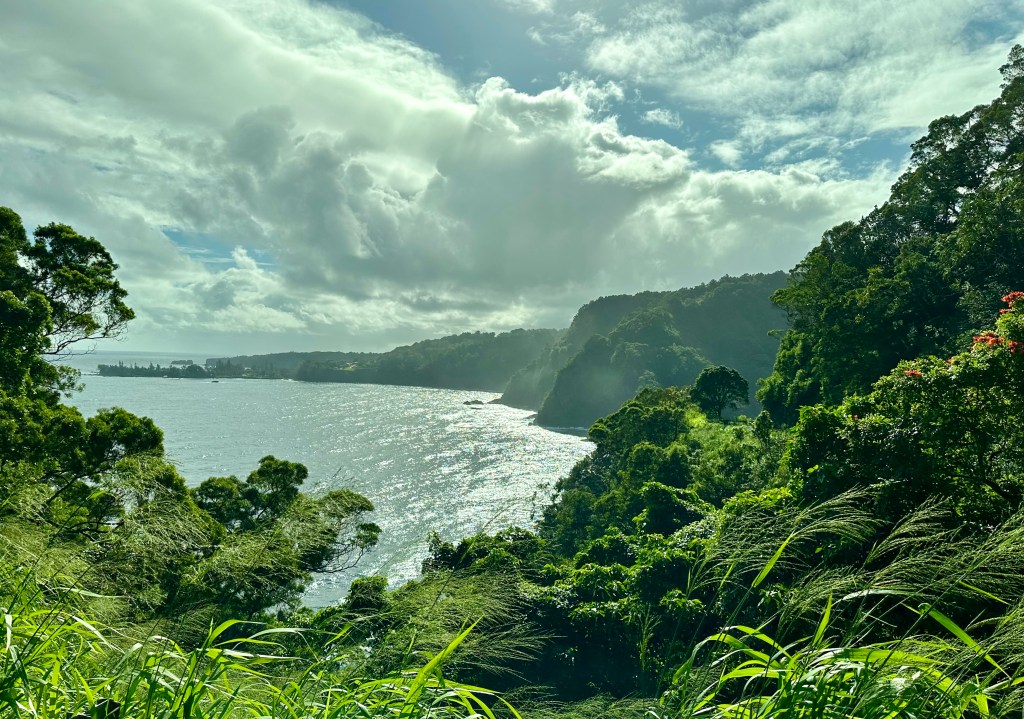
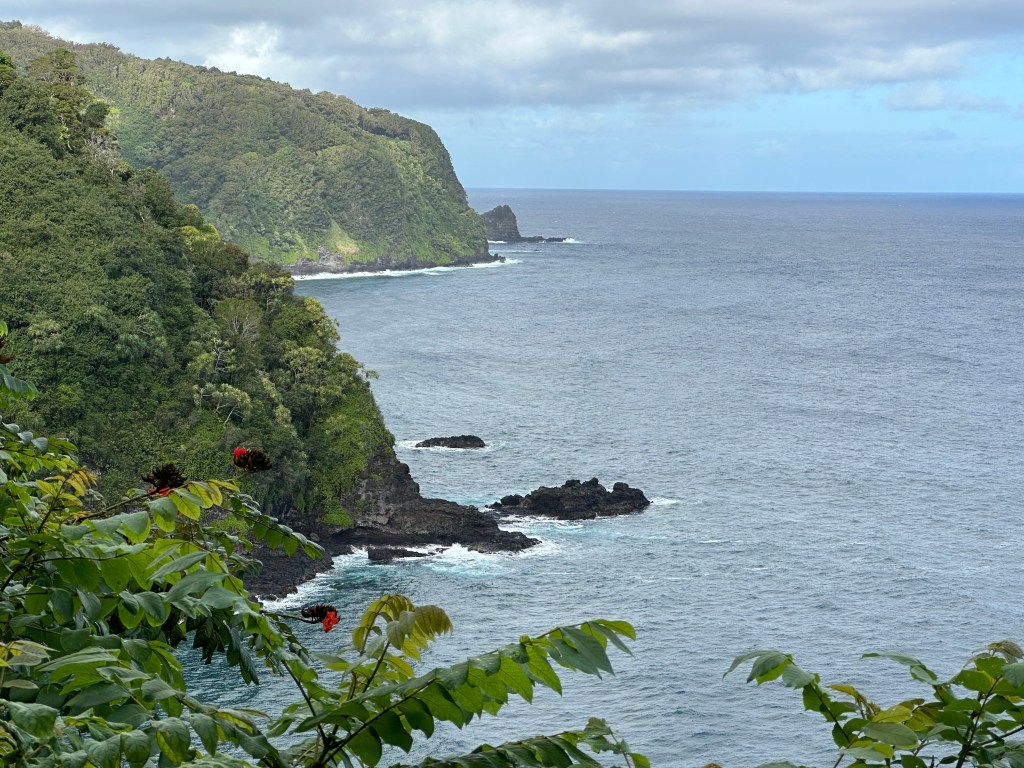
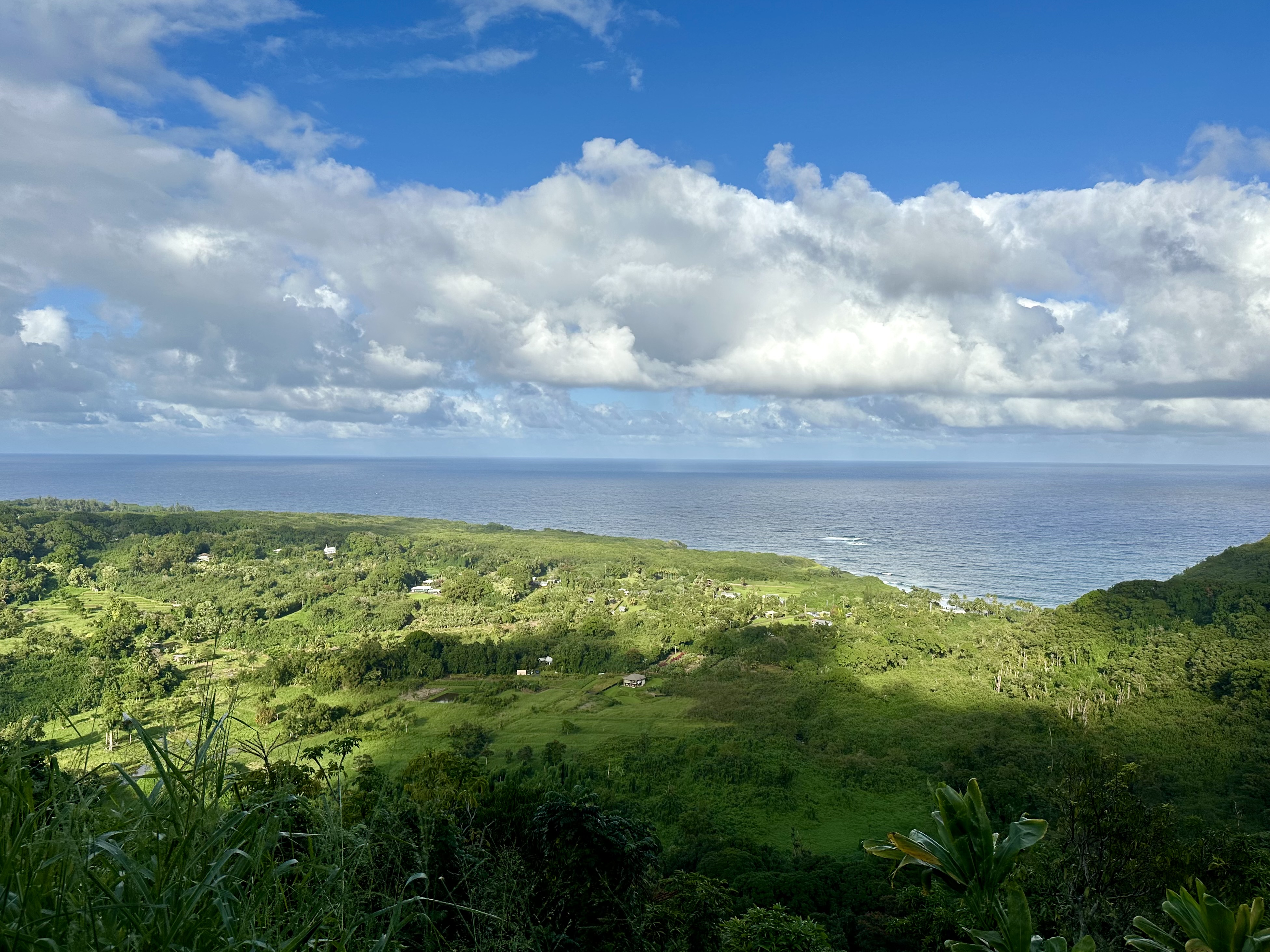
As we continued along the coastline, an incredible scene appeared at nearly every curve. The undulating road hugged the lush mountainsides of the rainforest we had entered.
Even through the tinted bus windows, we saw calendar-worthy shots of the rugged coast that appeared to knife into the ocean. Like all the other 131 Hawaiian Islands, Maui is just the tip of a vast volcanic mountain. If these mountains were on land, they would be higher than Mount Everest.


Please click on the photos to enlarge them. Photos by Bruce Stambaugh
But instead of driving through mountaintop snow, the bus skirted through lush vegetation and onto picturesque peninsulas dotted with houses, churches, and a few touristy businesses. We couldn’t stay long enough at each stop for me. We had to truck on.
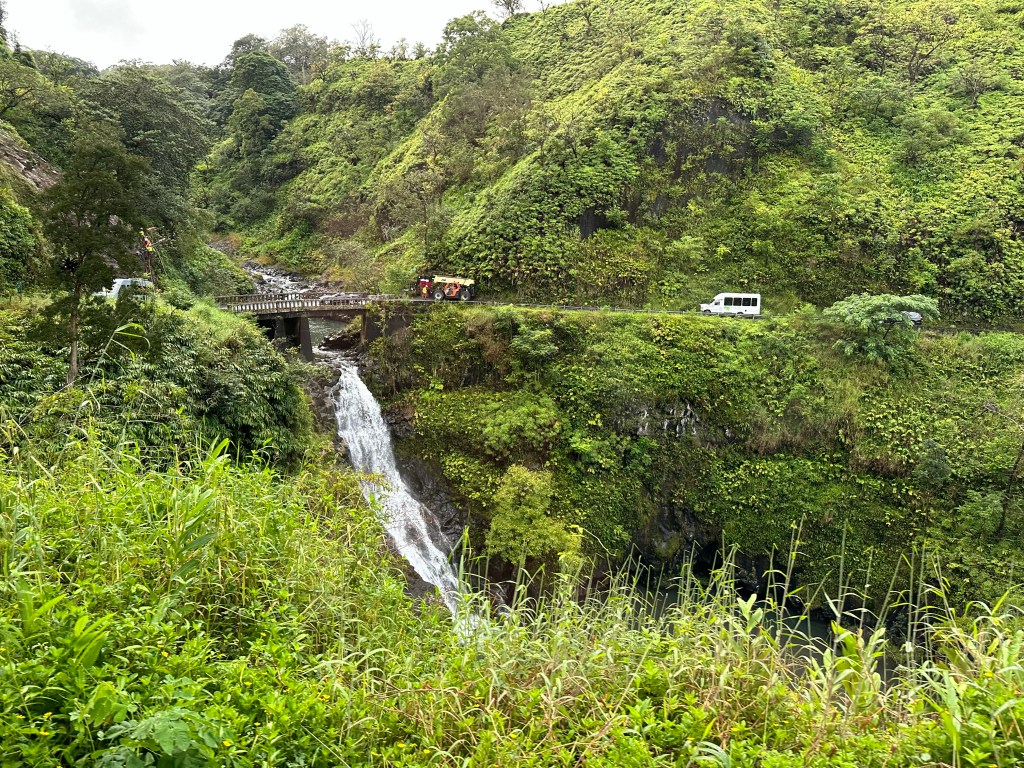
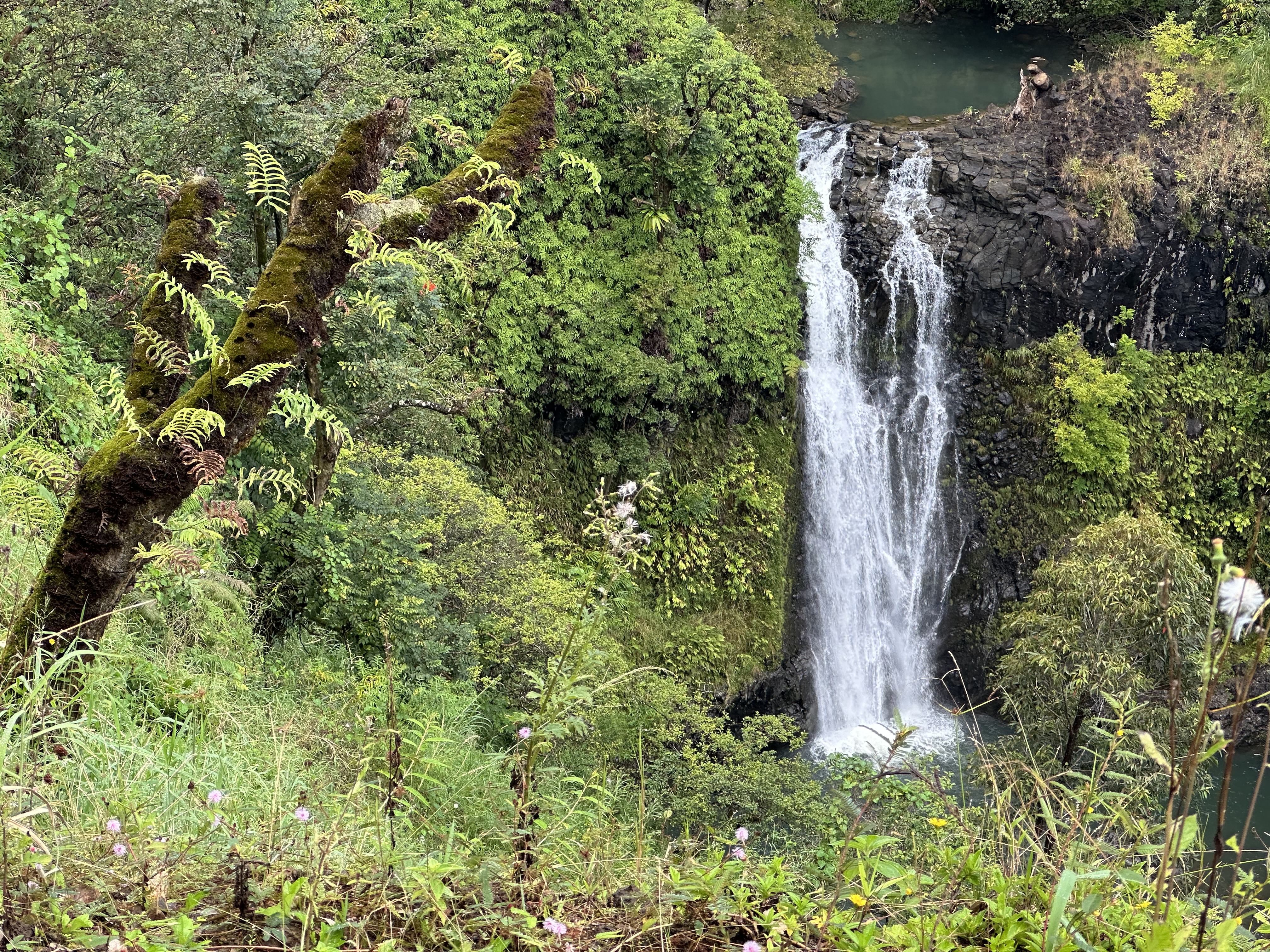
At the Ko’olau Forest Reserve, we observed the lush surroundings of the rushing, falling waters. Other visitors had different ideas. Despite the signs that climbing was prohibited, one man climbed through the dense foliage to the top of the waterfall to show off for his friends. He feigned jumping but instead sat down for a photo.
At the century-old one-lane bridge below, young men took turns hurdling themselves off the bridge over a cliff and plunged into a deep pool created by the falls’ constant crashing. Friends were stationed at strategic locations to view the daredevil leaps. One guy even stood at the edge of the ledge, filming each diver.
At overlooks, local farmers hocked their produce from the beds of pick-ups. They offered free samples of sweet, sticky oranges, two kinds of coconuts, and piles of fruit I couldn’t identify.

Sale kept us moving. Soon, we arrived at Hana, where we lunched at an outdoor pavilion. The proprietor even brought me a gluten-free pizza, which I gladly shared with others.
Hana was our turnaround spot, but it was certainly not the end of our discoveries. We also visited Wainapanapa State Park, which had its own version of a black-sand beach. It was gorgeous and popular.
The beach’s setting was stunning. Lush greenery thriving on mounds of solidified black lava surrounded the beach that gradually slanted into the ocean. Lava cliffs protected the small inlet that led to the beach.

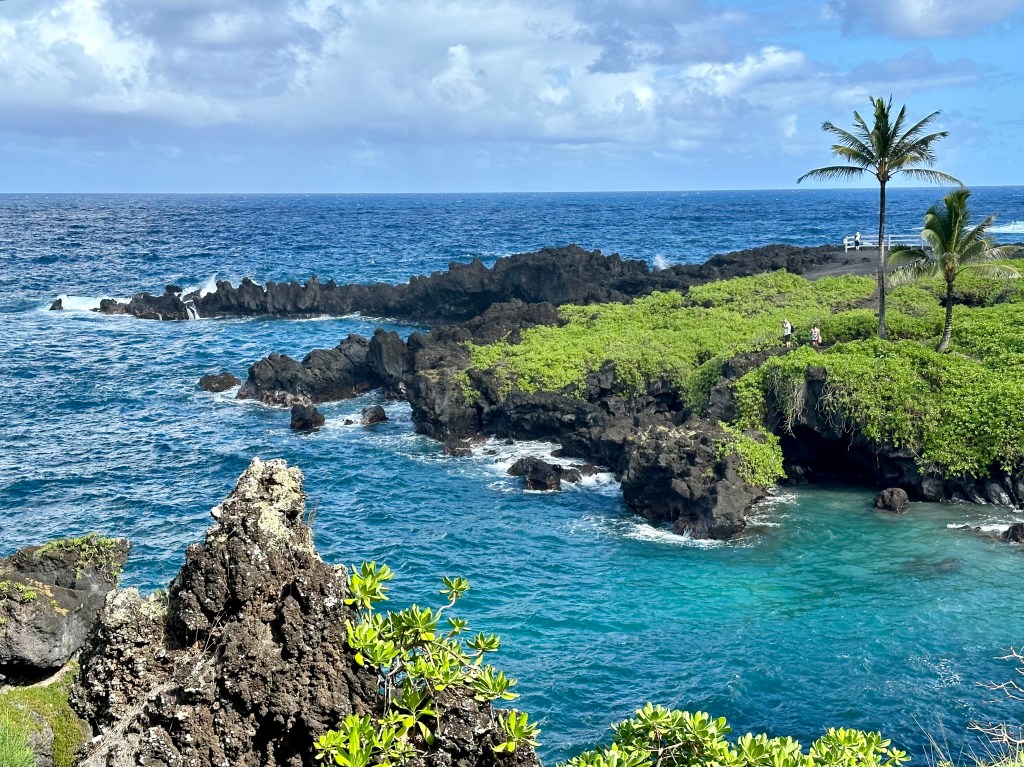


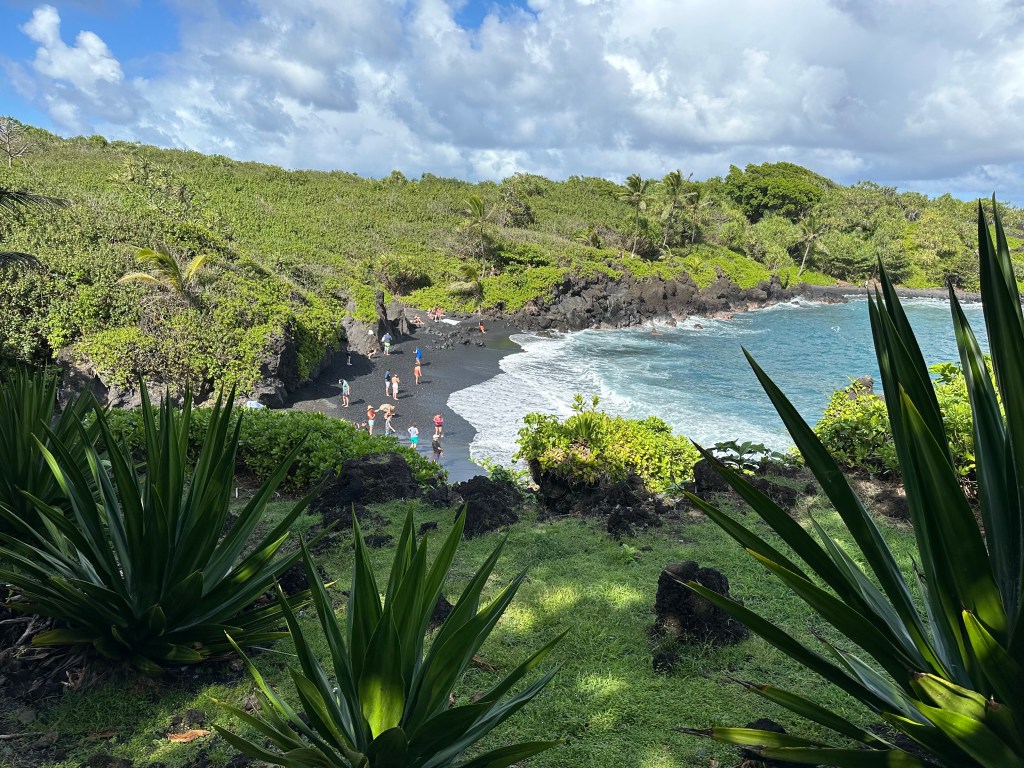
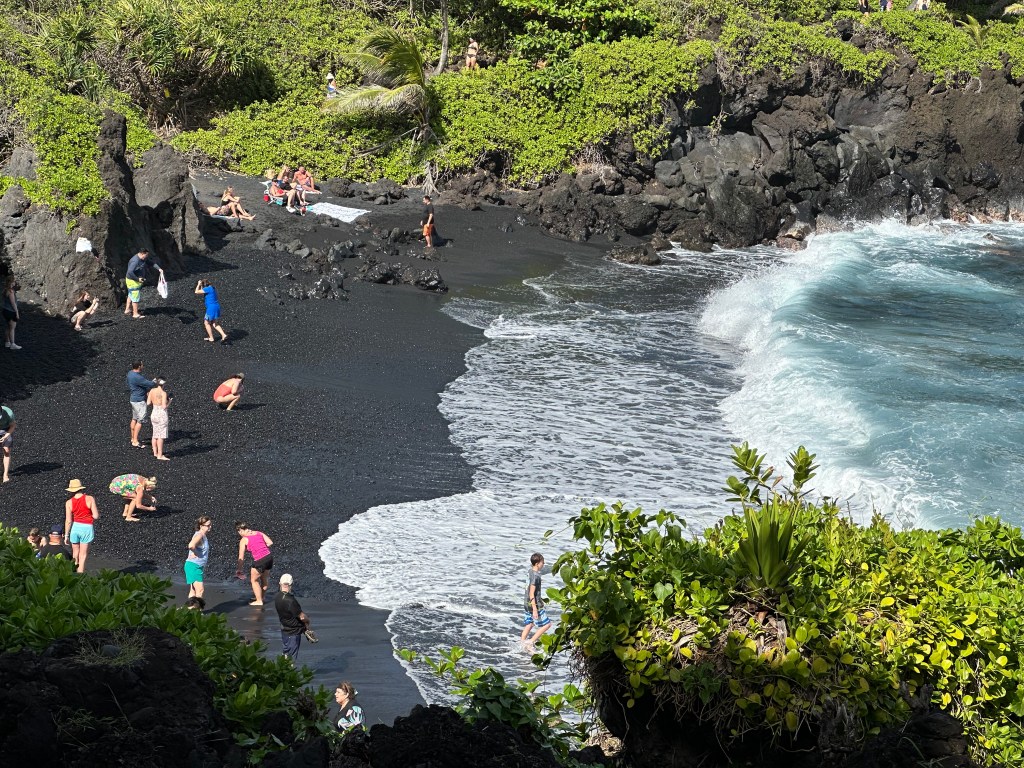


The royal blue waters rolled and miraculously transformed into a frothy white carpet that gently recoiled until another wave struck. Not surprisingly, the beach was busy with folks looking for shells and shark teeth, waders, and people lounging in beach chairs.
As I explored the area, tropical birds I had never seen caught my attention. Some seabirds with white heads and gray bodies hugged the lumpy side of an unusual volcanic rock formation not far from shore. A few flew around the rocks and landed back in a recess. Later, I found out they were Brown Hoodies. Behind me, a small flock of songbirds foraged in grassy spots nearby.
With daylight waning, we needed to keep moving. Still, Sale stopped for photo ops of waterfalls and pristine ocean views.
Sale, our gregarious bus driver

Along the way, Sale pointed out several burned-out vehicles that had crashed and been left on pullouts along the narrow Road to Hana. During the night, vandals had stripped and torched them. He didn’t understand that mentality any more than we did.
What Sale did understand was the Hawaiian way of life. His Hawaiian family roots were deep, and he poignantly shared personal stories of love, loss, and hardship.




Please click on the photos to enlarge them. Photos by Bruce Stambaugh
As beautiful and alluring as the islands are, living in a paradise like Hawaii is not easy. The cost of living is the primary driver of difficulty. Gasoline always hovers around $5 a gallon, eggs are $12 a dozen, and milk prices average $10 a gallon. Rent and taxes are high, and if you live away from any urban area, it can take hours to go grocery shopping.
According to Sale, three generations of families cohabitate to make ends meet. It makes for crowded living, but sharing the expenses is the only way most Hawaiians can remain in the lands they have loved for many generations.
Another Hawaiian novelty is a remnant of World War II. Spam, the canned meat, was fed to the troops during the war. The locals liked it so well that it has become a Hawaiian culture staple. Spam musubi is a favorite snack. It’s a sandwich with a rice filling and two pieces of fried Spam wrapped with dried seaweed. Even McDonald’s has capitalized on the fad becoming a tradition. Yes, Spam is on their menu.

The lyrical Hawaiian language also fascinated me. With only 12 letters, five vowels, and seven consonants, it creates lengthy words and names. But the words roll off residents’ tongues like rhythmical waves coming ashore.
Hawaiians are proud, friendly, and willing to share their Polynesian history and love for their beautiful island home. This approach to life defines their culture of inclusion.
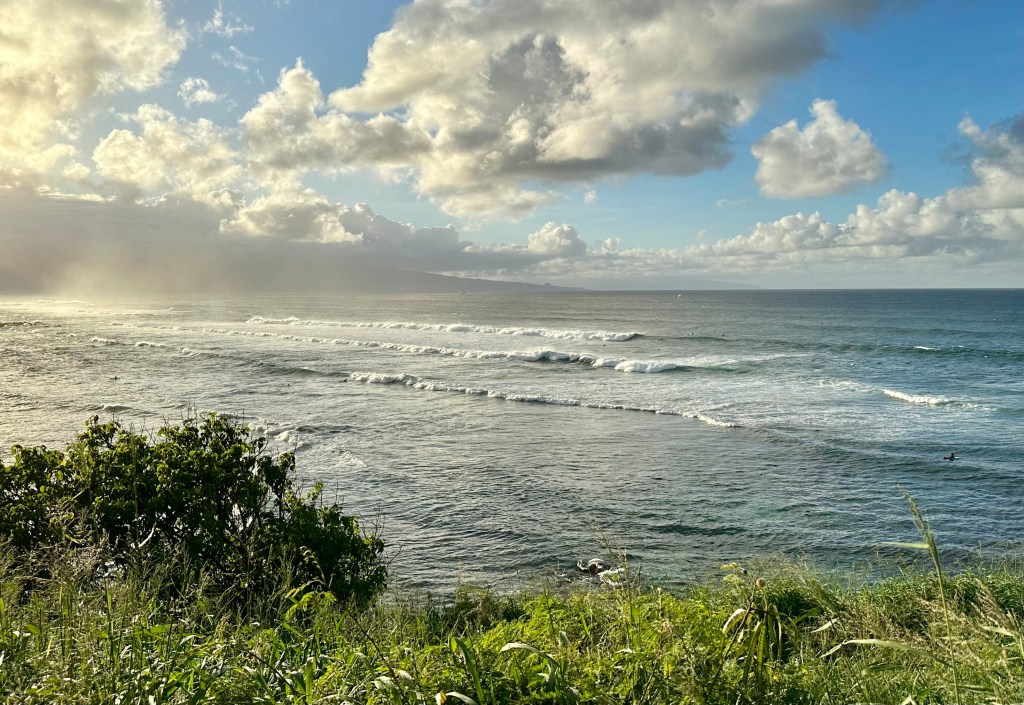
Our last stop was where we began. The late afternoon sun shone brightly on Ho’okipa Beach Park’s breakers. A half-dozen surfers bobbed in the water, waiting on the perfect wave.
But Sale wanted us to see something else. We walked 20 yards down the steep access road to the beach and looked down. Giant Green Sea Turtles were coming ashore to bask in the warm sunshine. It was another unscheduled stop that only a local like Sale could gift us.

Please click on the photos to enlarge them. Photos by Bruce Stambaugh
As darkness set in, I thought about all we had experienced over these few days. The culture, the bubbly language, the incredible vistas, beaches, Hawaiian history, the importance of family, the inclusion of visitors, balmy breezes, sunny, warm days, and wildlife combined to make this a fantastic trip.
Then, a text from my wife reported that she had tested negative for COVID-19. She celebrated by relaxing in the warmth and fellowship of Maui.
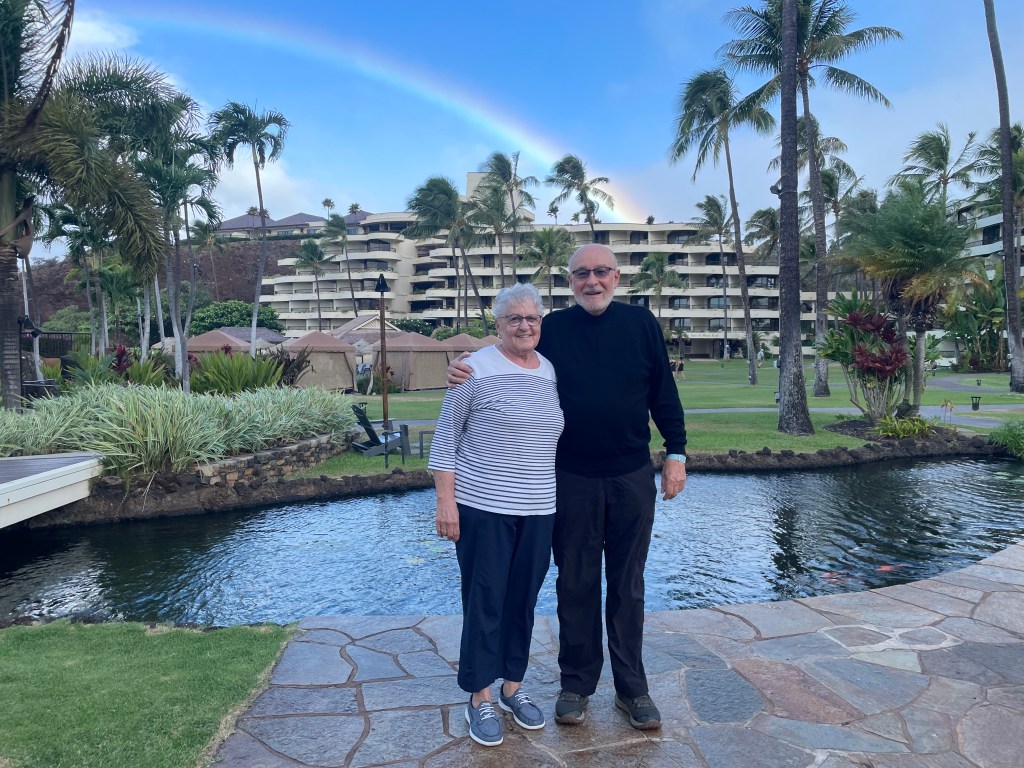
As we prepared to leave the following day, we had our picture taken with yet another rainbow in the background.
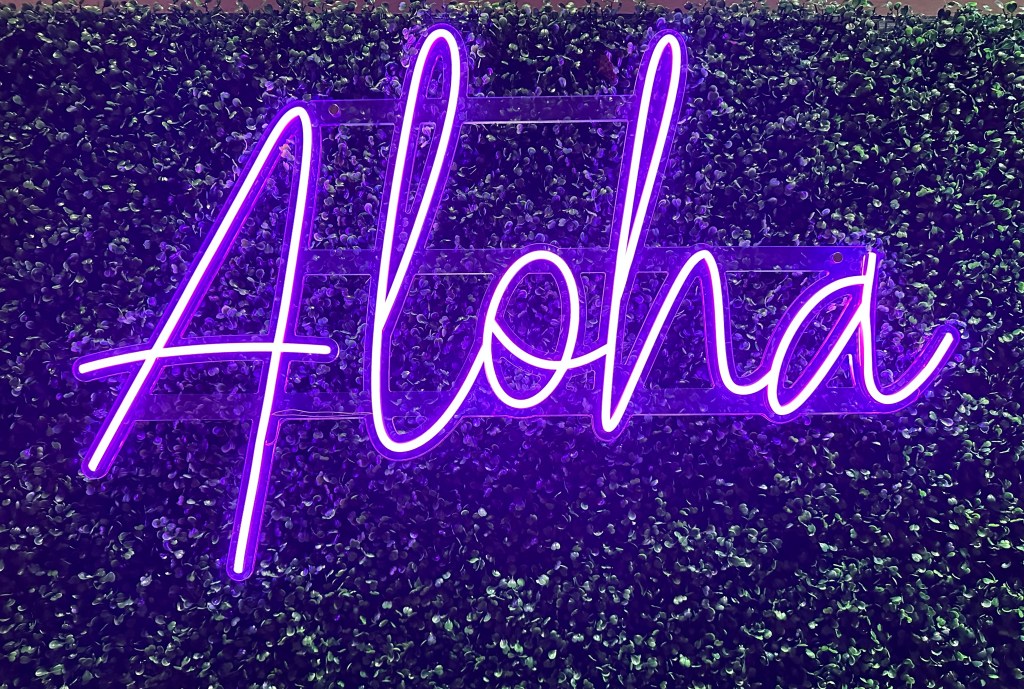
If we heard one word consistently from the time we stepped onto Hawaiian soil until we boarded the plane to leave, it was Aloha. Aloha means “hello” and “goodbye.” It’s a verbal representation of Hawaii’s inclusive society.
After saying our goodbyes, we spent most of the day flying home. It was an anti-climatic finale to our marvelous trip.
© Bruce Stambaugh 2025
 Roadkill Crossing
You must be logged in to post a comment.