
I had lots to do. My first destination was the pharmacy, where I was to pick up a couple of prescriptions. As I started inside, a little bird stopped me.
The bird lay on the sidewalk upside down, twitching. I looked up and saw a large plate glass window. Another bird strike, I thought to myself.
I decided to leave the bird there. If it were still there when I returned after getting my prescriptions, I would see if I could help the poor critter. The other items on my to-do list could wait.
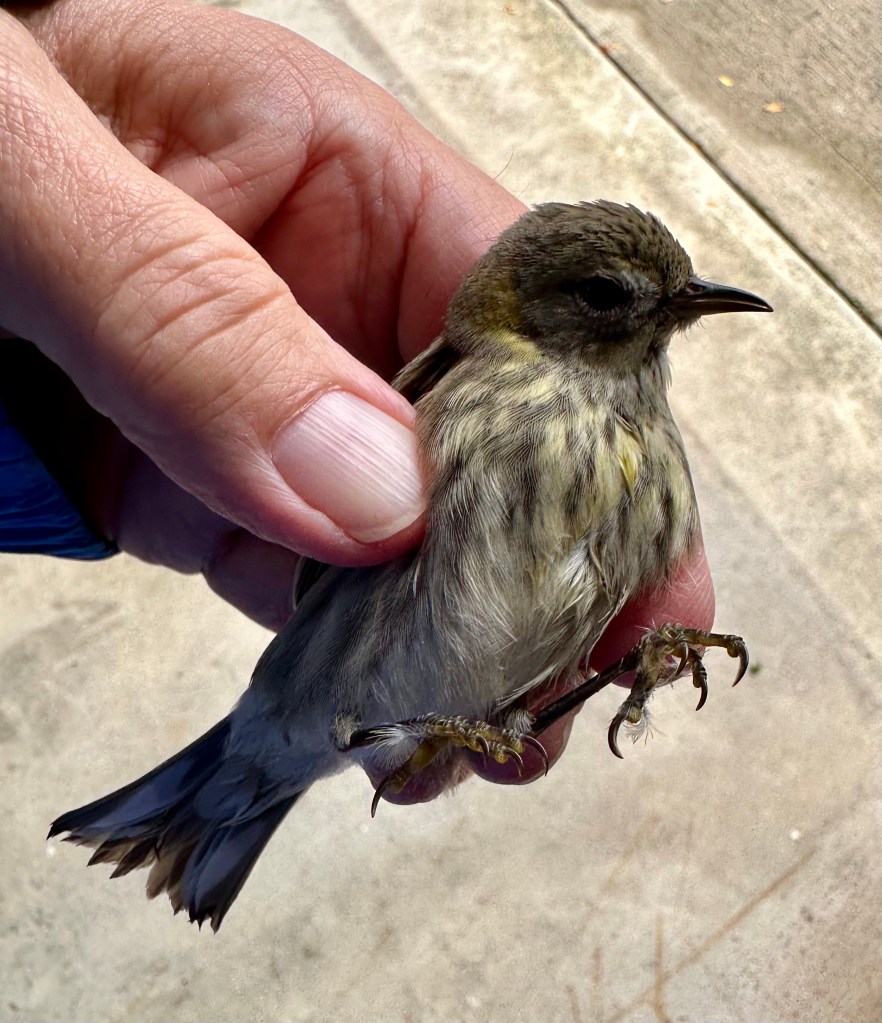
The tiny bird was still in the same spot in the few minutes I was away. It had managed to flop onto its feet but gave every sign of being injured. I bent down and gently picked it up. I thought the stripes on its belly and a faint yellow color indicated a Pine Siskin. I shared a photo of the bird with better birders than me and was happy to learn it was a Cape May Warbler.
This bird’s coloration would be much brighter in springtime, dressed in its mating attire. It was fall migration, and Cape May Warblers, like many other songbirds, turned dull for protection on their way to the Caribbean Islands from their summer nesting grounds in the far north’s spruce forests.
I returned to my vehicle and placed the stunned bird in the only thing I had: a grocery store tote bag. I called the nearest bird rehab center and was instructed to put the bird in a small box with airholes and secure it to keep it in place.
Back home, I found an appropriate box, laid a hand towel in the bottom, and placed another smaller box with slits over it so the bird could breathe. I headed for the rehab center 40 minutes away.
A mile from the rehab center, more rain from the remnants of Hurricane Helene began to fall. This wildlife hospital was in a mountainside woods outside a small city in Virginia’s Shenandoah Valley. I pulled up to the front door, and a volunteer soon arrived. Because I had called, they were waiting for me.
Just like a human hospital, I had forms to fill out. I wrote down my contact information and specific details on where and when I had found the bird. I was handed a card with the patient’s number on it to use should I inquire about the bird’s status. And just like that, I was on my way home.
I emailed the rehab center to correct my misidentification, but I didn’t hear back until two days later when I received a phone call. They thanked me for taking the time to bring them the warbler. The lab tech confirmed that the bird injured itself by hitting the window.
It was having trouble breathing and had internal inflammation. The rehabbers gave it oxygen, water, food, and the proper medication. The bird responded to the expert treatment and was ready for release, and their protocol requested that it be set free close to where it was found.
The caller wanted to know if I would pick up the bird and take it to a park near where I found the warbler. Without hesitation, I again cast aside my plans for the afternoon and gladly drove down to pick up the bird and release it at the park.
Returning with my healed patient, I wondered what my reaction might be. I was glad the bird had recovered, but emotionally, there was more to it than that. As a long-time avid bird watcher, I had found many birds dead from window strikes. I would freeze their bodies until I could take them to a local wilderness education center. The carcasses would be preserved and put on display for schoolchildren to inspect. As a birder and a retired educator, that gave me satisfaction.
But this case was different. I checked both the rescuer and transporter boxes on the form I filled out at the rehab center entrance. I felt joy for the bird and the rehabbers’ successful efforts. As for me, I rejoiced that I had forgone those errands to save the dainty bird.
I wasn’t any avian hero. Still, I was thrilled when I opened the box. After a brief hesitation, the recovered Cape May Warbler beautifully flew into the woods nearby, never to be seen again. I couldn’t stop smiling.

 Roadkill Crossing
You must be logged in to post a comment.