Birds and birders: Two of a kind

boardwalkentrancebybrucestambaugh
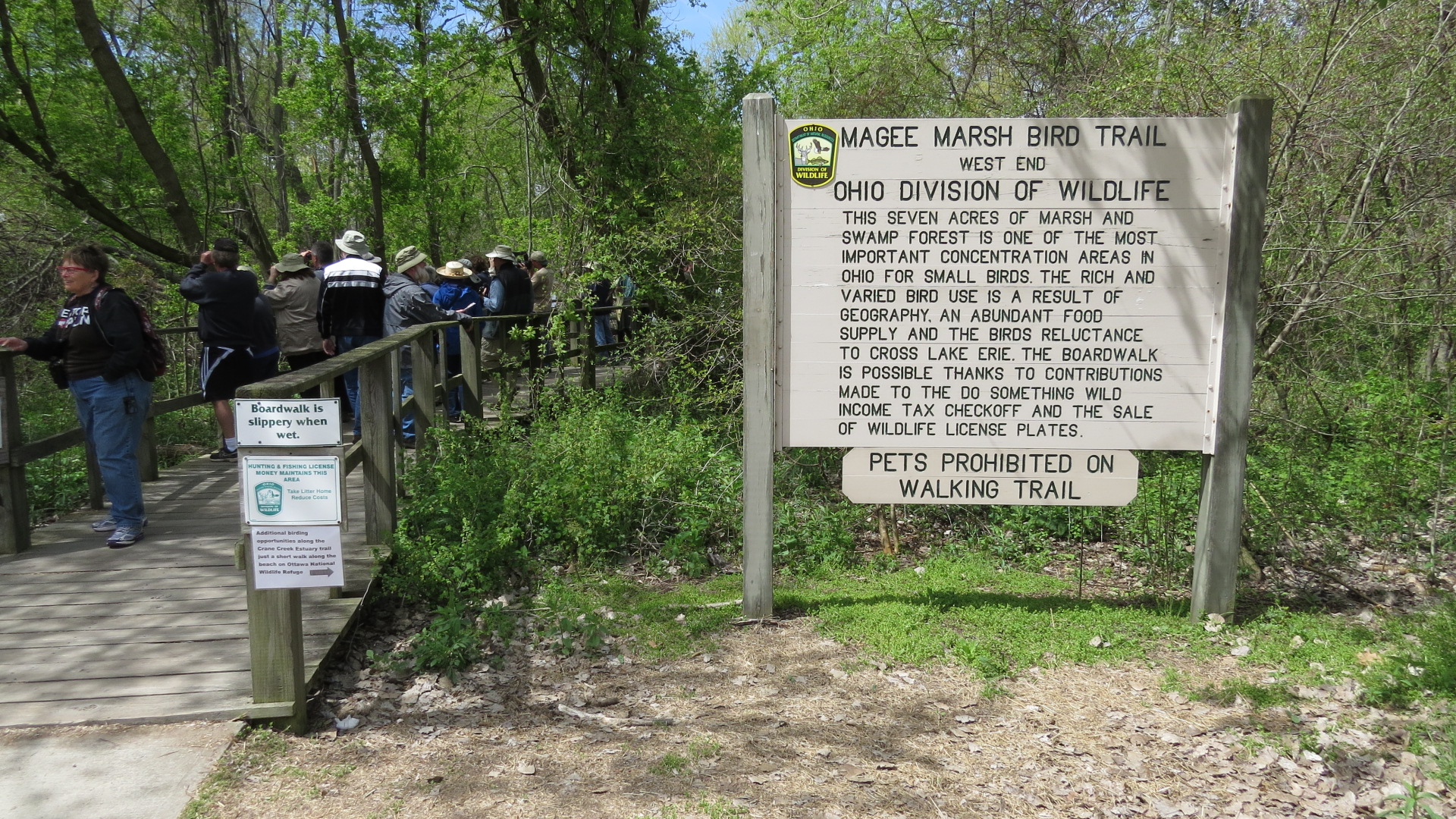
The west entrance to the Magee Marsh boardwalk is a great place to begin the birding.

By Bruce Stambaugh

Birds and birders have a lot in common. This thought struck me on my latest trip to northwest Ohio’s birding mecca, Magee Marsh Wildlife Area.

Billed as the Greatest Week in American Birding, the event coincided with the peak of the spring warbler migration. Warblers, and other migrating birds, use Ohio’s airspace as their launching pad to their northern breeding grounds.

Before the birds cross Lake Erie, they tend to rest along its shores. There they replenish their strength by devouring insects that flit around the budding and blooming deciduous trees, shrubs and wildflowers. Shorebirds scour the marshes and shores for their nourishment.
woodcockbybrucestambaugh
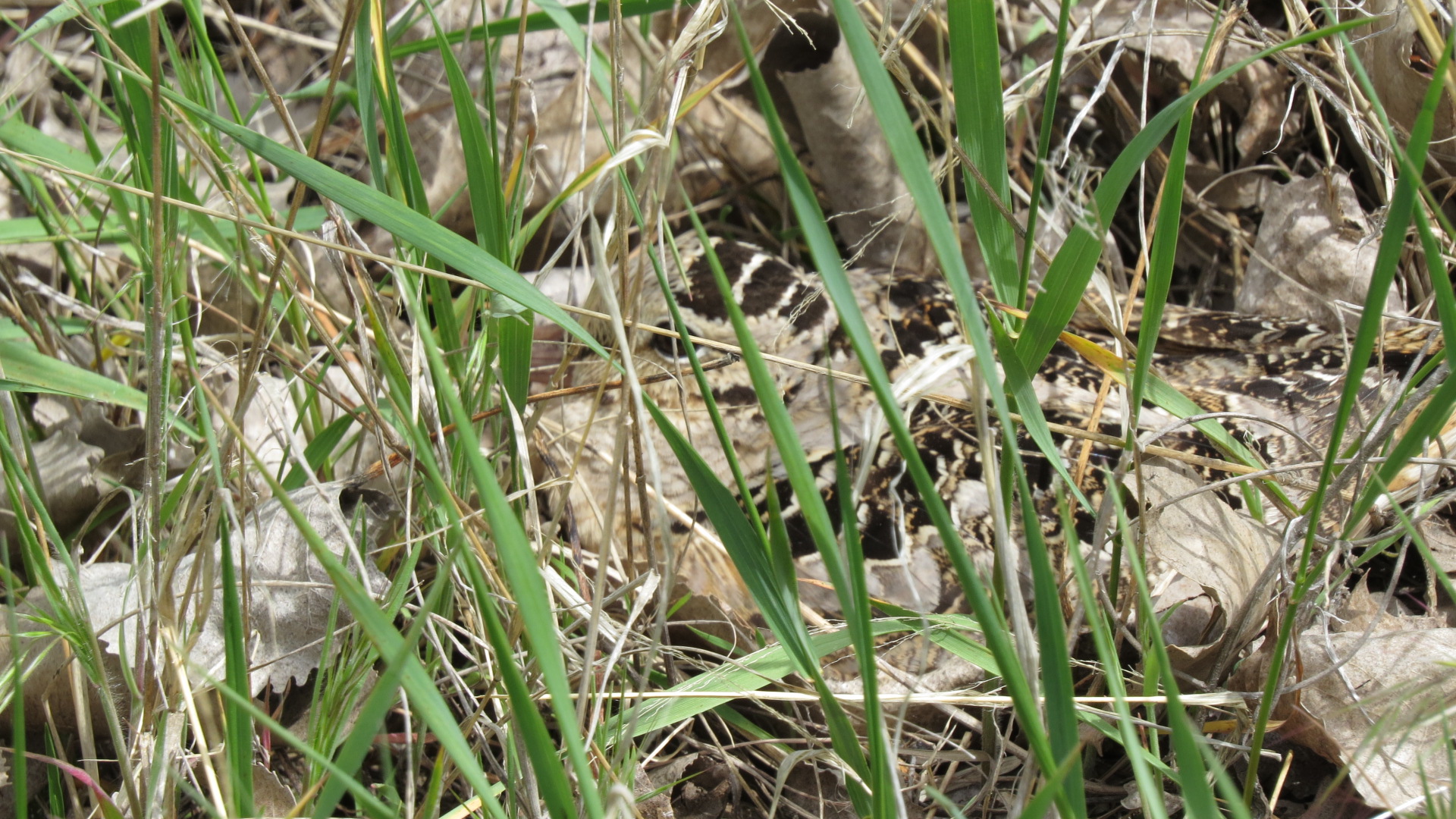
This American Woodcock chose the median of the parking lot to make her nest.

As an amateur birder, I enjoy watching backyard birds and observing passers through with equal zeal. But if I want to see a multitude of colorful migrating birds packed into one location, Magee Marsh is the place to go.

The marsh and its 2,200 surrounding acres serve as a sprawling wildlife sanctuary with varied habitat types, including estuaries, marshes, scrub lands, woodlots, rocky areas, beaches and of course the lake itself. The area also provides sportsmen with seasonal controlled hunting and fishing.
birdhabitatsbybrucestambaugh
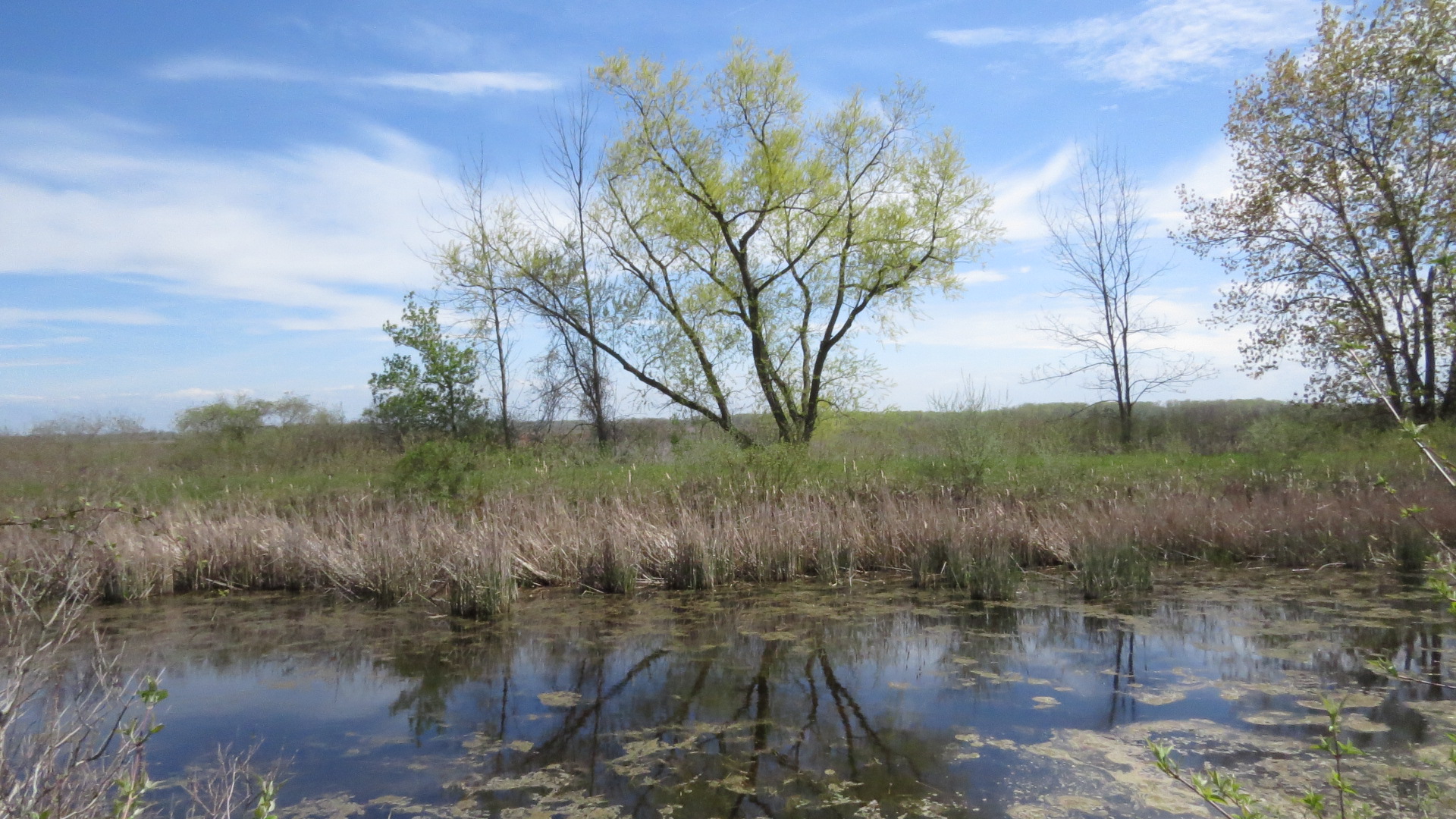
Magee Marsh has many habitats that attract several species of migrating birds.

During bird migration season, the only shooting of birds permitted is with cameras. Believe me, plenty of shots are fired in search of the perfect picture of the incredible songbirds, shorebirds, and birds of prey.

In my meandering around the boardwalk, trails and beach, I discovered something that should have been obvious. Birders have a lot in common with the birds they watch.

boardwalkbirdersbybrucestambaugh
Birders checked out warbler on the boardwalk at Magee Marsh

Like their feathered friends, birders come in all shapes, sizes and ages. Just like the birds, birders sport different hues and clothe themselves in a variety of colors, including camouflage, worn more to soothe the birds than hide from predators.

There are other comparisons, too. Some birders maneuver and forage in solitude for their targets. Others travel in organized groups. Most birders are quiet, but some let loose with an effusive chatter when a flashy warbler or rare bird is spotted.

When a shorebird captures a fish, it often finds itself quickly surrounded by others hoping to also steal a bite. When a birder discovers a coveted find, others gather around hoping to capture the image through their spotting scopes, binoculars, or cameras. Those without scopes are graciously invited to better view the often-concealed bird. Birders are genuinely kind people.

youngbirdersbybrucestambaugh
A young family took a break from their birding at Magee.
When a bird is located along the boardwalk at Magee, birders bob and weave, stretch and stoop to get just the right viewing angle. Birds do the same in search of food or checking out habitat. Most birders go in search of birds, like the many warblers that flit from limb to limb decreasing the insect population. Others sit and wait for the birds to come to them, like a Great Blue Heron patiently waiting for a fish to spear.

Camaraderie and sharing are normal in the sport of birding. Staunch birders make life lists, month lists, day lists, yard lists,
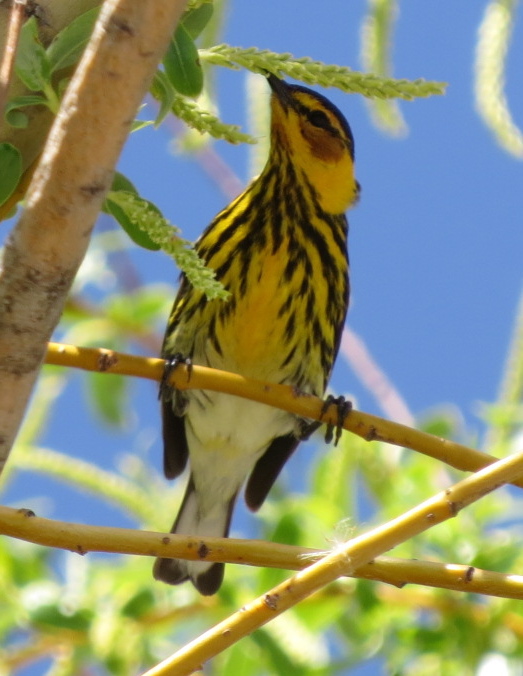
capemaywarblerbybrucestambaugh
This Cape May Warbler dined on insects before heading across the lake.
state lists, annual lists, and just about any other kind of list you might imagine. That’s how serious they take this popular sport.

If someone finds a bird they can’t identify, a more expert birder gladly assists in teaching how to properly confirm just what species it is. Teaching and learning are just as important as appreciating the birds and their habitats.

Perhaps that is why birding is one of the most popular sports in the world. During the Biggest Week in American Birding, global citizens flock to northwest Ohio in hopes of seeing a special species.

To hear the various lyrical birdsongs and behold the flashy mating plumages first hand is truly a treat. To see the smiles and satisfaction on the faces of the elated birders is equally rewarding.

happybirdersbybrucestambaugh
Birders tend to be pleasant, engaging people.

© Bruce Stambaugh 2013

Enjoying spring’s aviary adventures

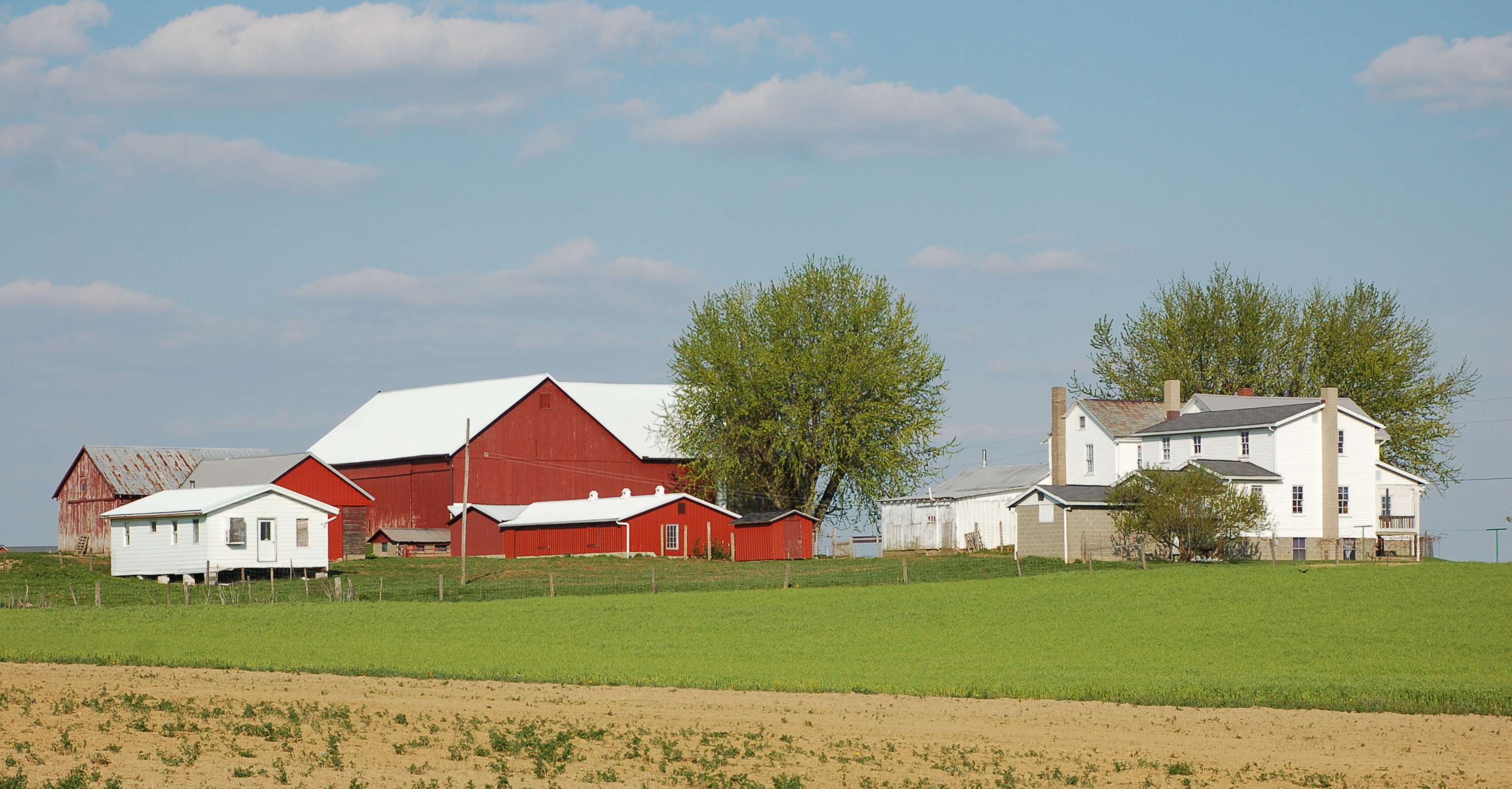
Amish farm by Bruce Stambaugh
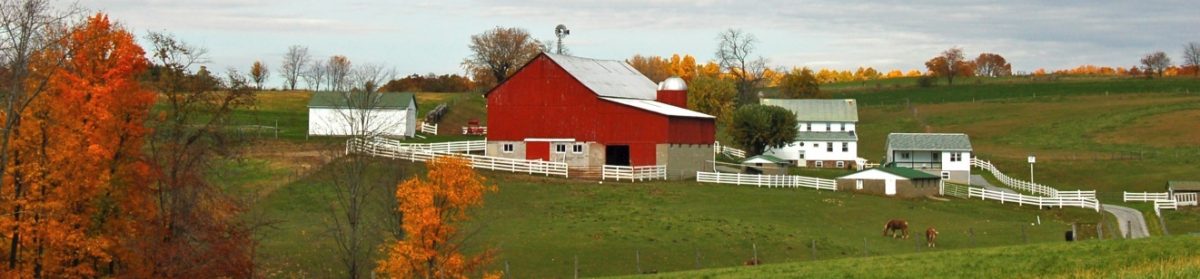
A typical springtime scene in the heart of Ohio’s Amish country near Mt. Hope, OH.

By Bruce Stambaugh

We are fortunate to live where we do here in northern Ohio, especially in the Holmes County area. Our manicured farmlands, brushy fencerows, dense woodlots, numerous lakes and the wetlands of the Killbuck Valley provide an abundant variety of habitats that attract an equal abundance and variety of birds.

In our busyness, we should stop, look and listen to the free show that is all around us. The many birds, some just passing through, others that will make their summer home here, can fill our senses with amazing music, incredible color, and entertaining activity. No admission charge is needed.

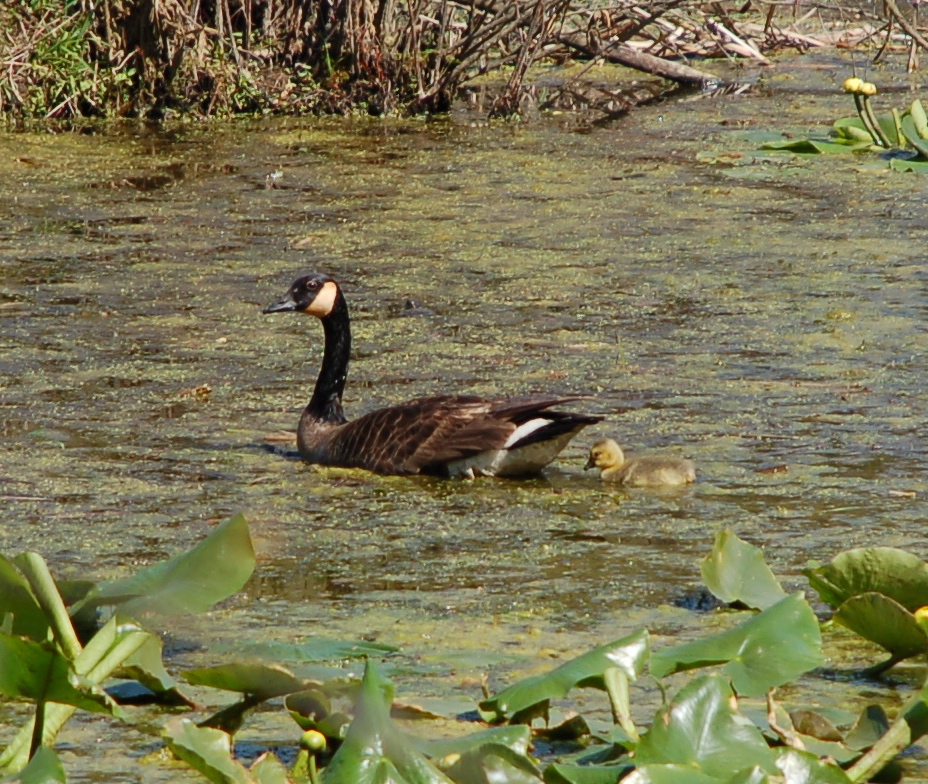
canadagoosebybrucestambaugh
A Canada Goose and a lone gosling glide in the marshy Killbuck Valley north of Millersburg, OH.

Even before sunrise, the chorus of songbirds begins to warm up like a pre-concert symphony. Usually the American Robins are first to welcome the new dawn with their varying songs. Soon others like the Northern Cardinals and Song Sparrows join in. By first light, a cacophony of warbling fills the morning air. Everyday brings a new chorus.

Once the morning brightens, the birds mix a paint palette of colors into the recital. Now at their height of intensity for procreation purposes, the colors of the birds are positively stunning. Their appointed markings are a pleasure to behold.

White-crowned Sparrow by Bruce Stambaugh
A White-crowned Sparrow stopped for fuel on its way north.
The male White-crowned Sparrow, with its alternating bold black and white stripes atop its head, could serve as a referee amid all the commotion and scramble for seeds at the backyard feeders. Instead, it is intent on fueling up for its long flight deep into the Canadian northlands.

Pairs of Cardinals forage for their breakfast of cracked corn and oil sunflower seeds. Like two teenagers in love, the bright red male feeds his adoring but duller mate in their courting ritual.

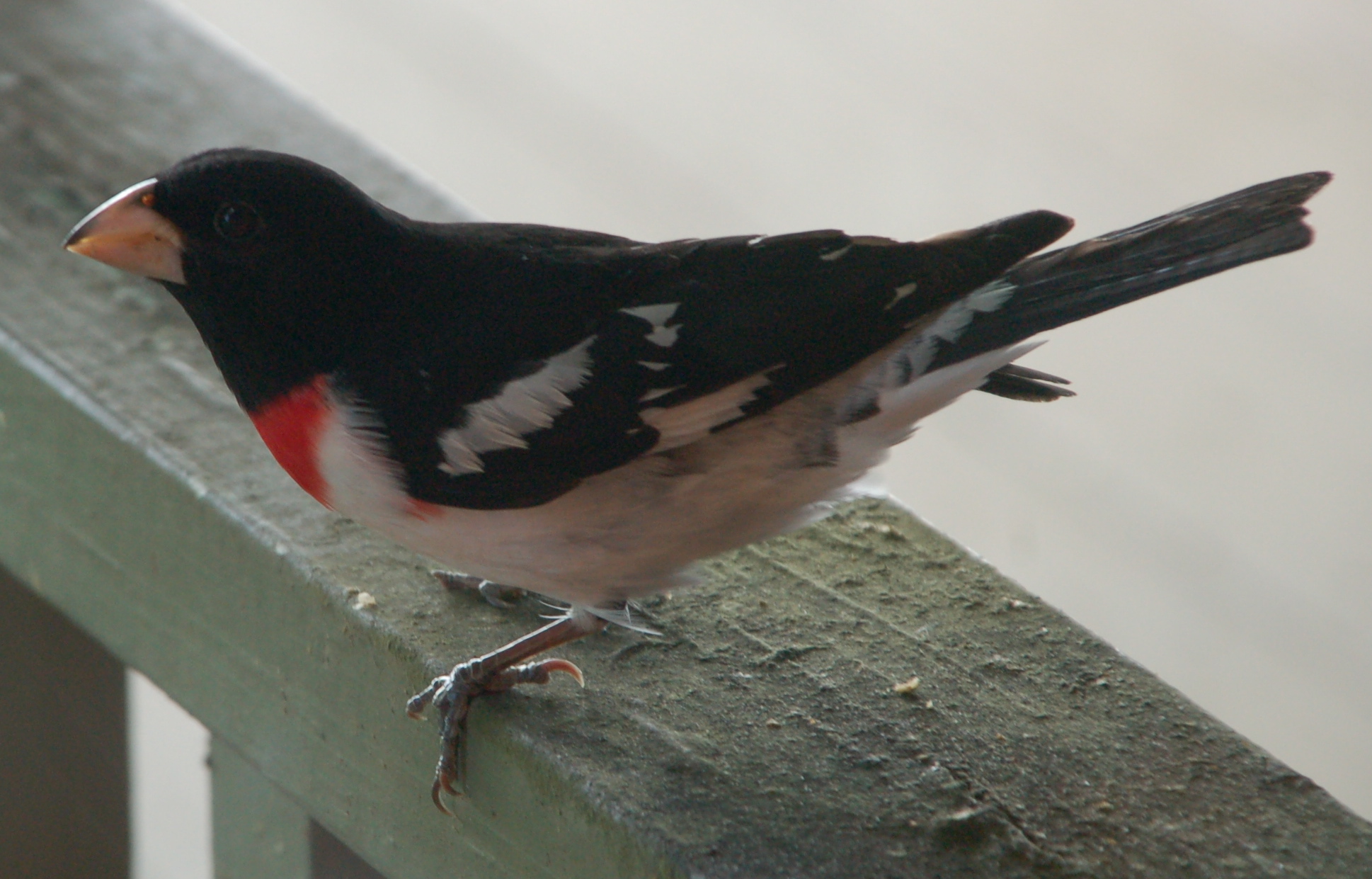
Rose-breasted Grosbeak by Bruce Stambaugh
Rose-breasted Grosbeaks are regular visitors to backyard feeders.
Without hesitation, the impressive Rose-breasted Grosbeak sallies onto the feeder hanging only inches from the kitchen window. Even in a brief glimpse it is easy to see how this bird got its name, its rosy breastplate all too obvious. The female, on the other hand, is awash in rich creams and browns, all for protection against hungry predators.

Baltimore Oriole by Bruce Stambaugh
A female Baltimore Oriole enjoys frequent visits to the bird grape jelly feeder.
The Baltimore and Orchard Orioles enjoy quick snatches of a grape jelly concoction housed in upside down bottle caps on the porch railing. A couple of quick gulps and they are gone, but never far away. Their liquid warbling says they’ll be back later for more.

The regal Red-headed Woodpeckers command attention from humans and aviary audiences alike. Without being bossy, they clear the feeders all to themselves. No doubt their brilliant red, white and black attire and their size have a lot to do with that.

Red-headed Woodpecker by Bruce Stambaugh
A male Red-headed Woodpecker visits the peanut butter suet feeder several times per day.

The Red-bellied Woodpeckers are bolder, both in sound and behavior, their iridescent red head stripes as flashy as strobe lights on patrol cars. Their noisy chatter serves as a warning siren announcing their arrival.

Even the little Black-capped Chickadees come dressed for the dinner party. Their tuxedo-like coloration is fresh and ready for the spring prom. They zip back and forth from tree branch to feeder, neatly holding the seed with their feet, while their tiny beak chisels for the main course, the sunflower heart.

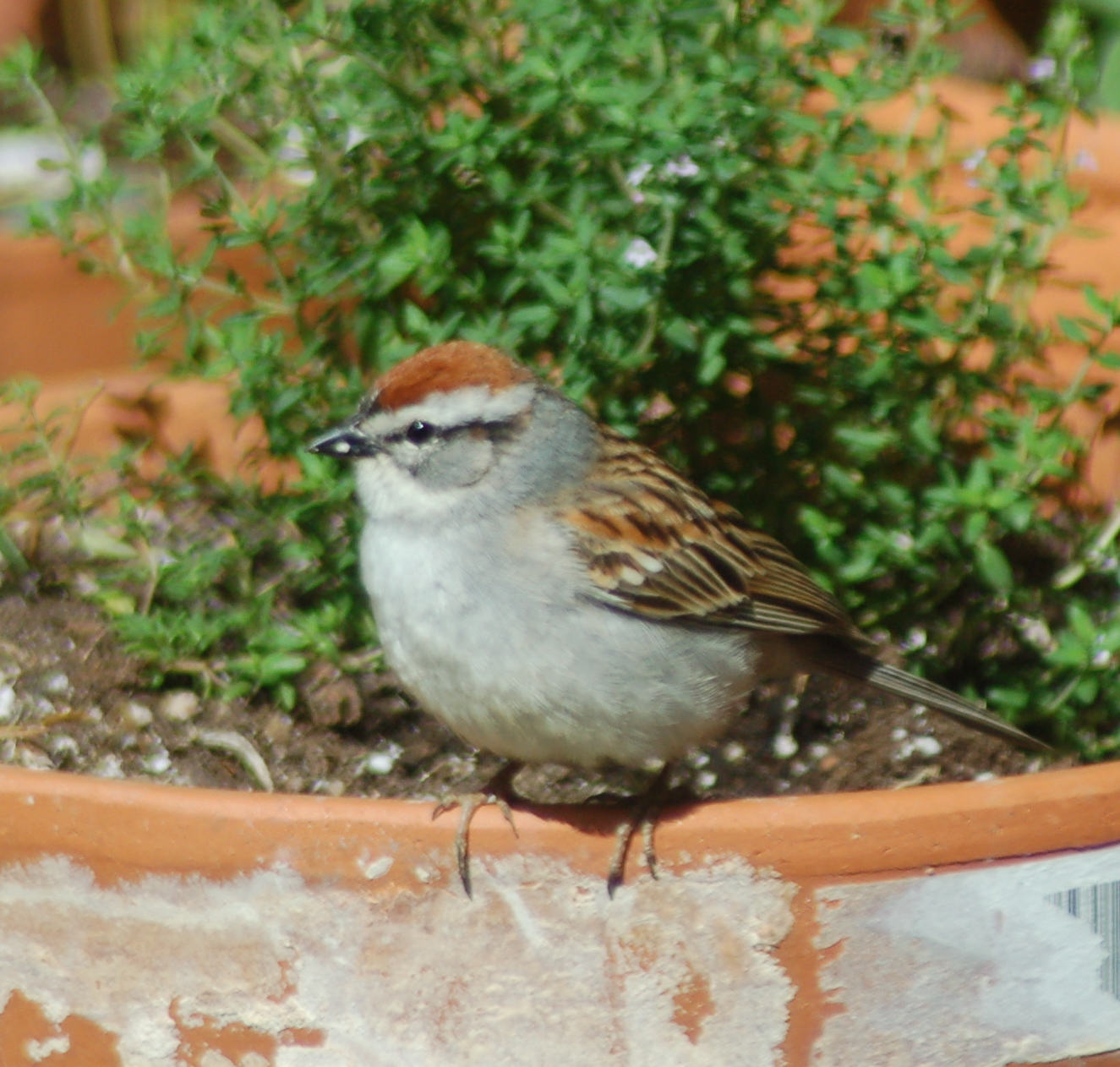
Chipping Sparrow by Bruce Stambaugh
Even the little Chipping Sparrow is a joy to observe.

One hates to turn away from the aviary activity to see what might be passing overhead. An American Eagle, a Great Blue Heron, flocks of Mallards? It’s springtime in Ohio. All options are open in this intermingled habitat.

It is amazing what we can observe, especially when our feathered friends enter our life space. We just need to stop, look and listen.

© Bruce Stambaugh 2012

Bay Photos by Donna

Wildlife Photos From The Chesapeake Bay Region

ROAD TO NARA

Culture and Communities at the Heart Of India

K Hertzler Art

Artist and nature journalist in the Shenandoah Valley of Virginia.

Maria Vincent Robinson

Photographer Of Life and moments

Gabriele Romano

Less Noise. More Meaning

Jennifer Murch

Art is the only way to run away without leaving home. -Twyla Tharp

Roadkill Crossing

Writing generated from the rural life

ANJOLI ROY

writer. teacher. podcast cohost.

Casa Alterna

El amor cruza fronteras / Love crosses borders