

With the calendar turning from February to March, bird migration has officially begun. True, several bird species had already started the arduous task of returning north from their southerly winter habits.
To account for that, birders divide the seasonal calendar in the Northern Hemisphere much differently than humans do. Bird spring runs in March, April, and May when most migrating birds return to the nesting homelands in the northern United States and Canada.
Surprisingly, summer is the shortest season for birds. It lasts just two months, June and July. It’s prime mating, nesting, egg laying, and hatching time. Once the young are self-sufficient, the first migrating birds begin their long trips south.
The fall season for birds runs from August through November. Different species have more than one brood and migrate on a different schedule based on habitat, food supplies, and other factors. For birds, December, January, and February comprise the winter months.
So, now that March has arrived, birders scout their favorite ponds, lakes, rivers, streams, wetlands, and fields for any early arrivals on their way north. Birders especially prize waterfowl and songbirds to spot and photograph.
Locations where migrating birds frequent are called hot spots. I checked a few on March 1. Though I didn’t find many bird species, I enjoyed seeing and photographing new migrants.

My first stop was one of my favorite locations for birds and sunsets, Silver Lake in Dayton, Virginia. It’s a 12-acre lake built in 1822 for a mill. The shallow lake is perfect for diving and dabbling ducks. I saw only a trio of female Buffleheads and one muskrat this time.
A few miles away is the Cooks Creek Arboretum, tucked away at the end of a cul-de-sac. I spotted three birders with binoculars aimed at a hillside farm field. Birders tend to be pleasant people, so I didn’t hesitate to ask what they were seeing.
“About 150 American Pipits are flying and landing in the field,” one of them said. “Unfortunately, they seem to land over the crest of the hill.”
We walked together down the path to get a better look, but with a heavy cloud cover in the late afternoon, the birds were only visible during their short, rapid flights. However, I followed the birds to the flatter, more southern part of the field.
I captured a relatively poor photo of a few of the pipits flying. Patience, though, is a venture for birders. I saw a few birds foraging in the green vegetation of the field. I captured one of the small brown pipits as it began to fly. After wintering in the extreme southern U.S. and Mexico, the pipits were on their way to the far north Arctic tundra.

Please click the photos to enlarge them. Photos by Bruce Stambaugh
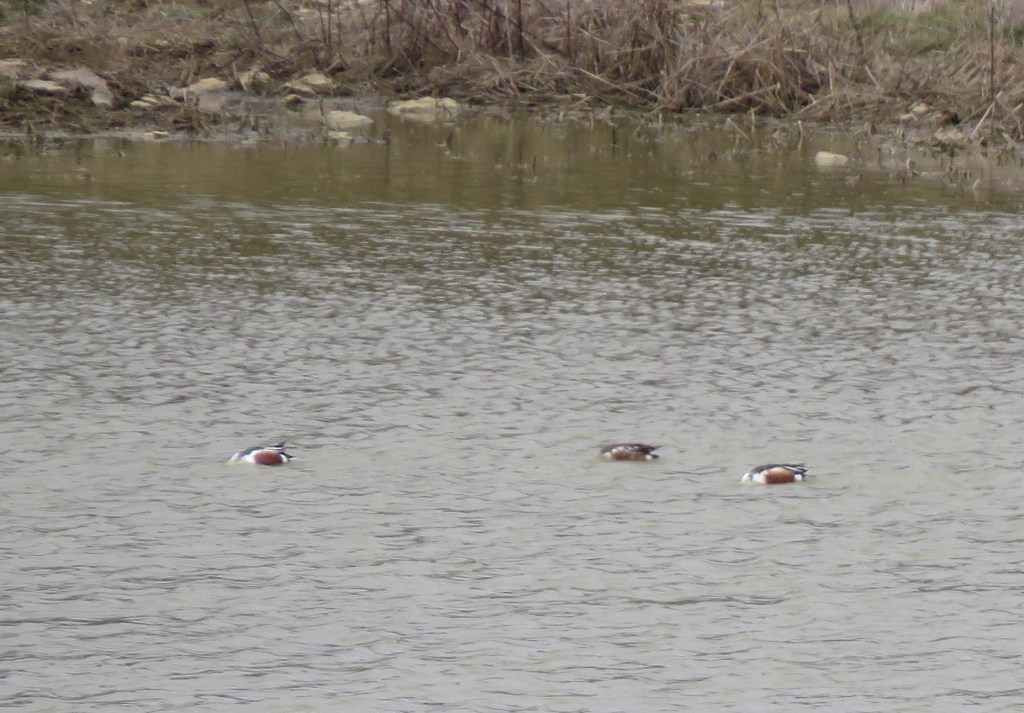
Happy seeing these fascinating visitors, I was pleased at my next stop just a few miles east. A local hot spot farm pond held dozens of Green-winged Teals and a handful of Northern Shovelers. Since the pond is on private property, I stood on a knoll across the road from the pond. With the distance of the pond, the chilly wind, and my inability to hold the camera steady, I felt fortunate to get some shots of these lovely birds.
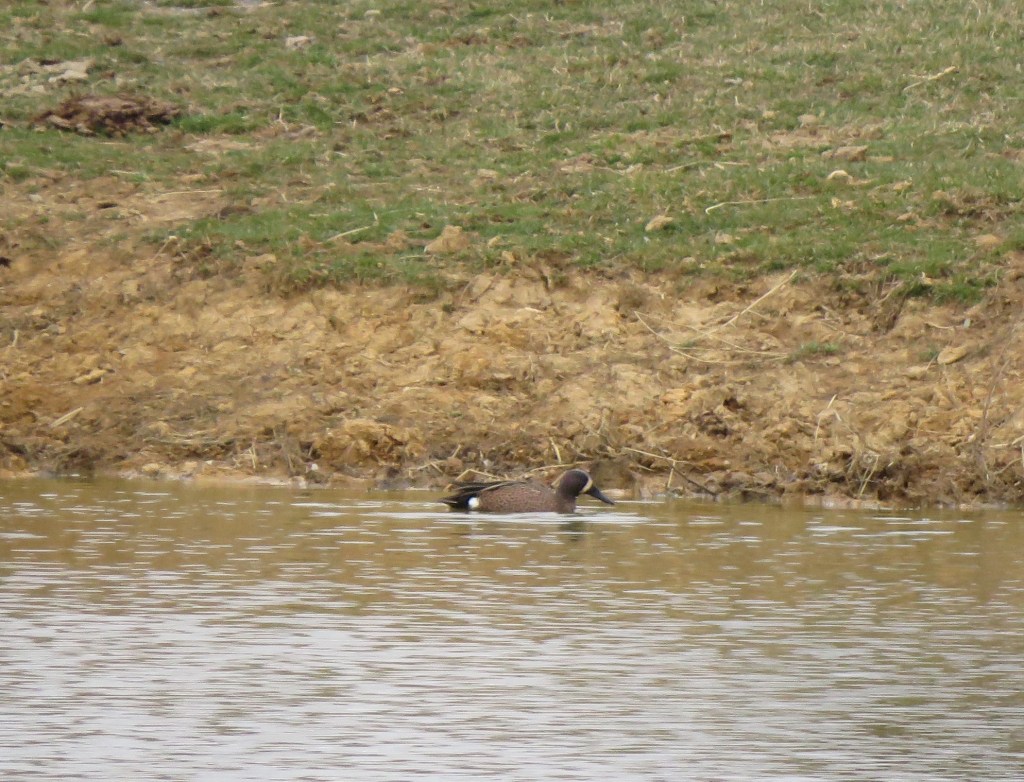
I drove several miles to another farm pond much closer to the road. A lone Blue-winged Teal swam with a pair of Mallards while two Canada Geese watched from the shoreline.
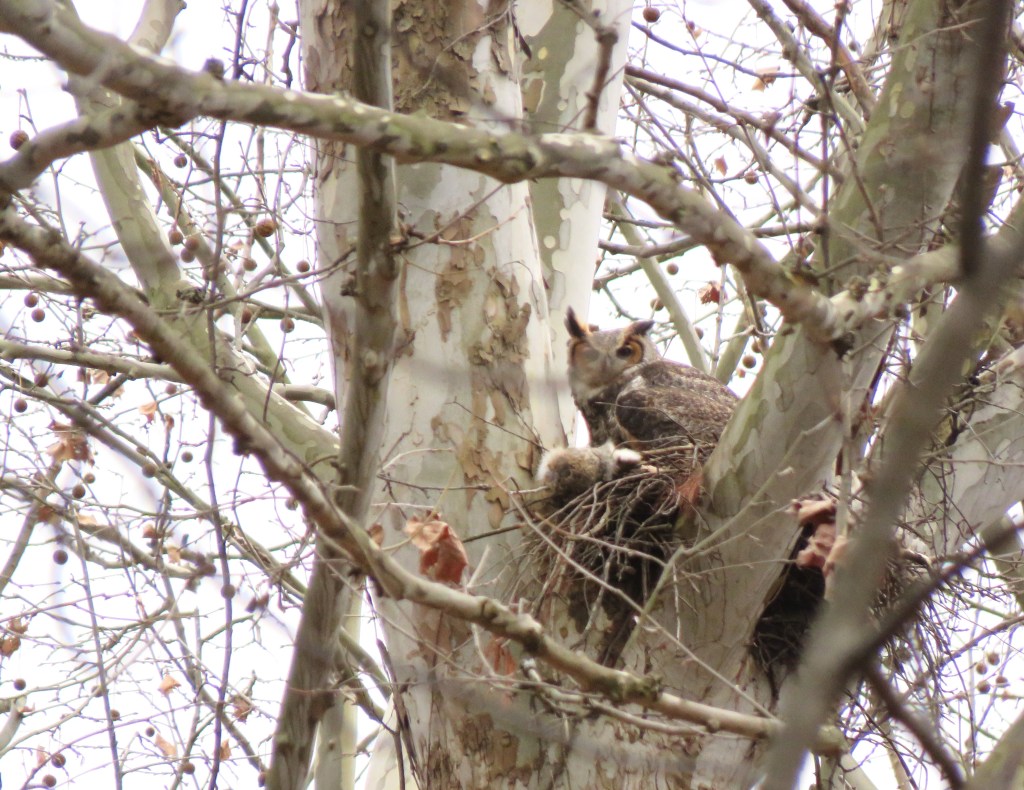
On the way home, I detoured to a local arboretum and quickly found a nesting Great Horned Owl with two owlets in the fork of a sycamore tree. Friends had told me about it the day before.
Though spring doesn’t officially arrive until March 19, the birds are on the wing for spring migration. I intend to catch as much of the birding splendor as I can.
© Bruce Stambaugh 2024
 Roadkill Crossing
You must be logged in to post a comment.