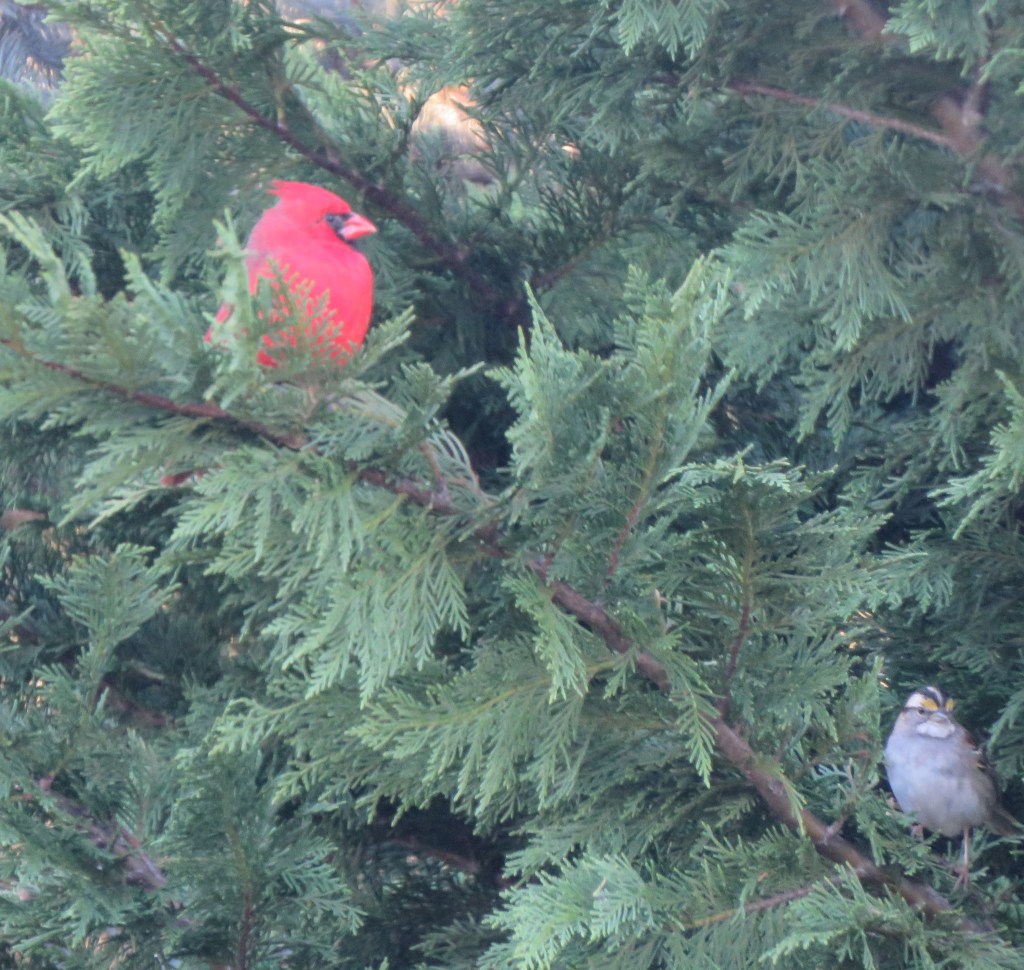
Sometimes photographers get lucky. I spotted this male Northern Cardinal perched in the evergreens behind our home. I took several shots as the bird turned and presented different poses.
When I uploaded the photos to my laptop, I had no idea that the White-throated Sparrow had popped out of the dense foliage. It wasn’t in any of the other photos. I cropped the photo because the sparrow is barely in the frame.
Photo by Bruce Stambaugh 2026
So, when I thought I was capturing an image of one bird, I ended up with two.
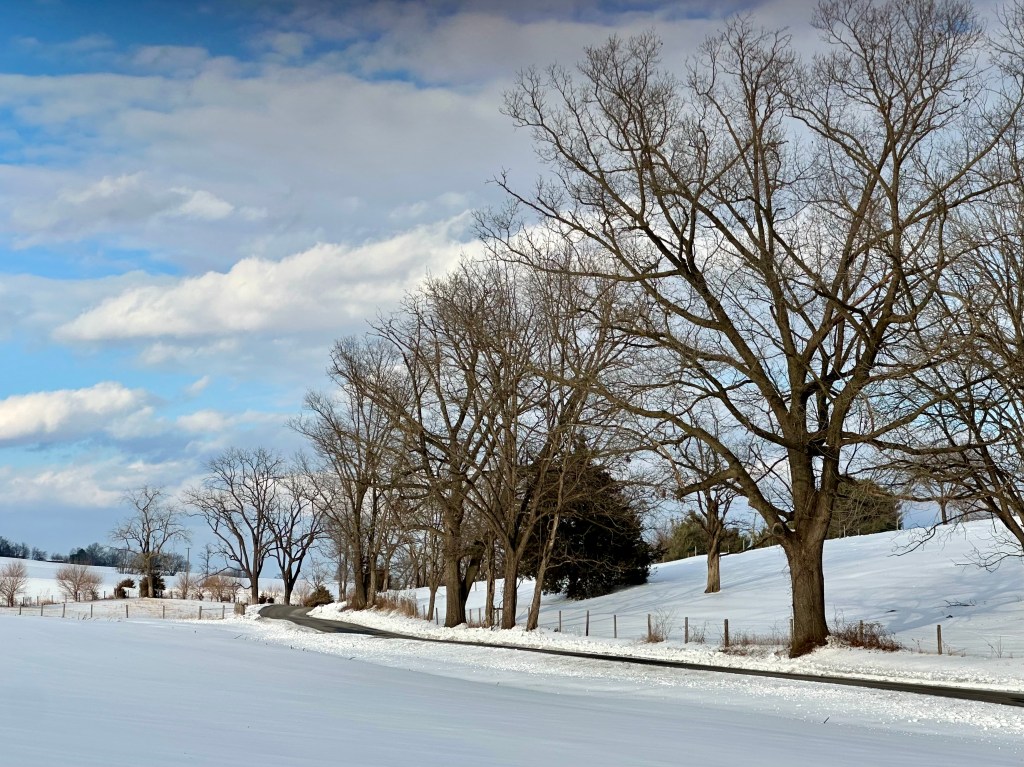
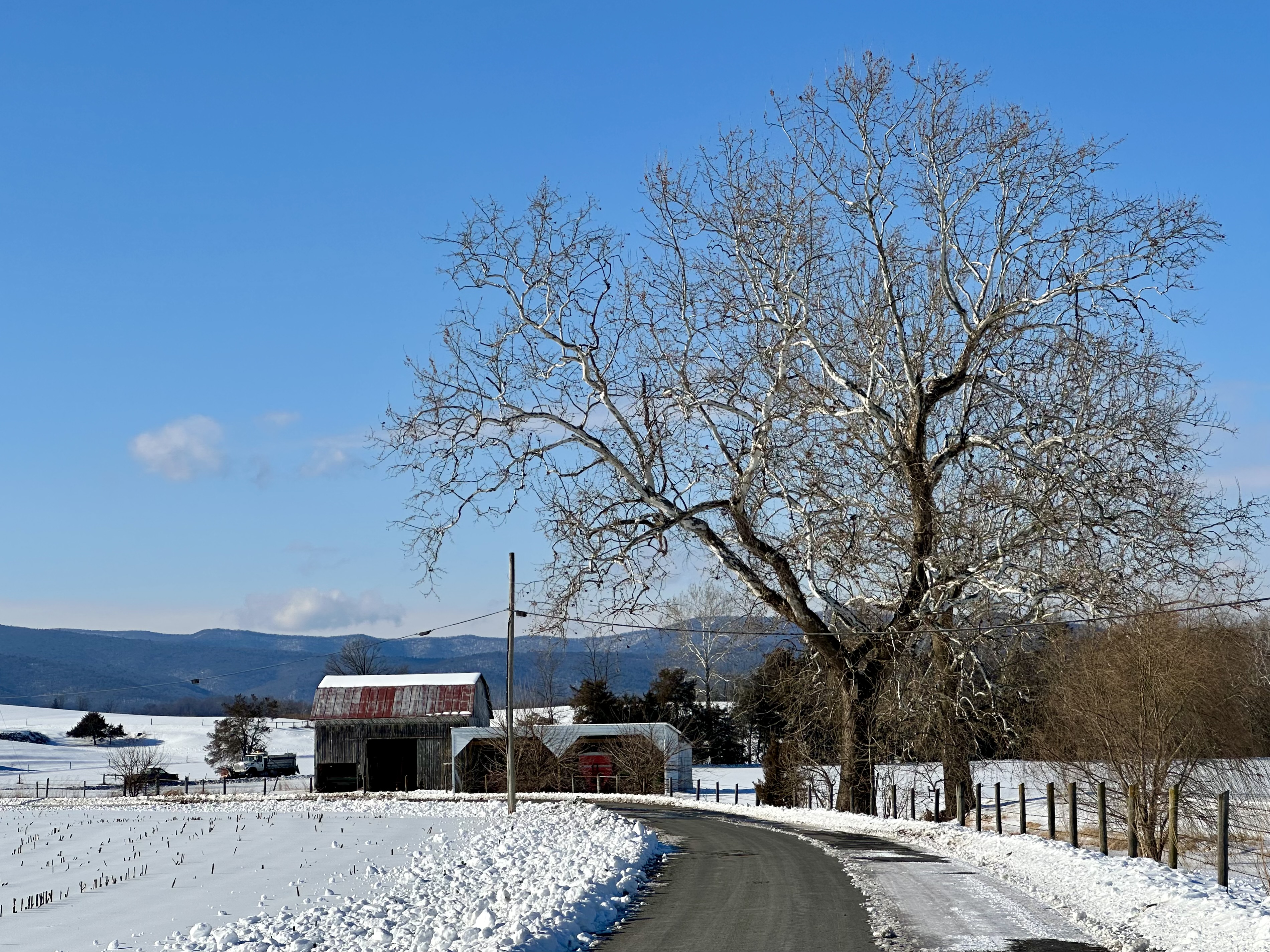
A rural road cuts through the snow. Photo by Bruce Stambaugh
It took a rare bird sighting to get me out of our warm home and into the frigid weather after a snowstorm dumped six inches of snow and sleet onto Rockingham County, Virginia.
A lone Snow Bunting had been spotted along with small flocks of Horned Larks in an area noted for rarities. A Snowy Owl was spotted there in November 2024.
I was familiar with the birds’ location, but I still took the long way around to get there. I wanted to drive the main roads to ensure my safety.
Like most areas hit by the recent storm, the temperatures dropped to record or near-record marks as the system slowly moved away. Consequently, the snowpack froze as the nighttime temperatures dropped to single digits.
That made snow removal difficult, and salting highways inefficient. Still, the roads were clear, but the plowed snow piled up like concrete construction barriers on both sides of the road, blocking roads and sidewalks.
Before I ever turned onto Lumber Mill Road, a flock of Lapland Longspurs flew in front of my stopped vehicle. A passing car spooked them, ruining my photo opportunity.
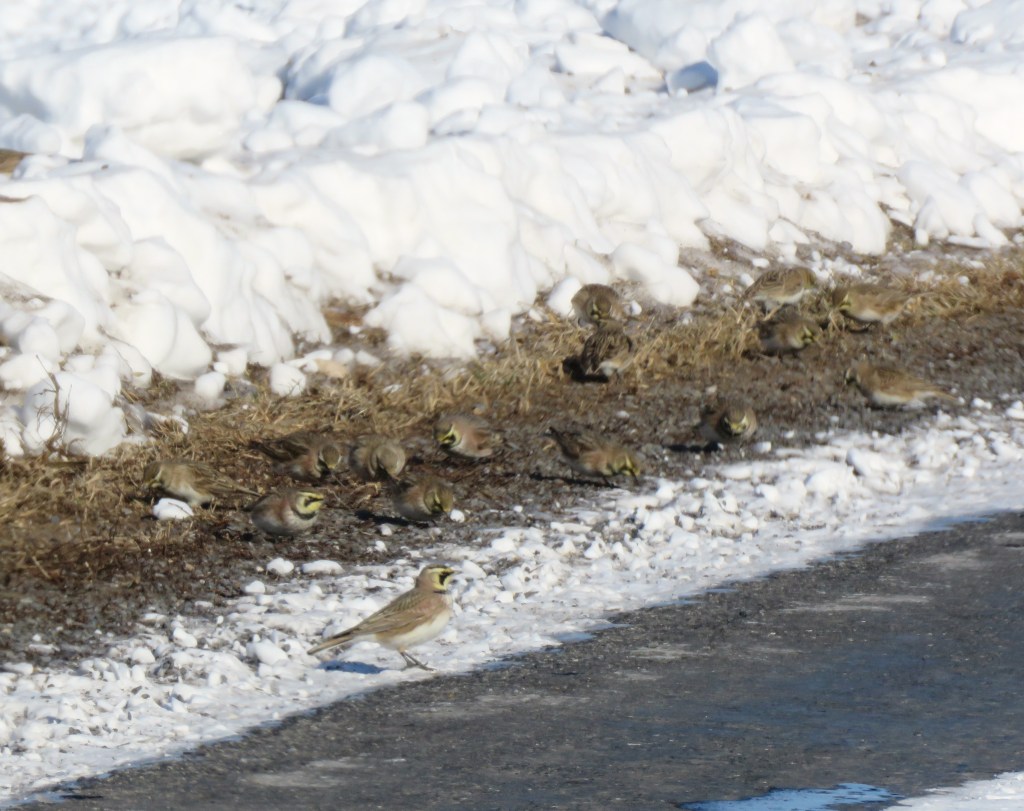
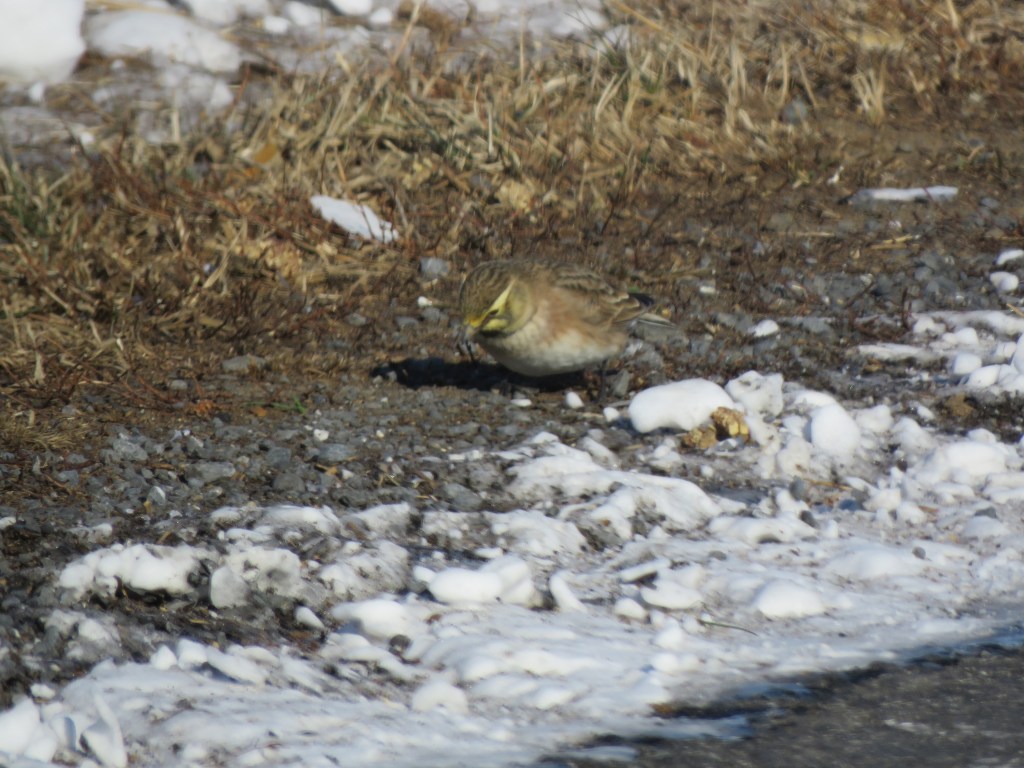
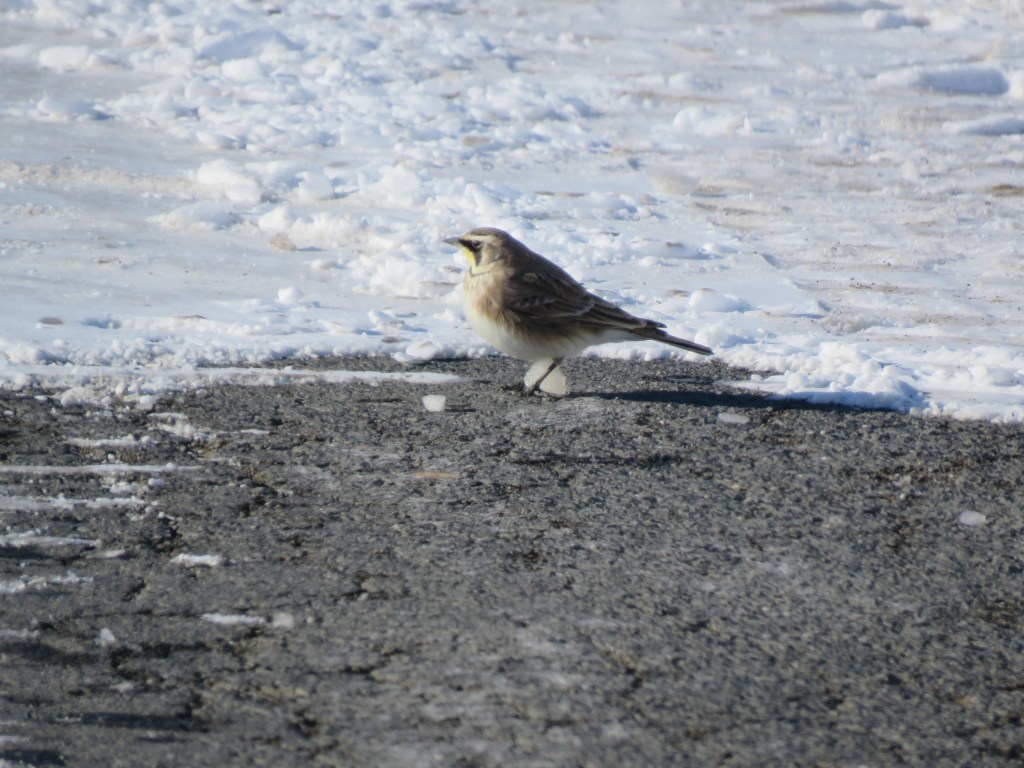
As I approached the area where the Snow Bunting had been seen, small flocks of Horned Larks flew in loops over the snow-covered farm fields on either side of the roadway, then landed close to where they had launched. The birds were feeding along the roads where the snowplow had exposed patches of weedy grass. The birds also used the grit and salt to help digest the seeds they ate.
Horned LarksA Horned LarkA Horned Lark in the road
Please click on the photos to enlarge them.
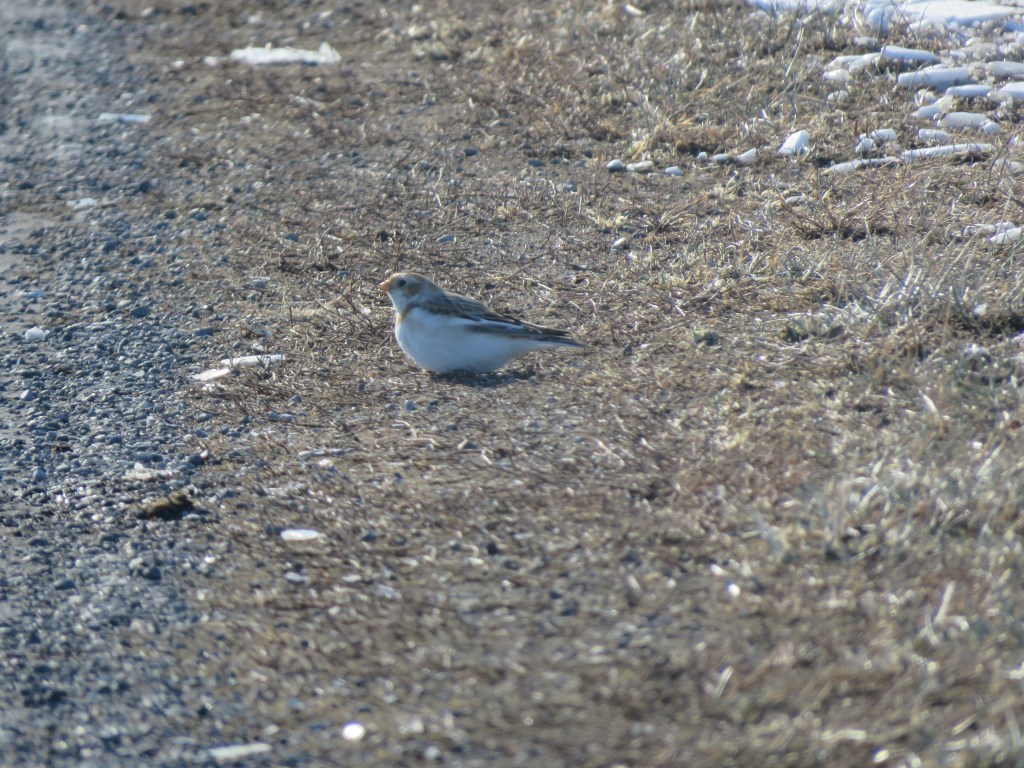
Having photographed the Horned Larks, I proceeded a few yards down the road, and the Snow Bunting flitted farther ahead. I stopped my SUV and used my telephoto lens, not wanting to scare the bird again.
Given the harsh weather conditions, schools and many businesses had closed. Sidewalks and parking lots in the more urban areas had yet to be plowed. The extreme cold weather compounded the problem.
With the sun bright during the day, the surface layer of the snow cover melted slightly, and the snow froze harder as nighttime temperatures fell. Those conditions kept most people at home, significantly reducing the traffic on roadways.
The lone Snow Bunting. Photo by Bruce Stambaugh
Alerted by an email, other birders soon arrived, and I was happy to point out where the Snow Bunting had appeared. I was excited to see it myself, since I had never seen Snow Buntings in Virginia. Plus, it was unusual to see only one. Snow Buntings commonly appear in small flocks, and the only other time I had seen them was 50 years ago in my backyard during a rare blizzard in Ohio.
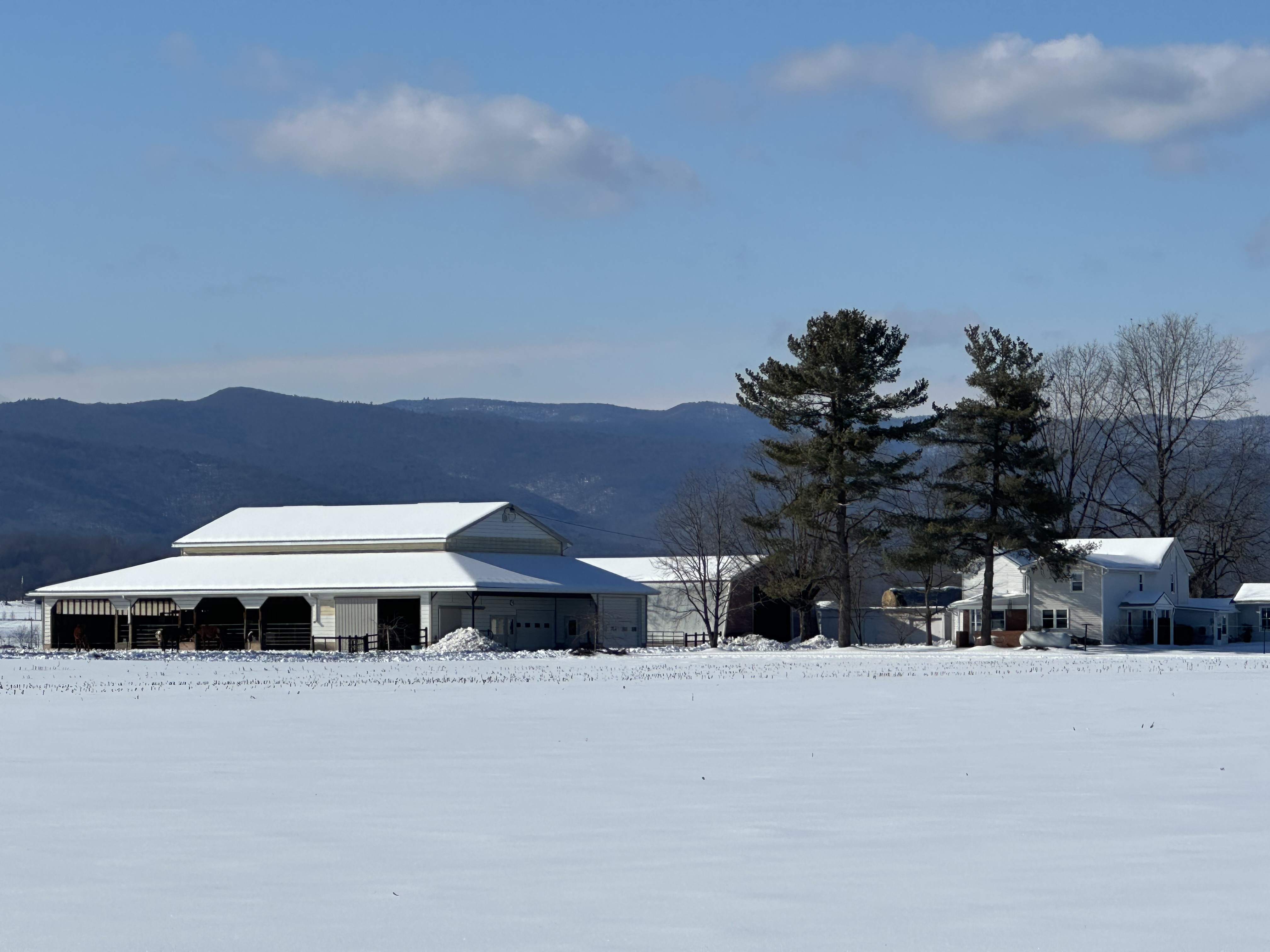
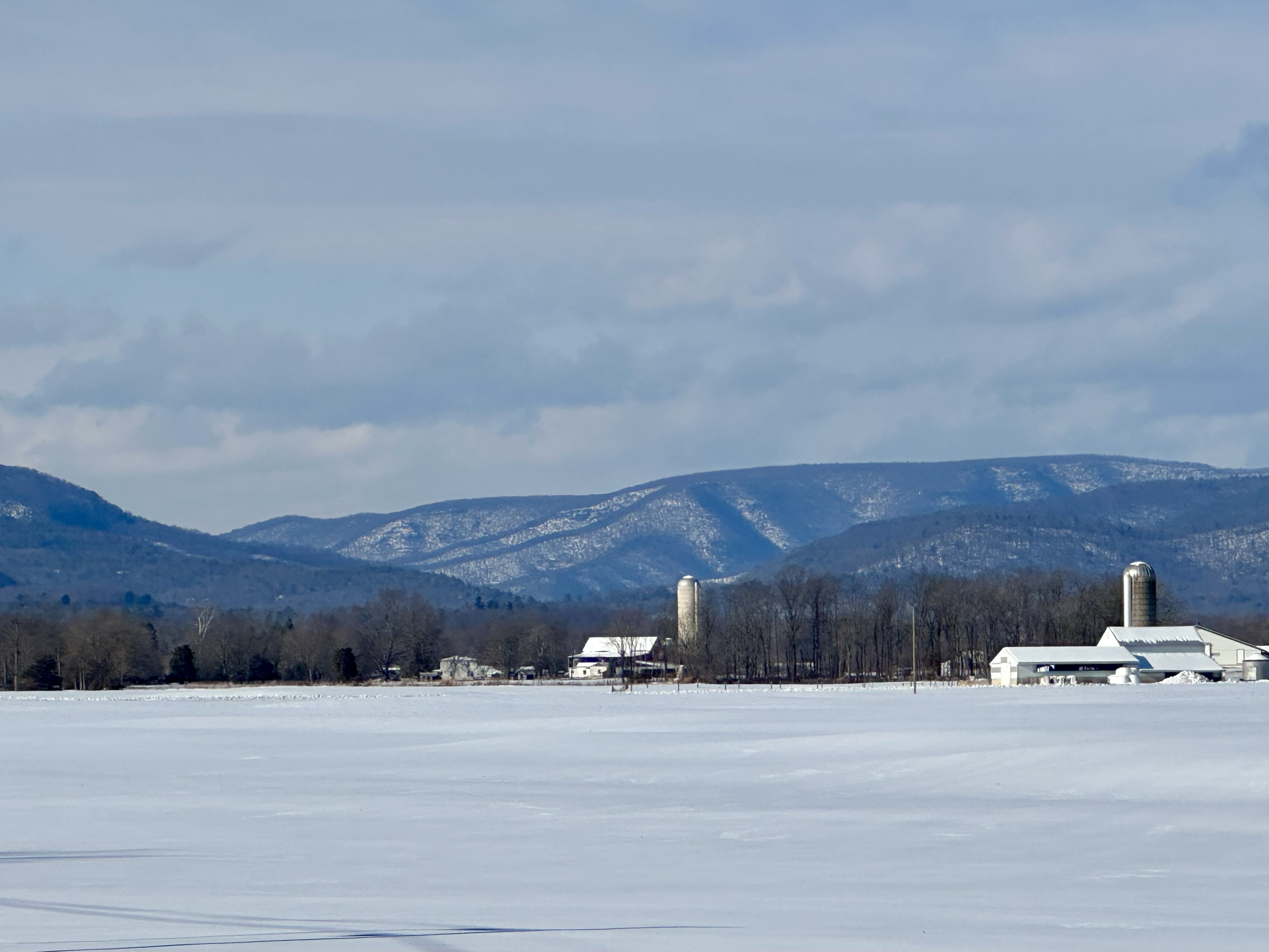
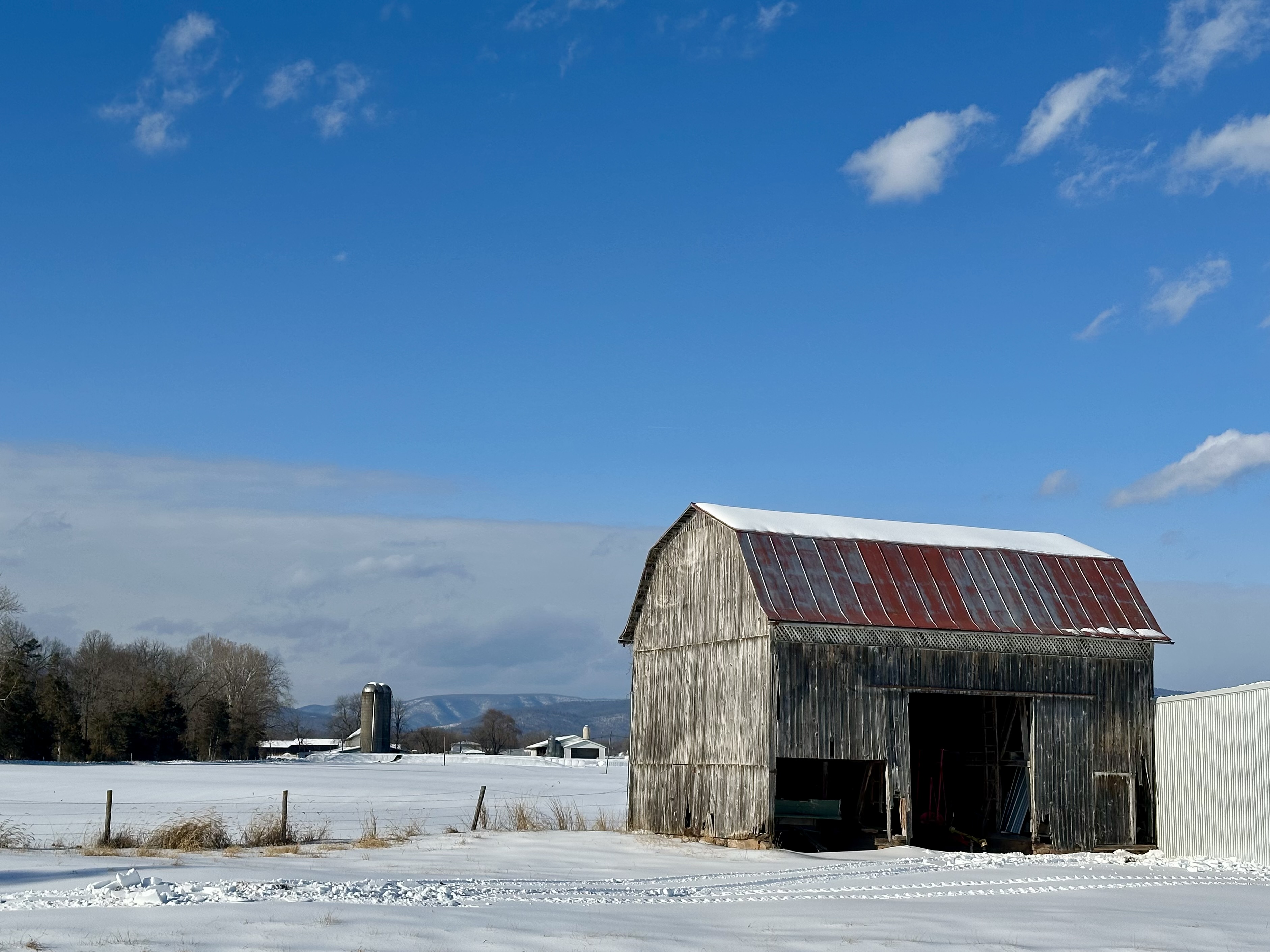
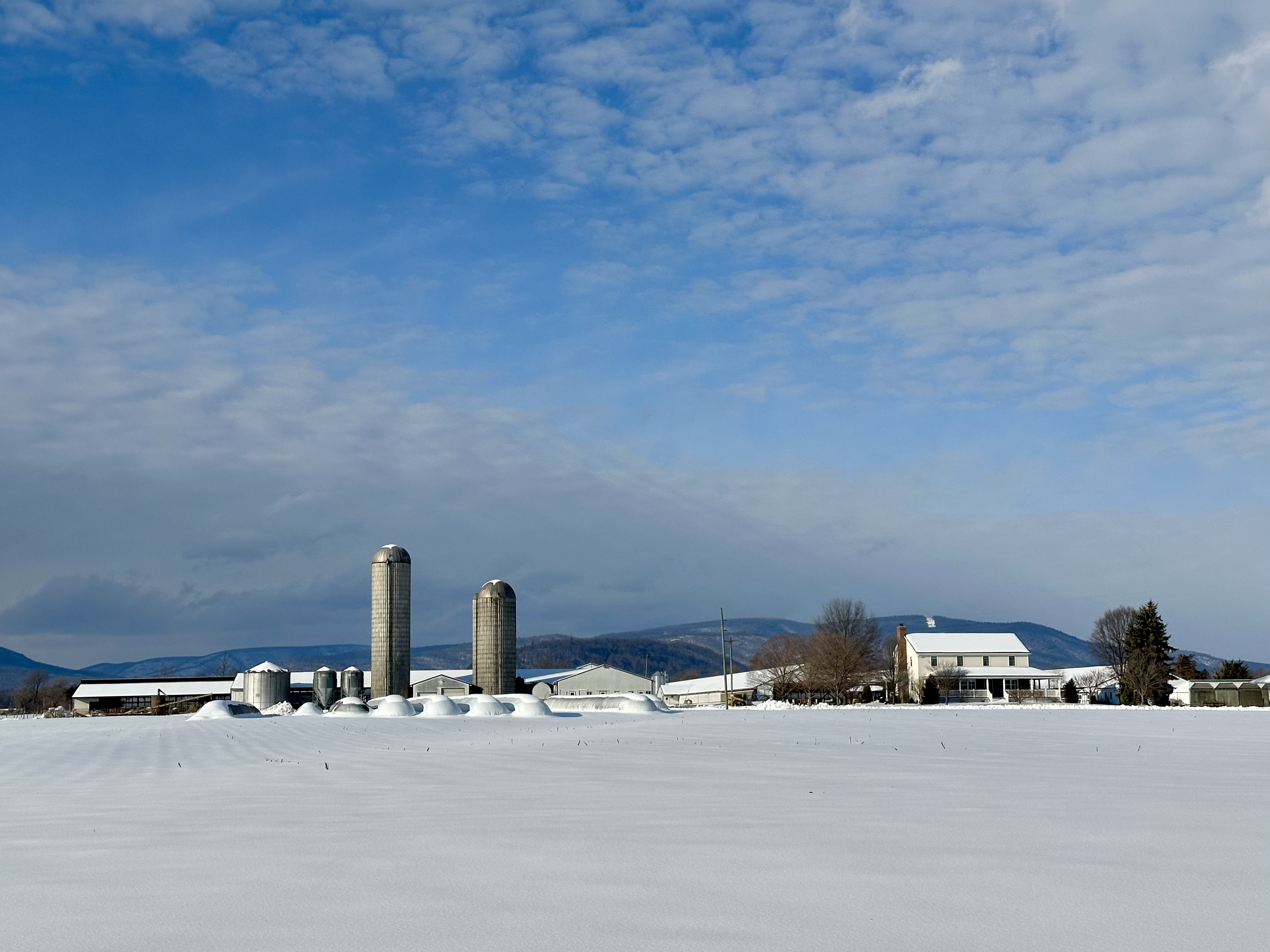
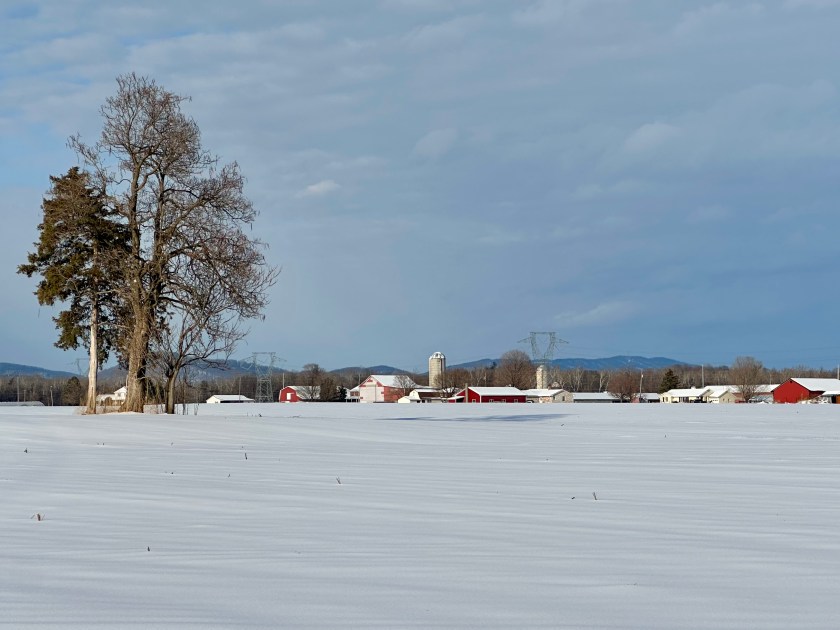
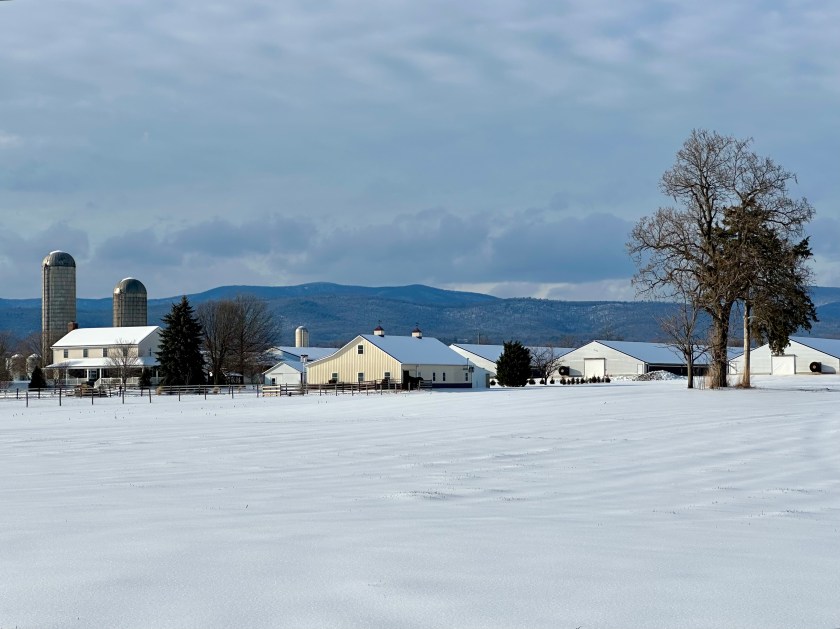
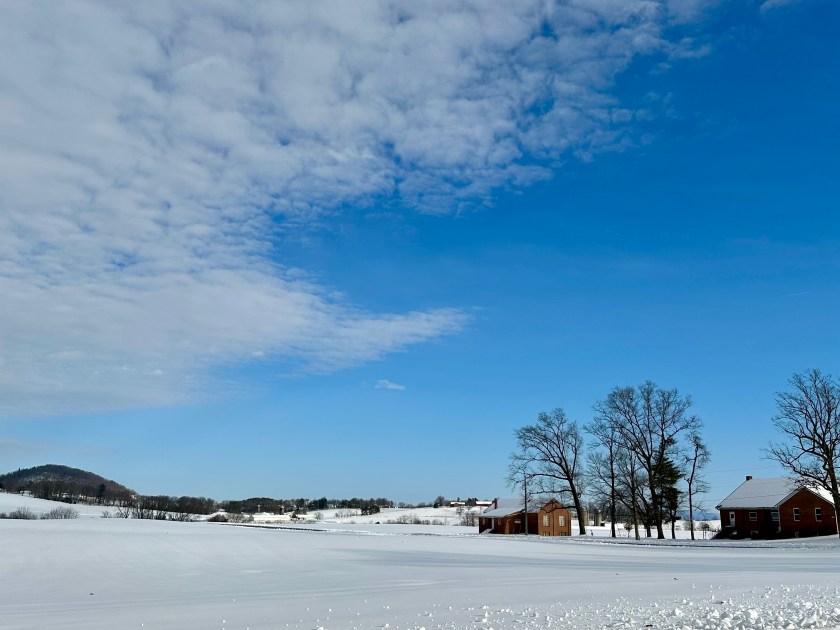
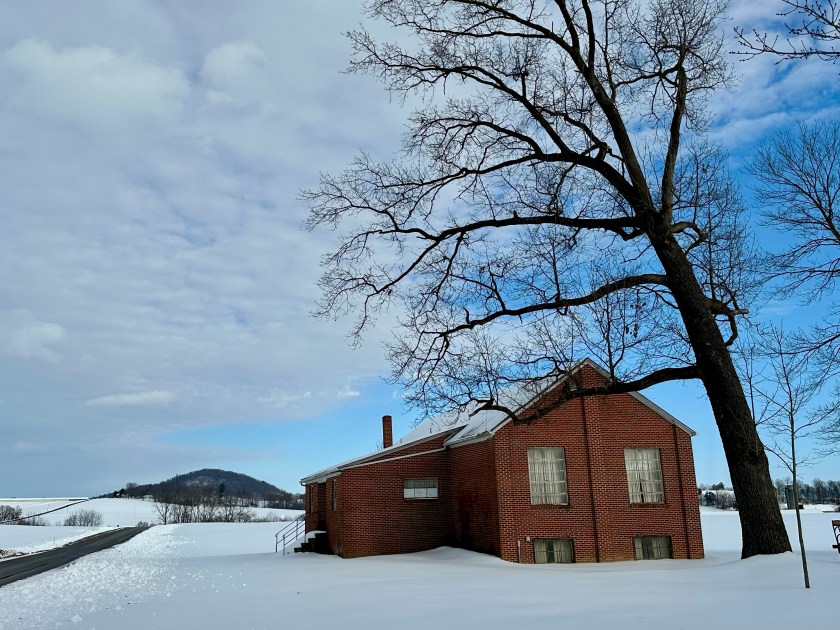
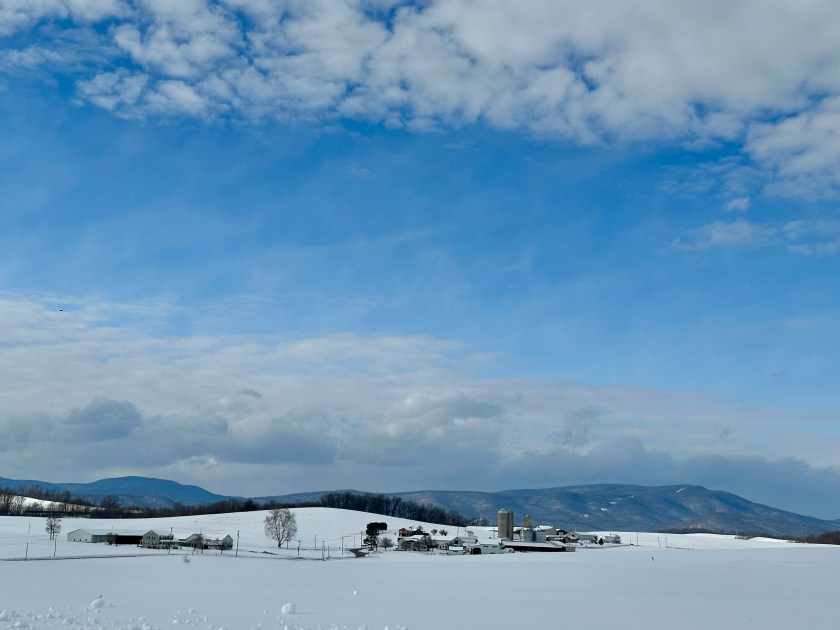
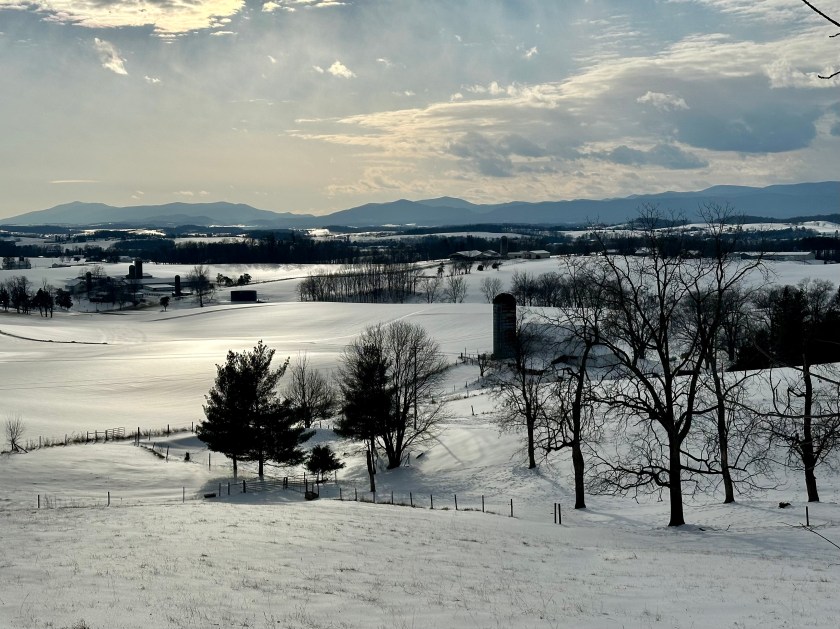
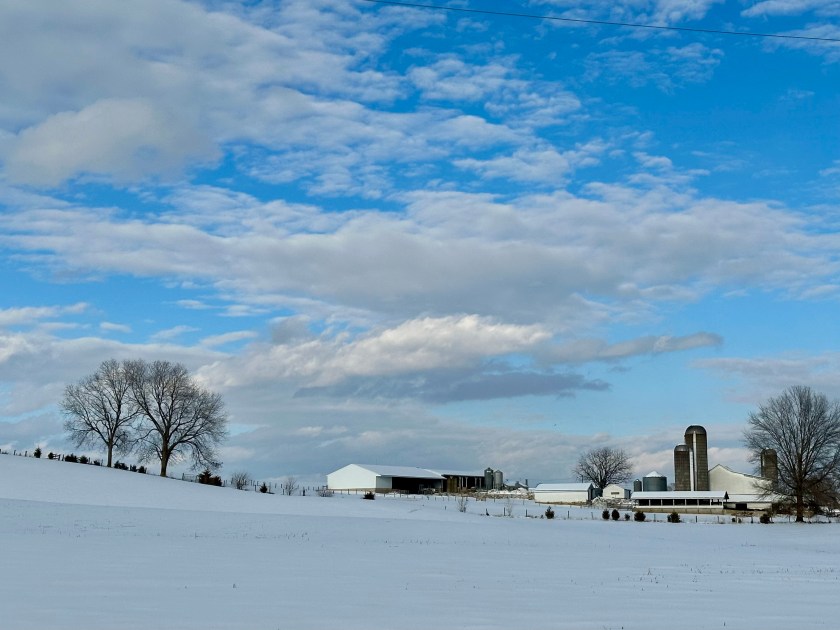
With the birds photographed, I turned my attention to capturing the winter wonderland all around me. The farmsteads glowed in the afternoon sunshine, and the snow and cold, clear air made everything bright and clean.
Fencerows and trees contrasted with the white blanket below them. The Allegheny Mountains hovered over the scenic countryside like anxious mothers.
I scared up other flocks of Horned Larks as I continued meandering along narrow limestone roads that connected one Old Order Mennonite farm to the other. Holsteins crowded into feeding troughs, devouring hay the farmers had recently pitch-forked into the stanchions for them.
Knowing that the roads were at least passable, I felt more comfortable driving as I made a loop around Mole Hill toward home. In the southwest, the afternoon’s slanting sun radiated a glistening sheen across the hard-packed snowy landscape.
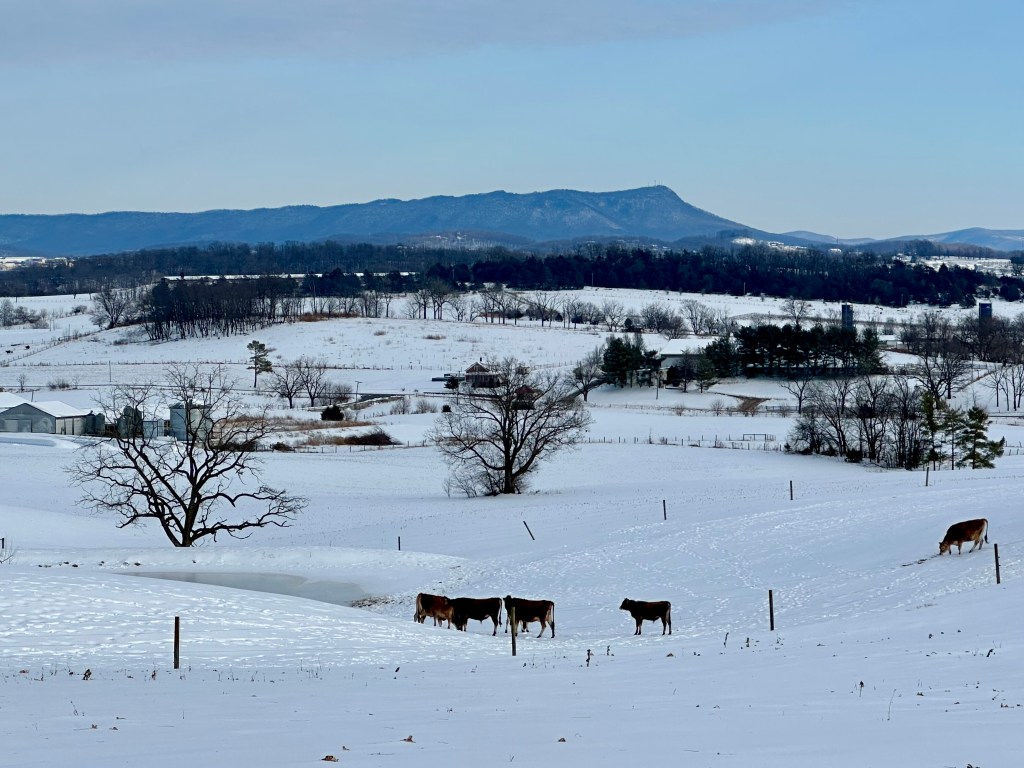
On the east side of the local landmark, Massanutten Mountain stood tall above the undulating lands of the Shenandoah Valley. I crunched my way a few yards from the road to capture black Angus cattle exiting a barn into the snowy pasture.
The dark macadam and the tree branches reaching for the sky sharply contrasted with the snow-white countryside. It was a sight almost as inspiring as seeing the lone Snow Bunting.
Black Angus cattle and Massanutten Mountain. Photo by Bruce Stambaugh
Diamondhead at sunset from Waikiki Beach. Photo by Bruce Stambaugh
On our last day on Oahu, we signed up for a circle tour of the island. However, thanks to our skilled and knowledgeable bus driver, it was more of an immersion into the Hawaiian culture. We dove in.
A native of Oahu, Lani knew all the places to stop, including a few that weren’t on our official itinerary. She made a lovely tour luscious.
Before we ever boarded the bus, a bright rainbow arched across the early morning sky. It wouldn’t be the last we would see.
Another rainbow to start the day.
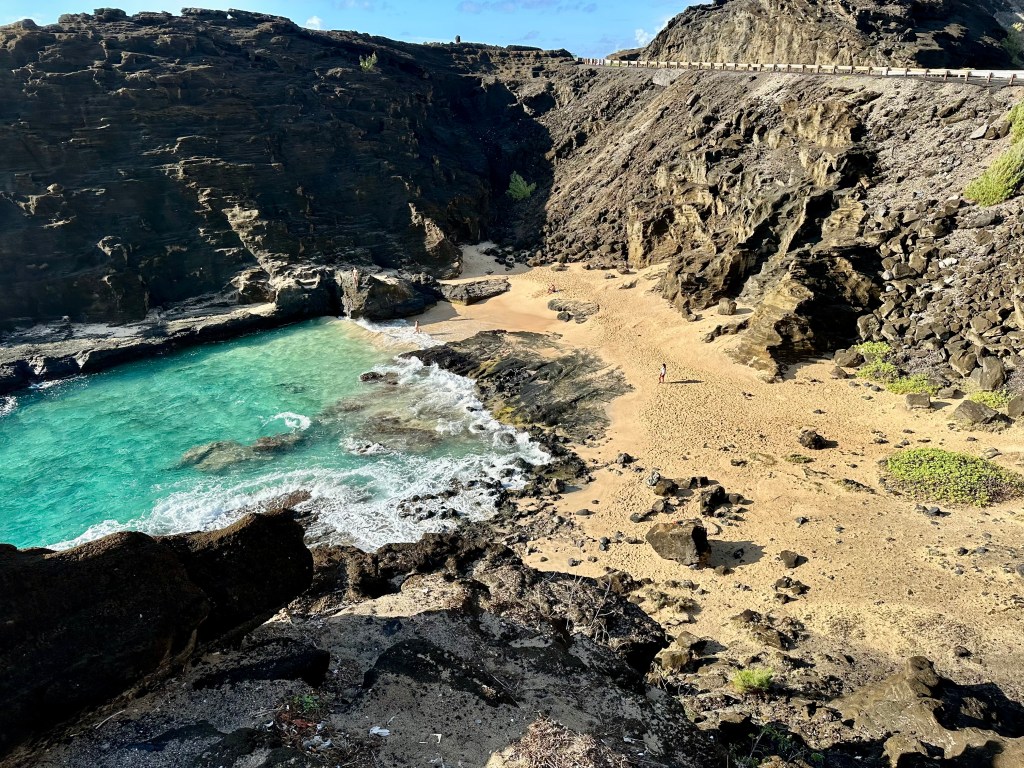
Our first stop was an overlook along the main highway, which offered spectacular views of the Pacific Ocean and a stretch of ancient lava coastline. Unfortunately, the waves weren’t big enough to give us a frothy show at the Halona Blowhole.
Please click on the photos to enlarge them.
However, in a small cove below, a few swimmers braved the steep and rocky descent to a secluded beach, where wave after wave lapped at the small sandy shore. I could have spent hours soaking in the view, the balmy breezes, and the warm sunshine, but Lani had other places to tantalize us.
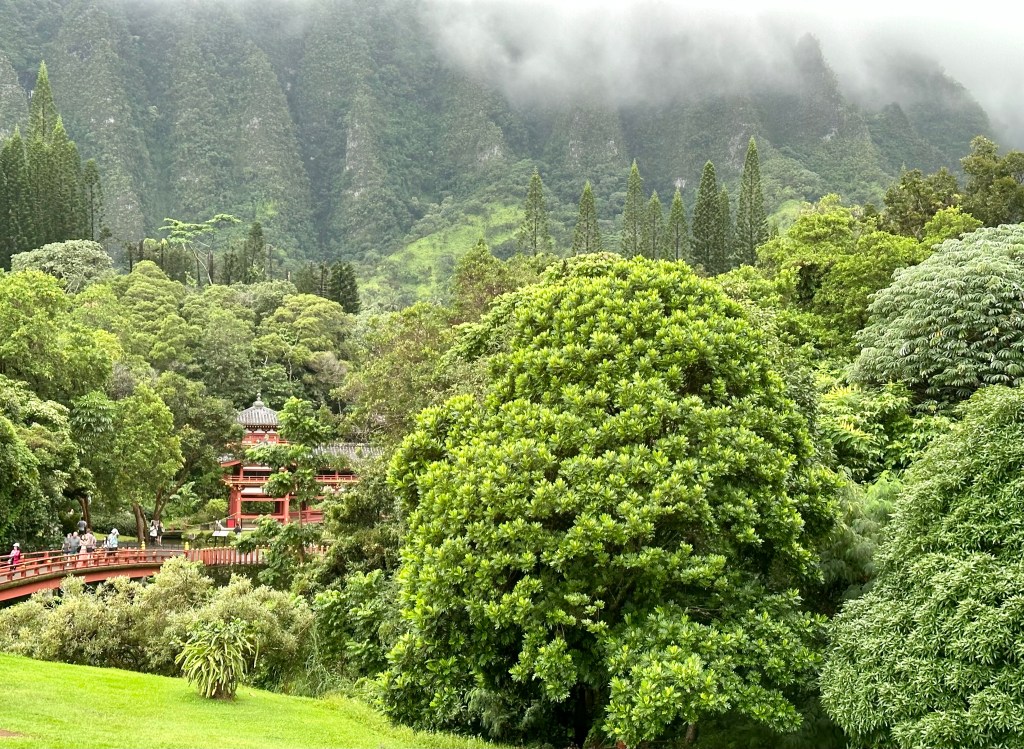
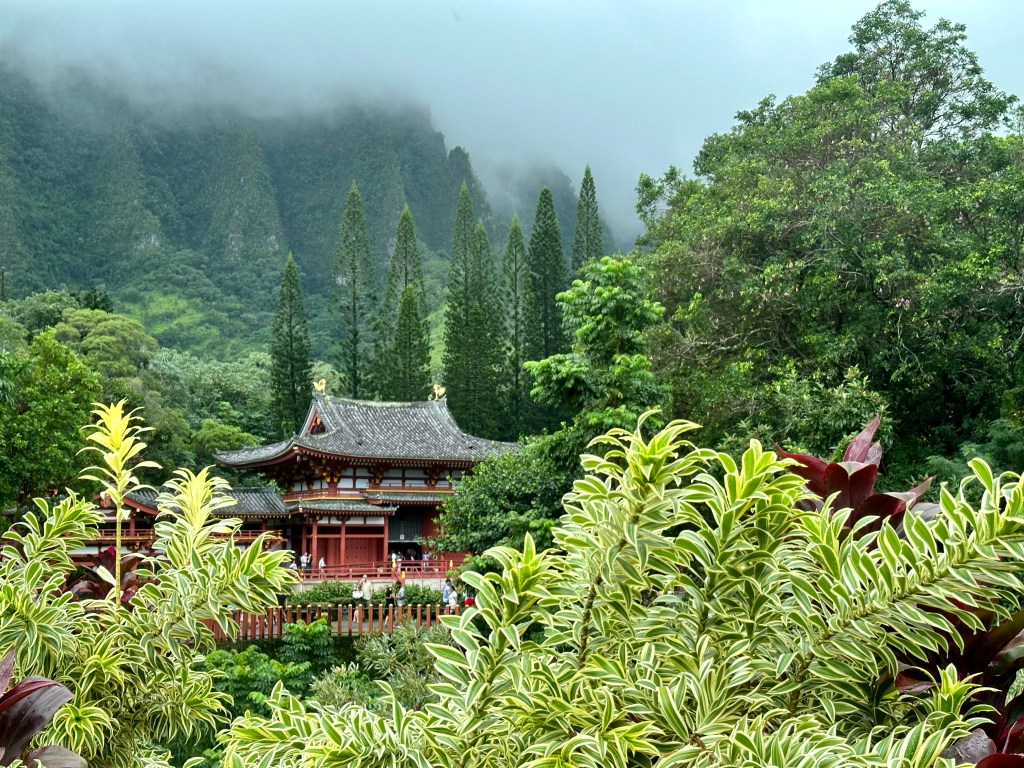
We drove inland and entered the Valley of the Temples Memorial Gardens. Set against curtains of solid lava adorned with lush greenery, a bank of lacy clouds hovered over the temple grounds.
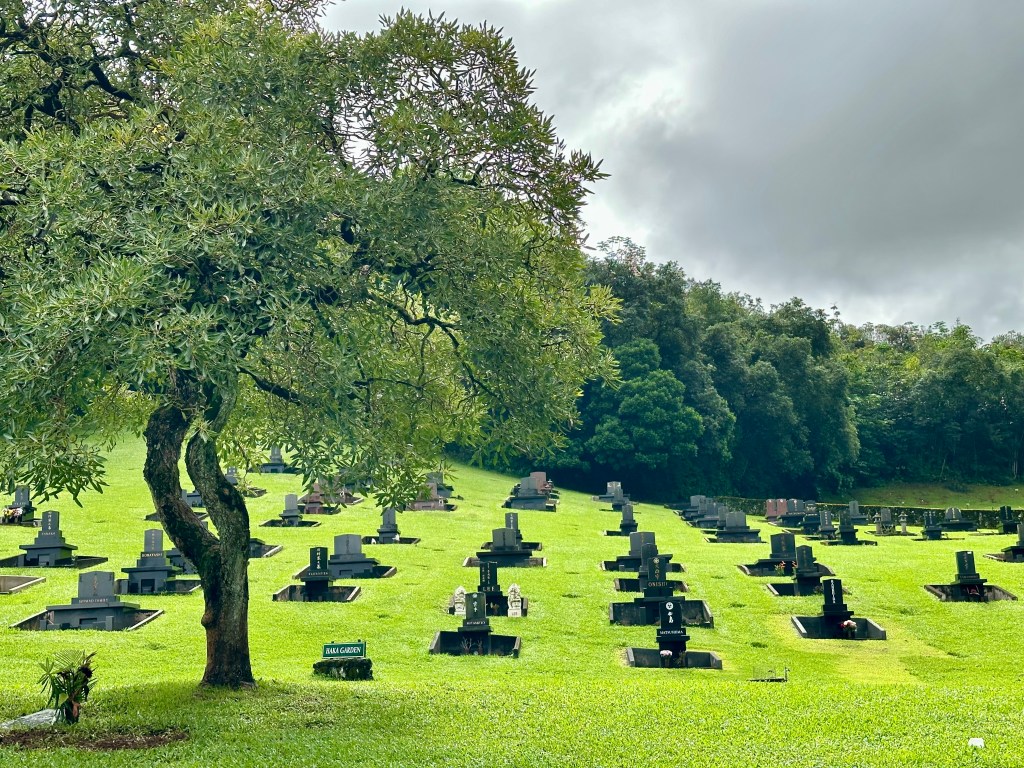
Located at the base of the Ko’olua Mountains, the non-denominational Buddhist temple was surrounded by abundant vegetation, large and small. A sprawling, immaculate cemetery covered the rolling terrain between the highway and the temple.
Recent heavy rains had muddied the Swan Temple Lake. Still, the setting drew me in, daring me not to take a photo. I happily succumbed. We also rang the giant gong for good luck. I’d say it worked.
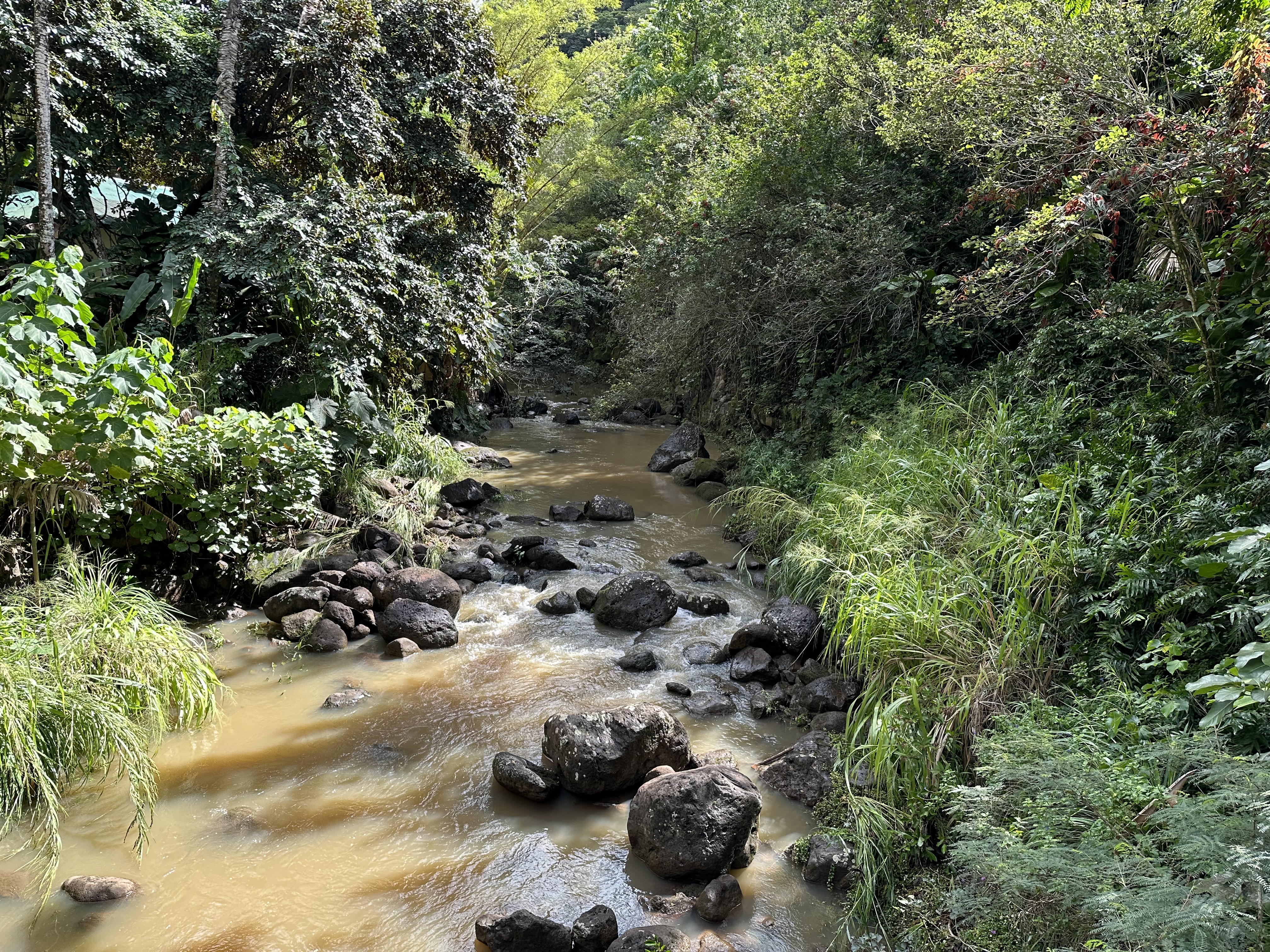
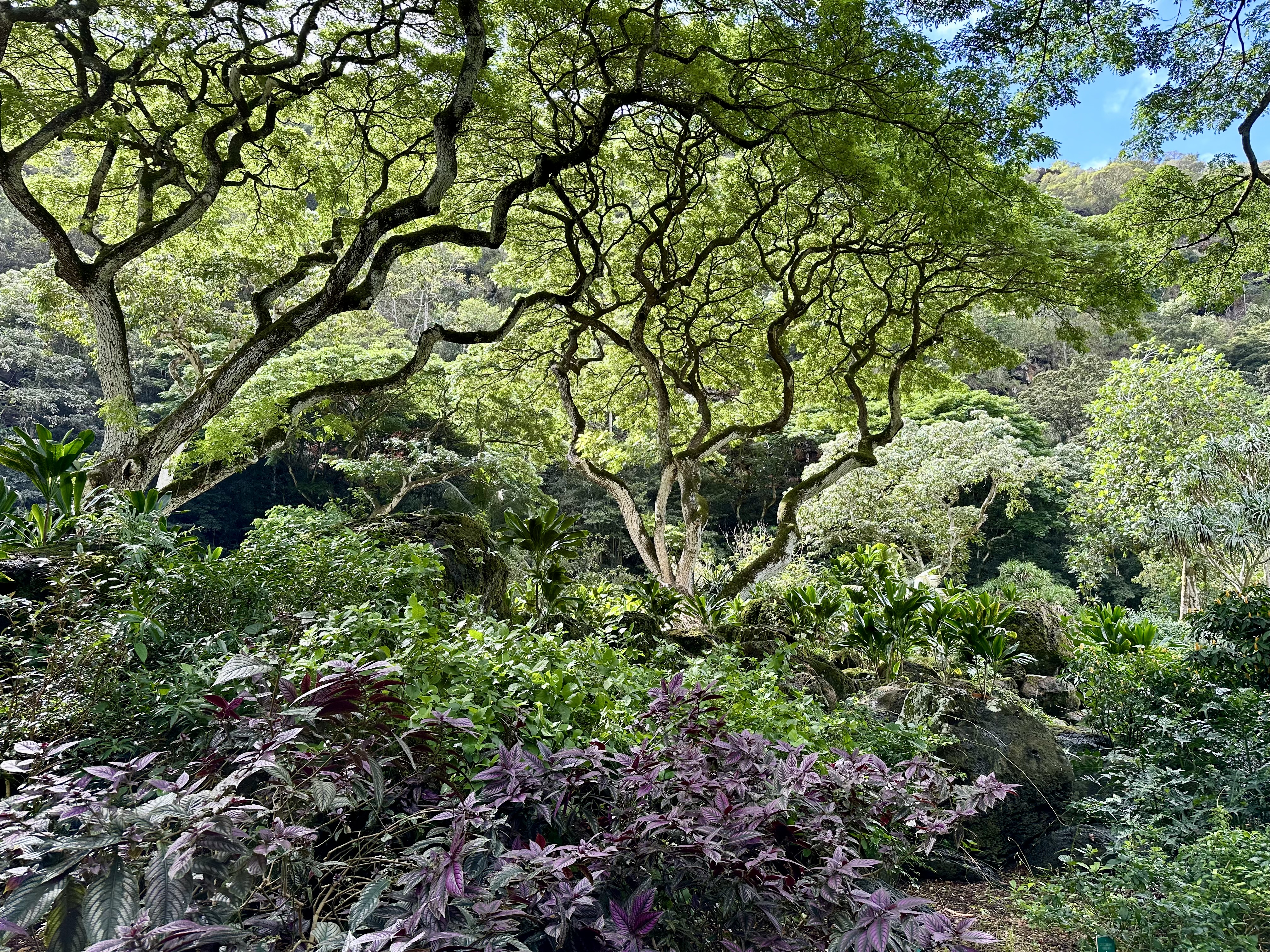
The next stop was Ko’olauloa Waimea Falls. I walked up to the falls, where some high school students enjoyed the cascading water. On its way to the ocean, the stream split the ravine, guarded by heavily wooded steep flanks filled with brilliantly colorful flowers and various songbirds I couldn’t identify. It was as if the incredible environment effortlessly drew me up the slope and back down.
Please click on the photos to enlarge them.
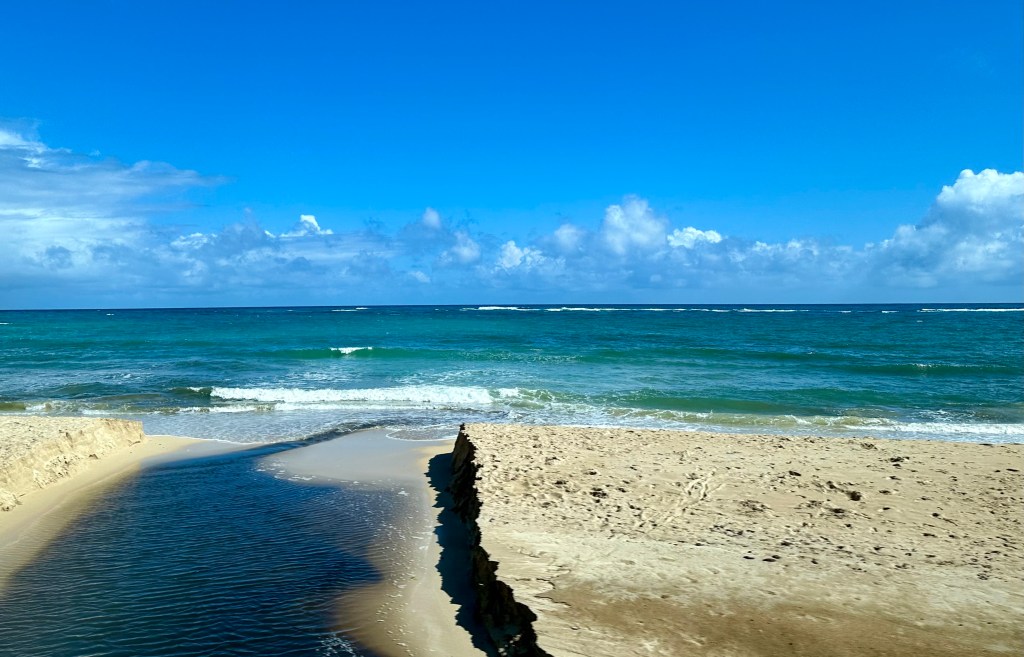
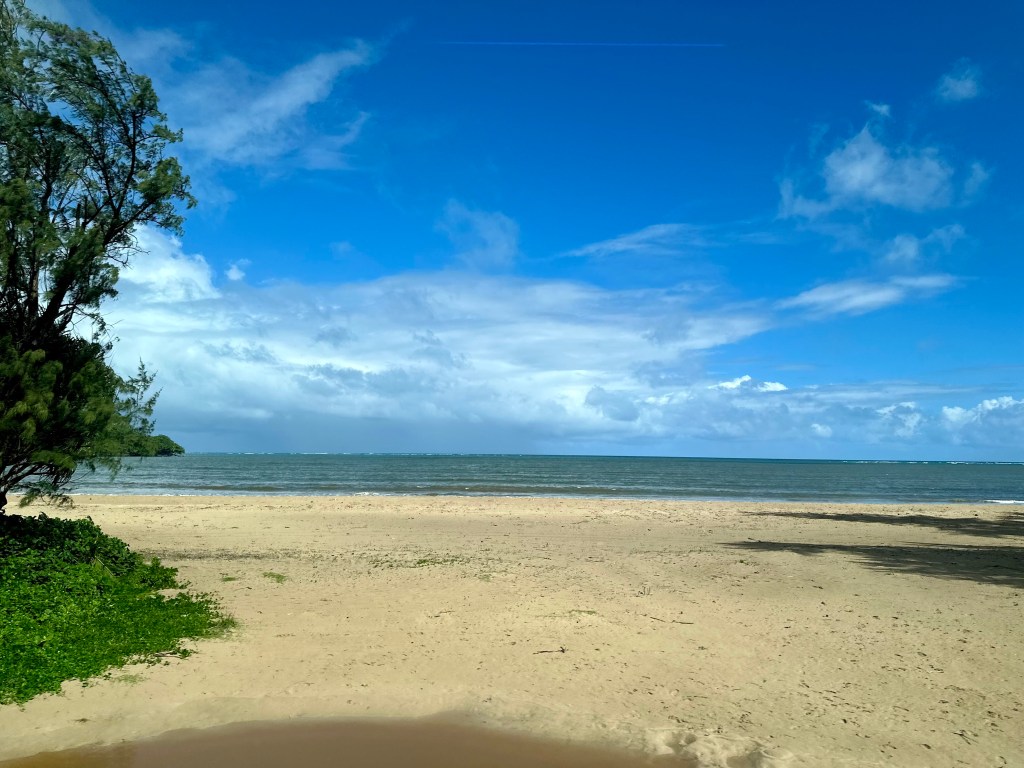
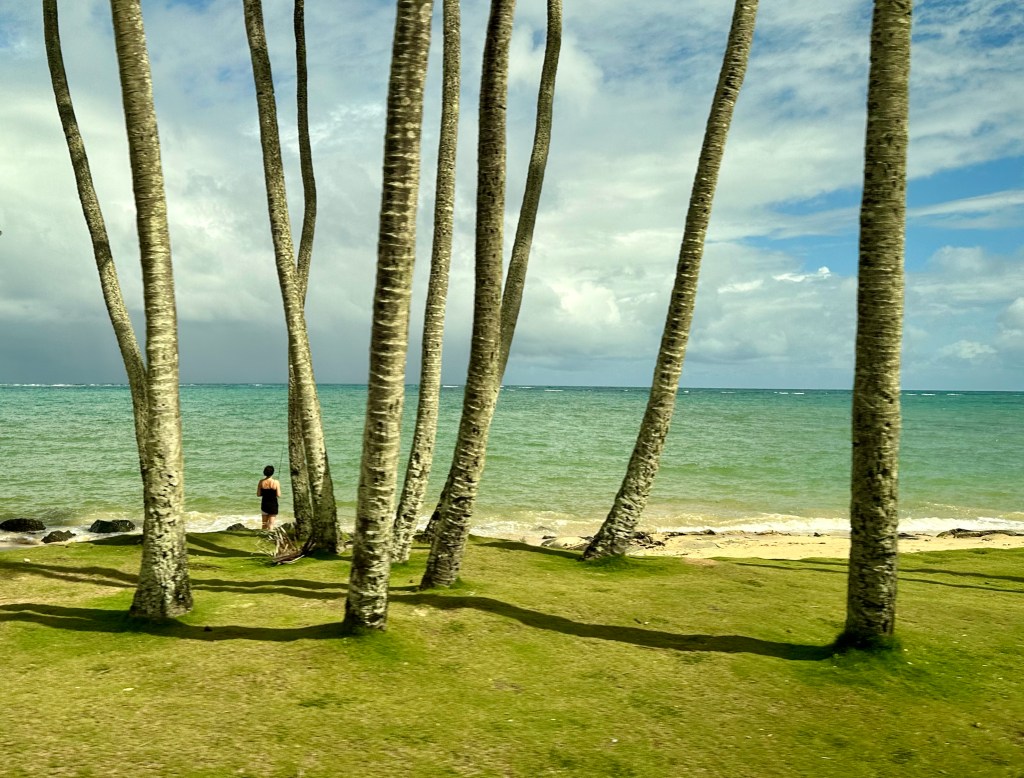
Too soon, it was time to continue our drive along the Kamehameha Highway, which offers beautiful ocean views. We passed multiple local parks, a testament to Hawaii’s commitment to preserving public green spaces. However, due to rising sea levels, shore and beach erosion are ongoing battles.
Along the Kamehameha Highway.
Our next stop was the Dole Plantation retail store. There, people enjoyed the famous Dole Whip while others browsed or shopped. Soon after leaving there, we passed acres and acres of agricultural land, some planted with pineapples.
Agricultural fields near a military base. Photo by Bruce Stambaugh
Our knowledgeable bus driver wisely took the counterclockwise route on the circle tour of Oahu. While we were returning, most traffic was headed out of Honolulu. Before we hit the city, we stopped at a pass that overlooks the capital.
Overlooking Honolulu on a windy, rainy day.
We had a 180-degree view of Honolulu and the surrounding mountains. Rain pelted one side of the urban setting while the other was dry. We braved strong wind gusts to enjoy the view and feel the rain.
We snaked our way down through neighborhoods of pagodas, apartments, schools, skyscrapers, unkempt houses, and urban parks to reach sea level. The tour was over, but the best was yet to come.
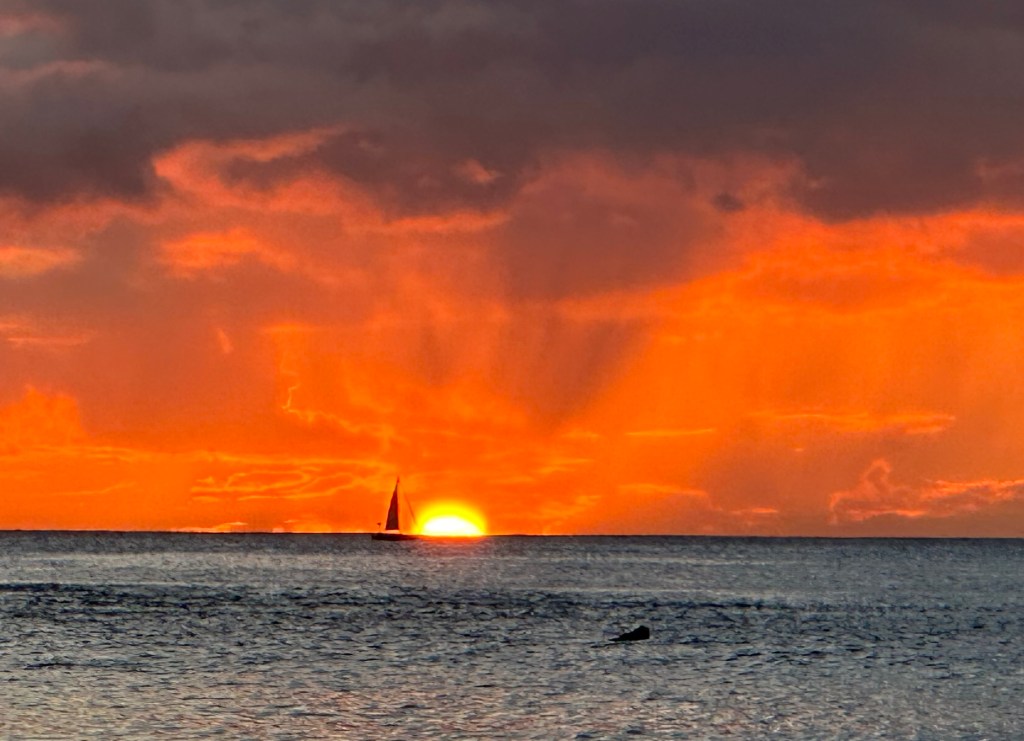
After dinner, our orange dessert was a spectacular sunset on Waikiki Beach. The next day, we flew to the Big Island.
As I sat at my computer, I heard a familiar roar. I grabbed my camera and raced outside. But I was too late for the shot I wanted.
The low-flying DC-3 airplane had already zoomed west and out of range for a photo. However, I had seen this pattern before. I figured the plane was on landing approach to a private airport eight miles southeast of us.
Sure enough, the plane turned south and then southeast into view. I snapped three quick photos, but the aircraft was again out of sight. When I viewed the pictures on my laptop, I was pleased that everything was in focus.
This photo stood out. The dappled, gray clouds seemed to frame the old airplane, and the late afternoon sun reflected off the underside of its fuselage. In a way, it looks like the plane is on fire, but I’m sure it landed safely.
Earlier this fall, my wife and I visited Gettysburg National Military Park with friends from Australia. We used the National Park Service’s free self-guided app to tour the sacred grounds at this tipping point of the American Civil War.
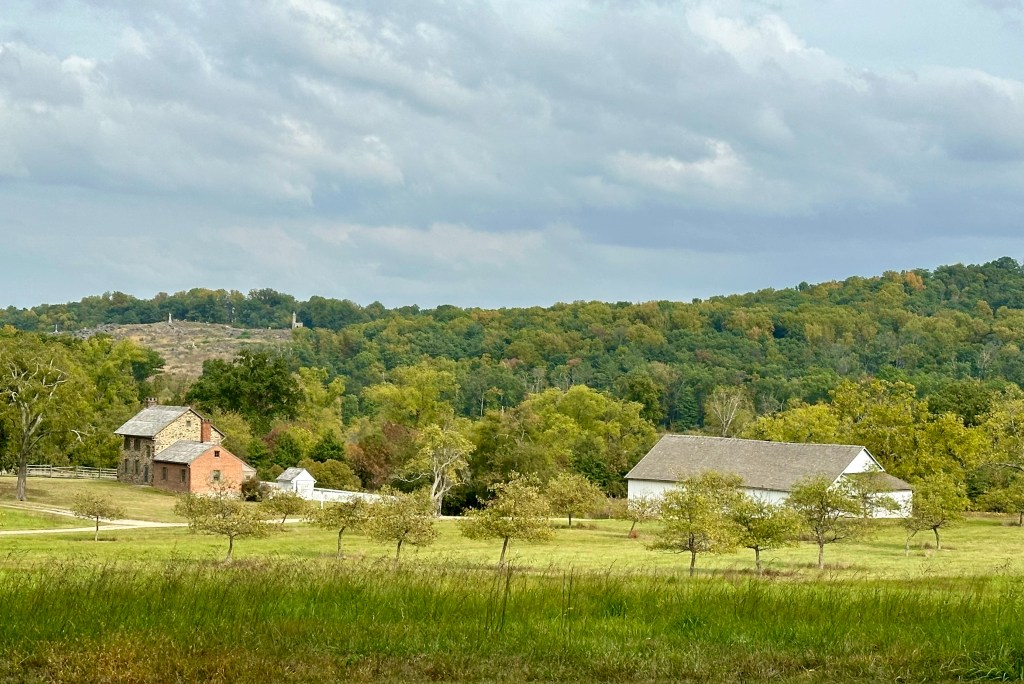
Interestingly, our Auzzie friends were most taken by the 1,300 monuments on the battlefields and beyond. On the other hand, I was amazed at the number of farmsteads overrun by Union and Confederate troops, and often both, as the battles raged. The Park Service has done a magnificent job of restoring them, and that restoration continues today.
Many of the farms where the fighting took place were small by today’s standards, often 50-80 acres. Of course, the buildings from other farms have long disappeared.
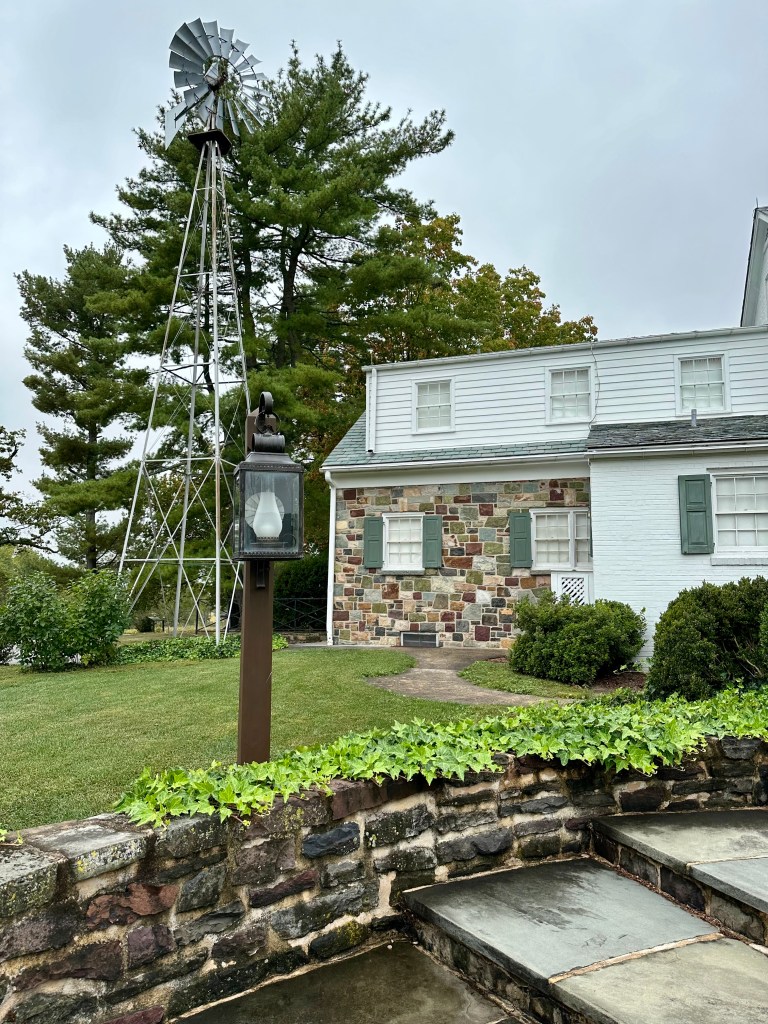
The McPherson Farm
The replica fences and the sorghum fields created a feeling of authenticity.The McPherson barn.The Codori farm saw heavy fighting on July 2 and was at the at the center of Picket’s Charge on July 3, 1864.The Phillip Snyder farm. Note the location of the outhouse. Big Round Top is the most prominent hill in the background.The Bushman farmstead. Note Little Round Top above the farmhouse.
Tree angles of the Trostle farm.
The Klingel farm on the east side of Emmitsburg Road.
The Sherfy farm on Emmitsburg Road. The 50-acre farm included the Peach Orchard, Big and Little Round Top, and Devil’s Den. The original barn burned during the battle.
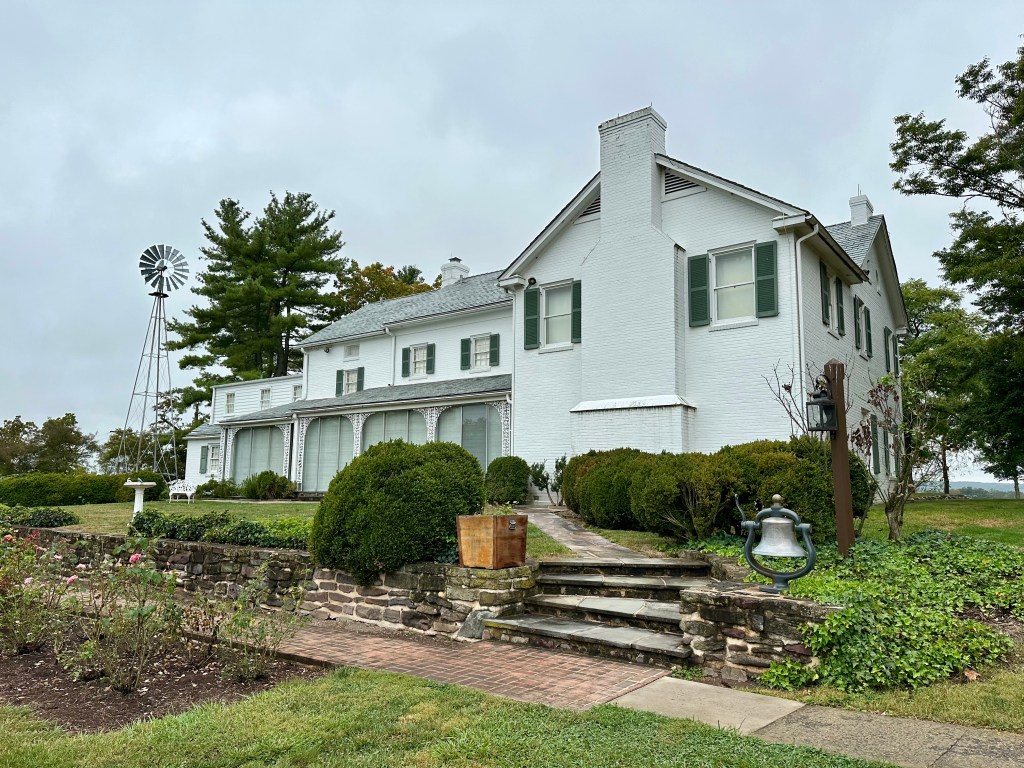
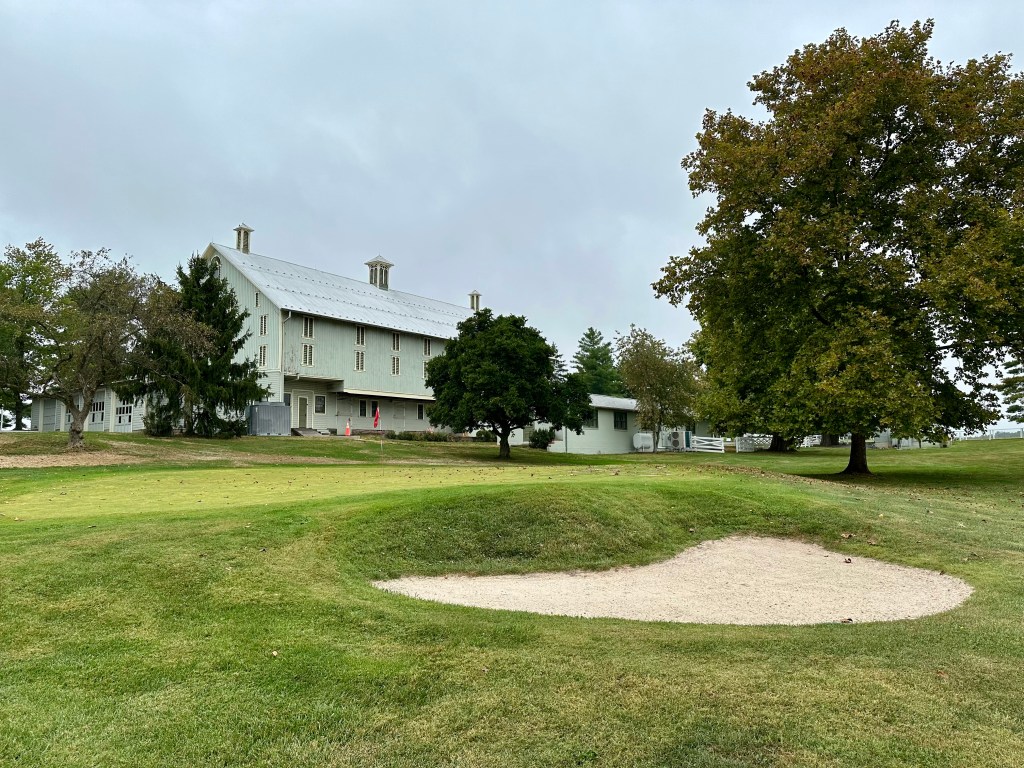
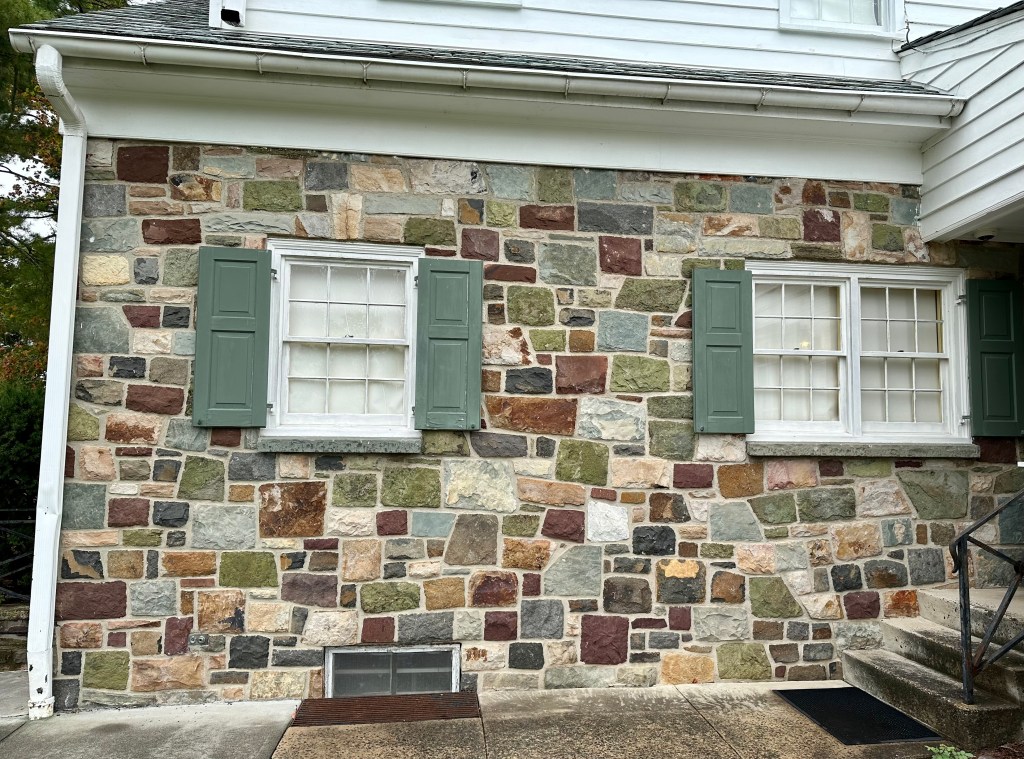
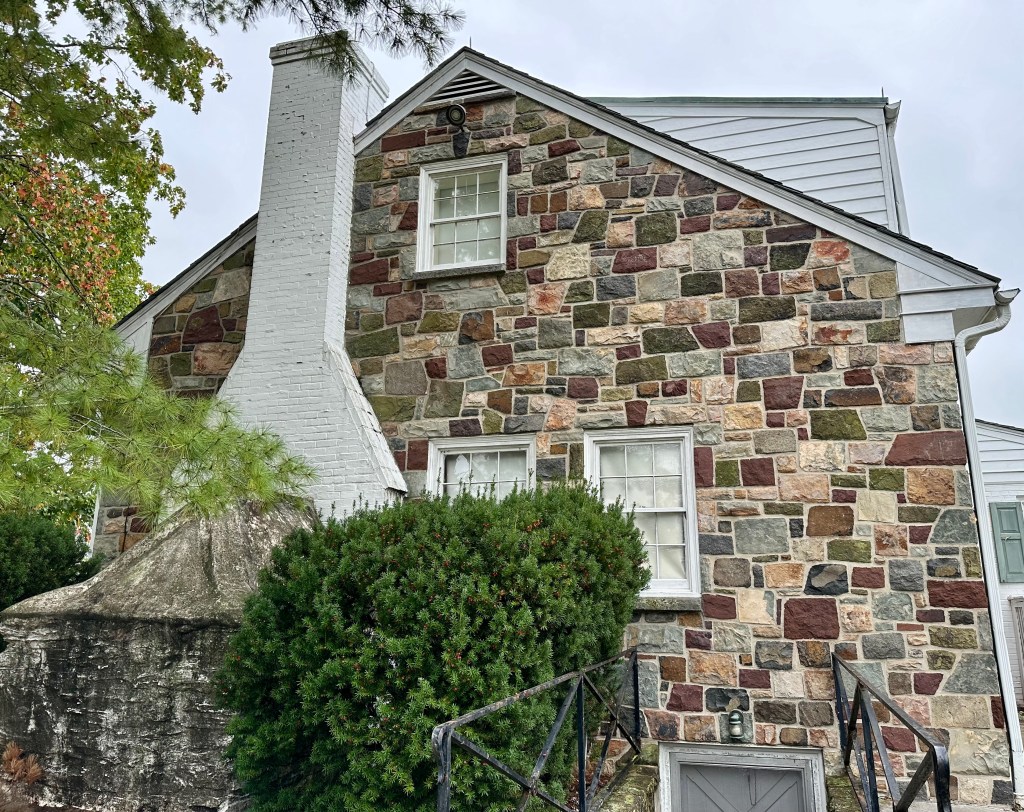
The Eisenhower farms on the southwestern edge of the battlefields.
Time did not permit me to explore the history of each farm in-depth, but that’s another reason to return to this hallowed ground.
The top photo of grandson Teddy, age 2.5, was taken this fall. The photo of the two ghosts and their sister pumpkin was taken on October 31, 2009. They are now 18, 15, and 20.
September’s first sunset. Photo by Bruce Stambaugh
We had another quenching and satisfying rainstorm yesterday afternoon and evening. After the front had passed, I checked the rain gauge in the backyard. The setting sun illuminated the backside of the storm clouds racing east. A brilliant orange and a bright but stubby rainbow caught my eye.
I looked to the west and discovered a striated sky of tangerine streaks. I grabbed my camera and headed for a nearby pasture that afforded a better view to the west before the colors faded.
Though not the most colorful of my photos, I liked this scene and all its rich ingredients: the farm lane with remnants of the rain’s runoff, the silhouetted trees, Mole Hill, an ancient local landmark, and the Allegheny Mountains beyond.
The Upper Falls at Letchworth State Park in New York.
My wife and I love to travel the country’s backroads. There are many positive reasons for our preference for highways other than interstates and expressways.
Engineers design and build multi-lane thoroughfares to save time by avoiding small towns, winding mountainous roads, lower speed limits, and often slower traffic. When you are retired, those reasons play second fiddle to scenery, wildlife, and plain old country charm.
The secondary roads hold surprises along the way. We find sleepy towns with impressive century-old homes, cozy diners and restaurants, locally owned and operated cafes, and shops we would miss on the superhighways. We discover fascinating state parks and cascading streams that play tag with the roads. We enter canopy tunnels of giant oaks and maples, flashy sycamores, and towering tulip poplar trees.
We also see too many storefronts shuttered in once-thriving downtown business districts. In the country, we pass abandoned houses far too often. They remind us of our younger years and serve as a reality check for the 21st century.
Of course, driving the roads less traveled has its drawbacks. Traffic comes to a crawl behind agricultural equipment, traveling at a snail’s pace from one farm to another. Semi-trucks delivering goods to local businesses block traffic flow for minutes while they attempt to squeeze into awkward and narrow loading docks. We feel the driver’s frustration.
Occasionally, traffic halts completely as cowboys on ATVs round up a herd of wayward cattle. I’ve even had to pull the car off the road to let them pass. Others might consider these situations as inconveniences. Rather than despair, I accept them as a part of everyday rural living.
Our latest trip to visit our son and his family in upstate New York, nearly 500 miles from our home in Virginia’s lovely Shenandoah Valley, offered similar experiences.
The ancient Allegheny Mountains bend northeast across Pennsylvania, making a direct route north impossible. So, we have learned to divide the trip into two days, taking alternate routes each time. Traveling with patience allows us to observe and appreciate whatever we see along the state and county roads that deliver us to our destination.
An Amish couple along the Susquehanna River in central Pennsylvania. Photo by Bruce Stambaugh
With the folded forested mountains on either side of us, the roads hugged and crossed the Susquehanna River with its many rapids and occasional islands. We stay the night in small cities like Williamsport, Pennsylvania, or Corning, New York.
We stop at overlooks to view the Susquehanna, tour the famous glass factory, or visit an old-fashioned country store and still arrive at our appointed time relaxed and stress-free. It’s a win-win situation.
A hobbyist’s backyard in Williamsport, Pennsylvania. Photo by Bruce Stambaugh
We headed south after our joyous visit with our son, his wife, and their curious two-year-old son. However, a last-minute decision turned our car west toward New York’s Letchworth State Park. It was time well spent.
Avid birder that I am, I stopped at several overlooks to view the impressive Genesee River Gorge and scout for birds. At one spot, a pair of Scarlet Tanagers foraged in an old oak tree, its leaves still not completely unfurled. A Summer Tanager landed nearby, but I was too slow with my camera. I savored the image of the bright red bird with a light-colored beak and was happier still that my wife got to see it, too.
The cheery songs of migrating songbirds resounded, but we had to keep moving since we were already taking the slow way home. Soon, we arrived at the lookouts to view the river’s inspiring trio of falls that cut the deep gorge a millennia ago.
I parked beside a vehicle identical in every way to our midsized SUV. The occupants exited their car just as we did, ecstatic about the fate of two metallic bronze Subarus parked side by side. I caught the stranger’s infectious joy and soaked in the three roaring falls.
I set the GPS for Altoona and noted that we would travel unexplored territory en route to the hotel. For most of the way, it was all state and county roads.
I knew we had hit the jackpot when we turned onto Short Track Road, a narrow county highway built to convenience locals. It wasn’t long until we began passing white homes with fading red barns. That combination meant one thing: Amish. Those farmsteads reminded us of our nearly four decades in Ohio’s Amish country, where we daily viewed similar scenes.
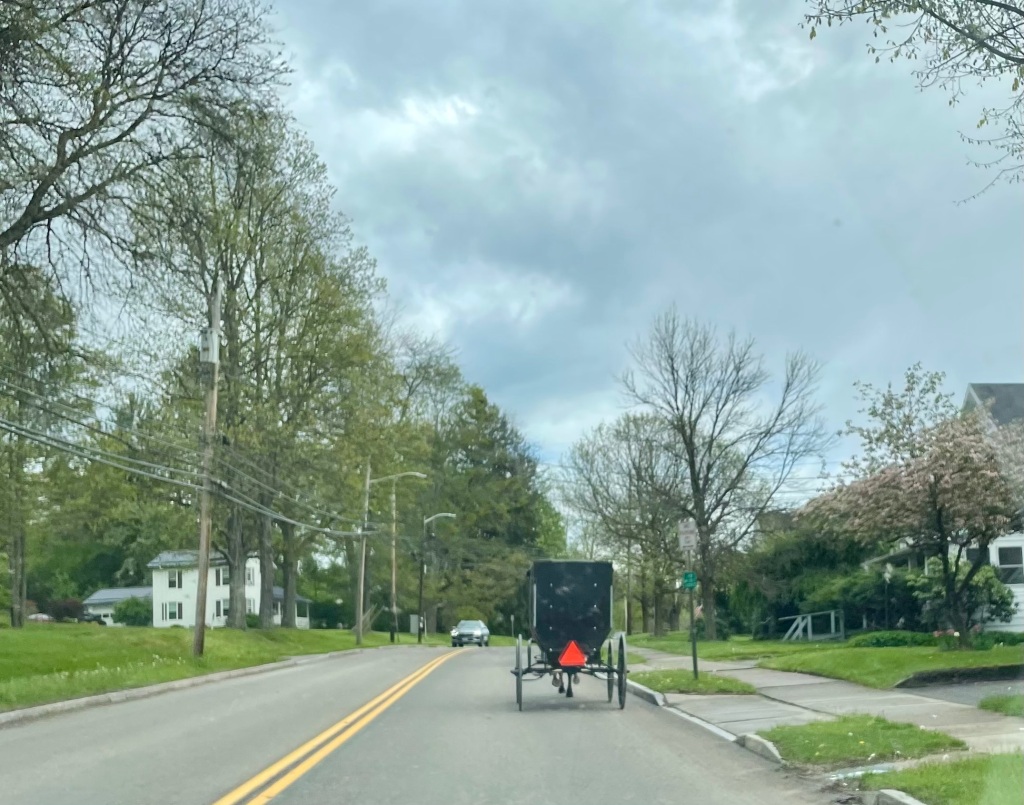
The hand-painted signs with mismatched upper and lowercase letters advertising cottage industries of hand-stitched quilts, local honey, brown eggs, and sawmill services brought familiarity. However, as is often the case with the Amish, they tweaked their clothing and buggies slightly different from their home communities in Ohio and Pennsylvania.
We noted that the crown of men’s black felt hats tapered from the brim to a flat top. The buggies were styled more plainly, equipped with different lighting and reflective tape, and displayed no orange, slow-moving triangle on the back. It was a sign of both their independence and connectedness to one another.
The blue bridge. Photo by Bruce Stambaugh
We crossed the fast-running headwaters of the Susquehanna on a decades-old, baby-blue iron bridge. Our car tires hummed over the meshed steel grating. Soon, we passed a white-brick country church that caused me to double-take. Its marque read, “Forget hope. Attend church.” Even though it was a Sunday, we kept driving.
We passed the entrance to yet another state park that looked immaculate. The road quickly turned and began a winding, steady climb up a low mountain. The rushing white waters of a roadside stream beckoned, but with no pullouts, we couldn’t stop to enjoy it fully.
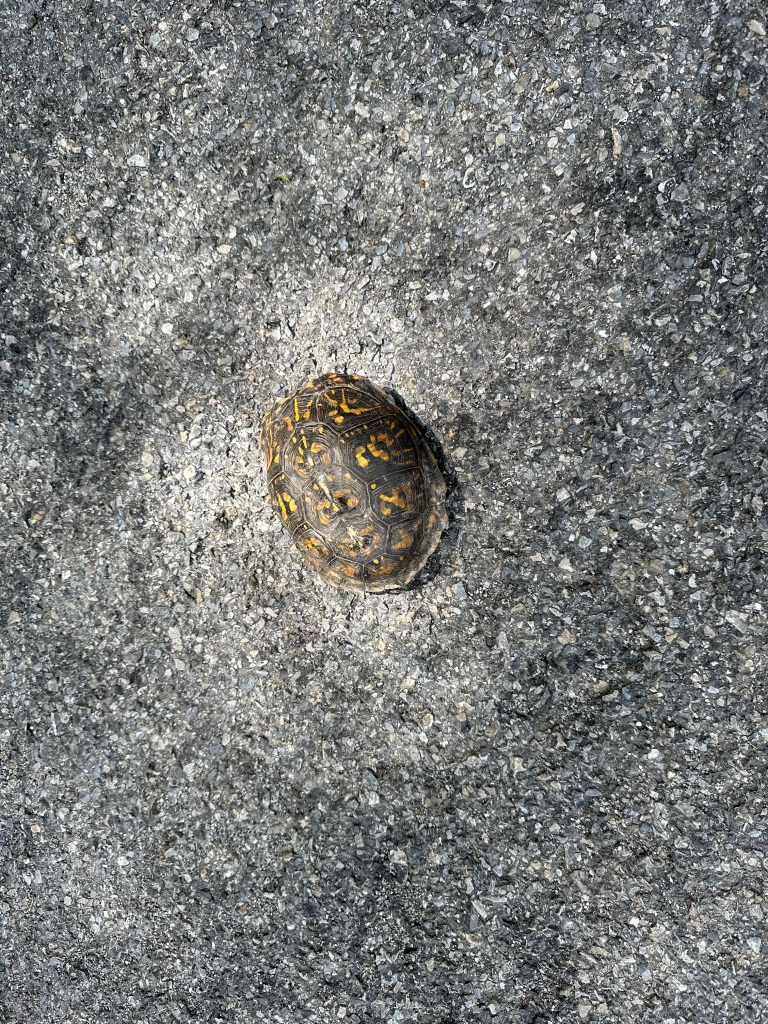
The box turtle. Photo by Bruce Stambaugh
On the downslope, the road straightened and eventually flattened out, with pasturelands on one side and wetlands on the other. I spotted a box turtle crossing the road. With little to no traffic, I stopped and carried it across. It was the least I could do.
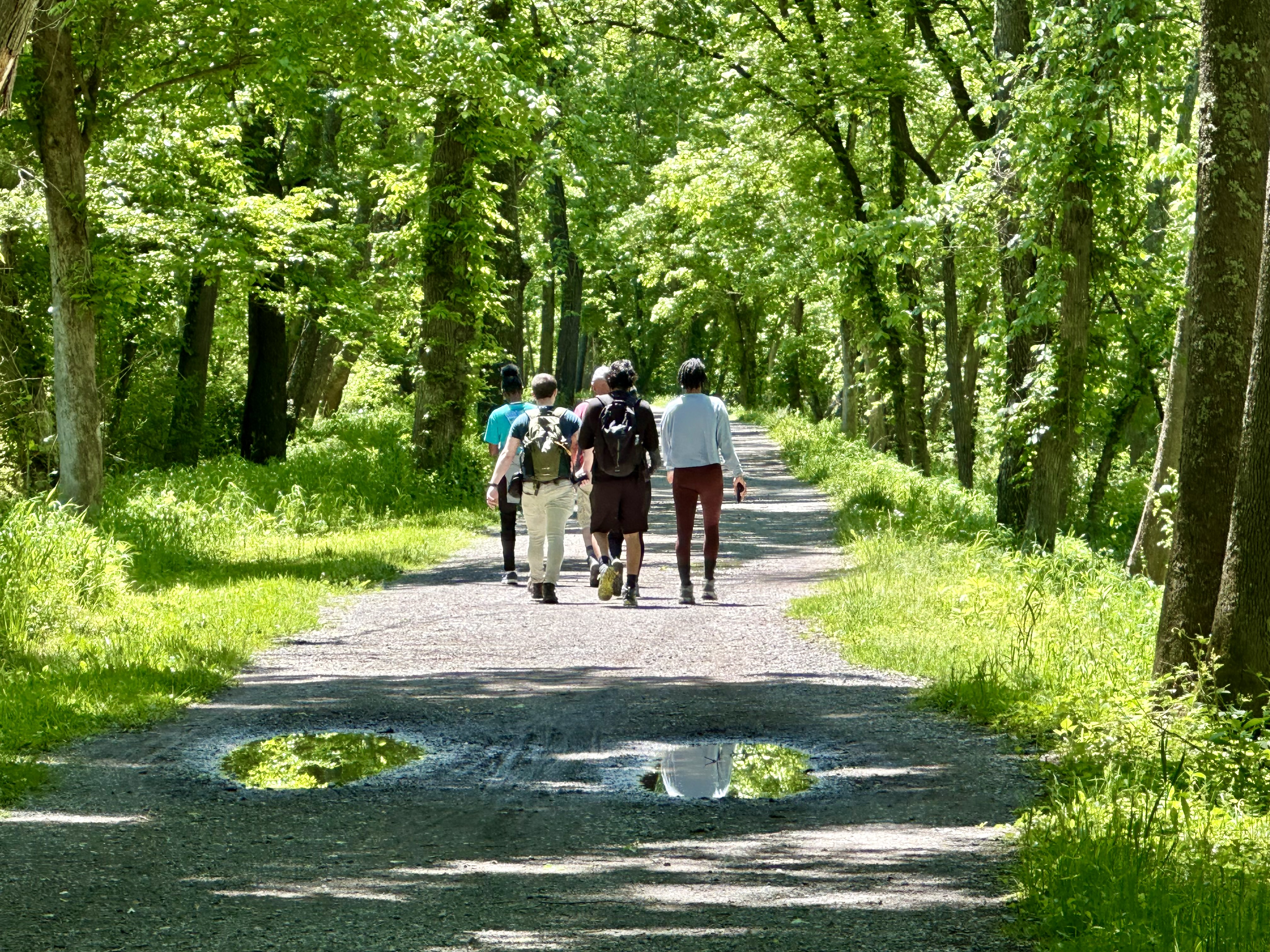
Our journey continued the next day with similar effects. We visited the Paw Paw Tunnel Towpath Trail near Old Town, Maryland. As we left the car, birdsong and butterflies filled the air.
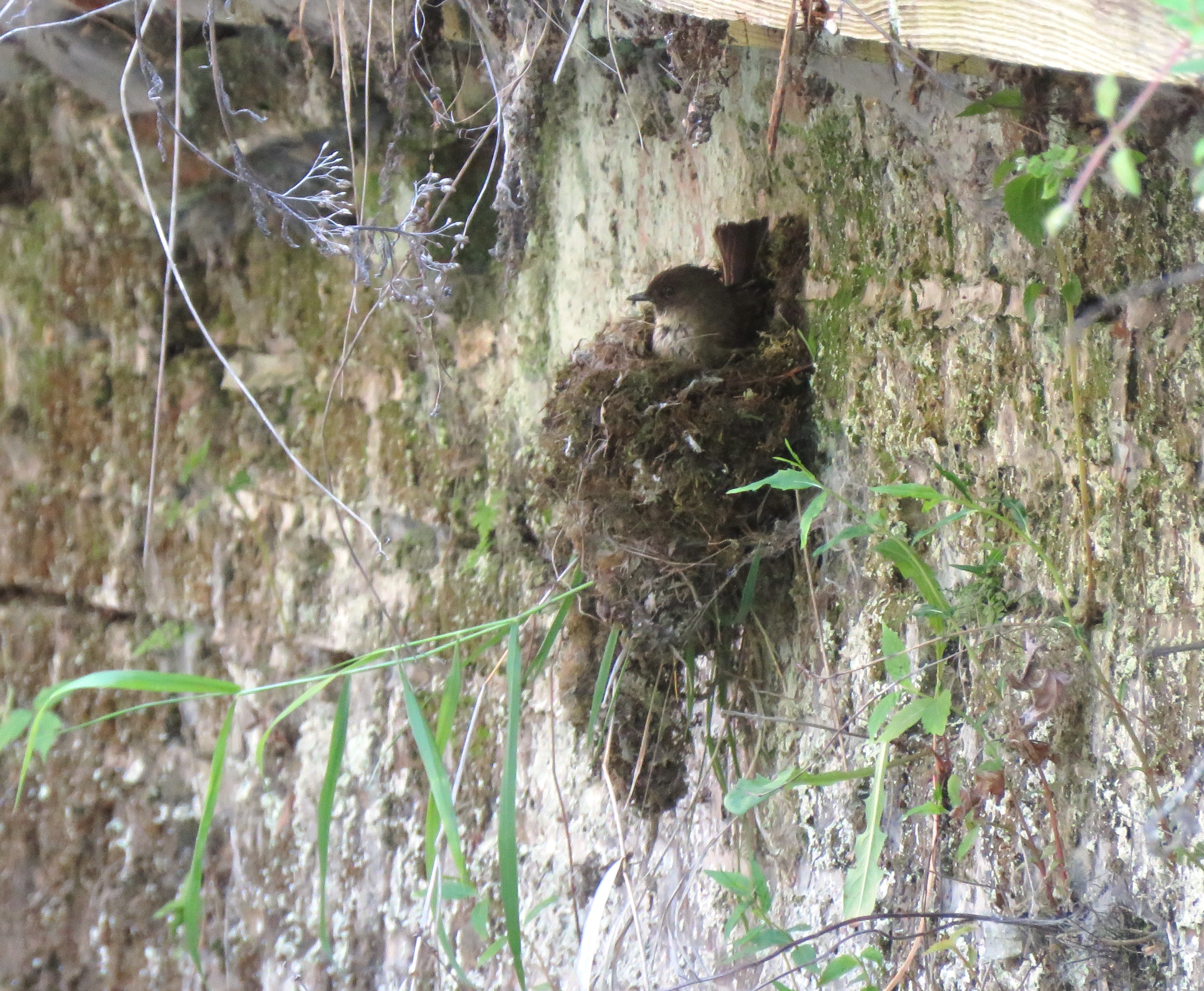
Walking from the parking lot to the old Chesapeake and Ohio Canal tunnel, the sights and sounds only improved. Baltimore and Orchard Orioles chattered competing calls from adjacent trees. A pair of Eastern Phoebes fed their young in a nest built on the canal’s old stone retaining wall. Blackburnian Warblers and Warbling Vireos serenaded us hidden among the leaves.
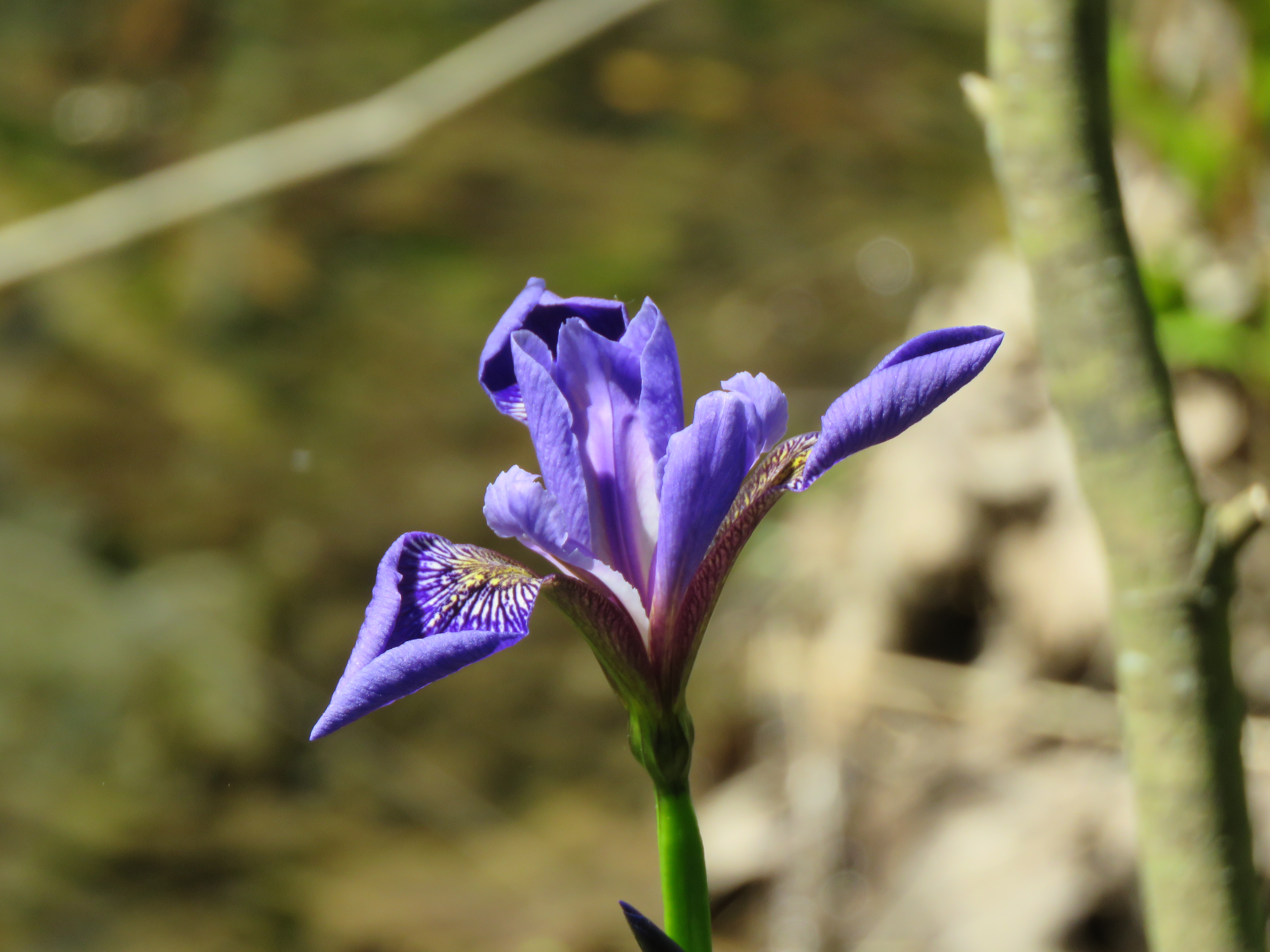
Black and Tiger Swallowtails, Pipevine, Dusky Wings, and Cabbage butterflies danced from wildflower to wildflower. Some gathered nutrients from puddles on the trail.
Please click on the photos to enlarge them.
We exchanged greetings with other hikers and bikers as we strolled along. The graveled trail’s dappled light, filtered by a mix of deciduous trees, big and small, cooled the hot day.
Satisfied and ready to be home, we crossed the Potomac River into West Virginia and steered south. Though arriving home tired, our drive on the backroads proved more refreshing than this septuagenarian could have imagined. That’s why we take them.
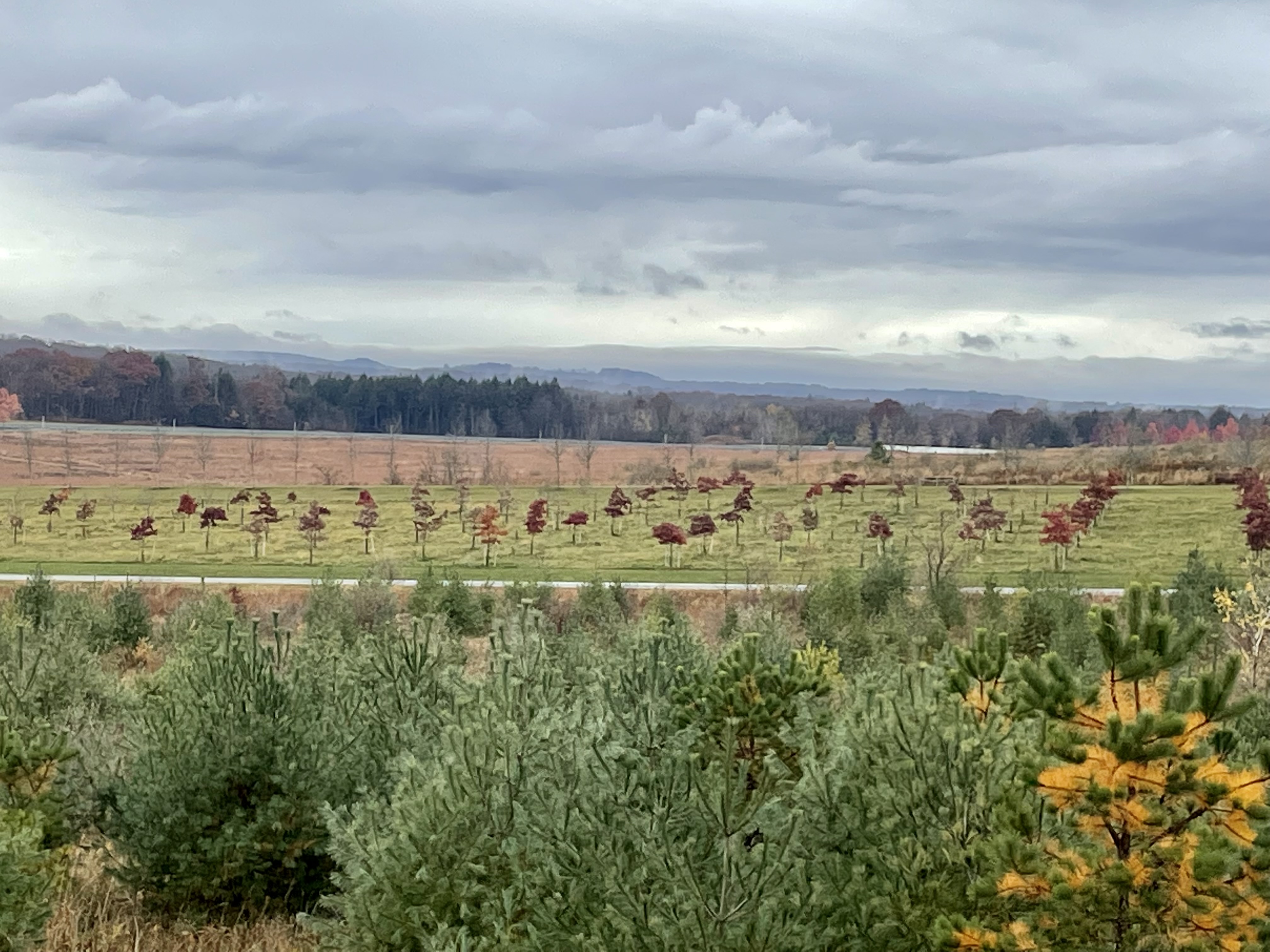
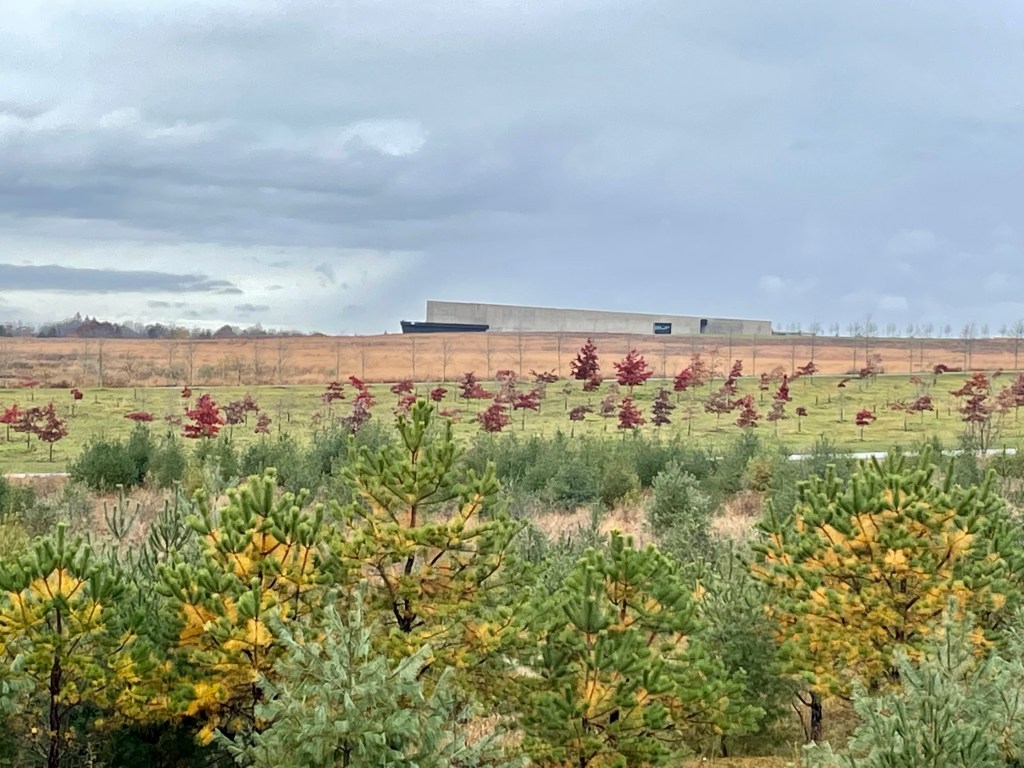
An overview of the Flight 93 crash site with some of the trees planted in honor of those who died.
Each time we visit our grandson and his parents in upstate New York, we try to stop at a new place on the way up or back, sometimes both. Returning home on our latest trip, we decided to visit the Flight 93 National Memorial near Shanksville, Pennsylvania.
I had been to the Flight 93 crash site about a year after the September 11, 2001 attacks on the U.S. There wasn’t much to see back then. Visitors were required to view the crash site from afar. Consequently, you couldn’t see much.
A short chain link fence held memorials to the 40 victims and first responders. A firefighter’s turnout coat and helmet were the most apparent objects. Relatives and friends had attached photos of the deceased and fresh and plastic flowers that hung askew from the woven wire fence.
A photo taken seconds after Flight 93 crashed near Shanksville, Pennsylvania.
A long, single wooden bench sat tangent to the makeshift memorial fence. It served as both a resting place and a reminder not to go any farther. The plane had crashed into an old strip mine, which appeared to have been haphazardly reclaimed. You entered the area from the west on the old dirt pit road formerly used by coal trucks and excavating equipment. A small graveled parking lot had been developed north of the temporary memorial area.
I remember standing there in silence out of respect for these brave folks who deserved to be recognized and honored better than this. The desolate setting seemed to mock the tragedy. An abandoned rusting steam shovel sat overlooking it all. The starkness of the scene shocked me.
This visit was much different, however. The Flight 93 National Memorial was established in 2005 as a tribute to the passengers and crew of the fateful flight. The federal government bought up the land around the sacred site, which the National Park Service maintains. Creating the national memorial was a coordinated public-private effort that included the Families of Flight 93, Friends of Flight 93, the National Park Foundation, and the National Park Service.
We drove in and out of rain showers on our way to the site. The entrance is now off U.S. 30, the Lincoln Highway. A black-topped roadway winds three miles to the Visitors Center Complex. The road’s length allows visitors to respectfully transition from the present time back to that fateful day. The Visitors Center is located on a rise overlooking the crash site near the old parking lot. Exhibits recap the unfolding events of that terrible day through videos, photographs, newspaper clippings, and maps. The building itself is plain, unremarkable in design, and positioned to mark the final path of the flight.
The entrance sign and the Tower of Voices to the left.
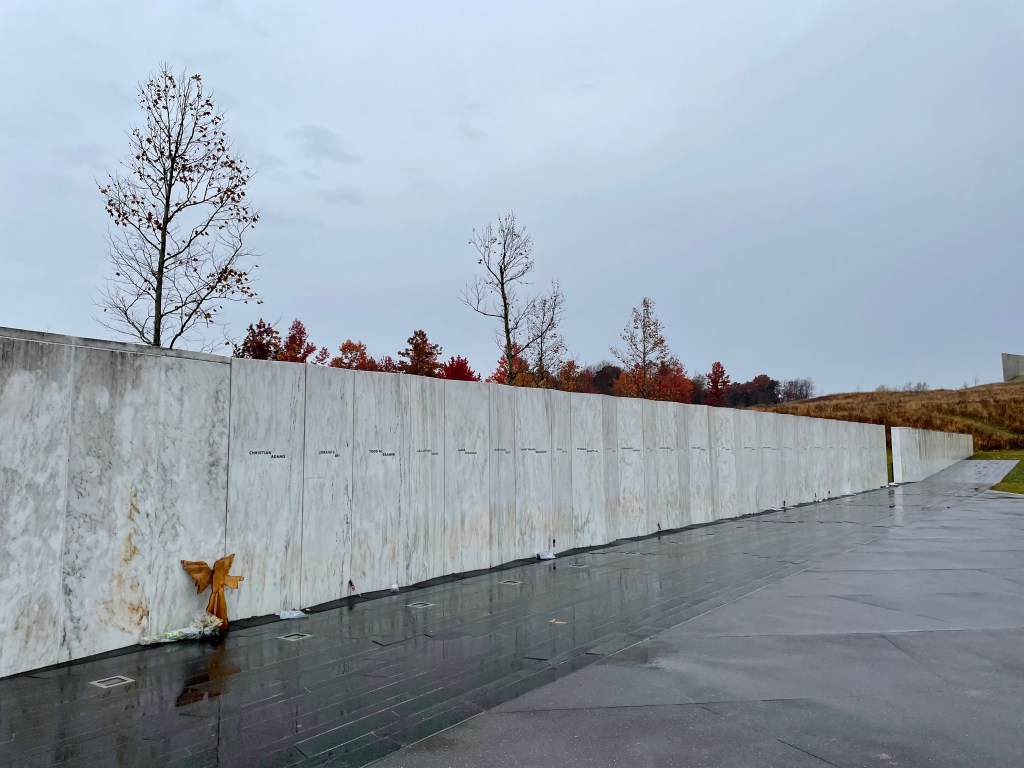
The Wall of Names.
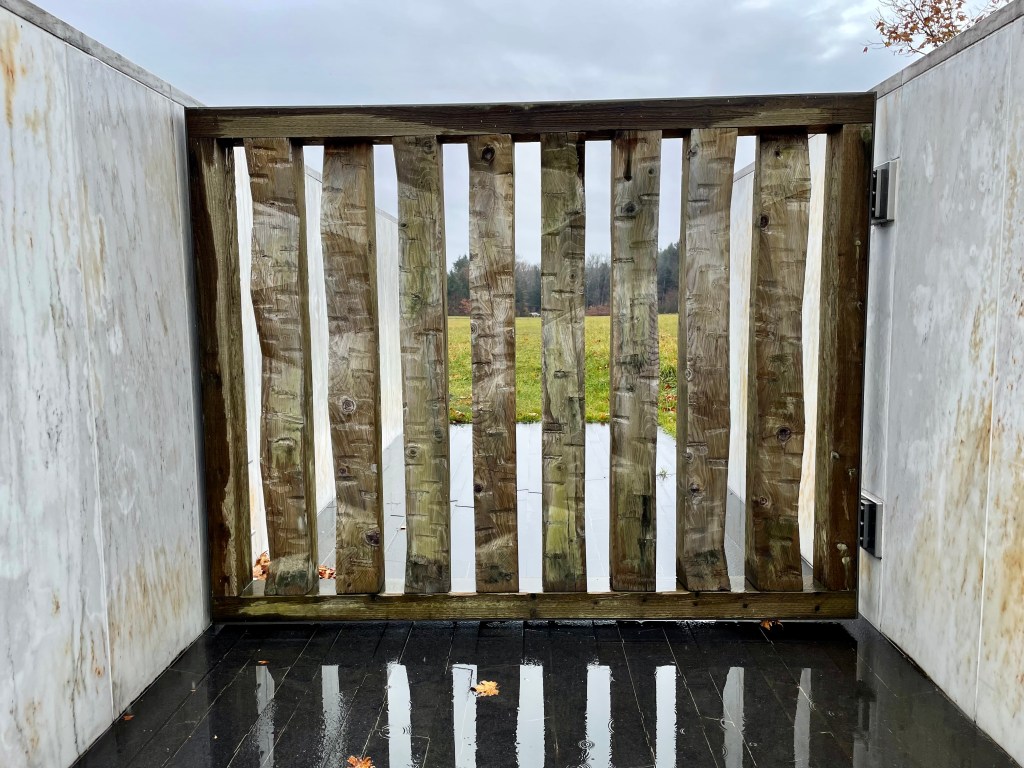
The Ceremonial Gate.
The black path leading to the debris field.
The Visitors Center overlooks the Wall of Names.
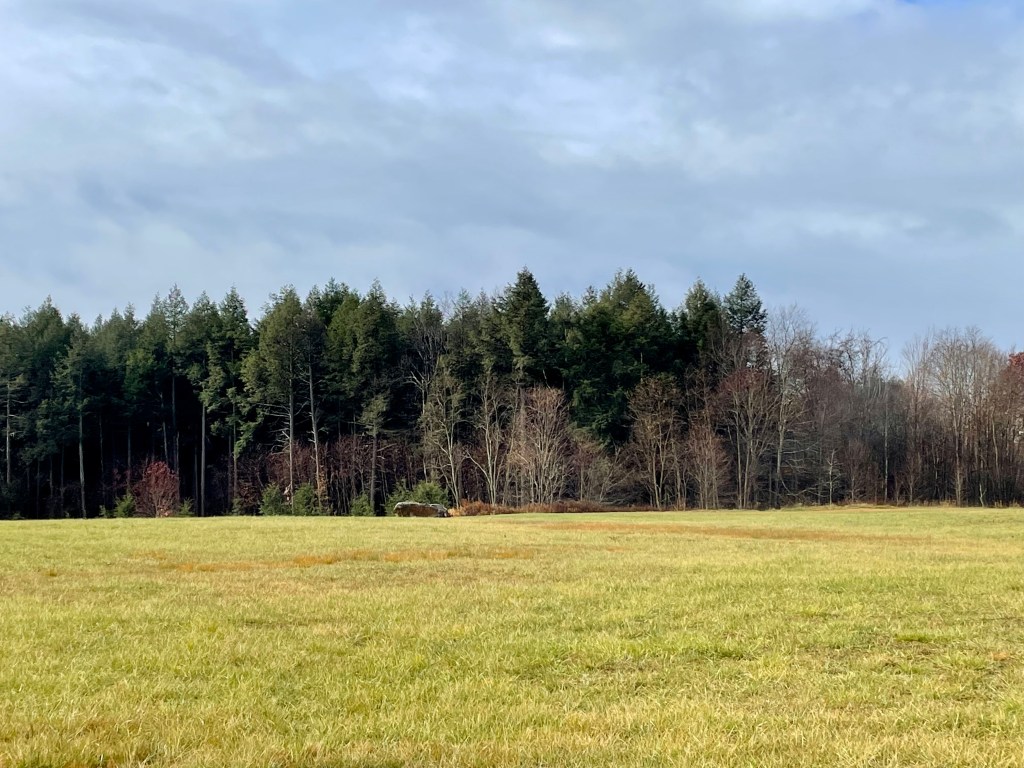
The 17-ton boulder that marks the crash site.
Red-spotted Newts were everywhere on the Memorial Plaza.
A few of the 40 Memorial Groves of trees and the Visitors Center.
The Tower of Voices.
The center also includes a bookstore, a viewing window, the Flight Path Walkway, and an Overlook. Since the crash left nothing more than a crater, a 17-ton bolder from the property was moved to mark the spot of the debris field. Visitors can walk or drive to the Memorial Plaza, located just north of the impact area. A Wall of Names points to the victims’ final resting place.
My wife and I arrived right after a school group did. Ranger Greg gave the youngsters and their chaperones an overview as we walked by them. Soon, they caught up to us in the exhibition room. We couldn’t help but hear Ranger Greg’s booming voice as we viewed the different displays. He certainly had the students’ attention as he told the story of Flight 93. He caught ours when he mentioned that the plane had veered off its scheduled path by abruptly turning southeast-bound over Canton, Ohio. My wife and I were both born in that blue-collar city. We walked closer to the group and listened as he told one aspect of the story after the other, most of which we had never heard before.
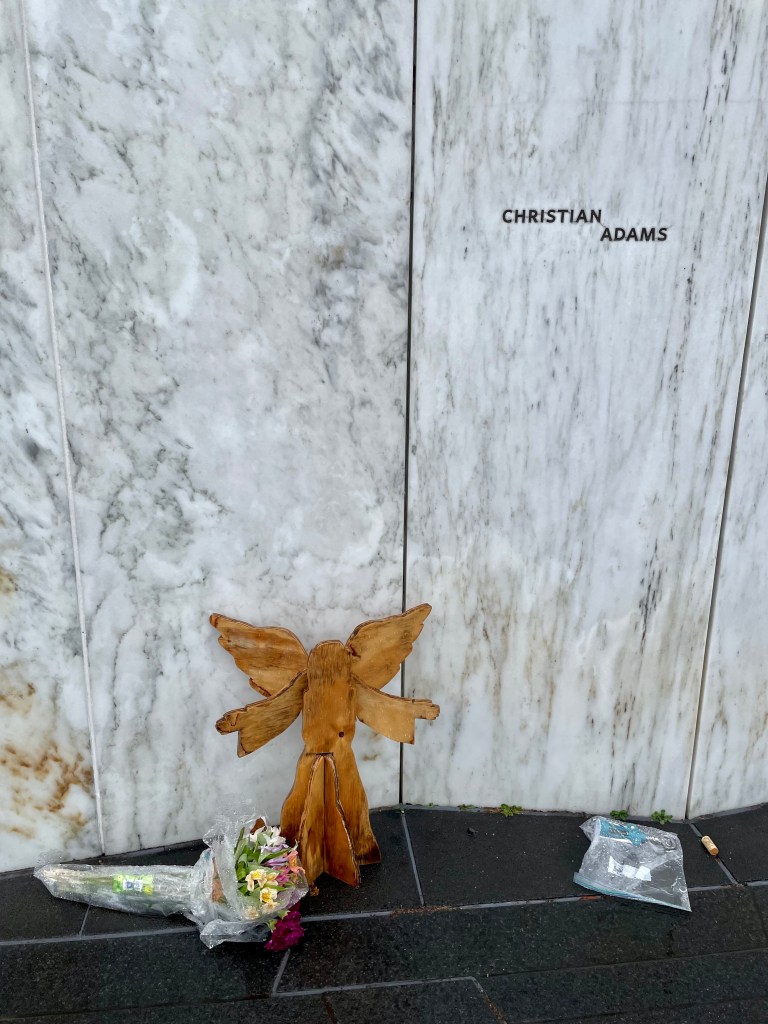
We drove to the Memorial Plaza, and volunteer ambassadors welcomed us. The rain intensity increased as Neva and I walked together quietly under a small blue umbrella, a fitting color for the place and mood. We stopped in front of the Wall of Names, an alphabetical listing of the flight’s crew and passengers. As I had experienced at the chain link fence two decades ago, memorial items had been left at some of the names. A wooden angel, fresh flowers, and a wine corkscrew rested beneath the first name on the black walkway. A volunteer explained why.
Christian Adams, a German citizen, worked for a German wine association. He was on his way to a wine convention in California that morning. The corkscrew served as yet another poignant symbol.
Items left at the Wall of Names in memory of Christian Adams
The dark walkway tiles represent the many cedar trees burned by the explosion and ensuing fire when Flight 93 dove into the ground upside down. A ceremonial gate of hewn cedar planks marks the way to the flight’s demise and the final resting place of those on board.
The radical changes I experienced gripped me. The 40 groves of 40 oak and maple trees planted in honor of the brave passengers and crew added a splash of russet to the fading fall landscape. Other volunteer trees sprouted from seeds planted by squirrels or blue jays or after lying dormant in the spoils of the old strip mine field. Today, they also serve as living memorials to the souls who lost their lives on that pleasant September day that turned so horrid.
We left with a new appreciation and a deeper understanding of what transpired on and to Flight 93. More than that, I was grateful for the simple, appropriate memorial that honored those brave, doomed souls.
The Visitors Center as viewed from Memorial Plaza.
































 Roadkill Crossing
You must be logged in to post a comment.