Carl Maxwell leads a life worth living


By Bruce Stambaugh

Given his many maladies and his age, Carl Maxwell, 77, of Berlin, Ohio, would have every right to simply give up on life. Instead, he has done just the opposite, and many people are the beneficiaries.

The list of all the good Maxwell has done in his life far exceeds his list of illnesses. Kidney dialysis three times a week, congestive heart failure, diabetes, quadruple bypass surgery on his heart, suffering four heart attacks, staph infections and skin cancer head the list.

Maxwell hasn’t let any of that stop him. If anything, they serve as incentives to live life to the fullest everyday. He does so personally and through several community organizations for which he volunteers.

“I love life,” Maxwell said. “I want to do everything I possibly can while I can.”

Carl Maxwell by Bruce Stambaugh
Carl Maxwell
Maxwell has and is doing a lot by any measure. His accomplishments would be impressive for someone in excellent health.

Maxwell was a charter member of the East Holmes Lions Club and is a charter member of the newly established Berlin Lions Club. He served as president of the East Holmes club, and was recently presented the prestigious Melvin Jones Fellow award by Lions Club International.

“I’m especially interested in the sight aspect of Lions Club,” Maxwell said. Lions Clubs collect used eyeglasses and distribute them to needy people around the world.

Maxwell has served as either president or vice president of the East Holmes Fire and EMS District board since its inception in 2000. He is the at large member of the five-member board.

Maxwell, along with his wife of 53 years, Lorene, volunteer at Save and Serve Thrift Shop in Millersburg twice a week.

“On Tuesdays,” Maxwell said, “I cut rages with Paul Roth.” He and Lorene also help out as cashiers on Thursday evenings.

Maxwell has also taught Sunday school at several levels at Berlin Mennonite Church for many years.

“I like people,” Maxwell simply said.

If he did slow down, no one would question his decision. Maxwell goes for kidney dialysis three times a week in Wooster.

“Counting my time on the road,” he said, “each visit takes eight hours.” Maxwell is not complaining about that.

“I didn’t really want to do dialysis,” Maxwell said. “But I got out voted 5-1 on that.” His loving wife and four sons all wanted him to do the treatments. Maxwell drew the line there.

“I had an opportunity for a kidney transplant,” Maxwell said, “but I turned it down.” He said he felt someone younger than him should have a chance at the available kidney. “I couldn’t live with myself if I had taken a kidney that some 20-year old needed,” Maxwell said frankly.

Carl and car by Bruce Stambaugh
Carl Maxwell showed off his salmon and grey 1958 Buick.

Maxwell doesn’t spend all of his time volunteering. He also has some heart-felt hobbies in which he has invested much time and money. Maxwell, who once had 14 antique cars, now has three old cars and a 2002 Corvette, which he calls his “toy.” He occasionally drives it to his dialysis sessions.

At the peak of his car collecting days, Maxwell served for 16 years on the regional board of directors of the Antique Car Collectors of Canton. Maxwell also has the world’s largest collection of Sinclair Oil products and memorabilia, which was featured earlier this year in an international collection magazine. From old gas and oilcans to large advertising signs to refurbished gasoline pumps, Maxwell’s collection is clearly one-of-a-kind. He has gathered items from many states and even other countries.

That extensive collection stems from his life’s work.

Sinclair signs by Bruce Stambaugh
Carl Maxwell has two triple-check Sinclair Oil signs displayed at his barn. He said only a handful remain.

Maxwell worked 36 years for Holmes Oil, which originally distributed Sinclair products. He started as a truck driver, but after six years, he and Maynard Hummel became co-owners of the business. Maxwell sold his half interest in the business after 30 years.

“I have had an unbelievable life,” Maxwell readily shared. He credits two women for those experiences, his wife and his late mother, Edna Weaver Maxwell.

“I owe a lot to others, especially my wife,” he said. “She’s just been amazing.” He said Lorene has been an incredible help to him in his many times of need. Maxwell said he recognizes his physical limits and takes the time to rest so he can continue to keep his busy pace.

“I want to do everything I possibly can,” Maxwell said. “Life is still worth living, and it’s too short to be negative.”

Carl and pumps by Bruce Stambaugh
Carl Maxwell has collected Sinclair Oil signs, cans and even gas pumps.

This article appeared in the July 2, 2012 edition of the Bargain Hunter, Millersburg, OH.

© Bruce Stambaugh 2012
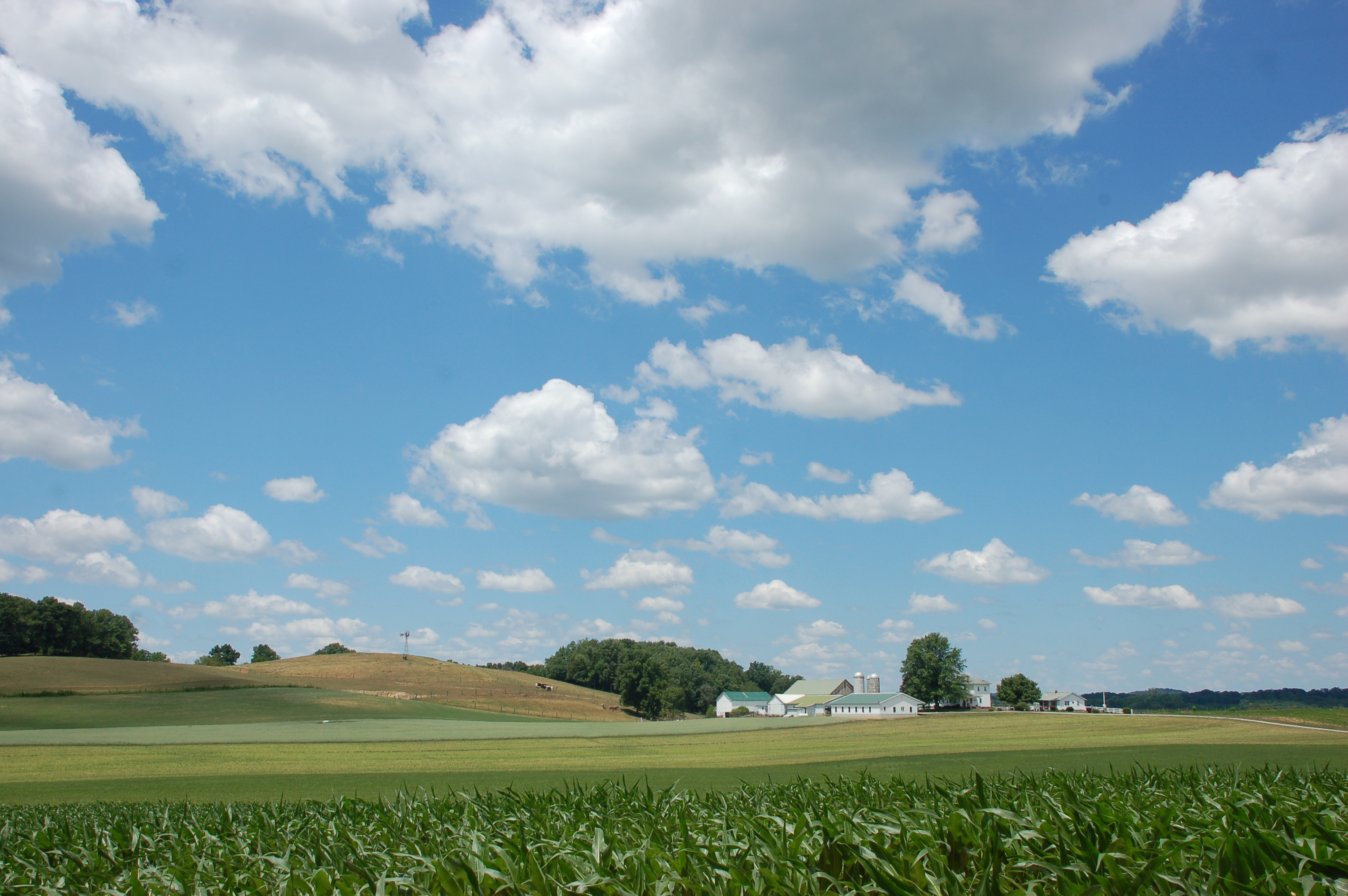
Lunch on the porch includes more than just good food

Porch view by Bruce Stambaugh

By Bruce Stambaugh

Everyone needs a sanctuary. For my wife and me, our back porch is our quick retreat from life’s demands. A few short steps and we are in a special place. Over the years our back porch has given us many marvelous memories.

We recognize that we are fortunate to live where we do. Our home, built three decades ago off an Amish farm, is situated between Benton, Berlin and Mt. Hope, all in Holmes County, Ohio. Our back porch provides panoramic, inspiring scenes.
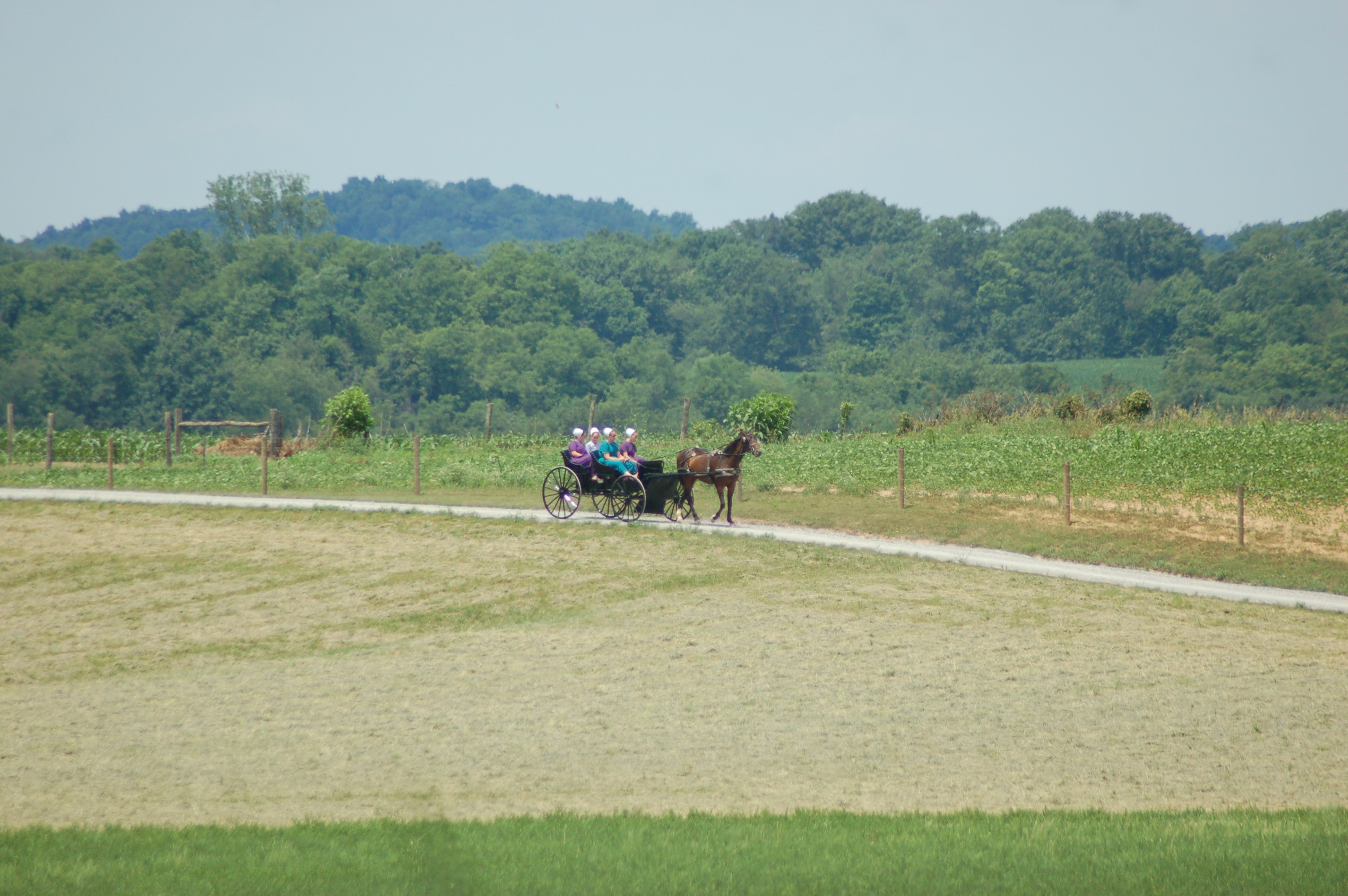
Girls in buggy by Bruce Stambaugh
The open-air porch was added to our modest home several years ago. We wanted a quiet place to relax during Ohio’s warmer climes. When the weather does cooperate, we especially enjoy lunches together there. It helps to have a wife who is a great cook. I’m no chauvinist, but I’m no chef either. Neva rules the kitchen and I reap the rewards and help clean up.

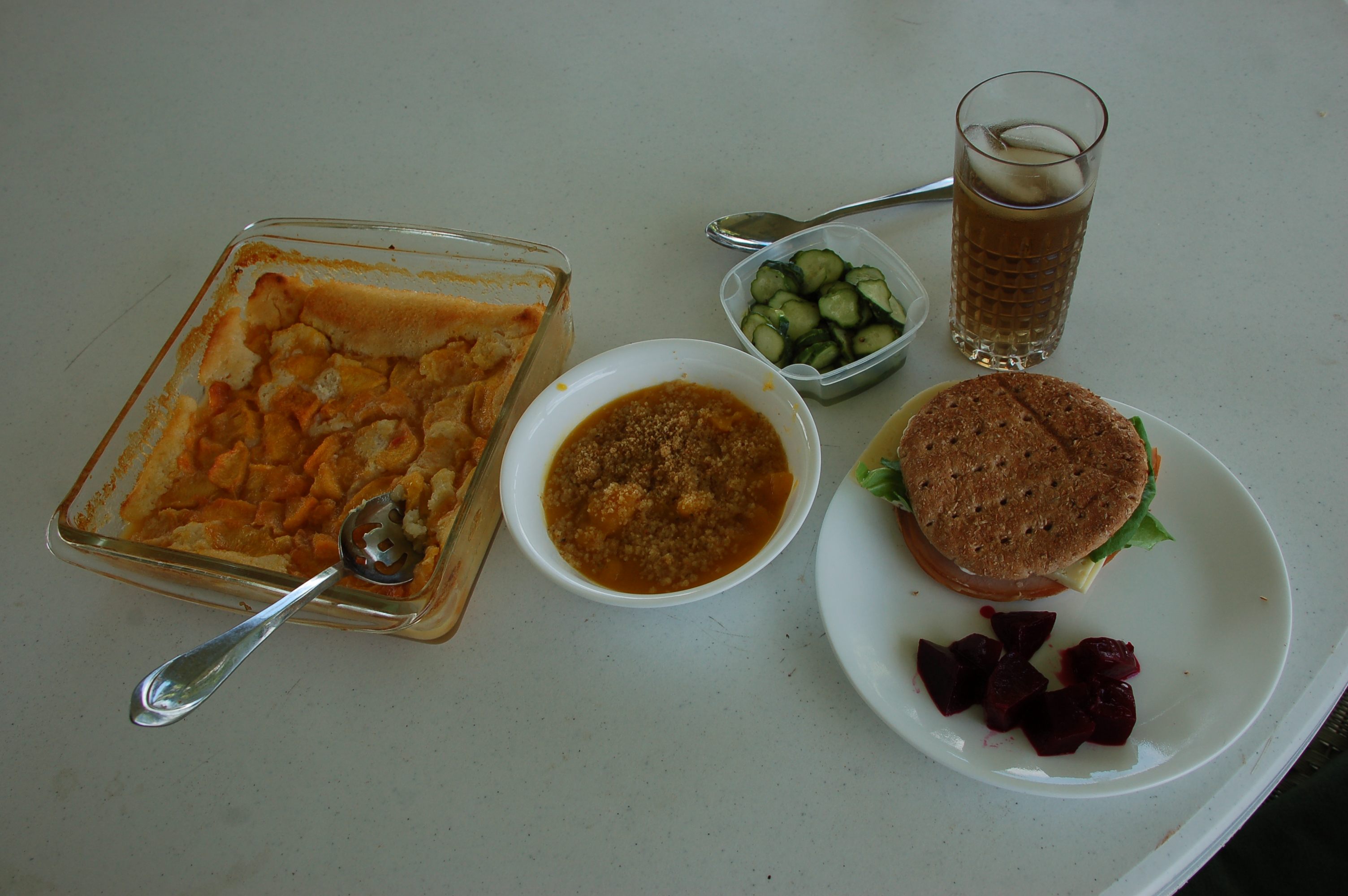
Lunch by Bruce Stambaugh
A recent lunch that we enjoyed on the porch.
Somehow the food tastes even better on the porch. One recent lunch featured her homemade butternut squash soup, sprinkled lightly with toasted bread crumbs. A fresh spinach salad with crasins and vinaigrette nicely complemented the soup.

A simple dessert of sweet cherries was washed down with fresh sweet peppermint tea, spiked with basil, giving the tea a sweet-tart taste. The mint was picked just minutes before being doused in boiling water. Other than the tea, no seconds were needed. A single course of each was plenty.
Mowing hay by Bruce Stambaugh
The house serves as a buffer between our busy highway and the backyard, minimizing the traffic noise. We love the quiet.

Well, perhaps quiet isn’t the proper word. Abundant backyard activity breaks any hint of silence. While we dined, we heard the undulating hum of a mower and the rattle of horse harnesses as our Amish neighbor completed his second cutting of hay before taking his own lunch break.

Downy by Bruce StambaughIn the meantime, the birds and wildlife kept us entertained as they also dined. With the porch open on the sides, it’s not unusual for birds to zip over our heads to the feeders. That is especially true for the acrobatic hummingbirds. Their feeder hangs from the edge of the porch near the kitchen window. It is fun to watch the territorial hummers chatter and chase each other away from their own version of lunch. They wouldn’t have to do that. There are several places to perch.

If we stay immobile, even the woodpeckers light upon the peanut butter suet feeder that dangles next to a hanging basket of flowers. The little downys, however, are the only ones that aren’t spooked off by our presence. Still, they nervously but needlessly chip and jerk their heads warily as they jab at the rich mixture, making sure we keep our distance.

Wildflowers by Bruce StambaughA green frog, one of six that inhabit our little garden pond, waits patiently for lunch to fly by. The green frogs that patrol our little garden pond adjacent to the porch patiently wait in the sun for their own lunch to fly by. When I hear a plop, I know they are as satisfied as we are.

Beyond the pond, monarch, swallowtail and red admiral butterflies partake in their own flowery buffet on the patch of ever-changing wildflowers. Along with volunteer sunflowers, the coneflowers, Black-eyed Susan’s, daisies, gaillardia and bachelor buttons paint a colorful palette in the shade of the canopy of pines and giant sugar maple.

When human guests arrive, their smiles reveal their appreciation for our sanctuary. Added together these pure and pleasurable ingredients always make for enjoyable and hardy gatherings. I’m more than happy to share the recipe.

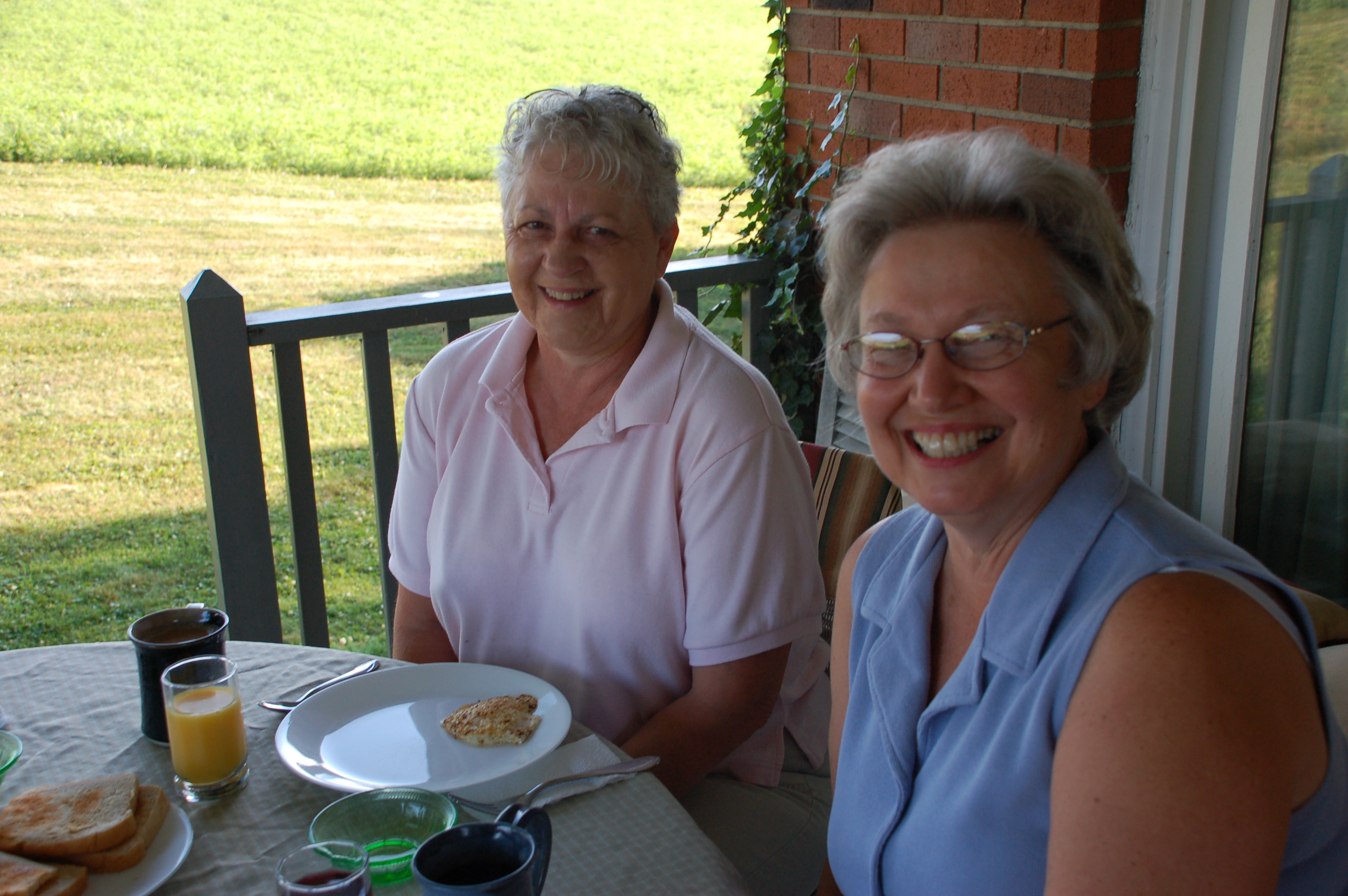
Guests by Bruce Stambaugh

© Bruce Stambaugh 2012

All abuzz about beekeeping

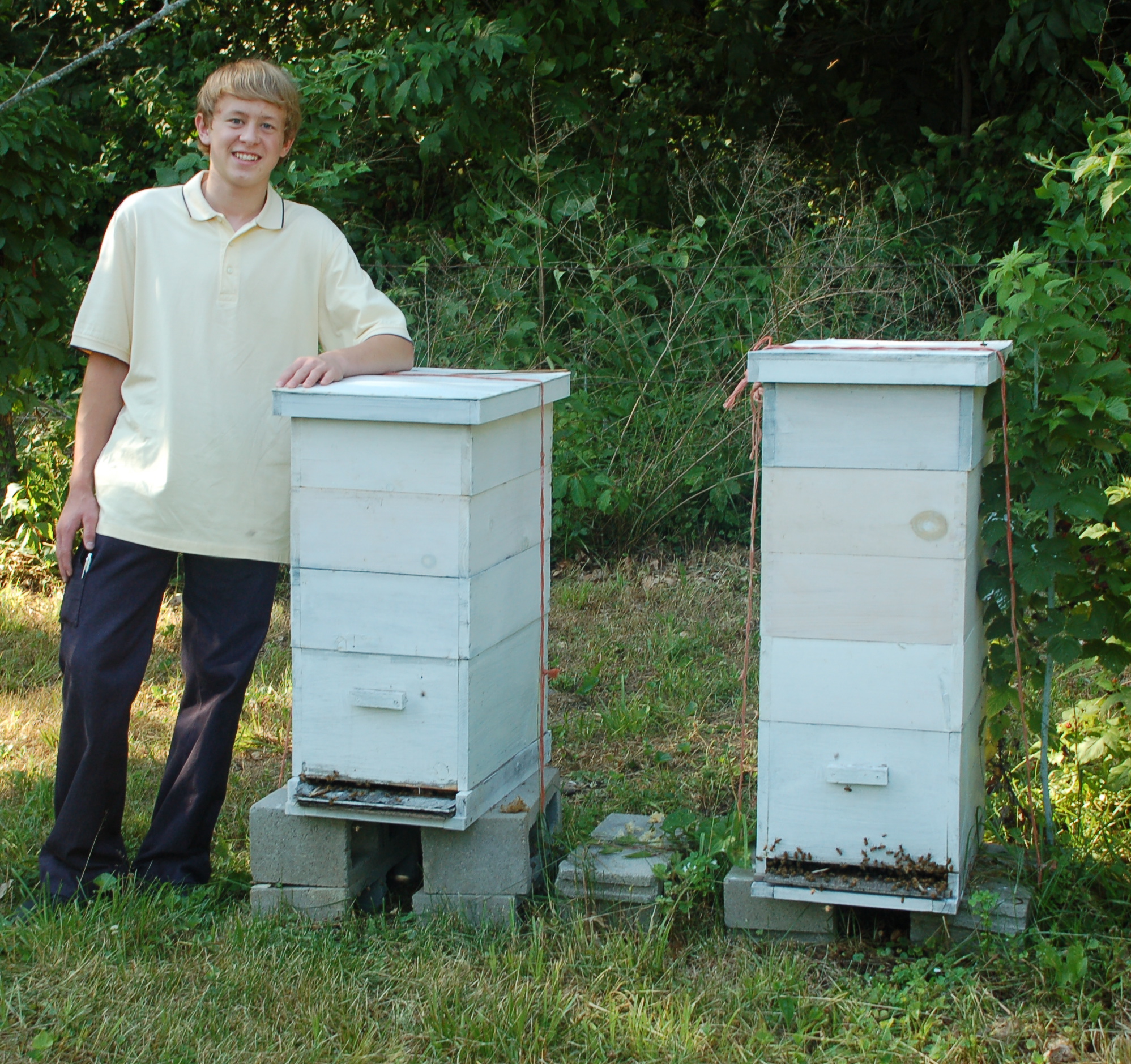
Bee hives by Bruce Stambaugh
Brian Miller, 17, of Apple Creek, OH checked out some bee hives before a recent meeting on beekeeping held near Mt. Hope, OH.

By Bruce Stambaugh

Beekeeping is on the rise, according to Dr. Jim Tew, recently retired bee specialist at The Ohio State University Extension Services in Wooster, Ohio. He just doesn’t know why.

A meeting held recently at the residence of Mark Miller near Mt. Hope, Ohio seemed to be proof of that. Men, women and children, many of them Amish, nearly filled the several rows of church benches set up in Miller’s spacious outbuilding where the beekeeping meeting was held.

Miller said beekeepers’ meetings like this one are held three times per year. He said there are two such groups in Holmes County, Ohio. They are geographically split into northern and southern groups, with U.S. 62 being the dividing line.

The meetings are held to keep area beekeepers informed about the latest information on beehive maintenance and keeping the bees healthy. They also lean on the informal approach to allow for extensive question and answer times.

Bee keepers meeting by Bruce Stambaugh
Dr. Jim Tew shared his expertise on beekeeping to a group of beekeepers in Holmes County, Ohio. Many of those in attendance were Amish.

Tew was asked to share his expertise on beekeeping. The gregarious and modest Tew kept the group relaxed with personal stories of his more than 40 years of beekeeping. He retired from the OSU Extension after 35 years.

The Alabama native told the group that beekeeping is extremely popular right now.

“But I don’t know why,” he said. He suggested one explanation could be that honeybee husbandry fits into the popular universal interest in providing a dependable, wholesome food supply.

Busy bees by Bruce Stambaugh
Honeybees scurried in and out of a hive across from Mark Miller’s residence near Mt. Hope, OH.

Related to that sustainability idea, Miller told the group, “I like the concept of producing our own bees here in Ohio.” Normally, purchasing commercial kits and commercially raised queen bees, which are essential for hives to thrive, starts bee colonies.

“Having meetings like this,” Miller said, “will help us toward that goal.”

Indeed, Tew indicated that when the Varroa destructor mites began to invade honey beehives in 1987, the industry took a huge hit. The killer bee scare followed that, and bee husbandry began to wane.

Mite zapper by Bruce Stambaugh
Dr. Jim Tew showed the group a mite zapper that could help control destructive Varroa mites.

“It’s unnerving,” Tew said of the disease, officially called colony collapse syndrome. “Happily those initial dark days have gone away, and I no longer have any fear of all of my hives dying.”

He shared various ways beekeepers could help deter the mites and how to properly inspect hives for any possible problems. He said the most recent die off of bees made headlines because information spread rapidly on the Internet.

“This die off was not new,” Tew said, “though it may have a different cause.” He explained that there could be many causes for hives not thriving.

“Too many of us want to find one reason for a die off,” he said. “Each of you who keeps bees will have to talk amongst yourselves to determine what system to stop the mites works best.”

Miller said the meeting was not limited to those who live north of U.S. 62. In fact, 17-year-old Brian Miller came from Apple Creek to learn about bees. He just began keeping bees last year, and said his hives are thriving.
Bee on daisy by Bruce Stambaugh
The Tri-County Beekeepers Association in Wooster awarded Brian Miller a $500 scholarship for an essay he wrote on “Why I love beekeeping.” He said the money enabled him to purchase needed beekeeping supplies and equipment to maintain and expand his hives.

Mark Miller, who began beekeeping in 2009, said he also received an award to help him get started.

“I was honored to receive the Don Meyers East Ohio Apiculture Project prize of $75,” he said. That amount helped him buy two hives and equipment to operate them.

Though he retired from his OSU Extension position, Tew continues in the bee business both personally and professionally. Besides keeping bees himself, he also serves as a state beekeeping specialist for his home state of Alabama.

He kidded the crowd by saying that he now has a 900-mile commute to work. In actuality, he travels to Alabama five times a year to complete his beekeeping responsibilities.

© Bruce Stambaugh 2012

The real reason to celebrate July 4th

D.O.G. Street by Bruce Stambaugh
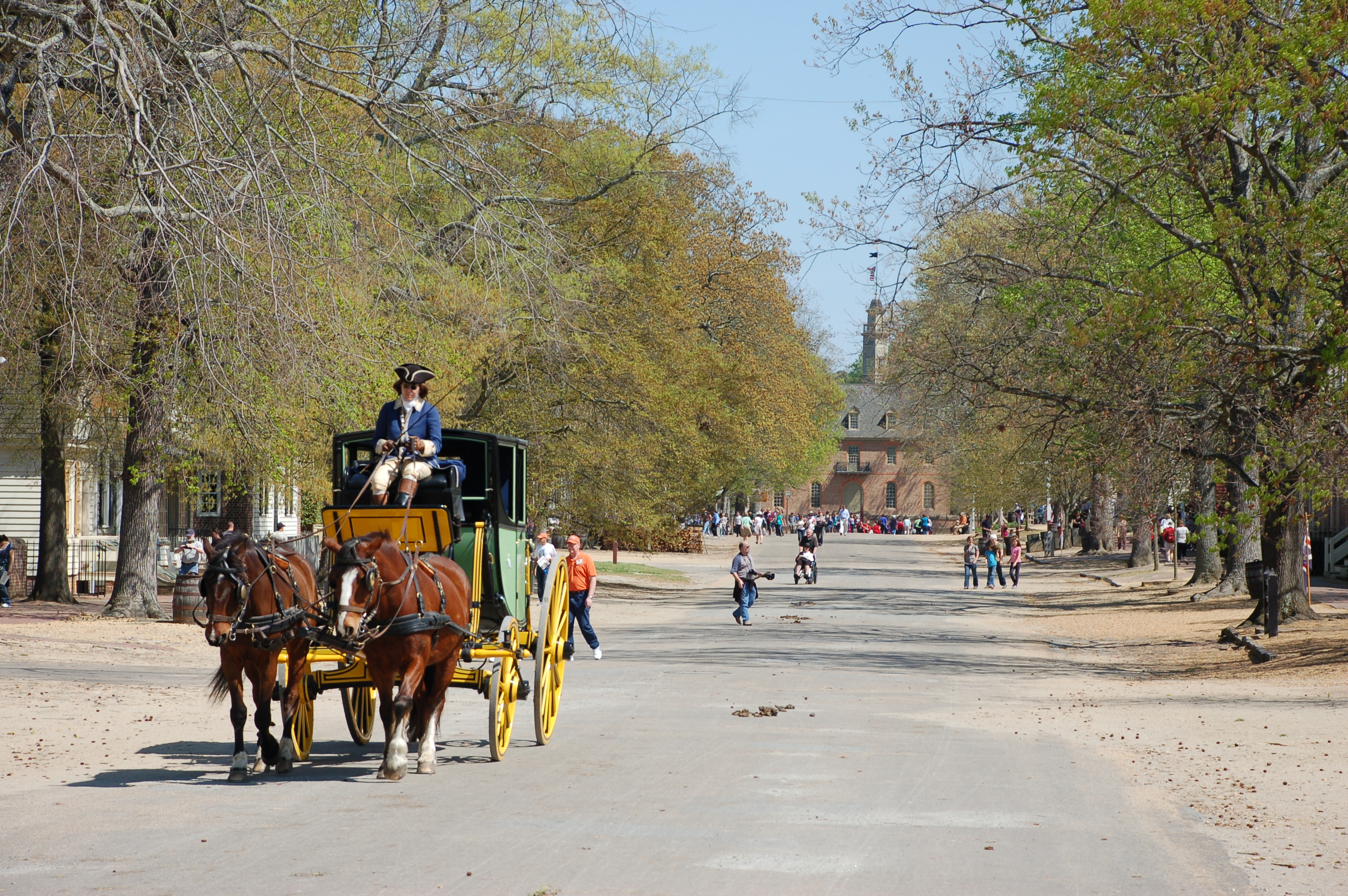
Many of the tenets of our democratic republic were formed in Williamsburg, VA along D.O.G. Street.

By Bruce Stambaugh

Watching starbursts of fireworks from five miles above the earth was an unexpected treat.

My family and I were flying back from vacation late on July 3, 1988. Our hour-long flight path took us along the southern shores of Lake Michigan and Lake Erie. Shortly after we were airborne, the sky began to pop with burst after colorful burst of fireworks.

Parade by Bruce Stambaugh
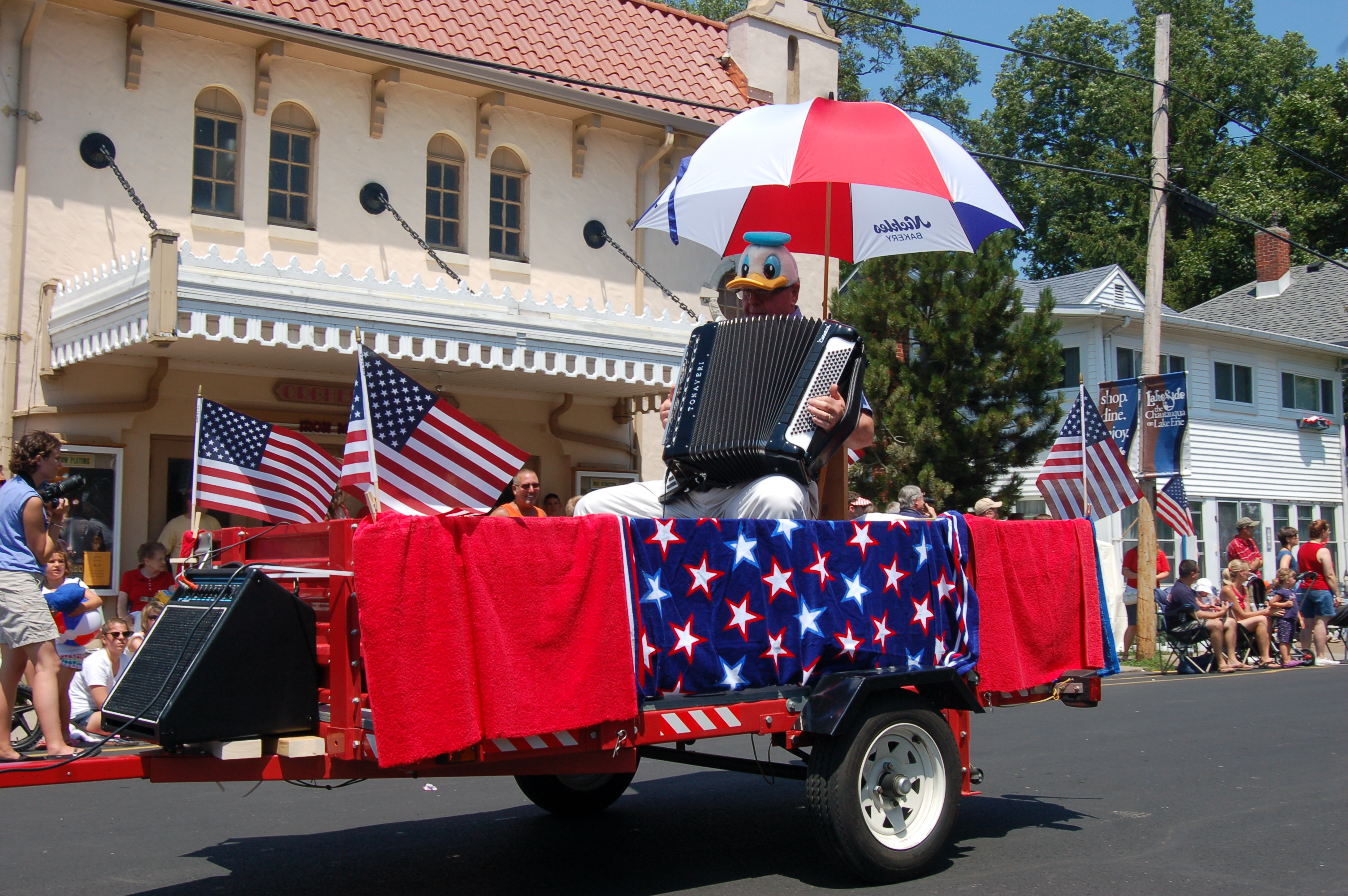
Parades are just part of the annual Fourth of July celebrations in the United States.
All along the route towns large and small expressed their jubilation for America’s Independence Day holiday with pyrotechnic displays. From high above I imagined the various sparkling bursts reflecting the broad diversity of folks that comprise this great country. Necks craned skyward, people from many cultures, races and religions in urban parks, county fairgrounds or on their own back porches had to also be admiring their local kaleidoscope of explosions.

As the last sparks flickered, I had to wonder then, as I wonder now, if the real meaning behind the celebratory fireworks is fully understood. As they picked up their chairs and folded their blankets to return home, what were they thinking? Was it just another fireworks display or did they truly comprehend the meaning of the day?

Those are questions that needed to be asked then just as they need to be asked today. Remembering our historic roots helps us to focus on where we are now and where it is we need to be going tomorrow.

Fourth of July decorations by Bruce Stambaugh
Homes like this one in Lakeside, OH will be decorated for the Fourth of July all across the U.S.

As we celebrate another Independence Day in the United States, here are a few historical facts that cannot be changed, though some have tried to distort the truth. The Continental Congress actually declared its independence from Great Britain on July 2, 1776. The revolutionary document, penned by Thomas Jefferson, was signed July 4, 1776, making the radical pronouncement official.

At great risk to their fame, fortune and reputations, these bold men, and they were all men, set down the groundwork of a new nation. That foundation was based on one essential notion, freedom.

A few years later that central idea wove its way into the heart of the U.S. Constitution in the form of the first 10 amendments commonly called the Bill of Rights. They itemized specific freedoms, including the freedom of religion, the freedom of speech, and the freedom to gather, among others.

British flag by Bruce StambaughThe people of the American colonies wanted to shake the hold of Great Britain’s rule and run their own lives. This great document announced a new form of government for all peoples. Without it, anarchy would have ruled.

Since its initial adoption the Constitution of the United States has been amended to appropriately represent rights and freedoms for all of the country’s peoples, regardless of gender, race or creed as the population and society’s mores have evolved. To be sure, that evolution has had its civil rough spots to say the least.

From our present perspective, it can be easy to think that some things always were. “In God We Trust,” for example, was added to our coins and currency in 1864 at the end of the Civil War. The phrase “under God” in the Pledge of Allegiance was not added until 1954 during the McCarthy communism scare era.

The altitude at which we enjoy the July 4th fireworks isn’t terribly important. The attitude of appreciation and a clear understanding and application of how and why our basic freedoms exist, however, are essential for appropriate social discourse.

As the fireworks explode in honor of this July 4th, what will you revere about Independence Day?

Amber waves of grain by Bruce Stambaugh
Religious freedom was the primary moving force for Amish immigrating to the United States, where their amber waves of grain still roll today.

© Bruce Stambaugh 2012

A father who loved life, sometimes too much

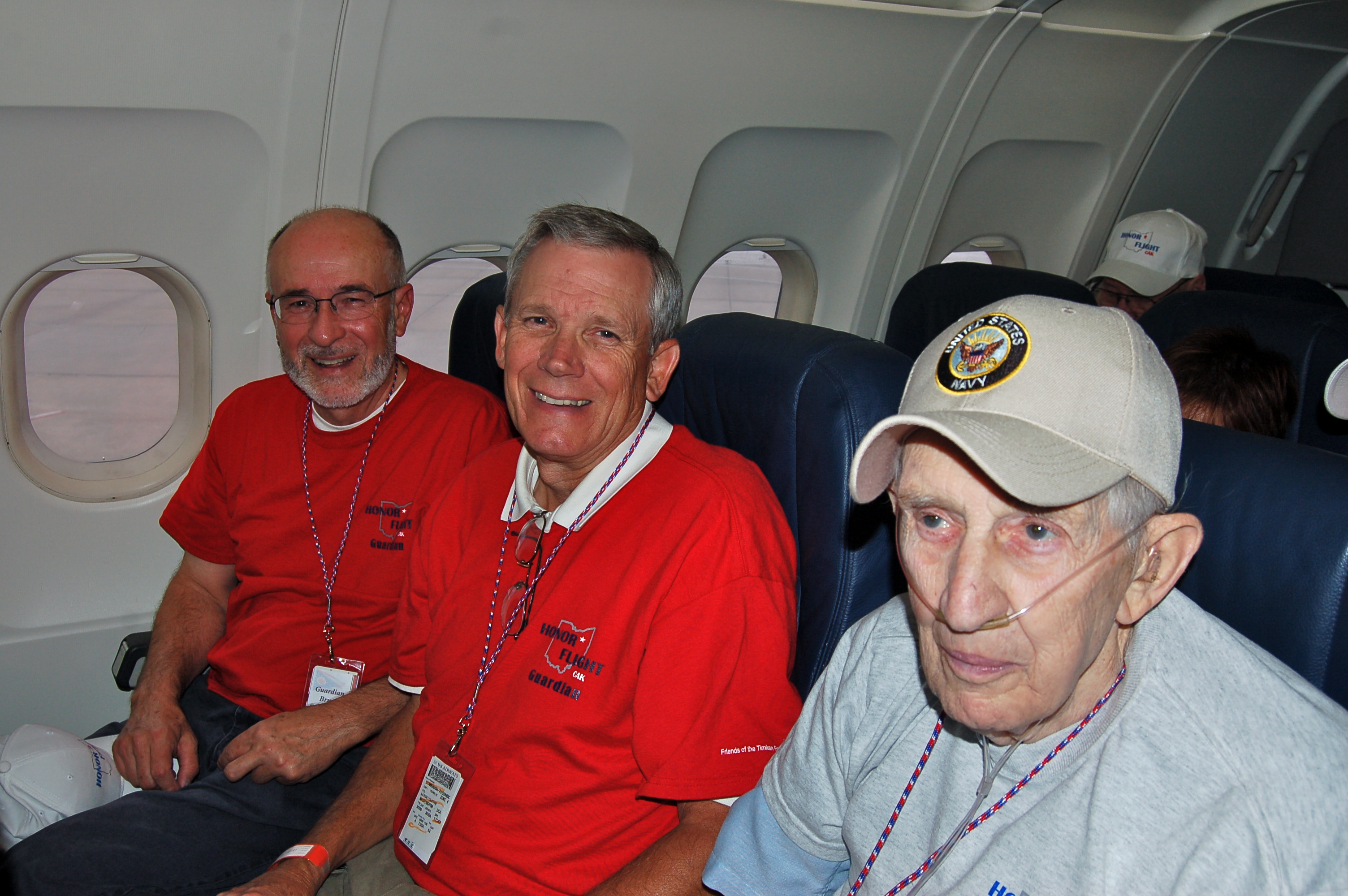
Stambaughs by Bruce Stambaugh
My older brother, Craig (middle), and I accompanied our father, Richard H. Stambaugh, on an Honor Flight to Washington, D.C. on Sept. 12, 2009.

By Bruce Stambaugh

My father loved life and his family, sometimes with reckless abandon. He seldom realized the latter. Dad chose to express his affection through actions rather than words. He enjoined his family in whatever he enjoyed doing, and Dad had a wide range of interests throughout his long life.

Dad especially had an affinity for all things outdoors. My brothers, sisters and I learned much about nature and sportsmanship. We also learned about safety, although I don’t think that was the primary lesson Dad had in mind.

Dad’s uninhibited fervor occasionally overrode practicality. The tricky tandem of affability and naiveté resulted in some memorable if not scary situations.

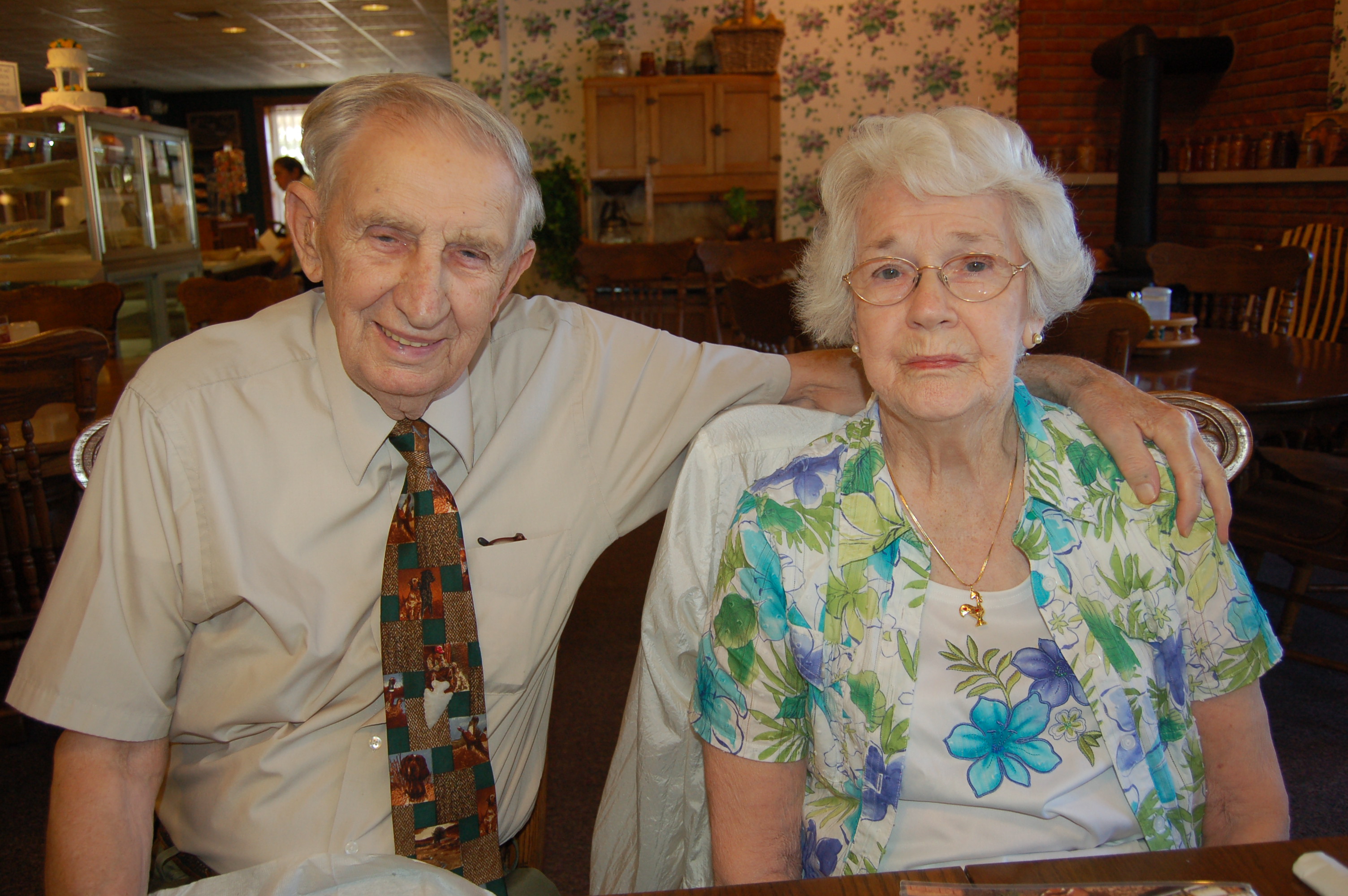
Parents by Bruce Stambaugh
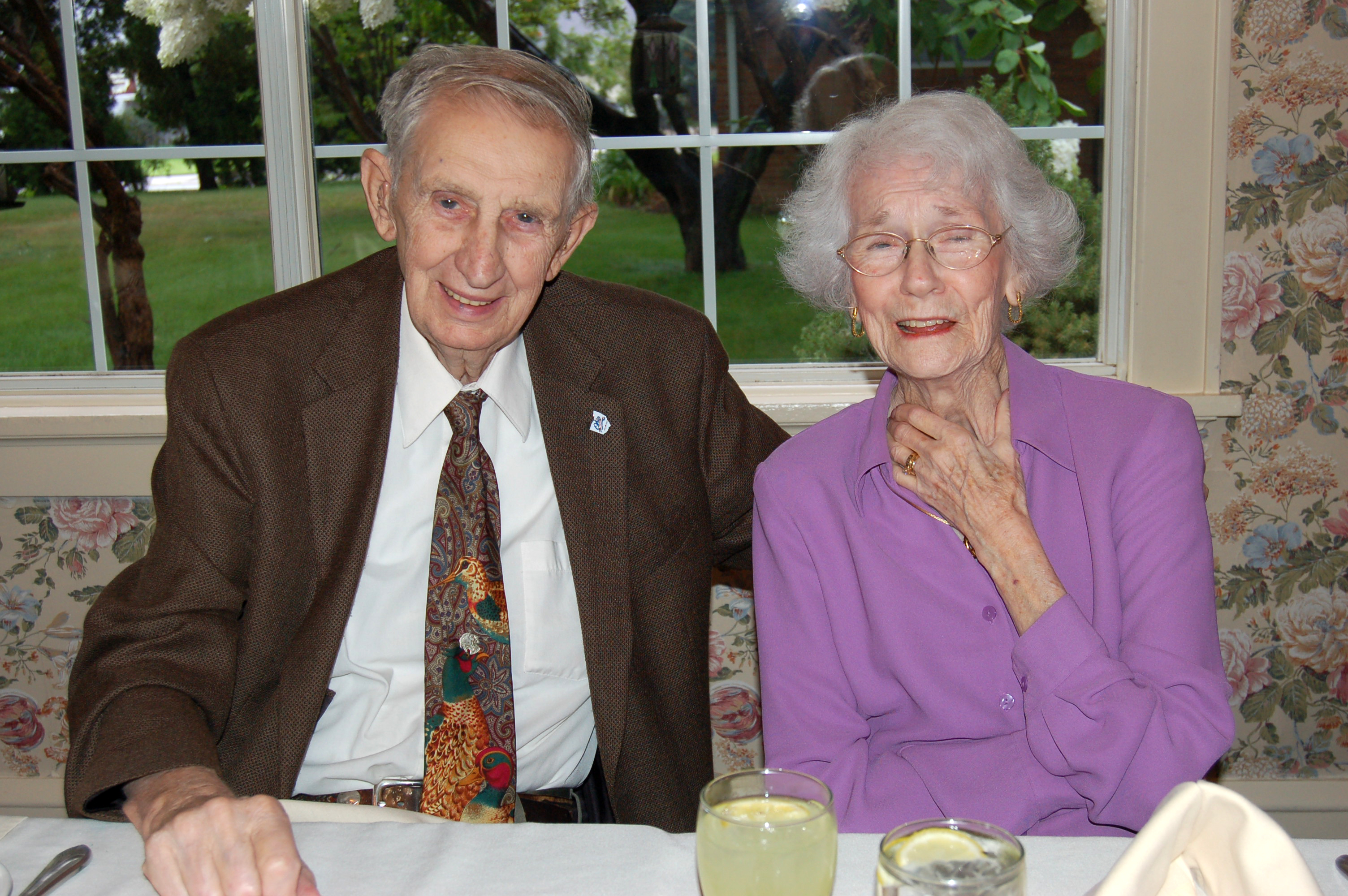
Dad and Mom on their 66th wedding anniversary.
Take the time my older brother and I nearly drowned while Dad was supposed to be watching us. I was too young to remember this incident, but I heard the story so often, I can visualize it in my mind. Craig was six. I was two. We lived on a channel that connected two lakes.

My brother and I wandered on to the boat dock behind our house. According to the neighbor, the next thing she heard was plop, plop. When she no longer saw us standing on the dock, she assumed the worst, jumped in the water and pulled us both to safety. I understand our mother gave our father a good going over, and with that fearful incident firmly ingrained in my psyche I never learned to swim.

My first actual memory of my father is less dramatic, although it, too, was problematic. Dad handed me a bottle of soda. That gesture certainly was tame enough. Problem was I was only three and at the time sitting on the ceiling rafters of the house in which I grew up. Dad and my great uncle Elmer built the brick bungalow together. Dad wanted his family to see the progress to date.

There I was a toddler dangling over what was to be the dining room, Dad proudly smiling, handing me a Coca Cola from the floor below. Either they had nailed me to the 2 x 6 or they were overly trusting that I wouldn’t fall.

Sometimes the unsettling consequences weren’t necessarily Dad’s fault. Dad signed up the family for a special all day passenger train excursion from our hometown of Canton, Ohio to Cambridge, Ohio and back, a distance of about 120 miles roundtrip. The only problem was the train’s locomotive had so many mechanical issues we were gone for 24 hours. No food service or sleeping quarters were available on the train. We arrived home at 6 a.m., and once again Mom was not pleased.

Clendening by Bruce Stambaugh
Over the years, Dad spent many enjoyable days hunting and fishing with family and friends in the Clendening Lake region of southeastern Ohio.

On a family outing to Leesville Lake, Dad rented a boat with a capacity of four for a family of seven. Dad thought two kids counted for one adult. The boat patrol officer thought otherwise.

Should I even mention the time Dad left Craig, our cousin and me in a drenching rainstorm 40 miles from home? In honor of Father’s Day, let’s just say that it all worked out in the end. Mom, of course, had the last say.

Certainly not all of our experiences with our gung-ho Dad were harrowing in nature. We had many, many good times together. I do believe that our vicarious adventures with Dad taught my siblings and me to both enjoy life and to do so responsibly.

Dad was a loving, lovable guy who at times simply couldn’t help himself. I am forever grateful for his headlong dives into life.

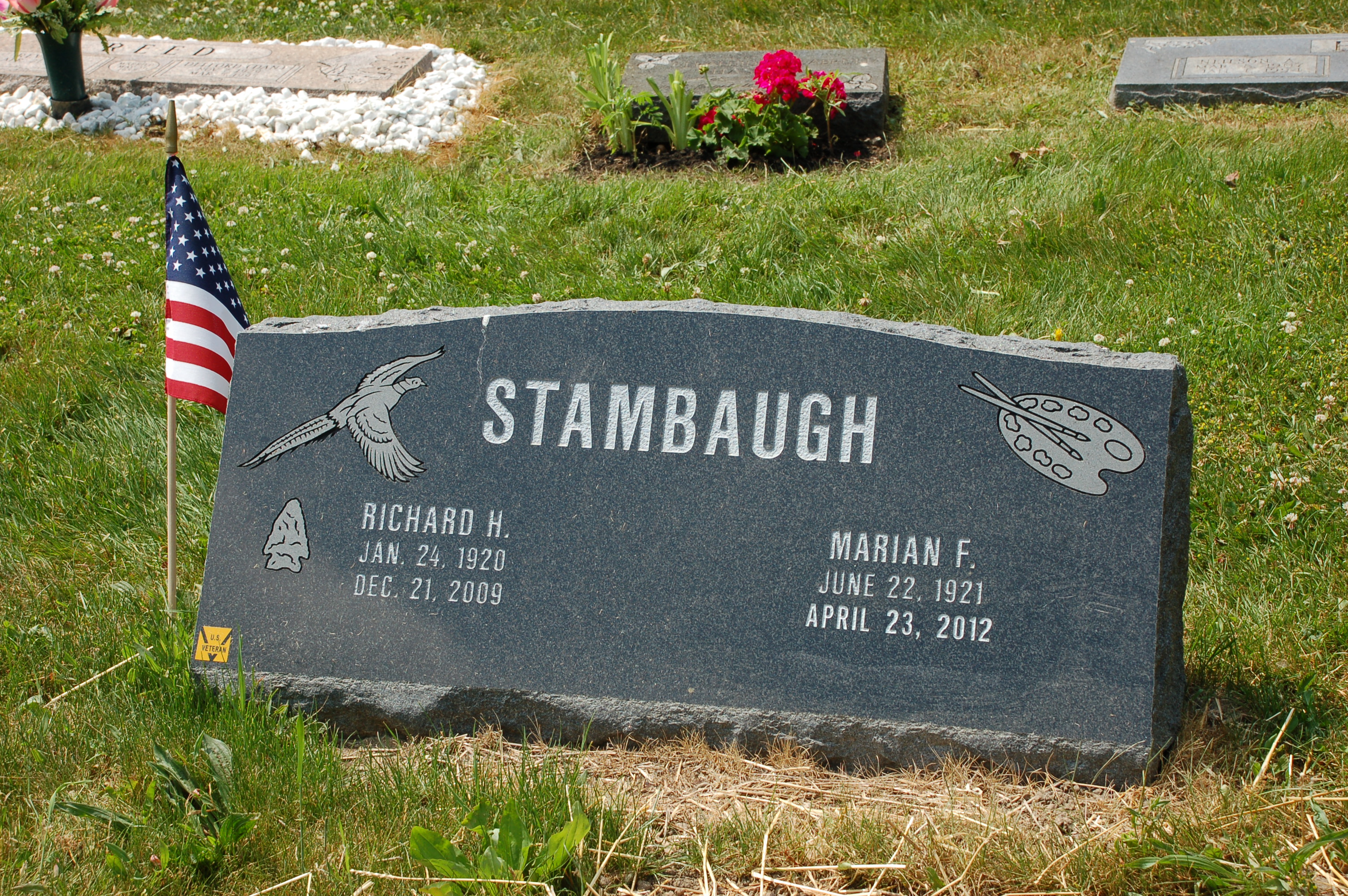
Headstone by Bruce Stambaugh

The reality of being a forlorn Cleveland Indians fan

Field box seats by Bruce Stambaugh
The view from our seats keeps you in the game.

By Bruce Stambaugh

I have always been a fan of the Cleveland Indians. It must be the masochist in me.

Cleveland was and remains geographically the closest city with a major league baseball team. It was only logical that I follow them. Loyalist that I am, I have remained a true fan through thick and thin. Believe me, there have been a lot of lean years in my lifetime.

In part, that’s why I was a bit taken aback by the recent remarks of Indians’ closer Chris Perez. The young relief pitcher, not one to be shy with his words, vehemently chastised the Cleveland fan base for not supporting the team. At the time, the Tribe, as they are affectionately known, was in first place in the standings and last in attendance in the major leagues. That displeased Perez.

Roommates by Bruce Stambaugh
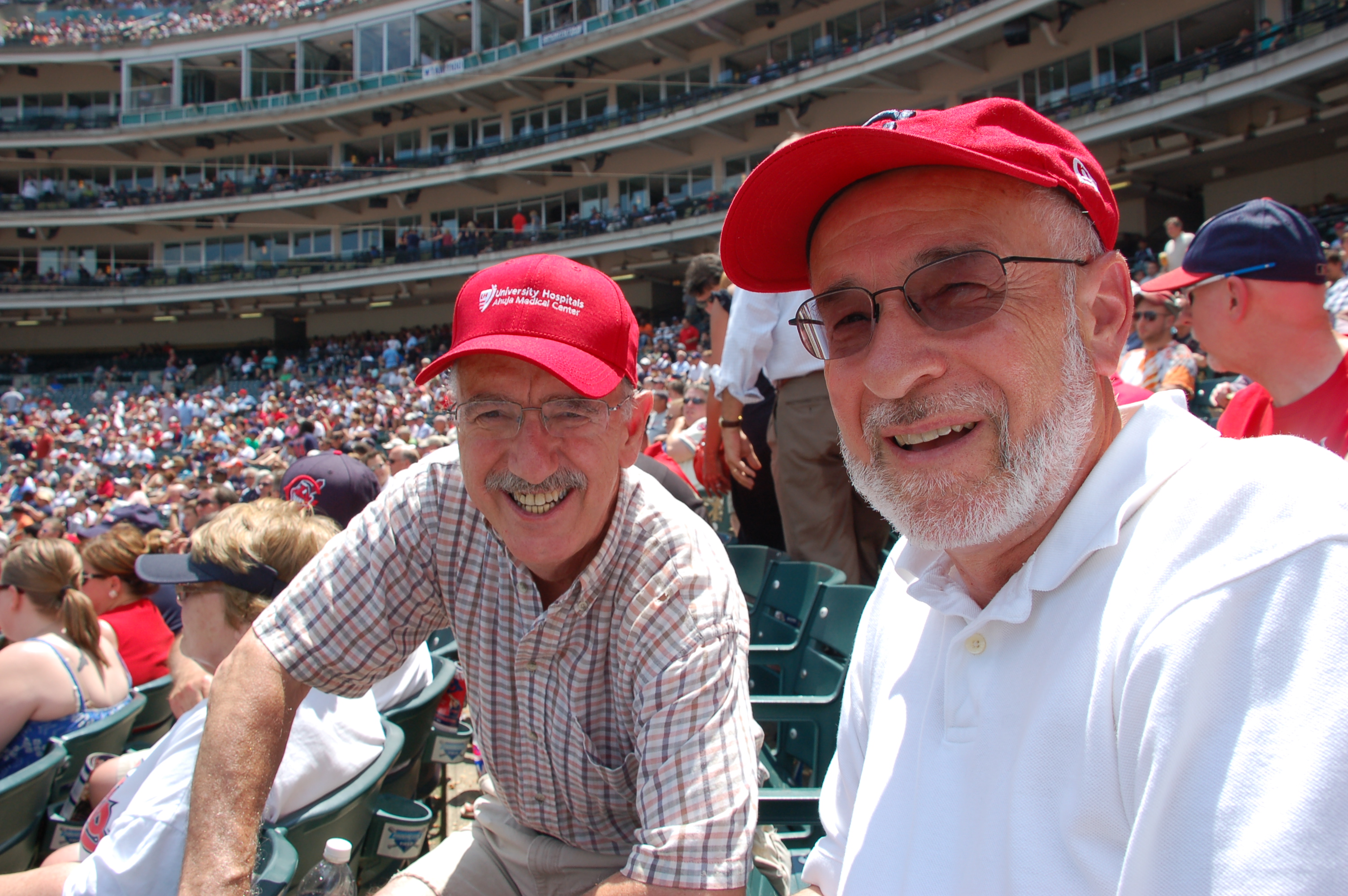
One of my college roommates met me at Progressive Field for an Indians game.

In a sport where clichés are the standard, it’s not how well you start the season, but where you end it. After winning 30 of their first 45 games last year, the Indians finished the season with a losing record. Like so many seasons before, their fast start melted with the summer heat.

Although I understood Perez’ point, I don’t think he comprehended the perspective of lifetime Indians fans. We have seen it all before. I doubt Perez knows about Max Alvis tripping over third base, turning a routine popup into a double. Or watching Tony Horton crawl back to the dugout on his knees after striking out on a blooper pitch. Or the embarrassing fiasco of “Ten Cent Beer Night.” More to his point, the Indians have been in this position time and time again.

Pick off by Bruce Stambaugh
Over the years, the Cleveland Indians have done about as much diving out of first place as they have diving back to first base.
Take 1961. On Father’s Day weekend, the perennial powerhouse New York Yankees were in town for a four game series. I watched the first two games on black and white television, and had tickets for the doubleheader on Father’s Day.

Cleveland won Friday’s game and then came back in dramatic fashion to beat the hated Yankees on Saturday 10-9. This was in the old Municipal Stadium, a cavern of a place that held 80,000 people. The Sunday games were standing room only. In those days, you could see two games for the price of one, which made doubleheaders so popular.

Fans stood five and six people deep behind the chain-linked fence, which arched the parameters of the outfield from foul pole to foul pole. The meshed fence then was not padded, which allowed the fans to see the action. Cleveland handily won both games, sweeping the series from the mighty Yankees.

Choo at bat by Bruce Stambaugh
Over the years, the Indians have had many good players like Shin-Soo Choo, only to lose them to free agency or trade them.

In the traffic jam outside the stadium, people were nearly delirious with joy. They were already celebrating as if the Indians had won the American League pennant. That proved slightly premature. By season’s end, the Yankees had won the league with the Indians far down in the standings.

In the off-season, the manager was fired. Players were traded, and that pattern was repeated for the next 30 years with no better results. Try as they might, the Indians always fell flat. The reality for the Indians fans was first place at the 4th of July, last place by September 30.

Verlander by Bruce Stambaugh
Late in a recent game vs. Detroit, Justin Verlander was still throwing 102 m.p.h., possibly out of frustration. The Indians won 2-1.
Of course that all changed in the 1990s when the Indians built a new stadium, spent big bucks acquiring free agent stars and grooming outstanding players in the farm system. Tribe fans were hysterical when the Indians went to the World Series in 1995 and 1997, only to lose both times.

The Indians haven’t won a World Series since 1948. Only the beloved Chicago Cubs have had a longer dry spell. And yet, there is no stigma to being a Cubs fan like there is cheering for the Indians.

I won’t let that deter me, however. It’s not yet July 4th. There’s always hope, and of course, if this season goes as previous ones, always next year.

© Bruce Stambaugh 2012
More delicious reasons to visit Ohio’s Amish country

Strawberry pie and ice cream by Bruce Stambaugh
The delicious homemade strawberry pie and ice cream will again be offered free to all those who attend Homestead Furniture’s Strawberry Summer Fest, June 14-16 at Mt. Hope, OH.

By Bruce Stambaugh

People visit the world’s largest Amish population for many reasons. Nostalgia for the way things used to be, the friendly, plain folks, the delicious, affordable food, and the neat, quilt-patch farm fields often top the list.

Free pie and ice cream by Bruce Stambaugh
This youngster was pretty pleased with his free homemade strawberry pie and ice cream.

On June 14, 15, and 16, two more reasons will emerge. Visitors can enjoy free homemade strawberry pie and ice cream made on the spot at Homestead Furniture in Mt. Hope, Ohio.

The expansive furniture store, which specializes in customizing hardwood and upholstered furniture, will hold its 12th annual Strawberry Summer Fest on those three days. On average, the store serves up 350 pies and 150 gallons of machine-cranked ice cream over the three-day gathering, which draws hundreds of people from several states.
Strawberry pie by Bruce Stambaugh
The Strawberry Summer Fest is held each year to help welcome in summer. According to Homestead Furniture’s sales manager Todd Reese, the store chose strawberry pie and ice cream as symbols of the season to share with customers old and new.

Cortona dining table by Bruce Stambaugh
The Cortona dining room table is just one example the exquisite furniture design and built by the craftsmen at Homestead Furniture.
Besides the free food, Homestead Furniture will also hold a drawing for gift cards to the store. Prizes total $1,750. Of course, Homestead Furniture will offer special sales prices on all of its hardwood, upholstered, and leather furniture, excluding custom orders. Their only other sale is in October.

In fact, the Mt. Hope merchant’s annual Sundown Sale will be held on Friday, June 15. Most businesses in town, from the hardware store to the fabric store, will be open until 8 p.m. The merchants also have a special drawing.

Homestead Furniture by Bruce Stambaugh
Homestead Furniture, Mt. Hope, OH is a busy place during its annual Strawberry Summer Fest.

Homestead Furniture will be open from 8:30 a.m. to 8 p.m. on June 14 and 15, and 8:30 a.m. to 5 p.m. on June 16. The store is located at 8233 SR 241, just north of Mt. Hope.

Mt. Hope is located 35 miles southwest of Canton, 50 miles south of Akron, and 75 miles south of Cleveland in the heart of Ohio’s Amish country.

Ice cream by Bruce Stambaugh
Employees at Homestead Furniture in Mt. Hope, OH make homemade ice cream five gallons at a time over the three day event.

© Bruce Stambaugh 2012
Inspired to make a difference

Living Acts group by Bruce Stambaugh
By Bruce Stambaugh

Kids of all ages inspire me. I guess that had something to do with honing 30 years in public education.

It also motivates me to help award scholarships at the end of each school year for the Holmes County Education Foundation if I can. This year my schedule was free. Once again I found myself seated with several other presenters facing the 2012 graduating class of West Holmes High School, Millersburg, Ohio.

The look by Bruce StambaughLike the others who announced scholarship winners, my job was a simple one. I merely had to read off the names of the recipients of two different memorial scholarships of two of my very best friends in life. Prior to their deaths, Paul Sauerbrey and Helen Youngs had established the scholarships so that youngsters from future generations would be encouraged to further their education beyond high school. Over the years, the financial assistance has helped dozens and dozens of area students attend college or trade school.

I’m always impressed with how well behaved the graduating seniors are. For them, high school is over. They could be off celebrating. But on a beautiful late spring evening, most of the 179 seniors were on hand to accept a simple certificate awarding them their grant. In some cases, students earned more than one scholarship.

Unlike the caricatures too often portrayed about teens in the mainstream media, these young people are polite, thankful and eager to move forward with their lives wherever that may be. Sure, some of them wear flip-flops while others clop to the stage in high heels.

Flip flops by Bruce StambaughMore creative, free-spirited graduates don expressive attire. One kid once came dressed in pajamas. Nevertheless, the students understand the significance of the situation. In many cases, like my two friends, the money is given in the memory of someone. Several are memorial scholarships named for loved ones who died tragically or unexpectedly.

Prior to announcing the scholarship recipients, I take the opportunity to inform the students about Mr. Sauerbrey and Ms. Youngs. Perhaps this is my teacher instinct still coming out.

Mr. Sauerbrey and Ms. Youngs each were persons who made a huge difference in life, not just for me, but also for the entire the community. I wanted to put some flesh and bones and spirit with the names of the scholarships. The students listened attentively.

Both Mr. Sauerbrey and Ms. Youngs were instrumental in the daily activity of Killbuck, Ohio, the village in which they lived most of their lives. Mr. Sauerbrey taught at the elementary school for most of his 43-year teaching career.

Ms. Youngs worked at Killbuck Savings Bank for 55 years. She also served as the town treasurer for 43 years, and loved to play the organ and sing in the choir at Killbuck Church of Christ.
Youth volleyball by Bruce Stambaugh

Previous scholarship recipients have made a difference through their chosen careers. Some have become teachers, doctors, lawyers, bankers and mechanics while others operate their own businesses. Given the grace, respect and appreciation the 2012 graduates showed in accepting their scholarship awards, I expect they will succeed as well.

What really caught my attention though was the support and geniality that the graduating students showed to each other. They truly seemed to care for one another.

If that positive attitude persists in life, these graduates will likely make a difference whatever they do and wherever they land. Mr. Sauerbrey and Ms. Youngs would be very pleased indeed.

Baptism by Bruce Stambaugh
© Bruce Stambaugh 2012

Memorial Day is for remembering

Dad and Mom by Bruce Stambaugh
Our parents, the late Richard H. and Marian Stambaugh, at their 65th wedding anniversary celebration.

By Bruce Stambaugh

This Memorial Day will hold special significance for my four siblings and me. It will be the first that we will decorate both our father’s and mother’s gravesite.

Mom died April 23 at age 90. Dad passed away Dec. 21, 2009. He was 89.

The simple act of placing flowers at their graves will make it memorable. No matter their age, losing your parents is never easy, especially when they were parents that you loved a lifetime. Not everyone has that precious opportunity.

My brothers, sisters and I were very fortunate. Both Mom and Dad lived long, full and fulfilling lives. Through both their graciousness and their imperfections, they gave us many marvelous memories.

At the pinnacle of his professional engineering career, Dad’s life took an unexpected turn when my younger brother brought home an arrowhead that he had found on the school playground. Dad grew inquisitive. His desire to learn, something he instilled in all five of his children, grew intense.

Arrowheads by Bruce Stambaugh
Just one of the many mounts of artifacts that Dad collected over the years. Most of these are rare triangular points. Dad labeled where and when each was found.

From that initial find, Dad went on to develop an extensive artifact collection. He read, went to lectures, lead an archeology club, surface hunted, and dug his way to being a well-renowned amateur specialist on Native American culture. Of course, he dragged along several of his children to many of these events, especially walking field after field looking for the flinty points and stone tools.

Along with hunting and fishing, Dad’s archeological adventures consumed much of his retirement years. He gave lectures and was always a hit with school children.

Presentation by Bruce Stambaugh
Our father, Dick Stambaugh, continued sharing about Native American culture as long as he was able and as long as he had an audience. Here he gave a talk at Walnut Hills Retirement Home in Walnut Creek, Ohio, where he and our mother lived until their deaths.

Mom would often accompany Dad on his excursions. She would hunt for artifacts. Mostly though Mom would take along her easel, paints and brushes, find a nice scenic spot and sketch out the basics for what would become a vibrant watercolor.

Now and then, it would be the other way around. Dad would accompany Mom to an artists’ workshop, even to other states. While the instructor led his troupe in an all day art class, Dad would wander the countryside looking for likely spots to hunt arrowheads.

One time near Burnsville, N.C., Dad stopped at a farmhouse and asked permission to walk the farmer’s fields. Being the affable guy that he was, Dad quickly made friends. Before he could even set foot in the cornfield, the farmer brought out a box of artifacts he had collected over the years. Dad identified and classified each of the items for the grateful farmer.

In return, Dad was permitted to keep whatever he found. That evening, as the artists gathered to share what they had painted, the leader asked Dad to show what he had found. Though neither was certified, Mom and Dad were model teachers simply by how they lived their unpretentious, generous lives.

Laughing by Bruce Stambaugh
Our mother, Marian Stambaugh, shared a laugh with one of her nieces at the retirement home.

Typical for their generation, Mom and Dad were careful about showing affection to one another, especially when us kids were around. I never quite understood that. Yet, despite their differences and occasional arguments, I knew deep down that Mom and Dad loved one another.

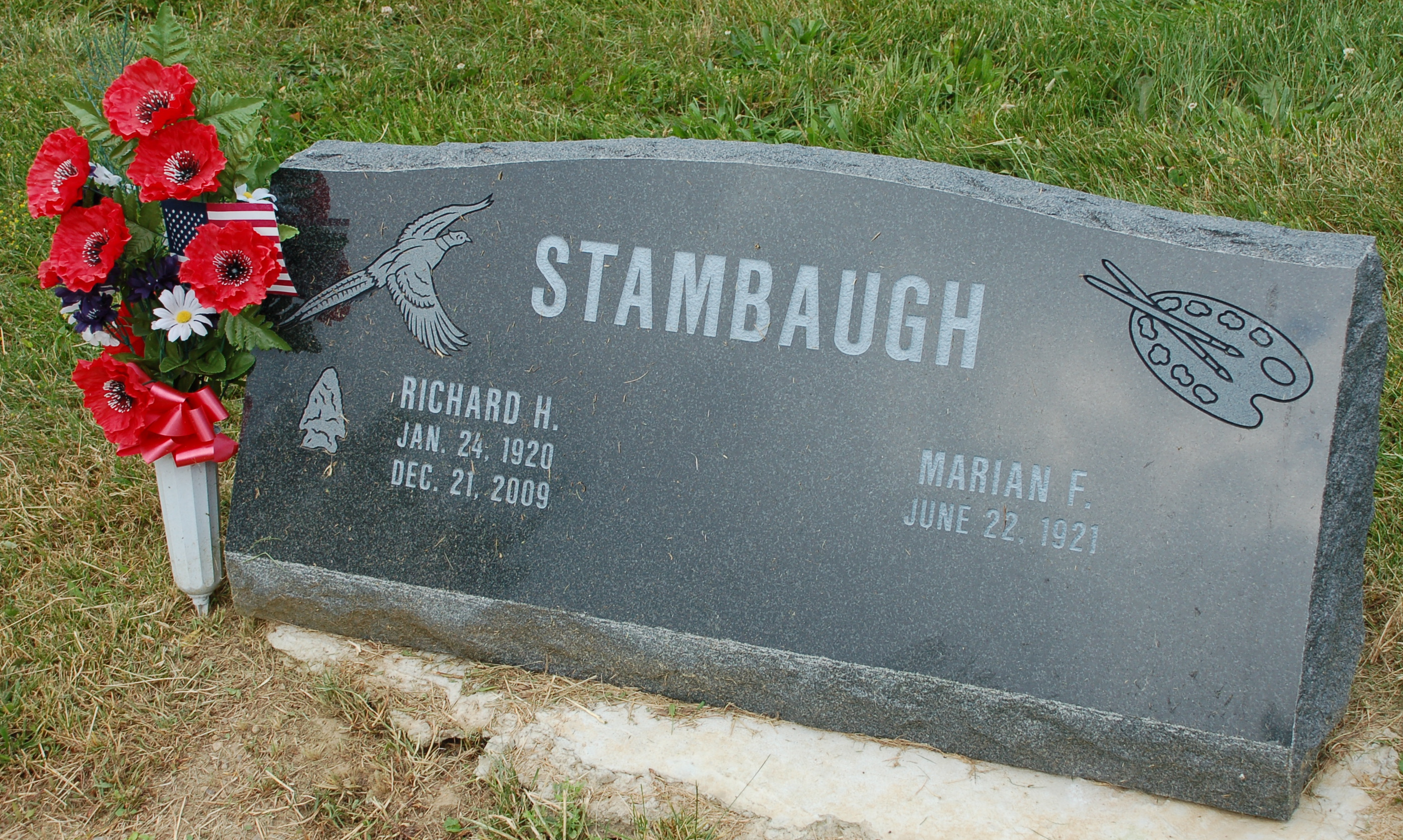
Accordingly, their black granite headstone is engraved with symbols that most appropriately represented their lives. A pheasant and an arrowhead show Dad’s commitment to conservation and archeology. An artist’s paint palette symbolizes Mom’s talent for sharing the beauty she saw.

Gravestone by Bruce StambaughMom and Dad were wonderful parents. It’s only appropriate to honor them on Memorial Day to show our continued affection and appreciation for the charitable, instructive lives they lived as a couple and as individuals.

Memorial Day is for remembering.

© Bruce Stambaugh 2012
Enjoying spring’s aviary adventures

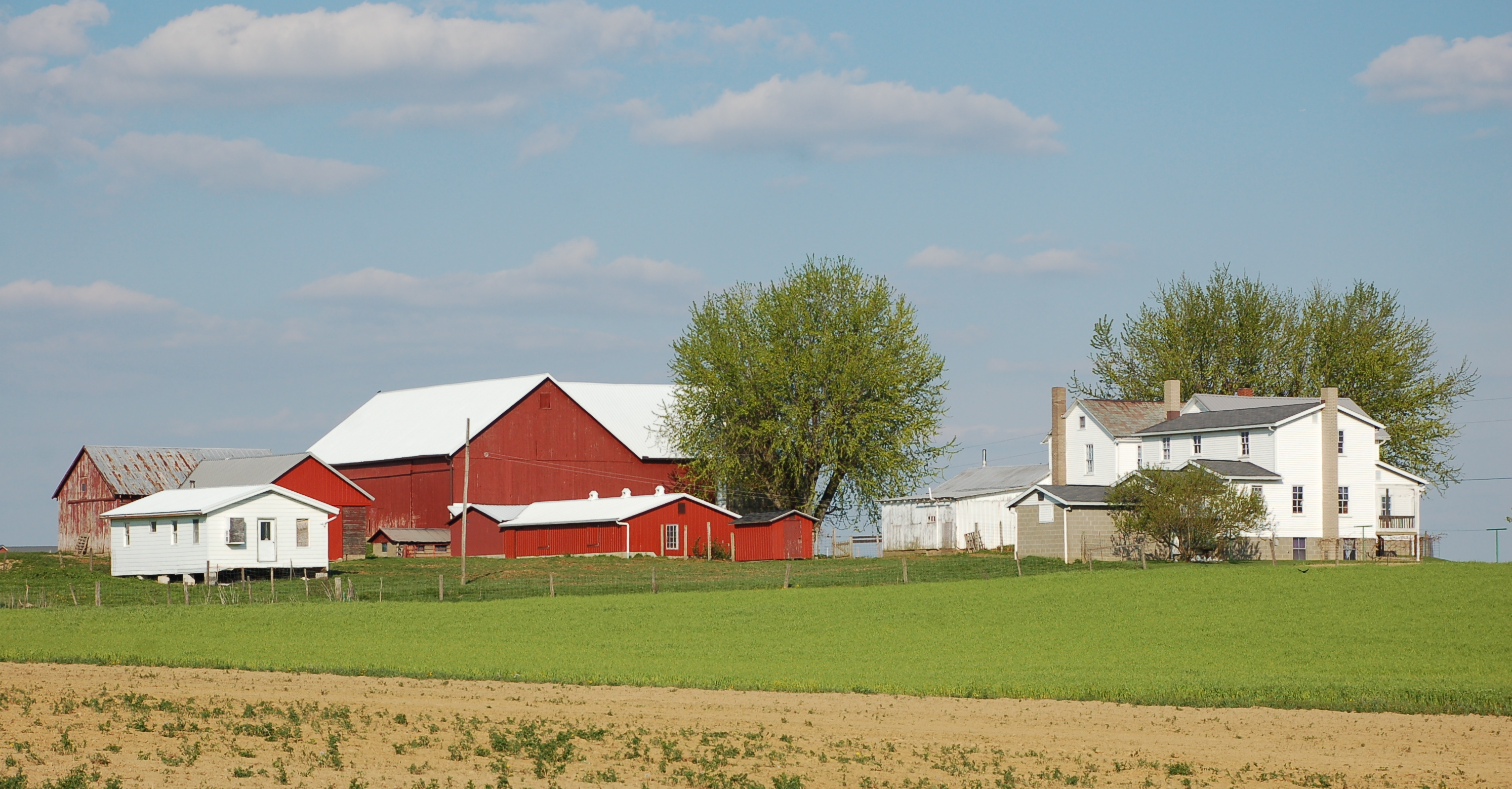
Amish farm by Bruce Stambaugh
A typical springtime scene in the heart of Ohio’s Amish country near Mt. Hope, OH.

By Bruce Stambaugh

We are fortunate to live where we do here in northern Ohio, especially in the Holmes County area. Our manicured farmlands, brushy fencerows, dense woodlots, numerous lakes and the wetlands of the Killbuck Valley provide an abundant variety of habitats that attract an equal abundance and variety of birds.

In our busyness, we should stop, look and listen to the free show that is all around us. The many birds, some just passing through, others that will make their summer home here, can fill our senses with amazing music, incredible color, and entertaining activity. No admission charge is needed.

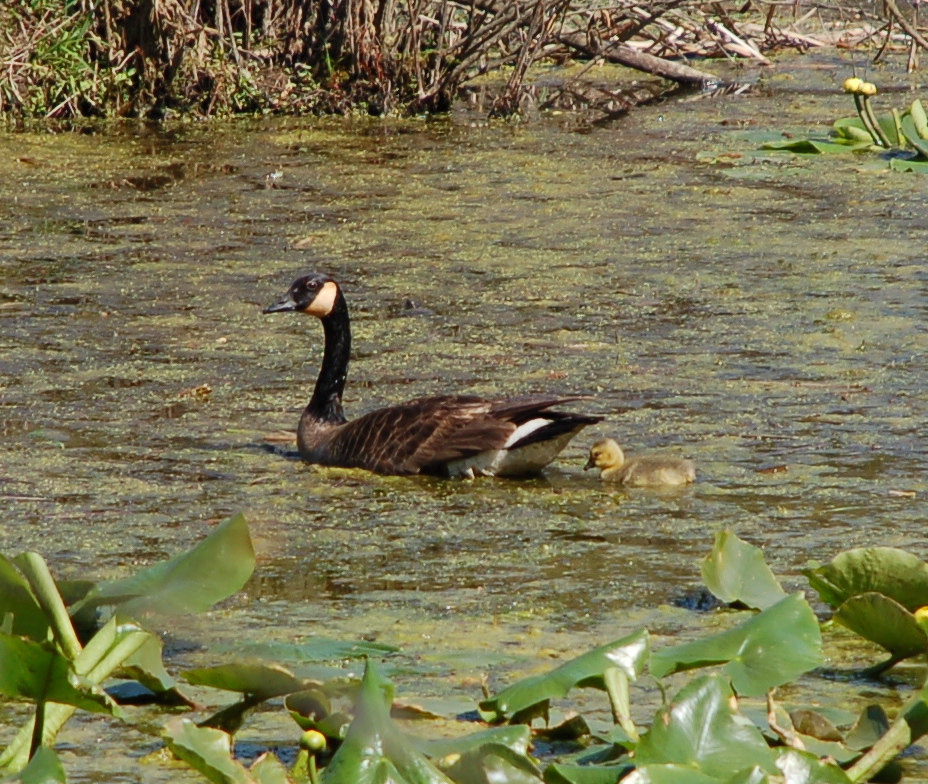
canadagoosebybrucestambaugh
A Canada Goose and a lone gosling glide in the marshy Killbuck Valley north of Millersburg, OH.

Even before sunrise, the chorus of songbirds begins to warm up like a pre-concert symphony. Usually the American Robins are first to welcome the new dawn with their varying songs. Soon others like the Northern Cardinals and Song Sparrows join in. By first light, a cacophony of warbling fills the morning air. Everyday brings a new chorus.

Once the morning brightens, the birds mix a paint palette of colors into the recital. Now at their height of intensity for procreation purposes, the colors of the birds are positively stunning. Their appointed markings are a pleasure to behold.

White-crowned Sparrow by Bruce Stambaugh
A White-crowned Sparrow stopped for fuel on its way north.
The male White-crowned Sparrow, with its alternating bold black and white stripes atop its head, could serve as a referee amid all the commotion and scramble for seeds at the backyard feeders. Instead, it is intent on fueling up for its long flight deep into the Canadian northlands.

Pairs of Cardinals forage for their breakfast of cracked corn and oil sunflower seeds. Like two teenagers in love, the bright red male feeds his adoring but duller mate in their courting ritual.

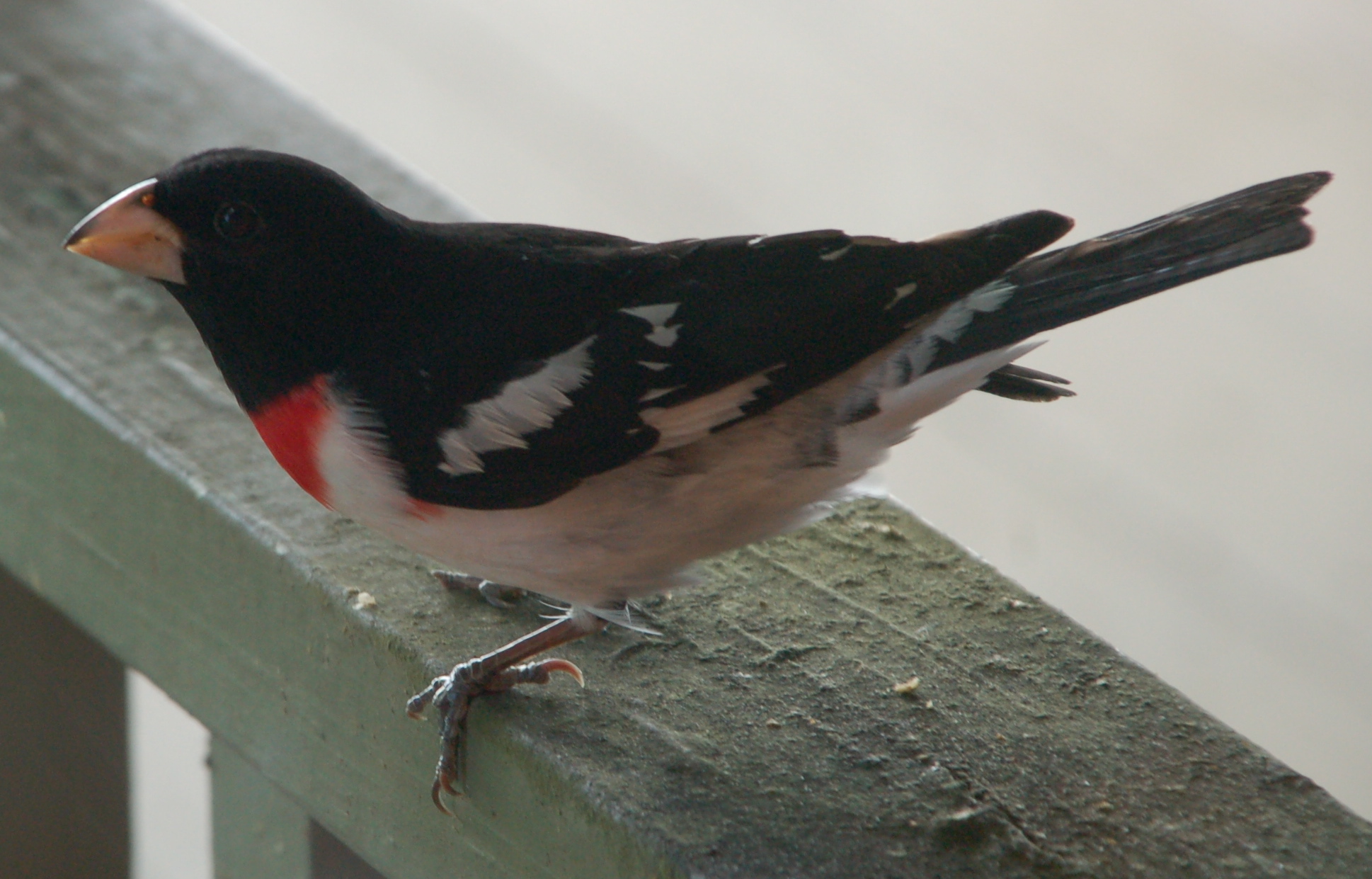
Rose-breasted Grosbeak by Bruce Stambaugh
Rose-breasted Grosbeaks are regular visitors to backyard feeders.
Without hesitation, the impressive Rose-breasted Grosbeak sallies onto the feeder hanging only inches from the kitchen window. Even in a brief glimpse it is easy to see how this bird got its name, its rosy breastplate all too obvious. The female, on the other hand, is awash in rich creams and browns, all for protection against hungry predators.

Baltimore Oriole by Bruce Stambaugh
A female Baltimore Oriole enjoys frequent visits to the bird grape jelly feeder.
The Baltimore and Orchard Orioles enjoy quick snatches of a grape jelly concoction housed in upside down bottle caps on the porch railing. A couple of quick gulps and they are gone, but never far away. Their liquid warbling says they’ll be back later for more.

The regal Red-headed Woodpeckers command attention from humans and aviary audiences alike. Without being bossy, they clear the feeders all to themselves. No doubt their brilliant red, white and black attire and their size have a lot to do with that.

Red-headed Woodpecker by Bruce Stambaugh
A male Red-headed Woodpecker visits the peanut butter suet feeder several times per day.

The Red-bellied Woodpeckers are bolder, both in sound and behavior, their iridescent red head stripes as flashy as strobe lights on patrol cars. Their noisy chatter serves as a warning siren announcing their arrival.

Even the little Black-capped Chickadees come dressed for the dinner party. Their tuxedo-like coloration is fresh and ready for the spring prom. They zip back and forth from tree branch to feeder, neatly holding the seed with their feet, while their tiny beak chisels for the main course, the sunflower heart.

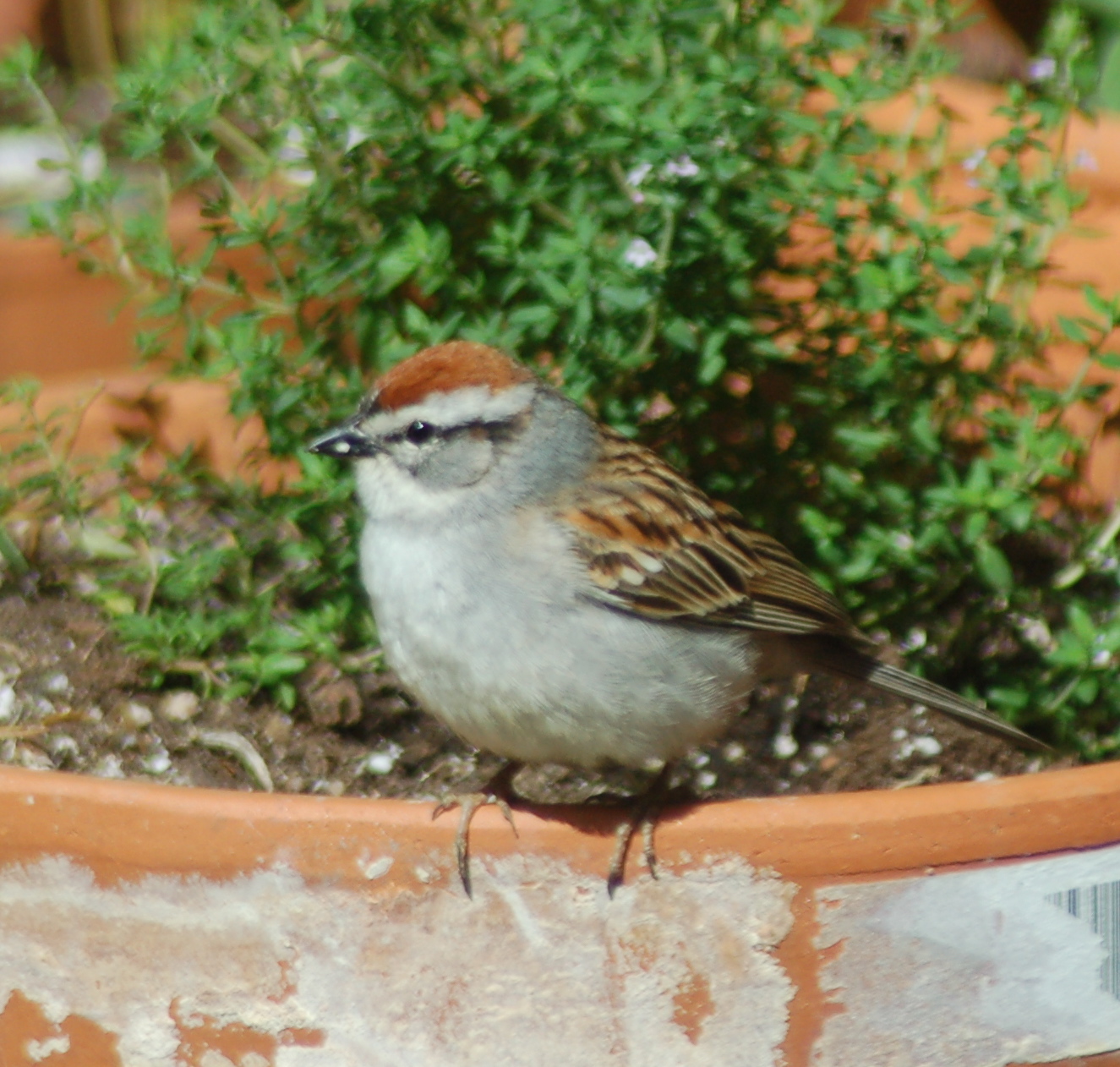
Chipping Sparrow by Bruce Stambaugh
Even the little Chipping Sparrow is a joy to observe.

One hates to turn away from the aviary activity to see what might be passing overhead. An American Eagle, a Great Blue Heron, flocks of Mallards? It’s springtime in Ohio. All options are open in this intermingled habitat.

It is amazing what we can observe, especially when our feathered friends enter our life space. We just need to stop, look and listen.

© Bruce Stambaugh 2012

Bay Photos by Donna

Wildlife Photos From The Chesapeake Bay Region

ROAD TO NARA

Culture and Communities at the Heart Of India

K Hertzler Art

Artist and nature journalist in the Shenandoah Valley of Virginia.

Maria Vincent Robinson

Photographer Of Life and moments

Gabriele Romano

Personal Blog

Jennifer Murch

Art is the only way to run away without leaving home. -Twyla Tharp

Roadkill Crossing

Writing generated from the rural life

ANJOLI ROY

writer. teacher. podcast cohost.

Casa Alterna

El amor cruza fronteras / Love crosses borders