Concert in the park offers mixed melodies

concertintheparkbybrucestambaugh
The amphithearter in Tuscora Park in New Philadelphia, Ohio provides a great venue for an old-fashioned concert in the park.

By Bruce Stambaugh

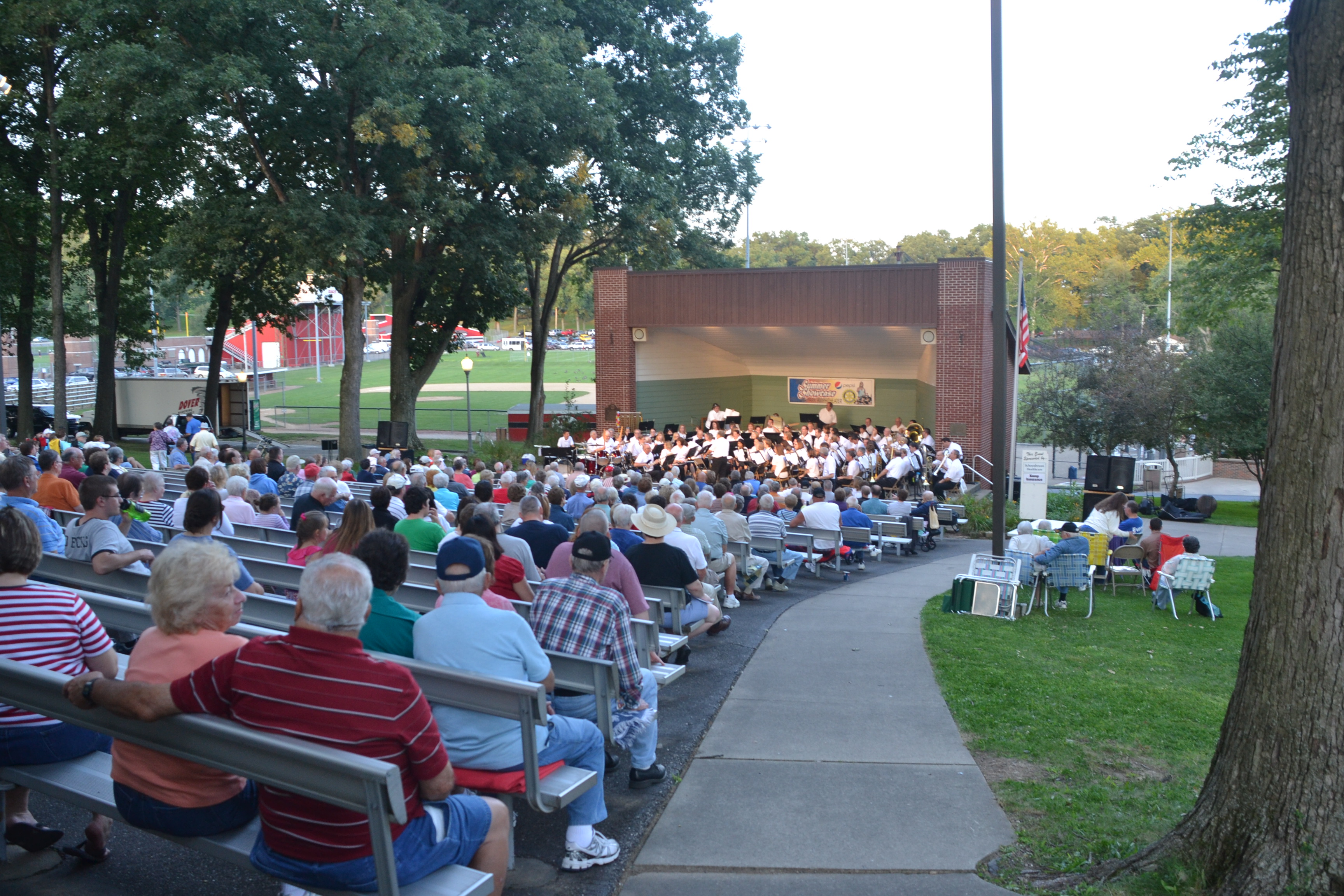
For the second year in a row, my wife and I attended the last concert of the season for a local community ensemble, the Dominic Greco Band. The group performed in an outdoor amphitheater at Tuscora Park in New Philadelphia, Ohio. To say that the evening was again a joy would be an understatement.

The two evenings spaced a year apart were comparable with only a few exceptions. For one, I remembered to take my camera this year to capture all of the action that I anticipated from last year’s experience. I wasn’t disappointed.

The weather was significantly dissimilar, too. Just like the rest of summer 2012, it was rather warm at last year’s performance. This time the temperature was unusually cool for late August in Ohio. I was comfortable in a sweater and eventually a jacket, too.

Of course the band played a different set of tunes. But they could have given the identical show, and I would have been happy. The fact that we knew some of the performers and soloists made the event even more special for us.
warmingupbybrucestambaugh
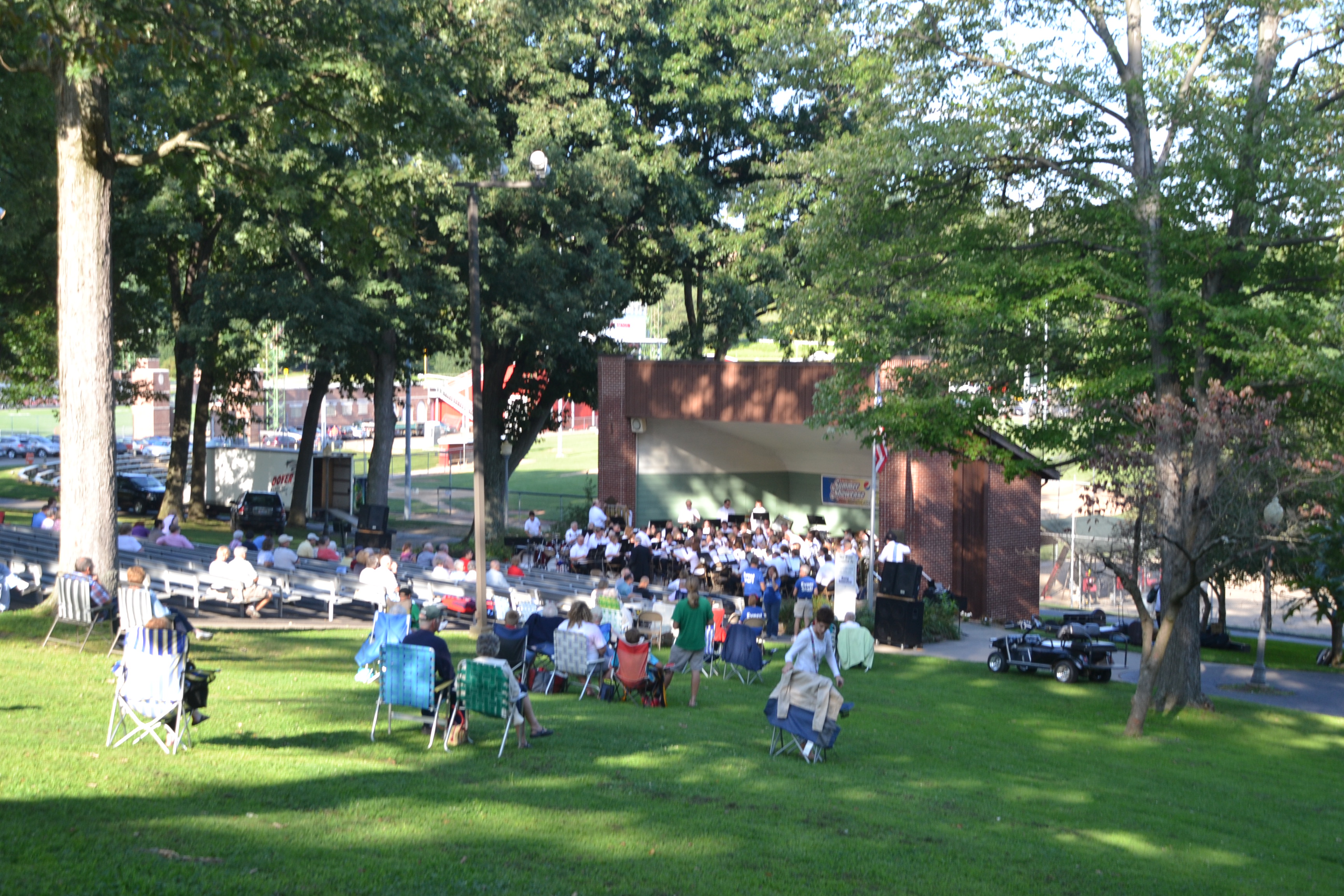
The band was in its preconcert mood when we arrived a half hour early.

We arrived with the orchestra warming up, their squeaky woodwind sounds competing with a hubbub of other audible commotion normally associated with a park setting. Again, it was like back to the future.

The park is in the basin of an ages old Wisconsin Glacier outwash plain. The parking lot sits atop a lateral moraine, with picnic shelters, tables and barbeque grills scattered beneath a stand of giant hardwoods on the east slope of the park.

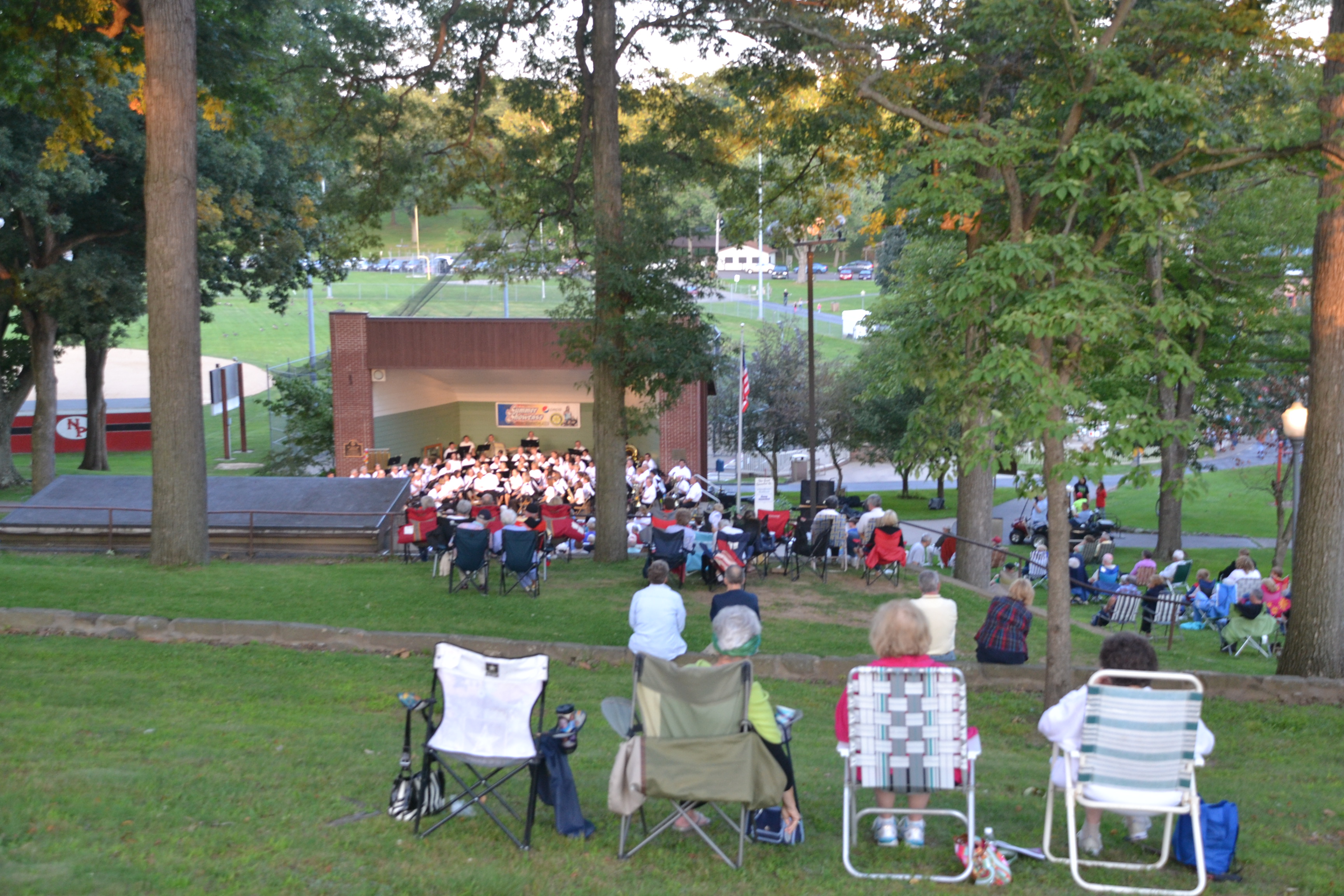
We sat at the end of one of the long rows of metal bleachers that fan across the hill in front of the amphitheater. A paved path descends beyond the stage and unfolds into the rest of the park. In that arrangement, all of the sounds carry up to the audience, and no one’s view is obstructed.

And what a mismatched, Americana landscape it was. There was the orchestra preparing to play while the rest of the park buzzed with activity. To the south the amusement park section bubbled with action.

This slideshow requires JavaScript.

The concession stand sold its hotdogs and snow cones. The calliope music of the old merry-go-round played away, beckoning young and old alike. Next door the little train that could stood ready and waiting for passengers. As soon as a few had their tickets, off it went on its clackety clack oval route.

Without waiting for the conductor’s wand, the engineer sounded the horn at the approach of each pedestrian crossing. A few shouts of glee arose from the top of the Ferris wheel, too.

Just as the band got into the swing of things, the sound of aluminum bat on leather softball emanated a rhythm of its own from the batting cages situated right behind the amphitheater. Beyond that, a large flock of geese landed in the outfield grass of the baseball field. Last year, the sights and sounds of a real game competed with the music. This year, the geese got their turn.

As if time had stood still, the local high school football team again pounded their shoulder pads into the blocks during their evening practice. I was almost disappointed that the ambulance and police car that raced by last year didn’t reappear.

The clamorous pulse of the park that accompanied the band’s melodies made the harmonious concert all the sweeter. It was a symbiotic symphony if ever there was one.
topofthehillbybrucestambaugh
The view from the top of the hill at Tuscora Park shows how the area unfolds.

© Bruce Stambaugh 2013

A fire in the neighborhood

barnfirebybrucestambaugh
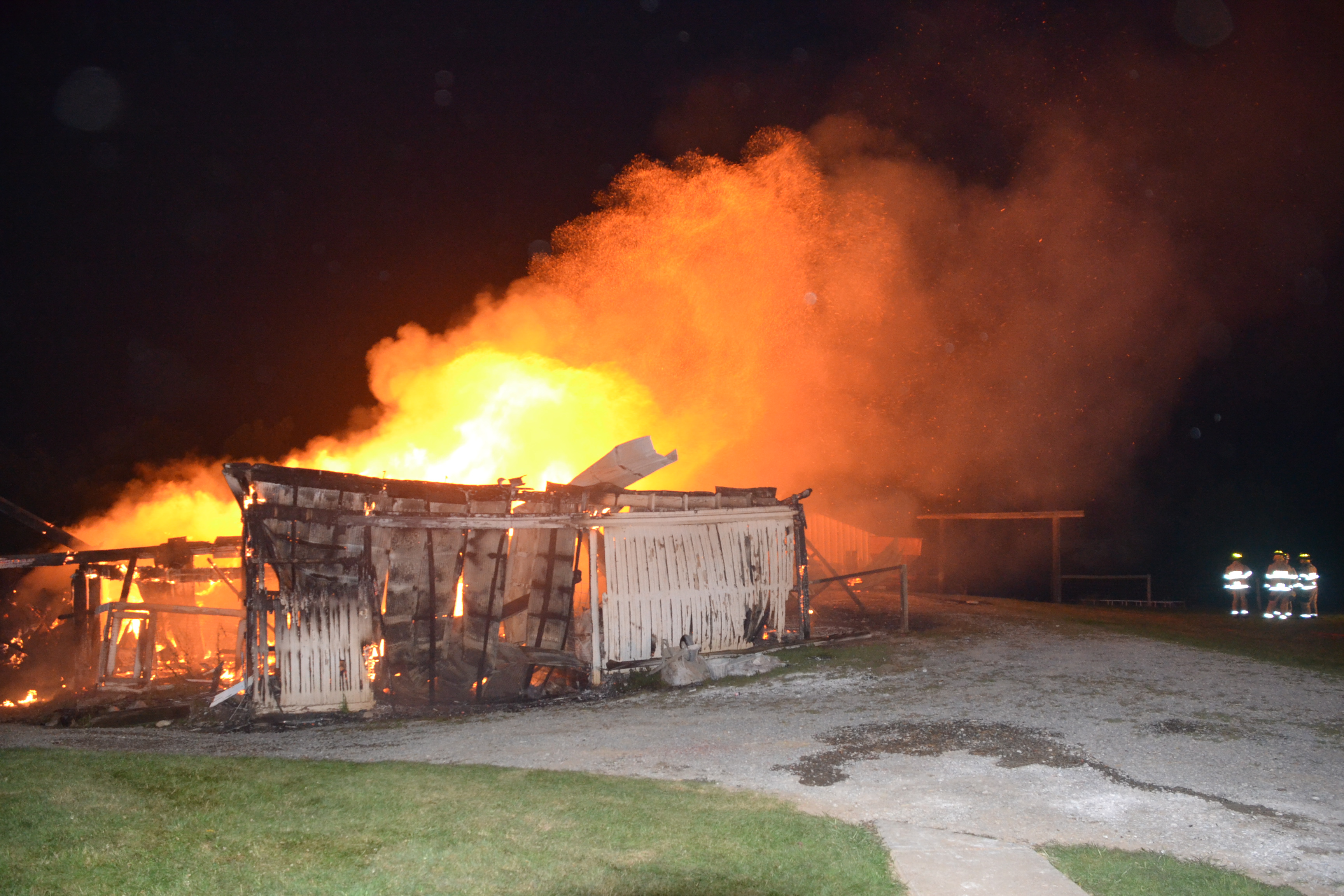
This was the first picture that I took of the barn fire shortly before 10:30 p.m. on August 12, 2013

By Bruce Stambaugh

We had just turned out the lights for the night in anticipation of a really good night’s sleep when we heard the sirens. With the windows open on this warm and wonderful August evening, the sirens grew louder as they quickly approached.

I headed to the dining room to look north out the windows. Above the stand of giant field corn an eerie dancing orange glow lit up the night sky. We had a big fire somewhere in the neighborhood.

I got dressed as quickly as I could, grabbed my cameras and headed to the garage. In the meantime, my wife had ventured out into the front yard. She reported back that it was either our friend’s excavating business or the neighbor’s barn that was burning.

Once the parade of responding fire vehicles passed by, I pulled my car onto the road and quickly saw that indeed it was our neighbor’s barn. It was fully involved in flames. Only the sheet metal roof remained, held up by the century old timber frame, dark against the constantly changing fiery kaleidoscope that was quickly consuming its host.

This slideshow requires JavaScript.

With the barn that far gone, the firefighters executed their only logical option. They concentrated their hoses on protecting the other exposures situated around the old bank barn. Soon long streams of water played back and forth dousing the rooftops, cooling them from the ferocious temperatures generated by the destructive flames.

My first instinct was to see what I could do to help directly at the scene. Knowing I’d only be in the way, I instead pulled into my excavator friend’s parking lot, focused my cameras and started snapping.

I wasn’t alone. Scores of others joined me. Tractors, vans, cars, pickups and bicycles filled the parking lot. Most spectators, like me, were lined along the wire fence that separated a farm field from the parking lot a football field from the blaze.

I photographed the various stages of the fire. Just 11 minutes after I had taken the first picture, the roof succumbed to the inferno. Embers of burning debris cascaded high into the dark sky, carried aloft by a steady south wind.

With the barn completely collapsed, I walked down the road to console the owners and to talk with firefighters that I knew. I was amazed at both their numbers and their efficiency.

Normally, rural areas are hurting for volunteer firefighters. This night, so many men and women in turn out gear or auxiliary smocks had responded to the alarm that they had to take turns spraying water or offering food and drink. The response for this emergency was tremendous. It was an impressive display of community service.

In addition, a gallery of onlookers congregated close to the old farmhouse. Most were family, friends and neighbors who had come to see if they could help in any way. Many had arrived before the first fire engine.

burninghaybybrucestambaugh
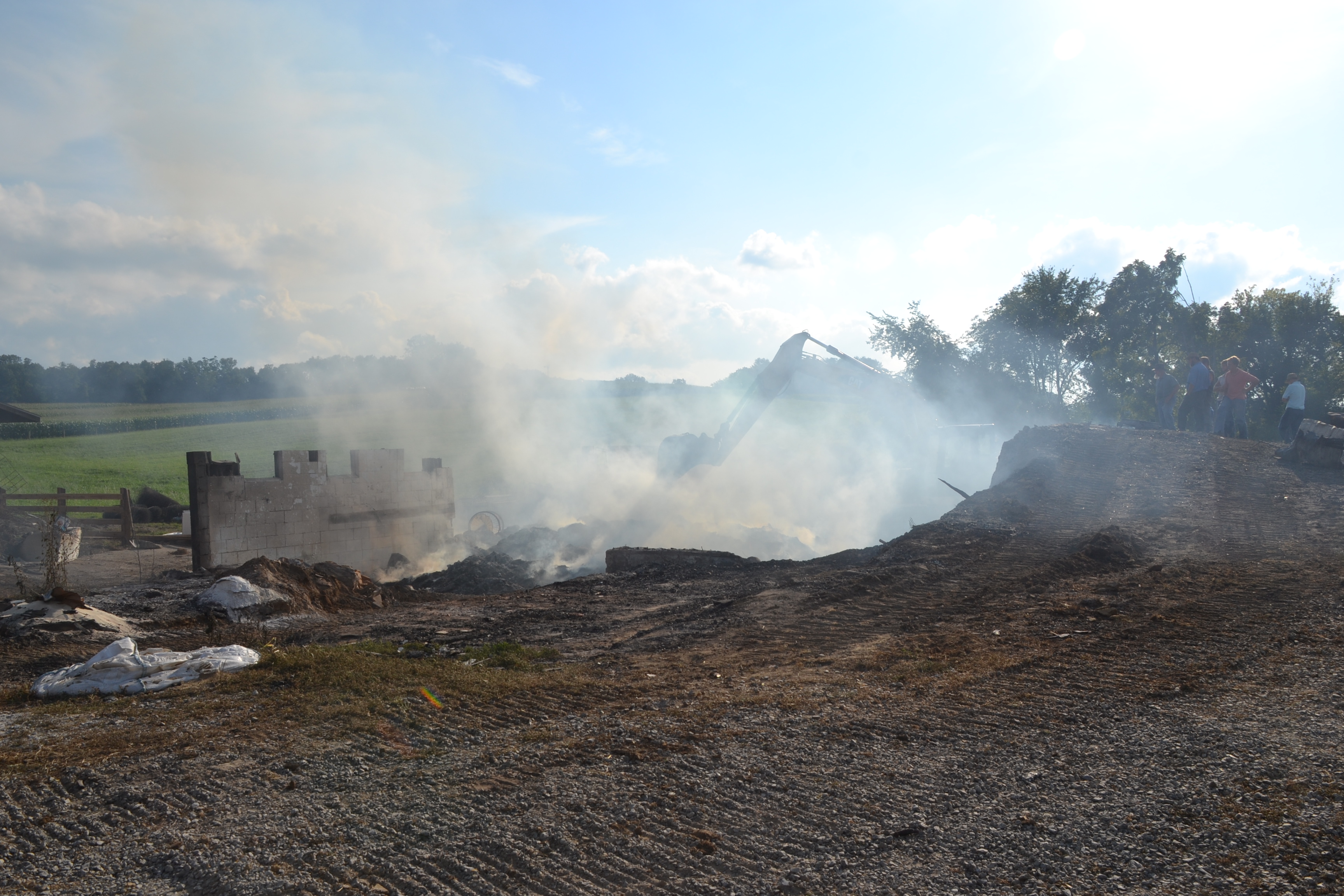
In less than an hour, the bank barn was reduced to burning hay inside of charred basement walls.

I took a few more photographs and spoke with the owners. Everyone was fine. No animals had been harmed, and most of the equipment had been removed from the barn just that day. The only losses were the barn, its storehouse of hay, and personal cultivated memories. Amish church insurance would compensate for the material losses of the accidental fire. The origin of the fire was either from wet hay or sparks from an unattended burn pile several feet west of the barn.

I was sad for my neighbors, but heartened by the many people who came to help. A crisis can test the mettle of a community. This August night, its people showed their stuff.

smolderingruinsbybrucestambaugh
The clean up began the next day amid the ruins of the smoldering barn.

© Bruce Stambaugh 2013

The cottage tradition continues

sunsetoverthelakebybrucestambaugh
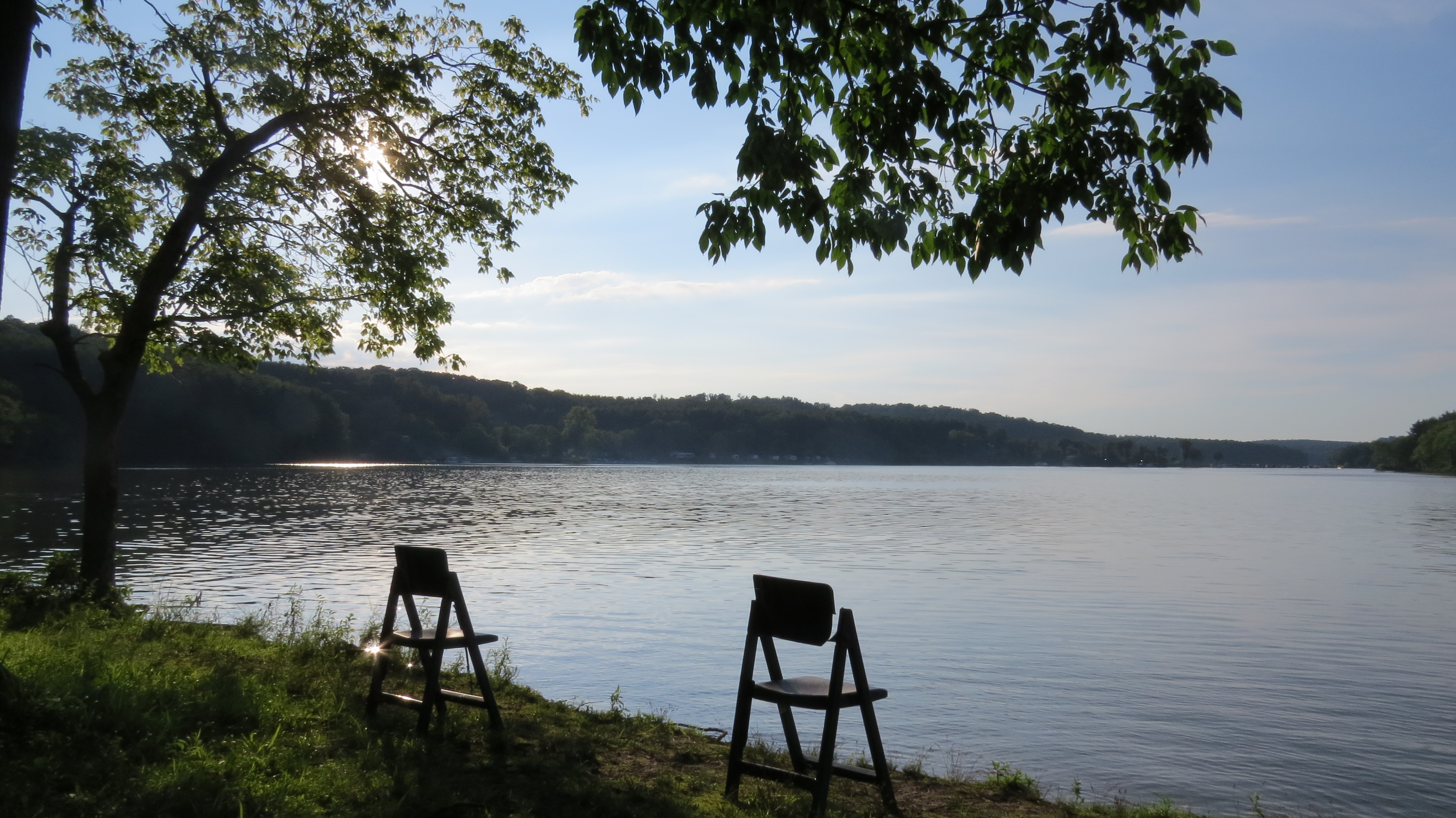
Shoreline in the evening.

By Bruce Stambaugh

The smoke from the evening campfire rose up and over the cottage my parents had built three decades ago. Stars and planets were beginning to twinkle through the broken canopy of the mixed hardwoods that clung tight to the steep hillside.

Through the thicket down the hill, the lake shimmered with the evening’s last light. All was still except for the crackle of the fire and a few katydids.

We humans broke the spell with inquisitive conversation. The couple with whom my wife and I shared this pleasant woodsy setting was new to the cottage neighborhood. For them, it was a dream come true to own a cottage an hour from home where they could find peace and quiet away from his busy construction work.

briarhillfireplacebybrucestambaugh
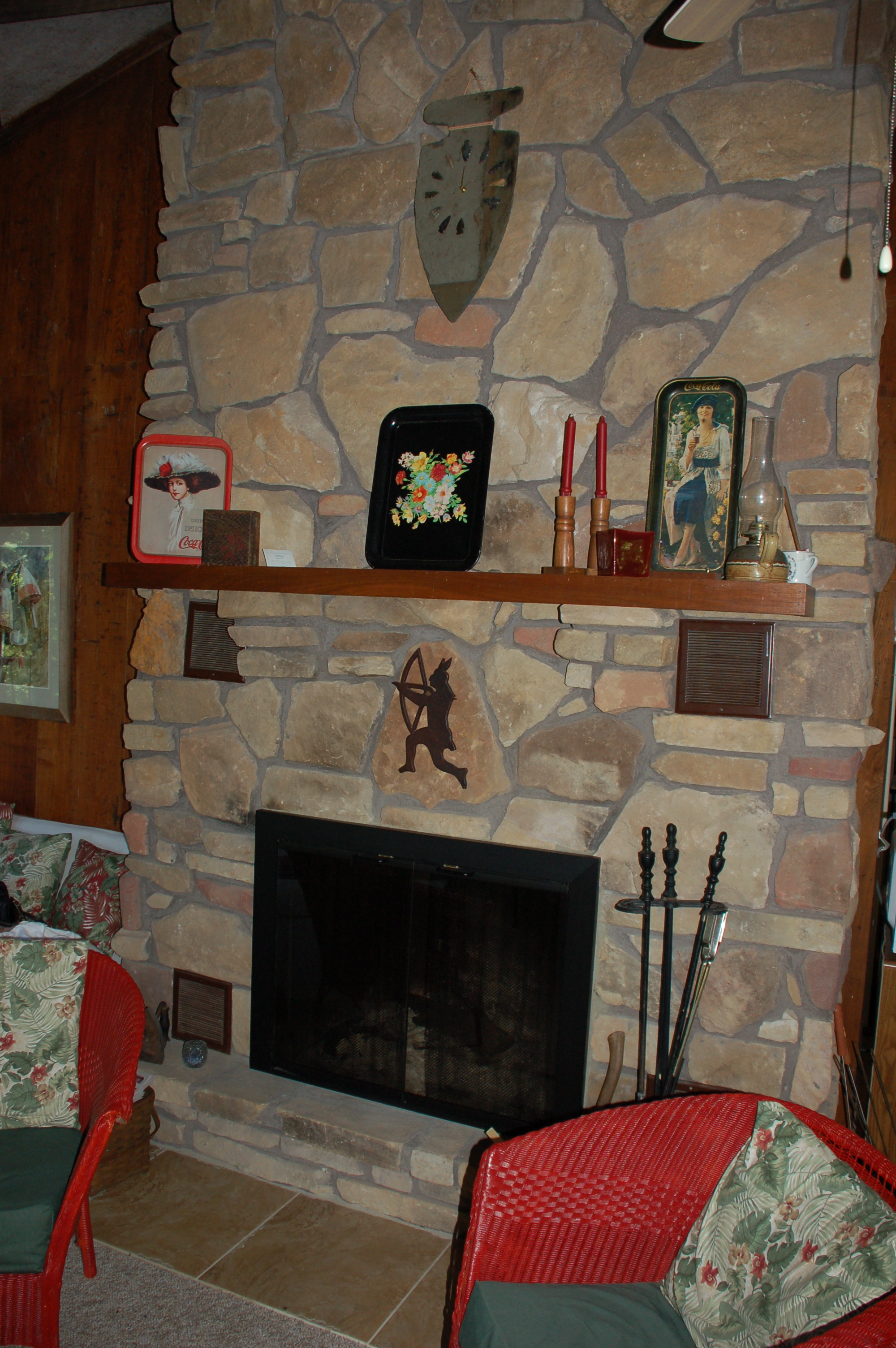
The Briar Hill fireplace that is the centerpiece of the cottage.
My father had made it clear that he wanted the cottage to stay in the family after he was gone. To honor that desire more than fulfilling my own dream, my wife and I purchased the cottage the year before my father died in December 2009. It has been a labor of love and restful retreat ever since.

Dad had had cottage fever for a long time. When a small building lot became available 50 years ago on his favorite fishing lake, he bought it for $500. I think he actually had to borrow the money to complete the deal. That’s how passionate Dad was about making his dream come true.

Design and construction of the cottage followed a decade later. Contractors laid the foundation, and built the massive sandstone chimney, which is the cottage’s centerpiece. Its earthy colored stone came from the Briar Hill scrap pile in Glenmont, Ohio.

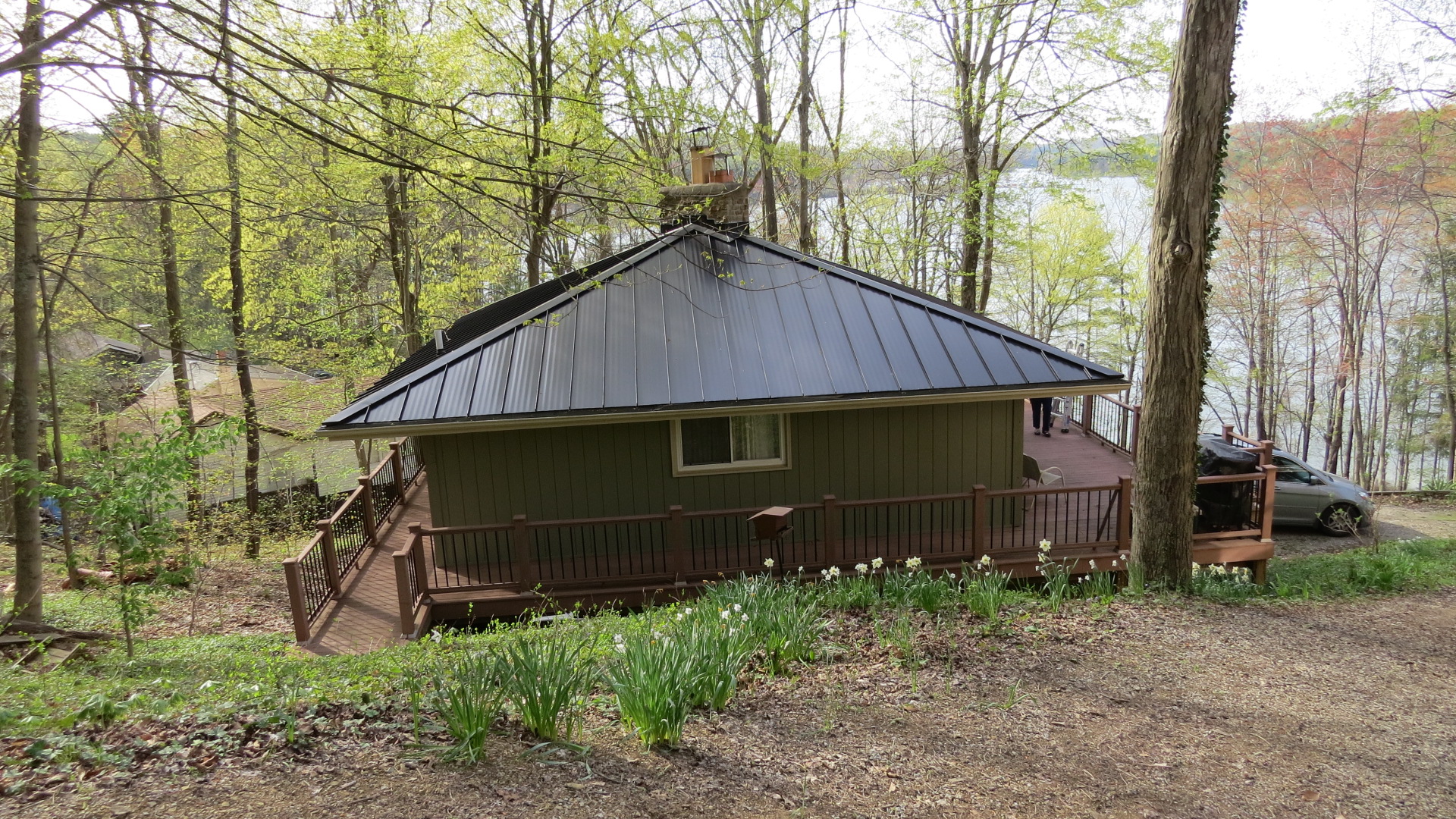
There was nothing fancy about the cottage in either its style or structure. Basically a 24 by 24 foot square building, our artist mother realized setting the cottage on the lot diamond-like would enhance the view from inside and out. It was a most excellent decision.

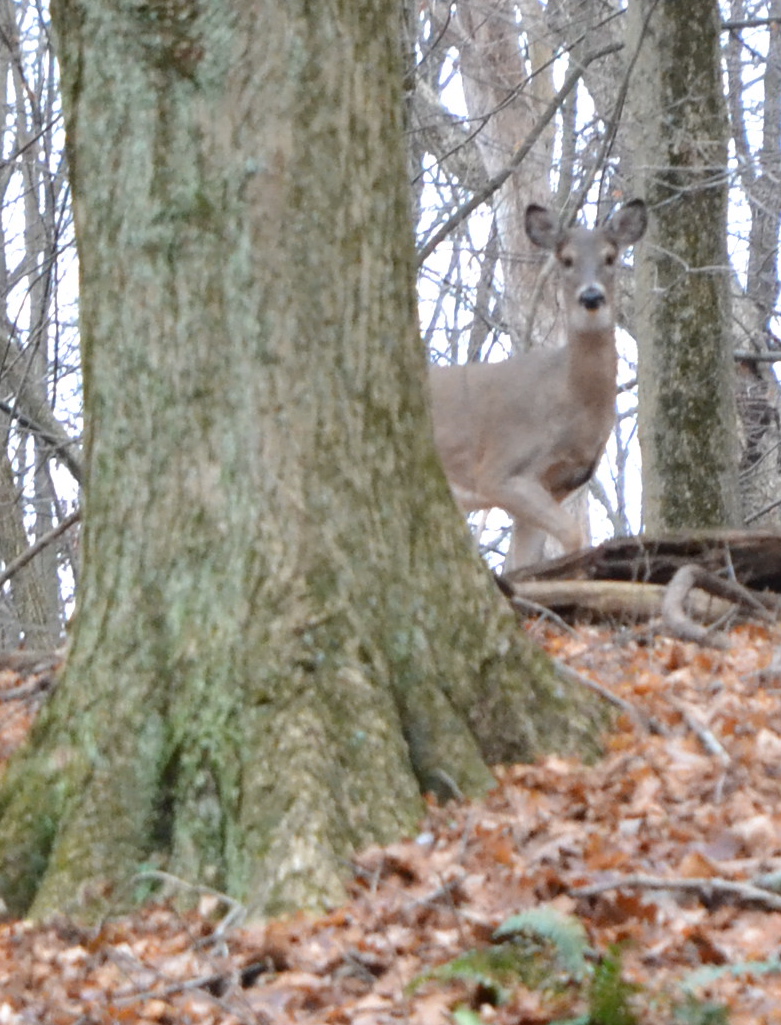
deerinthewoodsbybrucestambaugh
Deer often pass close to the cottage.
After it was framed, Dad was determined to finish out the cottage on his own. In other words, he had lots of help from friends, family and hunting and fishing buddies.

Dad was way ahead of his time. He repurposed as much of the building materials as he could in the cottage. That included some white oak lumber he obtained on the cheap, and had planed smooth. It became the porch held up by beams he had salvaged from the old roller coaster at Meyer’s Lake Park in Canton, Ohio.

To Dad’s delight, many family gatherings were held on that porch. The problem was that Dad only saw the cottage as it originally was, not as it really was as it aged.

The porch, for example, began to deteriorate, despite Dad’s patching efforts to keep it repaired. As our families expanded with grandchildren, Dad’s organized gatherings became smaller and as tenuous as the porch itself.

When we bought the cottage and began the remodeling process, the first thing to go was the old porch. Dad wasn’t too happy with me. While he and Mom were still mobile, my wife and I gave them a tour of the refurbished cottage on what was to be Dad’s last Father’s Day.

hillsidecottagebybrucestambaugh
A view of the cottage from the campfire circle.

Today we use the place as a get away to renew our spirits and connect with nature. Just like Dad, we particularly enjoy hosting others.

Like our new neighbors, we wanted Dad’s cottage dream to continue. Gazing upon that heavenly host of constellations, I think I saw Dad winking his approval.

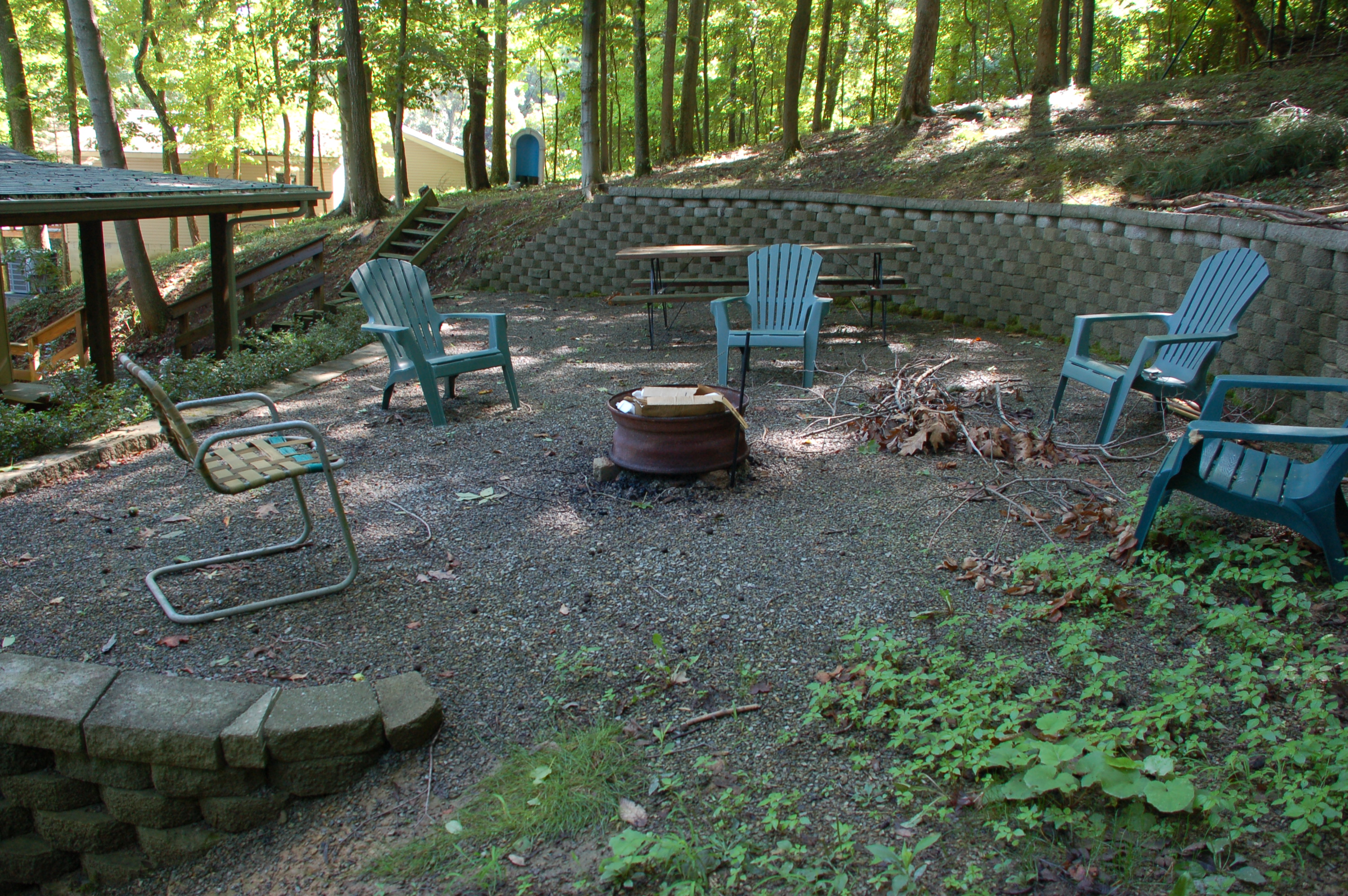
campfirecirclebybrucestambaugh
The campfire circle hosts many enjoyable conversations on summer evenings.

© Bruce Stambaugh 2013

No rainy days at Lakeside, Ohio

lakesideohiobybrucestambaugh
From sunrise to sunset, the area around Lakeside, Ohio’s dock is where the action is.

By Bruce Stambaugh

There’s never a rainy day at Lakeside, Ohio, making it the perfect summer vacation spot for all ages.

Sure, it rains at Lakeside. It’s in Ohio after all and on the shallow, sometimes precarious south shore of Lake Erie. That doesn’t mean the weather puts a damper on vacationing visitors, some who come from California and other foreign countries.

The weather, no matter how fierce, can’t quash Lakeside’s infectious community spirit. Sunshine or downpour, you can witness Lakesiders being Lakesiders wherever you go in the little resort town populated with quaint cottages and genial folks.

If it does rain, which it did on more than one occasion during our latest week in the Chautauqua on Lake Erie, no one dismays. Plenty of great activities await, with gaggles of polite people to encounter.

lakesidecottagebybrucestambaugh
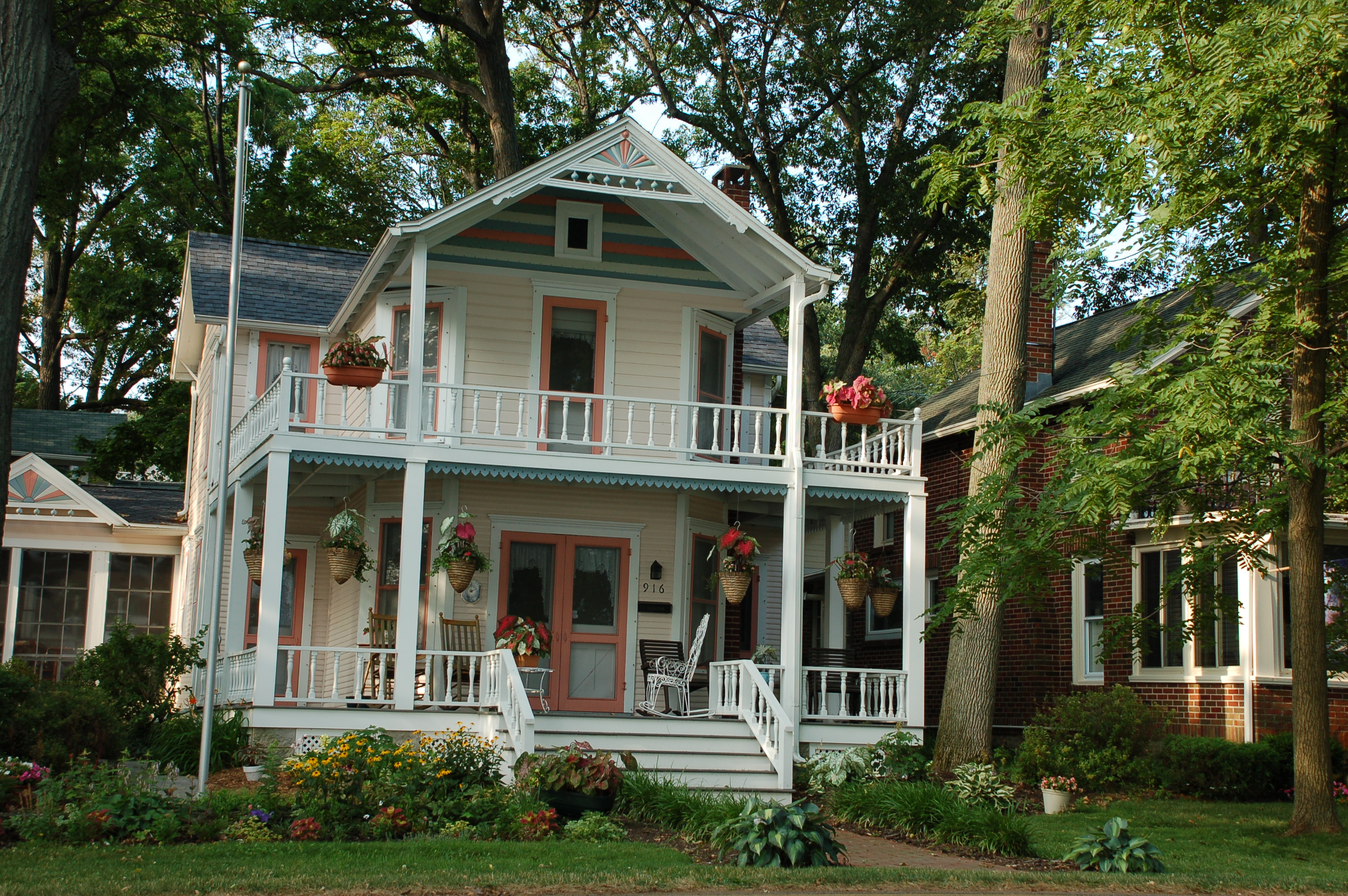
Steamboat style cottages dot the streets of Lakeside, Ohio.

The new splash park is a cool hit with youngsters on a hot summer’s day. If the weather denies them that chance, you can likely find them sitting on one of the many inviting front porches that distinguish Lakeside cottages and homes.

A wise, gray-haired grandma centers a wicker loveseat, arms embracing grandchildren. They read aloud, do word games, Sudoku, or tell family stories, true and otherwise.

If three generations can’t enjoy a rousing round of miniature golf under the canopy of old-age hardwoods, the family won’t grow bored. They might turn to board games, Scrabble, chess, checkers, or Monopoly.

Thanks to its Chautauqua pillars of religion, education, arts and entertainment, and recreation, Lakeside is known for many engaging activities. Since 1928, shuffleboard has topped the sporting list historically.

Tennis, too, has its fair play at Lakeside. Families, couples, teams, and playing partners ply clay and paved courts for fun and competition.

Should it storm, chairs soon form a tight ring around antique dining room tables, cards are shuffled, and the competitive spirits are expended differently. Instead of power drinks to keep them going, homemade sweet tea and lemonade hit the spot.

Around the two-mile jogging trail that rings Lakeside’s boundary flows a steady stream of fitness. If the weather is too ugly to brave, brainpower replaces muscle power through summer reading or a spirited round of dominoes with family, friends and visitors.

The Lakeside dock is the centerpiece of the summer sun worshippers. Young swimmers, sailors, fishing generations and sun soakers congregate to do their things. In the event that the dock is closed due to inclement weather or northerly gales that swamp the cement pier with crashing waves, alternative plans are made with few complaints.

The handful of Lakeside’s eclectic restaurants and niche cafes, where scores of high school and college students earn a summer’s wage, offer plenty of fare and latitude to accommodate all. Patience whets the appetite for homemade donuts and refreshing ice cream.

Even on the sunniest of days, hundreds of folks hungry for other kinds of food are filled to capacity by the rich stories offered by the weekly chaplains. It’s as cerebral as it is churchy.

Weather-resistant, creatively designed indoor activities abound for children, while adults pick and choose between lectures, programs and displays. Nearly every week, some sort of special community function is offered.

Evenings bring out a large portion of the town’s population for a medley of performances in historic Hoover Auditorium. Others linger dockside basking in the glow of another inspiring sunset, sometimes only minutes after the end of an all-day rain.

Rain or shine, there really are no rainy days at Lakeside, Ohio.

lakesidesunsetbybrucestambaugh
Watching the sunset from the dock is part of the Lakeside tradition.

© Bruce Stambaugh 2013

Tragedy can draw people closer together

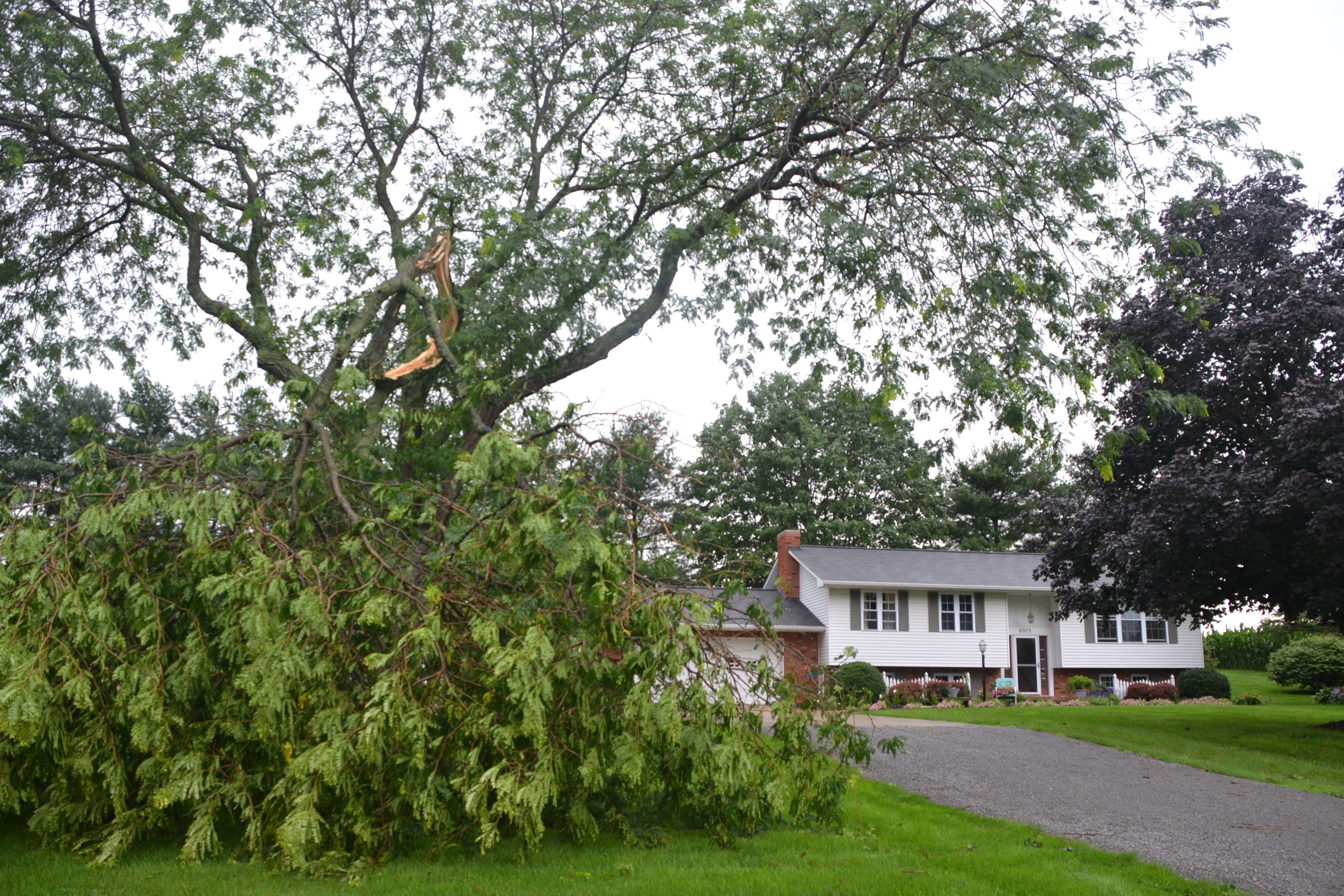
treedamagebybrucestambaugh
Whipping winds from a severe thunderstorm damaged a substantial limb in the middle of the sunburst locust tree in our front lawn.

By Bruce Stambaugh

When a friend gets hurt, you feel sad and sympathetic. When that friend is injured on your property, you feel horrible, helpless, even responsible. That’s just what happened to my friend, Dan.

A recent severe thunderstorm blasted through our area and in the process heavily damaged the majestic and delicate sunburst locust tree in our front yard. A large limb bent to the ground, but remained precariously attached to the main trunk.

Dan is a jack-of-all-trades, especially adept at trimming trees. He takes every safety precaution and uses sound judgment. When I showed him the tree, he said he was willing to trim the badly broken limb.

concessionstandbybrucestambaugh
Just one of Dan’s many trades is operating a highly successful concession stand at a local produce auction.
My preference was to work together some afternoon once he closed his concession stand at the local produce sale. Dan said he preferred to work on the tree on Saturday morning. However, my wife and I were going to our cottage in southeast Ohio for the weekend.

Dan assured me he would be fine alone, and encouraged us to continue with our cottage plans. And so we did until Neva received a text from our neighbor. Dan had been hurt while working on the limb. I felt sick.

Desperate for more information, I called the emergency room at the local hospital and asked to speak with one of Dan’s family members. After a few seconds of hearing some fumbling with the phone, a familiar but softened voice spoke. It was Dan, not quite sounding himself.

Near tears, I asked how he was, and Dan assured me that other than a broken jaw, a broken shoulder blade and a broken rib, he was fine. Typical Dan.

swirledcornbybrucestambaugh
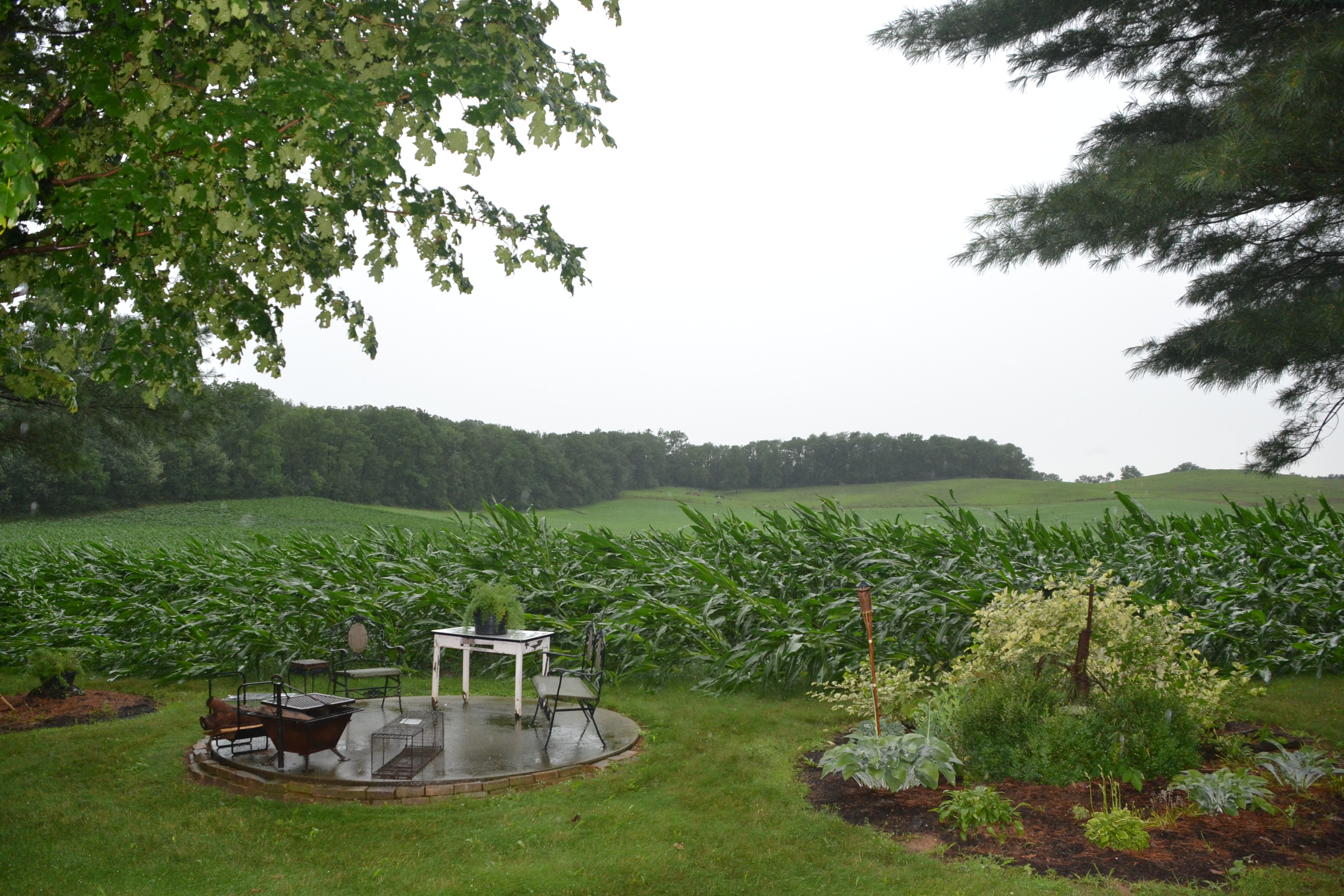
Winds from the severe storm swirled eight-foot high corn nearly to the ground.

Dan immediately took all the blame for the accident and assured me that he was all right. He said we should continue our weekend at the cottage.

Dan’s son filled me in with the few details of the accident that he knew. Passersby saw the mishap unfold, stopped and lifted the large limb off of Dan.

Dan was transferred to a city trauma center for surgery to repair his broken jaw. I still felt horrible about the accident to my friend. Dan’s family kept us updated on his condition, which fortunately was not life threatening.

We enjoyed the weekend with friends as best we could. But Dan was always on my mind. On Monday, I visited Dan at the hospital and was glad to see he remained in his usual good humor even while still waiting on his jaw surgery that evening.

trimmedtreebybrucestambaugh
Dan’s son, family and friends returned to the home to finish cleaning up after the accident.
On Tuesday morning as I was finishing my regular walk, I got a call that finally made me smile. It was Dan. He wondered if I could come pick him up from the Akron hospital when he was released in the afternoon. Absolutely I would.

On the way home, Dan kept saying that he was just so happy that my wife and I weren’t there when the limb came down. He knew we both would have been out helping him, and who knows what would have resulted?

The injury certainly hadn’t damaged his congenial personality. I had failed to ask for a written estimate for the work, so Dan said he would double the bill from $10 to $20.

Dan is convinced there was a reason for the accident happening. I have a hint about that.

The trauma, the emotion, the frantic communication back and forth, and now the joyful reunion had galvanized our friendship. Better times are ahead. Trimming trees won’t be included.

© Bruce Stambaugh 2013

Walking with the grandsons generates more than exercise

davisandevanbybrucestambaugh
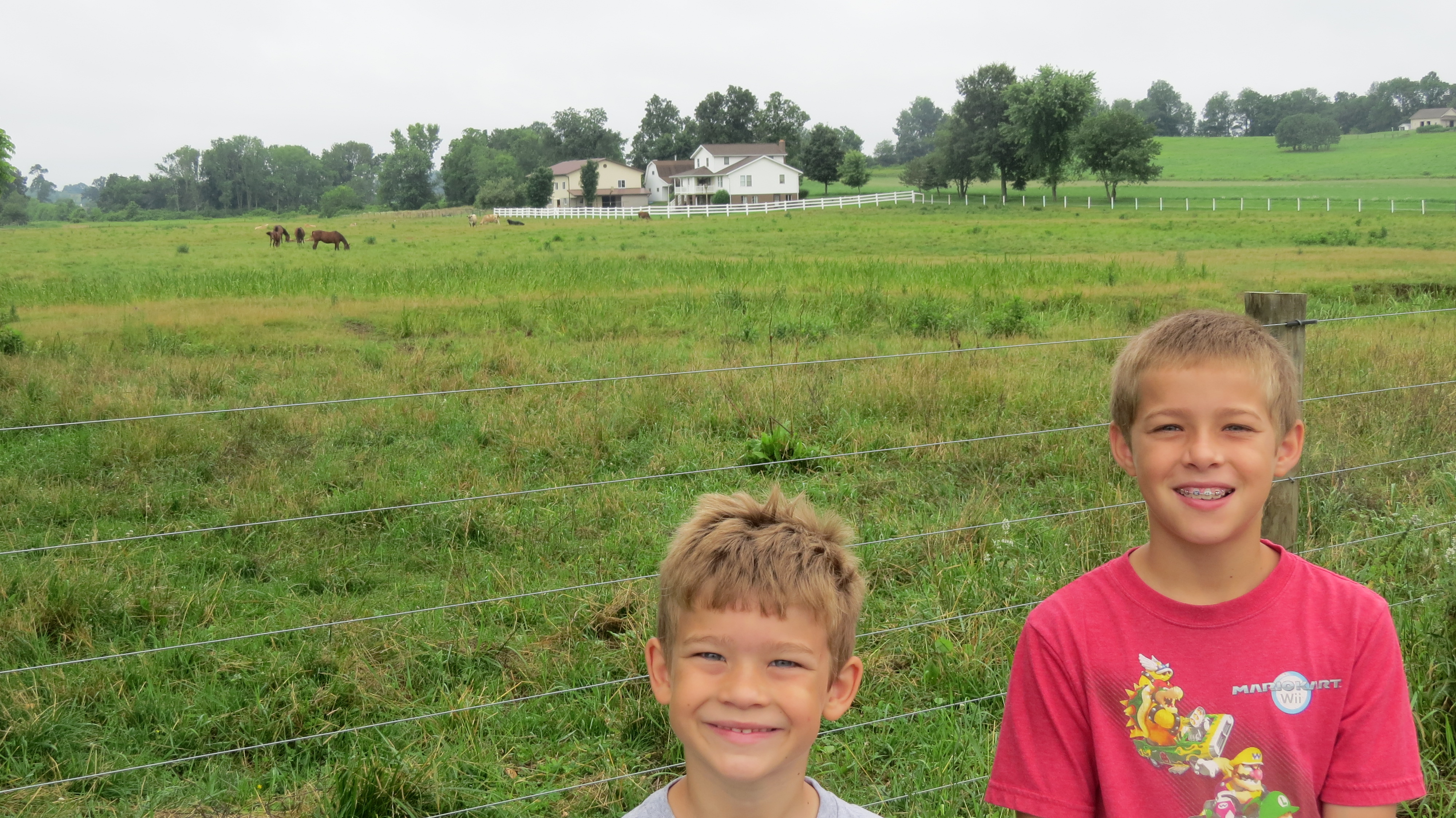
Grandsons Davis and Evan posed for a photo along the way.

By Bruce Stambaugh

Unlike their little sister, my grandsons, Evan, age nine, and Davis, now seven, wake early. No matter how late they stay up the previous night, they always rise with the cows.

On a recent visit from their city-situated home in Virginia to our Ohio rural one, I found the boys quietly playing in the living room as I prepared for my morning stroll.

I asked them if they wanted to walk with me. Davis said he would. Evan said not. So Davis changed his mind. As I headed for the front door, they both reevaluated the situation, likely based on previous walks with Poppy. They joined me after all.

Both are smart, observant boys, full of vim and vinegar. At their age, you never know what’s going to pop into their brains and tumble out of their mouths. They know that the saunter down the chip and sealed country road can resemble an amble in a zoo, with both domestic and wild animals appearing at various spots along the way.

checkingitoutbybrucestambaugh
The boys carefully checked out the dead Screech Owl along the roadway.
Practicing good safety habits, we walked single file. I took the lead on the initial stretch of the stroll along our busy county road. Most motorized vehicles seem to seldom adhere to the posted 45 m.p.h. speed limit.

That is particularly true of cars, vans and trucks heading north toward us down what we affectionately call the Number Ten Hill ski slope. Fortunately, in the quiet countryside, you can generally hear the acceleration approaching well before you see it. We stepped to the side until the traffic passed.

As we did so, we discovered a dead Screech Owl in the neighbor’s grass. It most likely had been hit overnight as it hunted for food. On the way home, I picked up the bird, placed it in a plastic sack and put it in the freezer until delivery could be made to the Wilderness Center in Wilmot where it would be preserved as a hands on educational tool for children like my grandchildren.

purplemartinsbybrucestambaugh
A family of Purple Martins perched high on the snag of a dead decidious tree at the beginning of our walk
We turned east on the township road and soon spied a family of Purple Martins perched high in the limbs of an old snag. Upon our arrival to their station, the gregarious birds greeted us by circling and chattering overhead.

Boys being boys, all things gross always intrigue them. The flattened brownish-green plops of horse manure left on the roadway drew their attention. Davis, the more scientific one of the two, wanted specific details of how it got there. I encouraged him to be patient, that maybe he would learn first-hand how that particular organic operation functioned.

At one homestead, I praised a meticulously manicured vegetable garden. Apparently too tame, the exploring boys barely gave it a glance.

wagonloadofwoodbybrucestambaugh
Always the exacting young man, Evan had to point to the wagonload of firewood to be sure that was the wood that would be delivered to the house.

Further down the road at our neighbor’s farm, I showed them the wagonload of chopped firewood that awaited delivery to our house. Their eyebrows shot up at the bulging cargo.

The mention of home seemed to trigger the fact that we had walked far enough, though we still had a quarter of a mile to go to complete my usual route. Not wanting to disturb the morning’s peacefulness, I relented. Knowing that breakfast awaited, the boys kept a steadier pace on the return trip, virtually ignoring the chestnut mares and Holstein heifers.

Though a horse drawn buggy did pass us, Davis must have forgotten his question, negating having to describe the unappetizing depositing process to their admiring sister. She’s a dainty enough eater as it is.

This slideshow requires JavaScript.

© Bruce Stambaugh 2013

Robbers can’t steal the most valuable treasures

amishcountrybybrucestambaugh
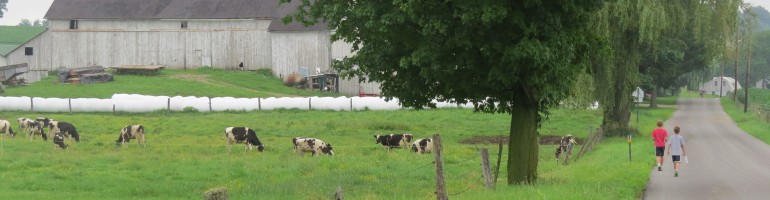
I drove by this Amish produce farm on the way to and from the pharmacy.

By Bruce Stambaugh

I happened into the local pharmacy mid-morning to purchase a few items I needed. It turned out to be much more than a routine shopping trip into town.

The clerk at the checkout counter was a former student in one of the buildings where I had been principal. Normally, upbeat and cheery, I mentioned that she seemed a bit down about something. The young woman replied that the store had been robbed of drugs the previous evening, and that she was still a little jittery from the experience.

I expressed my regrets and sadness to her. I told her that my own parents and my wife’s parents had each had been robbed. In the aftermath, they felt violated, insecure and wary. The young woman said she felt the same.

Just then another employee arrived and joined the conversation. She, too, had a school connection. She was an employee, and I had her son as a student.

feelingsafebybrucestambaugh
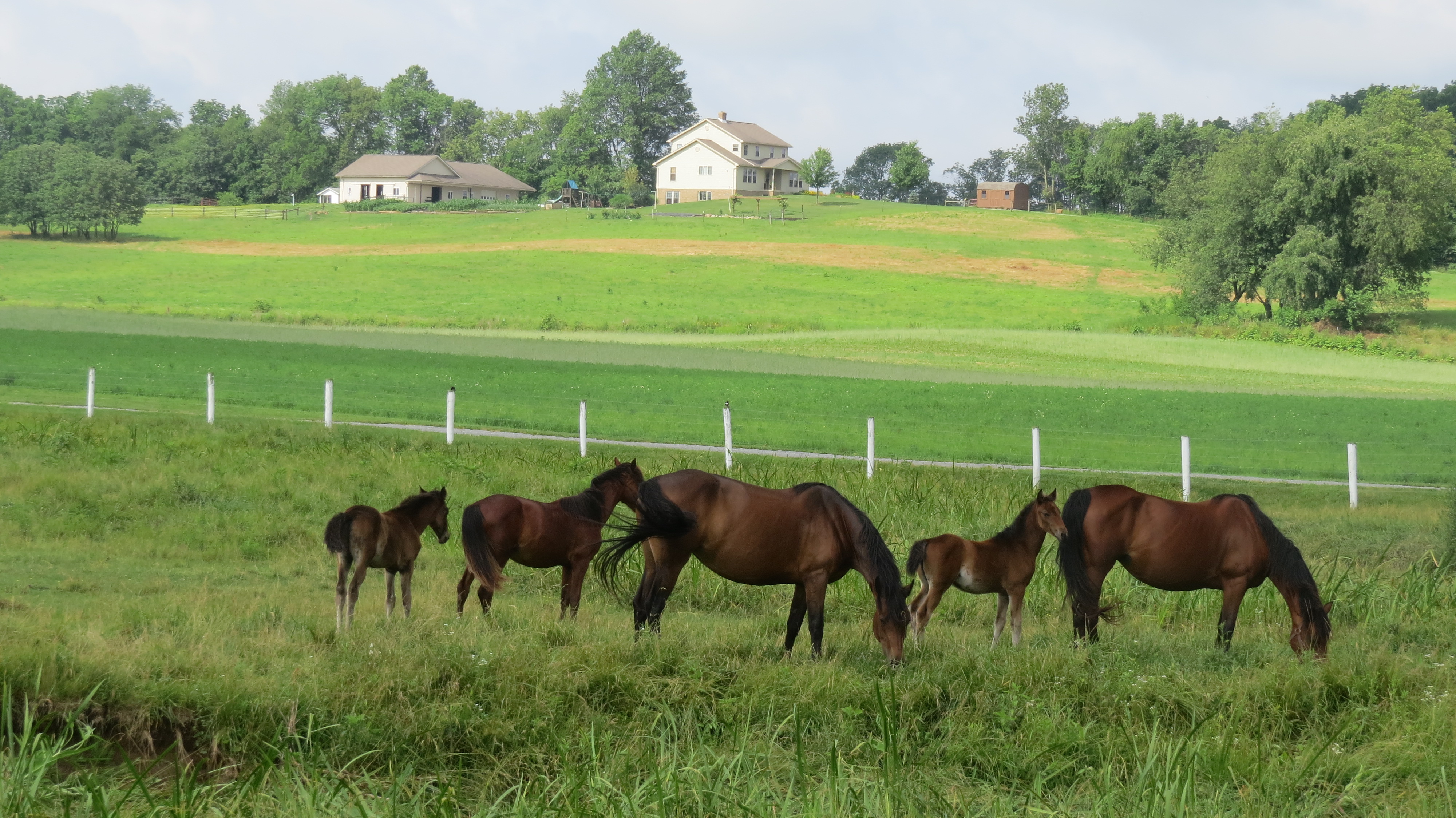
The scene reflects the lifestyle in Amish country. Though crimes do occur from time to time, the perpetrators are usually caught and convicted.

The women told me that law enforcement officials had arrived quickly, and through the help of witnesses and their police dog, the alleged perpetrator had been caught.

Still, I could see the fear in their eyes and hear the quiver in their voices. At that point, another customer arrived at the checkout counter. Yes, she, too, was another former student.

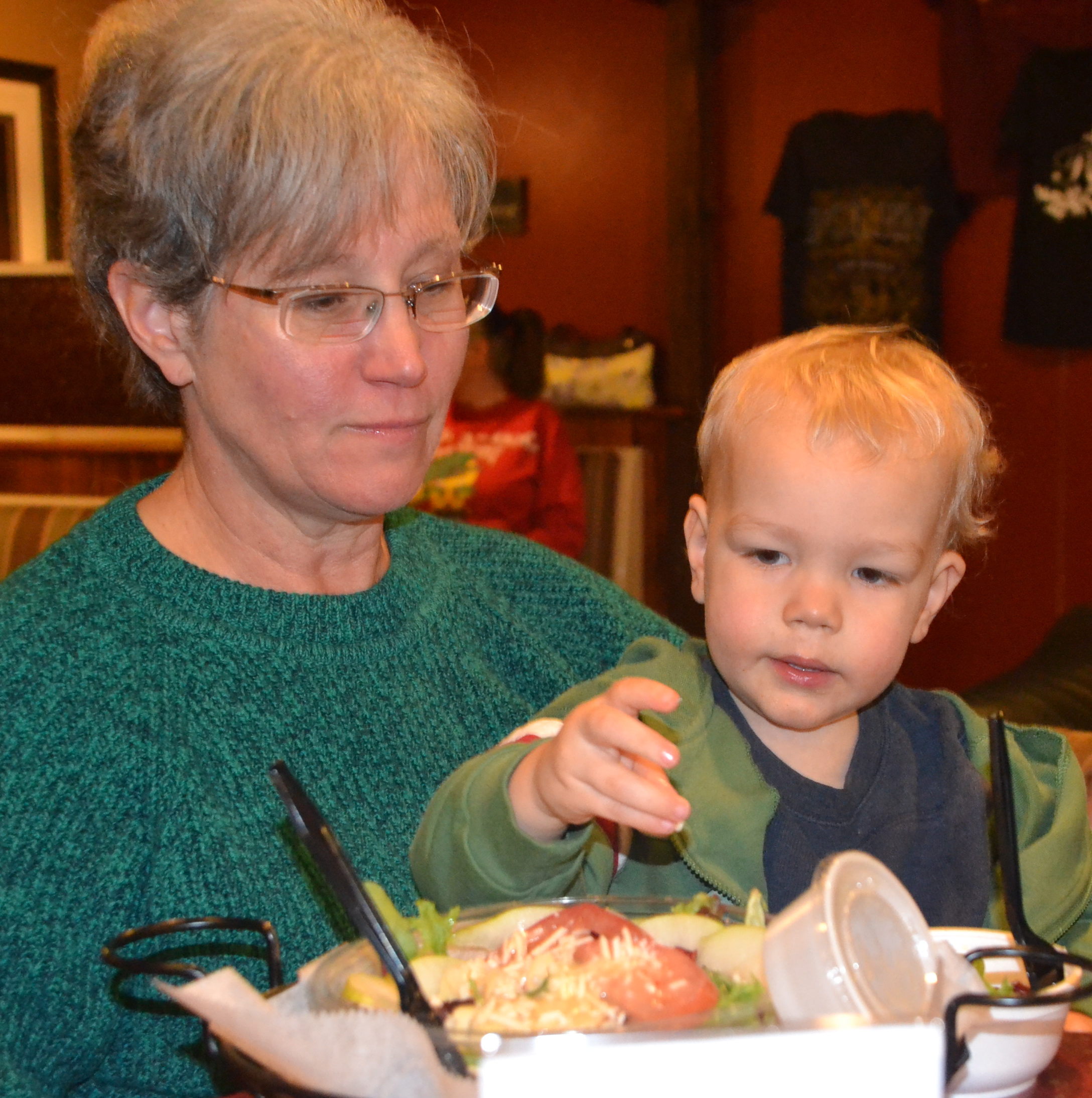
Grandma and grandson.
I recognized her and her freckles, but had to ask her name. I told Heidi she hadn’t changed, and she said I hadn’t either. I told her to get her glasses checked, and we all laughed.

Given the circumstances and the setting, it was fun just to share a bit of laughter. The kibitzing we did back and forth helped them forget the robbery.

We are fortunate to live in a community where criminal acts are the exception and not the rule. Like my friends at the drug store, we are all connected one way or another.

I think this familiarity with one another develops a certain resiliency with folks. My neighbor’s business was broken into. Another neighbor had a valuable deer stolen. Local banks have been robbed, and on and on it goes. Fortunately, these various incidences happened over a long period of time.

There are times when the thoughtless desperation of others interrupts our normal life. And yet, a new day dawns and we go on with our everyday business, trusting, hoping, and praying that all will go well.

newfriendsbybrucestambaugh
Smiles are generally the rule in any Holmes Co. business.

When you live in a community where many people know one another through friendship, work, church, school, neighbors or are related, you tend to feel safe. You also feel connected.

A friend of mine, long since gone, once hosted her grandchildren who lived in a metropolitan area in another state. When it got dark, one of the grandchildren asked if she was going to close the drapes since people passing along the busy highway could see in.

grandsonbybrucestambaugh
Grandson
Her reply to the simple question was a life lesson for her grandchild.

“We leave the curtains open,” the grandmother said, “so that people can see us. That way they will know we are all right.”

There are times when others will take advantage of us for such thinking. But if that happens, friends, neighbors, coworkers, relatives and former students will help us in our time of need.

Sometimes that help simply comes in the form of a little spontaneous laughter that helps keep us connected to one another. In the case of my friends at the pharmacy, the smiles and the laughs in the face of fear were treasures no robber could steal.

© Bruce Stambaugh 2013

Have hat, will travel

hatsbybrucestambaugh
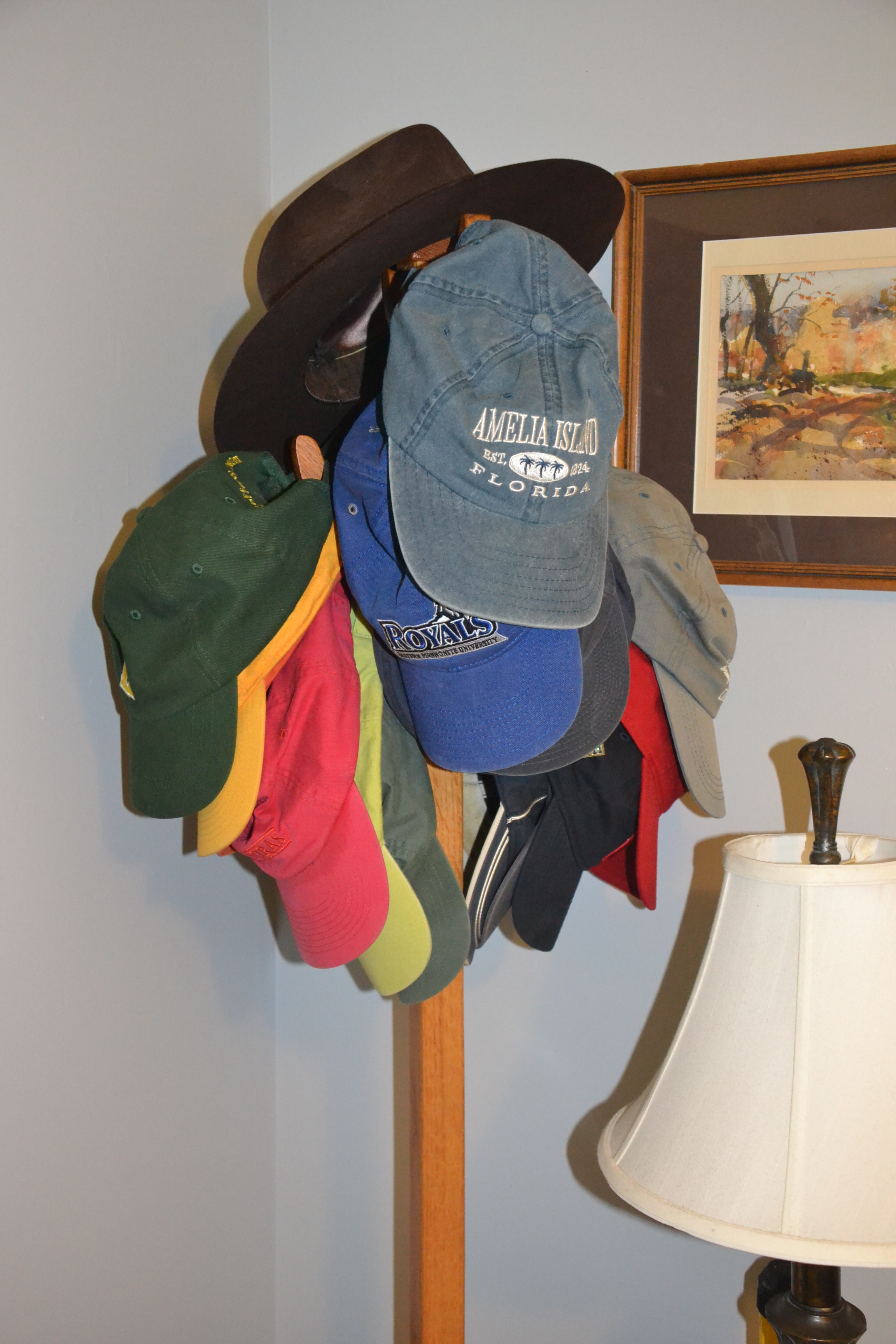
Some of the hats in my utilitarian collection.

By Bruce Stambaugh

People collect all kinds of things when they travel. Post cards, plates, jewelry, T-shirts and mugs are popular items. Souvenir shops in any touristy locale confirm that.

Me? I collect hats, more out of necessity than sentimentality. Given my lack of hair, I call it BPS (Bald Protection Syndrome). At least I have a practical use for my hat hobby.

BPS is the only way I can explain my obsession with hats. Baseball caps, golf caps, air-cooled hats, even a cowboy hat, define my collection.

It dawned on me that my assortment of hats really represents a segment of my personal history. I look at a hat, and I can usually recall where I bought it or in some cases, like the cowboy hat, who gave it to me.

hatrackbybrucestambaugh
Not a spot to spare on my hat rack.
The hats hang on an oak hall tree that a dear friend made for me. The hall tree stands in a corner beside my bed. The hats are the first things I see in the morning and the last at night, keeping the memories fresh in my mind.

The brown, broad-brimmed, pressed velvet Stetson cowboy hat occupies the pinnacle of the hat holder. That’s no coincidence. My daughter and her family gave it to me as a present several years ago when they lived in Texas. I wear it only on rare occasions.

I collect hats the way Imelda Marcos saved shoes. Each peg of the faithful hat rack is full of hats and memories. The hats come in different shapes and colors, but most are ball caps. All generate vivid recollections.

I have too many from a favorite vacation spot, Lakeside, Ohio. I don the bright yellow hat with a big blue block letter “L” on the front most often.

Perhaps some of my favorite hats are the ones I acquired while participating in some special activity. I have a handsome brown cap with the sun rising over the profile of a mountain, all stitched in white. I got that one at the state park where I once hiked and birded in Arizona.

Another hat I wear a lot is the one I received for attending a birding symposium. It should come as no surprise that the hat features a bird on the front.

Still another hat I obtained in Arizona and bought especially for birding is a lightweight, broad-brimmed, air-cooled canvas hat. I only wear it when it’s hot or when we go to the beach with the grandkids.

Two hats in my collection have extra-special meaning to me. I purchased both in Honduras. One is bright red with orange lettering that spells out the name of the poor Central American country.

meandmyhatsbybrucestambaugh
I’m happiest in hats.
The other Honduras hat is black with a red rooster on it, which is very apropos. As unstable as the Honduran government is, I think the roosters actually run the country. They are everywhere and don’t bother to wait for the sun to rise to announce their presence.

The pride and joy sports hat in my collection is bright red with a raised deep blue block “C” on the front. I wear it when I attend Cleveland Indians games to show my support for the often-hapless team. Wearing it may also reveal other blemishes in my character.

Some people collect stamps, others coins or antiques or teacups. I collect hats. Each one has a story and a special meaning.

Vacation season is here. More travel, more memories, and more hats ahead.

© Bruce Stambaugh 2013

In memory of an impulsive father

thecottagebybrucestambaugh

By Bruce Stambaugh

My late father was a loving, loveable guy. His impulsive actions, however, often masked those admirable traits.

Combined with his affability and innate friendliness, his good intentions sometimes wrote a recipe for embarrassment if not potential disaster. Even when in the wrong, Dad would turn a negative into a positive.

Dad was definitely gung-ho about everything he did in life. With his many interests, he did a lot in his 89 years of living. He went full force, no holds barred. Dad was simply passionate about life.

If he knew this about himself, Dad certainly never acknowledged this reckless abandon approach to life as a fault. The way he lived, he had to have seen this passion as an attribute.

parentsbybrucestambaugh
My wife and I surprised my parents on Father’s Day in 2009 with a visit to the cottage they had built. We had purchased it from them, and remodeled the cottage. Dad died on Dec. 21 that year.

Dad loved sports, especially outdoor activities like hunting and fishing. He also amassed an extensive Indian artifact collection. Dad was involved in many community activities, almost always in leadership positions. The end result was that he made many friends in his lifetime.

Dad’s enthusiasm sometimes got the best of him, and others, too. The story my nephew shared at Dad’s memorial service three and half years ago pretty well summed up my father’s impulsiveness. The story is true with no hyperbole interjected.

Mom and Dad had a cabin on Clendening Lake in southeast Ohio. They loved to host friends and family as frequently as possible. My younger brother and his family attended one such outing.

pontooncolorsbybrucestambaugh

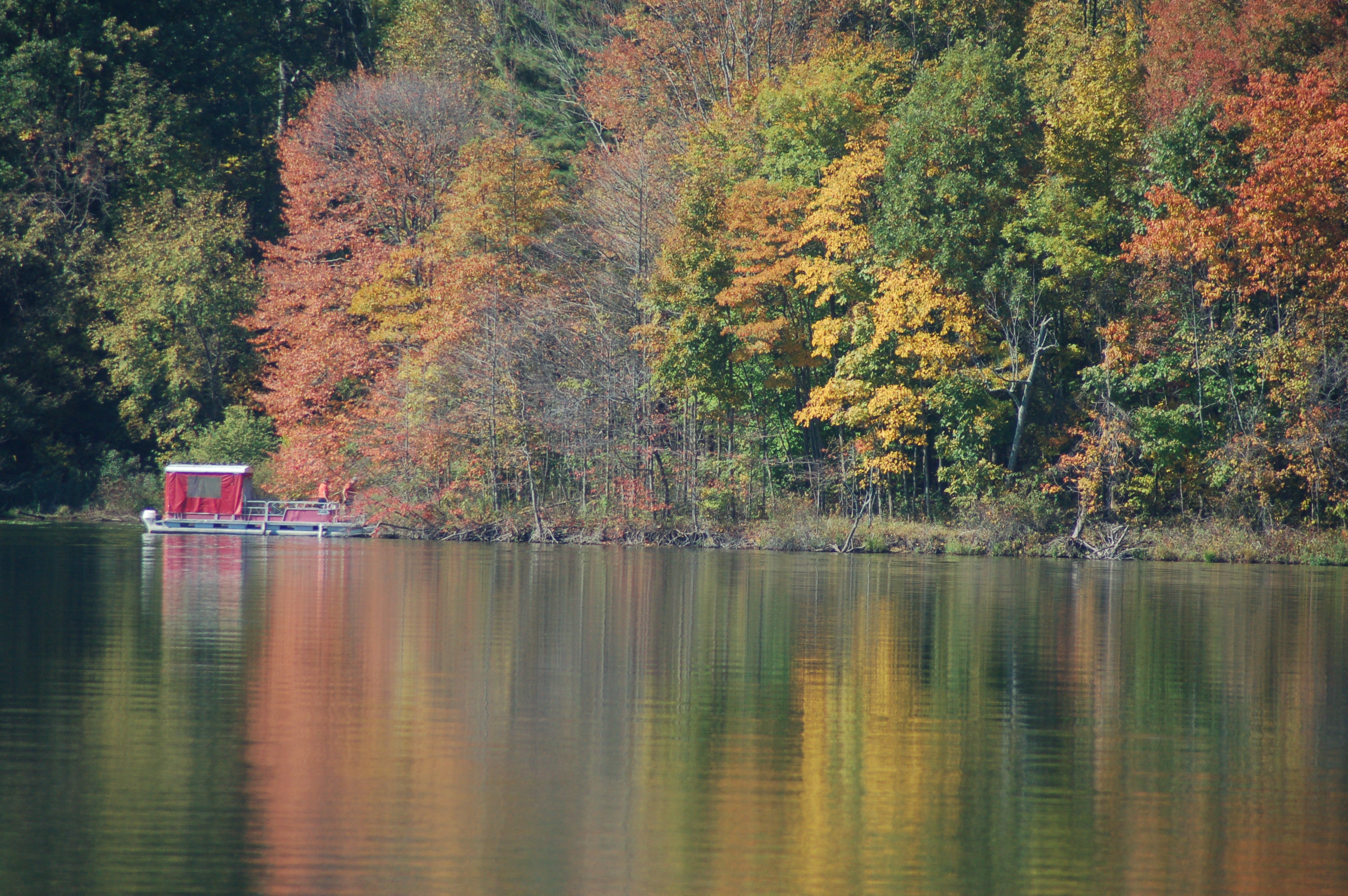
A favorite activity of Dad’s was to pile everyone onto his pontoon boat for a combination cruise and fishing trip around the 14-mile long lake. The scenery was always enjoyable. The fishing on the other hand often was more bait than catch.

On this particular voyage, Dad had found a spot right across the lake from the cabin. My nephew reported that the fishing was good until my father’s impetuosity intervened.

Dad cherished interacting with people, often to the point of being late for supper or forgetting an appointment altogether. I think he invented the word “relational.”

While my brother and his family were concentrating on catching croppies, Dad noticed another boat on the opposite shore. He thought it looked like the owner of the cabin next to his.

fallfishermanbybrucestambaughDad suddenly announced to his surprised passengers, “Hey, that looks like Bennett over there,” and up came the boat anchors. Lines were reeled in, and across the lake they went at full throttle.

Since Clendening isn’t a very wide lake, it didn’t take too long to reach the spot where Mr. Bennett was fishing. My nephew recalled wondering why his grandfather wasn’t decreasing the pontoon’s speed as they got closer and closer to the south shore.

Seeing the inevitable, my brother motioned for Dad to slow the boat or change coarse. He did neither.

Dad instead responded by yelling a series of “Hellos” to Mr. Bennett, who at first waved back, then tried frantically to wave Dad off.

Dad greeted his neighbor by ramming the pontoon boat into the much smaller bass boat, tipping it and its owner into the murky lake. Fortunately the water was shallow there. But all of Mr. Bennett’s rods, reels, tackle boxes and stringer sank straight to the lake’s bottom.

Dad had finally stopped the pontoon by the time Mr. Bennett had popped up soaking wet. What was my father’s first comment to Mr. Bennett after the crash? An apology? Not exactly.

Dad matter-of-factly hollered, “Hey, Bennett, are you catching anything?”

fatherandsonsbybrucestambaugh
My older brother, Craig, and I accompanied our father, Dick Stambaugh, on an Honor Flight trip to Washington. D.C. on Sept. 12, 2009. We posed in front of the Ohio pillar at the World War II Memorial.

© Bruce Stambaugh 2013

Viewing the world through different lenses

conflictclassbybrucestambaugh
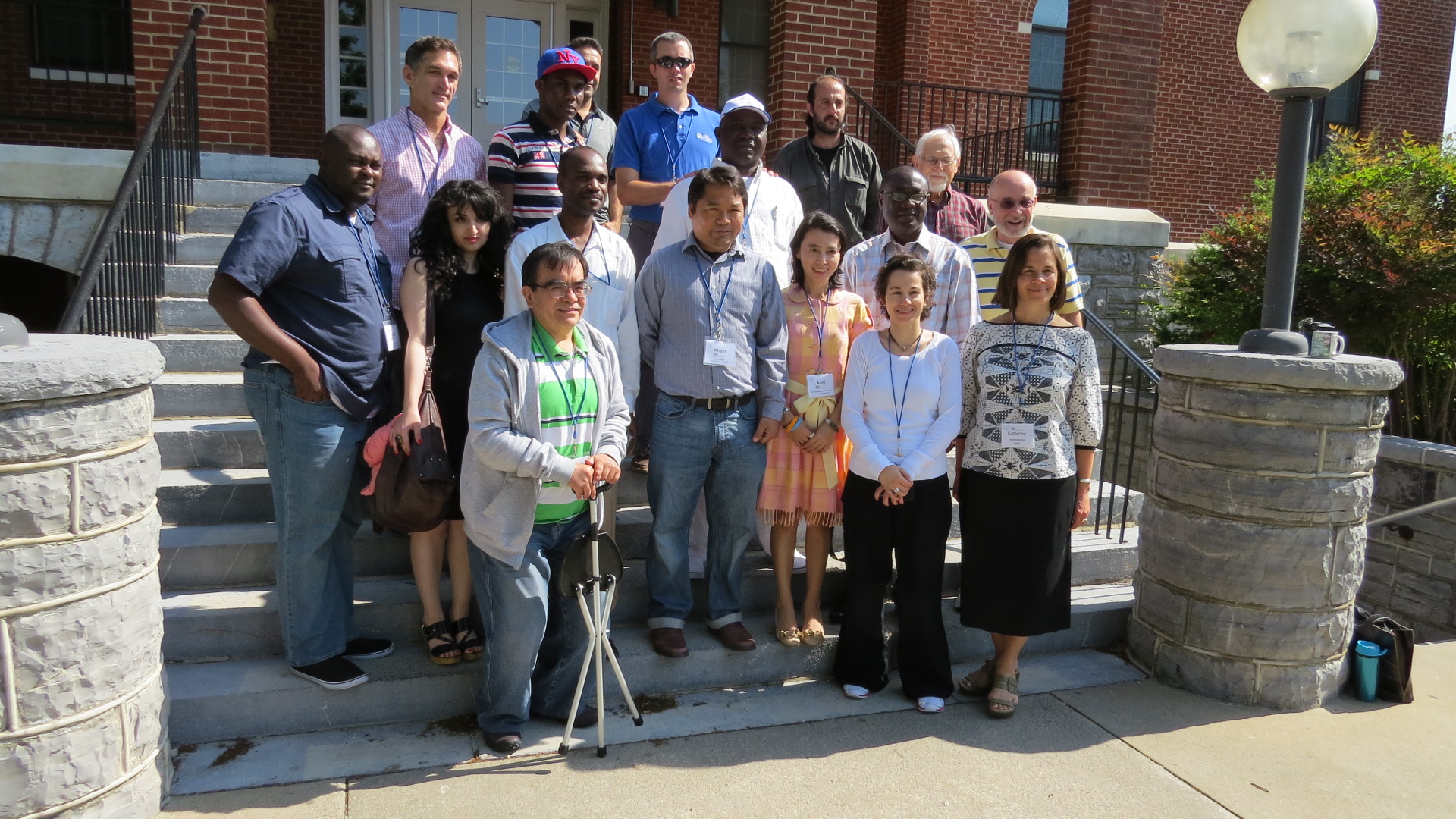
The Conflict Analysis class of the Summer Peacebuilding Institute at Eastern Mennonite University, Harrisonburg, VA.

By Bruce Stambaugh

We have it pretty nice here in the Greater Holmes County, Ohio area. I have known that ever since I moved to the area just after the historic July 1969 flood.

Ask locals, and they’ll tell you that it’s the best place in the world to live. I wouldn’t begin to argue otherwise.

That doesn’t mean, however, that this is the only place to call home. Clearly, if it were, the countryside wouldn’t be the same. Pastoral settings would give way to a jagged urban scape and all the trappings that accompany it.

For those who never venture afar from our comparatively protected environs, there is a danger with our self-satisfaction. Seeing the world with only our particular glasses can give us a distorted viewpoint on other cultures, socially, politically, economically and any other way you want to look at life.

At times it can be good to change lenses. That means we sometimes have to get well out of our comfort zone to do so. We have to let go of what we know, and learn anew.

foggyviewbybrucestambaugh
Virginia’s Shenandoah Valley offers incredible views, like the morning mist rising out of the valleys.

Recently I took an intensive graduate school course at the Summer Peacebuilding Institute at Eastern Mennonite University in Virginia’s lovely Shenandoah Valley. It’s a place as pretty as home, only old age mountains backdrop rolling, fertile foothills.

Of the 16 participants in the class, I was one of only three North American students. The others came from places like Azerbaijan, Thailand, Iraq, Kurdistan, Belgium, Ghana, Nigeria, Syria and Haiti. I would have struggled to find some of these countries on a globe.

The students ranged from young adults to grandparents like me. Their given names were Amstrong, Yvon, Nurana, Carlos, Rana, Aunt, Ray, James, Oscar, Henry, Nameer, Ernest, Amina, Khant and Salar. They were pastors, government leaders, workers for non-governmental aid agencies, interpreters and teachers.

Though our cultures, races and geographic origins varied greatly, we were there to learn about the various ways to analyze and understand conflict. Given the current situations in the countries represented, much useful information was certain to be shared back home.

smallgroupdiscussionbybrucestambaugh
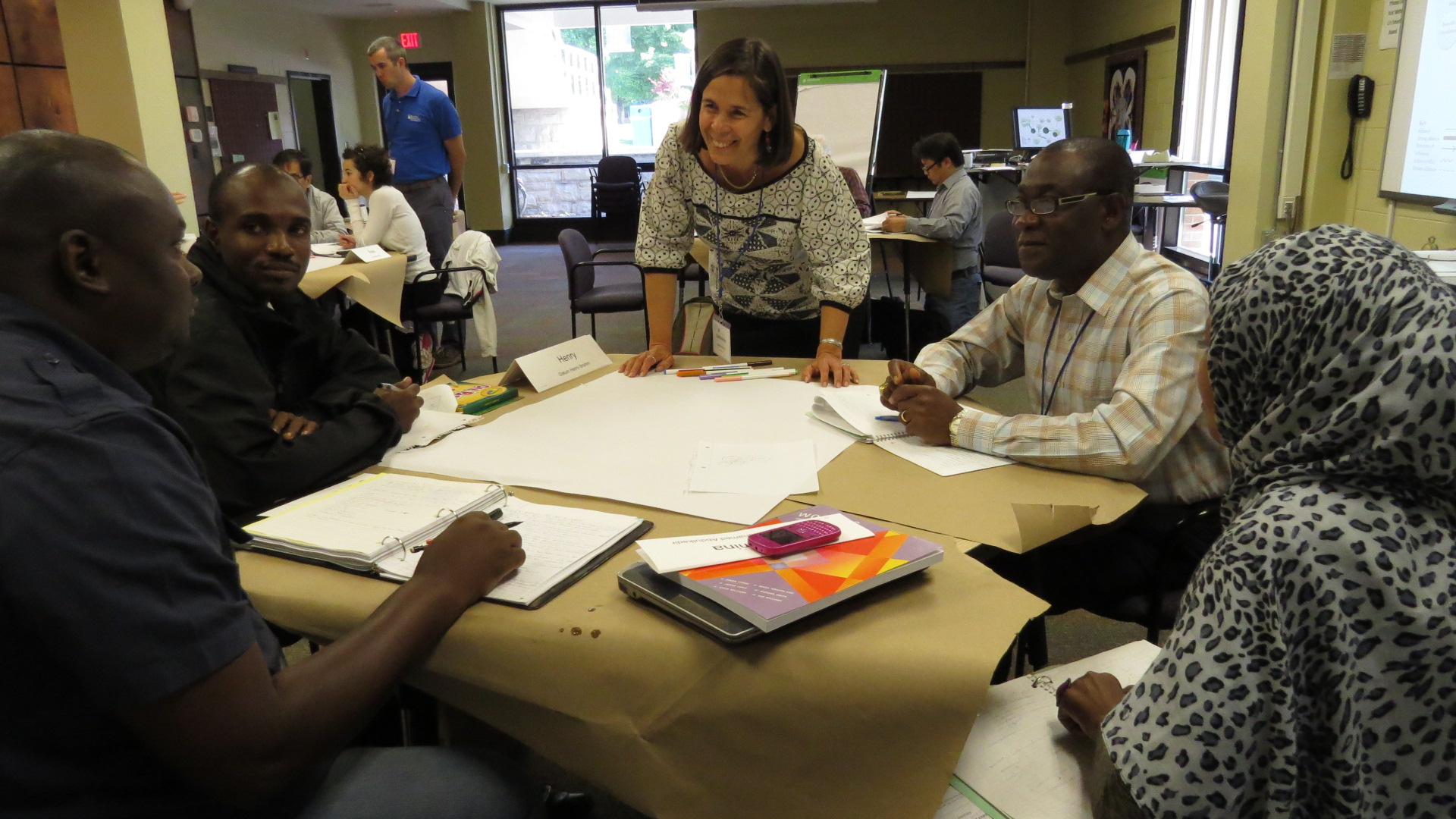
Much of the class time was spent in small group discussions and activities.

In the classroom, we sat in groups of three or four, each day a different configuration, each day new and fascinating stories intertwined with the professor’s lessons. Their personal stories, shared privately, were compelling, if not fearsome.

A pastor from Haiti called his wife every night and spoke to her from midnight until nearly dawn just to ensure his family’s safety. The consequences of war had destroyed the home of a young woman from Syria. Yet reconciliation, not retribution, was the aim of these devoted, considerate, inquisitive community leaders striving to promote peace.

dynamicwomenbybrucestambaugh
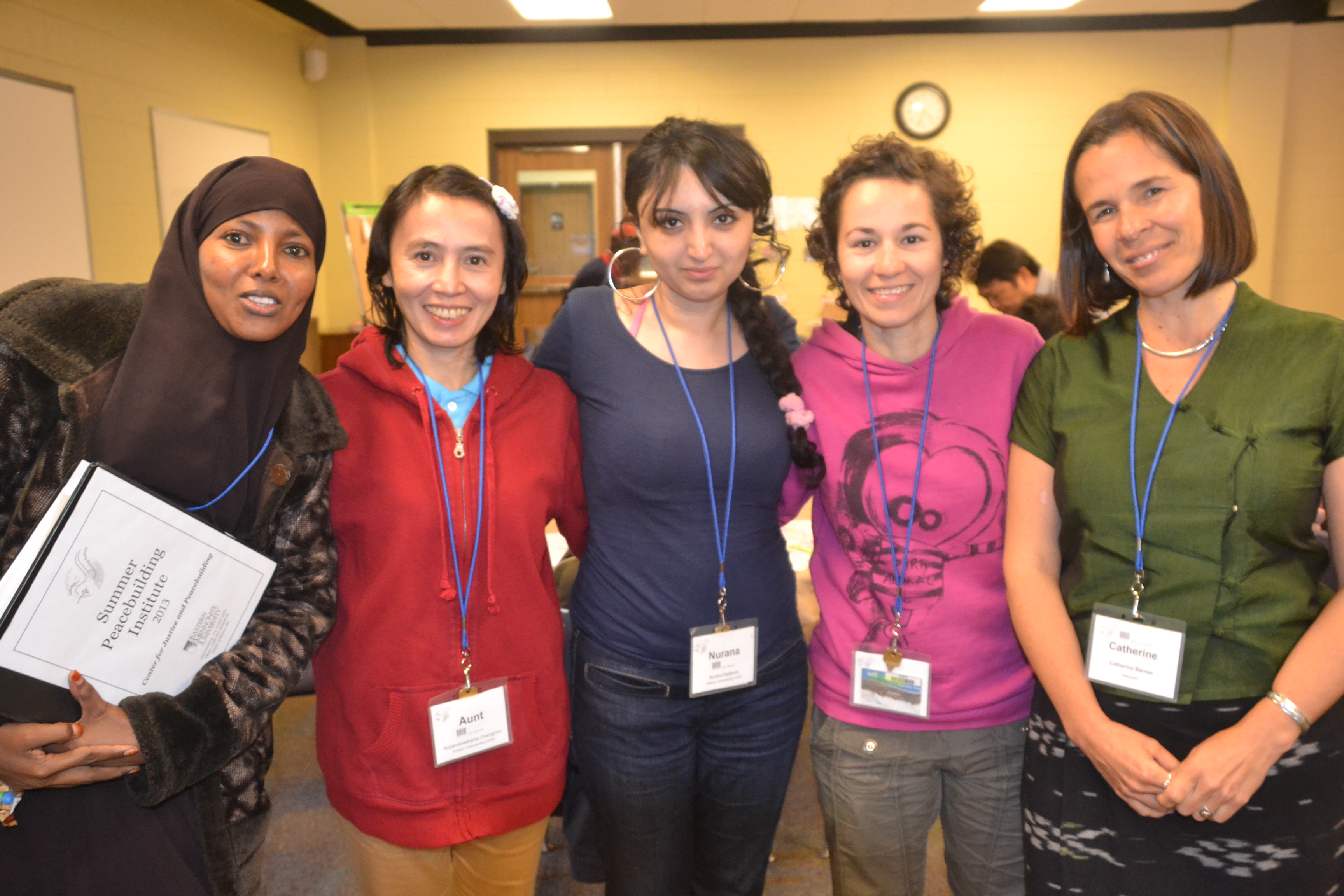
The dynamic women of the Conflict Analysis class of the Summer Peacebuilding Institute.

Instead of focusing on how bad it was in their country or blaming other governments, these men and women were glad for the opportunity to learn how to dissect and resolve conflict. They would take what they had learned and apply it as best they could. Their goal was to improve the world around them, even if it was one person at a time. Where there was despair, they saw hope.

When the Haitian pastor asked me if my home was safe, I hesitated before answering. I looked deep into his dark, wondering eyes, and simply said, “Yes, I live in a very safe place.”

“You are very fortunate,” he replied softly. I was humbled.

All of us who live in our lush, agrarian area are fortunate. Occasionally it takes looking through other life lenses to fully appreciate our own home view.

springtimeinamishcountrybybrucestambaugh
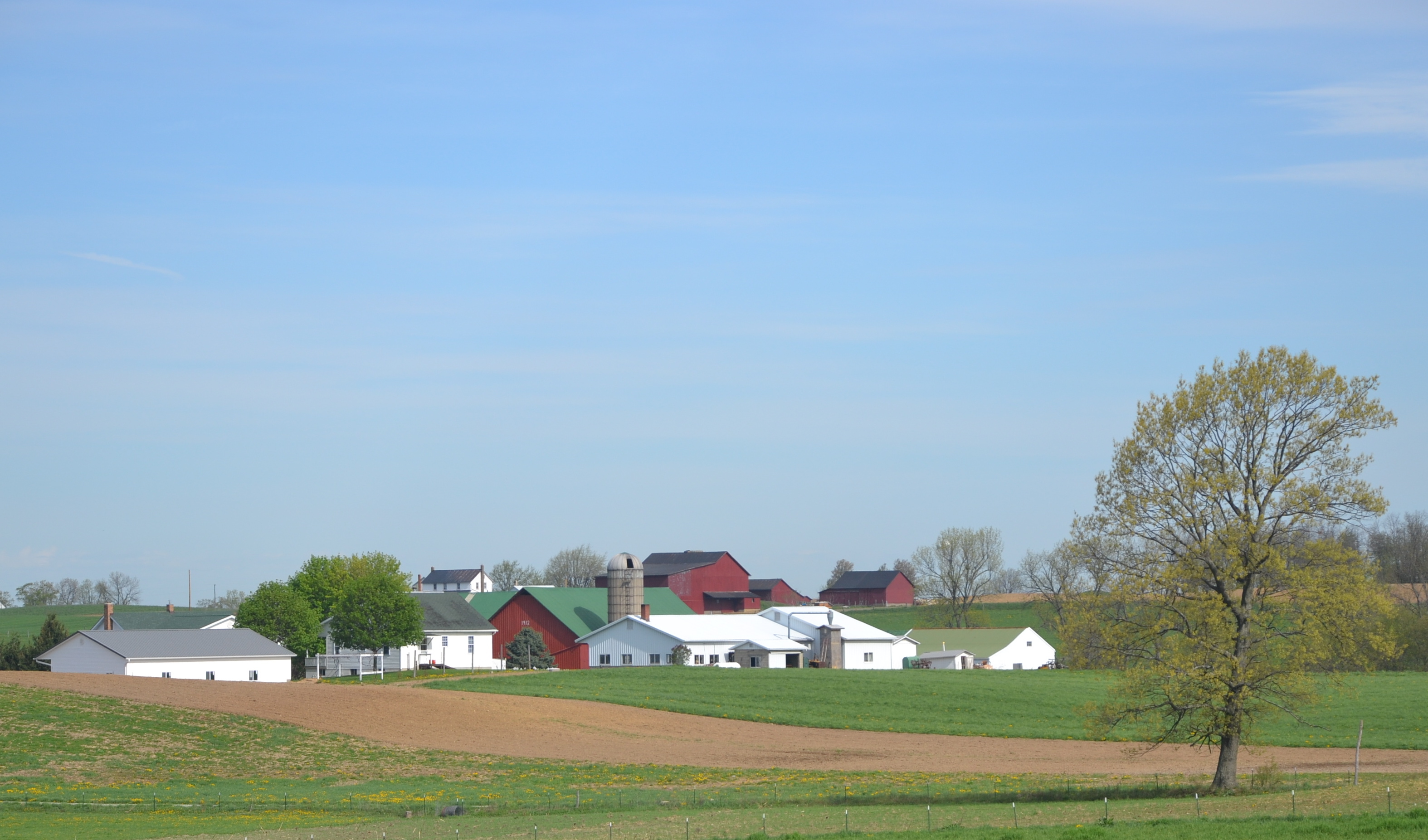
A typical springtime view in Holmes Co., Ohio.

© Bruce Stambaugh 2013
Bay Photos by Donna

Wildlife Photos From The Chesapeake Bay Region

ROAD TO NARA

Culture and Communities at the Heart Of India

K Hertzler Art

Artist and nature journalist in the Shenandoah Valley of Virginia.

Maria Vincent Robinson

Photographer Of Life and moments

Gabriele Romano

Personal Blog

Jennifer Murch

Art is the only way to run away without leaving home. -Twyla Tharp

Roadkill Crossing

Writing generated from the rural life

ANJOLI ROY

writer. teacher. podcast cohost.

Casa Alterna

El amor cruza fronteras / Love crosses borders