My wife and I
stayed in a bed and breakfast
in Waynesboro on Wayne St.,
and the owner’s name was Wayne.
I couldn’t, no I wouldn’t make this up.
Bruce Stambaugh
March 29, 2011
My wife and I
stayed in a bed and breakfast
in Waynesboro on Wayne St.,
and the owner’s name was Wayne.
I couldn’t, no I wouldn’t make this up.
Bruce Stambaugh
March 29, 2011

By Bruce Stambaugh
Where do you begin to share about being married to the same person for four decades? After all, my wife and I have been through a lot together during those 40 years.
Perhaps the best place to start is at the beginning. And what a beginning it was.
Crazy as it sounds, nine days after we met we were engaged, although we did wait a month to make it public. We didn’t want people to think we were totally nuts. We were married nine months later. When our two children were old enough to understand, we advised them against using our expeditious courtship as a model to matrimony.
I can remember our wedding day as if it were yesterday. I was so scared that I didn’t even notice that the farm field next to the church had been sprayed with liquid manure that afternoon.
Before the receiving line had formed, I got a taste of what married life really would be like. I accidentally stepped on the train of my wife’s wedding dress, and immediately had her finger in my face. I think that’s when I started to smell the manure.
Our son once asked me what was the secret to the success of our marriage. I simply told him that his mother and I have had no secrets between us. What happens happens. Good or bad, helpful or harmful, “for richer or for poorer,” it’s all out there.
Like most marriages, it hasn’t always been pretty or blissful. No marriage is perfect, including ours. Sure, we air things out, but in so doing try to always maintain our love, respect and admiration for one another. We may have raised our voices to one another from time to time, but never a hand.
We haven’t come this far together on our own either. Family and friends have graciously helped us along the way. Our parents were excellent models of wedded commitment.
From them we learned not only to serve others, but to also enjoy each opportunity that would come along. We try our best to humbly help wherever and whenever we can.
Another plus for us is that Neva and I have a lot in common. We love to travel, enjoy quietness, sunsets, nature, and sharing a meal with guests. Hospitality is one of Neva’s greatest gifts.
Of course, we each do our own things, too. She reads. I write. She quilts. I bird.
That might be another element that cemented our marital longevity. We wisely allow each other our own space and time, without a hint of jealousy or suspicion. If you truly love someone, trust is everything. Break it, and you find yourself back at square one or worse.
For me, the best part of being married for 40 years is just that. We have been married for 40 years. Our marriage has been an investment in one another, our wonderful children and their spouses, our grandchildren, our families, the community, friends, and our church family. We have been blessed by their contributions to us, too.
Where do you end sharing about being married to the same person for 40 years? For that answer, it’s probably best to go back to the beginning, again: “Until death do us part.”

Don’t miss the big, bright
Supermoon tonight at dusk
rising in the east.
Bruce Stambaugh
March 19, 2011
By Bruce Stambaugh
I don’t know about you, but I am more than ready for spring. It’s been a long, long winter.
True, this year residents of Ohio’s Amish Country avoided the huge snowstorms of last winter, and overall we didn’t compile as much snowfall as last year. Instead, ice, as in freezing rain ice, predominated the snows. The nasty combination made the lesser snow amounts just as slippery and difficult to maneuver in as the previous year’s foot-deep accumulations.

Last fall, my wife and I made a major decision that we thought prudent. We had our home’s original windows and spouting replaced. Since the house was built in the mid-70s, both were overdue to be changed.
After all, building materials had greatly improved in the last three decades. Windows were manufactured to be tighter and more energy efficient. Spouting became seamless long ago. It was time we caught up.
With our rural property full of trees, and a dense deciduous thicket not far to the south and west, leaves and pine needles tended to clog our gutters and downspouts year-round. It’s amazing how much debris gets blown around long after the trees have dropped their foliage.
If a storm was forecast during any season, I would trudge to the garden shed, take down the eight-foot wooden ladder, grab the stepladder, and head to the roof to clean the gutters and downspouts. I used the bigger ladder to access the garage roof, and leaned the stepladder next to the stubby brick chimney to climb onto the house roof.
I really didn’t mind this labor-intensive exercise. Heights never bothered me either. I enjoyed my periodic roof excursions. The views were great. I could see the neighbor’s faded white barn a mile to the east. Belgian workhorses and chestnut buggy horses intermingled in the pasture with the Holsteins.
The north afforded the best scenery, a panoramic landscape of hills and valleys miles away. I peered over roof’s edge at the back of the house to spy on the school of goldfish swimming carefree in the little garden pond.
As I aged over the 31 years in this home however, I realized my balance wasn’t what it used to be. With safety in mind, I decided to quit the climbing and go for the new gutters with leaf guards.
The guards installed were u-shaped channels with tiny perforations that would allow the water to enter but nothing else, not even the thin, burnt orange pine needles. I was more than contented with this overdue addition until winter’s initial ice storm.
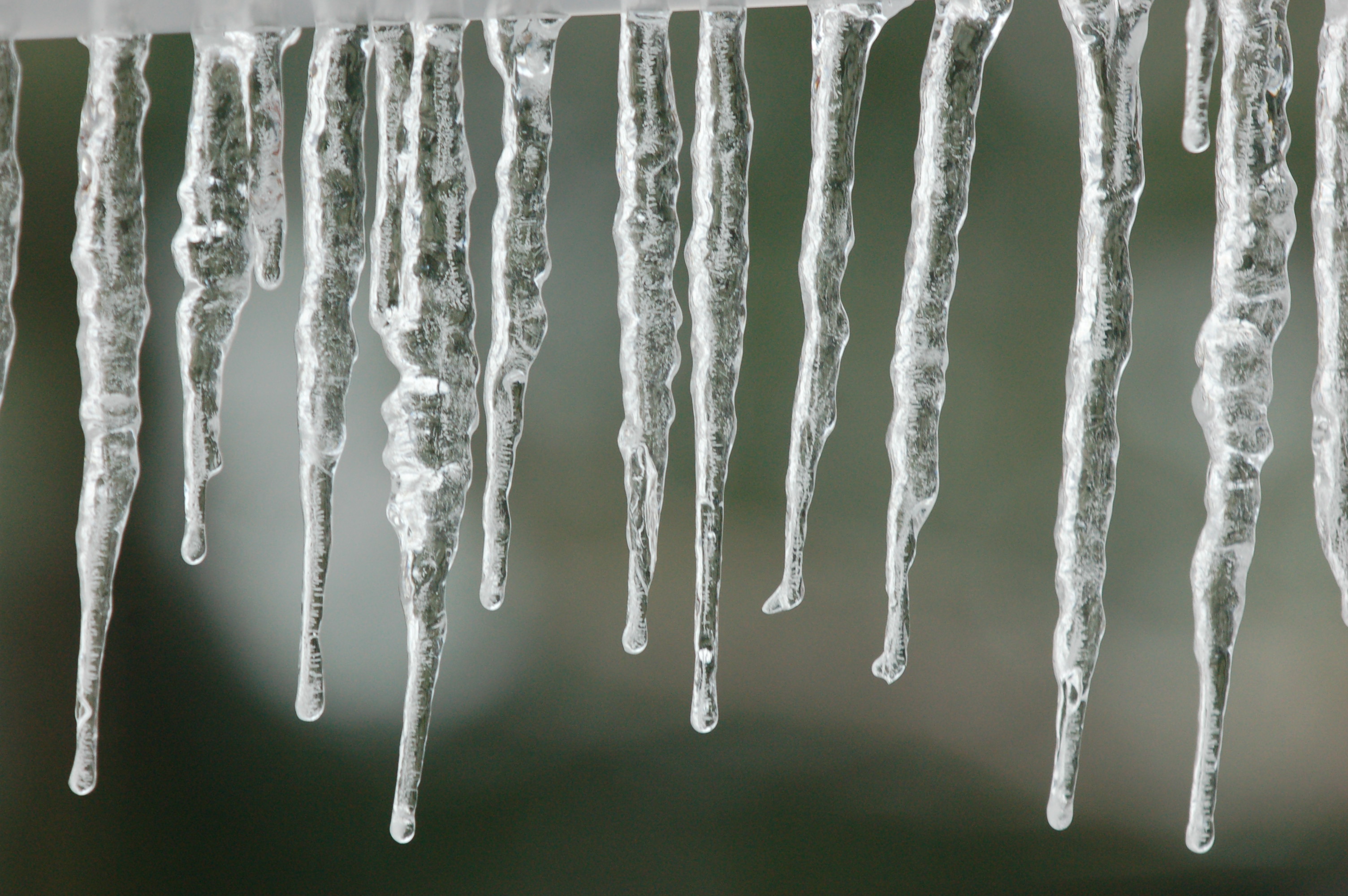
The first glaze of ice sealed the pinholes of the gutter guards. With the freeze and thaw, freeze and thaw cycles of the storms, thick layers of ice easily accumulated on the new gutters. Ice cycles dangled the full length of the gutters on the front and back of the house.
When I realized what was happening, out came the ladders again, and back up on the treacherous roof I went. Given the series of storms with their mixed bag of precipitation that we experienced, I kept handy the rubber mallet and metal scraper needed to break loose the stubborn ice.

If for no other reason than saving my own neck, I for one will be glad when the vernal equinox says goodbye to winter and hello to spring. Just to be safe, I probably won’t put the deicing tools away until June. It is Ohio after all.

Tonight, just above the horizon
in the western sky
less than an hour after sunset,
planets Jupiter and Mercury
are only a piece of pie apart.
Bruce Stambaugh
March 14, 2011

By Bruce Stambaugh
When Gary Miller of rural Millersburg, Ohio got the idea to make his own maple syrup a couple of years ago, he never envisioned where that thought would take him.
“Two years ago,” Miller said, “I was standing in the rain under an umbrella boiling sap in an assortment of old used pans on my grill.”
This year, thanks to the ingenuity and dedication of some close friends and family members, Miller has his very own sugar shack. And when the sap is running, his shack and the surrounding woods are very busy places indeed.
The shack itself was donated to Miller. A friend, Paul Conrad, had an old shed he told Miller he could have, and Miller’s sons moved it in seven different sections for him. Once on site, the building was reassembled, reusing the old lumber.
That process set the tone for what was to come. Much of the equipment used by Miller and his friends has been refurbished as some part and purpose of the maple syrup operation.

Indeed, when the sap is moving, so are a half dozen or so of Miller’s friends who help with the project. They placed 400 taps in sugar, red and black maple trees, according to Miller.
“We are careful about how many taps we place in a tree,” Miller said. “We don’t want to stress them.”
They also helped split the wood that fuels the fire that boils the sap on a homemade evaporator. Of course, the gregarious crew also put that together. Much of that ingenious system consists of recycled metal and other materials.
The wood stove that holds the fire that boils the sap belonged to Scott Sponsler, another friend. The stove was extended with metal from old toolboxes from a pickup truck that Miller owned.
Miller had a fan rebuilt and some ductwork manufactured locally. Together they help distribute the heat generated by the wood stove. The heat evaporates the sap into syrup.
The sap enters the sugar shack from another recycled item, an old bulk tank rescued from an unused milking parlor. It is held up by a repurposed metal stand so the sap flows by gravity into a smaller, reconstructed holding tank inside the old wooden shed.

From there, the sap runs into a customized sheet metal maze that allows the sap to be evaporated as it circulates up and down the four parallel troughs. After entering a second connected metal maze, the sap begins to change color. It is closer to the firebox and the preheated sap really starts to boil. Its darker color indicates that the moisture is being bubbled away.
Miller said that the sap isn’t officially maple syrup until its consistency is at least 66.9 degrees Brix, as measured by a hydrometer. Miller said with his setup, it takes 51 gallons of sap to produce a gallon of syrup.

Miller and his friends make the syrup when the sap is running. He said warmer days and cooler nights are the best conditions to make the sap run.
Before it is pumped into the elevated holding tank, the sap is gathered into 15-gallon containers from each tap bucket. The containers are carried on the back of a small tractor. Of course, the tractor was loaned, too.
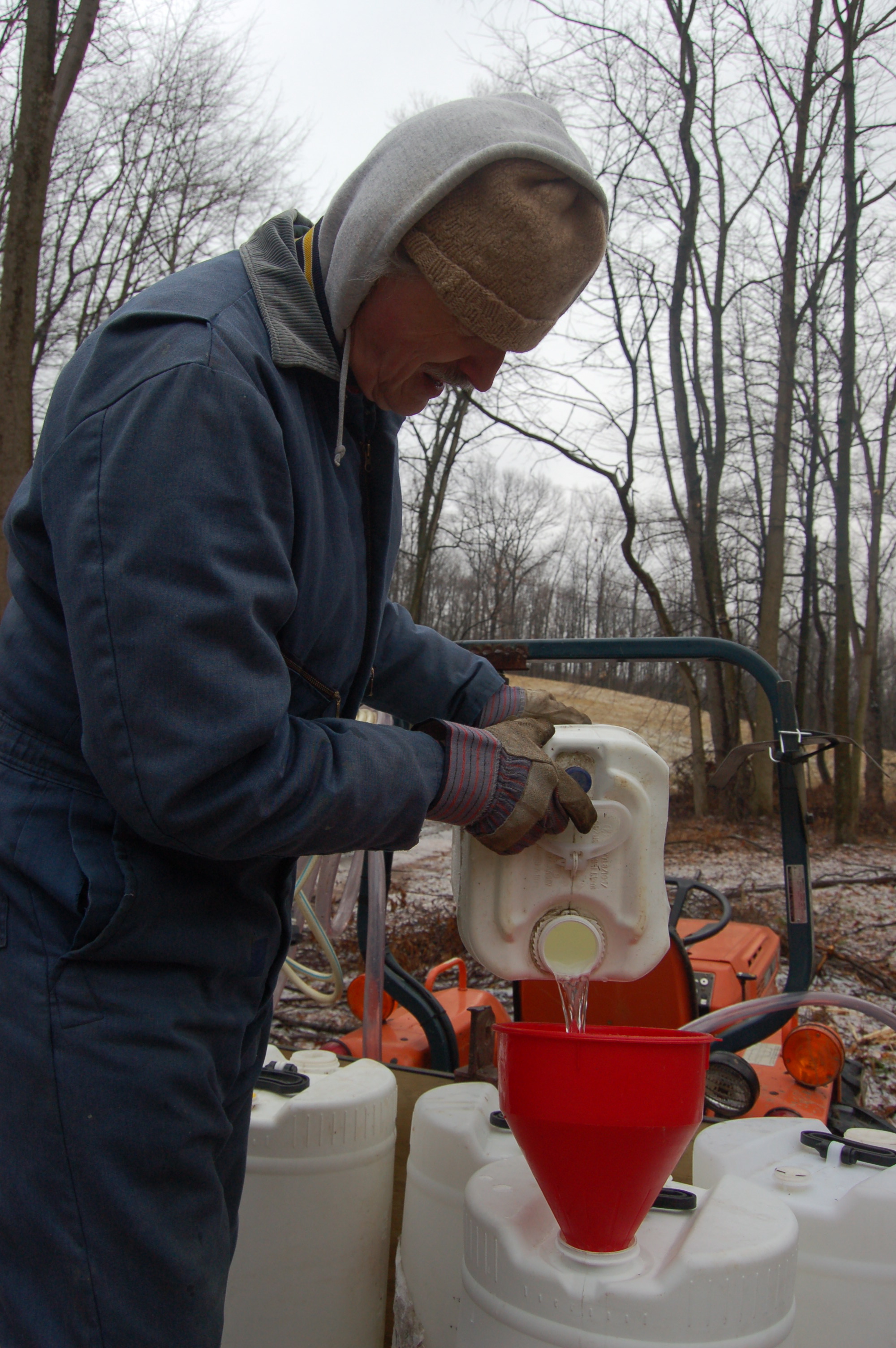
All the free equipment and labor is only appropriate. Miller said the maple syrup that is produced is not for sale, although it does have a name, Smoke Pit Maple Syrup.
“This is not a commercial operation,” Miller emphasized.
Instead customers get to donate whatever they feel the syrup is worth. The money is used for an educational scholarship program in Honduras. Miller’s Sunday school class at Millersburg Mennonite Church is financially sponsoring the schooling of several children there.
With all that said, Miller shared another important ingredient in the maple syrup production as far as he is concerned.
“It’s not about the syrup,” Miller said. “It’s about the fellowship.”
Indeed, laughter and kibitzing among the friends intermingle with the steam from the cooking sap in the cold, small shack. The steam and merriment waft together out into the cold air through the open doorways. The good-natured ribbing helps make the labor-intensive sugaring efforts all the sweeter.
Persons interested in obtaining some of the Smoke Pit Maple Syrup should contact Miller at 330-763-0364.

Is prostate cancer
appropriate for haiku,
and is it for me?
Bruce Stambaugh
March 11, 2011
By Bruce Stambaugh
Avid birders love to do Big Days. Big Days are when a group of dedicated birders sets a goal of seeing as many bird species as possible in a span of 24 hours.
I had a big day recently, too. My big day was a kaleidoscope of activities, some bright and cheery, others light and muted, and a few dark and fearsome. Knowing that this day’s lively landscape would also be an emotional roller coaster, my faithful wife held my hand all along the adventuresome path.
My shifting pattern of colors didn’t involve any feathers, however. Rather, the palette I experienced involved people and their comparative connectedness to me.
After breakfast, my wife and I headed into Berlin, Ohio considered by default the center of the largest Amish population in the world. I surprised Neva with a brief stop at the local coffee shop for mochas. She got decaf, but I needed some caffeine to get me through the day’s busy agenda.
Slurping our coffee, we headed up the stairs to our financial advisor. He wanted us to make some tweaks in some of our monetary investments. But you can only do so much with a $1.95.
From Ohio’s Amish Country, we were off to my hometown, Canton, to see my urologist for a consultation. The previous week I had had a biopsy for prostate cancer. This meeting alone would have qualified as it’s own big day.
But being the thrifty couple that we are, we packed the day with a purposeful assortment of activities and conversations. My good doctor got right to the point. He spent more than an hour with us, mostly reviewing the several choices for treating my cancer.
While the kindly doctor clearly itemized the wide range of options and their side effects for me, Neva furiously took notes. All the while my head swam. We set a follow-up date for deciding which procedure would be best for me, and we were off to our next encounter.
The timing couldn’t have been better. Neva and I each got a one-hour massage. I could actually feel the tension ooze out of my body, and my mind stopped racing about what I had just heard and anticipating what was to come for me.
I had a brief but important business appointment just down the road. With my mind clearer, the meeting went well.
From there, we delivered some furniture we no longer needed to one of Neva’s cousins, who lived just a few miles away. We made our delivery, visited a little and were off to our next rendezvous, dinner with my older brother and his wife.
The date with Craig and Shirley was well-timed, too. A year and a half earlier, Craig had had prostate surgery similar to what my doctor recommended for me. Over absolutely marvelous entrees, we casually discussed my brother’s procedure and other various maladies that seem to be dominating baby boomer lives more and more.
We skipped dessert, and walked a few hundred steps to our son and daughter-in-law’s lovely New York style loft on the square of Wooster, Ohio of all places. Craig and Shirley, whose youngest daughter lives in New York City, were mightily impressed with the stylish apartment and its accompanying minimalist furnishings.
On the 20-minute drive home, the color wheel of events of my big day flashed before me. So did the fear and uncertainty of what lies ahead. But given the loving and colorful characters who surround me, I know all will be well no matter what.

By Bruce Stambaugh
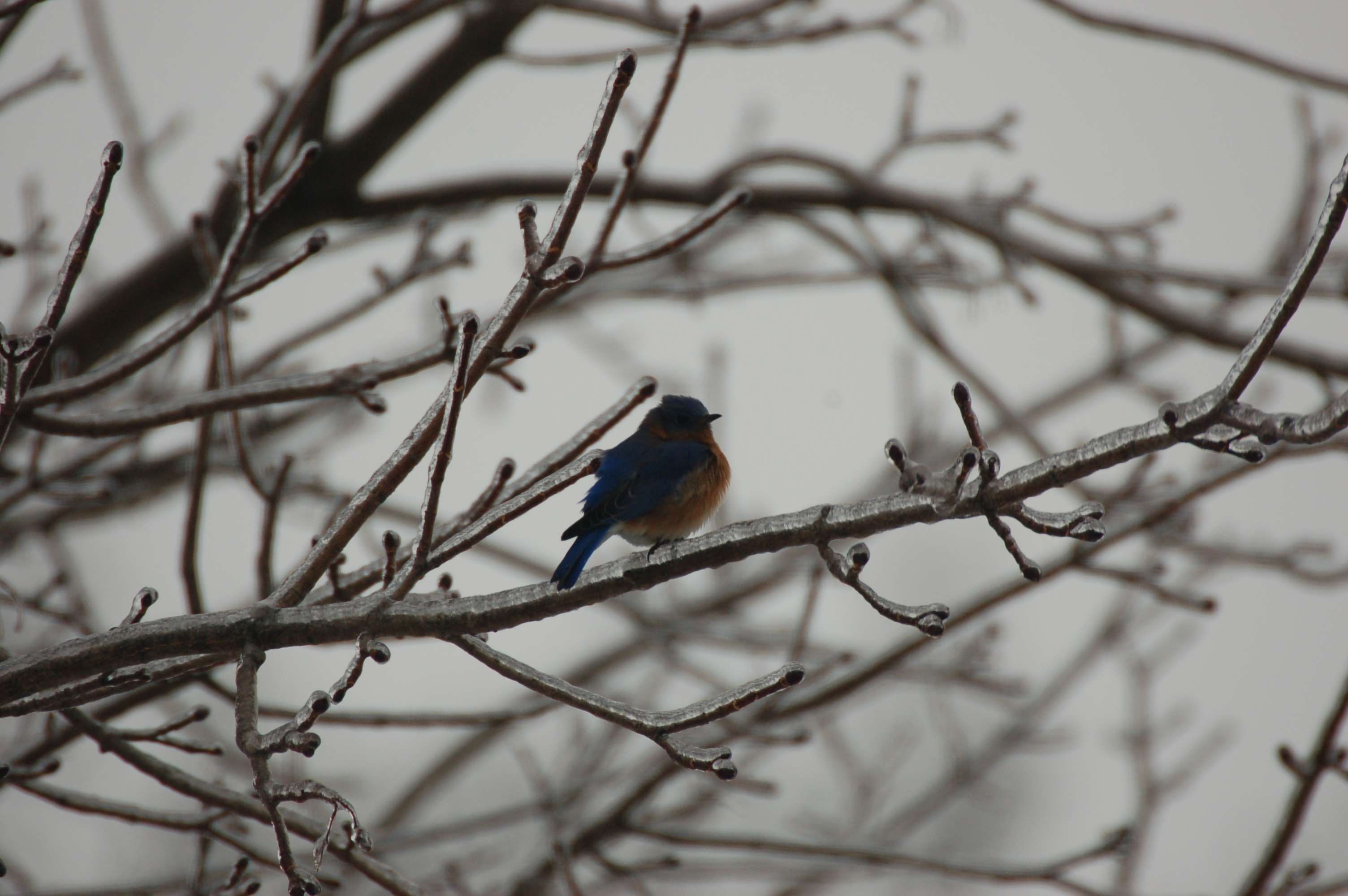
As I write this, I’m looking out the ice-splattered window watching it snow an inch an hour. The trees are once again encrusted with a layer

of crystal clear, weighty ice. The poor boughs of the evergreens are again bowed to the ground.
The rest of the landscape is covered with inches of yet more snow. Fierce, brisk northwest winds stymied the snowplow operators and sent them back to the garage in disgust and for safety’s sake.
I am always glad when the calendar flips to March. To me, March is a Jekyll and Hyde month, the last of winter, and the first of spring.
In truth, March in northeast Ohio is the month with the potential for all four seasons. It doesn’t always work out that way of course.
When the calendar reads March, I know winter’s icy grip is loosening, if only by time. If we are patient, though, spring will eventually win out.
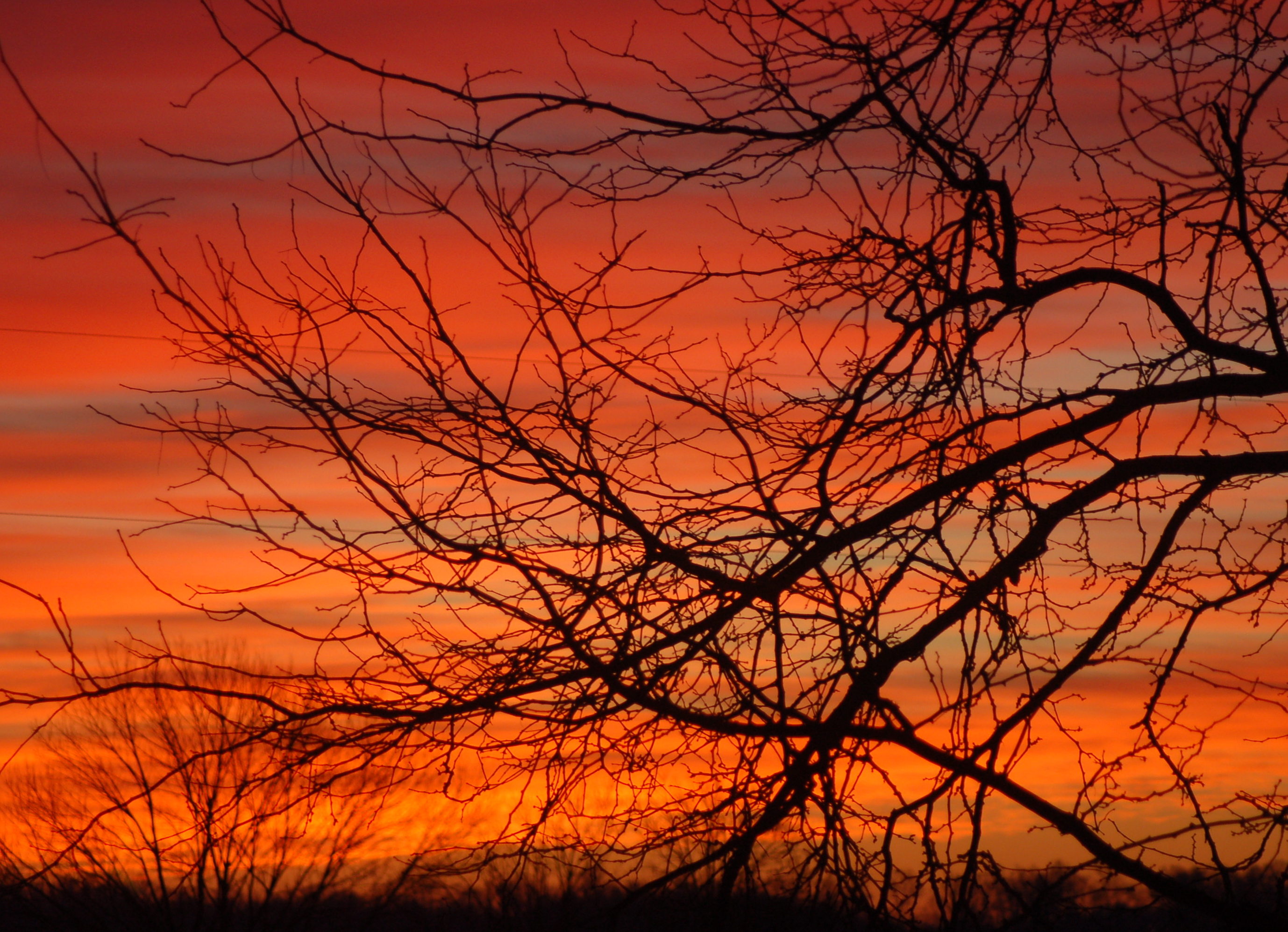
Tired of winter and ready for spring, I opened my digital photo files and reviewed recent March memories. The visual variety brought a smile to my face even as noisy gusts whipped the snow outside harder still.

The first pictures showed exactly what the day at hand already had. Snow blanketed the landscape, but the sky was clear. The next few days revealed similar scenes. The snow remained, but so did the sunny skies. Horses romped in the snow and the days ended with picturesque sunsets.
By the middle of the month the deep snow cover gradually melted down, and green, grassy patches peeked through. People went jacketless and our first crocus bloomed on St. Patrick’s Day. The lovely lavender petals contrasted nicely with the spiky green leaves and the rich, brown ground of the flowerbed.
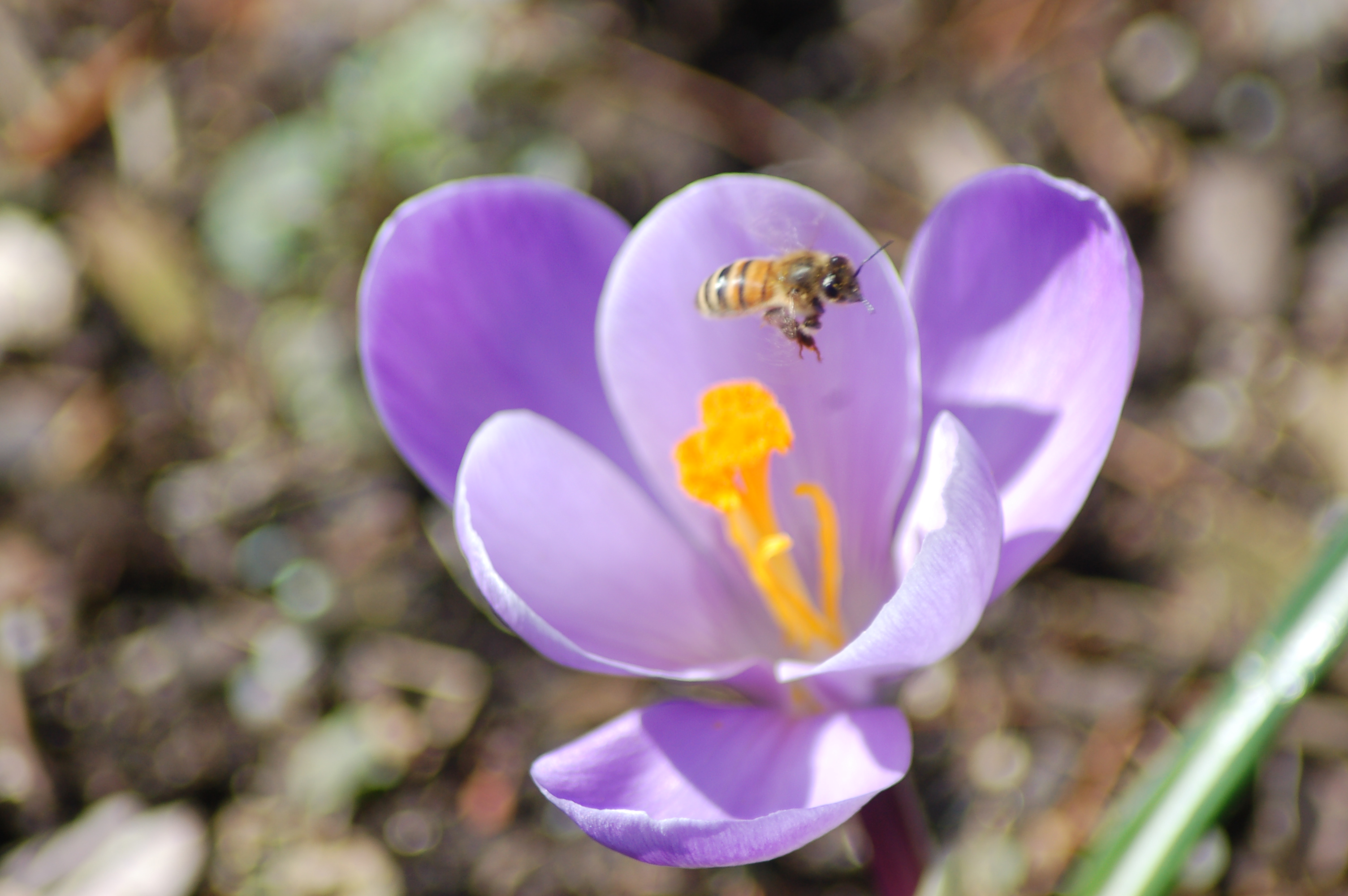
The next day, I photographed a honeybee gorging pollen. This scene really instilled hope.
There were more flashy sunsets and a picture of a thin crescent moon that looked just like a smiley face grinning at us in the early evening sky. We had one like that last month, too, but it was too cold to enjoy from the out of doors.
A couple of days later the frogs from my little garden pond emerged to bask in the warmth of the bright sunshine. And more flowers bloomed equally vibrant.
Just when you begin to fall in love with March, she can deliver some nasty punches. Tornado season begins in earnest and in the past we have had some powerful thunderstorms in March. They often are followed by cold and snow. A friend used to say that it always snowed during regional basketball tournament time.
Sure enough, five days after the frogs contentedly sunned themselves, our first daffodils showed their pretty yellow faces. The next day they drooped sadly, covered in heavy wet snow.

If there is an upside to such an early spring snow, it’s in the comfort that it won’t last long. As proof, my Amish neighbor was plowing his long field one row at a time at month’s end.

A sudden windy gust awakened me from my vernal dreaming. It was then that I noticed a familiar but long absent resonance. In the middle of this latest blizzard, a Song Sparrow sang as if the daffodils and crocuses already were blooming.
That subtle sound of music renewed fervent hope that winter and spring would soon change places.
Whoopie pie recipe
2 eggs 1/4 teaspoon of salt
1 cup vegetable oil 8 tablespoons of cocoa
2 cups brown sugar 1 cup milk
3 cups flour 1 1/4 teaspoons of vanilla
1 teaspoon of baking soda
Mix eggs with vegetable oil and sugar until creamy, then add flour, baking soda, salt, cocoa.
Add vanilla and milk.
Drop on greased baking sheet with teaspoon.
Bake at 375 degrees F. about 7 minutes.
Let cool.
Add filling between two cookies.
Filling recipe
5 tablespoons of flour 1 cup of milk
1 cup of sugar 1 cup of shortening
1/2 teaspoon of salt 1 teaspoon of vanilla
Mix flour and milk, and cook until thick, then cool.
Mix other ingredients.
Add the two mixtures together and beat until fluffy.
Neva Stambaugh
Wildlife Photos From The Chesapeake Bay Region
Culture and Communities at the Heart Of India
Artist and nature journalist in the Shenandoah Valley of Virginia.
Photographer Of Life and moments
Personal Blog
Art is the only way to run away without leaving home. -Twyla Tharp
Writing generated from the rural life
writer. teacher. podcast cohost.
El amor cruza fronteras / Love crosses borders
 Roadkill Crossing
You must be logged in to post a comment.