A window with an ever-changing view

Ohio sunrise by Bruce Stambaugh
One of the many spectacular sunrises I've seen through my office window.

By Bruce Stambaugh

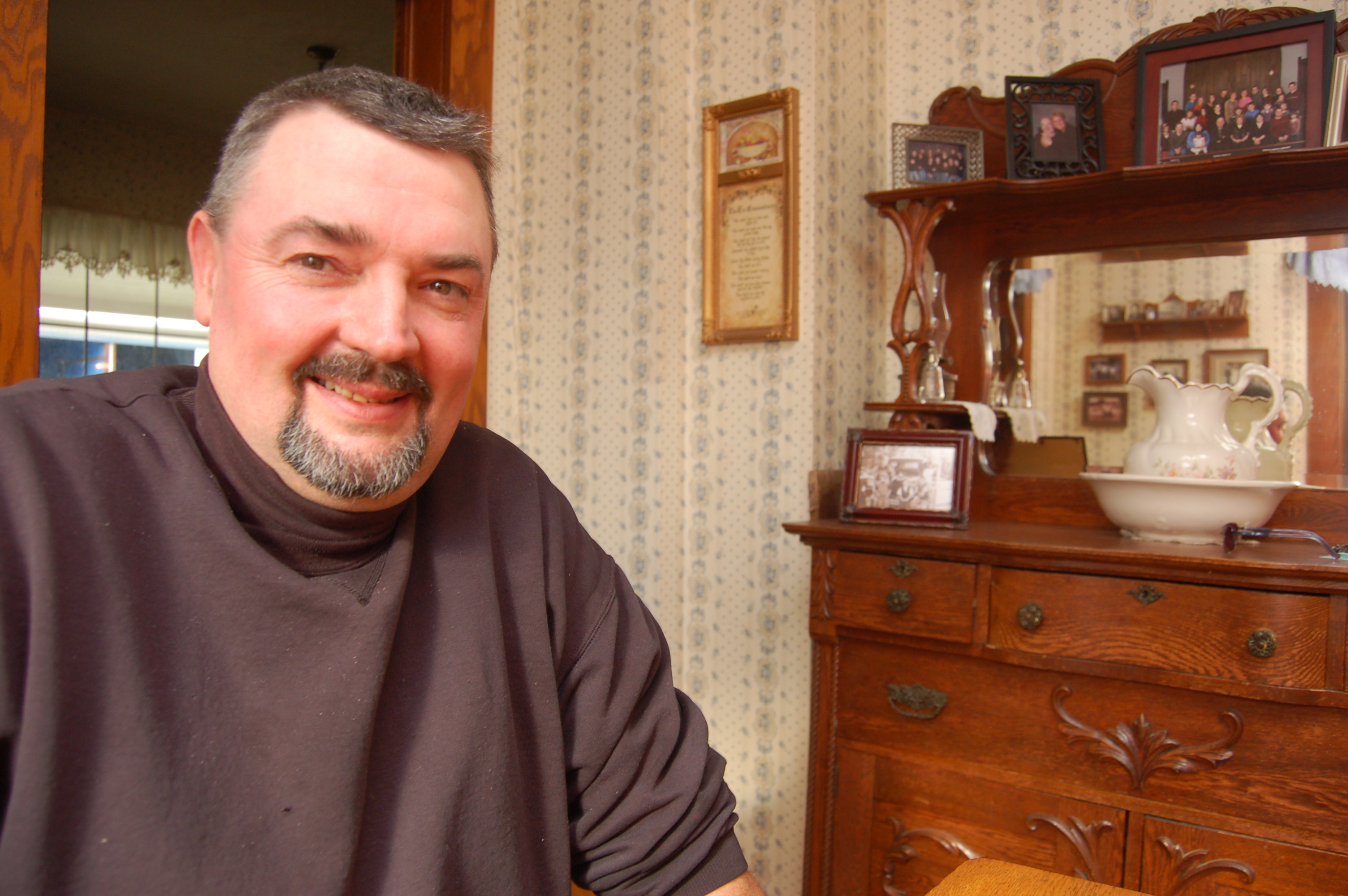
I’m glad I have a window with a view in my home office. That view is forever changing, sometimes subtly, sometimes dramatically.

When our daughter flew the coop 13 years ago to marry the love of her life, her mother and I converted her bedroom into our home office. The room was just the right size to meet our workplace needs. The cheery double window to the outside world was an added bonus.

My work area occupies the space right beside the window on the east side of our east-facing home. My wife’s computer desk is to my right. The window affords me some periodic and necessary breaks from the long-term sitting I do at the computer.

I’ve seen a lot over all the years peeking out that office window. Keep in mind our house is built on an Amish farm on a very busy county road that cuts through the heart of the world’s largest Amish population.

Horse and buggy on CR 201 by Bruce Stambaugh
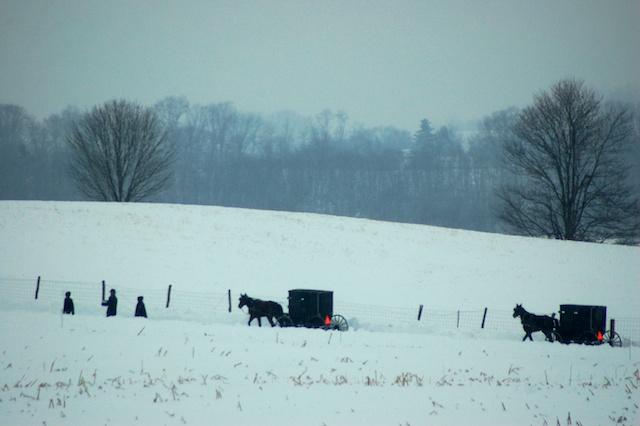
Horse and buggy traffic is common along Holmes County Road 201.

The surface of County Road 201 routinely carries an amazing array of cargo. If I were to create a catalog of the movements north and south along the road, I would have a pretty thick document.

The booklet’s index would include several categories. A random representation of the locomotion I’ve witnessed would include canoes atop buggies, bicyclists, strings of antique cars, wagon trains, tractor-trailer parades, tractors pulling wagon loads of people sitting on lawn chairs, speeding motorcycles and dedicated joggers.

Of course, not everything I have seen has buzzed by on the highway. We rejoice when we see our neighbors readying their equipment to head out for their work away from home jobs. Given the economy, that surely is a happy sight.

Hoar frost by Bruce Stambaugh
Hoar frost stuck to twigs on a dogwood bush.

Some of the prettier things we’ve observed through the window include incredible sunrises, spiny hoar frost stuck to everything it touched, and triple rainbows. I have watched as golf ball sized hail covered the ground. Blinding snow squalls prevented me from seeing the roadside mailbox.

I have seen some rather ugly images out that window, too. Auto accidents and insensitive people pitching litter from passing vehicles make that unpleasant list.

My favorite observations, however, are the animals I see. And just like the highway bill of lading, I have watched a variety of wildlife engaged in assorted activities in every season. Eastern Bluebirds have perched atop the lamppost positioned along the front sidewalk. Deer scurried for cover by taking a shortcut through the front yard.
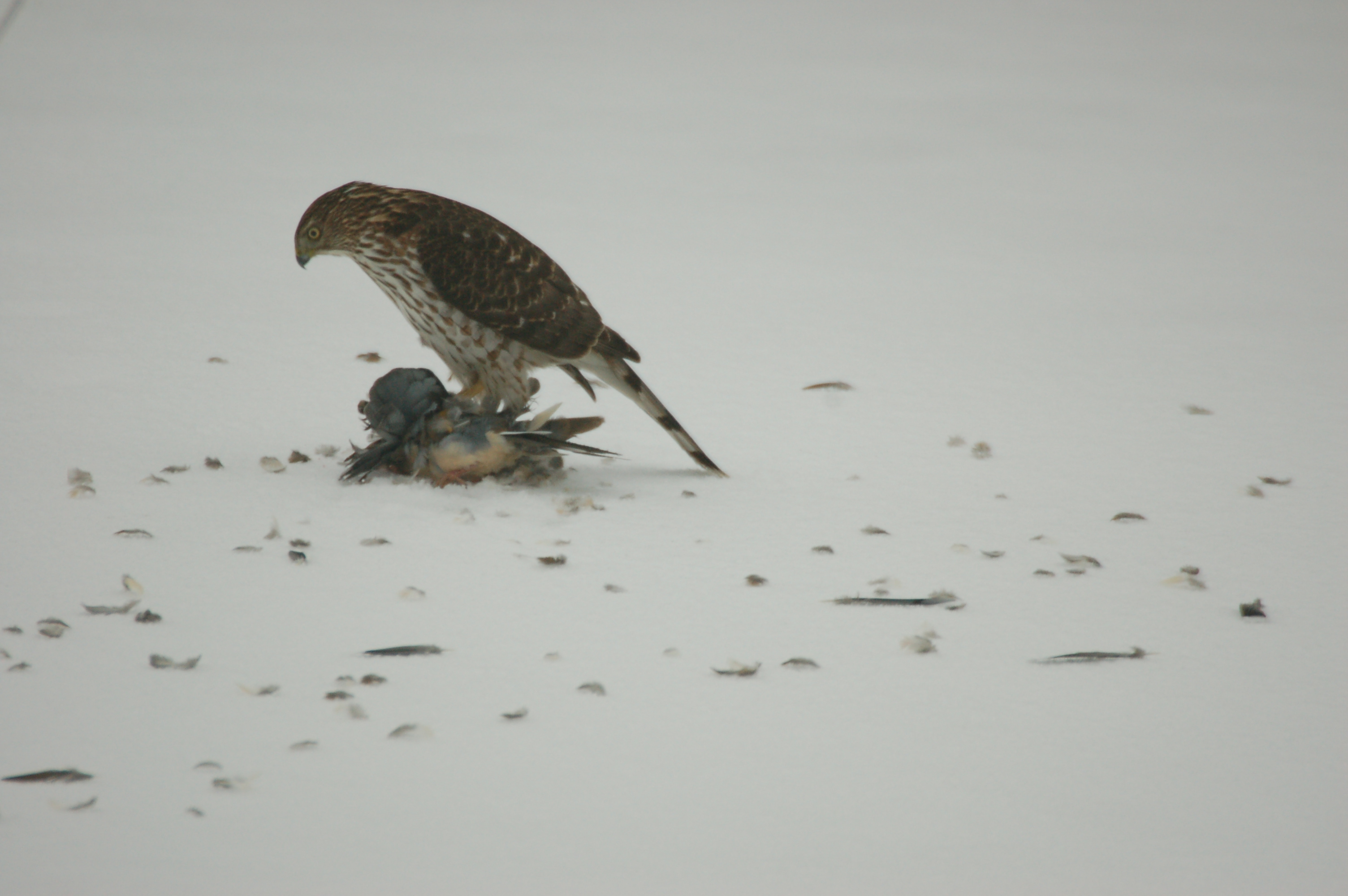
Cooper's Hawk by Bruce Stambaugh
A Cooper's Hawk pinned its catch, a Mourning Dove, to the snowy ground.

After one of last winter’s heavy snows, I spied a Cooper’s Hawk pinning its Mourning Dove breakfast to the ground, feathers scattered in a broad oval around the crime scene. I shot lots of pictures through the window for evidence just in case the assault ever got called into court.

Recently, a curious flash drew my attention away from the computer, through the window to the greening yard. A Red-tailed Hawk had swooped down to claim a fox squirrel that had been run over on the road earlier that day.
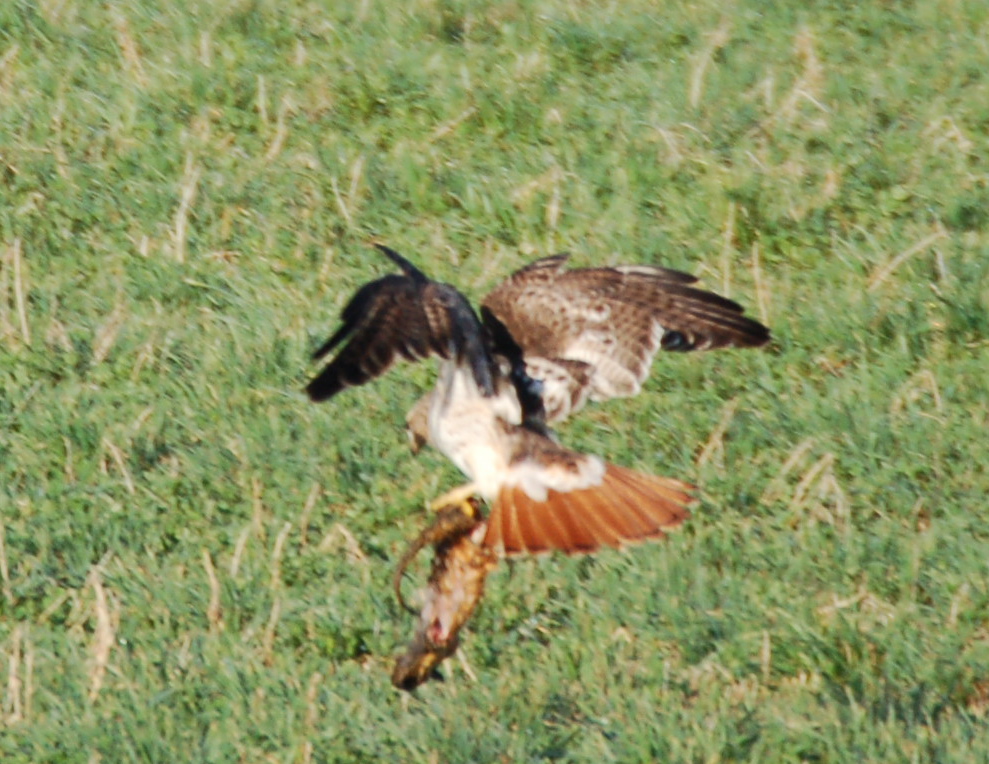
Hawk and squirrel by Bruce Stambaugh
The dead fox squirrel was simply too heavy for the Red-tailed Hawk to lift for any distance.

As the hawk tried to roost in one of our Norway maple trees, it dropped the flattened rodent. Try as it might, the hawk could not fly away with its fortunate find.

Finally, the frustrated hawk left still hungry. I took pity on the poor dead squirrel, went outside and placed the mutilated carcass at the base of the tree trunk.

The next morning I discovered the squirrel was gone. Though curious as to what had happened to it, I was really thankful that was one incident I didn’t have to view out my window.
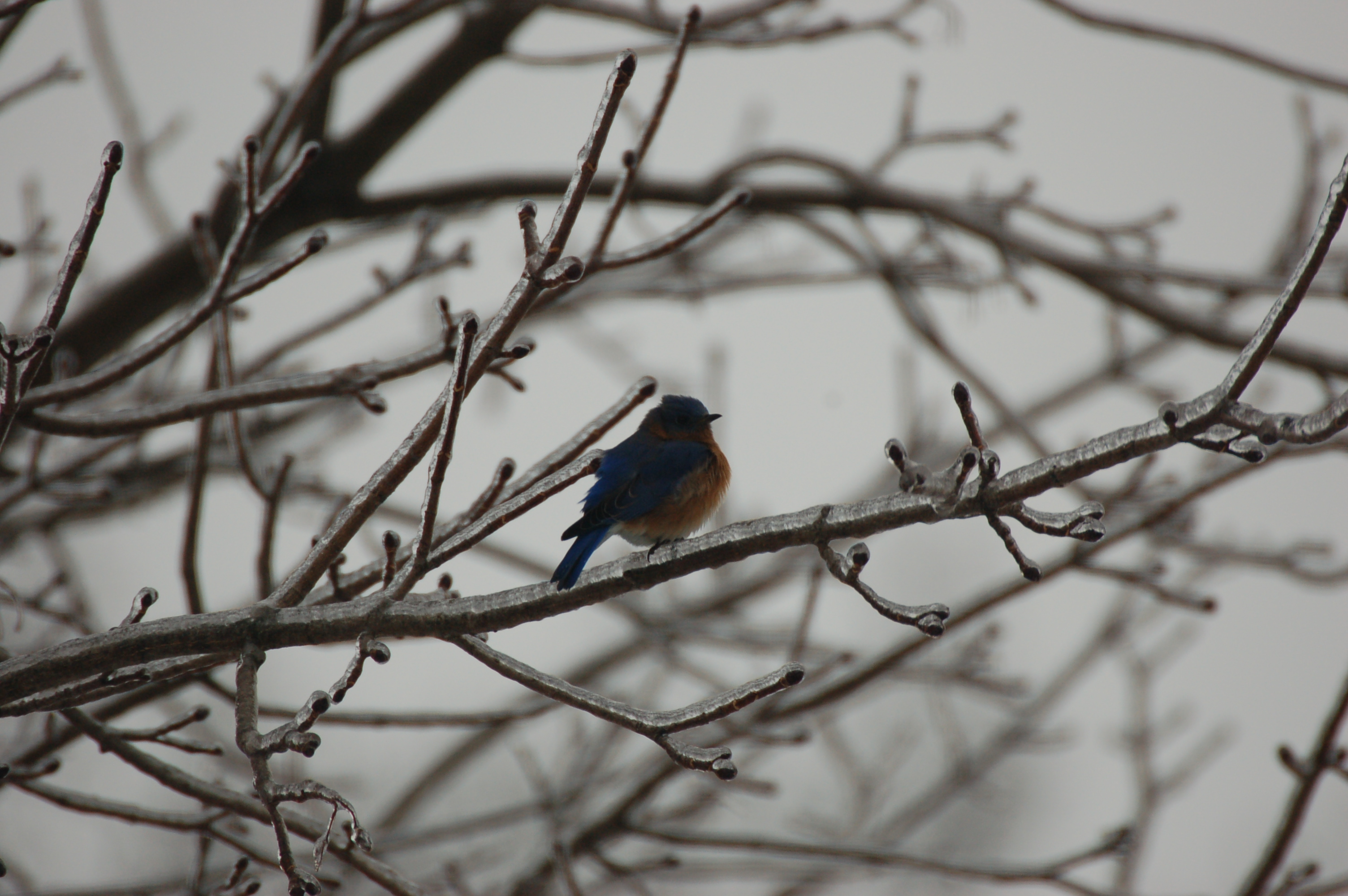
Bluebird on ice by Bruce Stambaugh
A male Eastern Bluebird perched on an ice-covered limb outside my office window.

Look who’s talking now

Amish phone booth by Bruce Stambaugh
A phone booth on an Amish property is often placed away from the home to avoid the temptation of overusing the phone.

By Bruce Stambaugh

On a dark, chilly November night several years ago, an emergency medical technician arrived on the scene of a car verses buggy accident at a rural intersection. Unlike the car’s passengers, the older Amish man driving the lantern-lit buggy was uninjured.

As the scene cleared, the first responder asked the Amish man how far he had to go to call for help. With a toothless grin, the Amish man reached into his denim jacket and flopped opened a cell phone.

In the early days of cell phones, when even the EMT didn’t have one, that scenario might have been rare in Amish country. It isn’t any longer. As contradictory as is it may sound, Amish have and use telephones. They use them to converse, to fax, for GPS, to text, and on rare occasions, to access the Internet.

Of course, like many of other Amish lifestyle “rules,” there are many variables in the Amish – phone connection. Church leadership metes out phone use guidelines for Amish. Those rules and their application vary greatly. It all depends on which church and which order of Amish as to what the rules may allow. The rules about phone use, like other lifestyle guidelines, even differ from church to church within the same order of Amish.

Amish place by Bruce Stambaugh
The home of a young Amish family in Holmes County, Ohio.

The orders of Amish, if placed on a continuum, would range from New Order on the left to the Swartzentruber’s on the right. In other words, from the most progressive to the most conservative, with those terms being used in the religious sense, not politically. In between are the most numerous, the Old Order Amish that people describe when they refer to the sect.

The extremes of phone use by Amish would range from members of one church group permitted to have landline phones in their residence to others that are permitted no phones at all. Again, their individual church leaders determine how and where Amish use phones. This may seem strange or even unfair to those unfamiliar with the Amish, and sometimes to those who even live among them. But simply put, that’s just the way it is.

Driving down any highway in Amish country will reveal which families and businesses are not permitted to have landline phones in their buildings. Near the edge of the road, travelers will see small buildings about the size and shape of the old-fashioned phone booths with a door and usually a window for light.

They look like phone booths because that is exactly what they are. Enclosing the phone in a small structure protects the person using the phone from any inclement weather and provides privacy. The homemade phone booths are usually locked to prevent any vandalism or misuse.

Amish farmstead with phone booth by Bruce Stambaugh
Find the phone booth among all the other buildings on this farmstead near Walnut Creek, Ohio.

Such phone booths could be used by a single family or business, or by multiple families. Each family or business would have its own voicemail extension. The phones are not answered live.

Some churches require that phone booths be so many feet from the home or business. Some even require the phone to be across the road, so as not to be too convenient, thus reducing the possibility of casual use. Some Amish, especially the New Order sect, would allow a landline in their home.

In many churches, phones for calling out and faxing are permitted in the business, but not in the home. Incoming calls go directly to voice mail. This rule is economically weighted. The successes of cottage industries, which have boomed among the Amish in the last two decades, are critical to the welfare of the Amish community. Only about 10 percent of the Amish population farms today. The rest either have their own businesses or work at other local businesses.

Of course, any discussion about Amish and the use of phones would be incomplete without mentioning the ubiquitous cell phones. Cell phones are actually more widely accepted among the Amish leaders than landlines, simply because they are not literally tied to the public utility grid.

Cell phones have proven to be an efficient tool when it comes to doing business, regardless of the trade or product produce. Generally speaking, a common rule for cell phones is that they are turned off in the residence. Another rule stipulates that the phones cannot access the Internet or e-mail.

Because they are not yet church members, none of the rules apply to Amish youth, unless of course their parents say they cannot use them. Just like their non-Amish peers everywhere, texting and using cell phones to take pictures are typical for today’s Amish teenagers regardless of which church order their parents may belong.

In the 21st century, phones are one technology the Amish have embraced. Clearly though, the difference between them using the phone compared to the rest of society is in the details. For those instructions, the Amish look to their respective church leadership.

Amish Super Bowl Haiku

Amish head to church by Bruce Stambaugh
Amish youth gathered for a Super Bowl Sunday hymn sing.

Super Bowl Sunday
neighborhood Amish youth hold
an evening hymn sing.

Bruce Stambaugh
Feb. 6, 2011

Joe Wengerd set to end his education career

Joe Wengerd by Bruce Stambaugh
Joe Wengerd announced his retirement after 36 years in education.

By Bruce Stambaugh

The day after the school board accepted his resignation for retirement, Joe Wengerd’s ear was either tuned to the bus radio or had a cell phone pushed against it.

He was still handling his duties as superintendent of the East Holmes Local Schools in his calm, deliberate, concerned way. A snowstorm was approaching, and he had dismissed school two hours early.

With safety foremost on his mind, Wengerd wanted to make sure all the students arrived home safely. He also conferred with the athletic director to reschedule a basketball game.

“This wasn’t an easy decision for me,” Wengerd said about his retirement, “but it was the right one.”

Wengerd said he had thought about retirement for sometime. Finally, he concluded that it was time for a younger person to step in and take over the district’s leadership.

“I’m leaving the best job ever,” he said, “especially given this school district.”

However, one thing Wengerd said he wouldn’t miss was getting up at 4:15 in the morning to check for inclement weather. Altogether Wengerd has spent 21 years in the East Holmes Local Schools. He was superintendent for the last five years. He has a total of 36 years in education.

Wengerd began his career as a counselor at a children’s home in Logan County, Ohio. He later received his education credentials and entered the educational field. He taught elementary school in Ada prior to moving back to Holmes County.

He was principal in the West Holmes Local School District at Millersburg, Lakeville and Nashville elementary schools for eight years before returning to his home school district.

Wengerd said that one of the reasons leaving the school would not be easy was because his roots run deep in the East Holmes community. He was born here, attended Berlin Elementary and graduated from Hiland High School, and lives in the home where he grew up.

“It’s a great community to be connected to.”

Prior to serving as superintendent, Wengerd was principal at Charm, Flat Ridge and Wise elementary schools for four years and at Berlin Elementary for a dozen years. He also filled in temporarily at Hiland High School.

“Each of these were unbelievable jobs,” Wengerd said wistfully. “I didn’t want to leave any of them.

“Each leadership position became such a part of me,” Wengerd said. He also said he considered each a new challenge.

Wengerd said he was hoping for a new landscape to draw him. He won’t be alone in that sentiment. His wife, Phyllis, has also decided to retire after 31 years of teaching. She is a teacher at Chestnut Ridge Elementary.

“We will probably do some short term church service projects,” Wengerd said. “We love the national parks and will probably visit some of them, too.” He said they would also spend time with their only grandchild in Columbus.

The Wengerds have three adult children, all of whom are teachers. Daughters Kate and Maggie both teach elementary grades in Pickerington, and their son, Jesse, teaches math at Berlin.

“We didn’t make them go into teaching,” Wengerd said. But he and his wife weren’t necessarily the sole models for their children either.
“Education is the legacy of Phyllis’ family. She and her three siblings were all in education and so were their spouses.”

Wengerd received his bachelor’s degree from Bluffton University, and his Master of Education degree from the University of Dayton.

True to form, he had been thinking about retiring for sometime.

“There wasn’t a single event that lead to this decision,” Wengerd said. “I thought I would retire out of a building.”

Reflecting on being the district’s chief educational leader, Wengerd said, “I thought the superintendent’s position was a great opportunity to influence our students and give back to the community at the same time.

“I will miss working with the kids,” Wengerd said. “I liked to visit every building when I could.

“I love going out to Hiland and seeing former students that I had in Berlin as a principal. It’s fun to see them grow, mature and participate in extracurricular activities.”

Wengerd said he felt his biggest achievement as superintendent was getting the staff and students to all work in the same direction.

“In the five years I was superintendent, East Holmes received either an Excellence or Excellence with Distinction rating,” he said.

“Those results weren’t me,” he continued. “Those were the students and teachers working hard on student achievement goals.”

Wengerd said school board members were gracious in accepting his resignation.

“They told me they valued my leadership,” Wengerd said. “I greatly appreciated their comments.”

Wengerd said the board would work with the Tri-County Educational Service Center and the Ohio School Board Association in formulating a plan to search for a new superintendent.

An uncomplicated man gets involved

By Bruce Stambaugh

Jim Croskey, of rural Holmesville, Ohio is an uncomplicated man. But don’t let his down home folksiness fool you.

For most of his adult life, Croskey has put his inner spirit into action for the good of others. His productive community interactions reflect the spectrum of his interests and priorities.

Jim Croskey by Bruce Stambaugh
Jim Croskey has been involved in a variety of community activities in and around Holmes County, Ohio.

His philosophy for civic duty is as straightforward as the man himself.

“If you’re not involved,” Croskey said plainly, “you can’t complain.”

He should know. Croskey has been involved in a web of activities that crisscross his most treasured values. Family, farming, church and the environment are all dear to his heart.

After graduating from West Holmes High School in 1980, Croskey said he continued his education in the school of hard knocks. In other words, he worked in the oilfields for four years.

That experience got him both thinking and looking into what he really wanted to do. He married Shirley Schlegel in 1984, and with a common interest in antiques, Croskey began an antique refinishing business.

A year later, he started working for his father-in-law, Roy Schlegel, on DalRoy Farms. He must have found his niche, because Croskey is in his 25th year of farming with the Schlegel’s. Croskey is the farm manager of the 900-acre agricultural business.

“I worked on farms in the summer during high school,” Croskey said. “I saw this as a good opportunity to allow me to get into farming.”

His job is to make sure the day-to-day farm operations happen. Croskey said they focus on raising corn, soybeans and hay, and that is his job to look for the best prices on fertilizers and sprays. He said they no-till farm, meaning they do not plow the cropland.

With conservation ever on his mind, Croskey said they have used rye as a cover crop for harvested cornfields. In the spring, the rye is cut for fodder for their livestock.

Croskey said is it critical for him to stay abreast of the latest innovations by attending workshops and seminars.

Croskey incorporates his agricultural interest into community service by sitting on the Holmes Soil and Water board. He has done so for 10 years.

“I see that service as helping farmers and helping the environment,” Croskey said.

Long prior to his service on Soil and Water, Croskey and his wife served as 4-H advisors for two different clubs for a total of 19 years.

“When we started,” Croskey said, “4-H involved five to six families in the clubs. Now it has grown far beyond that status.” Croskey also served on the county 4-H committee for several years.

Before his 4-H service, Croskey was on the Holmes County Farm Bureau for eight years, including three as president.

“That’s what really got me started on the community service,” he said. “At the time, I was the youngest Farm Bureau president ever.”

Croskey said that changed this year when his son, Jimmy, became the organization’s president at age 25. “So the tradition continues,” he said with a wink.

“I haven’t had very much recliner time,” he chuckled. Indeed he hasn’t. Croskey has also been elected Prairie Township Trustee for three terms.

Croskey has also been very active in the church he attends, Fredericksburg Presbyterian. He served eight years as an elder, a trustee, and is currently chairperson of the outreach committee.

That position lead to another, the Fredericksburg Outreach Committee, which established the Chain Reaction Bicycle Shop.

With the Holmes County Trail ending in Fredericksburg, the three local churches thought it a good idea to offer something practical for local children to safely enjoy the benefits of the trail, according to Croskey. The group sponsors bike trips.

“People come to ride that may not come to church,” Croskey said. “We might as well help them, too.” The shop is now closed for the season.

“Church prepares you for how you go out into the world,” Croskey said. “I simply try to be an example.”

Just in case he is not involved enough, Croskey also serves on the board of the Loudonville Farmer’s Equity, which has 250 members.

After all these years, the Croskey’s still enjoy antiques. The difference is they have furnished their farm home with them, rather than refinish them for others.

With all that he does for the community, Croskey probably wouldn’t have the time anyhow.

Schuler remains young at heart

Feeding the birds is one of life’s pleasures for Judson Schuler, of Millersburg, Ohio.

By Bruce Stambaugh

In every way, Judson Schuler, 94, belies his age.

His mind is as sharp as a tack. He recalls incidences from 60 years ago as if they happened yesterday. And yet, he can more than carry his own in conversation about current events.

For a man is his 90s, Schuler has maintained his health, too. He attributes that to his regular physical workout routine three times a week at a local physical fitness facility.

“I like to stay active,” Schuler said. “I think it’s one of the secrets to staying healthy while getting old and enjoying it.”

He is true to his word.

“I still like to mow and help out with raking and gathering the leaves,” Schuler said. Given the size of his property, that is no small task. Schuler lives on Briar Lane in Millersburg, Ohio. His late wife, Beverly, was the daughter of the president of Briar Hill Stone in Glenmont.

“The original idea for our development was that every home would be built using their stone,” Schuler said. “It was to be a model for what could be done in construction.”

“Bev and I built this in 1956,” he said. “It still suits me well.” Accordingly, the home was built using the decorative, multi-colored sandstone. The Schuler’s were married 62 years. Schuler has a son, a daughter, four grandchildren and eight great grandchildren.

The living room and den to the back of the stately home both have large windows and sliding glass doors that afford Schuler good views of the wildlife that he so adores.

“I enjoy feeding the birds, especially the goldfinches,” he said. Indeed, he has a thistle feeder and a hopper feeder in the spacious backyard. His binoculars hang at the ready by his favorite chair.

Schuler also gets great pleasure from watching other wildlife, like squirrels and deer that scurry through his tree-studded backyard. Though he wouldn’t ever say so, Schuler certainly has earned his right to leisure away his days.

Schuler was a noted attorney in Holmes County for many years. He practiced law well into his ‘70s. His late brother, John, was one of his partners. Ray Miller was the other.

“I still have an office in the firm,” he said. “That was part of the sale, that John and I would always have an office to go to.”

Schuler said that when he began practicing law in 1946, Millersburg had six or seven attorneys.

“Now I think there are 20,” he said with an ornery smile.

Schuler said he no longer practices, but that he still goes to the office occasionally just to check in with the other attorneys. The Critchfield, Critchfield and Johnston law firm bought Schuler’s Millersburg firm when he retired.

“My middle name is Critchfield,” Schuler said. “I’m a second cousin to that family.”

Early in his attorney days, Schuler was once the Holmes County prosecutor. But his heart was in private practice.

With his successful career behind him, Schuler takes one day at a time and enjoys every minute of his experiences. That approach might be because his life has revolved around relationships with his clients, his friends, his community activities and his family.

Schuler has served in several civic capacities. He was the local veterans service officer. He served on the development disabilities board, the airport authority, and several years on the board of directors of the Commercial and Savings Bank.

Schuler was also appointed by the governor to serve on the Ohio Public Health Council, which processed all the rules for mental hospitals, nursing homes, and even public water supplies.

“That was an incredible experience for me,” Schuler said. “I learned a lot during those 12 years.”

Schuler is also a member of the American Legion Post 192 and was made a life member of the Killbuck VFW.

Schuler served in the Army during World War II and fought in the battle of The Bulge. He can rattle off details of war stories as if they had happened yesterday.

He likes to read a lot, too, focusing on “the great people at the beginning of the Republic.” Schuler also likes golf and of course, watching Ohio State football games. He has owned season tickets for 50 years, as he received both his bachelor’s and law degree from The Ohio State University.

Though he has traveled the world and had many exciting experiences, Schuler still considers himself “a small town guy.” Likely, there are plenty of local people thankful for that.

Judson Schuler, of Millersburg, often relaxes in his den.

Getting ready for winter

Martins Creek by Bruce Stambaugh
A series of heavy snowfalls hit Ohio's Amish country last winter.

By Bruce Stambaugh

Like it or not, winter is right around the corner. We have already tasted some of winter’s appetizers, snow, temperatures in the teens, and, of course, shortened daylight.

Fortunately here in Ohio’s Amish Country, the snow didn’t amount to much, and the skinny temperatures quickly moderated. Once winter arrives officially next week, that could change. We could have a snow-filled winter like last year, or worse yet, one like 1977 and 1978 when snowdrifts reached 20 feet or more.

Living in Ohio all my life, I have found it helpful to mentally and physically prepare myself for the inevitable. Whether it is prolonged or only stays awhile, the weather will get cold, and it will snow from time to time.

Snowbirds arrive in Pinecraft, FL by Bruce Stambaugh
Snowbirds arrive via bus in Pinecraft, FL.

Those who dislike that harsh reality and who are in a position to do so flee south or southwest to warmer climes. At least the snowbirds hope they will be warmer. Last year proved otherwise. It frosted in Florida and snowed deep in the heart of Texas.

Snow deep in the heart of Texas by Bruce Stambaugh
It even snowed in Austin, TX last winter.

All of us can’t escape the onslaught of winter’s harshness. Some of us don’t want to. Others are involuntarily stuck here to fend for themselves.

I have fond childhood memories of the benefits of winter, like ice skating, sledding, flinging snowballs and digging snow tunnels. Most of them likely were indeed in the throes of winter. But I do remember delivering newspapers in a glorious Christmas Eve snow.

I also recall hustling our young son and daughter into my in-laws’ farmhouse amid stinging, sideways snow, howling winds, and frigid wind chills. There are times when Ohio winters are at their absolute worst in December.

We then anticipate January and February to be utterly horrible. And low and behold they might turn out to be meek and mild, not to mention mucky.

Whether we stay or whether we go, winter, regardless of the weather, will arrive. We might as well get ready for it.

Snow covered cornshalks by Bruce Stambaugh
A typical snowy scene in Ohio's Amish country.

In many ways, we already have. The tomato trellises we erected last spring have long been coaxed out of the ground and stored in the garden shed, thanks mostly to one of our kind, strong young neighbors.

The birdfeeders have been cleaned, filled and hung, and the backyard birds, and a couple of mooching fox squirrels, have already been taking advantage of the freebies. Actually, I am the one that is grateful. Watching the birds, and squirrels, rabbits and occasional deer, enjoy the cracked corn, oil sunflower seeds and suet mixes is my winter’s entertainment.

White breasted nuthatch by Bruce Stambaugh
A white-breasted nuthatch at my kitchen window feeder.

In truth, I feed the birds year-round. With winter’s approach, I merely increase the number and style of feeders to accommodate the various feeding habits of my feathered friends.

Of course, I can’t neglect the vehicles that transport us from place to place during the winter weather. I make sure each is winterized and ready to endure whatever winter has to throw at us.

The woodpile is stacked high and wide, ready to feed the hungry fireplace. I’d rather be shunning the cold elements in front of a warm fire than on the outside shoveling them. Who wouldn’t?

Winter is nigh. Are you ready?

How Amish celebrate the holidays

Amish church by Bruce Stambaugh
Amish on their way to church near Mt. Hope, Ohio. Church was held in a member's home.

By Bruce Stambaugh

The Amish enjoy celebrating the holidays just as much as anyone else. They simply go about it a bit differently.

Defining how the Amish celebrate America’s most time-honored holidays deserves an introductory explanation. The Amish are divided into church groups, usually about 100 persons per church. And by church, they mean fellowship, since they hold church in their homes, shops or barns.

There are actually many different types or orders of Amish. The Swartzentruber Amish are considered to be the lowest order, with the New Order Amish the highest, since they hold Sunday school on the alternate worship Sundays.

Using the terms “lowest” and “highest” is not intended to be derogatory or even hierarchical. It simply is the way it is with the Amish. Those in between are the Old Order, by far the most numerous in among the Amish population. The orders are simply determined by rules of the church leaders.

Clearly, defining the Amish is a lot harder than their simple lifestyles might let on. Nevertheless, they all celebrate the holidays one way or another.

The key to understanding how the Amish do so lies in this understanding. You can’t generalize about the Amish. Their holiday traditions and rituals vary from family to family, church-to-church and sect-to-sect, not much different that any other culture or ethnic group.

Modesty is a major principle in the values of the Amish. That fact can be seen in exactly how the Amish keep the holidays. In living out their faith beliefs, they do so joyously surrounded by food, family and friends.

Here then is an overview of how any given Amish family, save those in the Swartzentruber order, might celebrate the holidays.

Thanksgiving

Most Amish take advantage of this national holiday just the way the rest of the country would. They gather with family, extended family and friends and enjoy turkey, mashed potatoes and gravy, cranberry sauce, a vegetable and of course dessert, usually homemade pie.

However, instead of breakfast, many of the Amish fast prior to the large noon meal. Fasting is a physical sign of purification in preparation for the celebration.

The lower order Amish, however, have a different take on Thanksgiving. They see it as an opportunity to prepare for the winter months ahead. For them, Thanksgiving is the big hog-butchering day. They’ll save their substantial meal for another later.

Christmas

From the Amish perspective, anyone not Amish is considered “English.” The Amish recognize and respect the “English” demarcation of Christmas on December 25. For them, Christmas is a sacred day in honor of the birth of God’s only son, Jesus Christ. And here again, many, though not all, will fast prior to their family gathering.

Amish actually celebrate Christmas twice, once on the standard date of December 25, and again on January 6, commonly referred to as Old Christmas. In higher religions, that day is known as Epiphany.

Unlike the rest of society that celebrates Christmas, the Amish do not have Christmas trees or decorations. They will, however, burn Christmas candles in honor of the day.

After the usual Christmas meal of turkey or ham and all the trimmings, the Amish will spend the afternoon and evening away playing table games, board games and cards. None of the card games would involve using face cards.

Of course, it wouldn’t be Christmas without gifts and the Amish carry out this tradition of gift giving as well. The gifts will be wrapped, but usually nothing elaborate. Children will receive toys.

Since not all of Amish Country is Amish, the usual holiday decorations and activities occur like in the rest of Christendom. Millersburg, the Holmes County, Ohio seat,  holds a Christmas parade, Santa included, and on December 10 will initiate its first candlelight church walk from 6 to 8 p.m.

Berlin, Ohio, the hub of Amish Country, has a luminary ceremony. Even little Mt. Hope, where mostly Amish live, has a Christmas parade and a live nativity scene. Santa, however, is nowhere to be found.

Old Christmas

Old Christmas harkens back to the change from the Julian calendar to the Gregorian calendar during the latter stages of the Reformation when Pope Gregory XIII switched Christmas to December 25. Out of tradition and reverence for their forefathers, the Amish have continued to honor Christ’s birth on January 6.

Unlike the more jovial December 25 celebrations, Old Christmas is more solemn. It begins with fasting, followed by another typical Christmas meal and some more gift giving. However, the emphasis is on reflecting and visiting as apposed to reveling.

No matter which holiday is being celebrated, family is always an important element in any get-together for the Amish. And that is true for any Amish order.

V is for volunteer and Voltz

Jane Voltz by Bruce Stambaugh
Jane Voltz has both worked and volunteered for several years at Pomerene Memorial Hospital in Millersburg, Ohio.

By Bruce Stambaugh

Jane Voltz, of Killbuck, Ohio epitomizes the role of a volunteer. She loves the work, but doesn’t want any of the notoriety. Her efforts are reward enough.

Voltz, 70, has been a volunteer with the Joel Pomerene Memorial Hospital auxiliary in Millersburg, Ohio off and on for 30 years. Next year, she will be its president.

That’s why she is looking for yet one more volunteer to replace another volunteer position she has held. Voltz has served as the local Medicare advocate. Because she is once again about recent changes to Medicare, and how the annual open enrollment time, which expires Dec. 31, works.

The Ohio Senior Health Insurance Information Program at the Ohio Department of Insurance is sponsoring the workshop. It is billed as a way to stay informed, stay healthy and to save money for those enrolled in Medicare.

“This would be a good opportunity for someone to explore what is involved in the position,” Voltz said. “Of course, everyone with questions about Medicare can attend.”

For Voltz, Pomerene Hospital has been a second home. Aside from her extensive volunteering roles, she has worked at the hospital for 35 years.

“I started in 1956 as a nurse’s aide,” Voltz said. She retired 25 years later, and then returned “as a back up to the back lab currier,” as she put it.

“I like spur-of-the-moment things like that,” she said. Voltz cited a Sunday morning call she received to make a run to another hospital for the lab as an example of how her immediate assistance is needed.

Voltz said she considers the hospital staff and volunteers her second family.

“We are very fortunate to have this hospital,” she said.

Voltz said in the process of helping visitors and patients at the hospital, she gets to see people she hasn’t seen in awhile. Voltz said she is only one of at least 100 volunteers who make up the auxiliary.

Voltz said the main roles of volunteers include transporting patients within the hospital, especially department to department, and delivering flowers to patients’ rooms.

She said the auxiliary depends solely on fundraising in order to provide funds for items that are needed, but don’t make it into the hospital’s budget. Profits from the gift shop, uniform sales, poinsettia sales, book sales and bake sales all contribute money to pay for auxiliary donations.

“We work closely with the Pomerene Hospital Foundation,” Voltz said. “The auxiliary recently bought a $6,000 ice machine for the dining area.”

Voltz said she has been the Medicare advocate for the hospital since 1992.

“I want to spend time with my grandchildren,” she said. “There has to be somebody out there who is willing to do this needed service.”

Voltz has a son and a daughter and four grandchildren. She also has five stepchildren, 13 step-grandchildren and 13 step-great-grandchildren. Her first husband, Harold Garver, died in 1970, and her second husband, Dwight, died in 2004. Voltz had stepped away from her volunteer work for a while to care for Dwight, who had Alzheimer’s disease.

Voltz was born and raised in Killbuck, and is a graduate of Killbuck High School. In addition to helping with her grandchildren, Voltz said she likes to travel.

“Anyone who says they don’t know what they would do if they retired needs to know there are many ways to help as a volunteer,” Voltz said.

“We have to enjoy each day because we don’t know what tomorrow will bring.”

Voltz used her mother as her inspiration for volunteering. She said her mother would donate items to the Volunteers of America truck whenever it came around.

“Everyone should volunteer for something,” Voltz said. “Your payment is the satisfaction of helping someone.”

During her long career as a volunteer, Voltz certainly has received a great deal of satisfaction from her efforts. Her hope now is that someone will pick up her role as Medicare advocate before the end of the year.

Anyone interested in the Medicare advocate position should contact Voltz by calling the hospital at 330-674-1015.

All dressed up for the holidays

By Bruce Stambaugh

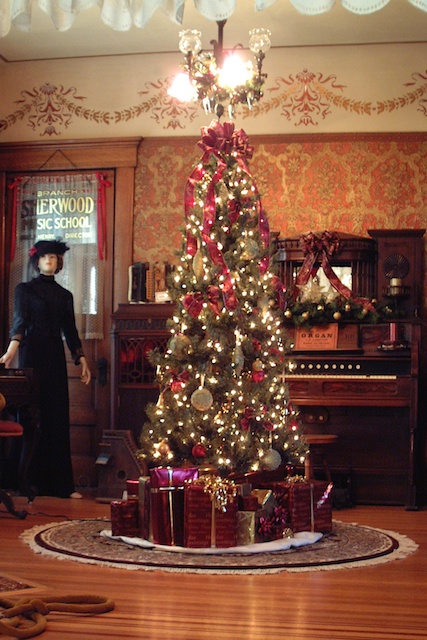
If you ever wondered what an old-fashioned Christmas really looked like, the Victorian House in Millersburg, Ohio will let you cure your curiosity.

Victorian House Millersburg Ohio
Each holiday season the Victorian House in Millersburg, Ohio is beautifully decorated inside and out. (Photo provided by the Victorian House.)

Every year local businesses, organizations and individuals spend two weeks transforming the historical, 6,000 square foot Victorian House into “Holidays at the Mansion.” The 28-room, three-story mansion comes alive with Christmases gone by.

Area decorators create holiday splendor as it once was by decorating multiple Christmas trees, window decorations and decorating several rooms with authentic and festive period accessories. Displays of lights and garland will festoon the exterior.

Victorian House Christmas Tree
The holidays are celebrated in every room of the Victorian House in Millersburg, Ohio. (Photo provided by the Victorian House.)

“This year we will have several new room sponsors that will add a fresh new look to this year’s decorations,” Mark Boley, Director of the Holmes County Historical Society, announced.

“In addition,” Boley continued, “a special holiday exhibit will be on display in our ballroom.” Harry Wilson, of New Philadelphia, will have several of his one-of-a kind egg art on exhibit. Wilson is affectionately known as “The Egg Man.” Wilson uses the natural color of the eggs from ostriches, emu, geese and chickens to create unique works of art.

The Victorian House will be open for holiday tours Monday through Thursday, 1 to 4 p.m., and Friday through Sunday, 1 to 8 p.m. through December 31.  The Victorian House will be closed both Thanksgiving Day and Christmas Day.

The Victorian House has been featured in Victorian Homes Magazine, and on the Home and Garden TV show Victorian America.

You can take your time enjoying the Victorian House holiday decorations since the tours are self-guided. Costs are $8 for adults, $7 for those 65 and older, and $3 for students. Children are also welcome to check out the holiday flare since some of the rooms are dedicated for kids. The kids can look for Santa in an old bathtub. Every woman’s House will sponsor a special room just for the kids. There is no charge for children 12 years old and younger.

Besides the holiday decorations, the Victorian House showcases the historical collection of the Holmes County Historical Society. The mansion is listed on the National Register of Historical Places.

L. H. Brightman, a wealthy industrialist from Cleveland, built the Victorian House in 1900. It is located at 484 Wooster Road in Millersburg. The Holmes County Historical Society uses the mansion as its headquarters

To arrange a group or bus tour, call 330-674-0022 or email the Victorian House at info@holmeshistory.com.

Bay Photos by Donna

Wildlife photos from the Chesapeake Bay region

ROAD TO NARA

Culture and Communities at the Heart Of India

K Hertzler Art

Artist and nature journalist in the Shenandoah Valley of Virginia.

Maria Vincent Robinson

Photographer Of Life and moments

Gabriele Romano

Personal Blog

Jennifer Murch

Art is the only way to run away without leaving home. -Twyla Tharp

Roadkill Crossing

Writing generated from the rural life

ANJOLI ROY

writer. teacher. podcast cohost.

Casa Alterna

El amor cruza fronteras / Love crosses borders