
A Lesson in Judging and Curiosity

Reflections in a Pond. Photo by Bruce Stambaugh

“Thinking is difficult. That’s why most people judge.” — Carl Jung

The morning sky was cerulean as I was on my way to deposit three bags of yard waste at the county landfill’s recycling center. When I turned onto Main St., traffic in both southbound lanes was stopped for some reason. I figured it might be a wreck at the next intersection.

Soon, vehicles in the right-hand lane began moving, so I merged into that lane. Then, I saw two Hispanic men walking from a fast-food restaurant to a dump truck five cars ahead. Had they really stopped their vehicle in the left lane to get something to eat? I zipped by the truck on the right and headed to my destination.

When I arrived at the landfill, I drove straight to where tree limbs, shrubs, leaves, and grass clippings were dumped, later to be ground into mulch. As I began unloading the three bags of sticks, leaves, and dead plants, the truck that blocked the road backed in beside me.

The two occupants quickly began to dump the truck’s load onto the huge pile. I kindly asked the driver what had happened where their vehicle had been stopped.

“You mean in front of McDonald’s?” the driver asked. I nodded in the affirmative.

“Oh, the transmission in the car beside us went out,” the man explained. “The lady was crying and didn’t know what to do, so we got out and pushed her car into the parking lot.”

I thanked them for their good deed of kindness and silently chastised myself for wrongly judging them. I was embarrassed by my egocentricity.

Why do we think so negatively when we don’t know all the facts? Why was I so self-centered simply because traffic was stalled? I wasn’t on a timed schedule.

Instead of being unnecessarily judgmental, why wasn’t I more curious about the situation? Jung’s relevant quote spoke to me. Jung was a Swiss psychologist and psychoanalyst in the 20th century.

I pondered all this on my way home. I thought more broadly about the current chaotic state our country is in. Is this the way bias and bigotry start, one little, insignificant episode at a time?

I didn’t consider myself biased toward others or a bigot—most people don’t—but this incident gave me pause. After a 30-year career in public education and a dozen more years in marketing, I always considered myself open-minded and fair toward others.

I wondered how many times in my lifetime I judged situations and other people without comprehending I was doing so. Probably a lot more than I care to recall. I suspect this septuagenarian is not alone in that regard.

So, how do we change our approach to life’s little hindrances? Professional contemplatives suggest starting with the breath: Breathe in, breathe out, breathe in, breathe out, they recommend.

I should have recognized this right away. Instead of long, deep breaths, I imagine my breathing was short and shallow, only adding to my unnecessary frustration and likely increasing my blood pressure.

From experience, I know that contemplative practices have many benefits. According to the Center for Contemplative Practices, they can improve health, mood, sleep, self-awareness, curiosity, and other personal gains.

Had I taken the time to remember and act upon these principles, my day would have started much differently. After all, how much effort does it take to pause, take a deep breath, and relax? The answer is not much.

However, I was bold enough to ask the men about the situation and received a straightforward answer that satisfied my inquisitiveness. Those good samaritans pulling in beside me at the landfill were a godsend. I imagine the women driver felt the same way.

So, the next time I tense up, I’ll try to remember to breathe in and out and not judge. How about you?

© Bruce Stambaugh 2024
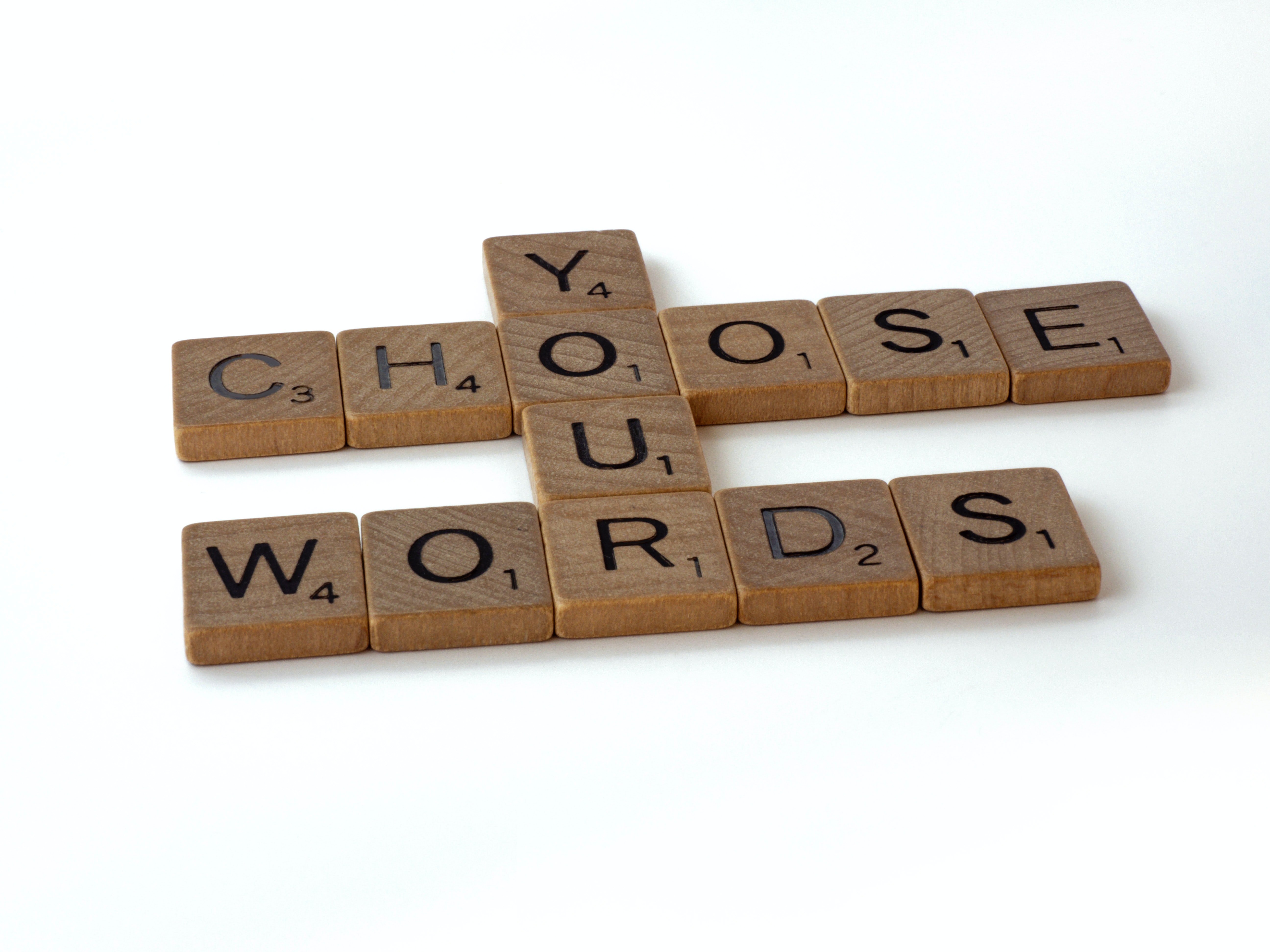
Words Mean Something

Use them carefully

Photo by Brett Jordan on Unsplash.

As a writer, words are essential to me.

The words we use reflect our values, our soul, or who we are. Words mean something, whether spoken or printed in a story, letter, text, email, or comment. When strung together in sentences and sentences into paragraphs, the sequence of words reveals our true meaning.

Before speaking or writing, we need to ask ourselves: will our words enhance or hurt, build up or tear down? I recall too many times in my own life when I wish I would have considered the consequences of my words before I used them.

Actions may speak louder than words. But words reveal our hearts’ desire. How we use words, the tone in which we say or write them guides our actions for better or worse.

In this day and age of on-demand communication, mostly from our mobile devices, words are more potent than ever. Whether spoken or printed, words convey meaning. That’s the point of communicating.

Words have the power to build up or tear down. Free will bestows on us the choice to affirm or deflate others.

Our world seems to be spinning out of control. Our words can either slow or accelerate that spiral.

Consequently, before we speak or write, we need to be mindful of the power and importance of our words. Will they result in caring or harming?

My siblings and I knew the consequences of using foul language or lashing out towards others. There are no tasty soaps.

My public school teachers, elementary through high school, were just as strict about our English language, only in an instructional mode, of course. I am very thankful for their insistence on learning to diagram sentences properly and knowing the parts of speech.

I revered my 11th grade English teacher despite her highfalutin language. She used words I had never heard before, and I am so glad that she did. She whetted my appetite for writing.

Learning and using new words stirs our curiosity and expands our horizons. We shouldn’t be shy, ashamed, or hurt that we don’t know or use a particular word correctly.

Applying words to describe our everyday life is the way we commune. It connects us one with another.

A necessary means to expanding our vocabularies is through reading, and what we read influences what we think. What we believe often tumbles out in the terminologies we use.

Shouldn’t our communication with and toward one another be used judiciously? As author Anne Lamott suggests, one word is better than two.

Words can sting, heal, incite hate, and spread love and understanding.

Words come from humans. Humans have choices. Let the words we use be for better and not for worse. Let us be kind to one another in speaking the truth.

Likewise, let us be patient with one another if we disagree. The words we use should always reflect our virtue and simultaneously respect the other’s dignity. Otherwise, we might find ourselves in a war of words rather than at a peaceful center point.

I recognize times in my past when I have not lived up to my established expectations. I have used the wrong words at the wrong time with unpleasant results.

Consequently, I have also learned that sometimes, especially in times of deep despair, the best words are no words at all. Simply being present speaks louder and more comforting than any articulated vocabulary.

So, when it comes to words, let humility, curiosity, and grace be our guideposts.

© Bruce Stambaugh 2021

Bay Photos by Donna

Wildlife photos from the Chesapeake Bay region

ROAD TO NARA

Culture and Communities at the Heart Of India

K Hertzler Art

Artist and nature journalist in the Shenandoah Valley of Virginia.

Maria Vincent Robinson

Photographer Of Life and moments

Gabriele Romano

Personal Blog

Jennifer Murch

Art is the only way to run away without leaving home. -Twyla Tharp

Roadkill Crossing

Writing generated from the rural life

ANJOLI ROY

writer. teacher. podcast cohost.

Casa Alterna

El amor cruza fronteras / Love crosses borders