We were up early to catch a short flight to the island of Samos. In fact, the trip to the airport took longer than the flight.

We went to Samos because it was one of the ports where a ship carrying the Apostle Paul stopped. From Acts 20, verse 15, it appears it was simply an overnight stay. The island was the birthplace of two influential men, Pythagoras and Epicurus.
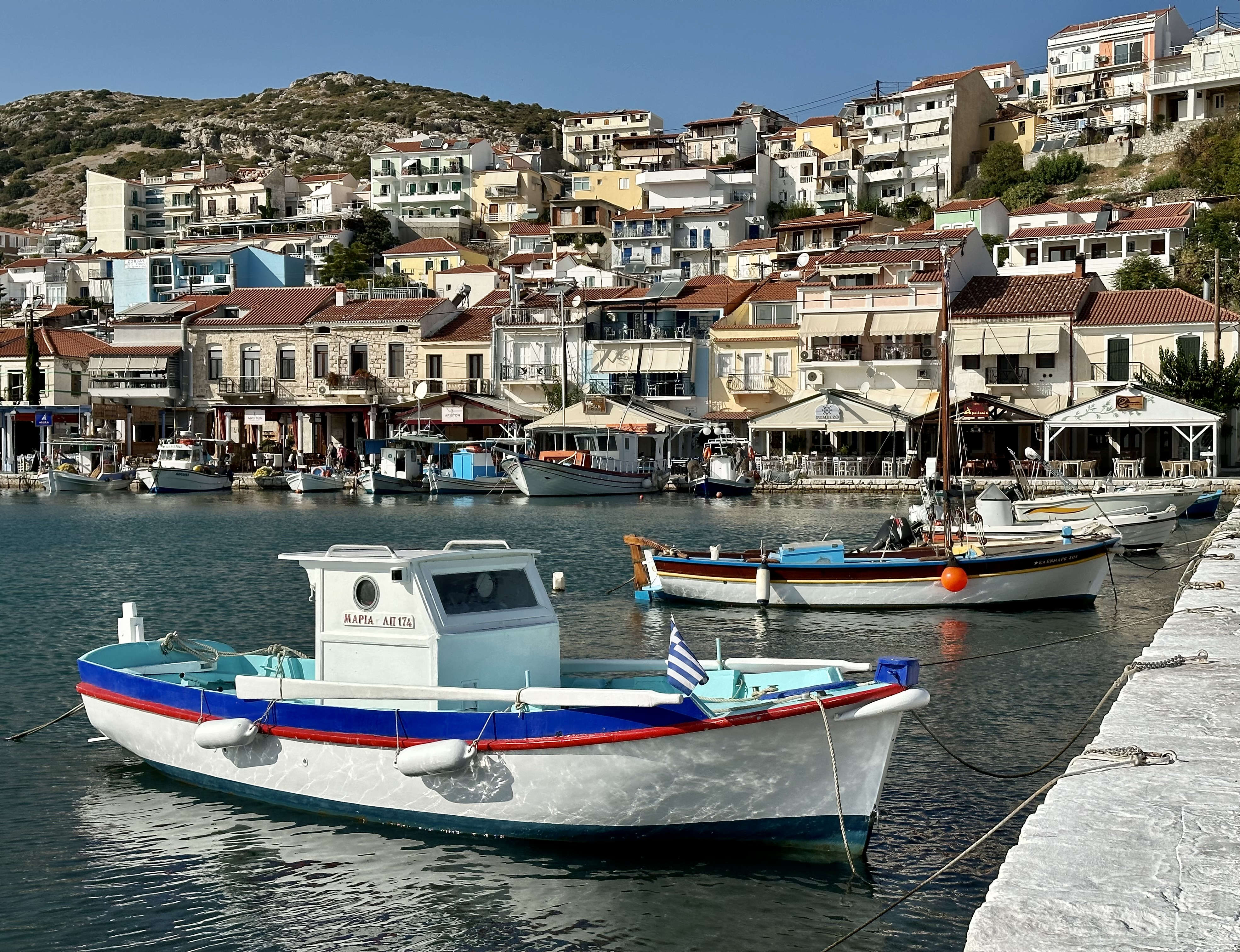
The town where Paul stayed is called Pythagoreio in honor of the famous mathematician. A statue honoring Pythagoras is situated midway on one of the town’s harbor piers.
It wasn’t just his math abilities that garnered great respect for Pythagoras. A giant underground aqueduct was dug through the mountainside in the 6th century B.C. to gain a regular fresh water supply. The Eupalinian Tunnel ran nearly 3,400 feet through Mount Kastro to bring potable water from the island’s west side.

Conditions for digging the tunnel were horrible, and workers argued about the fairness of their wages, paid in wine and bread. Workers claimed they had slaved harder than others. To solve this dilemma, Pythagoras invented the Cup of Justice, also called the Pythagorean Cup, so that all workers received their fair share.
The cup has a protrusion in its middle and a line around the inside to show how much wine should be poured into it. Should a worker fill the cup beyond the line, the cup would rapidly drain its contents via a siphon system. That ingenious device halted the arguing and greed of some of the workers. Artisans produce the cups and decorate them to be sold to tourists. Of course, we bought one.
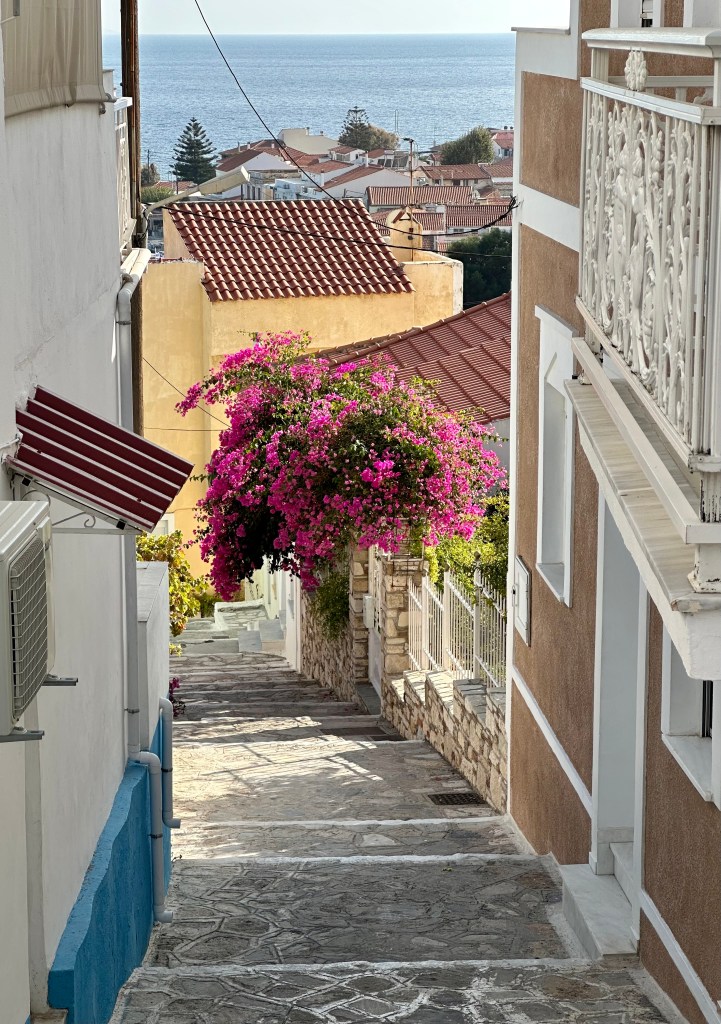
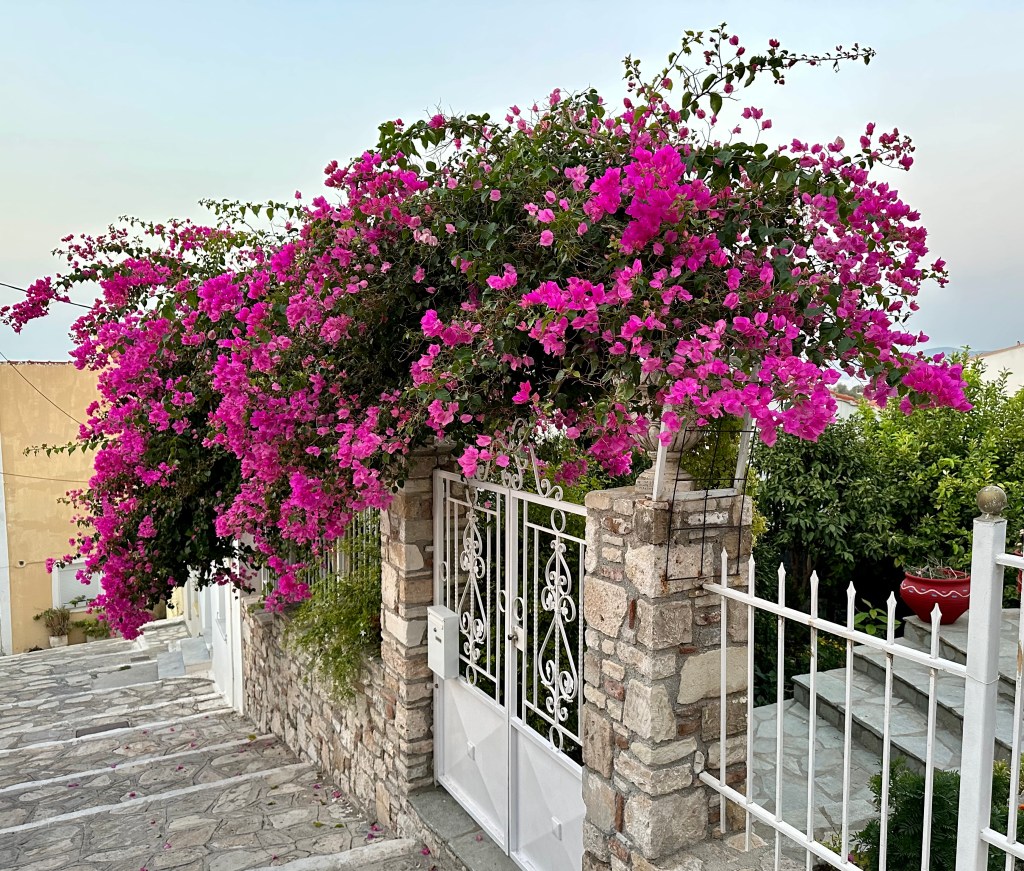

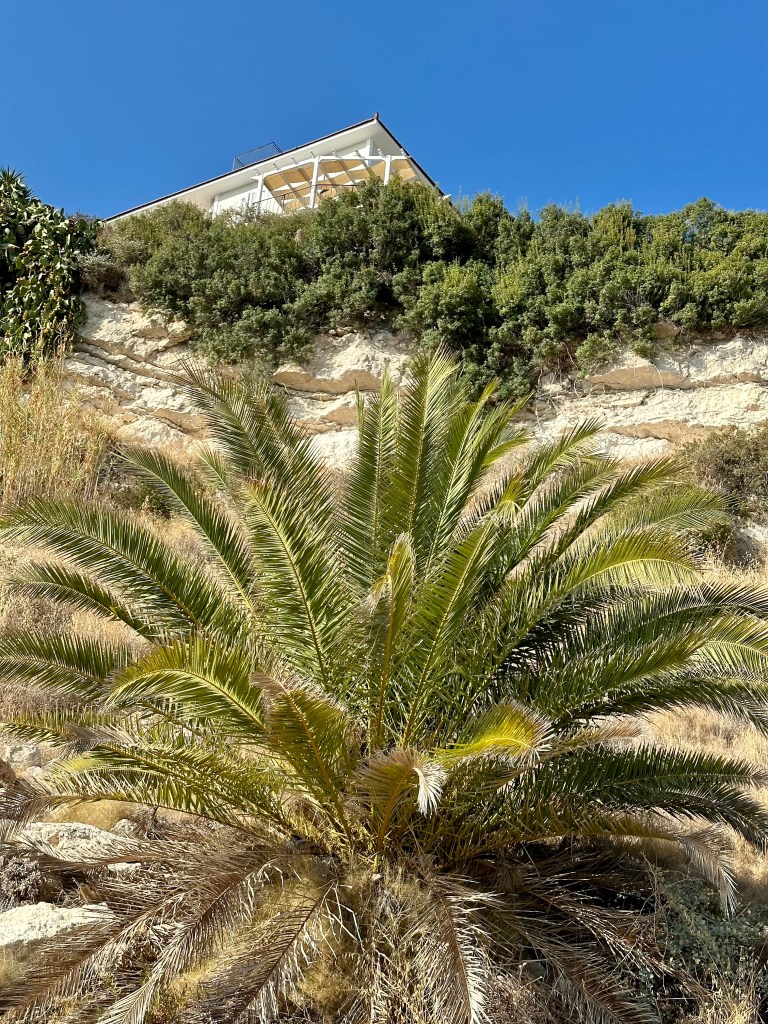

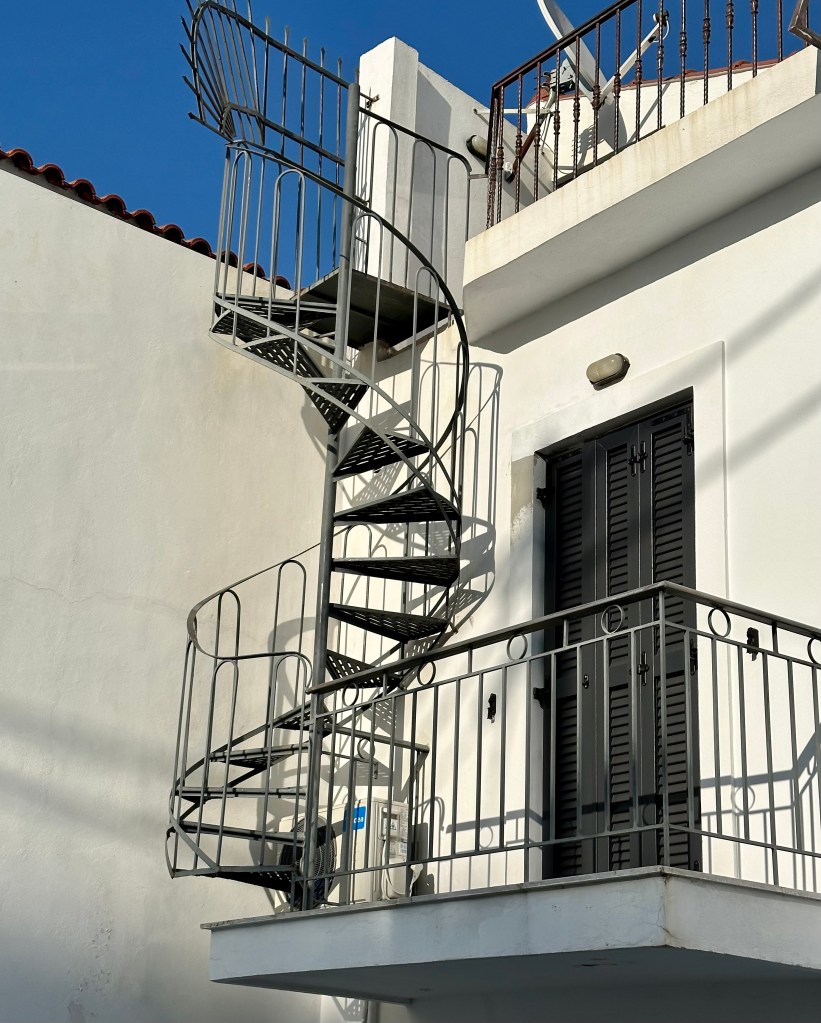
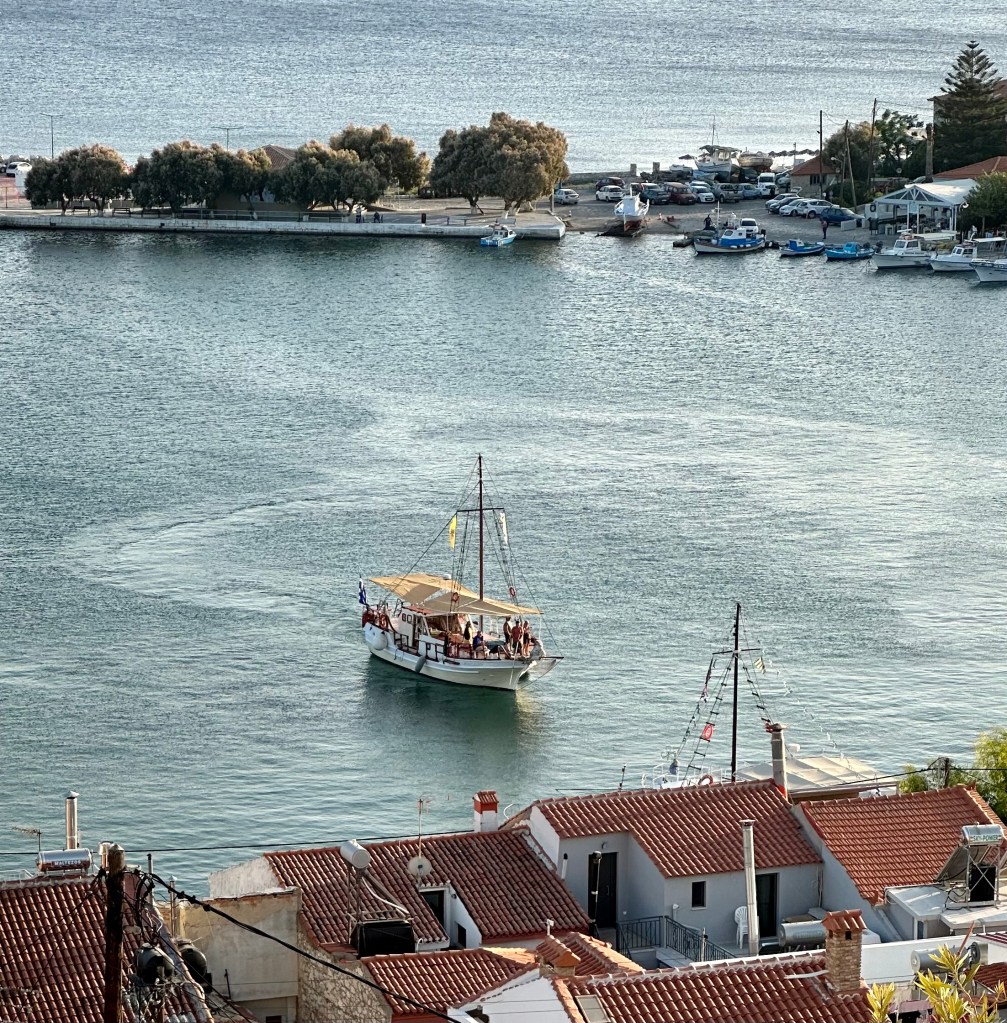


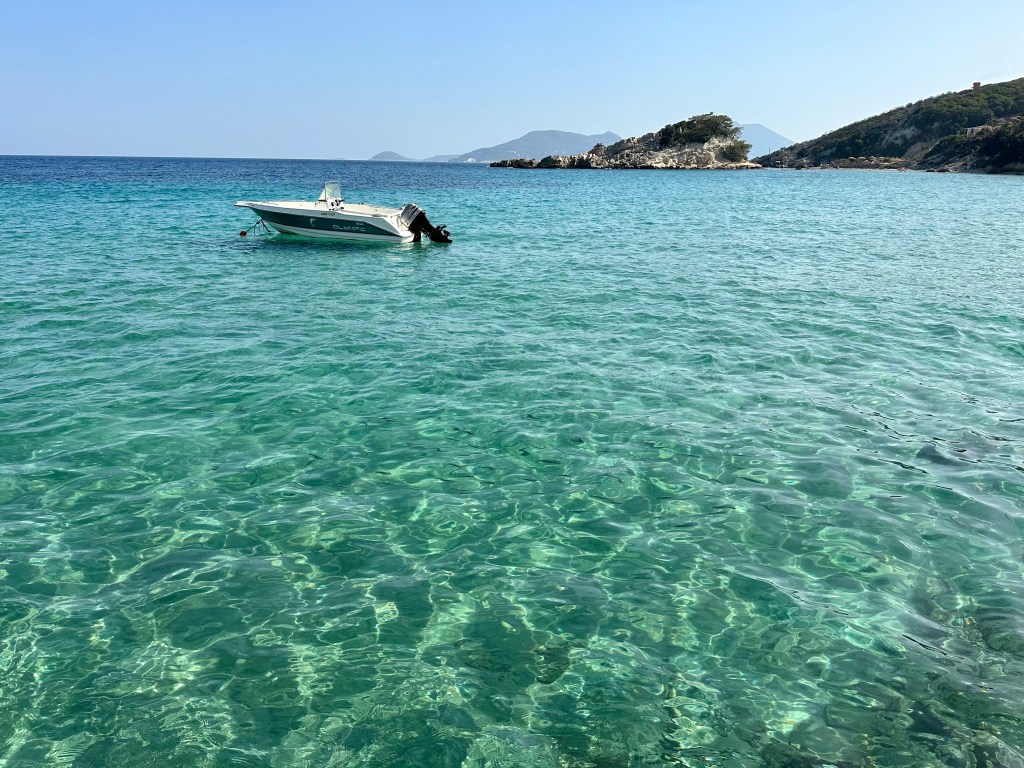
Our time in Samos was joyous and relaxing. We had lots of free time to explore the town with its cobblestone streets and sidewalks, find our own restaurants, and enjoy the quiet and beauty.
As we explored Pythagereio, we discovered many wonderful alleys and buildings. An old castle and the adjacent church were still closed due to damage from an earthquake a few years ago.
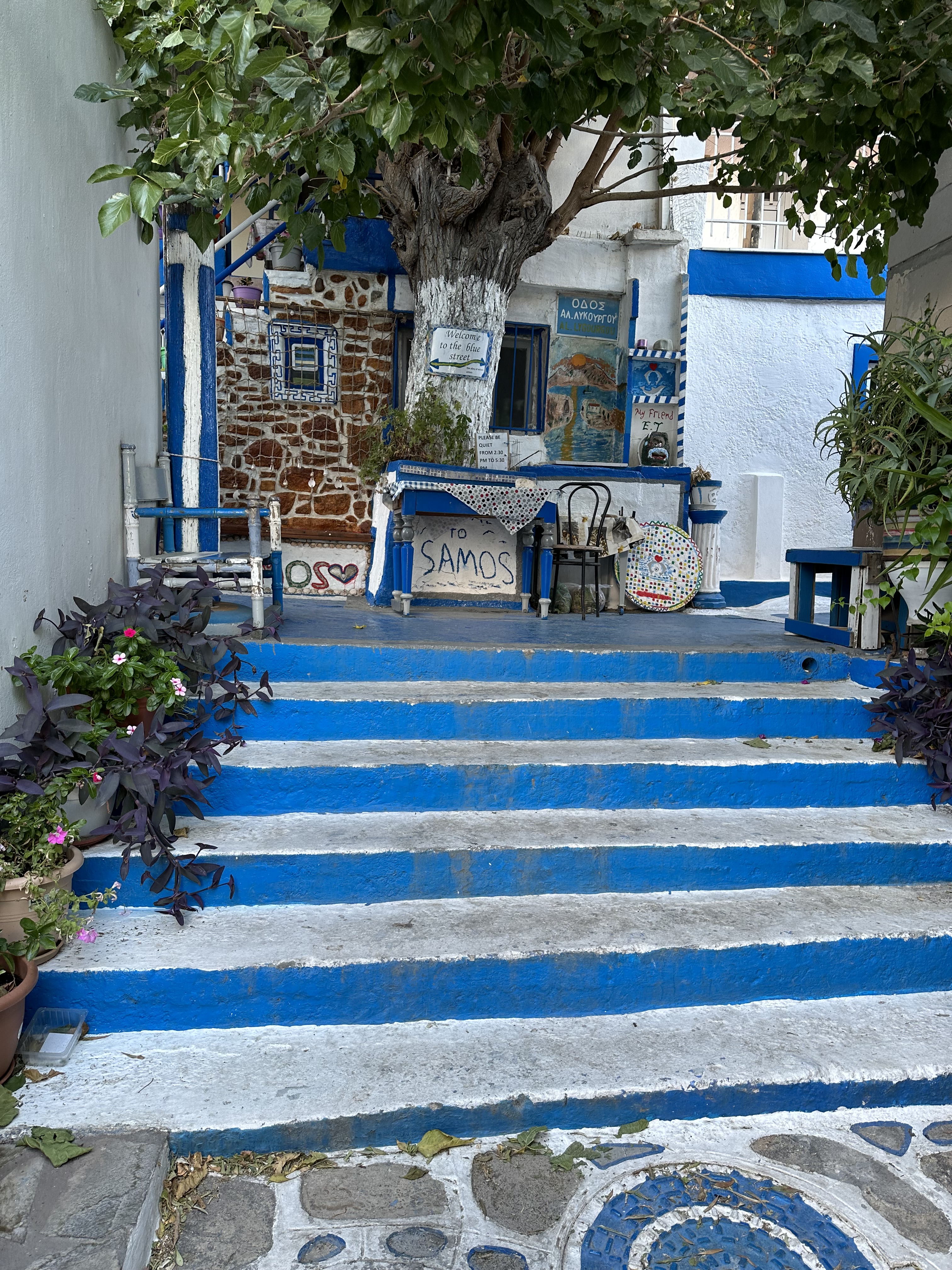
Just down the hill was Blue Street, not much more than a sidewalk with most everything painted blue by the local retired artists who lived there. We found their creations fun and attractive. They painted everything from manhole covers to doorways.


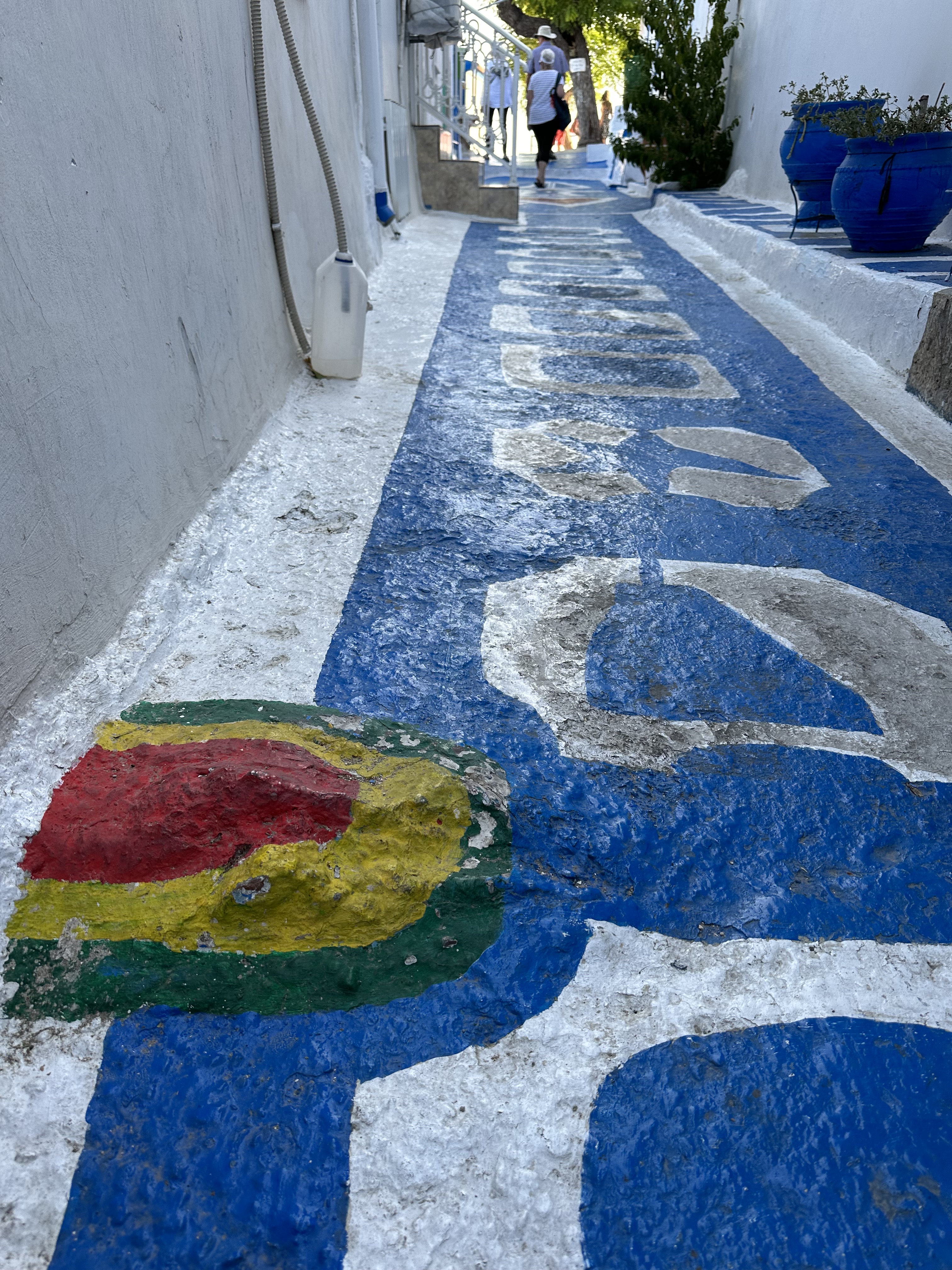
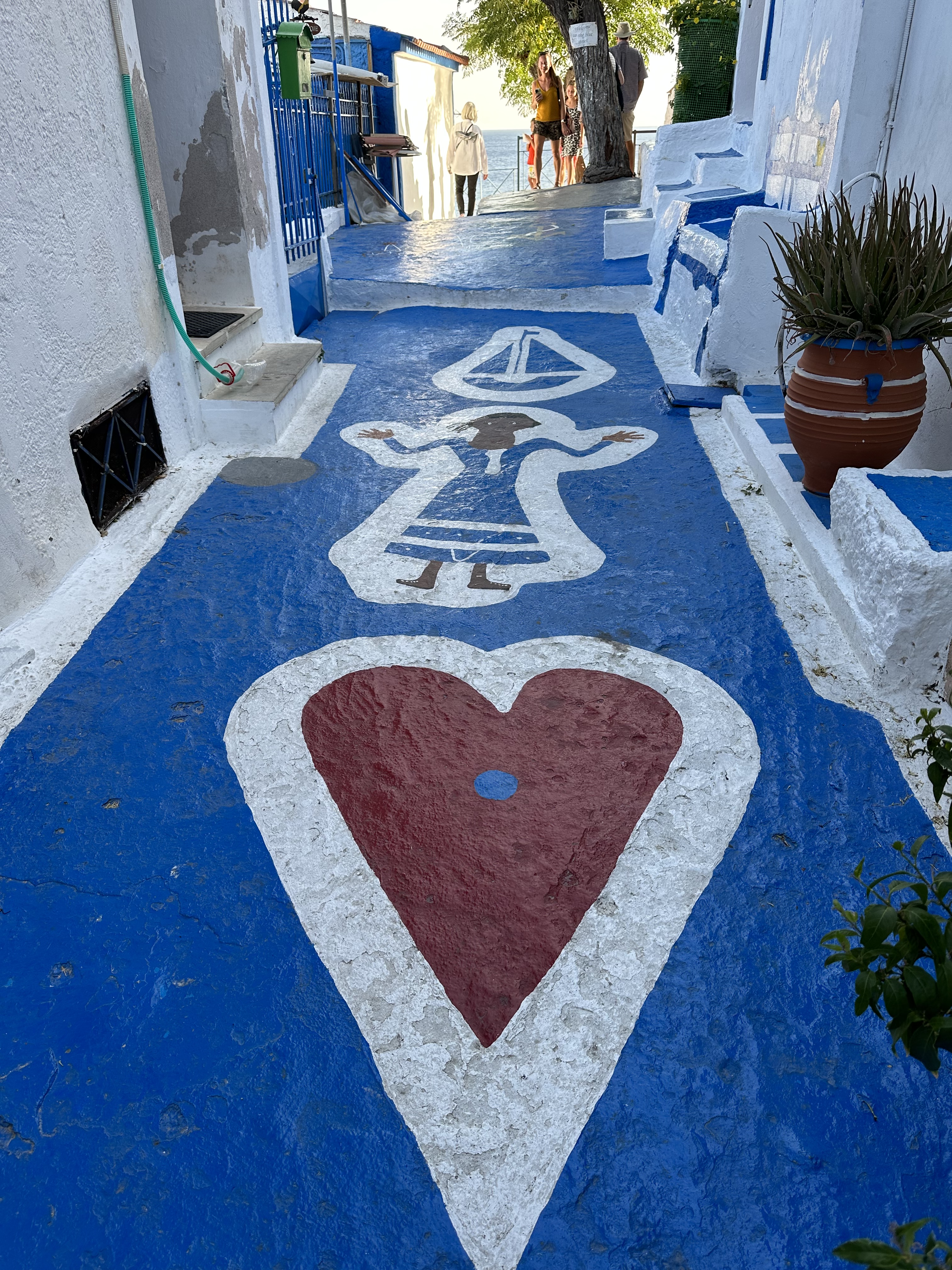


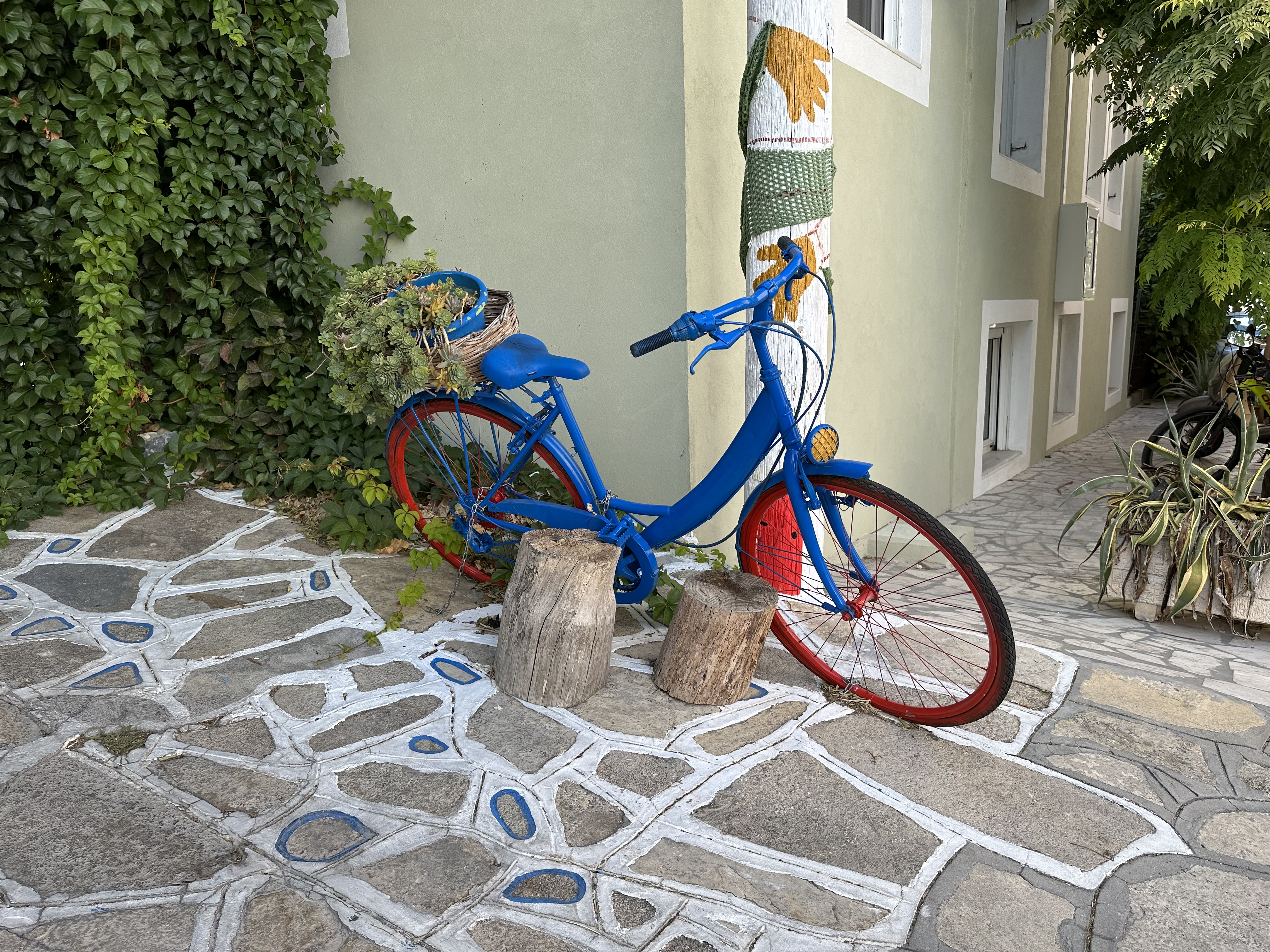

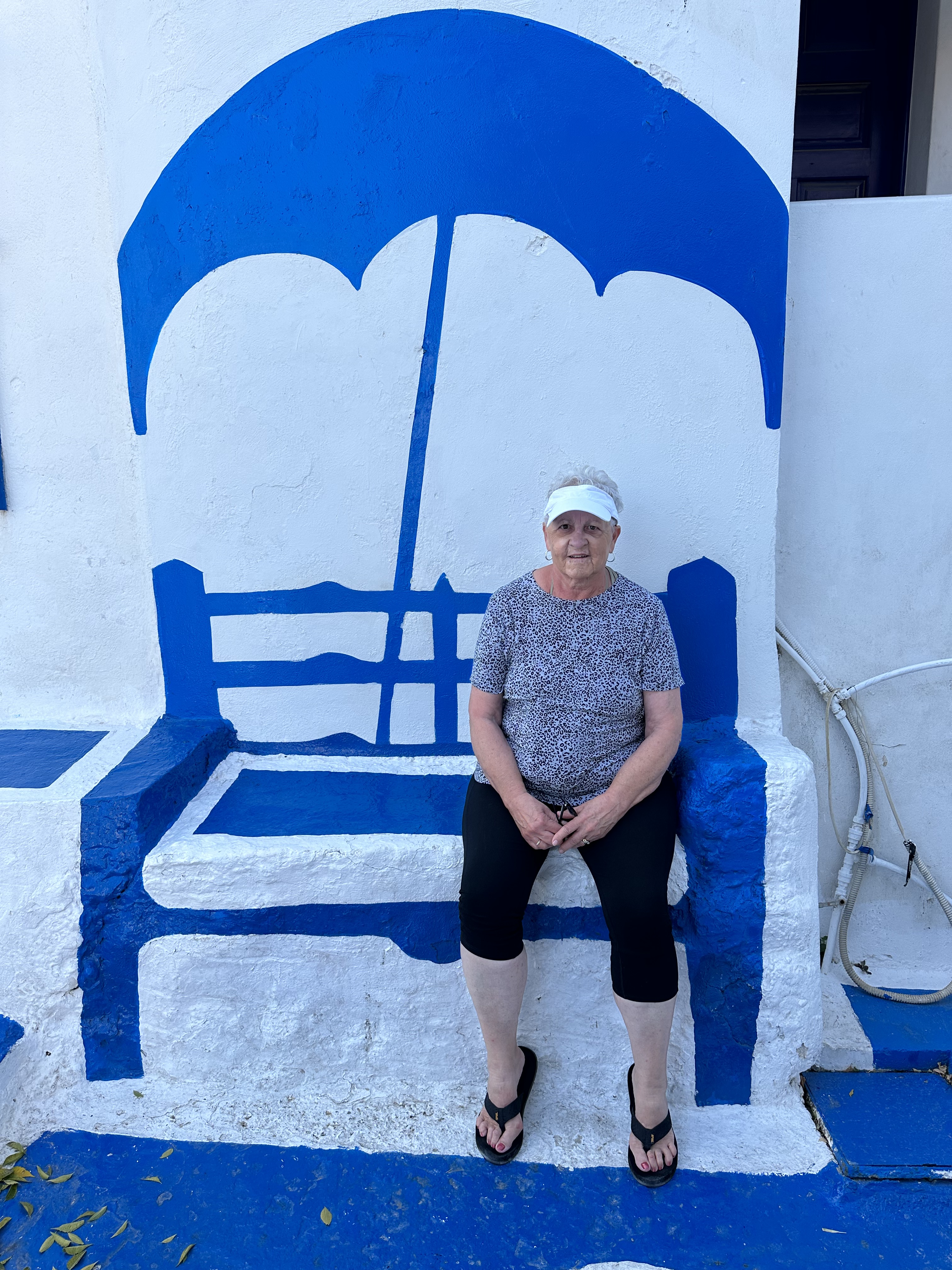

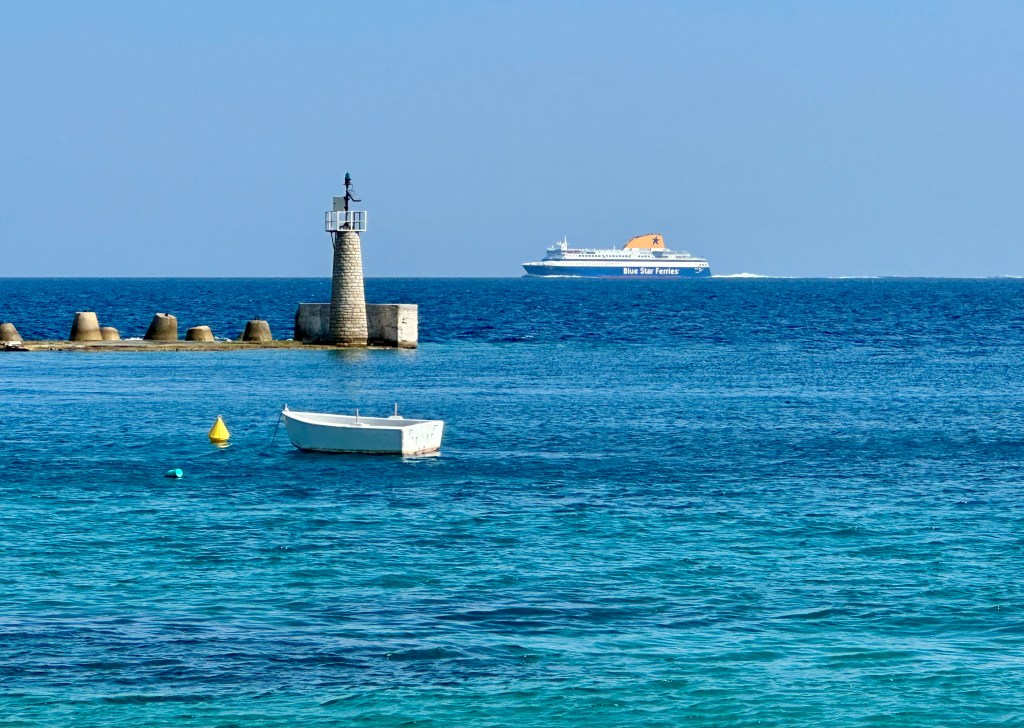
Most of all, though, my wife and I simply enjoyed sitting on a bench near the customs station on the harbor. We viewed the quaint town from our seats and enjoyed watching a few boats come and go.
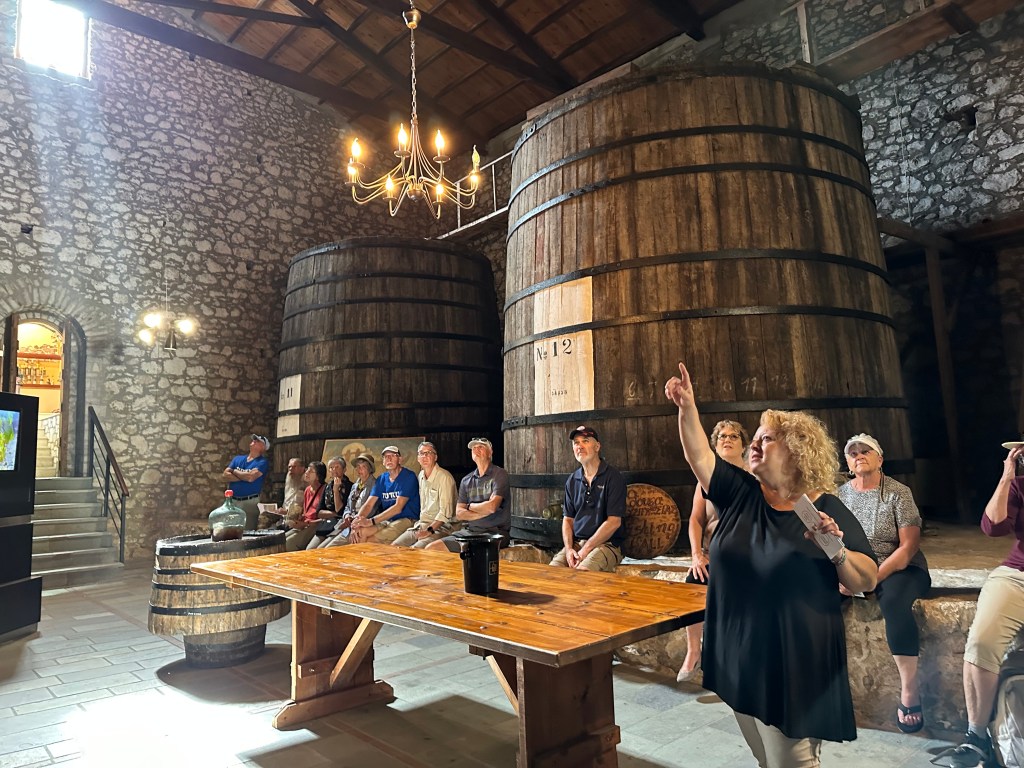
On the second day, we rode a bus to the western part of the island and toured a wine museum. Samos is famous for its sweet Muscot wine. The island’s western side is much more lush than the leeward side since it rains more.



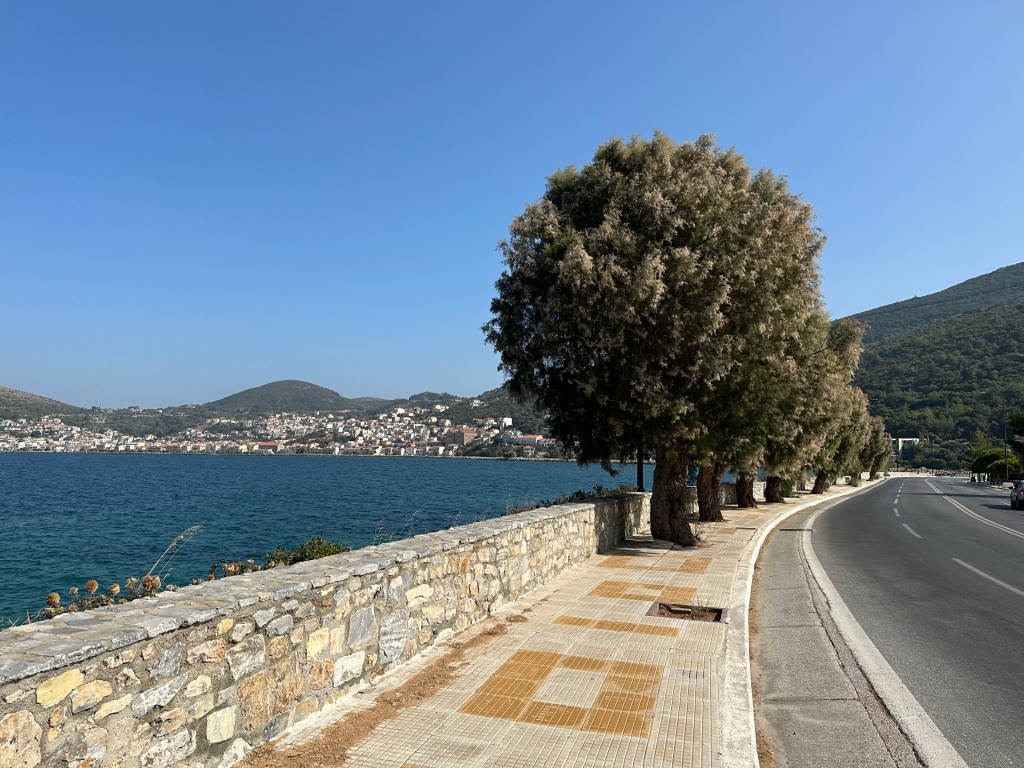
Once we started downhill toward the town of Vathy, the greenery of trees, shrubs, and grasses stood in stark contrast to the arid brushy topography on the eastern side. We also visited a monastery above Pythagereio containing a cave and a chapel. It wasn’t far from the aqueduct tunnel.
Samos is separated from Turkey by the mile-wide Mycale Strait in the eastern Aegean Sea. The Greek navy maintains a station on Samos with several boats moored in the harbor. We enjoyed the sunrises over the mountains in Turkey.
Tomorrow: The island of Patmos

© Bruce Stambaugh 2023
 Roadkill Crossing
You must be logged in to post a comment.