Inspired to make a difference

Living Acts group by Bruce Stambaugh
By Bruce Stambaugh

Kids of all ages inspire me. I guess that had something to do with honing 30 years in public education.

It also motivates me to help award scholarships at the end of each school year for the Holmes County Education Foundation if I can. This year my schedule was free. Once again I found myself seated with several other presenters facing the 2012 graduating class of West Holmes High School, Millersburg, Ohio.

The look by Bruce StambaughLike the others who announced scholarship winners, my job was a simple one. I merely had to read off the names of the recipients of two different memorial scholarships of two of my very best friends in life. Prior to their deaths, Paul Sauerbrey and Helen Youngs had established the scholarships so that youngsters from future generations would be encouraged to further their education beyond high school. Over the years, the financial assistance has helped dozens and dozens of area students attend college or trade school.

I’m always impressed with how well behaved the graduating seniors are. For them, high school is over. They could be off celebrating. But on a beautiful late spring evening, most of the 179 seniors were on hand to accept a simple certificate awarding them their grant. In some cases, students earned more than one scholarship.

Unlike the caricatures too often portrayed about teens in the mainstream media, these young people are polite, thankful and eager to move forward with their lives wherever that may be. Sure, some of them wear flip-flops while others clop to the stage in high heels.
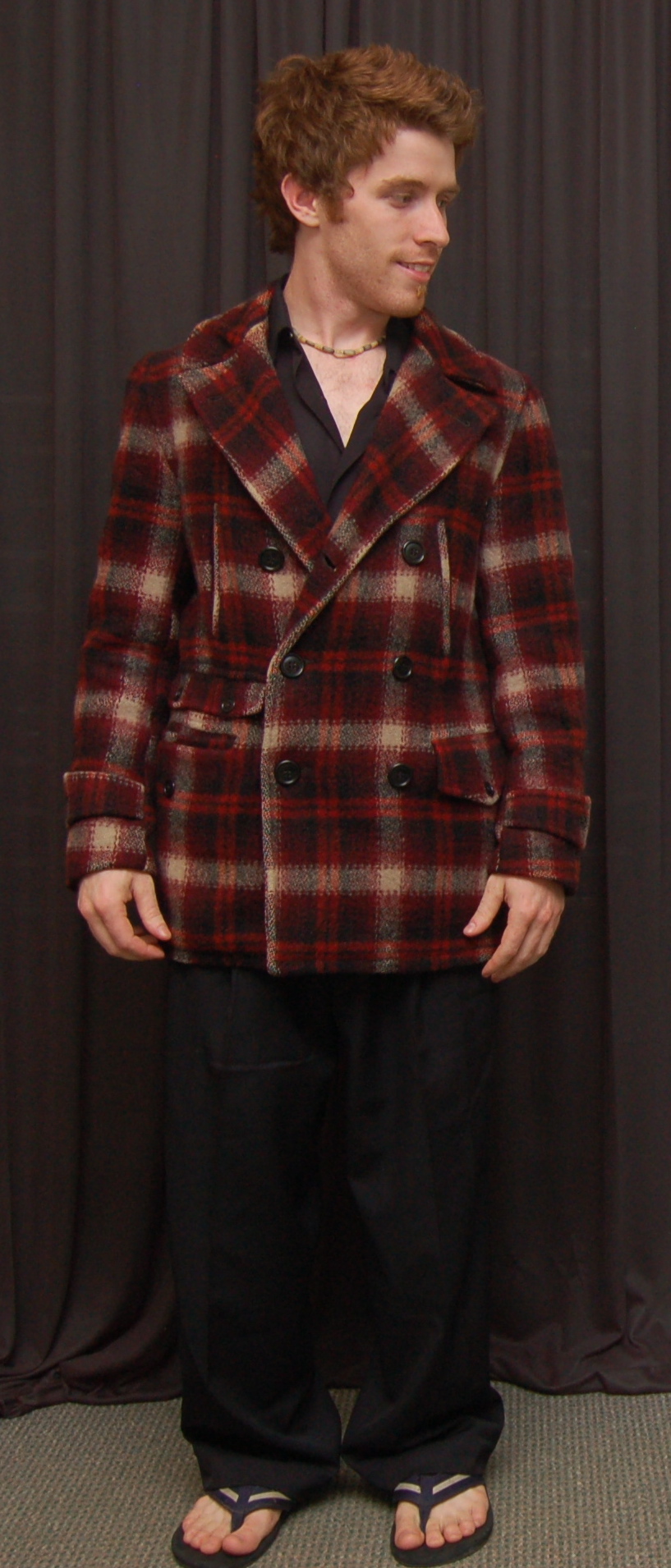
Flip flops by Bruce StambaughMore creative, free-spirited graduates don expressive attire. One kid once came dressed in pajamas. Nevertheless, the students understand the significance of the situation. In many cases, like my two friends, the money is given in the memory of someone. Several are memorial scholarships named for loved ones who died tragically or unexpectedly.

Prior to announcing the scholarship recipients, I take the opportunity to inform the students about Mr. Sauerbrey and Ms. Youngs. Perhaps this is my teacher instinct still coming out.

Mr. Sauerbrey and Ms. Youngs each were persons who made a huge difference in life, not just for me, but also for the entire the community. I wanted to put some flesh and bones and spirit with the names of the scholarships. The students listened attentively.

Both Mr. Sauerbrey and Ms. Youngs were instrumental in the daily activity of Killbuck, Ohio, the village in which they lived most of their lives. Mr. Sauerbrey taught at the elementary school for most of his 43-year teaching career.

Ms. Youngs worked at Killbuck Savings Bank for 55 years. She also served as the town treasurer for 43 years, and loved to play the organ and sing in the choir at Killbuck Church of Christ.
Youth volleyball by Bruce Stambaugh

Previous scholarship recipients have made a difference through their chosen careers. Some have become teachers, doctors, lawyers, bankers and mechanics while others operate their own businesses. Given the grace, respect and appreciation the 2012 graduates showed in accepting their scholarship awards, I expect they will succeed as well.

What really caught my attention though was the support and geniality that the graduating students showed to each other. They truly seemed to care for one another.

If that positive attitude persists in life, these graduates will likely make a difference whatever they do and wherever they land. Mr. Sauerbrey and Ms. Youngs would be very pleased indeed.

Baptism by Bruce Stambaugh
© Bruce Stambaugh 2012
Being more visible is no accident

By Bruce Stambaugh

It’s no accident that buggies, pedestrians and bicyclists are easier to see when traveling the hilly and curvy roads of the area.

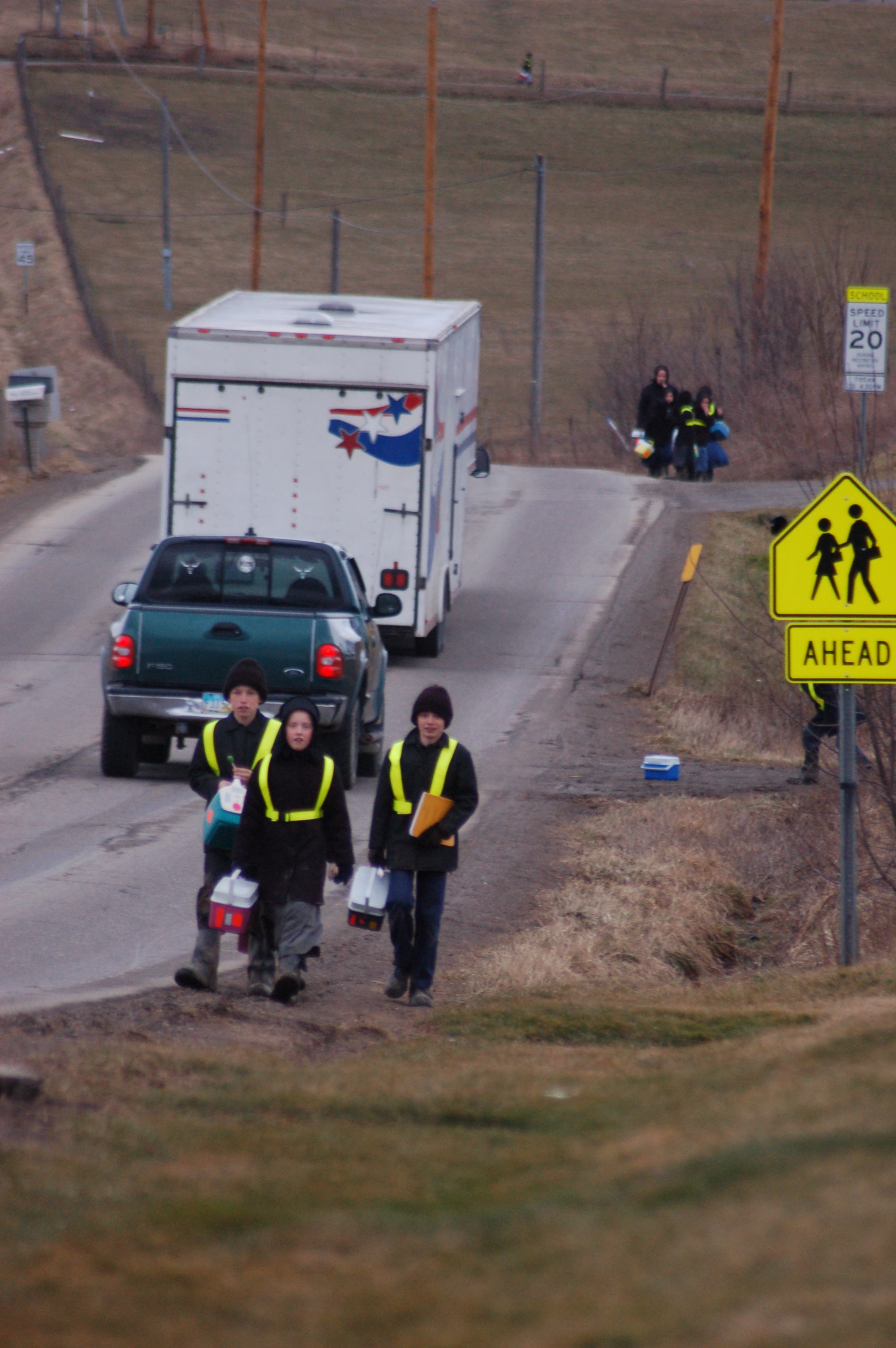
Visible walkers by Bruce Stambaugh
Pedestrians, like these Amish school children, are much more visible since they started wearing day glow vests.
The Amish Safety Committee, made up of three Amish men, has been working for 18 years to educate their constituency on road safety. The most recent focus has been on improving visibility.

Drivers who frequent the Amish areas of Holmes, Wayne and Tuscarawas counties can literally see the impact the committee has made. Recognizing the importance of being seen, lighting has been the biggest improvement. In addition to the required slow moving vehicle orange triangle on the rear of the buggy or cart, most horse-drawn vehicles are now well lighted.

“The biggest factor in most car/buggy accidents is speed,” said Wayne Hochstetler, of rural Millersburg, and a member of the safety committee. “Drivers just can’t judge how fast they come upon a dark colored buggy.” Church rules stipulate that buggies be black in Ohio.

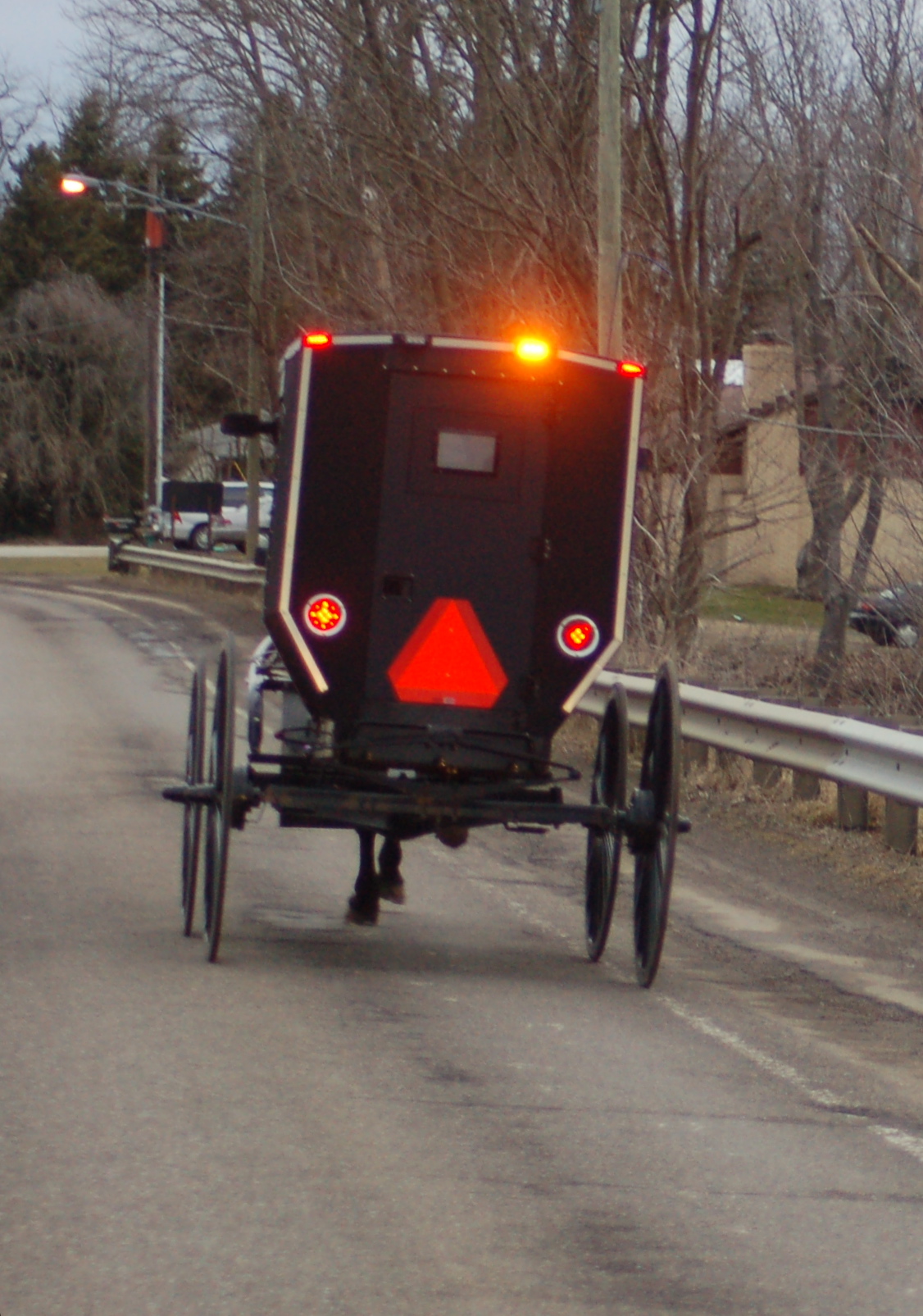
Visible buggy by Bruce Stambaugh
Amish buggies, like this one in Holmes Co., OH, are much easier to see thanks to improved marking and lighting.
“The biggest help has been the blinking amber light,” Hochstetler said. The light is usually centered at the top of the back of the buggy. It operates on batteries, and some models even provide varying blinking patterns.

“The blinking light tells the driver that a buggy is ahead sooner than the triangle does,” Hochstetler said. The committee has suggested other lighting for buggies as well.

“We encourage people to use taillights and running lights for both the front and back,” Hochstetler said. Rear lights are imbedded in the body of the buggy, while running lights are on both sides of the buggy.

The rear lights are red, just as they would be on a motorized vehicle. The running lights serve as a form of headlight, although, according to Hochstetler, they are used more to be seen than afford light for the buggy operator to see.

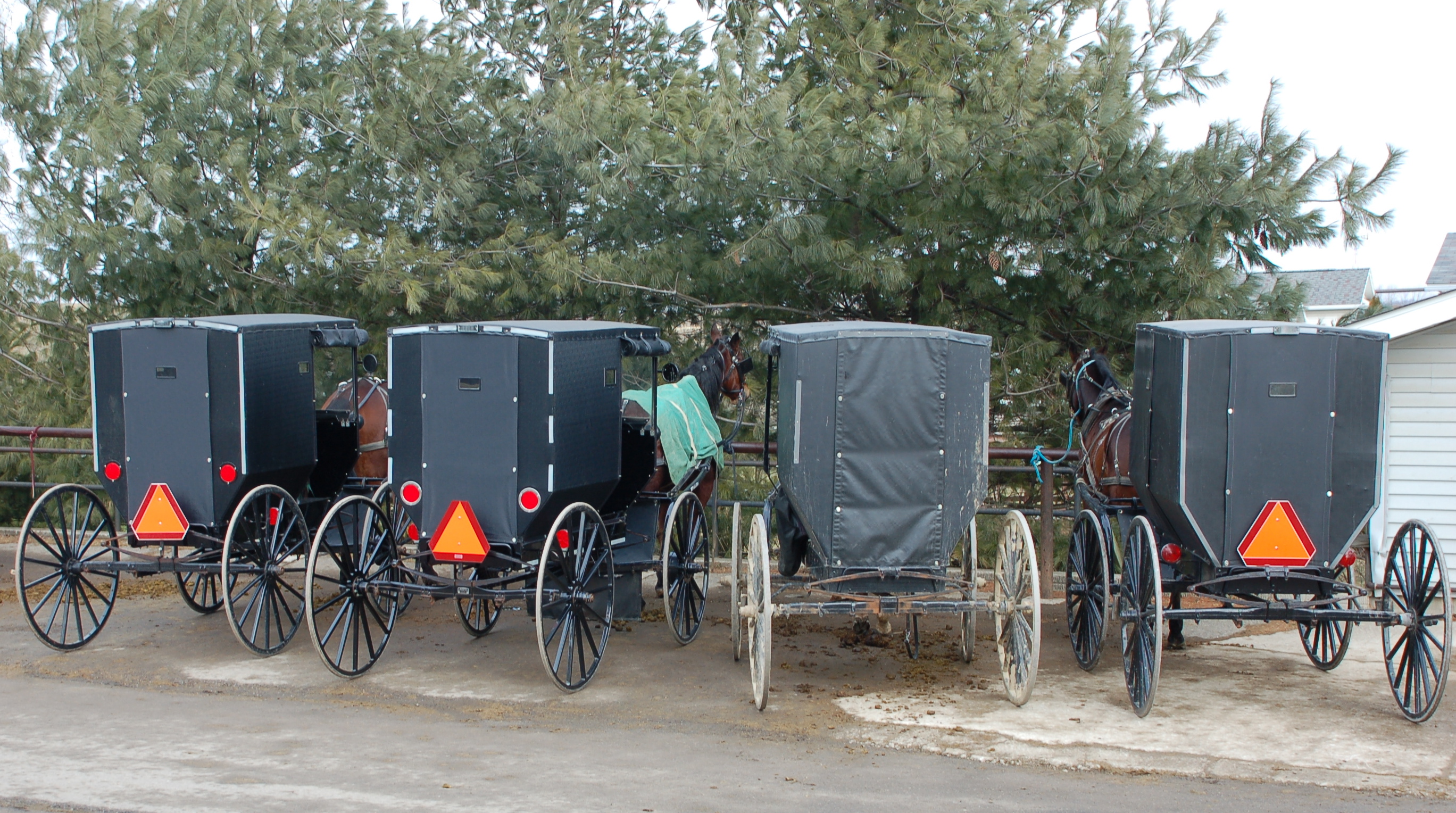
Tied buggies by Bruce Stambaugh
Amish buggies are marked with Slow Moving Vehicle orange triangles, reflective tape, and lights. How they are marked is determined by the church district to which they belong, or which sect of Amish, like the Swartzentruber buggy with no SMV.

In addition, smaller lights are often used on the top front of the buggies, too. These are white, amber or sometimes blue, though law enforcement discourages the latter. Most of the new lighting is LED lamps, which create a brighter, easier to see light. Most buggies also have white reflective tape that outlines the back of the buggy.

The illumination improvements haven’t been confined to horse-drawn vehicles either. Many pedestrians and bicyclists now wear reflective and lighted vests for easier visibility. Like the buggy lights, the lighted vests blink at night. Some walkers use LED lamps attached to their hats in order to be seen by oncoming traffic.

Bicycles also use red blinking taillights and bright white headlights. Reflective straps are also used around horses’ ankles and on the shafts of the buggies to which they are hitched. This permits reflectivity from traffic approaching from the side.

Safety sign by Bruce Stambaugh
Drivers of all kinds are reminded to drive safely in Amish country.

Besides Hochstetler, other committee members are Gid Yoder and Rueben Schlabach. Detective Joe Mullet, of the Holmes County Sheriff’s Office, and Lt. Chad Enderby, of the Wooster Post of the Ohio State Highway Patrol, serve as ad hoc advisory members.

Hochstetler said that the grassroots efforts of the committee have been so well embraced by the Amish in Holmes, Tuscarawas and Wayne counties that they have been invited to help form other safety committees in other Ohio Amish communities.

“We have even been asked to share in other states like Indiana, Michigan and New York,” Hochstetler said.

Mullet said that even the Swartzentruber Amish, the lowest order of the sect, are now using two lighted lanterns with front and rear lens. They formerly used only one.

Mullet said that he spends several days a year visiting Amish parochial schools to teach the students practical safety measures. They include the proper way to walk and ride bikes to and from school, and encouraging wearing the day glow vests.

Mullet said he often tells personal stories to make it more meaningful for the students. Mullet also has an advantage in keeping the students’ attention since he can speak Pennsylvania Dutch with the students.

In addition to being proactive on safety, the Amish for several years have paid a self-imposed donation to the Ohio Department of Transportation to help improve area roadways. Hochstetler said each church district has a person designated to annually collect donations for each horse-drawn road vehicle owned by the household.

ODOT shares the money with county and township officials for local road improvement in areas where Amish live. The money is intended to be a monetary substitution for road improvements in lieu of paying gasoline taxes, which owners of motorized vehicles pay each time they buy fuel.

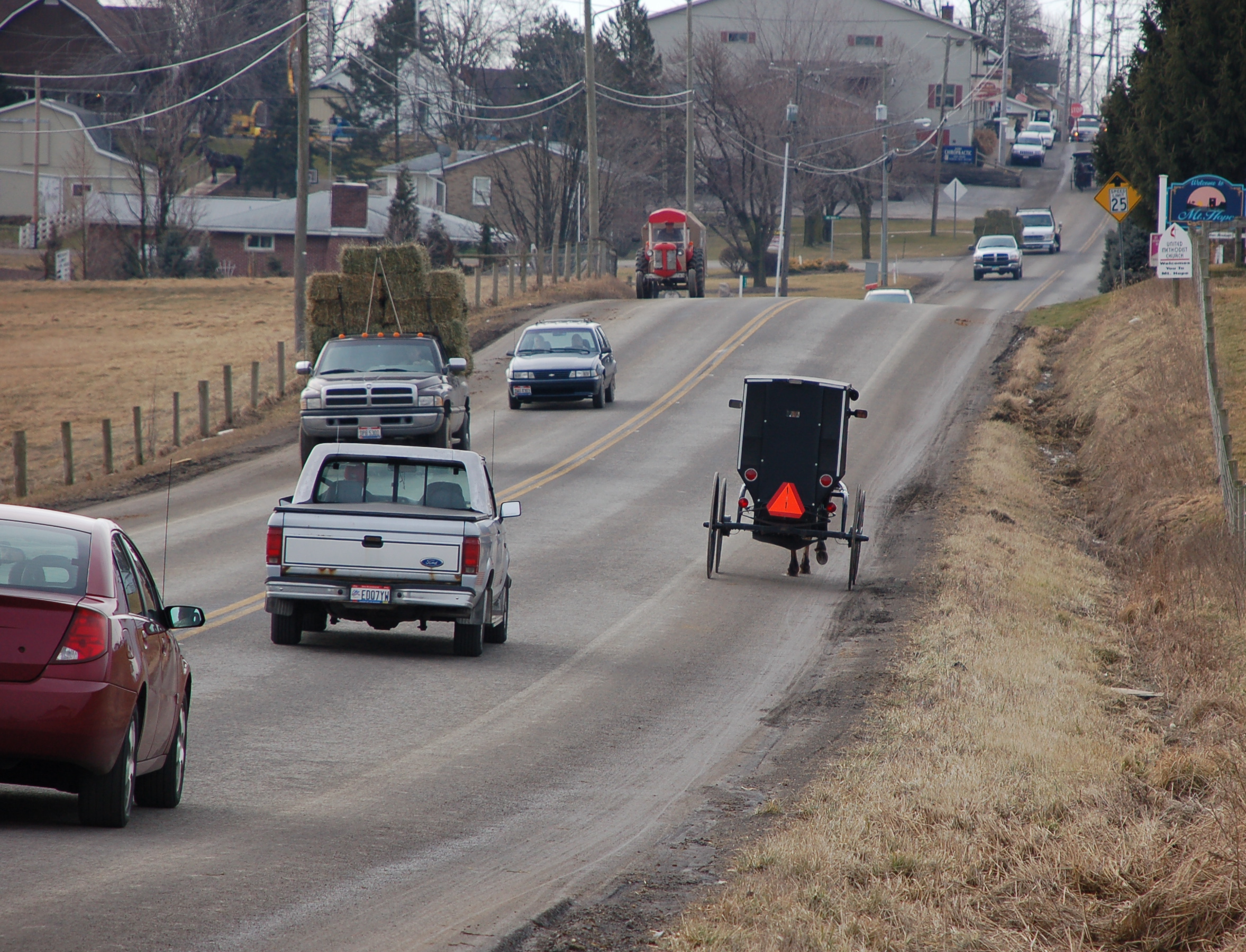
Buggy lane by Bruce Stambaugh
Donations by Amish families to the Ohio Dept. of Transportation help construct and maintain buggy lanes for safer traffic flow. This buggy was traveling near Mt. Hope, OH.

Amish show their thanks through service to community

Amish harvest by Bruce Stambaugh
During harvest, the Amish literally pitch in to help one another.

By Bruce Stambaugh

Once the floodwaters of the historic July 1969 flood had receded, the residents of Killbuck, Ohio were in shock. Homes and businesses were either destroyed or severely damaged by the record high water levels. Townspeople were ready to give up, the cleanup looked so daunting.

Then something amazing and unexpected happened. Scores of Amish and Mennonites arrived from the eastern section of the county, home to the world’s largest Amish population, to help. No one had asked them to come. They just showed up.

The volunteers waded in and did the absolute hardest, dirtiest jobs, clearing out mud and muck with no complaints. They did it all out of a basic foundation of thankfulness.

Helping in times of need affords the Amish a method of connecting with the community. It is their personal and active way of expressing their appreciation for community and country, and the cherished ability to worship freely.

Church buggies by Bruce Stambaugh
Gathering the buggies before church at an Amish home in Holmes Co., Ohio.

Amish do not normally participate in organized governmental positions. They do not take oaths, which such positions often require. Consequently, when opportunities to assist others arise, the Amish respond.

The Amish do not always wait for disaster to strike either. They are proactive in helping the less fortunate.

Donating blood is one of those opportunities. It’s not unusual for a local blood drive to collect 100 or more units every 56 days.

The Amish also show their thankfulness by helping with numerous annual benefit auctions that are held locally. A short list would include The Rainbow of Hope auction, The Ohio Mennonite Relief Sale, the Holmes County Home and the Holmes County Training Center.

Hitching rail by Bruce Stambaugh
The hitching rail at the Mt. Hope, Ohio, Auction is lined with horses and buggies on sale day.

Supporting such causes is borne of a two-fold purpose for the Amish. They recognize the importance to help those who have particular needs, and they also accept that they could possibly be in that situation themselves. They are grateful for whatever happens.

To briefly identify the purpose of the aforementioned benefits helps to understand the depth and breadth of the Amish aid. Funds from the Rainbow of Hope auction assist children with major medical bills. The Relief Sale raises funds for worldwide projects under the direction of Mennonite Central Committee.

MDS house by Bruce Stambaugh
A home damaged by Hurrican Katrina in Boothville, LA was repaired under the direction of Mennonite Disaster Service.

Amish even travel far from their geographic area to put their faith into action. After Hurricanes Katrina and Rita, scores of Amish assisted in the Gulf States cleanup and reconstruction. So many helped, in fact, that Mennonite Disaster Service set up an Amish only camp where the volunteers could live according to their normal lives without the influence of distractions like television and the Internet.

Locally, the auctions for the county home and the Training Center raise operating funds. The county home has some Amish residents, and Amish make up a good percentage of the population at the Training Center, which works with developmentally challenged students and adults.

Another way of contributing to the common good for some Amish is to join the local volunteer fire department. Several area departments have Amish on their rosters as firefighters and emergency medical technicians.

True to their desire for modesty, the Amish want no recognition or publicity for their kind efforts. Their satisfaction comes from the simple act and ability to help others.

Amish help by Bruce Stambaugh
Amish quickly helped their neighbors have a severe thunderstorm hit near Charm, Ohio in July.

Of course, the iconic images of Amish helping at a barn raising are conjured up as the ideal way to help their neighbor. But their generous participation in the community and world at large clearly shows that the Amish think and act out of thankfulness far beyond their own immediate area.

To be sure, most Amish families embrace Thanksgiving as a day of joyous celebration of community, bountifulness and life itself. Even then many Amish approach the day piously, fasting in the morning prior to the feast that includes all the traditional trimmings.

The Amish mark Thanksgiving Day as a pinnacle to a lifestyle of serving. Fittingly, they would be too modest to acknowledge that fact.

Amish farm fall by Bruce Stambaugh
A typical Amish farm in the fall in Holmes County, Ohio.

This article appears in the November 2011 edition of Ohio’s Amish Country magazine.

Response to disaster defines community

Buggy charm by Bruce Stambaugh
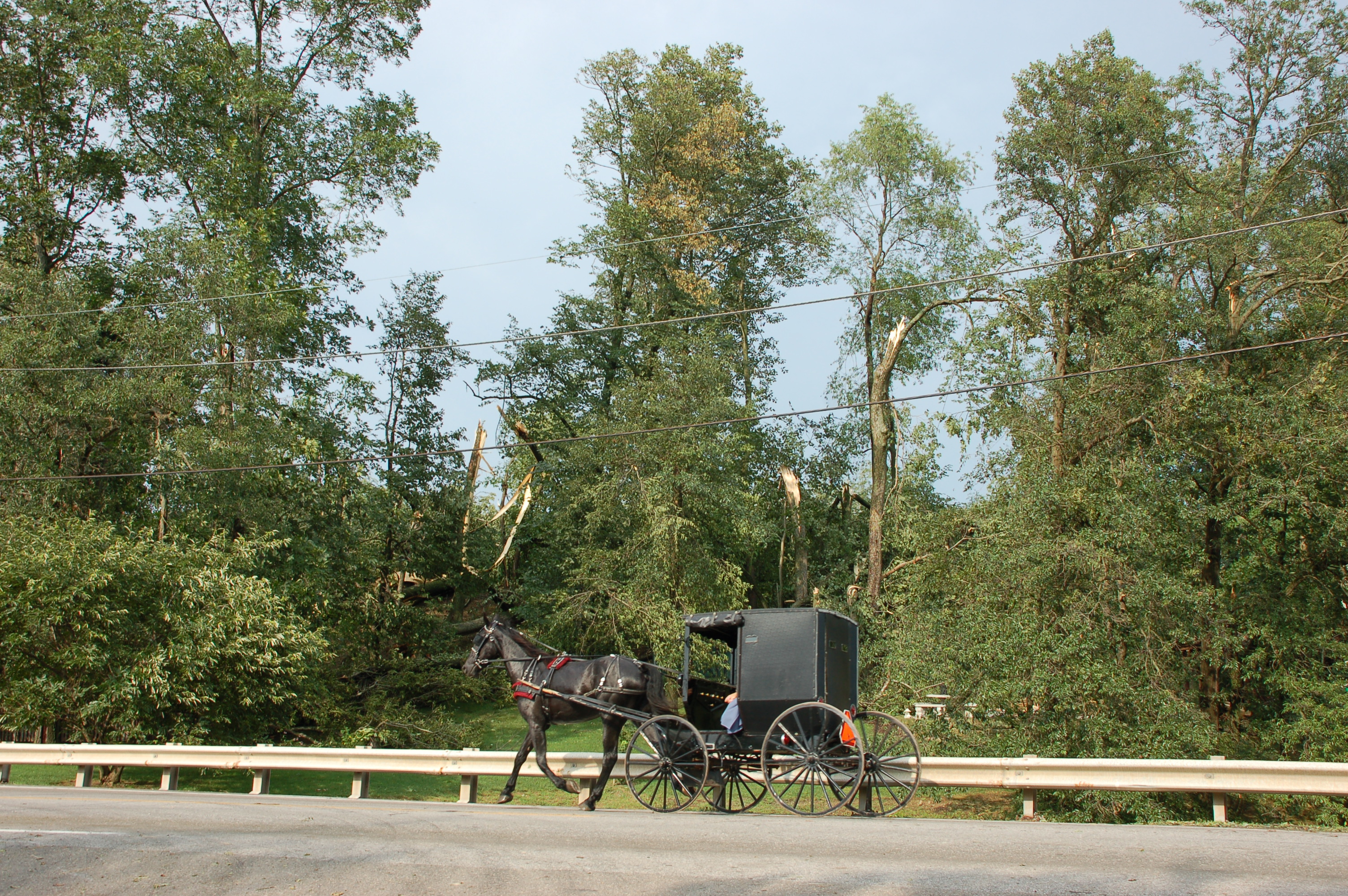
A horse and buggy rolled by some snapped off trees north of Charm, Ohio.

By Bruce Stambaugh

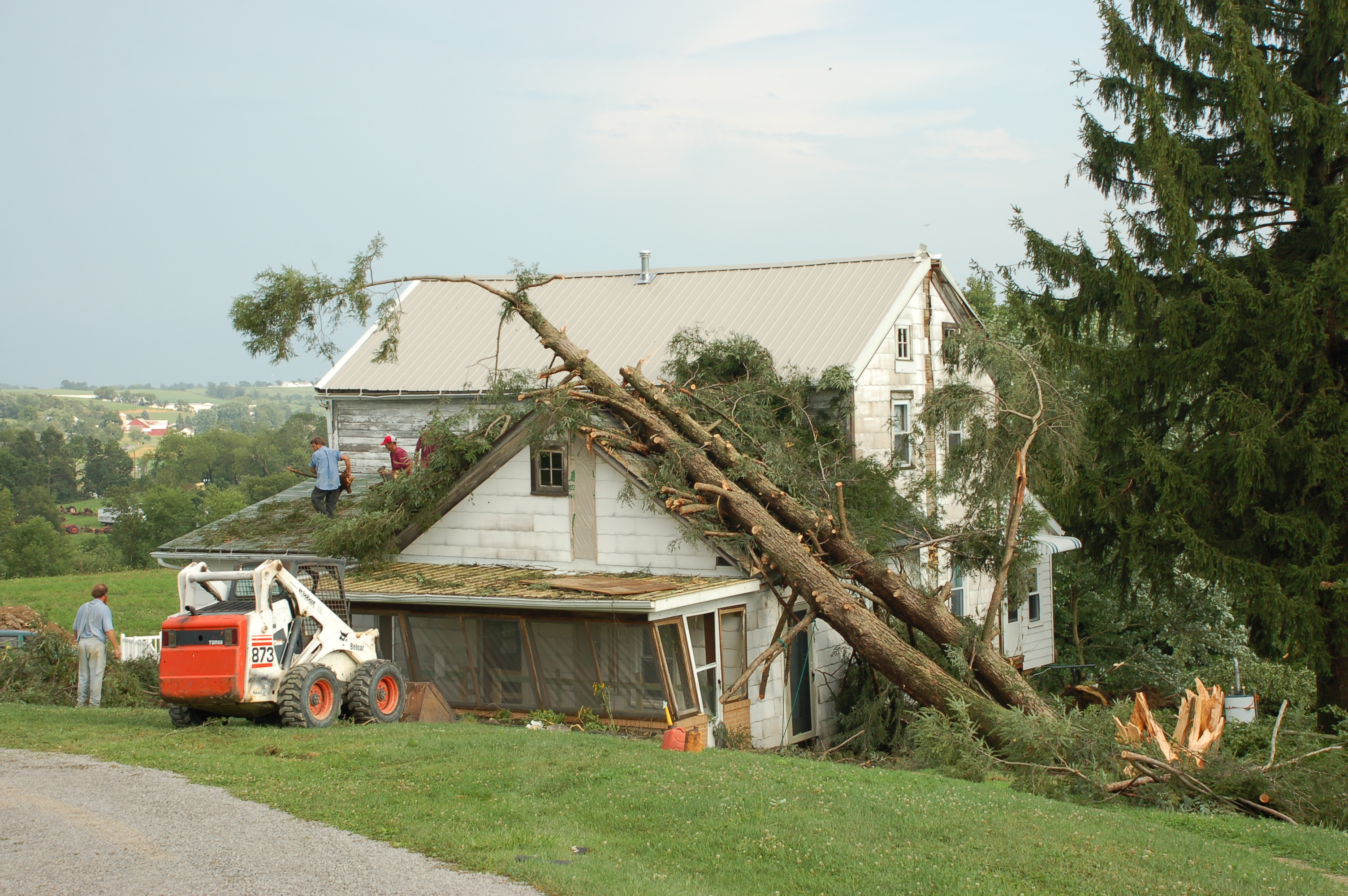
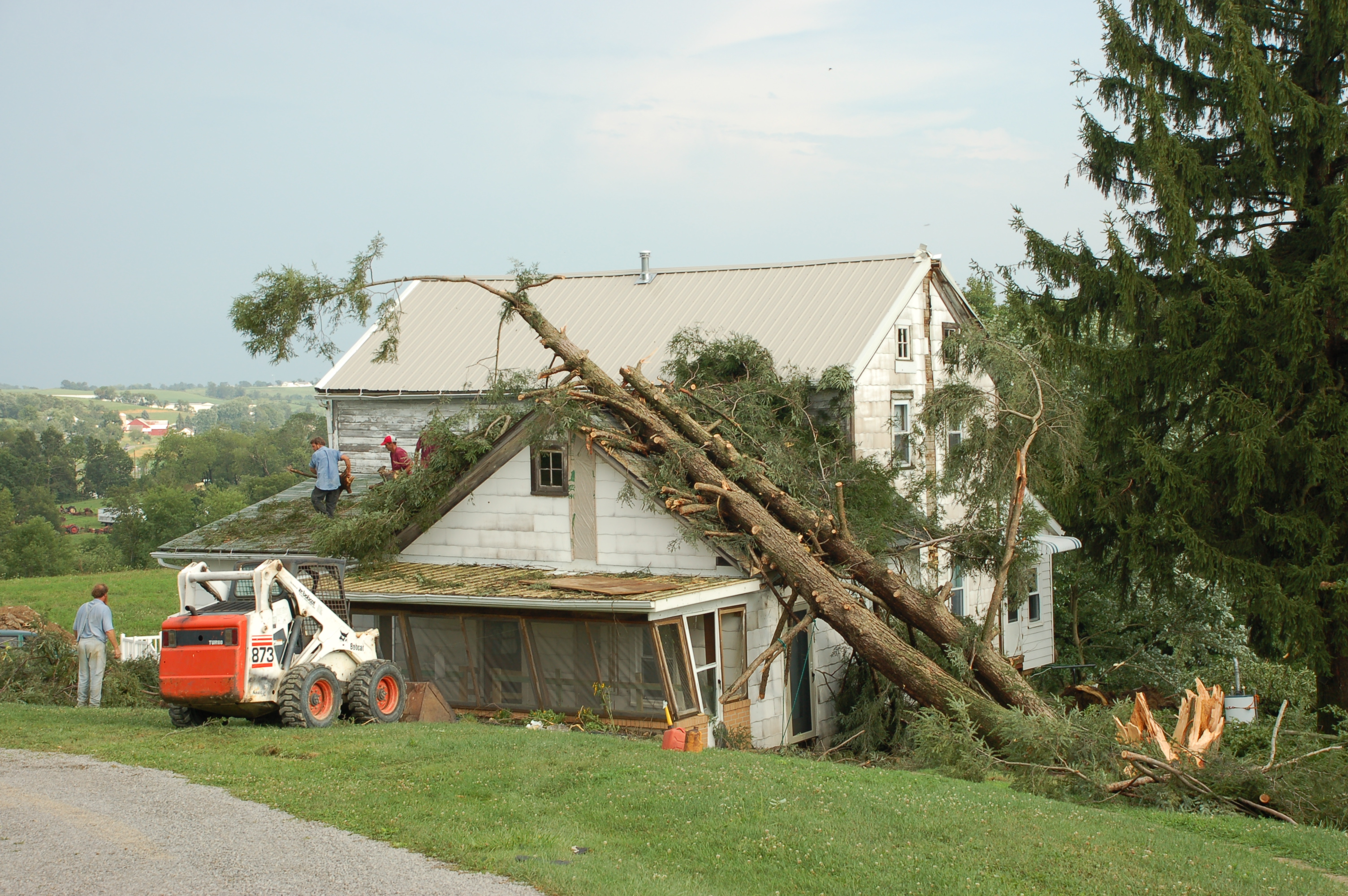
If anyone ever wanted a snapshot of what defines this community, the beehive of activity in the aftermath of the storm that recently hit the Charm, Ohio area would perfectly frame that picture.

No sooner had the trees plummeted onto homes, buildings and roadways, than residents were out and about checking on one another. With the good fortune of finding no injuries, the cleanup began in earnest.

Helping hands by Bruce Stambaugh
Neighbors pitched in immediately to help clean up the debris left by the severe thunderstorm.

Four-wheelers, tractors, Bobcats, track hoes, and even monster skid loaders ran up and down skinny township roads. Their drivers and passengers stopped to assist wherever help was needed.

A man driving through the area just happened to have his chain saw in his pickup. With trees in his way, he did the logical thing. He cranked up his chain saw and began cutting. Drivers of a trio of semitrailers lined up behind him exited their cabs and joined in. He sawed. They pulled the limbs aside.

That proactive scenario was repeated a multitude of times throughout the Charm area. The volunteers weren’t asked to do this important work. They simply did so because it needed to be done, and they had the tools and the talent to do it. More than that, the desire to assist their neighbors in need drove them into action.

This was no time to feel sorry for yourself. Those receiving the aid worked side-by-side with the volunteers.

The response to this latest calamity in Holmes County was immediate and spontaneous, as it always seems to be no matter where the misfortune happens. Whether it’s a fire, devastating illness, serious flood or a severe thunderstorm, citizens come to the aid of others. Time and again people automatically go above and beyond the call of duty.

Barn destroyed by Bruce Stambaugh
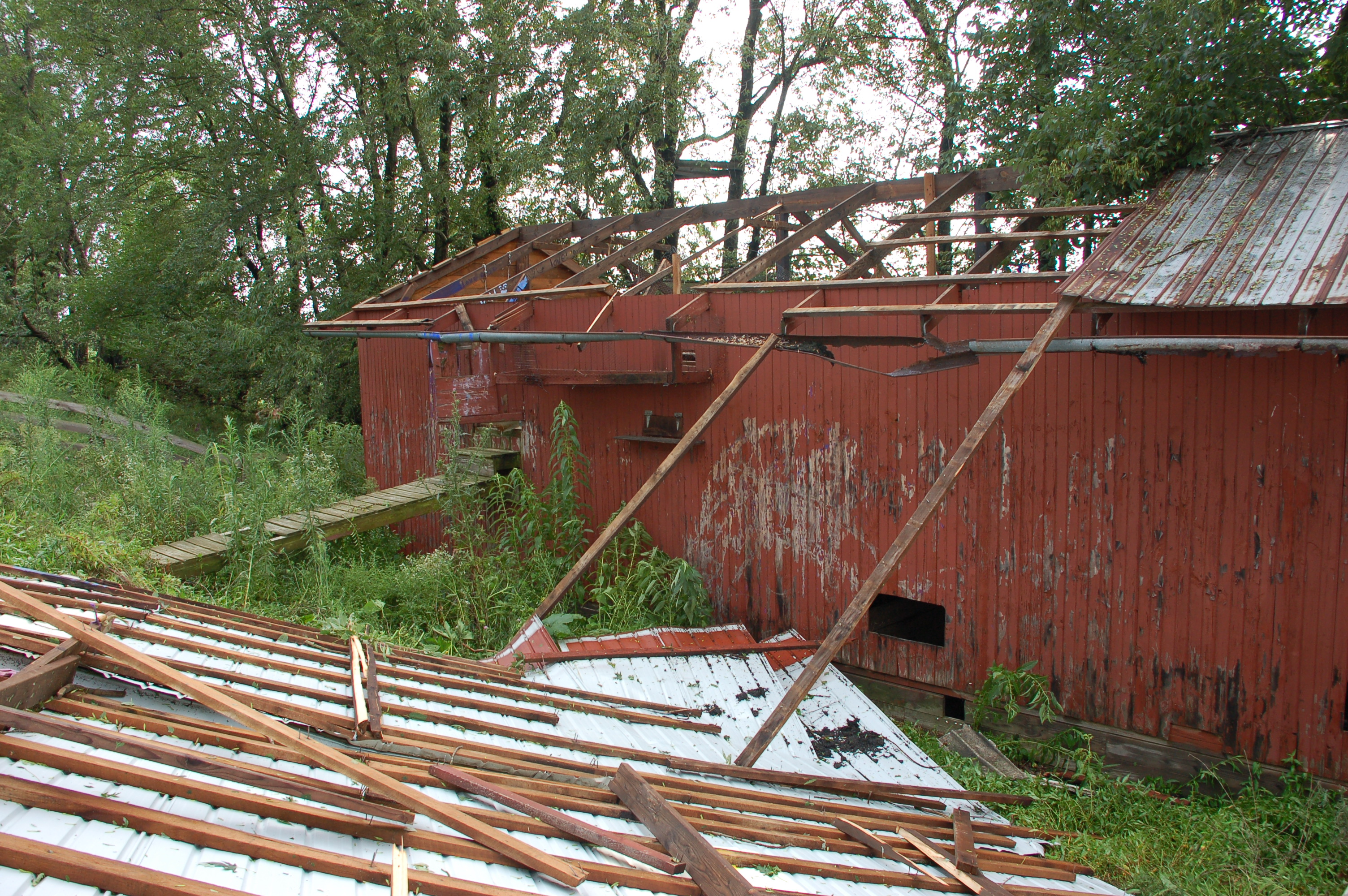
My friends' barn roof was ripped off by the microburst.

My wife and I got caught up in the flurry of activity in Charm. We went to check on the property of friends who live near Charm but were on vacation. The 80 mph microburst winds ripped the roof off their small barn and scattered anything not nailed down for hundreds of yards.

What we witnessed as we made our way to and from the farmstead was truly amazing, though not unexpected. In disasters like this, citizens in Holmes County by and large do the right thing. No police supervision was needed.

Road crews by Bruce Stambaugh
Residents, neighbors and road crews pitched in to clear roadways.

An hour and a half after the storm, roadways had been cleared of giant trees and other debris strewn by the incredible hurricane-force, straight-line winds. Houses, too, were already being repaired.

Everywhere we went people and machines were working to clean up the mess. They didn’t call the fire department. They didn’t wait on road crews, though at least one township had its personnel out clearing roads.

People saw the needs, and their inherent work ethic simply kicked in. The cleanup was on. Strangers helped strangers. Friends helped friends. It was a marvelous operation to observe and be a part of.

House damage by Bruce Stambaugh
This house sustained heavy damage from the large pines blown onto it.

One particular setting ideally modeled both the community spirit and gracious gratitude. Hands that had cut up a large severed pine gathered around a picnic table. Grateful hands placed offerings of nourishing food for the thoughtful helpers. Together they shared a simple meal. Kindness is contagious.

By any definition, that is how a community is supposed to work and commune. That scene has been duplicated many times in the past, and most likely will be again in any future adversity that hits our rural haven.

Staying connected is really important

By Bruce Stambaugh

It didn’t take long for our year and a half old granddaughter to warm up to me when my wife and I visited with her and her family recently in Virginia. Since we live in Ohio, we don’t get to interact with them as much as we would like.

Once Maren felt comfortable in my presence, she was fascinated with my bald head. When I bent down to her toddler level, the beautiful little girl boldly reached out and patted my baldness.

Now and then, after patting and rubbing my head, she would move her hand down, and jab her dimpled index finger into my beard. That little gesture generated an ornery laugh from the precocious Maren.

Granddaughter by Bruce Stambaugh
Poppy and Maren

It was as if she were saying, “If Poppy can grow hair on his face, why can’t he grow it on top of his head?” I’d like to know the answer to that question, too.

Maren was connecting with me inquisitively, creatively. Her affectionate patting and prodding warmed my heart. I truly felt connected.

Near the end of our extended stay in the beautiful Shenandoah Valley, I attended a two-day conference entitled “Conversations on Attachment.” It was about how we humans interconnect with one another, and why it’s so important, even for bald guys.

The words of the various articulate speakers evoked mental examples of meaningful interactions with others. I felt blessed.

Here were renowned psychologists, doctors, therapists, professors and theologians providing well-researched and published theories and studies confirming what I already believed. Humans are social beings designed to be interdependent. We are intended to live in community and in close relationships. One speaker described the collective process of positively relating with others as “a shared humanity.”

Before my wife and I left for our Virginia visit, our son and his wife graciously hosted us for dinner. Knowing how well they cook, I was more than glad to accept their kind invitation in honor of our 40th anniversary.

In addition to the magnificent food, we were pleasantly surprised with the inclusion of the best man at our wedding and his wife. The couple has been lifetime best friends with us. It was an engaging evening of delightful conversation and cuisine.

Texas BBQ smoker by Bruce Stambaugh
Son-in-law, Daryl Bert, and his Texas barbecue smoker

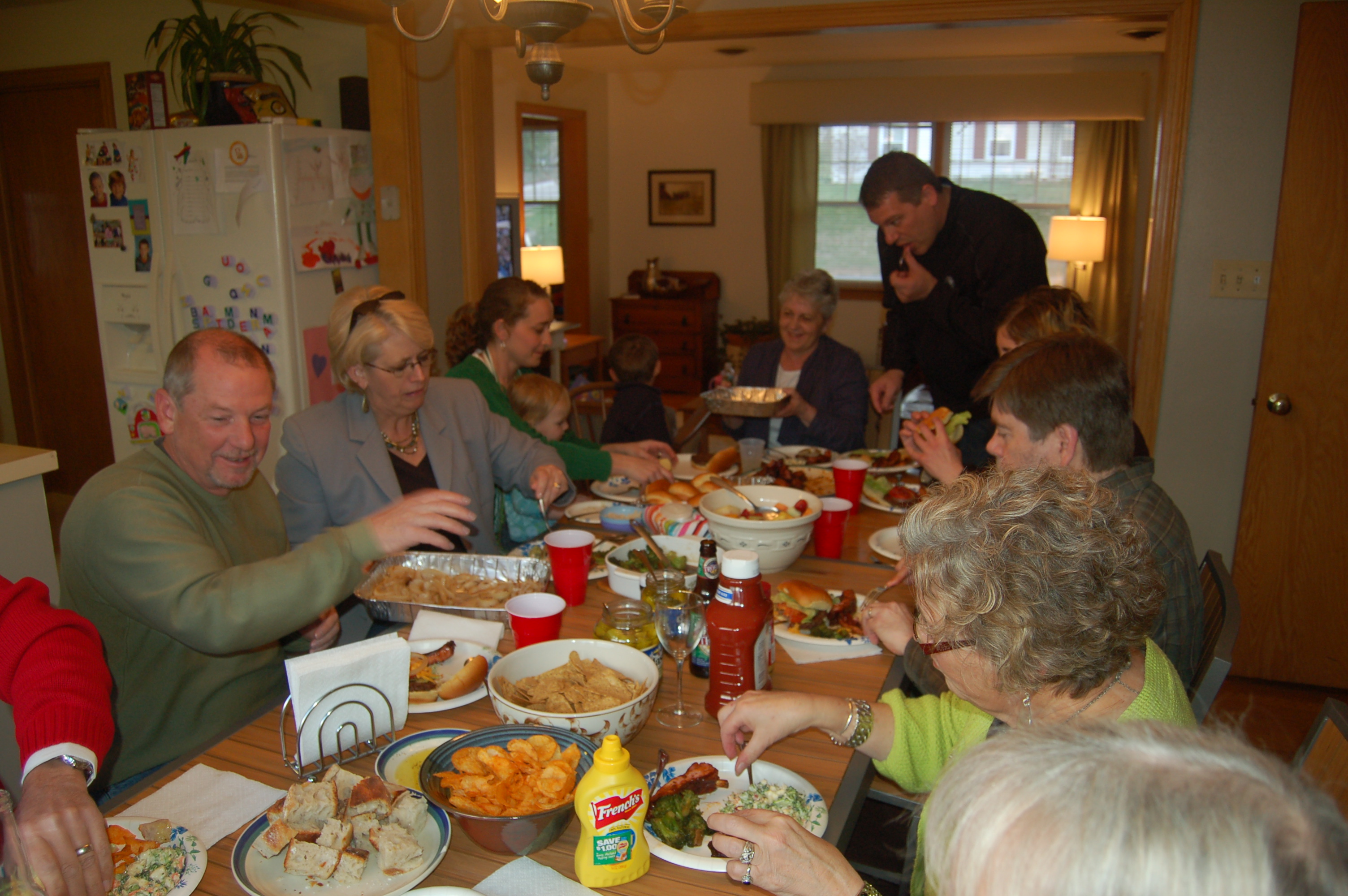
Before leaving Virginia, our daughter and son-in-law repeated the surprise performance at our last supper there. Using his best transplanted Texan barbecue skills, we dined on smoked pork ribs and incredible grilled burgers.

Again, we didn’t feast alone. Our daughter clandestinely invited four couples we had known over the years and with whom we had oft interacted. Now they all lived near her. She also invited our niece, a fellow Virginian. Just like before, we had no idea they were coming.

They each brought their own delicious dishes to complement the meaty main course. When the scrumptious meal wound down, our daughter had the guests disclose how they knew us. As the sharing evolved, something truly amazing unfolded. Though some around the table had never met, as they listened they realized they knew some of the same people mentioned in the various stories.

Their connecting with one another generated joyous revelation. The combination of the great food, inspiring conversation and spontaneous connectivity made it a truly fulfilling gathering. We had held our own attachment conference.

The great food, lively conversing and personal discoveries around the table equated with patting me on the head and poking my beard. I couldn’t get more attached than that.

Kermit Miller wears many hats

By Bruce Stambaugh

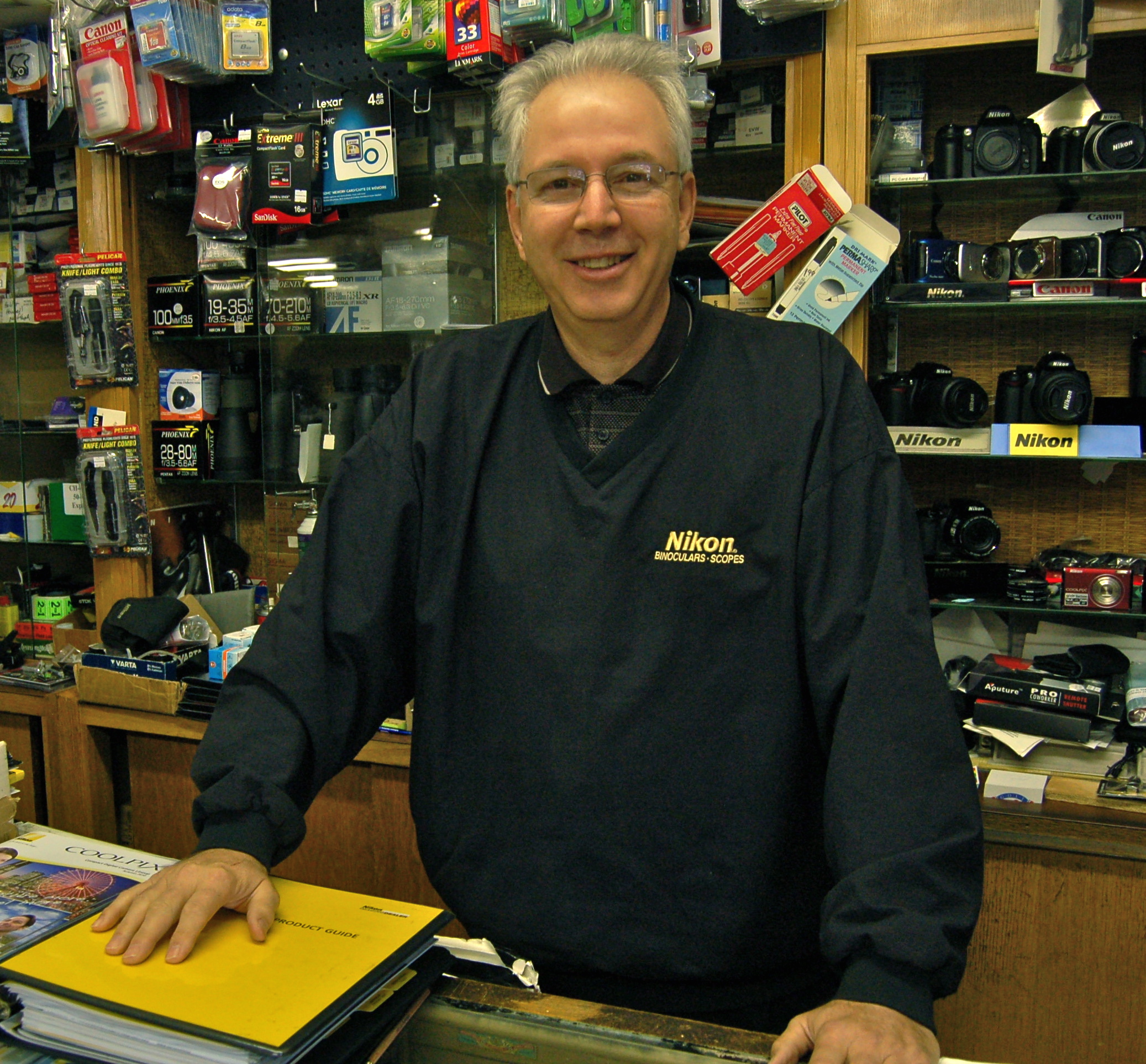
Kermit Miller sells several different styles of hats in the general store he and his wife, Pam, own in Walnut Creek, Ohio. Civic minded as he is, Miller wears various hats for the community, too.

Born in Millersburg, Miller, 59, returned to his native Walnut Creek after graduating with a degree in business from Heidelberg College in Tiffin. Naturally, he also returned to work at Schlabach’s Store where he was named manager in 1973.

Miller said he had worked for Schlabach’s since he was in the fourth grade.

“I was in charge of parking lot maintenance,” he said in his wry humor. In other words, he cleaned up after the horses.

“I still have to do that,” Miller said. Of course, that is because he and Pam are the only employees and somebody has to do that job.

That may be Miller’s philosophy when he takes off his business owner hat and puts on his water board hat. He keeps that cap close by since people call him at the store with concern and pay their water bills there.

Miller is the president of the Walnut Creek Water Company, a non-profit organization that supplies water to nearly 300 customers in the Walnut Creek area. Miller has served on the board since 1979. In that time he has seen much change with water delivery, including monitoring the water levels.

“It used to be that we knew we had a problem when the tower ran out of water,” Miller said. “Now we monitor the water level electronically.”

The addition of the water treatment plant, thanks to a USDA loan in 2007, was a big help, too, according to Miller. Of course, he put on his research hat to help provide answers to some of the many background questions required to get the loan.

“That took a lot of time,” Miller said. “Of course, I wasn’t the only one who helped with that.”

Cash flow is important to Miller in other ways. That’s another hat Miller dons. He is treasurer of the German Culture Museum, which just relocated from an old wood-framed home into its new headquarters on Olde Pump Street in Walnut Creek.

Miller said the dedication was held on August 14 to coincide with the opening of the original museum, which was August 14, 1982.

“Instead of lots of small rooms,” Miller said, “we now have a 60 by 90 foot open space to properly display historic items from the area.”

The late Ruth Schlabach, the previous owner of Schlabach’s Store, donated the land with the community in mind for the new building, which also houses a community room, township office, and branch library.

“The community provided the donations to pay off the cost for the building in three years,” Miller said. “We are grateful that the library board recently decided to reopen the east branch here.”

Kermit Miller by Bruce Stambaugh
Good deals and a friendly approach has kept a steady stream of customers to Kermit Miller's Schlabach's Store in Walnut Creek, Ohio.

Miller wore his appreciation hat when he nominated local resident and museum board president, Larry Miller, for the Ohio Individual Achievement Award given by the Ohio Local History Alliance. Larry Miller portrayed “Der Weiss” Stutzman at the grand opening of the museum. Kermit Miller did the same years earlier for Roscoe Miller and Ruth Schlabach.

Another hat Kermit Miller wears is his church cap. Miller served on the consistory of St. John’s United Church of Christ for 20 years.

Miller puts on his parent hat when he and Pam visit their three daughters. Karrie Wood lives in Melbourne, Australia. Krystal Hoffman resides in Buffalo, New York, and Korrine Morrow lives in North Lewisburg, Ohio.

Miller said it is easier to visit them now since the decision was made to close the grocery store section a few years ago. Schlabach’s store sells everything from trinkets to toys.

“We knew we could find it here,” is frequently heard in the store, according to Miller. He chuckles in satisfaction that people can find what they want locally when they have searched high and low elsewhere.

There is yet one more hat that Miller is probably known best for. Tucked in the southwest corner of the 6,000 square foot retail store is a very busy camera section. It is what drives the store’s business, according to Miller.

“People come here for the service as well as good deals,” he said. “I know we can’t compete in price with the big boys, but we can more than make up for that in customer service.”

From the steady stream of customers with photo questions and purchases, Miller’s camera hat gets worn a lot.

Gale Hershberger is the people’s people person

Gale Hershberger by Bruce Stambaugh
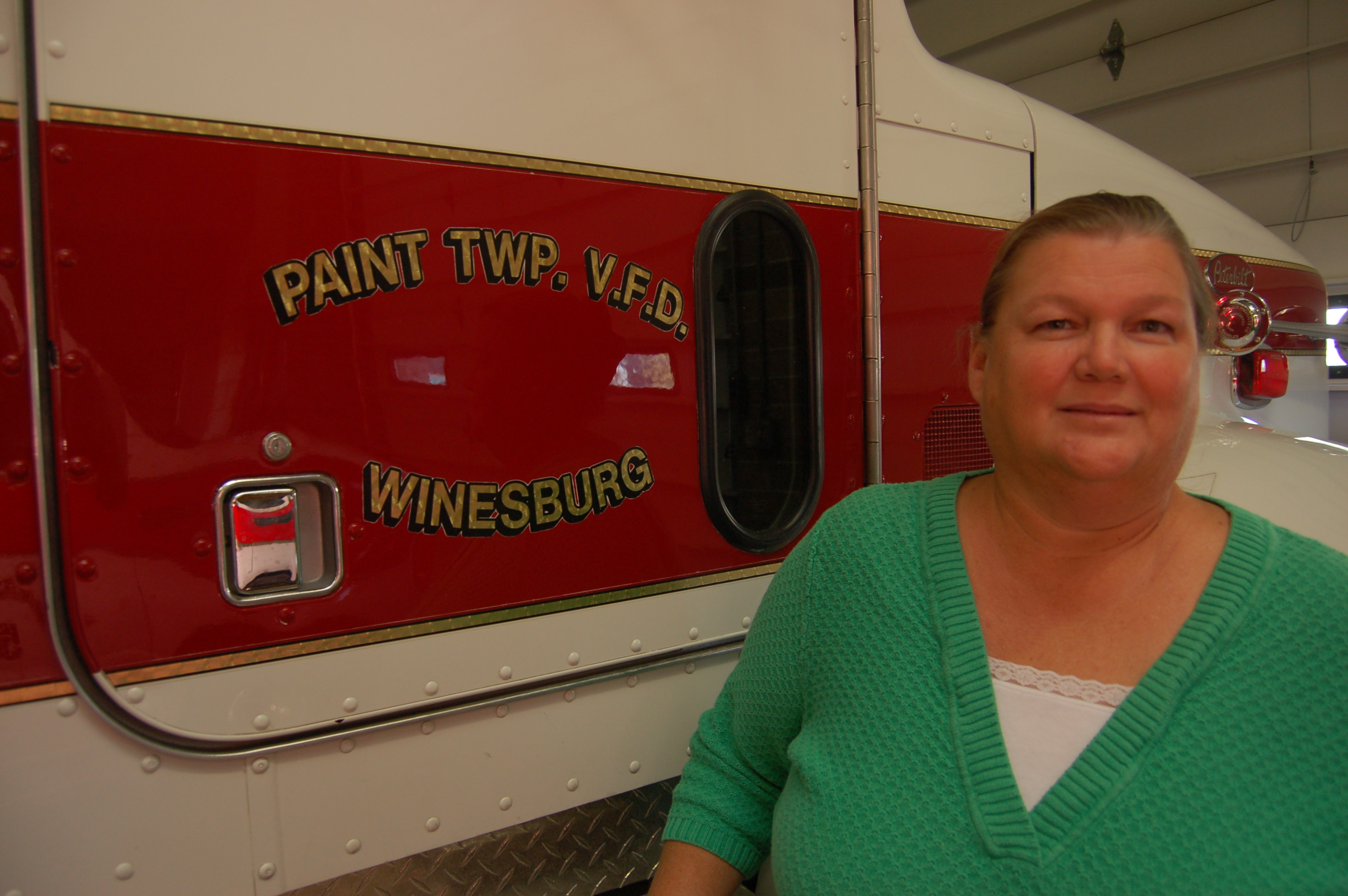
Gale Hershberger has been president of the Winesburg Vol. Fire Dept auxiliary for 25 years.

By Bruce Stambaugh

When the fire pagers sound, Gale Hershberger listens up.

She’s not a firefighter, but over the years, many volunteer first responders have been glad to see her show up at a working fire.

Hershberger, 50, has been president of the Winesburg Volunteer Fire Department auxiliary for longer than she cares to remember. It’s actually been 25 years. She and a dozen other women make sure tired, thirsty, hungry and sweaty firefighters have the necessary nutritional supplies to keep them going.

Hershberger’s husband, Tim, is not a firefighter either. So what got her involved in the auxiliary? It’s her penchant to serve, and her people-person personality that causes her to head for the fire station at 3 a.m. on a cold winter’s night or on the most humid afternoon of the summer.

“I see a need,” Hershberger said, “and I like to help fix it.”

Hershberger said she learned early on the importance of helping others. The Dover native would accompany her mother volunteering at their church.

“I like to think that I am observant of what goes on around me,” she said. “I like to be here to help people.”

Indeed, that is exactly what Hershberger has done throughout her life.

For 18 years, she has worked as a teacher’s aide in the East Holmes Local School District. In addition to the fire department Serve them she has. Aside from the fire department auxiliary and the 4-H involvement, Hershberger is also a board member for the Holmes County Chapter of the American Red Cross.

Hershberger sees that as natural fit for her and her fire department involvement.

“We were called to the Glenwood apartment fire in Millersburg with the auxiliary,” she explained. “Our first concern was providing for the needs of the firefighters, handing out water, Gatorade and snacks.”

Once the fire died down and the mop-up began, Hershberger automatically switched into the Red Cross mode and began assisting the fire victims. That’s just how she is.

“I feel I don’t do that much,” Hershberger said modestly. “There are people who work at much bigger, better things than me.”

But her efforts don’t go unnoticed. The volunteer firefighters have come to know that if Winesburg is on scene, the auxiliary and the needs they fill will be there, too.

“If the guys go, we go,” Hershberger said simply.

Hershberger received the 2009 4-H Alumni of the Year award. And recently she received a cute card of appreciation from a 4-H’er that meant a lot to her.

Hershberger also co-coordinates the Red Cross blood drive at Winesburg six times a year. The campaign is held in the Zion Reformed Church annex across the street from the fire station.

Like most volunteer fire departments, Winesburg (Paint Township) has its share of fundraisers. Of course, Hershberger can be found in the middle of all the efforts, whether it’s a chicken barbeque, auction, soup and salad supper, or pancake and sausage breakfast.

Hershberger said that over the years the auxiliary has been able to purchase the Jaws of Life, a heart monitor and new tables with money raised from fundraisers. Just ticking off that list brought a smile of satisfaction to Hershberger’s face.

Given what she has done with working for others, that smile may have been a peek inside her heart.

This story appeared in the Holmes Bargain Hunter.