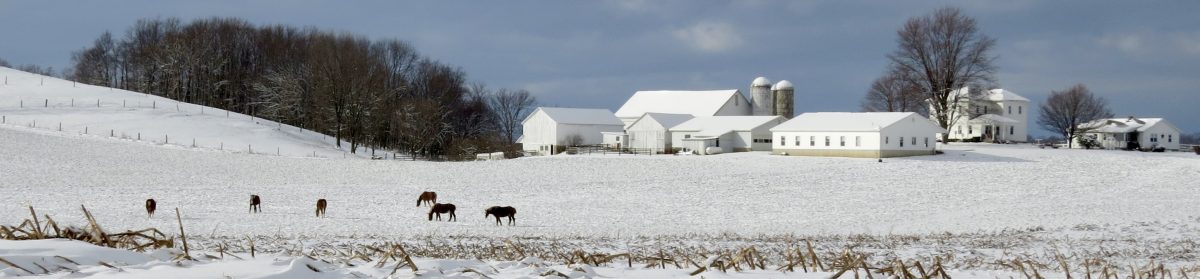
August is the quiet month

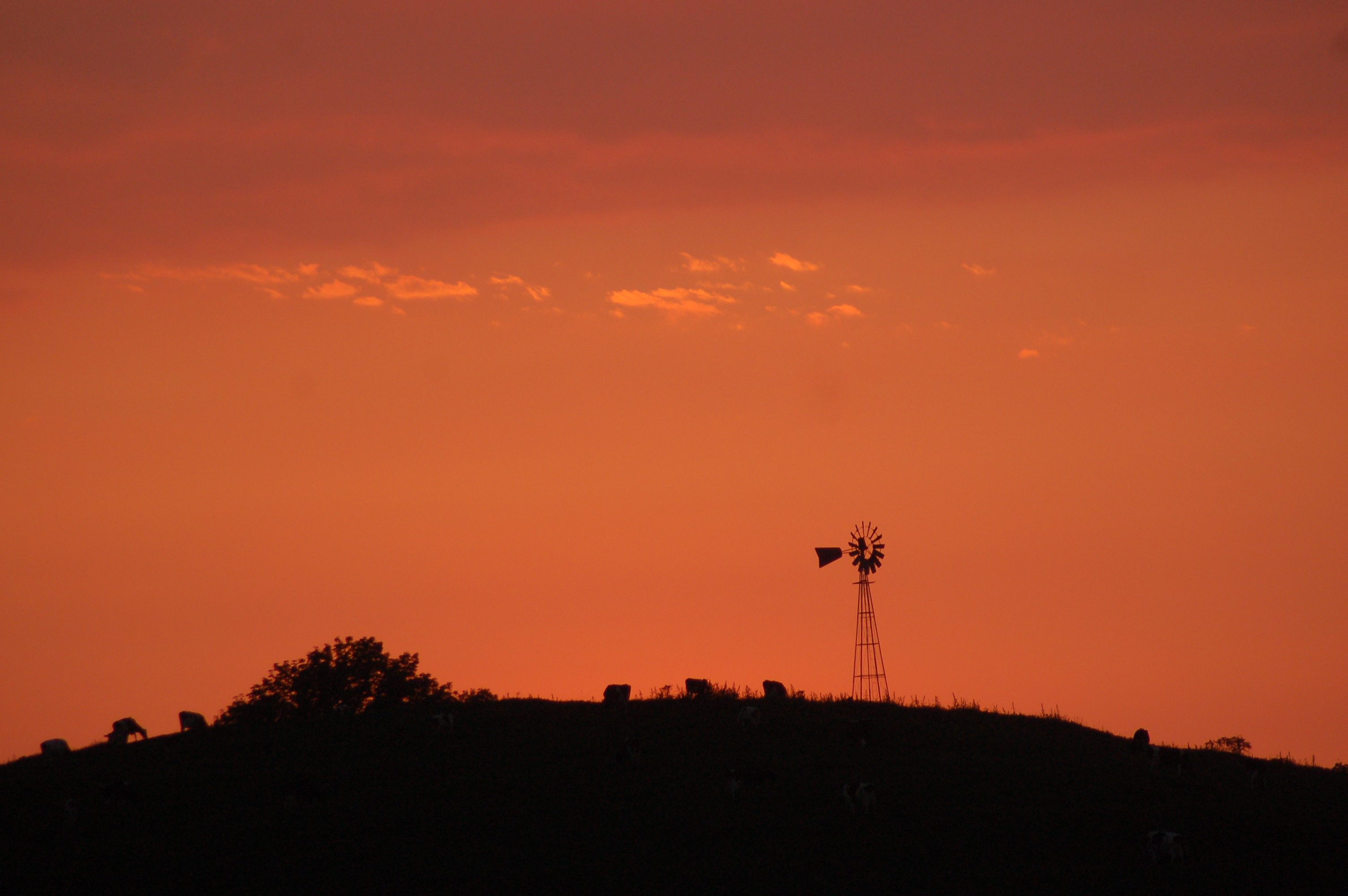
August sunset by Bruce Stambaugh
A typical August susnet in Ohio's Amish country.

By Bruce Stambaugh

I have always thought of August as a transitional month, the days between busy, boisterous July and the revitalizing September.

August is the stepping-stone from summer’s onslaught of activities into a pre-fall mentality. Vacations wind down for most people. It’s back to school and back to work.

If we take time to halt our busyness, our clamor to re-ready ourselves for the new school year at hand, we can take note of this calendar bridge from tilling to harvest, from clamor to order. In its intermediary mode, August seems to quietly take it in stride.

The songbirds no longer need to announce their territory or impress their mate. The young have flown the coop, or more properly stated, the nest, and bird life has returned to seeking daily subsistence. The American Robin precisely models the point.

From April to July, the Robins paired off, warbled their luxurious choruses almost continuously sunup to sundown. They pecked on windows, noisily flitted off their nests when disturbed and faithfully fed their young.

The Robins were ubiquitous in both presence and song. People often comment when they see their first Robin of the spring.

First Robin by Bruce Stambaugh
People often remark when they spot their first Robin of the spring.

Now, in late August, the Robins have all slyly retreated to their preferred nomenclature. They are more than content to while away the day searching for food deep in the recesses of the shade and forest.

Think about it. When was the last time you either heard or saw a robin? They simply and silently slipped away unnoticed.

If they haven’t already, other bird species will soon be disappearing from the area altogether. The Purple Martins, Barn Swallows and Common Nighthawks all heed their interior instinctive urgings and vanish unseen much like the Robin. We under-appreciate their massive consumption of insect protein until it’s too late to thank them.

Just as quietly, the multiple greens of fields and pastures have grown taller, richer. Chameleon-like, they have morphed into emeralds, tans and russets with hardly a rustle.
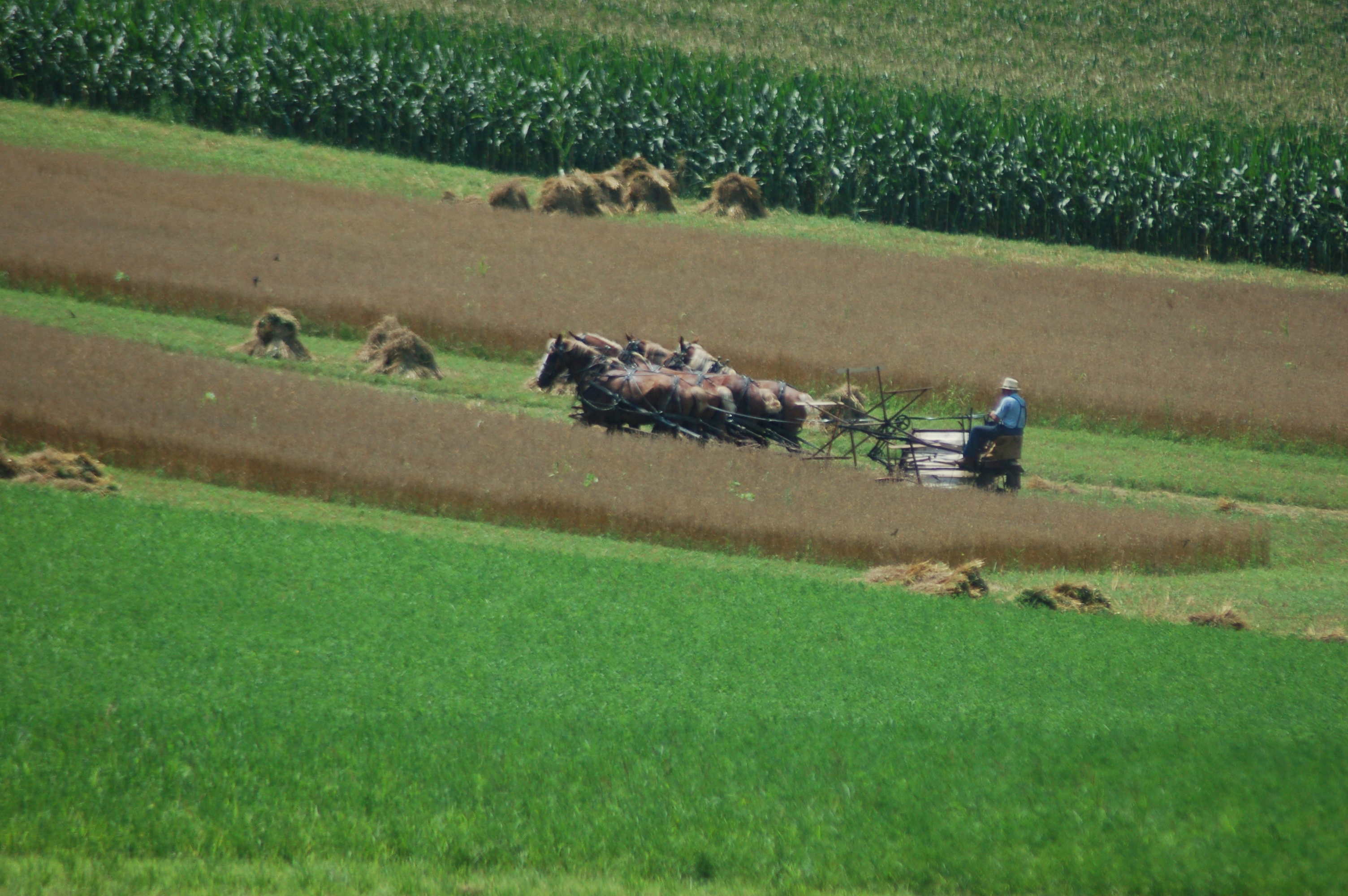
August harvest colors by Bruce Stambaugh
The colors of August change from day to day.

Farmers have taken in their wheat and most of their oats matter-of-factly, and now tolerantly wait the drying of the later cash crops, corn and soybeans. There is no mechanized clanking in patience.
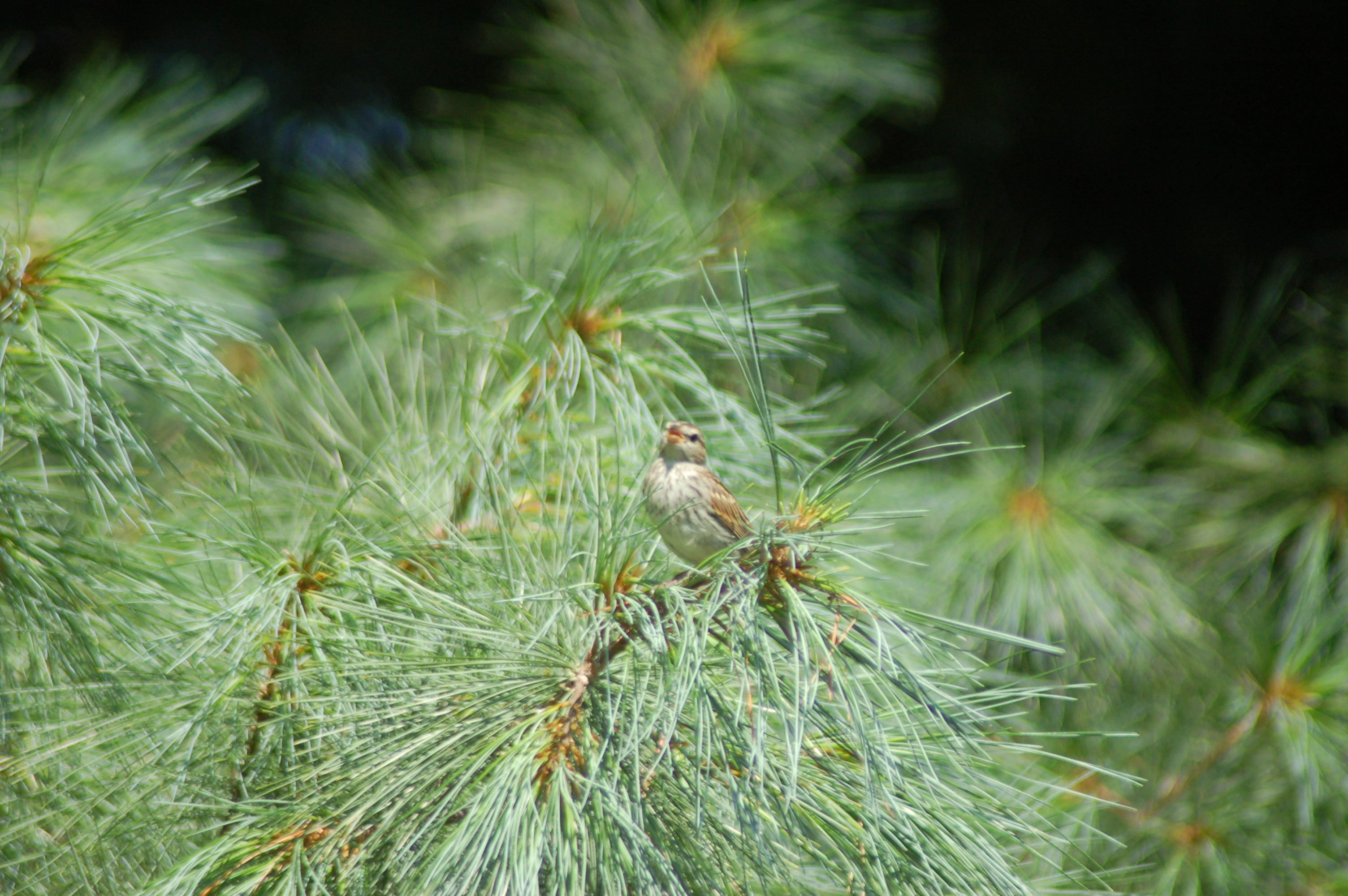
Song Sparrow by Bruce Stambaugh
A Song Sparrow sings away.
The Song Sparrow still belts out an occasional composition, but nothing as regular as it had been earlier in the season. The House Wrens, once so noisy they approached annoyance, have taken to the underbrush, giving their last brood endurance lessons.

August’s atmosphere also has been quieter than the previous months, save for a couple of late night thunderstorms. The brilliant flashes and deep, rolling booms shattered my sleep like Civil War cannon fire might have. Midnight imaginations run wild when deafeningly jolted.

The few sounds of August we can count on are more monotonous and so commonplace we may not even notice their calls. Cicadas and crickets signal day and night. With windows thrown open to catch the unusual August twilight coolness, the insect symphony has helped humans settle in for sound sleeping.

Every now and then a ranging coyote howls from atop the neighbor’s pastured hill, if for no other reason than to drive the tethered neighborhood canines crazy. The feral call is one thing. The domesticated is another.

Now that school years in most locales begin well ahead of September, the playful echoes of children rollicking at recess again fill the air. It’s a timbre I love to hear over and over again, even if it does break August’s amazing silent spell.
Amish school by Bruce Stambaugh

From book seller to book author, Wesner connects with the Amish

By Bruce Stambaugh

Erik Wesner, 33, went from selling books to the Amish to writing one about them. It was an unexpected but enjoyable trek for the Raleigh, North Carolina native.

“I kind of stumbled into it beginning in Arthur, Illinois,” Wesner said.

Erik Wesner by Bruce Stambaugh
Erik Wesner
Wesner went door-to-door selling books for nine years. His job took him to many communities around the country where Amish had settled.

“The kind of books I was selling were appropriate for them,” Wesner said. He explained that they included sets of family Bible study books.

Whether he spent five minutes or 20 minutes with each household, he liked what he saw and heard. He was impressed with the inquisitiveness of the Amish, their resourcefulness and friendliness.

Wesner graduated from the University of North Carolina with a double major of English and economics. It was that knowledge that caused him to take notice of something else that he found common among the Amish.

“Everywhere I went in the Amish communities,” Wesner explained, “I saw successful businesses.” He said he was intrigued with that pattern, especially since most of the entrepreneurs were self-taught and didn’t have either high school or college degrees.

“While visiting in Amish-owned businesses, I saw customers who had driven three hours from Indianapolis and Chicago to make purchases,” he said. “I figured that was a sign of quality and honesty.”

Wesner couldn’t help but notice the continued success of these businesses in each Amish community he visited, even given the down economy.

“From Iowa to Illinois to Lancaster, Pennsylvania to Holmes County, Ohio, I found many success stories to share,” he said. That instilled in him a desire to learn about how they were able to not just survive but thrive when other businesses were not.

That intrigue lead to his book, Success Made Simple, an extensive review of Amish-owned businesses and what makes them consistently tick and click. His book is based on many interviews with Amish business folks across the country.

Wesner said though the book didn’t make the best-seller list, he gained something even more rewarding.

“Through all of this, I have made many friends among the Amish,” he said. That is what brought him back to Holmes County recently. He was visiting some New Order Amish in the Shreve, Ohio area.

In addition to his book, Wesner started a blog called “Amish America” right after the Nickel Mines incident in Lancaster County, Pensylvania in 2006. A gunman shot several Amish schoolgirls. The story made headlines worldwide.

“I didn’t like some of the things I saw and heard following that tragic situation,” Wesner said. Since he enjoys writing, he began the blog at http://amishamerica.com/.

The blog features stories and photographs of various Amish communities. He said he writes about and shows examples of everyday Amish life without trying to glorify it.

“I really enjoy the immediacy of the blog,” Wesner said, referring to the immediate posting of comments by some of his many followers. “I find that very rewarding.”

Wesner said there have been unexpected benefits to his blog.

“I mentioned an Amish business on my blog,” he said, “and the owner thanked me. She had customers who said they heard about her business by reading the blog.”

Wesner said he is working on a second book about the Amish. He said it would focus on the lesser-known things about the Amish lifestyle.

When he is not visiting Amish communities during the summer months, Wesner spends eight months out of the year teaching English in his parents’ home country of Poland. He said his students are mostly adult professionals who need to learn English for their jobs.

“I guess I feel a sense of obligation,” Wesner said about living in Poland. “My grandmother still lives there, and I didn’t want her to feel alone.”

That kind of dedication to family would resonate well with the Amish culture, too.

Walking with grandsons

Amish oak shocks by Bruce Stambaugh

“Hold my hand, Poppy.”
The sweetest words ever heard
on my daily stroll.

Bruce Stambaugh
August 19, 2011

Corn and grandchildren are both Incredible

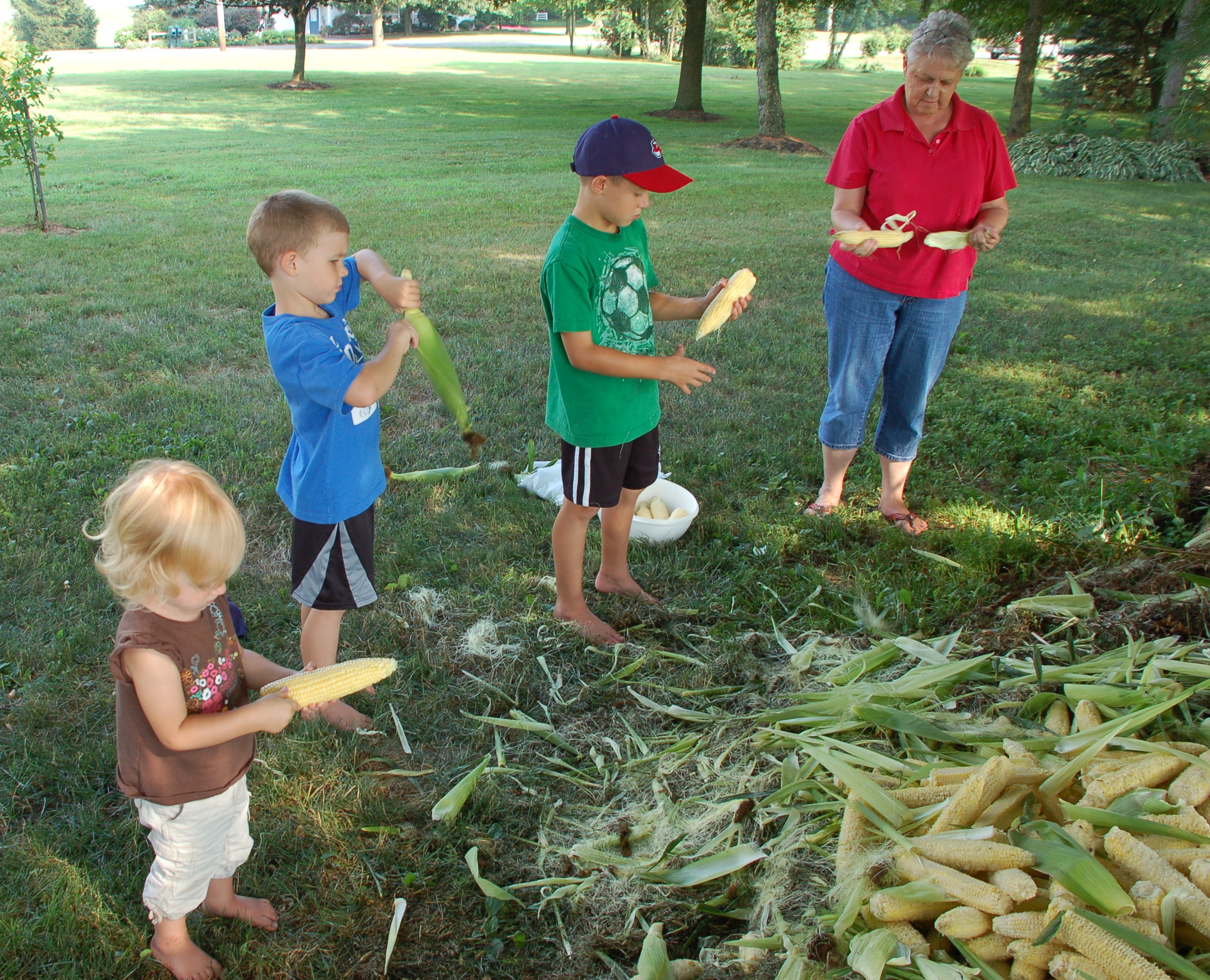
Husking corn by Bruce Stambaugh
Everyone pitched in to help husk the sweet corn.

By Bruce Stambaugh

We have begun a corny, new tradition in the family.

In June 2010, our daughter and her family moved from their beloved Austin, Texas to Harrisonburg, Virginia in the lovely Shenandoah Valley. As much as we enjoyed visiting them in the Lone Star State, we were thrilled that they would be much closer to us geographically.

True, driving the 350 miles across eight mountain passes approximated the flying time to Austin. The cost, however, was much less to travel overland than in the air, and more convenient, too.

My wife and I liked to visit Carrie and her family in Texas in late fall when the weather there was more favorable than the ever-changeable stuff of Ohio. On those autumn excursions, we often packed an extra suitcase, not for us but for them. It was filled with nothing more than several containers of frozen Incredible sweet corn. It was their winter supply of vegetable sweetness.

Slider and grandsons by Bruce Stambaugh
Slider teased our grandsons at a Cleveland Indians game last summer.

Last August our daughter and her three children drove from their Virginia home to ours in Ohio to help with the corn preservation process. Their extended stay gave us a chance to do up the corn and for them to explore the germane niceties of our area. Carrie returned home with the corn and the youngest, Maren, a few days later, leaving us with the two boys, Evan and Davis.

This year they repeated the process, only this time our wise and cunning daughter escaped with the Incredible and in appreciation for the golden gift left us with the trio of grandchildren, ages seven, five and 22 months. We couldn’t have been happier.

Last year, Nana and I took the boys to their first Cleveland Indians game. The highlight of the evening occurred off the field. Slider, the Tribe’s mascot, pounced on the boys, teasing them with hugs and tweaking their ball cap brims.

Last week, we repeated that experience, only with Uncle Nathan, our son, pinch-hitting for Nana, who was home entertaining toddler Maren. Unlike the perfect evening of a year ago, we witnessed two innings of baseball and two hours of drenching rain.

Corn silk by Bruce Stambaugh
Our granddaughter, Maren, was pretty picky when it came to removing the corn silk.

The baseball games were rewards for everyone pitching in to help with the corn process. Evan and Davis helped husk. Even little Maren joined in by removing the tickly corn silk from several cobs. She was meticulous in her task, determined to get every last strand.

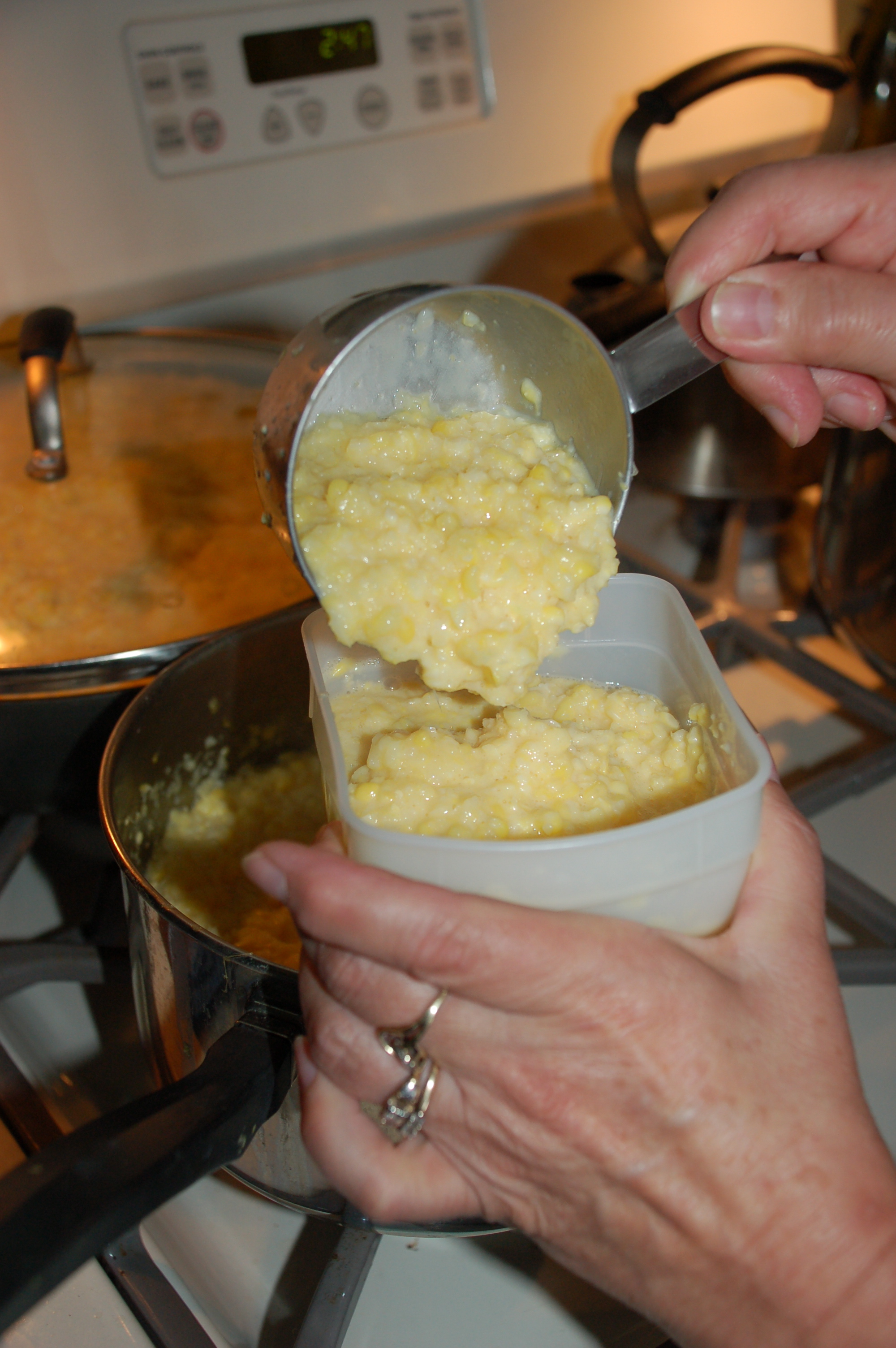
Nana, of course, coordinated the corn coronation. She prefers to cut the kernels from the cobs before cooking it. She says it goes a lot faster. Once the cooking is completed, it’s simply a matter of finding enough containers to cache the corn.

We were amazed at Maren’s vocabulary and inquisitiveness, which included willingly participating in the corn fest. Her long sun-bleached curls matched the shade of the corn’s yellowy ears.

Cooked corn by Bruce Stambaugh
After the corn is cooked, it is ladled into containers to be frozen.

Evan and Davis had grown, too. Lanky and imaginative, they had no trouble keeping busy without getting into too much trouble. Of course, at mealtime, locally raised corn on the cob was a favorite.

At week’s end, we met their mother halfway in southwestern Pennsylvania to return the children to their rightful owner. That’s one of the advantages of being grandparents.

All in all the mix of grandkids and corn made for an Incredible time together. It’s a sweet, new tradition that I hope lasts longer than the frozen corn usually does.

Marshy field

Geese in oats by Bruce Stambaugh

Beside oat soldiers
squads of geese, ducks and shorebirds
glean the marshy field.

Bruce Stambaugh
August 16, 2011

Response to disaster defines community

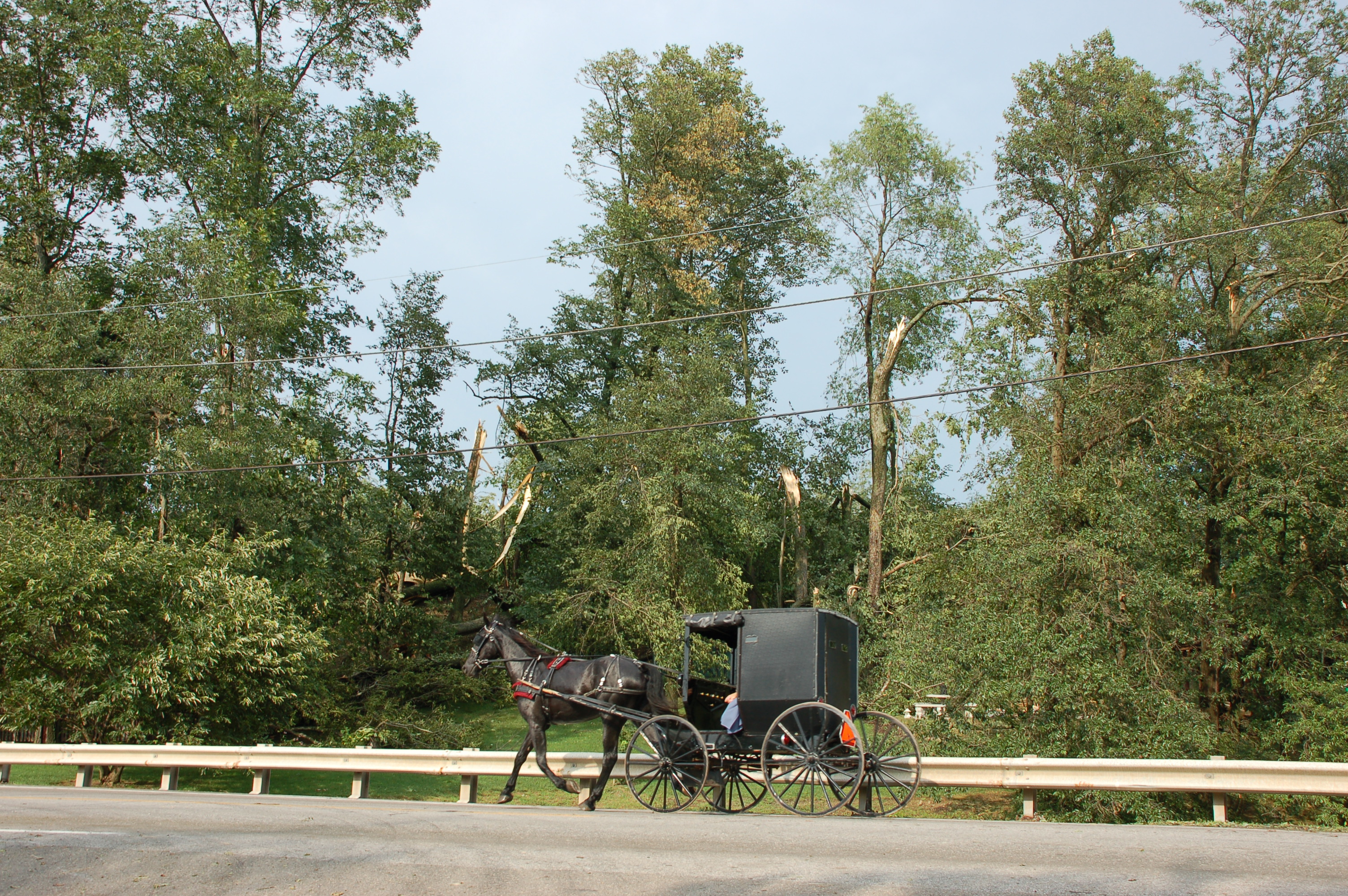
Buggy charm by Bruce Stambaugh
A horse and buggy rolled by some snapped off trees north of Charm, Ohio.

By Bruce Stambaugh

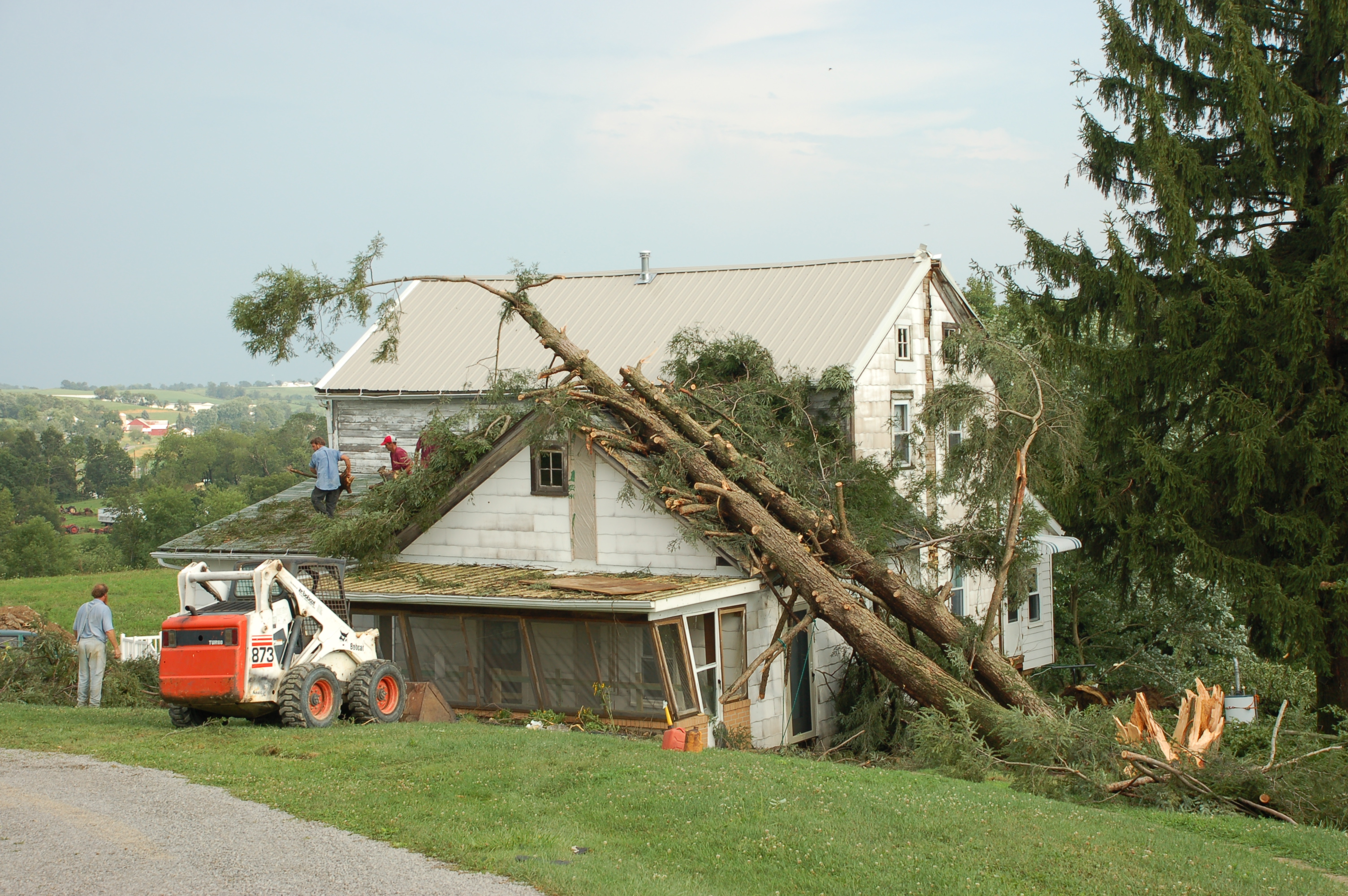
If anyone ever wanted a snapshot of what defines this community, the beehive of activity in the aftermath of the storm that recently hit the Charm, Ohio area would perfectly frame that picture.

No sooner had the trees plummeted onto homes, buildings and roadways, than residents were out and about checking on one another. With the good fortune of finding no injuries, the cleanup began in earnest.

Helping hands by Bruce Stambaugh
Neighbors pitched in immediately to help clean up the debris left by the severe thunderstorm.

Four-wheelers, tractors, Bobcats, track hoes, and even monster skid loaders ran up and down skinny township roads. Their drivers and passengers stopped to assist wherever help was needed.

A man driving through the area just happened to have his chain saw in his pickup. With trees in his way, he did the logical thing. He cranked up his chain saw and began cutting. Drivers of a trio of semitrailers lined up behind him exited their cabs and joined in. He sawed. They pulled the limbs aside.

That proactive scenario was repeated a multitude of times throughout the Charm area. The volunteers weren’t asked to do this important work. They simply did so because it needed to be done, and they had the tools and the talent to do it. More than that, the desire to assist their neighbors in need drove them into action.

This was no time to feel sorry for yourself. Those receiving the aid worked side-by-side with the volunteers.

The response to this latest calamity in Holmes County was immediate and spontaneous, as it always seems to be no matter where the misfortune happens. Whether it’s a fire, devastating illness, serious flood or a severe thunderstorm, citizens come to the aid of others. Time and again people automatically go above and beyond the call of duty.

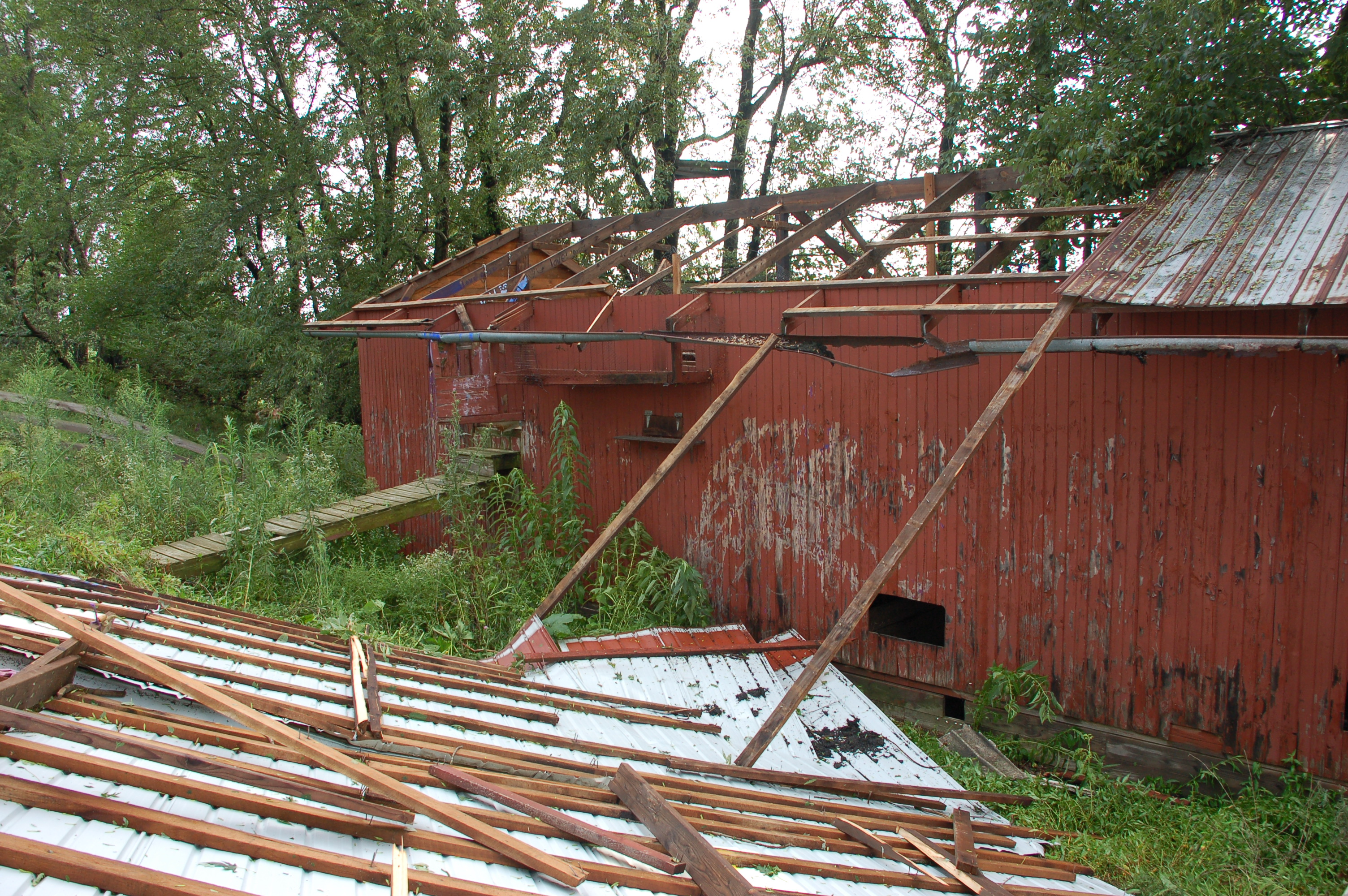
Barn destroyed by Bruce Stambaugh
My friends' barn roof was ripped off by the microburst.

My wife and I got caught up in the flurry of activity in Charm. We went to check on the property of friends who live near Charm but were on vacation. The 80 mph microburst winds ripped the roof off their small barn and scattered anything not nailed down for hundreds of yards.

What we witnessed as we made our way to and from the farmstead was truly amazing, though not unexpected. In disasters like this, citizens in Holmes County by and large do the right thing. No police supervision was needed.

Road crews by Bruce Stambaugh
Residents, neighbors and road crews pitched in to clear roadways.

An hour and a half after the storm, roadways had been cleared of giant trees and other debris strewn by the incredible hurricane-force, straight-line winds. Houses, too, were already being repaired.

Everywhere we went people and machines were working to clean up the mess. They didn’t call the fire department. They didn’t wait on road crews, though at least one township had its personnel out clearing roads.

People saw the needs, and their inherent work ethic simply kicked in. The cleanup was on. Strangers helped strangers. Friends helped friends. It was a marvelous operation to observe and be a part of.

House damage by Bruce Stambaugh
This house sustained heavy damage from the large pines blown onto it.

One particular setting ideally modeled both the community spirit and gracious gratitude. Hands that had cut up a large severed pine gathered around a picnic table. Grateful hands placed offerings of nourishing food for the thoughtful helpers. Together they shared a simple meal. Kindness is contagious.

By any definition, that is how a community is supposed to work and commune. That scene has been duplicated many times in the past, and most likely will be again in any future adversity that hits our rural haven.

A love affair with baseball

Slider with grandsons by Bruce Stambaugh
When Slider, the Indians maskot, hammed it up with our two grandsons, the score of the game became insignificant.

By Bruce Stambaugh

Baseball and I go way back.

I can’t remember exactly when I saw my first major league baseball game. But I do recall attending several as a youngster, often with my family.

I also recollect one of my first Little League games as a player. I was 7 years old, the youngest and smallest kid on the team. The coach put me at second base, possibly thinking that was the safest spot on the field for me. It didn’t work out that way.

Grandsons by Bruce Stambaugh
Our grandsons share my enthusiasm for baseball.

Those were the days when real baseball rules were followed no matter how young you were. The pitcher pitched, not the coach. The batters batted. T-ball was unheard of.

One hallmark of baseball is its pithy clichés. One axiom says put an inexperienced player on the field and “the ball will find him.” Well, it did me that day.

A batter lashed a one hopper right at me. The hardball jumped off the compacted all dirt infield and smashed right into my mouth. I walked to the bench with loose front teeth, bleeding gums, a fat lip and a bruised adolescent ego.

That should have been an omen. As much as I loved the game, I really wasn’t a very good player. Maybe that’s why I focused so much on my favorite team, the Cleveland Indians. I got my baseball fix by dreaming of playing third base for the Tribe.

In those days, before our home had a television, I listened to the games on the radio. I loved the cadence and opinionated passion that Jimmy Dudley, the Indians play-by-play announcer, put into calling the games. Each play came alive in my mind.

In the 1950s, the Indians were consistently good with great, inspiring players. Some made the Baseball Hall of Fame. Paige, Doby, Lemon, Wynn, Feller, Minoso, Score, and Colavito were just some of my idols.

Because we lived 60 miles south of Cleveland, we could only go to a couple of games each year. It was just too far and too expensive.

Grady at bat by Bruce Stambaugh
Excellent players like Grady Sizemore continue to be the exception rather than the rule for the Cleveland Indians.

But because he loved baseball, too, Dad made every effort to take us to a game or two when time and cash allowed. To get his money’s worth, we often went to doubleheader games. Dad reveled at seeing two games for one price. Those were the days when doubleheaders were played 20 minutes apart, not as two separately ticketed games like they are today.

You could take coolers and thermoses into the ballpark then, too. We must have been quite the sight with five children in tow carrying a big, red, metal cooler into the stadium. Dad wasn’t about to pay for food and drink when you could take your own.

Just as I was entering my formative years, a life-changing event occurred for the Indians and me. They traded my favorite player, Rocky Colavito, the previous year’s homerun champ, for Harvey Kuenn, the previous year’s batting champ.

The team’s fortunes soured after that. The players’ names changed, too. Tasby, Latman, Mahoney, Phillips, Klimchock and Kirkland were the regulars to root for, although there really wasn’t much to cheer about. The teams often started out well, but usually faded by late summer.

Baseball friends by Bruce Stambaugh
Enjoying a baseball game with friends is always a treat.

I still love our national pastime and attend as many games as I think I can afford. Despite my nostalgic affection for baseball and the cost of ballpark food, I am glad for one 21st century policy. Big red coolers are prohibited.

Aviary gleaning

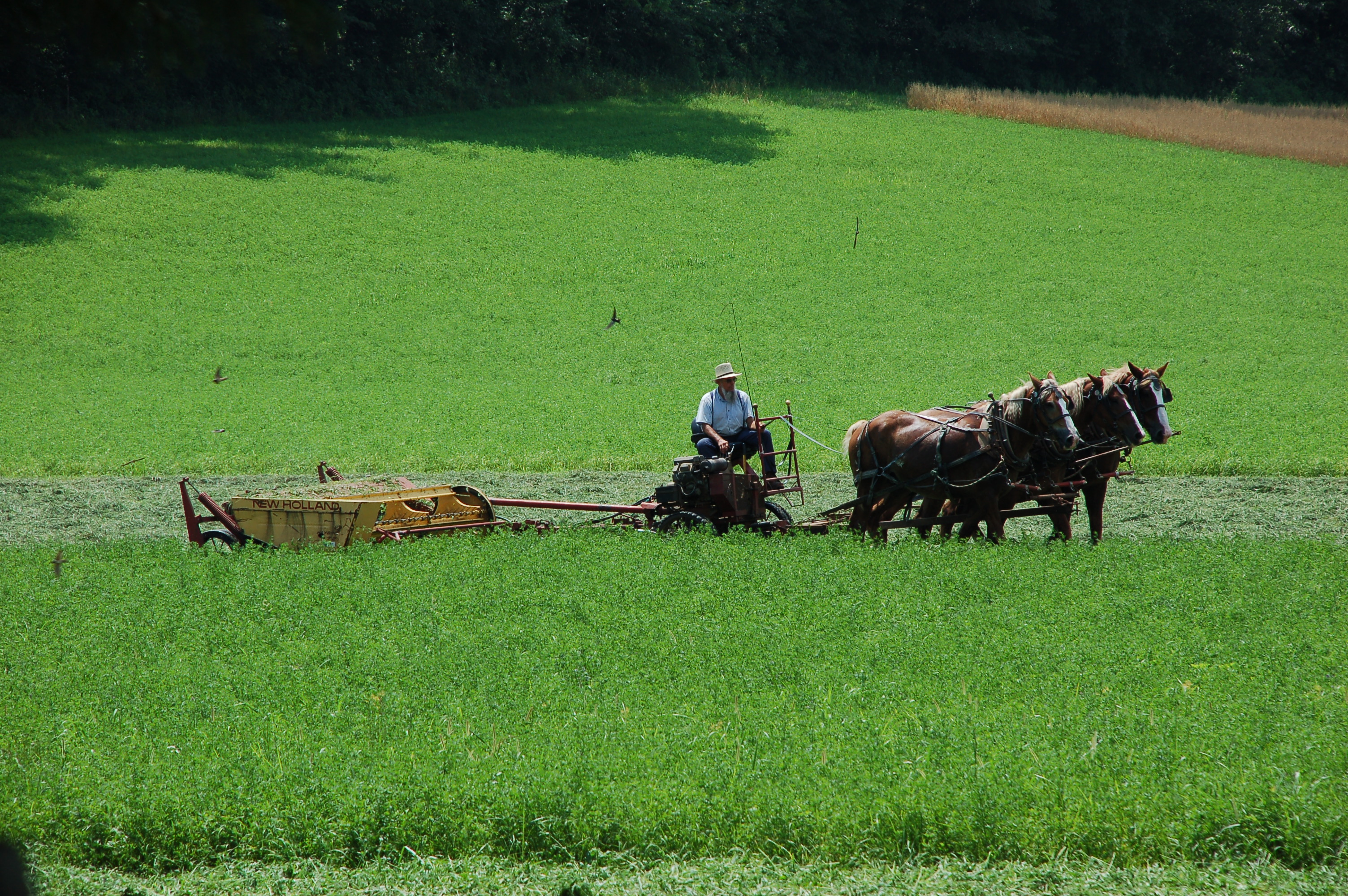
Barn Swallows by Bruce Stambaugh

Swallows encircle
the farmer and his mower,
a whirling harvest.

Bruce Stambaugh
July 30, 2011

Wren haiku

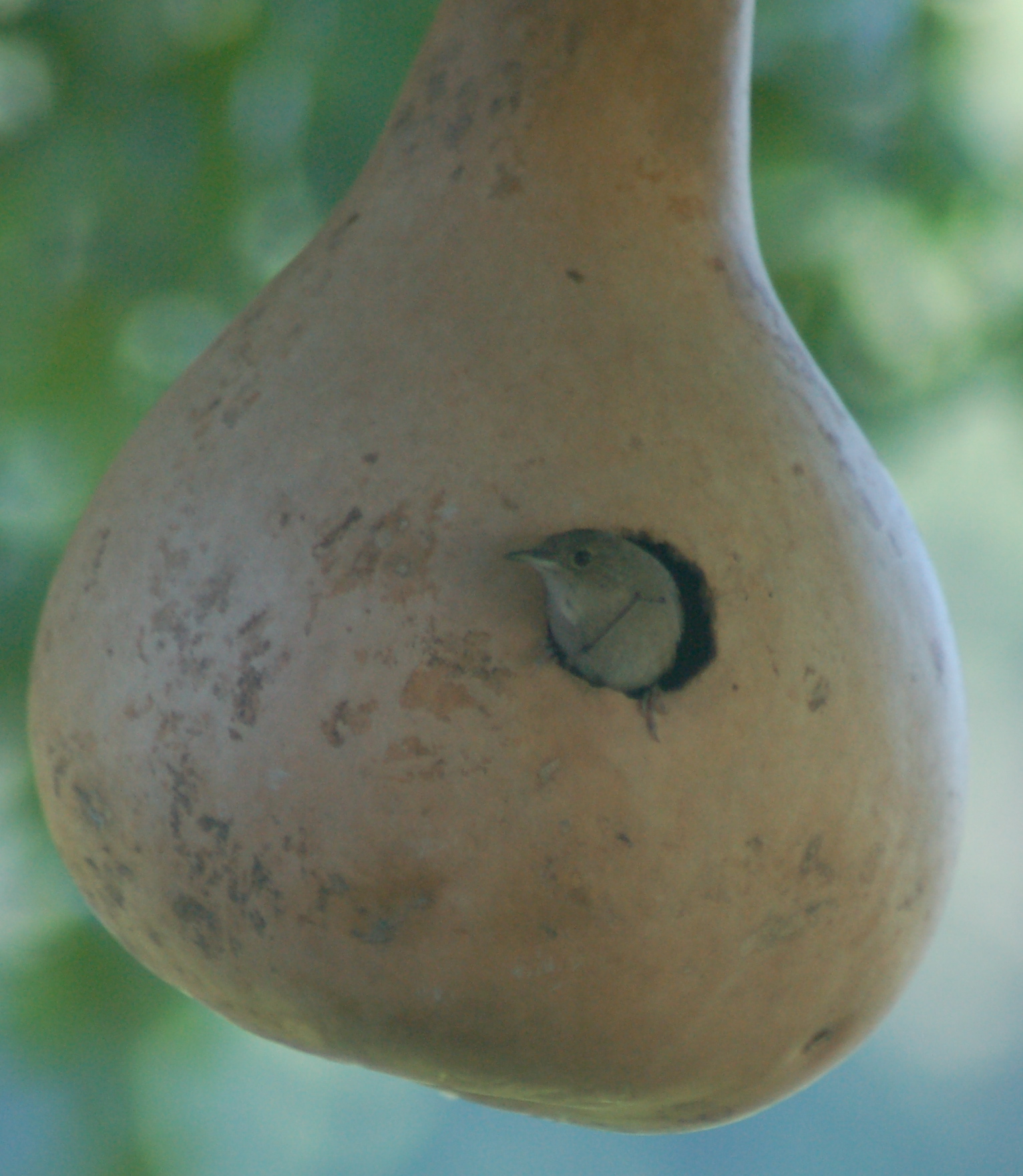
House Wren by Bruce Stambaugh

Warbling mother wren,
fledglings rattle from gourd house.
Satisfaction reigns.

Bruce Stambaugh
July 29, 2011

It was hotter than _____ (fill in the blank)

Hazy sunset by Bruce Stambaugh
Hazy sunsets culminated the hot, humid days.

By Bruce Stambaugh

I have never written an interactive column or blog until now.

With the onslaught of the recent blast of extreme hot and humid weather that affected the country from The Great Plains states to the Outer Banks to Maine’s rocky coast, I heard and saw a lot of comments about the heat.

Some can’t and shouldn’t be repeated, much less printed. I took the prudent approach and attributed the more lewd orneriness to heat stroke.

Here are a few of the ones that can be shared. It was hotter than a firecracker on the Fourth of July. It was hotter than a pistol. It was hotter than two goats in a pepper patch. It was hotter than a cat on a tin roof. Not the most imaginative offerings I know.

Others focused on an end result retort about the oppressive heat. It’s so hot the chickens are laying hard-boiled eggs. It’s so hot I can fry eggs on the sidewalk. It’s so hot that the trees are creeping around looking for shade. These platitudes seem a little more comprehensible.

The interactive part of the post comes in here. Perhaps you have your own heat related ditty. If so, I invite you to complete the headline with your own personalized version or post it in the comments section.

With the lengthy duration of this very hot weather, there can be no doubt that summer has arrived in all its glory in Ohio and across the nation. The National Weather Service was proactive in advising the public about heat related conditions, and offered suggestions on how to avoid heat exhaustion and heat stroke. Both are serious illnesses with their own specific symptoms.

Hard work by Bruce Stambaugh
Outdoor work required laborers young and old to stay hydrated.

I felt for people who had to work outside. I was pleased to learn that many such workers were asked to begin work earlier in the coolness of the morning so they could finish up before the really extreme heat of the late afternoon. Some shops simply shut down for a day to save their workers from the oppressive conditions.

Those who had to labor out in the elements soldiered on, improvising ways to stay cool. Construction and landscape workers removed their T-shirts and wore colorful bandanas around their heads for protection from the sun and to soak up the sweat.

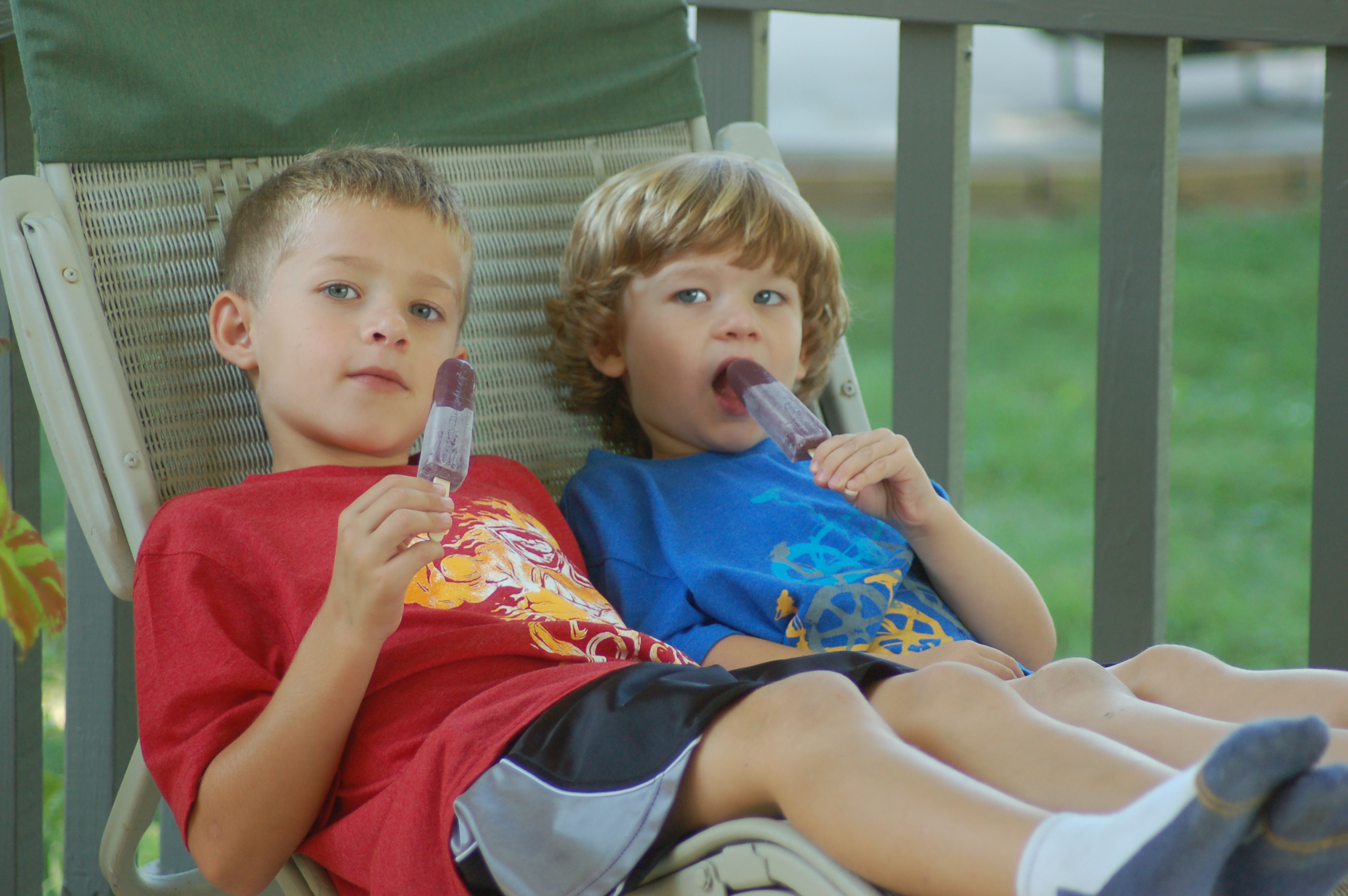
Popsicle days by Bruce Stambaugh
Taking frequent, cooling breaks is especially important on extremely warm and humid days.

Even though the National Weather Service warned the public with Heat Advisories and Excessive Heat Warnings, people still got sick. Unfortunately, several people nationwide died from difficulties brought on by the incredible heat. Most were elderly, who are the most susceptible to heat related health problems.

Taking the proper precautions can help avoid complications from being overheated. Keeping hydrated, taking needed breaks, and staying out of the direct sun as much as possible are the safest measures.

Horses in snow by Bruce Stambaugh
Last winter was an especially long and cold one for people and animals alike.

Besides the silly sayings, I didn’t really hear a lot of complaining about the heat. Perhaps the memories of the long, cold, wet winter and spring came to mind, and people just bit their lips and endured as best they could.

Much as I preferred not to be, I was out and about on the hottest days of the year. When I stepped from the refreshing and safe air conditioning into the outside elements, the heat overwhelmed me. It felt like I was walking into an oven. Getting back into the car after an hour’s meeting was no fun either.

I’m not complaining mind you. I’m just reporting. It was hotter than…?

Bay Photos by Donna

Wildlife Photos From The Chesapeake Bay Region

ROAD TO NARA

Culture and Communities at the Heart Of India

K Hertzler Art

Artist and nature journalist in the Shenandoah Valley of Virginia.

Maria Vincent Robinson

Photographer Of Life and moments

Gabriele Romano

Personal Blog

Jennifer Murch

Art is the only way to run away without leaving home. -Twyla Tharp

Roadkill Crossing

Writing generated from the rural life

ANJOLI ROY

writer. teacher. podcast cohost.

Casa Alterna

El amor cruza fronteras / Love crosses borders