The real reason to celebrate July 4th

D.O.G. Street by Bruce Stambaugh
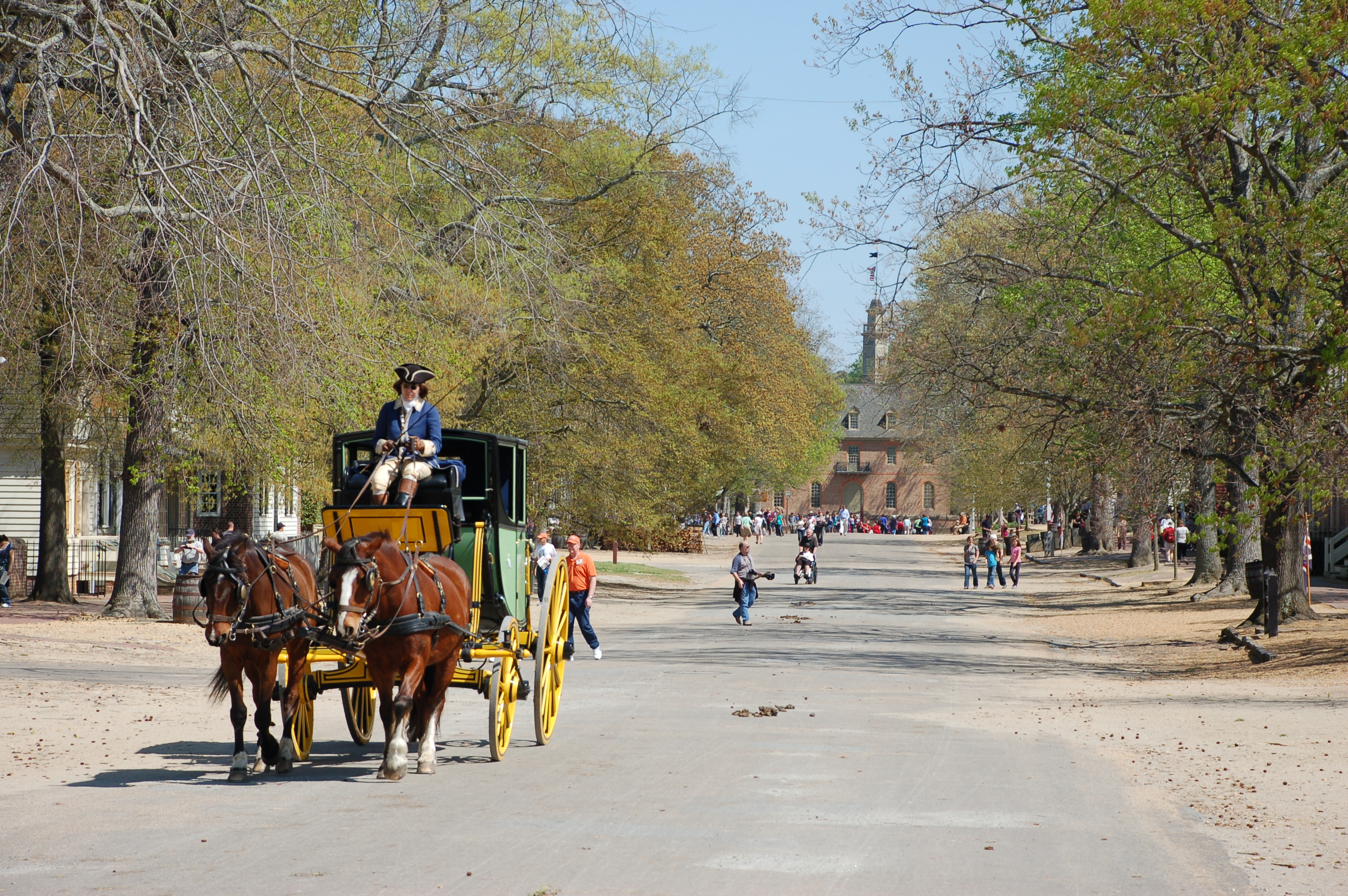
Many of the tenets of our democratic republic were formed in Williamsburg, VA along D.O.G. Street.

By Bruce Stambaugh

Watching starbursts of fireworks from five miles above the earth was an unexpected treat.

My family and I were flying back from vacation late on July 3, 1988. Our hour-long flight path took us along the southern shores of Lake Michigan and Lake Erie. Shortly after we were airborne, the sky began to pop with burst after colorful burst of fireworks.

Parade by Bruce Stambaugh
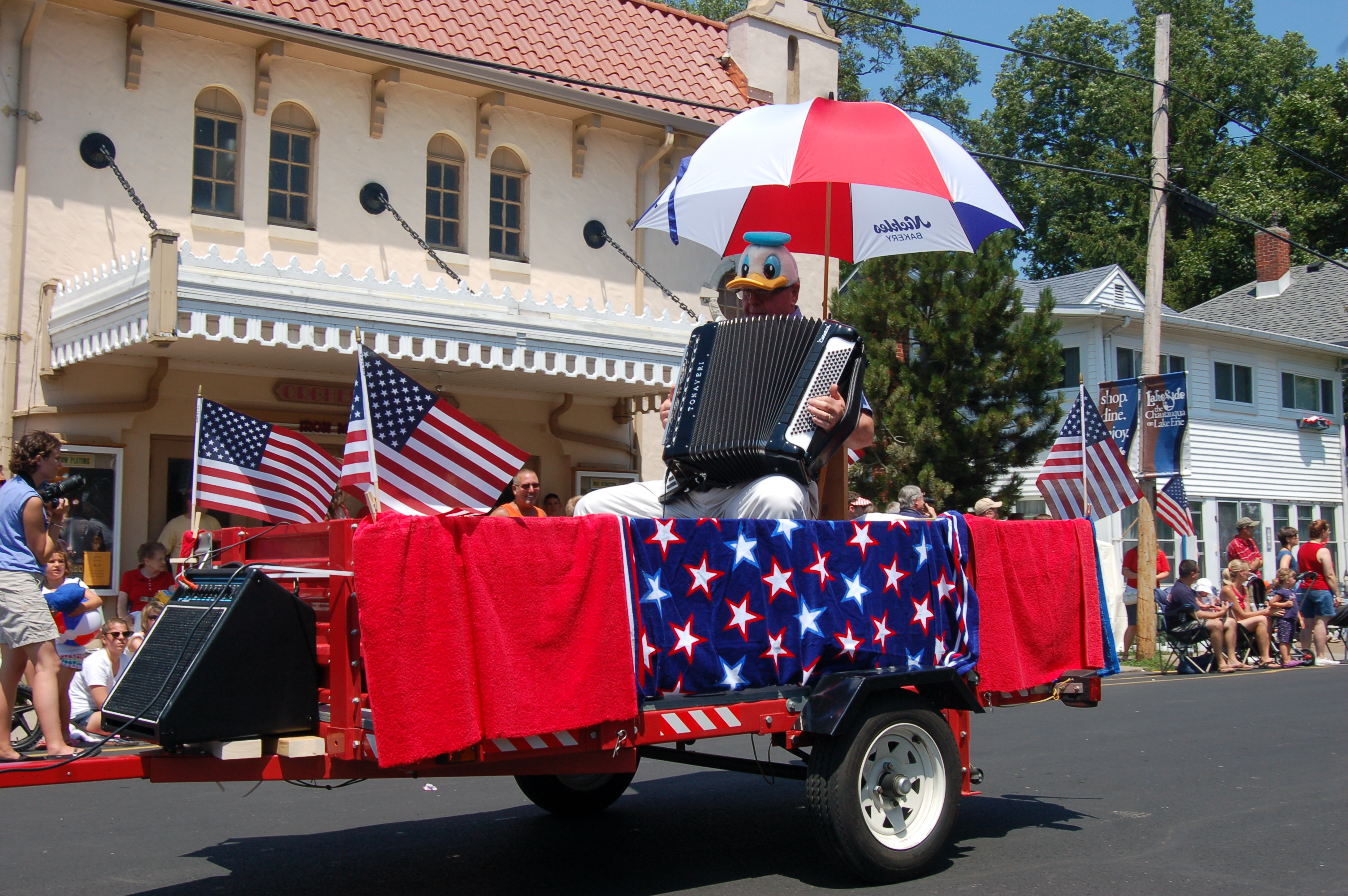
Parades are just part of the annual Fourth of July celebrations in the United States.
All along the route towns large and small expressed their jubilation for America’s Independence Day holiday with pyrotechnic displays. From high above I imagined the various sparkling bursts reflecting the broad diversity of folks that comprise this great country. Necks craned skyward, people from many cultures, races and religions in urban parks, county fairgrounds or on their own back porches had to also be admiring their local kaleidoscope of explosions.

As the last sparks flickered, I had to wonder then, as I wonder now, if the real meaning behind the celebratory fireworks is fully understood. As they picked up their chairs and folded their blankets to return home, what were they thinking? Was it just another fireworks display or did they truly comprehend the meaning of the day?

Those are questions that needed to be asked then just as they need to be asked today. Remembering our historic roots helps us to focus on where we are now and where it is we need to be going tomorrow.

Fourth of July decorations by Bruce Stambaugh
Homes like this one in Lakeside, OH will be decorated for the Fourth of July all across the U.S.

As we celebrate another Independence Day in the United States, here are a few historical facts that cannot be changed, though some have tried to distort the truth. The Continental Congress actually declared its independence from Great Britain on July 2, 1776. The revolutionary document, penned by Thomas Jefferson, was signed July 4, 1776, making the radical pronouncement official.

At great risk to their fame, fortune and reputations, these bold men, and they were all men, set down the groundwork of a new nation. That foundation was based on one essential notion, freedom.

A few years later that central idea wove its way into the heart of the U.S. Constitution in the form of the first 10 amendments commonly called the Bill of Rights. They itemized specific freedoms, including the freedom of religion, the freedom of speech, and the freedom to gather, among others.

British flag by Bruce StambaughThe people of the American colonies wanted to shake the hold of Great Britain’s rule and run their own lives. This great document announced a new form of government for all peoples. Without it, anarchy would have ruled.

Since its initial adoption the Constitution of the United States has been amended to appropriately represent rights and freedoms for all of the country’s peoples, regardless of gender, race or creed as the population and society’s mores have evolved. To be sure, that evolution has had its civil rough spots to say the least.

From our present perspective, it can be easy to think that some things always were. “In God We Trust,” for example, was added to our coins and currency in 1864 at the end of the Civil War. The phrase “under God” in the Pledge of Allegiance was not added until 1954 during the McCarthy communism scare era.

The altitude at which we enjoy the July 4th fireworks isn’t terribly important. The attitude of appreciation and a clear understanding and application of how and why our basic freedoms exist, however, are essential for appropriate social discourse.

As the fireworks explode in honor of this July 4th, what will you revere about Independence Day?

Amber waves of grain by Bruce Stambaugh
Religious freedom was the primary moving force for Amish immigrating to the United States, where their amber waves of grain still roll today.

© Bruce Stambaugh 2012
Memorial Day is for remembering

Dad and Mom by Bruce Stambaugh
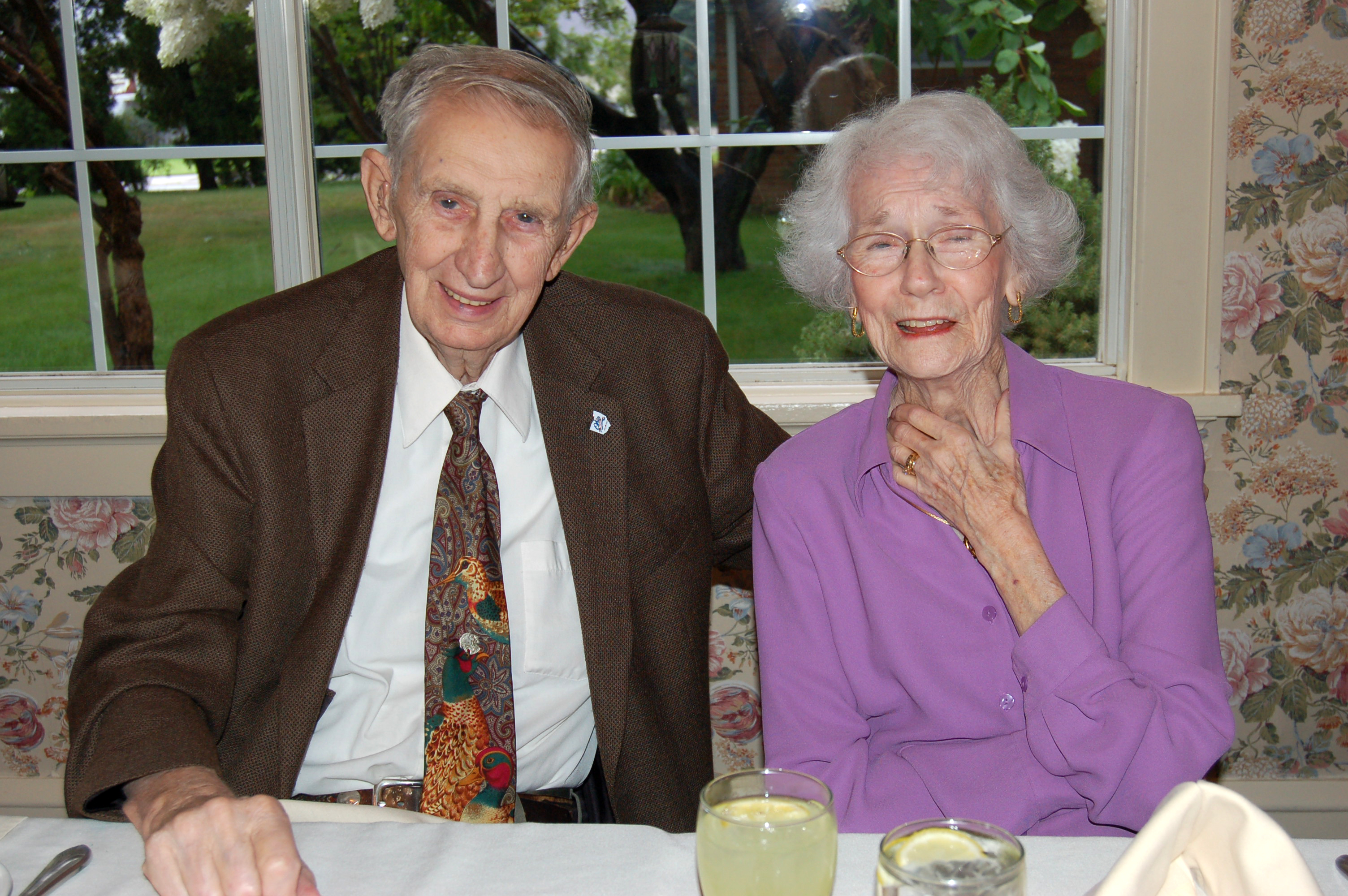
Our parents, the late Richard H. and Marian Stambaugh, at their 65th wedding anniversary celebration.

By Bruce Stambaugh

This Memorial Day will hold special significance for my four siblings and me. It will be the first that we will decorate both our father’s and mother’s gravesite.

Mom died April 23 at age 90. Dad passed away Dec. 21, 2009. He was 89.

The simple act of placing flowers at their graves will make it memorable. No matter their age, losing your parents is never easy, especially when they were parents that you loved a lifetime. Not everyone has that precious opportunity.

My brothers, sisters and I were very fortunate. Both Mom and Dad lived long, full and fulfilling lives. Through both their graciousness and their imperfections, they gave us many marvelous memories.

At the pinnacle of his professional engineering career, Dad’s life took an unexpected turn when my younger brother brought home an arrowhead that he had found on the school playground. Dad grew inquisitive. His desire to learn, something he instilled in all five of his children, grew intense.

Arrowheads by Bruce Stambaugh
Just one of the many mounts of artifacts that Dad collected over the years. Most of these are rare triangular points. Dad labeled where and when each was found.

From that initial find, Dad went on to develop an extensive artifact collection. He read, went to lectures, lead an archeology club, surface hunted, and dug his way to being a well-renowned amateur specialist on Native American culture. Of course, he dragged along several of his children to many of these events, especially walking field after field looking for the flinty points and stone tools.

Along with hunting and fishing, Dad’s archeological adventures consumed much of his retirement years. He gave lectures and was always a hit with school children.

Presentation by Bruce Stambaugh
Our father, Dick Stambaugh, continued sharing about Native American culture as long as he was able and as long as he had an audience. Here he gave a talk at Walnut Hills Retirement Home in Walnut Creek, Ohio, where he and our mother lived until their deaths.

Mom would often accompany Dad on his excursions. She would hunt for artifacts. Mostly though Mom would take along her easel, paints and brushes, find a nice scenic spot and sketch out the basics for what would become a vibrant watercolor.

Now and then, it would be the other way around. Dad would accompany Mom to an artists’ workshop, even to other states. While the instructor led his troupe in an all day art class, Dad would wander the countryside looking for likely spots to hunt arrowheads.

One time near Burnsville, N.C., Dad stopped at a farmhouse and asked permission to walk the farmer’s fields. Being the affable guy that he was, Dad quickly made friends. Before he could even set foot in the cornfield, the farmer brought out a box of artifacts he had collected over the years. Dad identified and classified each of the items for the grateful farmer.

In return, Dad was permitted to keep whatever he found. That evening, as the artists gathered to share what they had painted, the leader asked Dad to show what he had found. Though neither was certified, Mom and Dad were model teachers simply by how they lived their unpretentious, generous lives.

Laughing by Bruce Stambaugh
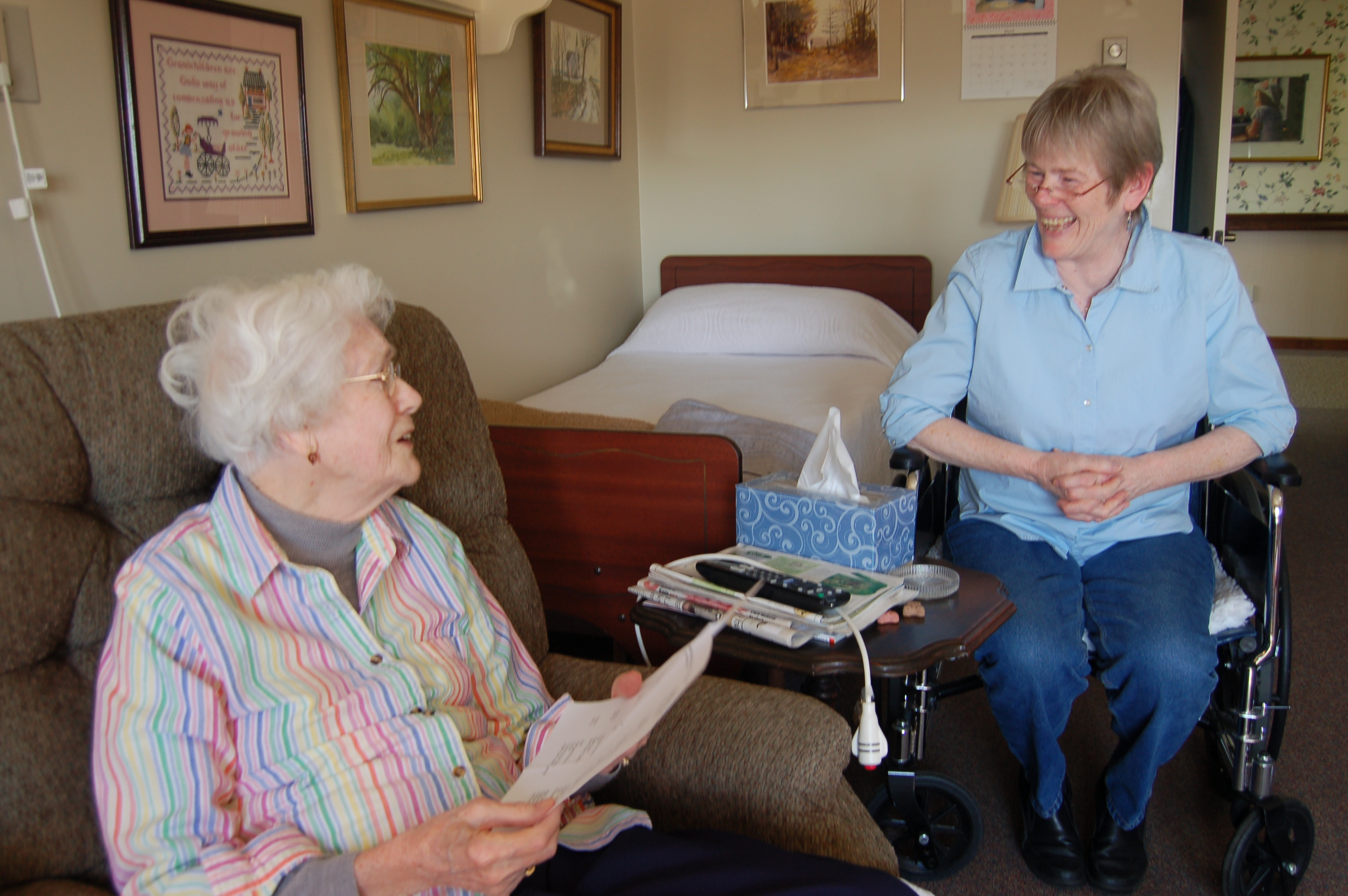
Our mother, Marian Stambaugh, shared a laugh with one of her nieces at the retirement home.

Typical for their generation, Mom and Dad were careful about showing affection to one another, especially when us kids were around. I never quite understood that. Yet, despite their differences and occasional arguments, I knew deep down that Mom and Dad loved one another.

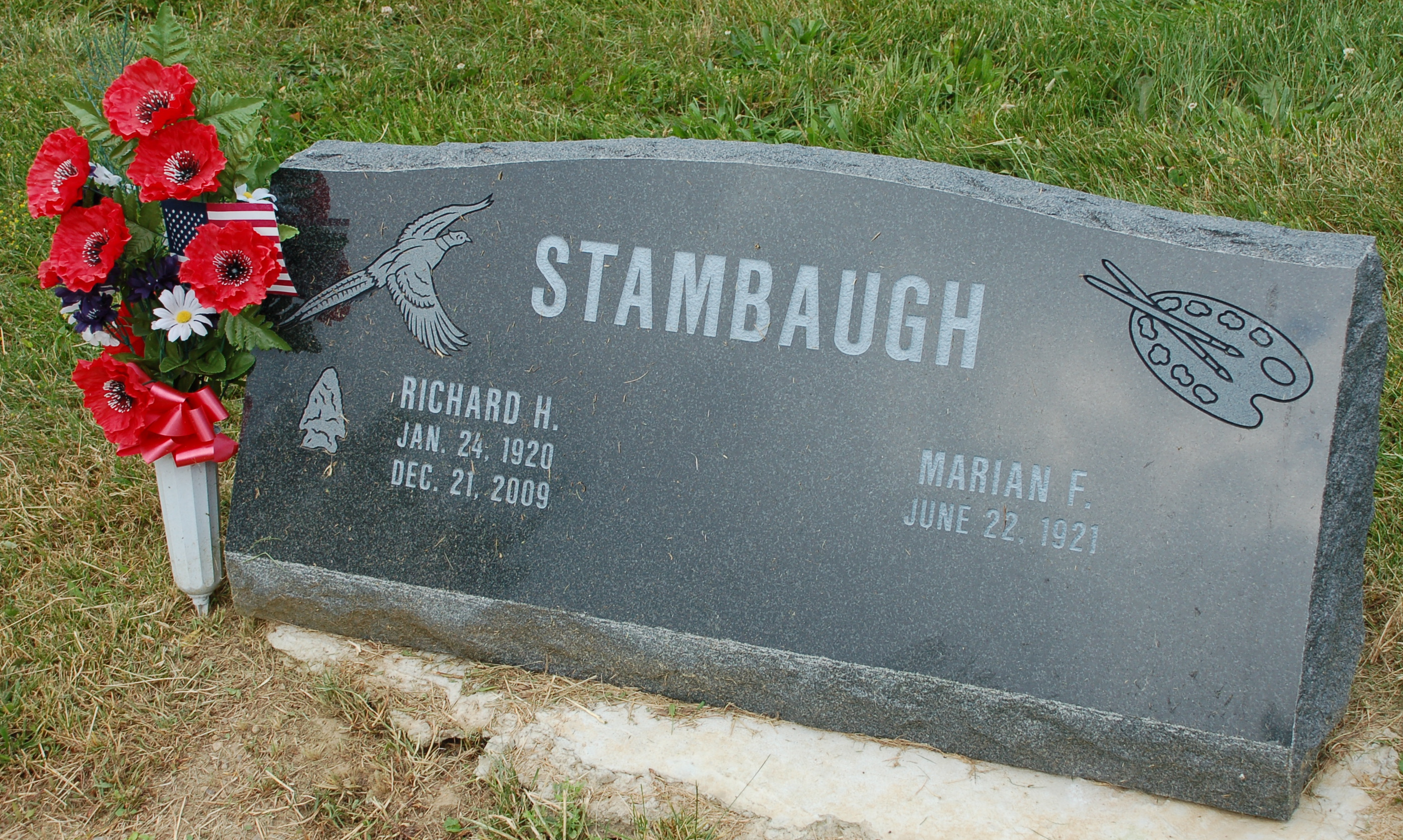
Accordingly, their black granite headstone is engraved with symbols that most appropriately represented their lives. A pheasant and an arrowhead show Dad’s commitment to conservation and archeology. An artist’s paint palette symbolizes Mom’s talent for sharing the beauty she saw.

Gravestone by Bruce StambaughMom and Dad were wonderful parents. It’s only appropriate to honor them on Memorial Day to show our continued affection and appreciation for the charitable, instructive lives they lived as a couple and as individuals.

Memorial Day is for remembering.

© Bruce Stambaugh 2012

In honor of the day, my late father, and the visionary founders who penned our freedoms

Richard H. Stambaugh by Bruce Stambaugh
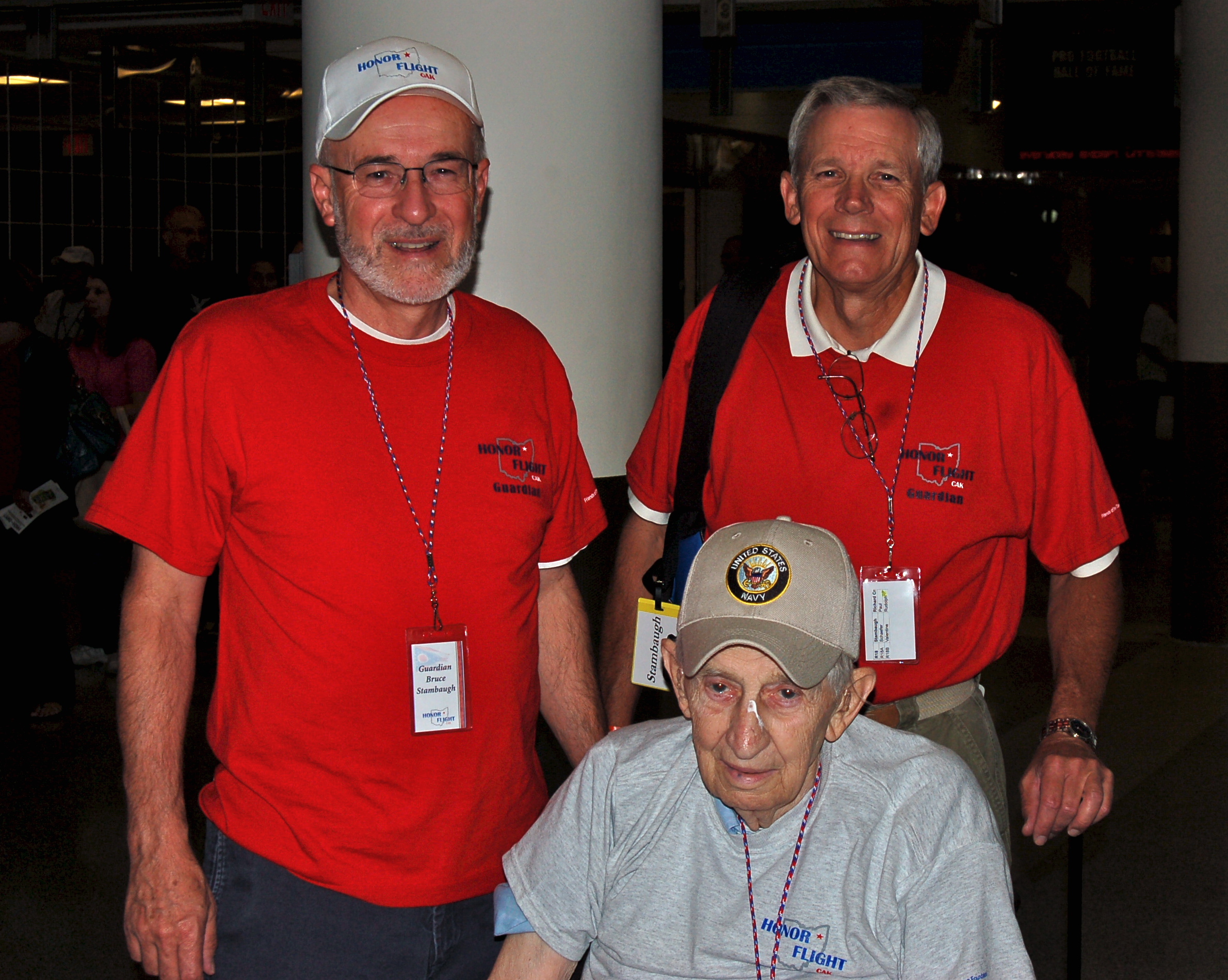
My father, Richard H. Stambaugh, achieved a long-time goal when he was able to visit the World War II Memorial in Washington, D.C. on September 12, 2009 thanks to Honor Flight. As part of a photographic review of the 21st century's first decade, this picture appeared on the front page of the NewYorkTimes.com on December 24, 2009, three days after Dad died.

The original article was first published on Nov. 11, 2011. I am republishing a revised version today in honor of Veteran’s Day in the U.S. and for all those who work globally for peace.

By Bruce Stambaugh

The very first sermon I heard preached in a Mennonite church 40 years ago was on nonresistance. That was precisely what I was looking for spiritually, and I embraced it. My father, a World War II veteran, was skeptical, but eventually accepted my decision.

Now years later, I was to accompany my 89-year-old father on a special excursion called Honor Flight for World War II vets. Dad was dying of cancer, and he had long wanted to make this trip to Washington, D.C. Regardless of physical condition, each of the 117 vets on the plane was required to have a guardian for the all-day round-trip. Given his physical situation, Dad needed extra care.

Given my nonresistance stance on war, I was reluctant to go. I likely would be the only conscientious objector on the packed plane. But this trip wasn’t about me. It was about my father fulfilling one of his dreams. To help him accomplish that, regardless of my personal convictions, I needed to go with him.

Bruce Craig and Dick by Bruce Stambaugh
My older brother, Craig, and I with our father, Dick, prior to leaving Akron-Canton Airport. Craig served as guardian for two other vets on the day-long trip

As anticipated, the vets received their patriotic just due. Upon arriving at Reagan National Airport in Washington, D.C., fire trucks sprayed arches of water across our arriving jetliner. This ritual was usually reserved for dignitaries. As we exited the plane and entered the terminal, a concert band played patriotic music. Red, white and blue balloons were everywhere, and hundreds of volunteers vigorously greeted us.
Handshake by Bruce Stambaugh
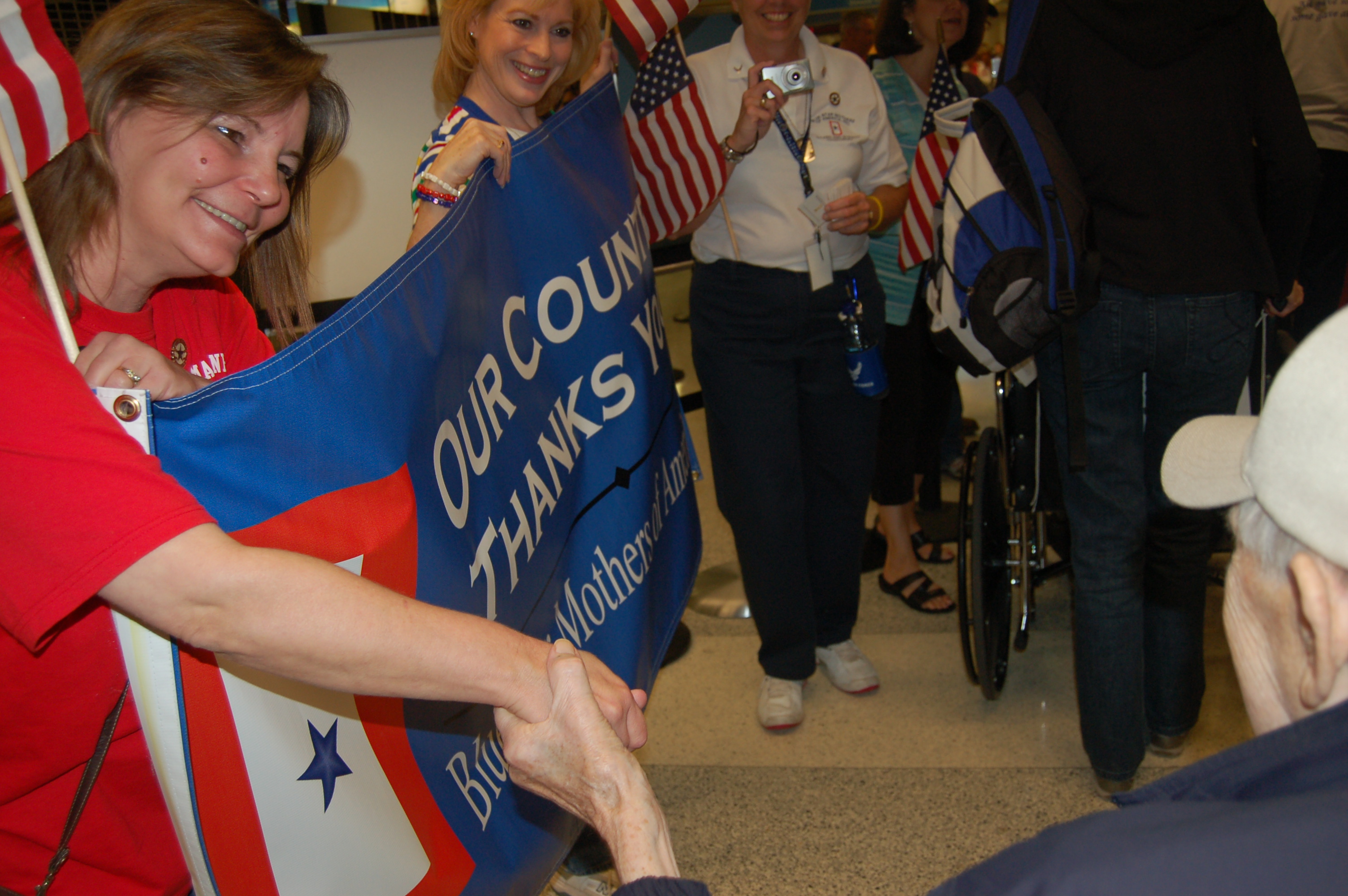
Another veteran was the first to welcome Dad to the World War II Memorial in Washington, D.C.

At the circular, mostly granite World War II memorial, strangers came up to the vets and shook their hands and thanked them for their service. I emotionally took it all in, focusing my attention on caring for my elderly father.

The entourage visited several other war monuments in the U.S. capital that day, too. Back at the airport, we had left in the morning, the vets received a similar patriotic welcome home. Dad said this experience ranked right behind his 67- year marriage.

With that comment, I was exceedingly glad that I had had the chance to experience that day with my father. I felt honored to have been able to accompany him on his most significant day and glad he had gotten to go. Dad died three months later.

Despite all the hoopla of that day or perhaps because of it, the futility of war became all the more obvious to me and had actually reinforced my nonresistance stance. To a person, the vets with whom I spoke said they hated what they had had to do. I

Welcome home by Bruce Stambaugh
Hundreds of well-wishers greeted the vets upon their return to Ohio.
also remembered the words of Jesus, when he said to turn the other cheek and to go the second mile and beyond for your enemy.

For a day I had had one foot on the foundation of God and country, and the other on the teachings of Jesus. The trip with my father was an inspirational reminder of the commitment I had made as a young man to a different way of making peace in a hostile world.

Mailcall by Bruce Stambaugh
Each vet on the Honor Flight received letters to read during mail call on the flight home.

Because of this experience, I had bonded with my father in his time of need, and I greatly respected what my father and the other veterans on the flight had done. And yet, I knew I could not have done what they had, not because of cowardice, but out of conviction.

I had participated in the Honor Flight out of love and respect for my earthly father. I had held fast to my peace convictions out of love and devotion to my father in heaven. In that paradox, I had found no conflict whatsoever.

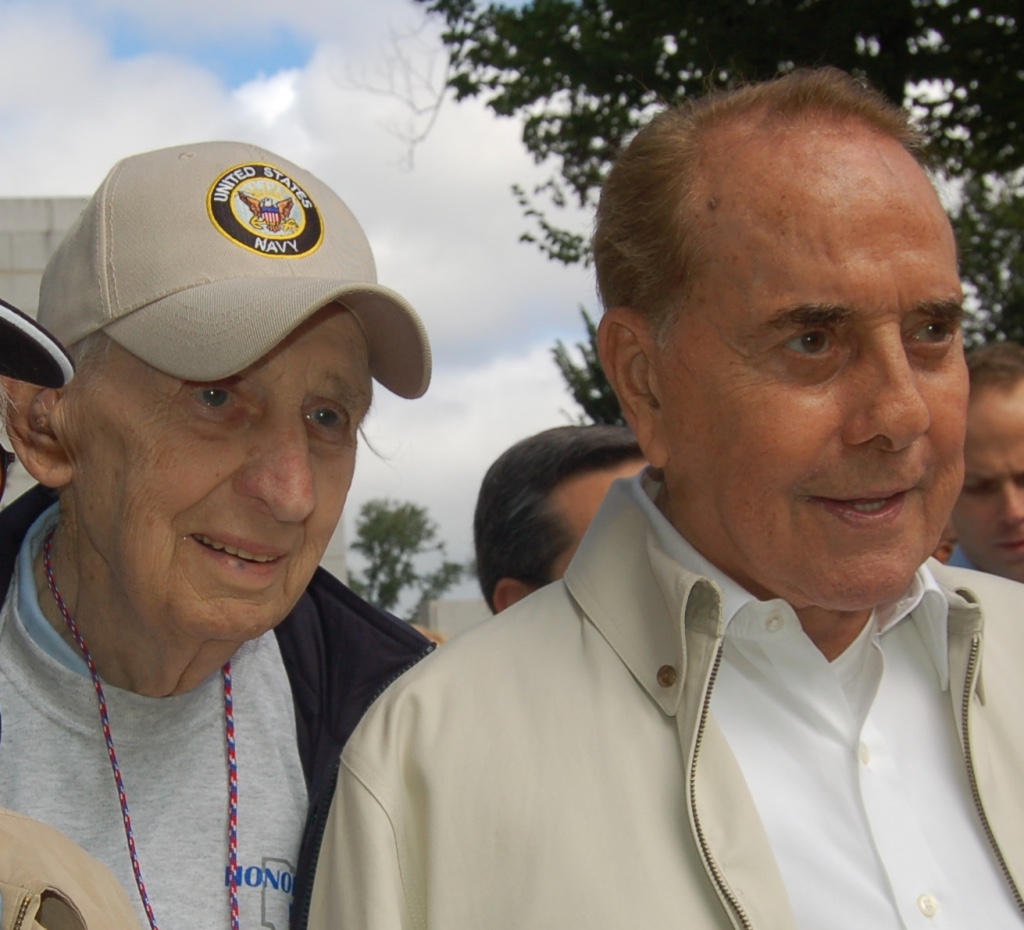
Bob Dole, WW II Memorial
When Dad spied Senator Bob Dole, who forged the way for the World War II Memorial, he rose out of his wheelchair and shuffled and squeezed his way beside the senator.

© Bruce Stambaugh 2017

This first article appeared in Rejoice!, the daily devotional for Mennonite Church USA.

The lights of September 11, 2001

By Bruce Stambaugh

My memories from September 11, 2001 are bathed in an emotional kaleidoscope of lights that seemed to guide me through that infamous day.
Sun rays by Bruce Stambaugh
The first light broke with the sunrise as I readied for work. I stood awestruck at the beauty that played out before me. The light from the morning sun glinted in bright shafts of beams through and around the leafy branches of the giant black oak tree directly across from our home. A misty ground fog was rising, reflecting and refracting light beams every which way.

The haze had dissipated and the sky turned pure sapphire by the time I reached my workplace. The sun had no competition now. The brightness of the crystal clear day buoyed me.

A lengthy phone call interrupted my regular startup office routine, which included turning on the radio. The caller went on and on, unnecessarily repeating point after point.

The second line on my phone rang. By the time I could rid myself of the windy caller, the other call had already gone into my voice mail.

Soon the little red light on the phone began to blink, the signal that I had a message. It was from our son, who lived and worked in New York City. Despite the passage of time, I can still distinctly hear his words.

“Dad,” Nathan’s message said, “Something has happened at the World Trade Center. We don’t have Internet or TV. Can you tell me what’s going on?”

I hung up and quickly turned on the radio. The first thing I heard was that a plane had crashed into the Pentagon in Washington, D.C. I bolted to the receptionist’s desk to find out what was happening. I was told that a plane had flown into one of the Twin Towers in New York City.

I tried to reach my son at his workplace, which was just south of Times Square. Neither his office phone nor cell phone would ring through. Fear gripped me.

Nathan's shadow by Bruce Stambaugh
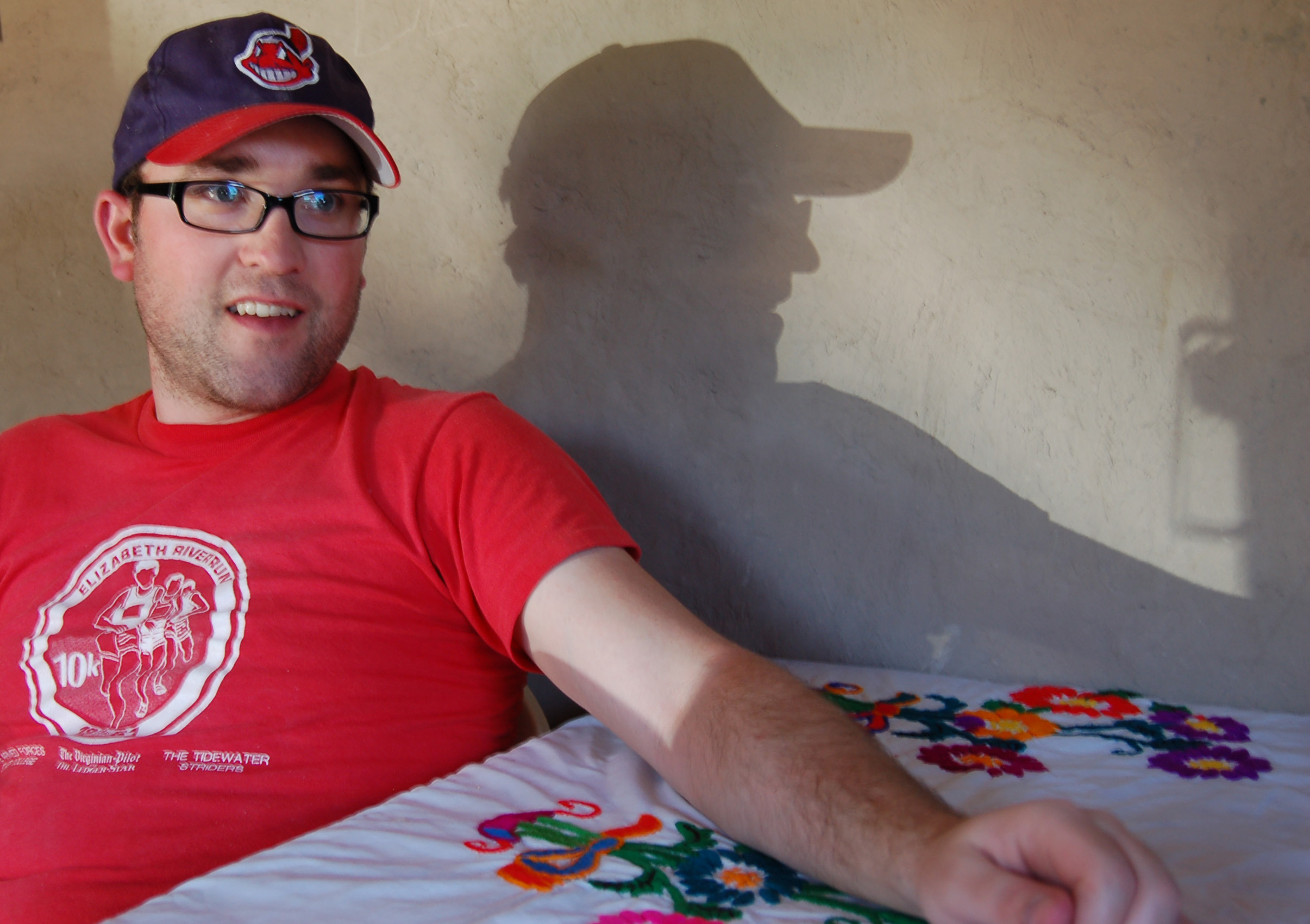
Our son, Nathan, during a break while on a work project near San Marcos, Ocotopeque, Honduras

I went to a TV to watch what was happening. By then, the second tower had been hit, and reports were coming in of another plane down in southwestern Pennsylvania.

At 10:45 a.m., I was paged for a phone call. I picked up the line and it was my son.

“Dad,” he said trying to cover his anxiety, “I don’t know how I got a line out to you. I just wanted you to know that I’m OK but that Manhattan is locked down. No one is going in or out.”

Despite our mutual fears, an indescribable light of love connected my son and I through those phone wires. We spoke for about 10 minutes until Nathan said that others wanted to use his phone. By late afternoon we were calmed with the news that our son had safely returned to his apartment.
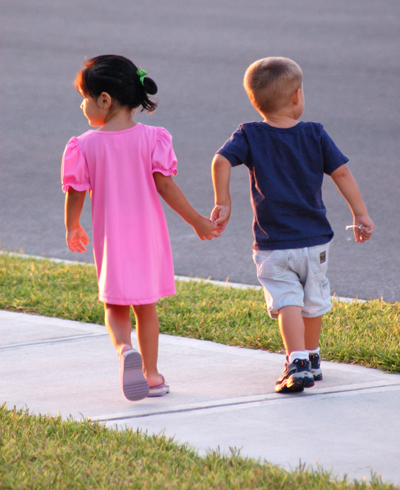
Holding hands by Bruce Stambaugh
At the end of that incredibly long, exhausting day another light shown. The live TV coverage broadcast a surreal scene. The evening’s sun filtered through the gray, smoldering debris at Ground Zero. A ghostly spire, all that structurally remained of the Twin Towers, reflected and refracted light beams eerily similar to those at the oak that morning. I hoped that some good could come of this horrific international catastrophe.

Now a decade removed, I still cling to that desire, though too many lives have had their own individual lights snuffed out. I long for the light of peace among all peoples, even if it means the need to share that light one person at a time.

Traveling the Constitution Route, then and now

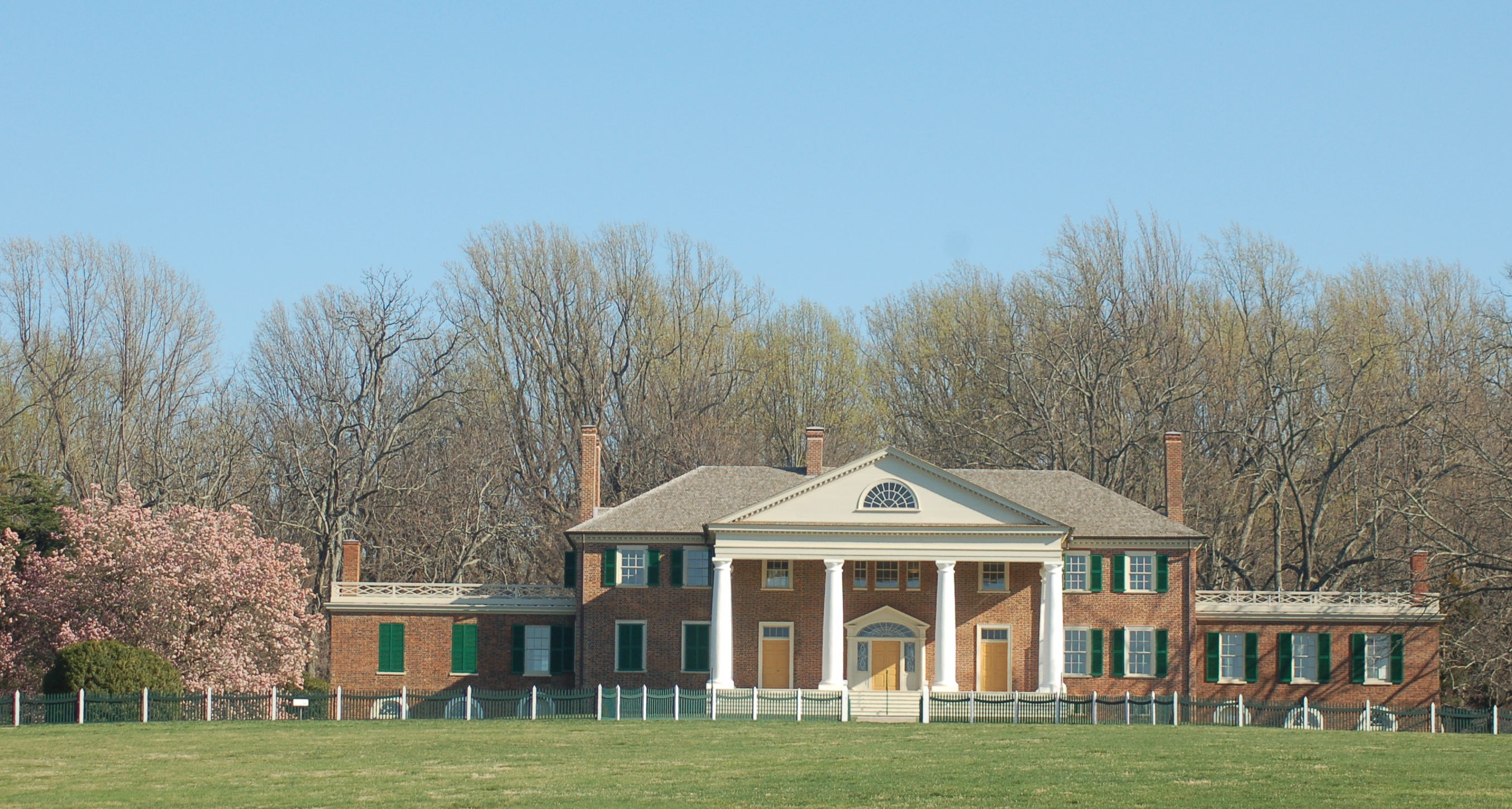
Montpelier by Bruce Stambaugh
Montpelier, home of James and Dolly Madison.
By Bruce Stambaugh

White, pink and yellow floral displays, both wild and domesticated, brightened the cold, steely overcast morning, invigorating our drive along Virginia’s historic Constitution Route.

Pastels predominated in the form of flashy forsythia bushes and clusters of buttery daffodils, showy pink magnolia petals, peach, cherry and redbud blossoms. Serviceberry bushes and flowering ornamentals showed their whites against winter’s dormant and dull remnants.

Familial signs at the gates of long lanes announced the names of many old money mansions of the sprawling plantations that now operate as horse and cattle farms all along the serpentine trail, officially known as Virginia Route 20. Mint Meadow, Gaston Hall, Hershey Hill, and Somerset were only a few of the rolling farms’ monikers.

Blooms at UVA by Bruce Stambaugh
Ornamental trees were in full bloom in Virginia.

Miles of fences, some white as the tree blossoms that kept them company, others stained soot black, still others meshed wire, lined the curvy route between Montpelier, James Madison’s home, and Monticello, Thomas Jefferson’s architectural wonder.

Most of the meandering highway on the 40-minute drive closely followed the very route that these two founding fathers and United States presidents had traveled by horseback or carriage more than two centuries earlier.

At one of the lazy s-curves, with a greening meadow on the east side and a dense deciduous woodlot on the other, a Bald Eagle flew across in front of us. Its talons clutched a trailing tangle of leafy vines, likely the softer lining for its bulky stick nest.

Though we were traveling at a much faster pace in a much faster world, I couldn’t help but sense the history that had happened along this path and at the dignified homes we passed. Only now farmhands groomed the horses and fed the cattle instead of slaves.

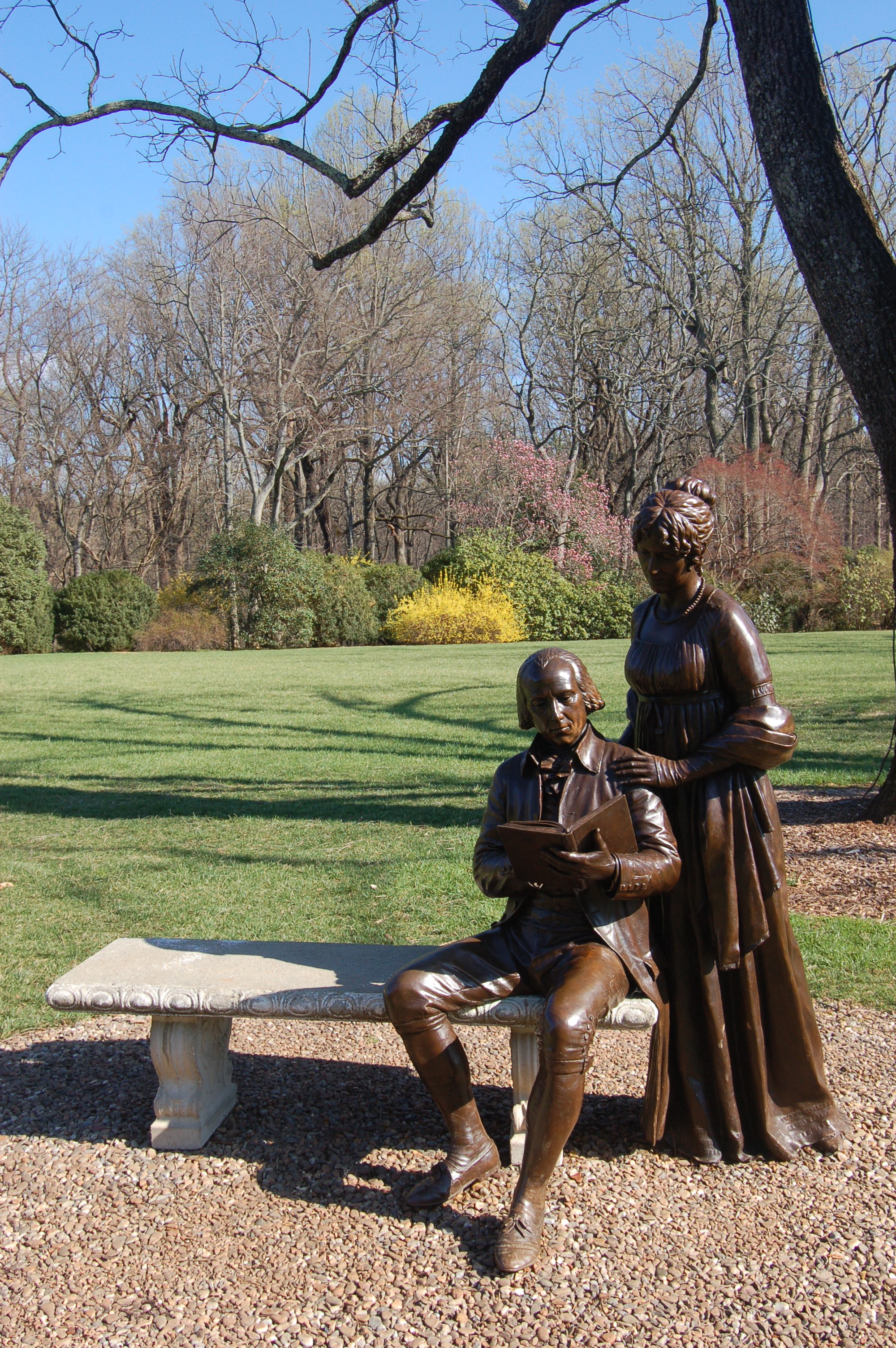
Madison statue by Bruce Stambaugh
A lifesize statue of James and Dolly Madison accentuates the beautiful backyard at their historic homestead, Montpelier in Virginia.

At Montpelier, a spreading magnolia in full-bloom served as the backdrop for a life-sized bronze statue of James and Dolly Madison. Though slight in stature, both were giants in establishing the democratic and social courses for our fledgling republic.

The ingenious Jefferson, author of our Declaration of Independence, and the meticulous Madison, the father of the Constitution, regularly rode the Constitution Route to each other’s homes to both socialize and pontificate.

To walk in their footsteps and see first hand their magnificent homes, slave quarters included, and to learn more about their magnificent minds and accomplishments was beyond inspirational. It was humbling and moving.

Exploring there was a refreshing retreat from the current turbulent and often selfish political times in which we find ourselves. Silently I wondered what these two great men would say about today’s state of affairs. At each location, the informative visitor centers helped answer that pondering.

Montpelier slave quarters by Bruce Stambaugh
Excavating the living and working areas of Madison's slaves at Montpelier is underway.

Jefferson and Madison, both learned visionaries who lived at opposite ends of the Constitution Route, were united in determining the direction the Constitution should take, that all people are created equal and endowed with specific freedoms.

Virginians will quickly point out that both men played prominent rolls in developing the Virginia Statute of Religious Freedom. Their joint influence is revealed in the law: “The religion then of every man must be left to the conviction and conscience of every man.” That concept was the first point Madison made in the Bill of Rights.

The two homesteads were fascinating to tour. The dedicated commitment of Jefferson and Madison to form, frame and cement certain rights, including the choice of religion sans government endorsement or coercion, made the Constitution the jewel in the crown neither president ever wanted to wear.

Monticello by Bruce Stambaugh
Thomas Jefferson's masterpiece, Monticello.

It’s no joke: April 1 used to be New Year’s Day

By Bruce Stambaugh

If there was one day I dreaded each school year for the three decades I spent in education, it was April 1, better known as April Fools Day.

The students and even a few teachers were merciless with their inane April Fools jokes. I was relieved when April 1 happened to fall on a weekend.

But five times out of seven, it did not. As a teacher and then principal, I endured the school-wide silliness. I gave a little more slack to the younger children who dared approach the principal to trick him. I did my best to play along.

I fondly remember their coy smiles and giddy calls of “your shoe’s untied.” I always took the bait, waited for the giggles, and moved on down the hall until the next juvenile ambush.

It was harder for me to tolerate the older students who tried unsuccessfully to be more sophisticated with their trickery. I didn’t have much patience with students who released the distracted teacher’s pet garter snake in the room or those who put tacks on teachers’ seats.

I wondered who in the world ever invented such a silly day. After all these years, I decided to quit wondering and investigate.

My due diligence was a thorough, if not speedy, search on Google. The results didn’t really lead to any definite conclusions other than to surmise that the antics of the crazy day likely got started way back when the Gregorian calendar was introduced. This significant change, which had to make health care reform seem simple, revamped the annual calendar in the entire civilized world.

The King of France, Charles IX, instituted the switch in 1564. Foremost was beginning the New Year on January 1 instead of April 1. The problem was that 16th-century communications were not what they are today. Of course, given the state of the current Twittering world, that may have been a good thing.

Word of the calendar change took several months, even years, to spread throughout Europe and beyond. Not surprisingly, some resisted the change and preferred to maintain the status quo, which included celebrating a new year beginning on March 25 and culminating on April 1. Just imagine New Year’s Eve lasting eight days. Sounds a lot like Mardi Gras to me.

Those who refused to honor January 1 as the beginning of the New Year and continued to use the April 1 demarcation became known as April Fools for their obstinacy and resistance to change. As the lore goes, April 1 was dubbed April Fools Day for those who clung to their old ways.

Those poor fools, excuse the pun, who refused to accept the new calendar were sent off on ridiculous errands and were made the butt of practical jokes, like sticking signs on their backs that said: “Kick me.” It reminded me of those good old-school days.

Perhaps because it took so long for the new calendar to be accepted, the practice of nonsense on April 1 became an annual event. The silliness gradually spread to the British and French colonies in America.

Apparently, traditions, whether good or bad, die hard. Students have been pestering teachers, principals, and probably parents ever since. With that in mind, you might want to check your seat today before you sit down.

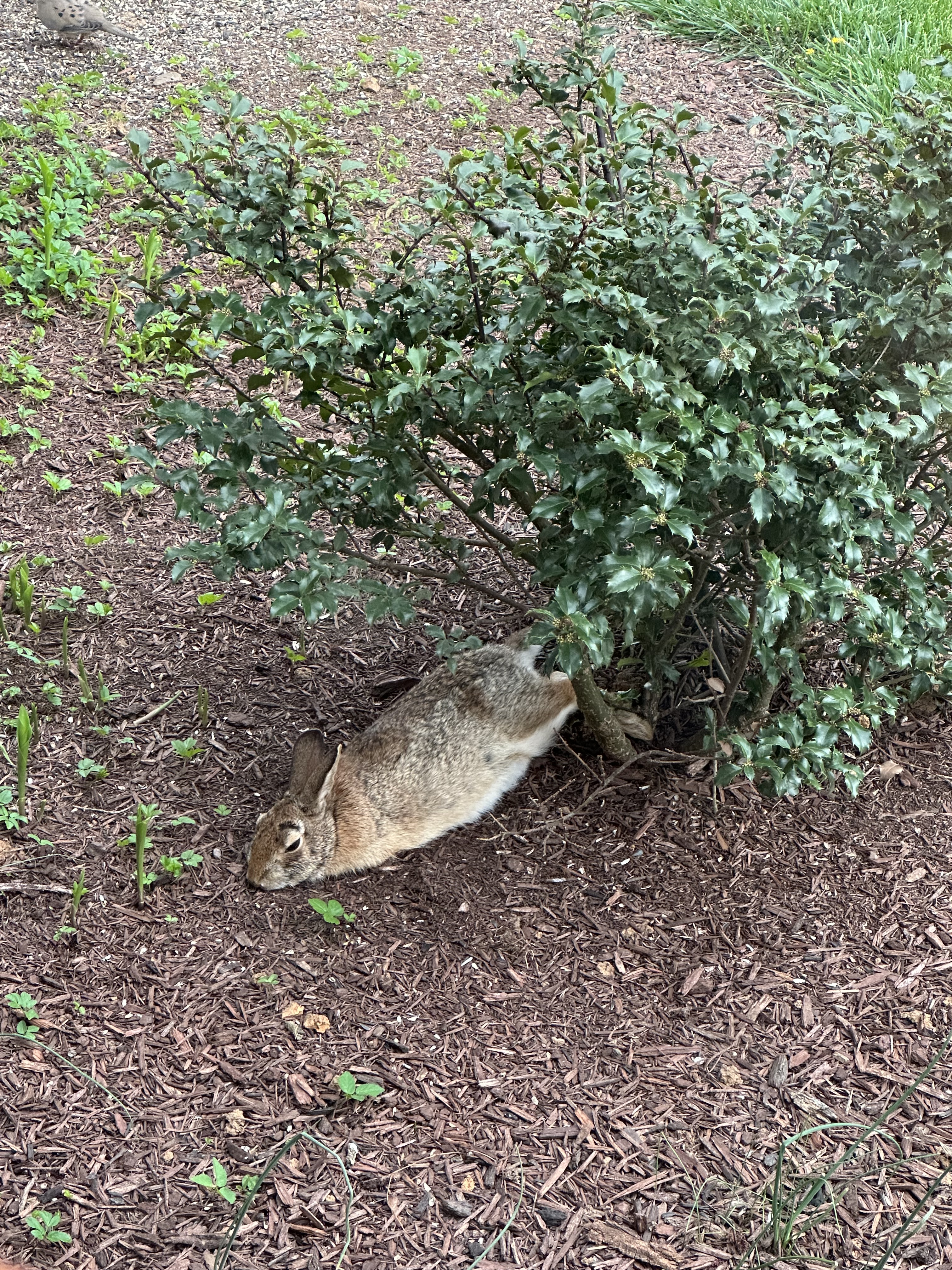
IMG_6901

Silly rabbit.

Bay Photos by Donna

Wildlife photos from the Chesapeake Bay region

ROAD TO NARA

Culture and Communities at the Heart Of India

K Hertzler Art

Artist and nature journalist in the Shenandoah Valley of Virginia.

Maria Vincent Robinson

Photographer Of Life and moments

Gabriele Romano

Personal Blog

Jennifer Murch

Art is the only way to run away without leaving home. -Twyla Tharp

Roadkill Crossing

Writing generated from the rural life

ANJOLI ROY

writer. teacher. podcast cohost.

Casa Alterna

El amor cruza fronteras / Love crosses borders