The pleasure and perils of driving in Amish country

Red barn white house by Bruce Stambaugh
A typical scene in Ohio's Amish country.

By Bruce Stambaugh

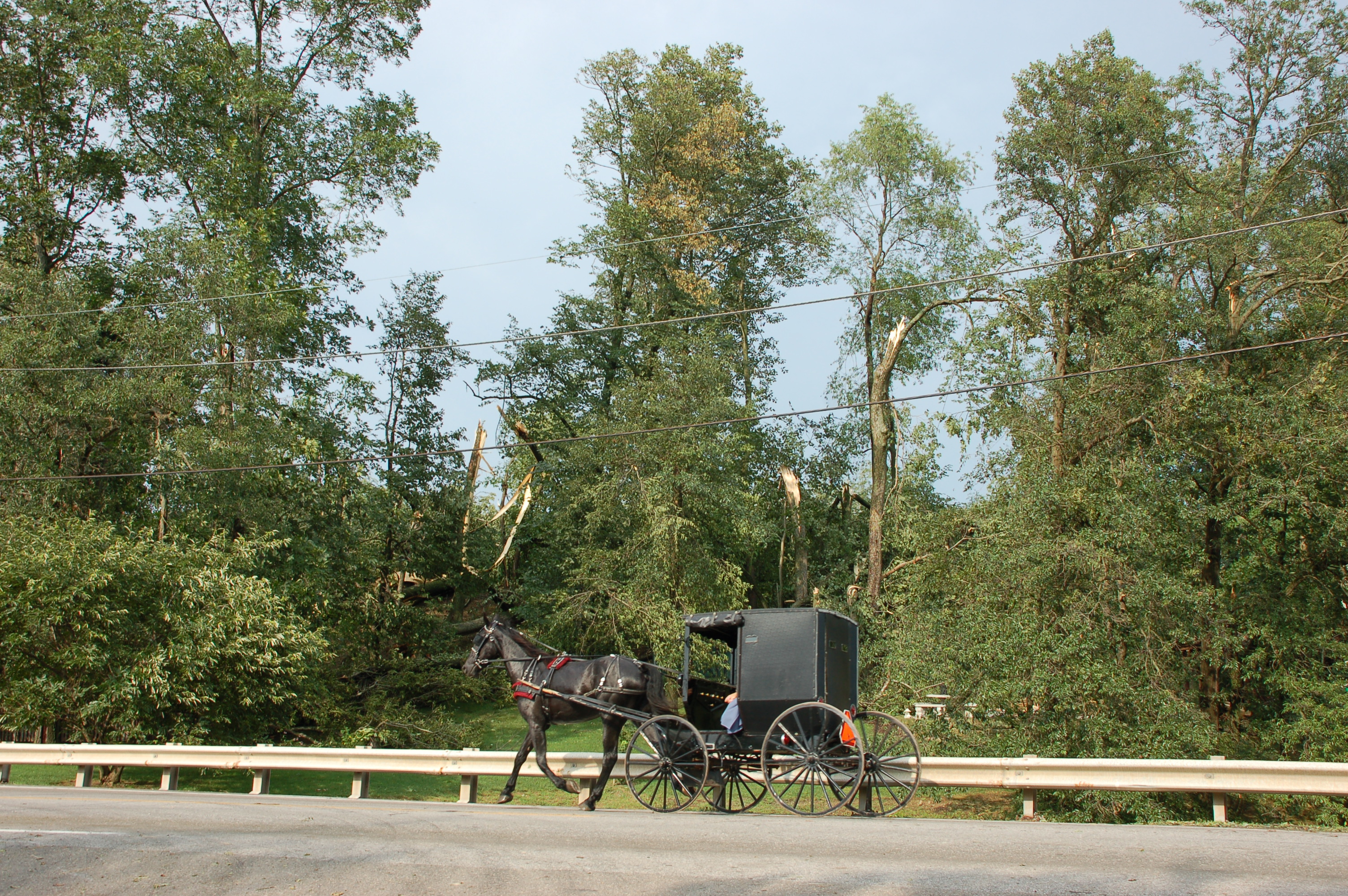
Driving in Amish Country is usually pleasurable and relaxing until the unexpected happens. A couple of recent experiences served as reminders of both the dangers and the benefits of traversing the winding, hilly highways in Holmes County.

A friend of mine, Glenda, and I recently each experienced amazingly similar situations only days apart. We each came away from our separate but comparable incidents feeling bathed in the beauty of humanity’s best behavior.

Glenda was on her way to her office when she came upon a buggy accident only seconds after it had happened. The buggy was crumpled, the horse lay injured in the roadway, and a young Amish woman was seriously hurt.

Glenda said everything happened in a whirl. Someone called 911 while she tended to Katie, the injured buggy passenger. Others came to settle the horse, releasing it from the tangled wreckage, getting it to a safe place and calling a vet.

The ambulance arrived, and transported Katie to the hospital. Glenda continued on the way to her office, wondering how the young girl would be.

Open buggy by Bruce Stambaugh
The Amish enjoy riding in their open buggies on pleasant days.

The following Sunday evening it was my turn. A friend had just arrived at our home for a visit when we heard a muffled crunch, followed by curdling screams of despair. We rushed to the front of our home to watch a horse bolt away, harnesses wildly whipping along the pavement.

A young Amish woman was slumped on the ground in front of a damaged buggy. Blood gushed from her forehead. John, our visitor, was a registered nurse and rushed to the girl’s aid. My wife retrieved towels from the house to help control the girl’s bleeding, and I called 911 on my cell phone.

Neighbors who had also heard the girl’s cries came running from every direction to help. Some brought blankets. Others lit flares to warn approaching traffic of danger on the other side of the hill. John continued to control the bleeding, and reassured the girl, whose name was Ellen.

A wave of bicycles all ridden by young Amish girls glided over the hillcrest. They had been with Ellen at a gathering, and retraced their path when they recognized her runaway horse. They came to see what had happened to their friend.

A few minutes later a pickup rolled up and out jumped Ellen’s parents and siblings. Someone had told them about the accident and they arrived to console their daughter. In addition, a passerby had corralled the horse and taken it to a neighboring farm. All this and the ambulance had yet to arrive.

Fortunately, Ellen was alert and with the bleeding stopped, she became more coherent and said the horse simply spooked. Unlike the accident Glenda happened upon, no other vehicle was involved.

Once the rescue squad arrived, treated and transported Ellen, the scene quieted dramatically. Our neighbors offered a flat trailer to haul away the damaged buggy. It was loaded and transported home. In a few minutes, the pickup returned the borrowed trailer.

The scene soon cleared after that, and we returned to visiting with John as if nothing had happened. Yet much had.

In both trauma situations, good citizens arrived to do what they could. What could have been very tragic instead turned humanitarian spontaneously.

As these two examples reveal, the beauty of driving in Amish Country isn’t always found in the scenery. The compassion of its citizens can outshine any pastoral vista.

Walking a very special walk

By Bruce Stambaugh

To be honest, it wasn’t a walk I thought I would ever make, especially just five weeks out from my robotic prostate surgery.

But when my friend, Kim, a prostate cancer survivor himself, suggested we participate in the Survivor’s Walk at the recent Relay for Life rally for Holmes County, Ohio, I couldn’t say no. I knew I needed to be there. Kim’s encouragement gave me courage.

However, Kim and I each had our own personal reservations about walking. I guess I just hadn’t fully comprehended the meaning of being a survivor while so many others struck with the dreadful disease could no longer say that. Walking together was an incentive to get involved.

When I learned that he, too, hesitated, I relaxed and realized that it was all right to be uncertain. My good wife, who has been an incredible companion throughout my journey with prostate cancer, went along, too.

Though ever supportive of the cause, I had never attended a Relay for Life gathering. I wasn’t sure what to expect. I thought you had to be part of a team to help raise funds. I was wrong.

When we arrived at the high school football stadium, it looked more like a small tent city. We registered at the survivor’s tent, which just happened to be the largest one there. That should have been a big hint to me.

Other tents hosted auction items, groups, games, sponsors, organizations and several cancer information stations. Still others were for campers who intended to overnight for the 18-hour event.

We found a place in the bleachers opposite the main stage. The co-coordinators reviewed the program schedule for those assembled, and the entertainment committee did their job well. They humorously energized us.

After the relay teams, all attired in color-coordinated T-shirts, were announced, the survivors took to the track. Survivor supporters could also walk if they wanted.

Blue Cure by Bruce Stambaugh
Kim Kellogg (right) and I wore our Blue Cure T-shirts in the Survivor's Walk at the Holmes Co. Relay for Life held recently.

Kim and I, both dressed in our Blue Cure T-shirts, began the walk near the front of the line. The Blue Cure Foundation (www.BlueCure.com) was founded to specifically bring awareness about prostate cancer.

As we began our walk, emotion stirred within. Soon though smiles replaced any doubts we had. Just ahead of us, a man pushed an older woman in a wheelchair. Scores of people lined the sides of the oval track and clapped and boisterously cheered us on.

I looked back, and was shocked to see so many people behind us. I told Kim that for a small-populated, rural county, there were a lot of cancer survivors. We guessed this group represented only a fraction of those affected by some sort of cancer.

Our encouragers included young children, senior citizens, strangers and friends. Yet we were all there for the same reason. We wanted to do something to find a cure, and I concluded that walking the walk I never thought I would make was the least I could do.

As we approached the finish line, the horizon darkened. A rainbow appeared, not in the sky, but on the field. The array of colors was itself bathed in an overarching purple, the universal color designated for every kind of cancer.

This walk I was initially hesitant to make turned out to be one I would not wanted to have missed. In this fight against cancer, none of us were walking alone.

I am my father’s son

By Bruce Stambaugh

My son has been trying not so subtly to tell me this for a long time. I am my father’s son.

What he means of course is that I act just like my late father did. Out of principle, I deny it of course, or at least I did. I didn’t think I was like my father at all, especially not his bad points.

Stambaugh men by Bruce Stambaugh
My older brother, Craig, our late father, Richard "Dick", and myself at the World War II Memorial in Washington, D.C.

I could clearly see that both my older and younger brothers each had many of Dad’s characteristics. The older is outgoing and antsy. The younger most physically resembles Dad, and is an avid sportsman.

But me be like Dad. No way. Dad wasn’t the best driver. I was once a certified driver education teacher. Dad was consistently late. I like being early. I wasn’t like my father at all, or so I thought.

As I have aged, I have humbly swallowed my pride. I realize that my son is right, although I probably don’t exactly see the resemblances that he sees.

I love some of the same things my late father did: nature, history, geography, travel, sports, antiques, community involvement, a sense of humor, and family. Dad poured his entire being into activities and organizations that revolved around those topics. That was especially true after he retired.

Dad helped found, foster and lead a private sportsmen’s club. He served on a regional planning board for 36 years. I wonder how much Dad’s involvement influenced my own participation in the organizations and institutions with which I affiliated over the years.

Dad’s love of travel took our family on many day trips to art and history museums, parks and other points of interest around the state. We got to know Ohio well.

That desire to explore and learn rubbed off onto me. My wife and I traveled with our two children, and like my own youthful experiences, many of our jaunts were day trips throughout the Buckeye State.

Dad wasn’t afraid to venture beyond Ohio’s boundaries either. He would travel with our mother when she attended out of state art classes. While Mom painted, Dad scoured field after field for Native America artifacts, one of his favorite pastimes.

In the evening, when it was time to share what each artist had accomplished, Dad was invited to show what he had found. Of course, he had to expound on the exact type of artifact, how it was used, and made. Dad knew a lot, much of it self-taught.

Storm clouds by Bruce Stambaugh
The backside of a severe thunderstorm.

My special hobby is the weather, especially extreme weather. I enjoy watching storms, and telling others about them. When people’s eyes start to glaze over, I realize it’s time to quit. That never bothered my father, however.

Dad taught me the value of preserving the old things, especially if the items happened to have been in the family. He and Mom gave my wife and I several well worn but personally valuable antique pieces that go back three family generations.

Dad’s handwriting was hardly legible. Mine is worse. Dad often mispronounced words. He always exchanged a “l’ for the “n” in chimney. When I catch myself garbling words, or more likely, when my son catches me doing that, my thoughts happily connect to Dad.

There it is. I gladly acknowledge that for better or for worse, I am my father’s son. I wonder if my son realizes he is, too.

Siblings by Bruce Stambaugh
The Stambaughs, Craig, Claudia Yarnell, Jim, Elaine Barkan, our mother Marian, and me.

Compassion haiku

Living Acts by Bruce Stambaugh

Compassion is not
fully understood until
it’s humbly received.

Bruce Stambaugh
June 12, 2011

The days we have waited for

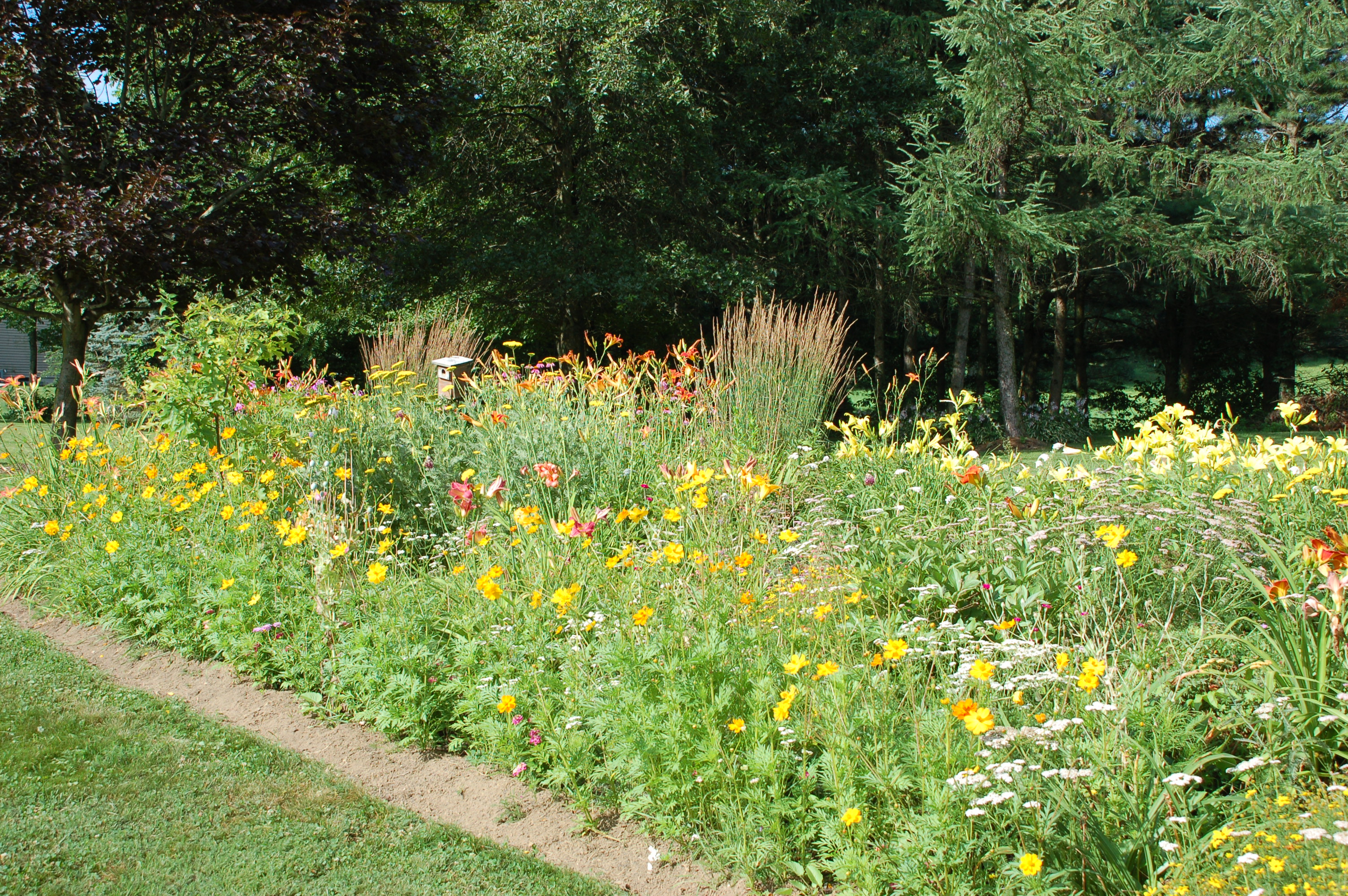
Wildflowers by Bruce Stambaugh
A wildflower patch in our backyard.

By Bruce Stambaugh

The days we have long awaited are at hand. After a winter that wouldn’t quit, and a spring that seemed more like November threefold, these desired days have sprung upon us as if a seasonal switch suddenly had been flipped, albeit belatedly.

Like much of the northern part of the country, Ohio spent the first five months of 2011 snowed in, flooded out, and shivering. Officially northeast Ohio had recorded a grand total of six sunny days between Jan. 1 and May 1.

Squall line by Bruce Stambaugh
A squall line charged into Ohio's Amish country.

The predominance of the gloomy, damp and cold days translated into depressed spirits and confined activities. But even as the days of May warmed and trees and flowers budded and bloomed, human outdoor activity remained restricted by wave after wave of heavy rainstorms.

Though we were mostly spared the severe weather that other parts of the country received, outside work and play remained limited. Now all that is behind us. The rich warm days of summer are here, and it is marvelous to inhale and embrace their arrival.

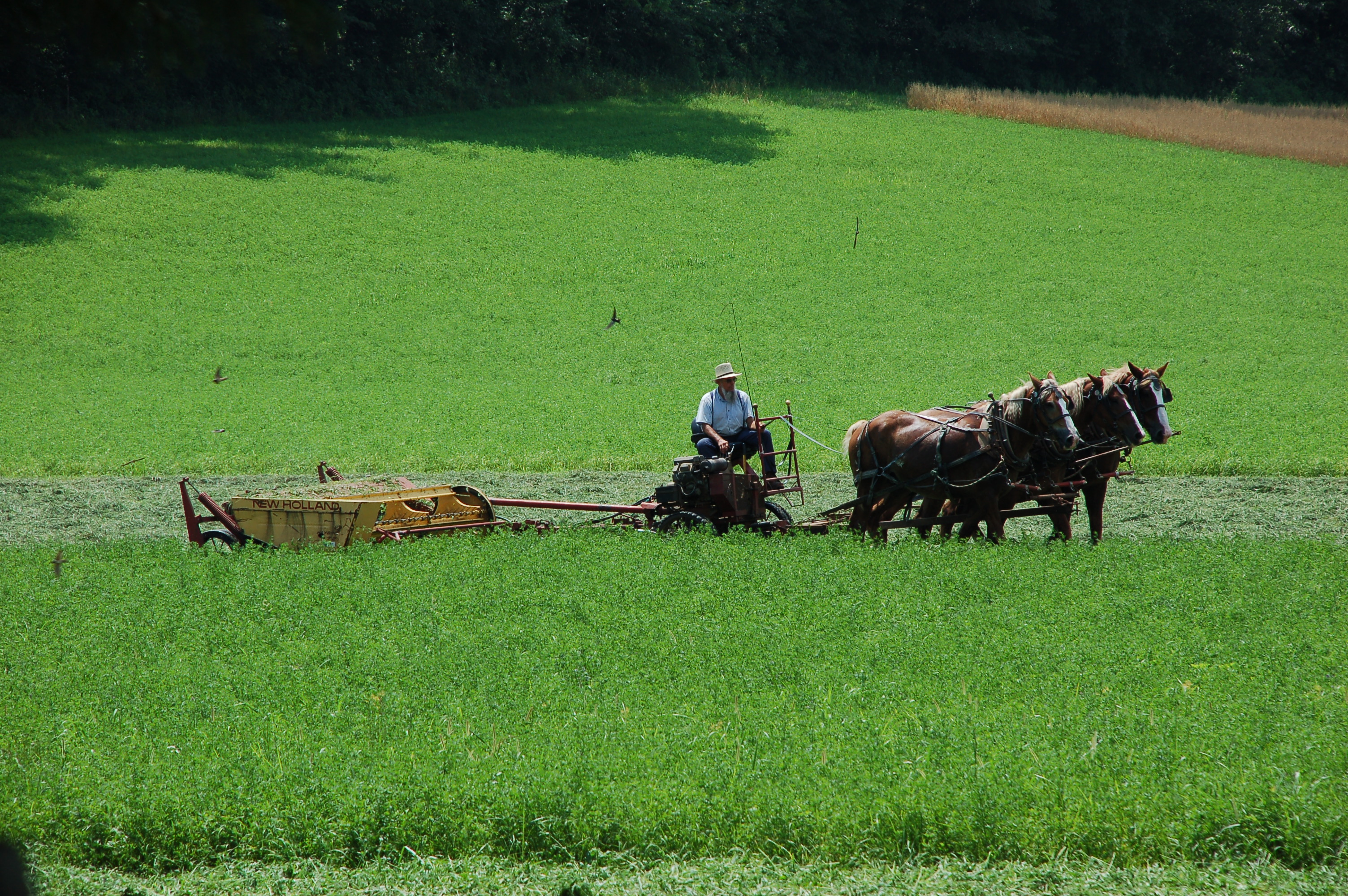
The anxious anticipation for sunnier, warmer days ended seemingly overnight. Farmers all across America’s breadbasket couldn’t wait to get into their fields, though many had to due to the saturated soil. Even teams of workhorses labored extra hard to break the soggy earth.

Plowing by Bruce Stambaugh
Plowing with horses is a long, steady process.

One week wood ducks floated on temporary lakes. The next the waterfowl were gone, replaced by plowed, harrowed and planted fields. That’s what a string of sunny days accompanied by strong warm southwest breezes can do to excess moisture.

Contractors and landscapers worked sun up to sundown to make up for lost time in pouring footers, building, excavating, and planting annuals. Commerce was renewed.

Planting by Bruce Stambaugh
My wife planted some heirloom tomatoes.

Motorcycle clubs and bicycle enthusiasts basked in the opportunities to wind their way all across rural byways. Children rode up and down lanes in pony carts and four-wheelers alike.

Gardeners finally could set their vegetable seeds and plants. In some locales, cooperative groups gathered to make the pleasant process all the more so and speedier.

Teenagers plunged without complaint into chilly lake waters just because they could. The outboard motors of both boaters and fishermen hummed in unison at the freedom to finally be able to play.

Sunset splash by Bruce Stambaugh
Teenagers took the plunge off the dock at Lakeside, OH.

Backyard birds coaxed their fledglings out of their secure nests and into the environs of the real world. Often they paused to collectively sun themselves like gaggles of bathers at the beach sans the bikinis.

Baby robin by Bruce Stambaugh
A young robin enjoyed the nice weather.collectively sun themselves like gaggles of bathers at the beach sans the bikinis.

The deciduous trees unfolded their canopy without delay, painting the landscape green on green. Soon the leaf cutters were hard at work thinning the verdant crop.

Irises, lilacs, peonies, poppies and roses created fragrant rainbows in every neighborhood. Azaleas and rhododendrons revealed their lovely petals just as the dogwoods dropped theirs.

Flower garden by Bruce Stambaugh
One of my wife's beautiful flower gardens.

Sitting on the airy deck of our woodland cottage in southeast Ohio, a single butterfly exactly symbolized the temporal jubilance. An impressive yellow and black tiger swallowtail zipped erratically through forest openings forged by gravel roadways and power line cuts.

Woods by Bruce Stambaugh
Where the butterfly roamed.

The butterfly darted unpredictably from shade to sun repeatedly among the emerald lushness. The butterfly improvised its quixotic dance back and forth all afternoon and well into the evening hours. I never saw it land.

Butterfly by Bruce Stambaugh
A Tiger Swallow Tail enjoyed our backyard wildflowers.

These are the days we have longed for, hoped for, prayed for. Like the innocent butterfly, let us rejoice and be glad in them, dancing a celebrative dance as if our sole purpose was to simply extol life’s goodness. Perhaps it is.

In praise of bathrooms and healing

By Bruce Stambaugh

I normally don’t write about politics. I try to keep my news on the bright side.

That said, I had a lot of time to fill while recuperating from my recent surgery to remove my cancerous prostate. I listened to the radio, watched television, reflected on life’s really important matters, and appreciated the kindness and generosity of family, friends, neighbors, churches, businesses, organizations and even strangers.

Their cards, visits, well wishes, prayers, flowers and food all rather overwhelmed me. I found it humbling and heartwarming to be told that so many people in so many ways love you.

The post-surgery visit to the doctor was positive, although we will have to wait a month for the results of my next PSA test to be able to say that I am “cancer free.” All things considered, I am very upbeat about my progress so far.

That brings me back to the beginning. While recuperating, I was astonished to already hear so many detailed reports on who might be running for the opportunity to oppose our current president in the 2012 election.

That’s right. Next year’s presidential election was commanding headline media time and it’s only Spring 2011. It was enough to make you nauseous, more so than the pain medication did for me.

The recovery process required that I also listen to my body. Much of that dualistic listening took place in the bathroom, which may be the perfect spot to have to endure premature political discourse.

Even without having had surgery, I’ll confess that I have always loved both bathrooms and politics. In today’s age of sound bite mania, it’s hard to tell the two apart.

In being sensitive to what my body was telling me as it slowly healed, I had to carefully respond appropriately. After they mess with your plumbing, believe me, you don’t want to stray too far from the water closet.

But then, I already had that reputation. As a kid, I got ribbed about using the bathroom so much. I tried not to let it bother me. I knew my business better than others, so to speak, and I learned early on to make sure I took care of business as needed.

Honduran outhouse by Bruce Stambaugh
An outhouse in rural western Honduras.

I used to say that I never saw a bathroom I didn’t like, until I went to Honduras. And even then, I learned the valuable necessity of compromise. As I matured, which is still being debated, medical tests proved what I already knew. Bathrooms were my best friends.

When I go to meetings, I always sit on an end chair just in case. In junior high school, I had a permanent hall pass. I made NASCAR pit stops seem inconsequential.

Minutes, hours, days and now weeks after my delicate, nerve-sparing robotic prostate surgery, I have learned that spending quality time in bathrooms is both a necessity and a positive sign of healing. In that unmentionable course of action, I have learned that patience is definitely a virtue.

I am looking forward to the continued healing and to hopefully hearing the words “cancer free” at my next doctor’s appointment. About 218,000 men in the United States are diagnosed each year with prostate cancer and more than 35,000 die from it annually. (See BlueCure.com for more information.)

Given those statistics, I absolutely feel fortunate to be able to share, even if it is about bathrooms. Premature presidential politics, on the other hand, is another matter.

Memorial Day is for remembering

cemetery by Bruce Stambaugh

By Bruce Stambaugh

Memorial Day is for remembering.

Originally, the day was set aside to remember those who had lost their lives in military service. Most research points to the American Civil War as the primary reason for Memorial Day. Graves of confederate and Union soldiers alike were decorated with flowers.

New York was the first state to officially observe a Memorial Day in 1873, with the rest of the northern states quickly joining in. The South, however, held its own day, separate from the date observed up north.

After World War I, that all changed. Memorial Day, then called Decoration Day, was established to remember all who had died serving the country in conflict. That’s how I remember the day growing up. Parades with bands, fire trucks, flags, and veterans marched by.

In 1971, Memorial Day was moved to the last Monday of May to create another three-day weekend. With that, the emphasis switched again. It was a time to remember all those who had gone before.

Yet Memorial Day became more of a celebrative affair that lasted the entire weekend than a singular time of showing respect. Picnics, softball tournaments, fireworks, and family gatherings overshadowed a time of reflection on the sacrifices and horrors of war.

When my parents built their beloved cottage in southeast Ohio in 1975, they always invited the entire family down for a Memorial Day picnic. We went fishing, boating, played games, and generally enjoyed each other’s company.

With the kids grown and gone, my wife and I began celebrating Memorial Day at our favorite vacation spot, Lakeside, Ohio. We enjoyed the company of Flag and bunting by Bruce Stambaughfriends, along with food and games. Patriotic events were staged, too, but my preference leaned more toward remembering in silent contemplation than engaging in nationalistic revelry.

As a young boy, I remembered spending hours sorting through the hundreds of black and white photographs that my father had taken during his stint in World War II. I was fascinated with the exotic South Pacific images I saw depicted in those old photos. Water buffalo, island natives selling goods, and intended to be silly equator-crossing ceremonies all intrigued me.

Dad, like his father before him, never wanted to talk much about the war. They each only shared briefly about their individual involvement. I came away from those limited discussions with the impression that both Dad and Grandpa Merle had abhorred their wartime experiences. They wouldn’t give details, but I concluded that it was the fearsomeness of it all from which they wanted to protect me.

Grandpa had served in the trenches in France during World War I, and was hit with mustard gas. He was only treated at a field hospital, and since they had no record of his injury, he suffered with chronic coughing the rest of his life.

Dad, on the other hand, chose a rosier route, avoiding the negatives. He bragged about being on the first ship into Tokyo Bay and how movies were traded from ship to ship via pulley and cable systems. In his retirement years, Dad enjoyed periodic reunions with his U.S.S. San Diego shipmates.

Neither my father nor my grandfather celebrated Memorial Day in grandiose, red, white and blue style. Rather, they chose to personally remember the horrific effects of war silently, privately. All the while, they relished in being surrounded by family and friends, enjoying the precious moments at hand.

This Memorial Day, I plan to do the same.

A long answer to a simple question

Garden pond by Bruce Stambaugh
The little garden pond in our backyard.

By Bruce Stambaugh

During his last visit to Ohio, my Virginian grandson, Davis, asked me a simple yet rather analytical question, befitting the inquisitive four-year-old, left-handed boy.

Davis and I were outside filling birdfeeders near the little garden pond positioned a few feet away from the back porch and just outside our kitchen window. Davis approached the pond’s edge, lined with mostly flat rocks scavenged from the neighbor’s farm fields.

“Poppy,” Davis queried, “Why do you have a pond?”

The bluntness of the simple question gave me pause. I straightened up, and thought long and hard before I answered him. The tone and intensity of his uncomplicated question told me that Davis really wanted to know.

As I contemplated my answer, Davis waited patiently, searching for the resident frogs and trying to count the darting goldfish. His long, strawberry blonde curls bounced with even the slightest move.

I was impressed with his youthful inquisitiveness. His question piqued my own consciousness regarding the purpose of the pond. I gave Davis the long answer.

I told him that when I retired as a principal, the staff and students at one of my schools gave me a gift certificate to build a garden pond. Apparently, I had let it slip that the pond was one thing I wanted to create once my school days were completed.

Of course, all that was probably too much information for Davis to process. Perhaps it mimicked a politician’s answer to a reporter’s intrusive direct question. Davis looked at me with his big blue eyes and repeated, “But why?”

I changed tactics. I gave him the words I figured he knew and that I loved.

Red-bellied Woodpecker by Bruce Stambaugh
A male Red-bellied Woodpecker enjoyed a sip from the little waterfalls on a cold December day.

I told Davis that the pond attracts life. I itemized a quick catalog of what I meant. The birds I enjoy watching, squirrels, rabbits, deer.

“Deer?” Davis quizzed long and slow, head tilted, hands thrown into the air.

I explained that although I had never actually seen deer drink there, I had found their hoof marks in the mud and snow around the oblong pool. We stepped away, and soon a chipping sparrow flitted to the gurgling little waterfall for a refreshing sip.

Grandson by Bruce Stambaugh
Davis, my inquisitive grandson.

I could almost see Davis’ gears churning beneath those flowing locks. I knew the inquisition would continue.

“Why do you have goldfish?” Davis asked next.

I lovingly touched his curly head and simply said, “So you and your brother can feed them.” Davis looked up at me and smiled, as if he sensed the patronization.

“The fish help keep the pond clean,” I continued. “They eat things that float in the water.” I prayed he didn’t ask for their scientific names.

My grandson’s pointed question helped me step back and appreciate my little garden pond all the more. I enjoy its abundant life, the alluring sound, the attractive and useful greenery in and around the pond, along with the attraction of fur and feathered wildlife year-round.

Those intrinsic pleasures more than compensate for the necessary regular maintenance required to keep the pond in a habitable state. Now, whenever I clean the pump filters, watch birds revel in the water and hear the frogs croak late at night, I’ll remember Davis’ clear question, too.

I know why I have a little pond with a miniature waterfall, brilliant orange goldfish and complementary water plants. “Because I like it,” which is what I should have told Davis in the first place.

My journey with cancer so far

By Bruce Stambaugh

On the morning of Dec. 14, 2010 I got the call I had dreaded. My preliminary test for prostate cancer was positive. A follow up biopsy confirmed the results. My journey with cancer had begun.

My immediate reaction was more of disappointment than surprise. My father had died of prostate cancer, and my older brother had had his cancerous prostate removed a year and a half earlier.

I saw the miseries my father had been through, and I knew what inconveniences my brother dealt with. Still, it was that immediate family history that resulted in my early diagnosis, for which I was most thankful. My doctors tested my PSA level twice a year.

Nevertheless, my initial emotions resembled the steepest, most winding roller coaster at any amusement park. Only, this turn of events wasn’t amusing. It was sad, frustrating, discouraging, lonesome, unacceptable, and agonizing all rolled into one.

At the same time, I knew that with the early diagnosis that I likely would have many more options than other cancer patients with much worse prognosis. And yet, this cancer was in my body and I was not happy about it.

I had been close to cancer before. Besides my father and my older brother, other close relatives and friends had had cancer. Too many acquaintances, former students and friends have either had cancer, are currently in their own battle with cancer, or have died because of it.

Each of their experiences touched me. Still, when the doctor tells you that you have cancer, everything changes.

Yes, it had been detected early. Yes, it likely could be removed or radiated. But it was still cancer. There is no good cancer. Cancer is cancer. Any action to counter the disgusting disease had the potential for unwelcome and unwanted physical, mental and emotional consequences.

Even so, I have found both friends and renewed friendships so far along this rocky path. I have been proactive in asking questions, and others have reached out to me.

Blues Brothers by Bruce Stambaugh
Kim Kellogg, Millersburg, OH, Randy Murray, Orrville, OH and I have formed our own prostate cancer support group. We meet about once a month at a local restaurant.

I meet periodically with two friends, both also in the midst of dealing with prostate cancer. Hearing their stories helps me to understand that each situation is different, and requires decisions that are best for each individual. The road to being cured from prostate cancer is different for every patient. Indeed, for some, there is no cure.

My route took me to a new urologist who laid out the best options for me, naming one by one the potential side effects, both short and long-term. None of them were pretty, including incontinency and impotency.

I have chosen robotic surgery as the best way to deal with my cancer. It is the least invasive, least painful, has the least blood loss, and the quickest recovery time, assuming all goes well. Plus, the surgery will remove the cancer from my body.

My particular prognosis for recovery is good, much better than hundreds of thousands of other cancer patients. I don’t find much solace in that, however.

Statistics show that one in six men get prostate cancer, and some of them are as young as 30. Early detection through testing is paramount, especially with a family history of the disease.

Others who have been down this road ahead of me say it’s important to maintain a positive attitude. That is how I am approaching my surgery. With supportive friends and family, I am comforted knowing that I do not have to walk this journey with prostate cancer alone.

Footnote: I especially appreciate the information and support received so far from Gabe Canales and his Blue Cure Foundation, along with all the good folks who post on Gabe’s Journey with Prostate Cancer Facebook page.

My mom, beautiful in so many ways

By Bruce Stambaugh

My four siblings and I were very fortunate to have the mother we did growing up.

The two decades that followed World War II were some of the most eventful yet tumultuous of the 20th century. However, I don’t remember feeling afraid in our modest household. I think Mom helped us stay focused on the positive aspects of life.

Mom, along with Dad, trusted us. Yes, we had rules, but they weren’t suffocating to us energetic, adventuresome youth. They just kept us connected and safe. We were taught to be polite, seek justice fairly, and to always be honest.

Marian Stambaugh by Bruce Stambaugh
Marian Stambaugh

As was the custom in that era, Dad was the breadwinner and Mom the housewife. Right or wrong, few seemed to question that model until my teenage years. It was just the way it was. I think I found a certain comfort in that daily arrangement.

Mom didn’t smother us, but we saw and sensed her love in how she handled every situation. Besides doing all of the housework, and there was a lot of it with five children and a working husband, Mom somehow managed time for each one of us.

She was there to mend both our scrapes and our clothes. We weren’t rich by any stretch of the imagination. Mom somehow made do with the meager salary Dad earned.

Busy as she was, Mom would always take time to interact with us personally as much as she could. Once, when no other kids were around, I asked Mom to play pitch and catch with me. She dropped what she was doing, found a glove and threw the ball back and forth with me for several minutes in the summer sun. And Mom didn’t throw like a girl either.

When we were ill, Mom was there to comfort us. When we were bad, she knew how to discipline justly and accordingly. I will confess that I always enjoyed watching my brothers and sisters getting the what for. I never did of course.

As a teenager, I felt my relationship with my mother growing stronger, better, yet different. Mom and I would regularly engage in protracted conversations covering a wide range of topics, including stories from her past that I had never heard before. Those were precious moments indeed.

Mom was as wise as she was talented and beautiful. She was smart enough to give us the space and freedom we each needed to find our own way in the world.

Mom was more than a mother and a wife, however. She had a life, too. She learned to drive at age 40.

Mom bowled with her sisters and mother. She was an accomplished artist. Even though she won awards and sold many of her watercolors, Mom seldom was satisfied with her vibrant renderings. I must have gotten my modesty from Mom.

Watercolor by Bruce Stambaugh
One of the many watercolor landscapes painted by Marian Stambaugh

Those snippets of memories can’t compare though to the love my siblings and I still have for her today. Out of necessity, Mom, who will soon be 90, is now the one receiving kindly care.

She is happy. She is still friendly and polite. And I wish I had a dollar for every time I have heard others remark about how beautiful a woman she is. She always was, and still is.

The five of us siblings were fortunate to have such a wonderful mother to guide and nurture us. Today we are fortunate to still be able to thank Mom for the many forms of beauty she modeled for us all.

Bay Photos by Donna

Wildlife Photos From The Chesapeake Bay Region

ROAD TO NARA

Culture and Communities at the Heart Of India

K Hertzler Art

Artist and nature journalist in the Shenandoah Valley of Virginia.

Maria Vincent Robinson

Photographer Of Life and moments

Gabriele Romano

Personal Blog

Jennifer Murch

Art is the only way to run away without leaving home. -Twyla Tharp

Roadkill Crossing

Writing generated from the rural life

ANJOLI ROY

writer. teacher. podcast cohost.

Casa Alterna

El amor cruza fronteras / Love crosses borders