Minding our Ps and Qs, 21st century style

Williamsburg VA by Bruce Stambaugh
By Bruce Stambaugh

I couldn’t help but sense the irony and wonder in it all. My wife and I were visiting my older brother and his wife near Williamsburg, Virginia.

We all were enjoying a pleasant spring evening on the back porch of their lovely home. My wife was using her iPhone. My sister-in-law toyed with her iPad. My brother and I each were surfing around on our MacBook Pro laptops.

The evening was dark and still, except for the occasional distant rumble of thunder. The only light on the porch was the glow from the screens of our electronic gizmos.

My brother and sister-in-law own a lovely home just minutes away from Colonial Williamsburg. Founded in 1654, Williamsburg played a significant role in the development of our country to say the least.
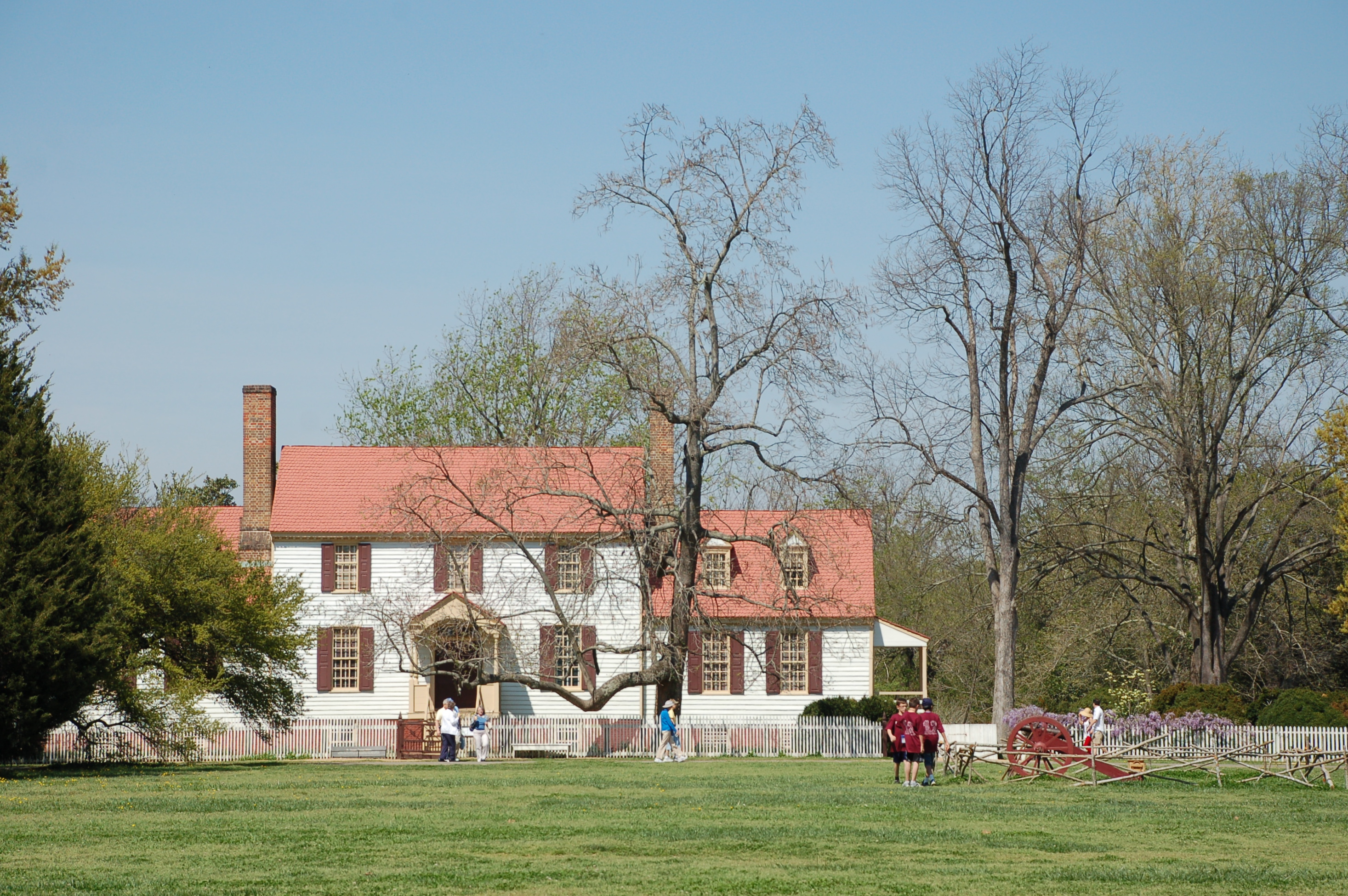
Williamsburg home by Bruce Stambaugh
We had spent the heart of the day walking the streets of the historic town. If you have never been there, it’s a bucket list kind of place, beautifully restored and maintained with lots to do for children and adults alike.
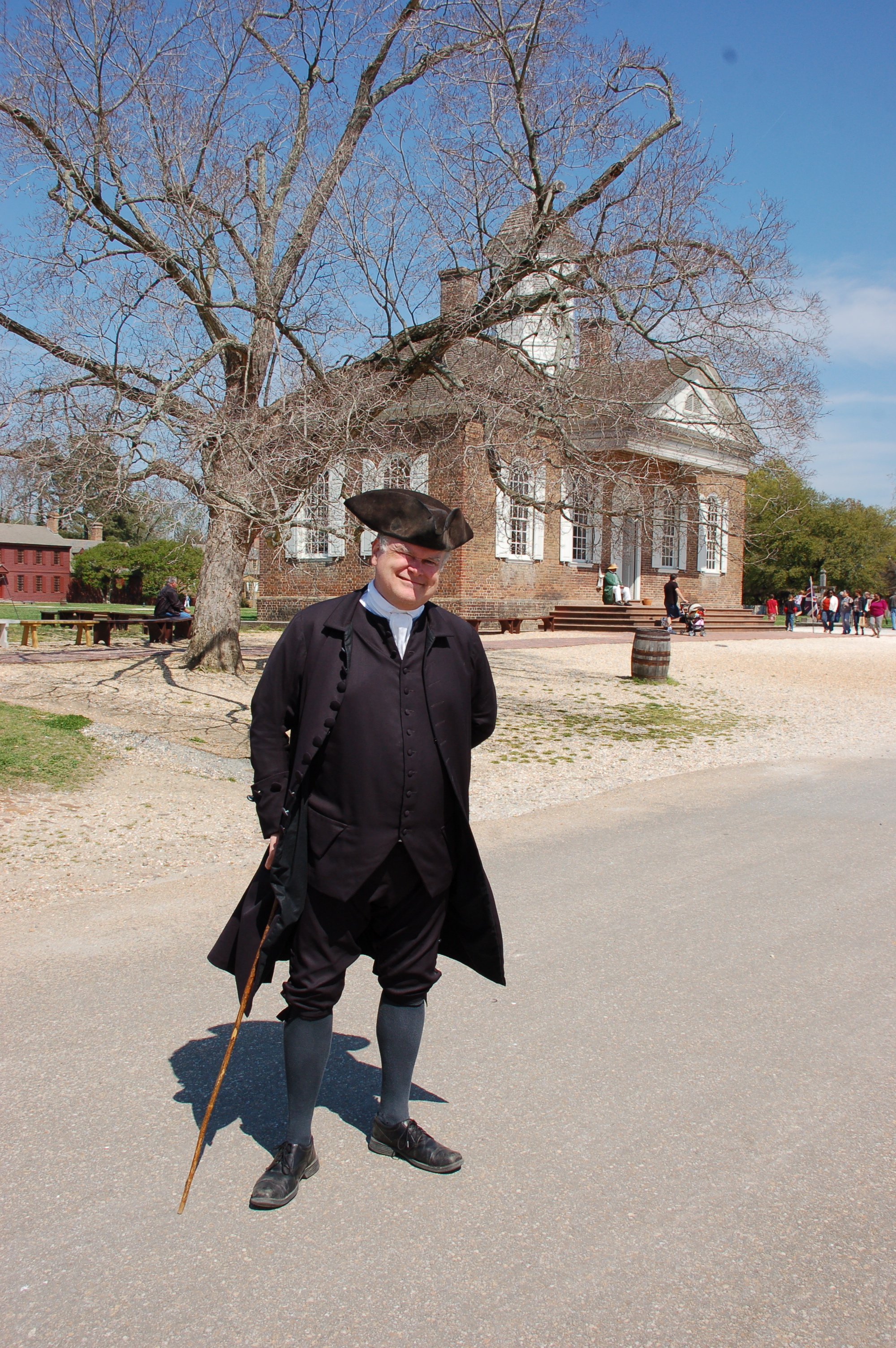
Williamsburg actor by Bruce StambaughEven though I had visited Williamsburg before, I again thrilled at just the thought of strolling the same streets that a young Thomas Jefferson once did. With so many guides and actors dressed in period attire, it was easy to imagine being back in time.

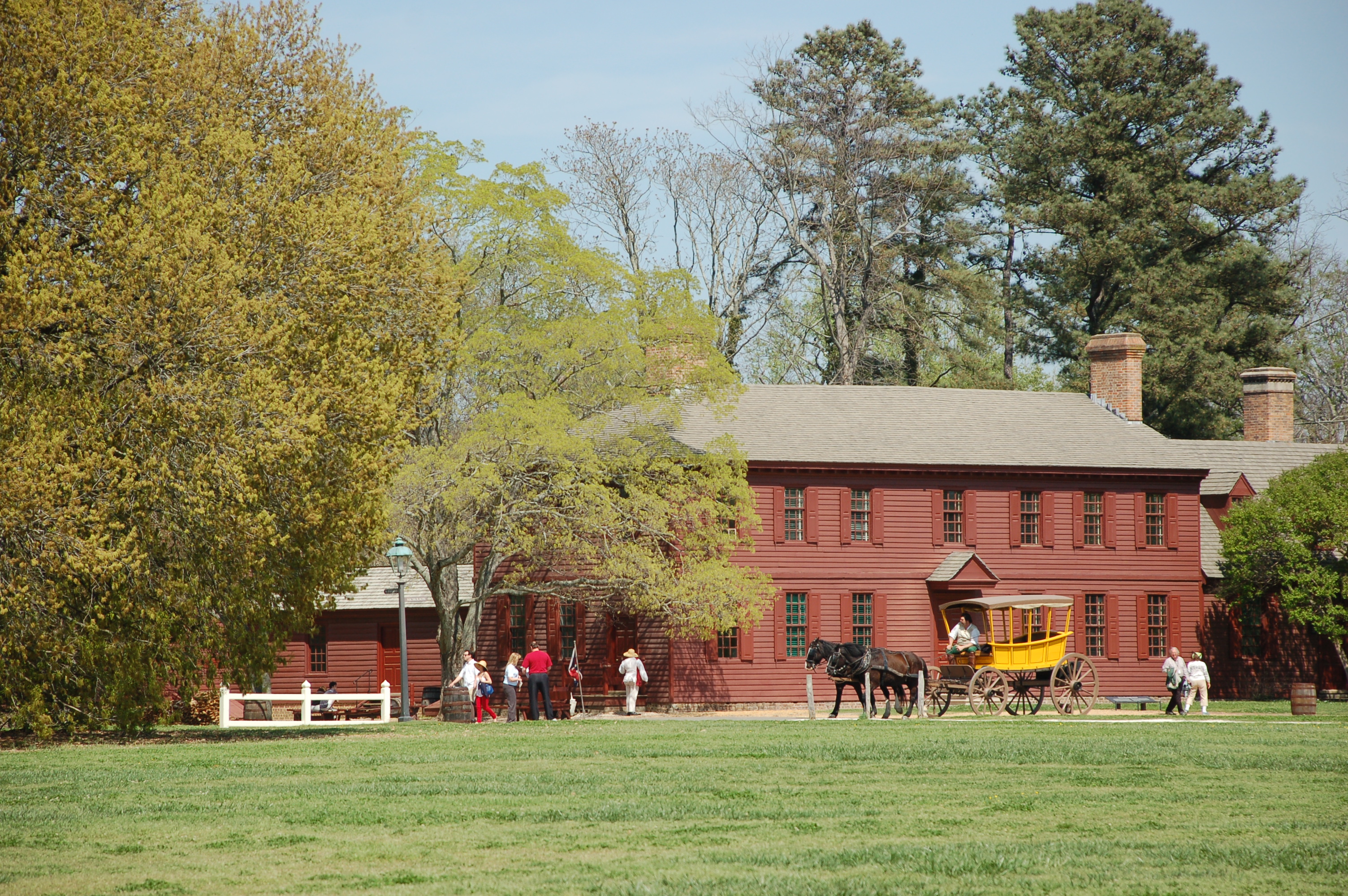
Plush carriages pulled along by noble teams of horses plied the once muddy streets, now paved for the comfort of the tourists and the convenience of the staff. The night before we had enjoyed a delicious meal in Shields Tavern, where we were careful to mind our Ps and Qs.

That old saying, still heard today, could very well have had Williamsburg roots. In those days, a tavern’s bartender simply kept a chalkboard ledger of what customers consumed. If they drank a pint, a P was lettered under their name. If a quart, then a Q was marked. At evening’s end, the bill was tabulated and the customers properly minded their Ps and Qs by paying their bill. Today it simply means to take care of your own business.
Williamsburg carriage by Bruce Stambaugh
As the four of us sat quietly on the darkened porch, we could have been minding our own Ps and Qs by paying our bills online. With the rumbling thunderstorms growing closer, it seemed a bit surreal using our 21st century technology to check in with the world while sitting in the shadow of a bygone era. The town crier was definitely no longer needed to announce the time.

I thought about other familiar sayings we utter without knowing their origin. We derisively chatter about big wigs without contemplating the phrase’s original meaning. For the record, “big wigs” came from the 17th century society custom of wealthy people wearing expensive wigs made of human hair. The taller the wig, the more aristocratic you were.
Williamsburg hats by Bruce Stambaugh
You could say we went the whole nine yards at Williamsburg. That reference was attributed to a bolt of fabric, which equaled nine yards. Clearly I enjoy linking the past with the present.

As the line of storms hit our area, it rained cats and dogs, but not long. Even well before colonial times, superstitious persons believed cats symbolized the rain and dogs the wind; thus, the saying.

Back on the porch, we powered down for the night, thankful for both the generous hospitality and the opportunity to reconnect with the origins of our democracy. I wondered if somewhere, someplace Thomas Jefferson and Steve Jobs were both smiling.Williamsburg wisteria by Bruce Stambaugh

From book seller to book author, Wesner connects with the Amish

By Bruce Stambaugh

Erik Wesner, 33, went from selling books to the Amish to writing one about them. It was an unexpected but enjoyable trek for the Raleigh, North Carolina native.

“I kind of stumbled into it beginning in Arthur, Illinois,” Wesner said.

Erik Wesner by Bruce Stambaugh
Erik Wesner
Wesner went door-to-door selling books for nine years. His job took him to many communities around the country where Amish had settled.

“The kind of books I was selling were appropriate for them,” Wesner said. He explained that they included sets of family Bible study books.

Whether he spent five minutes or 20 minutes with each household, he liked what he saw and heard. He was impressed with the inquisitiveness of the Amish, their resourcefulness and friendliness.

Wesner graduated from the University of North Carolina with a double major of English and economics. It was that knowledge that caused him to take notice of something else that he found common among the Amish.

“Everywhere I went in the Amish communities,” Wesner explained, “I saw successful businesses.” He said he was intrigued with that pattern, especially since most of the entrepreneurs were self-taught and didn’t have either high school or college degrees.

“While visiting in Amish-owned businesses, I saw customers who had driven three hours from Indianapolis and Chicago to make purchases,” he said. “I figured that was a sign of quality and honesty.”

Wesner couldn’t help but notice the continued success of these businesses in each Amish community he visited, even given the down economy.

“From Iowa to Illinois to Lancaster, Pennsylvania to Holmes County, Ohio, I found many success stories to share,” he said. That instilled in him a desire to learn about how they were able to not just survive but thrive when other businesses were not.

That intrigue lead to his book, Success Made Simple, an extensive review of Amish-owned businesses and what makes them consistently tick and click. His book is based on many interviews with Amish business folks across the country.

Wesner said though the book didn’t make the best-seller list, he gained something even more rewarding.

“Through all of this, I have made many friends among the Amish,” he said. That is what brought him back to Holmes County recently. He was visiting some New Order Amish in the Shreve, Ohio area.

In addition to his book, Wesner started a blog called “Amish America” right after the Nickel Mines incident in Lancaster County, Pensylvania in 2006. A gunman shot several Amish schoolgirls. The story made headlines worldwide.

“I didn’t like some of the things I saw and heard following that tragic situation,” Wesner said. Since he enjoys writing, he began the blog at http://amishamerica.com/.

The blog features stories and photographs of various Amish communities. He said he writes about and shows examples of everyday Amish life without trying to glorify it.

“I really enjoy the immediacy of the blog,” Wesner said, referring to the immediate posting of comments by some of his many followers. “I find that very rewarding.”

Wesner said there have been unexpected benefits to his blog.

“I mentioned an Amish business on my blog,” he said, “and the owner thanked me. She had customers who said they heard about her business by reading the blog.”

Wesner said he is working on a second book about the Amish. He said it would focus on the lesser-known things about the Amish lifestyle.

When he is not visiting Amish communities during the summer months, Wesner spends eight months out of the year teaching English in his parents’ home country of Poland. He said his students are mostly adult professionals who need to learn English for their jobs.

“I guess I feel a sense of obligation,” Wesner said about living in Poland. “My grandmother still lives there, and I didn’t want her to feel alone.”

That kind of dedication to family would resonate well with the Amish culture, too.

Words I always wanted to use

Amish clothesline by Bruce Stambaugh
Perhaps this post, like this clothesline, is just a lot of literary laundry flapping in the wind.

By Bruce Stambaugh

I have loved words for as long as I can remember. That’s a good thing for a writer.

Following the instruction of a highly regarded journalism professor, I never tried to use highfalutin words in my written endeavors. To be absolutely clear, it was best to write with everyday, run-of-the-mill words.

I have tried to stick to that advice ever since, earnestly desiring to avoid platitudes. Over the years though, I endeavored to expand my vocabulary. I noted catchy words that I either liked or sent me to the dictionary. I gradually created a latent lexis cache for future use.

Procrastinator that I am, I never got around to incorporating most of those exotic words in my dissertations. Consequently my verbose hoard burgeoned.

I figured a quick way to rectify that error would be to incorporate a multitude of those expressive descriptors in one fell swoop. My writer’s itch would then be scratched.

If and when I did such a deed, I pontificated that I had better generate a productive manuscript that actually resonated with the readers. I didn’t want to simply create a haberdashery of verbiage. I saw no need to hemorrhage words just for the sake of typographical splaying.

No matter how many syllables they contained or how obscure, the use of the words had to make sense. I wanted such exhortation to be both sanguine and seminal. That amalgamation would be a challenge. I emphatically didn’t want my text to be blowviating.

It would be inscrutable of me if the sentences were disparate. Therein lay the quandary. There could be no dissonance to what I wrote. I had to maintain my own aplomb. I certainly didn’t want my writing to be disingenuous. The content had to be sublime and easily assimilated.

I had to be succinct, too. A sheer plethora of words would not be acceptable. I couldn’t fathom allowing hubris to interfere with my communiqué. By my own volition, my certitude had to temper my cognition to avoid a panacea of a wanton wordy warren.

I could not permeate my writing with supercilious words that meant zilch to the readers. This discourse had to have evocative consonance. I certainly didn’t want the piece to be an Archipelago of disassociated declarations.

Intuition told me that the document had to be symbiotic. Being glib would never do. Creating a cacophony of jibber would not suffice either.

I knew I had to approach this sensitive assignment with both timidity and temerity. It would be a narrow literary line to walk. I would simply have to conjure up the pluck to pull it off.

Simultaneously, I understood that this nuance of style could not be maniacal in any way, shape or form. There was no room for duplicity.

To be true to both my readers and myself, I absolutely had to use discretion. Otherwise, the entire peripatetic piece would culminate into nothing more than an oxymoron. Such a paroxysm would be extremely unfortunate.

Whether you are agog, aglow or have a sense of animus after reading this, I just hope that this quixotic, idiosyncratic reverie of mine hasn’t dissuaded you. Otherwise I will have orchestrated my own demise with this effusive enigma, this pretentious prattle, this demonstrative claptrap.

Ergo, I would have to plead for impunity. Wait. I better go look up that one.

Sick haiku

It’s a lousy time
of year to have pneumonia.
But is there a good?

Bruce Stambaugh
Jan. 29, 2011

A post a day in 2011

I’ve decided I want to blog more. As a commitment, not a hollow resolution, I will make every attempt to post a blog everyday in 2011. I’ll still post my columns and articles, but I want to write more poetry, too. Perhaps I’ll make other observations as well.

I know it will be challenging, and there will be days when I won’t get it done. But it should be fun, inspiring, awesome and wonderful. In so doing, I’m promising to make use of The DailyPost, and the community of other bloggers with similar goals, to help and encourage me along the way. Of course, I will try to encourage others when I can, too.

If you already read my blog, I hope you will encourage me with comments and words of good will along the way. And don’t forget to click the “like” button, too.

Thanks for your support, and Happy New Year!

Bruce

Giving praise where praise is due

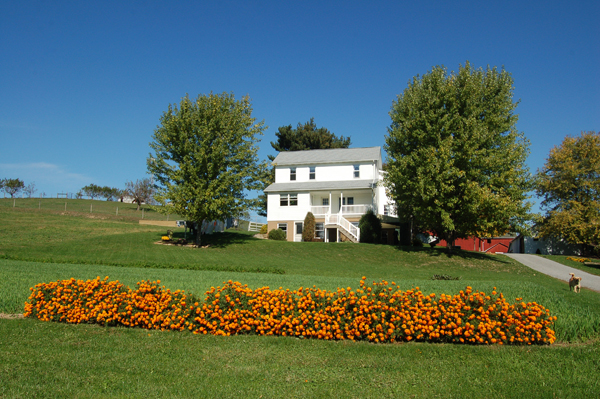
Marigolds by Bruce Stambaugh
Marigolds highlight an Amish homestead.

By Bruce Stambaugh

It had been a difficult day.

As the silvery sunset melted into the horizon, I reflected on the last few days and the people and events that had occurred. In reviewing the various situations, it hit me that like it or not I was entering the October of my own life, and that got my attention.

Days earlier I had met my friend Steve in a Mexican restaurant in the city where I was born and raised. Steve is a long-time buddy connected to my school principal days. Steve and I have a lot in common. First and foremost is that we both like to talk, at least according to our spouses.

If for no other reason than that alone, Steve and I have agreed to meet periodically without the wives. We get more talking done that way.

Steve is the kind of friend every guy should have. He doesn’t let you get away with anything. He is a self-appointed critic of my writing, and is unabashed about finding any mistakes that somehow make it through to publication. Well, at least he thinks they are mistakes, but he usually is mistaken.

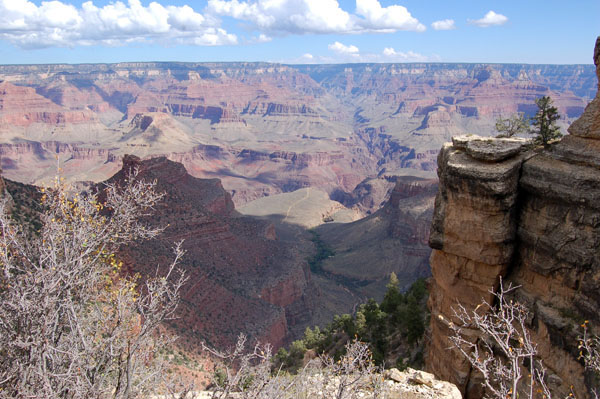
Bright Angel Canyon by Bruce Stambaugh
Bright Angel Canyon at the Grand Canyon, AZ is a favorite spot for hikers, painters and photographers alike.

That’s the kind of friends we are. He has the same theology about technology that I do. He loves to frequent the western United States and does so annually, months at a time, mostly hunting for arrowheads. Archeology and travel are other mutual interests.

At bat by Bruce Stambaugh
Baseball is my favorite sport.

Another thing we have in common is baseball. He hates it. I love it. Also, we enjoy discussing politics, until the conversation gets too political, then we switch to a more congenial topic, like baseball.

We talk about our late fathers and how our mothers are doing. And of course, we extol our wives, and try not to roll our eyes too much. Did I mention we laugh a lot?

A few days later, I took my mother on a short drive around the colorful countryside near the retirement home where she lives in Walnut Creek, Ohio. Mom always enjoys getting out when one of us “kids” can take her.

Mud Valley by Bruce Stambaugh
A typical scene in Ohio's Amish country, this one near Walnut Creek, Ohio.

This day was exceptional. The sky was pure blue, allowing the sun to heighten the already vivid colors. Since Mom was an avid and prolific watercolor painter, I always hope these short rides spark a memory of those days gone by when she and her friends would find a spot to paint, set up their easels and spend the day communing with nature and one another, beautifully interpreting what they saw.

Besides the warm hues of the leaves, a stunning red-tailed hawk flew right across our path. Around the curve, Mom spied some flashy marigolds. All in all, it was an invigorating jaunt. Seeing that Mom enjoyed the little excursion, I chose to tell her a comment that Steve had shared with me at the Mexican restaurant.

Marian Stambaugh by Bruce Stambaugh
Marian Stambaugh, 89, taught me to see and share in creative ways.

Knowing my mother was an accomplished landscape artist, Steve said, “You have your mother’s eye.” I non-verbally asked for clarification. “Instead of a brush, you paint with words and through the lens of your camera.” I don’t know if Steve noticed or not, but tears welled in my eyes. I was honored with the keen compliment. When I shared the kind words with Mom, tears welled up in her eyes, too. Despite her advanced dementia, knowing that Mom had understood at least a little of the depth and breadth of Steve’s insight made the compliment all the more meaningful.

The circle of blessing was now complete. It had returned to its rightful owner, the creative and artful woman who had taught me to see and share Creation’s beauty.

Suddenly, this difficult October day didn’t seem so difficult after all.