Timing is everything, especially when birding

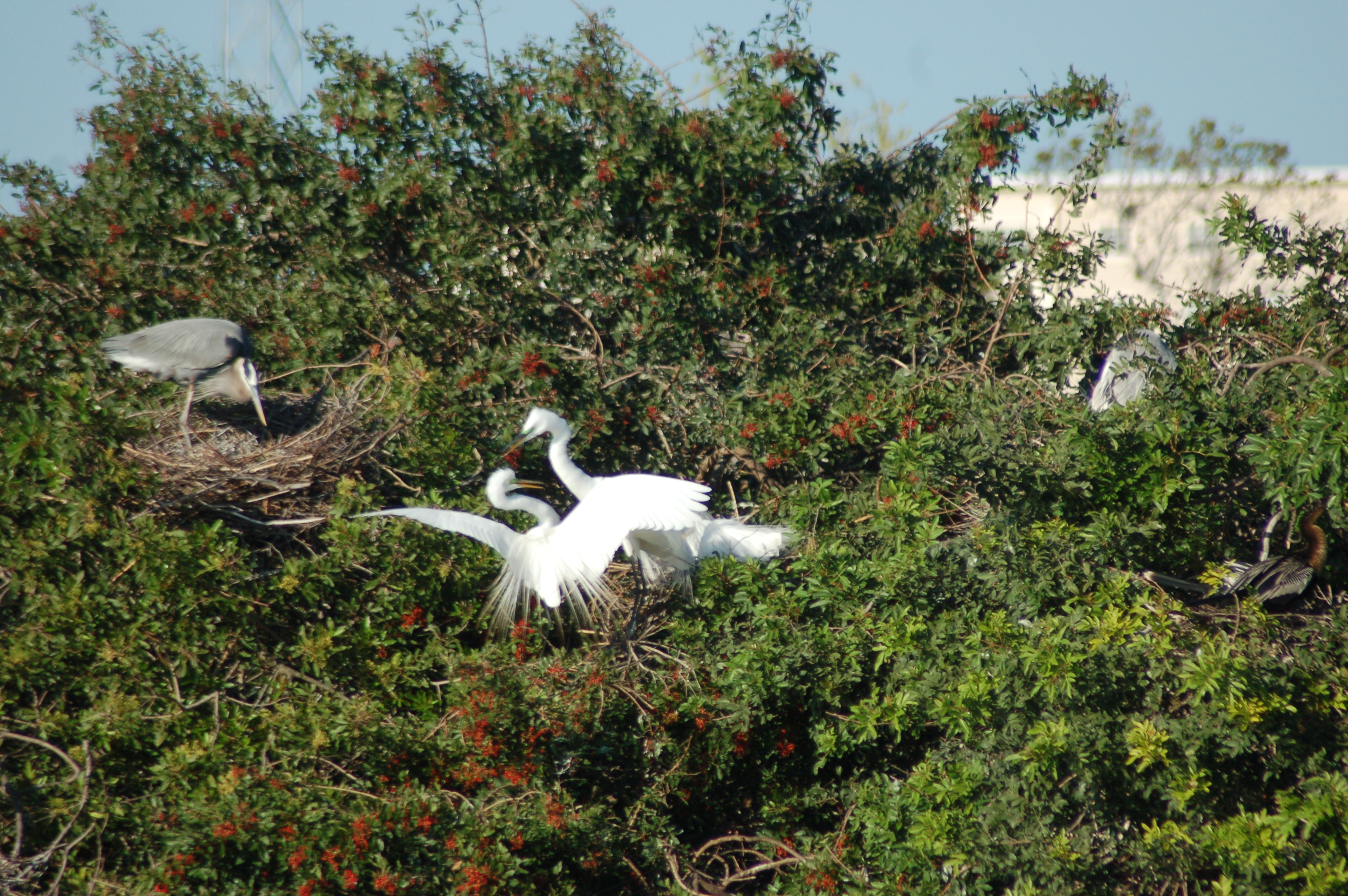
Courting Egrets by Bruce Stambaugh
I caught this pair of Great Egrets in their courting ritual at the Venice, FL Rookery. The Great Blue Heron to the left didn't seem too impressed.

By Bruce Stambaugh

The weather was dreary and cold, with occasional snow flurries. It was just another winter’s day in Holmes County, Ohio as far as I was concerned. But it turned out to be so much more than that.

I drove the nine miles east to check on my mother, who lives in a local nursing home. I kept my visit short as usual, making sure I had refilled Mom’s bowl of jellybeans before I said goodbye.

As I was driving home a flash of white caught my attention to the right just east of Berlin, center of the world’s largest Amish population. Besides the color, the bird’s large wings, small head and short tail were all instantly noticeable.

I checked traffic and slowed my vehicle. The bird’s rapid, steady flight cut directly across my path right to left, giving me a full, close view for nearly a minute.

By its distinctive wingbeats, its size and color, I reckoned it was a Snowy Owl. Given my situation, I had no other choice. I had to keep alert driving, yet I tried to keep my eyes on this rare bird.
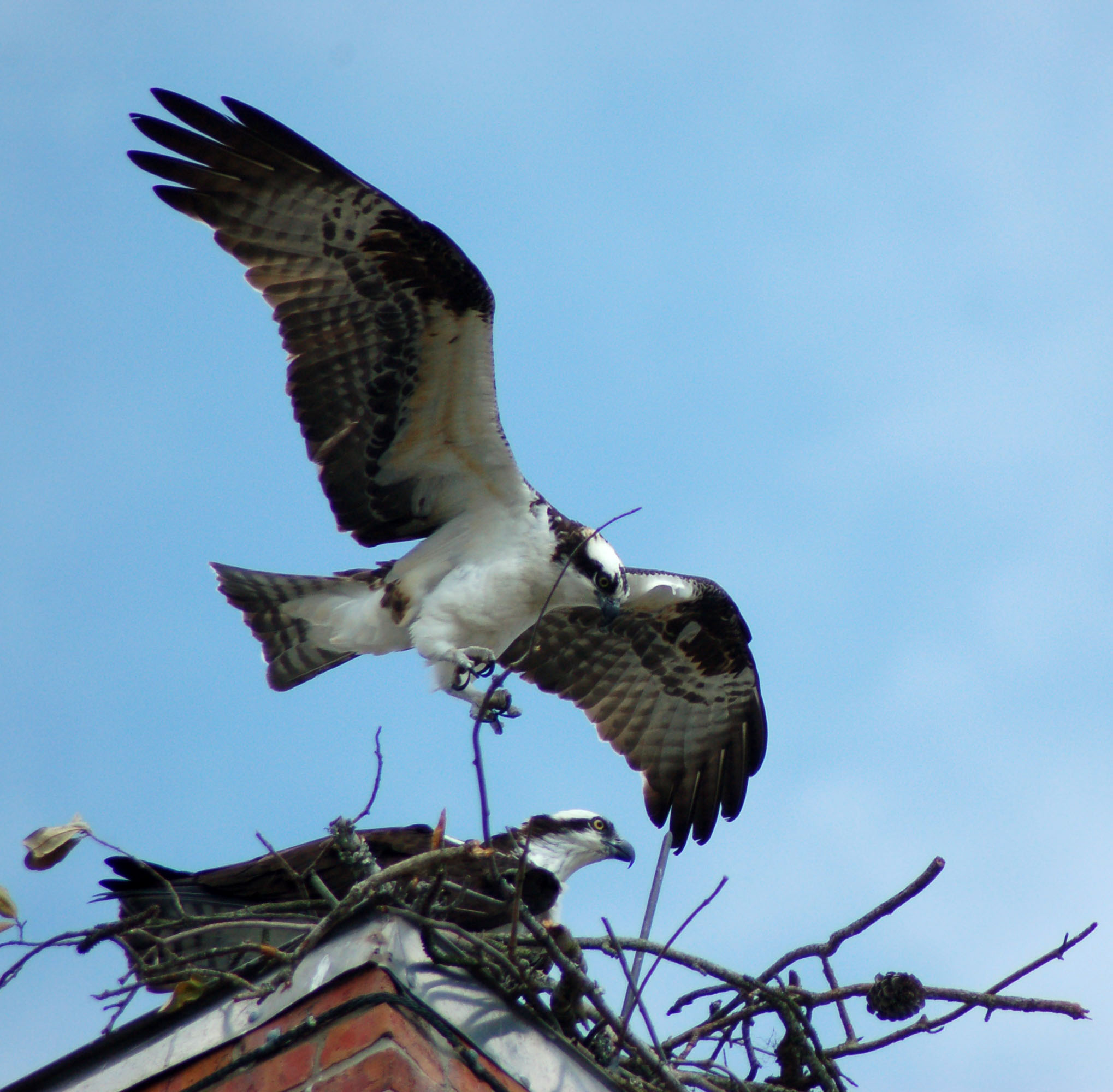
Ospreys at Corolla NC by Bruce Stambaugh
While vacationing in Corolla, NC, I happened upon this pair of Ospreys building a nest on a rooftop.
I didn’t have either my binoculars or camera along. The only thing to do was to keep driving and hope that I could spot it again as I made my way west through town.

Snowy Owls recently had been reported all across the midwestern part of the country, including Ohio. This was far south of their normal winter range. Experts speculated that the owls came in search of food. Normally nocturnal, Snowy Owls will hunt in the daytime when stressed by hunger.

As I motored through two signal lights and the usual clog of traffic in the busy unincorporated village, I kept looking south. I spotted the bird off and on, and saw it gliding as if it was going to land southwest of town.

Once I reached the open area west of Berlin, I again found the white owl, this time flapping its large wings. As I headed down the hill colloquially dubbed Joe T. hill, I lost sight of this magnificent bird. I didn’t know if it had landed or flown out of sight.

My only option had been to observe every detail of the bird that I could while driving. In the birding world, that process is called reckoning, meaning noting the birds shape, size, flight pattern, and behavior.

To be sure of my sighting, I consulted several bird books when I got home. They confirmed what I had seen. I reported the sighting to the rare bird alert. That way others in the area might see the owl, too.

That’s the way birders are. Half the joy of watching birds is sharing what is seen with others.

Amish boys biking by Bruce Stambaugh
Young Amish boys like these young men often will bike miles to go birding.
Ohio’s Amish country is blessed with an abundance of excellent birders, many of them in their early teens. It is not uncommon for them to get a group together, and bike for miles to go birding for a day.

They keep track of what they see, species, numbers and locations. And if they happen to spot an unusual bird, the word gets spread quickly so others may enjoy the opportunity as well.

In this case, I couldn’t believe my good fortune to be at just the right place at just the right time to see a Snowy Owl. I considered myself extremely fortunate to have seen this rare bird.

When birding, like so many other situations in life, timing is everything.

Checking the roads and the scenery

Fall haying by Bruce Stambaugh
By Bruce Stambaugh

When I moved to Holmes County, Ohio more than four decades ago, one of my initial purchases was a county road map. I wanted to learn my way around the ridges, valleys and hamlets of the area.

I drove both the highways and back roads in order to get to know the topography and citizenry of this place. Geography buff that I am, landscape variations between the glaciated and the unglaciated portions of the county greatly intrigued me.

I marveled equally at the steep wooded hills that defined the broad Killbuck Valley, and the rolling farmlands and rivulets in the county’s northern section. The common elements of picturesque scenery and practical people reoccurred despite the demographic differences.

All these years later I still drive the roads, still learn, still enjoy my bucolic and human encounters. I think about that often, especially when I inspect the roads for which I am responsible as a township trustee.

Washout by Bruce StambaughMy main objective is to ensure safe road conditions, and check for potential problems like plugged culverts, leaning trees and slippery roads. I do those duties, but the pastoral vistas and the genial people I encounter along the way can easily distract me. I don’t mind in the least. The diversity of the countryside and characters in my township are truly remarkable.

My regular route takes me up hill and down vale, through densely wooded ravines with sharply slanting walls that rise abruptly on both sides. In several places road and stream are pinched with just enough room to navigate side-by-side.
Amish farm by Bruce Stambaugh
In minutes, I can motor from forested valley to high, rolling fertile fields that surround coffin red bank barns and white farmhouses. Various shapes and sizes of purposeful farm buildings cluster around the intentionally unadorned agrarian castles.

It was inevitable that over the years the views would be altered. With the population regularly expanding and the land not, cottage businesses and manufacturing buildings sprouted up out of necessity. Many are Amish run and involve some aspect of the lumber industry. Other shops create products specifically for the benefit of the Amish lifestyle, like buggy shops and farriers.

The commerce is nice. The views and residents are better.
Saltcreek farm by Bruce Stambaugh
Near one of my favorite hilltops, the land falls away gradually, cascading toward the Killbuck lowlands. It is a sacred place for me, and yet it is at this precise spot where a new Amish country murder mystery novel is set. When I read about the book’s release, I wondered if the writer had ever met the good folks on the homestead he had impugned.

Last winter, during a fierce snowstorm, a semi-tractor trailer truck got stuck on the slippery incline in front of this very farmstead. The kind farmer cranked up his bulldozer, puttered out the long lane in blinding snow and pushed the teamster and his rig over the hill and on his way.
Wash line by Bruce Stambaugh
When it comes to beauty, seasons are really insignificant as I traverse my lovely township. Refreshing summer breezes flap wash lines loaded with pastel clothing. Gaggles of youth skate and play on frozen ponds. A Golden Eagle roosts on a chubby fence post. Leafy rainbows of the mixed hardwoods compete with those in post-storm skies.

Then, too, rounds from paintball guns plaster stop signs, runaway streams wash away road banks, and citizens rankle at impassible roads. Fear not. Repairs can be made, relationships mended.

Peace is restored to my Camelot, at least until my next dreamy drive.
Amish school by Bruce Stambaugh

Amish show their thanks through service to community

Amish harvest by Bruce Stambaugh
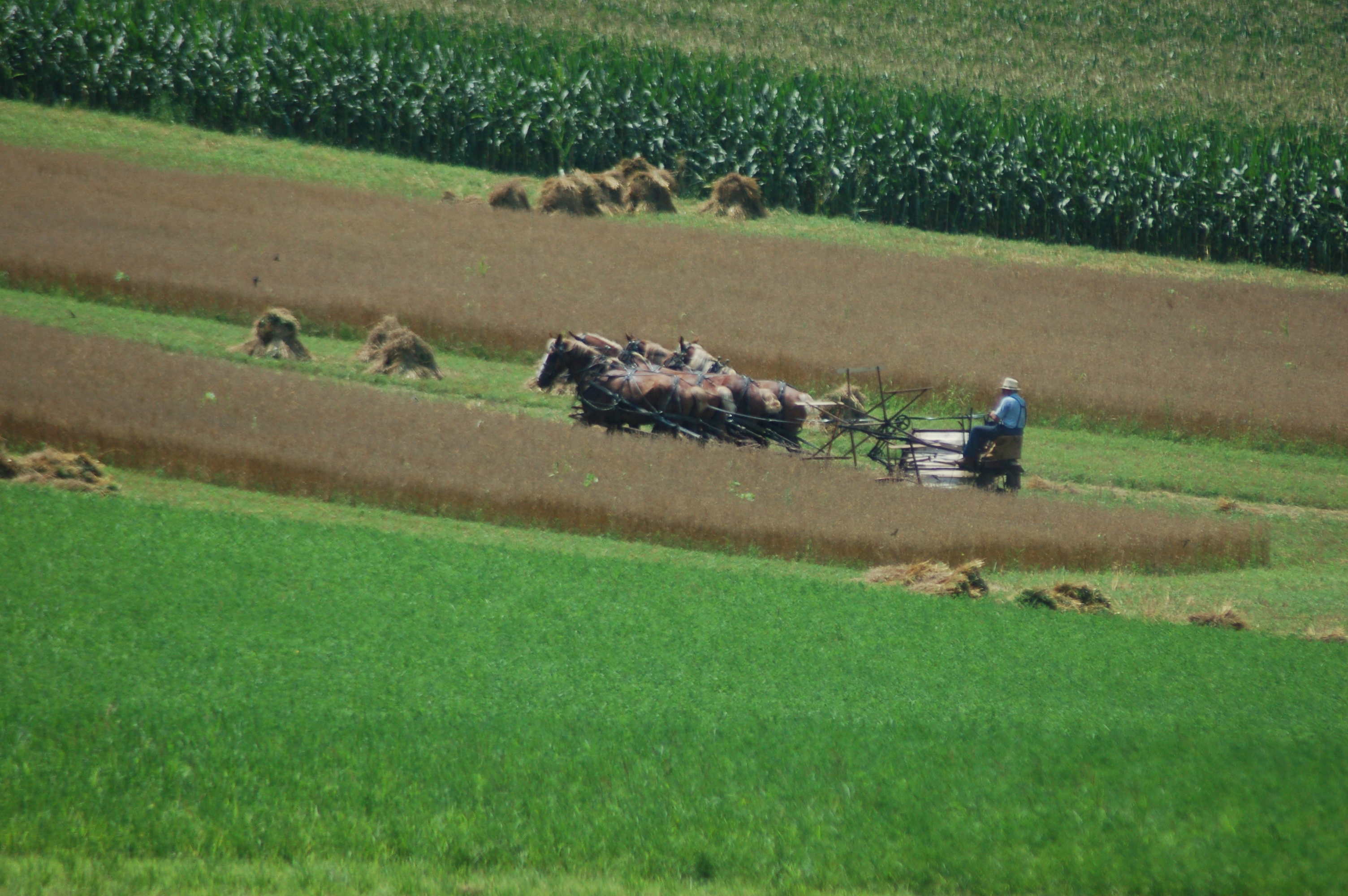
During harvest, the Amish literally pitch in to help one another.

By Bruce Stambaugh

Once the floodwaters of the historic July 1969 flood had receded, the residents of Killbuck, Ohio were in shock. Homes and businesses were either destroyed or severely damaged by the record high water levels. Townspeople were ready to give up, the cleanup looked so daunting.

Then something amazing and unexpected happened. Scores of Amish and Mennonites arrived from the eastern section of the county, home to the world’s largest Amish population, to help. No one had asked them to come. They just showed up.

The volunteers waded in and did the absolute hardest, dirtiest jobs, clearing out mud and muck with no complaints. They did it all out of a basic foundation of thankfulness.

Helping in times of need affords the Amish a method of connecting with the community. It is their personal and active way of expressing their appreciation for community and country, and the cherished ability to worship freely.

Church buggies by Bruce Stambaugh
Gathering the buggies before church at an Amish home in Holmes Co., Ohio.

Amish do not normally participate in organized governmental positions. They do not take oaths, which such positions often require. Consequently, when opportunities to assist others arise, the Amish respond.

The Amish do not always wait for disaster to strike either. They are proactive in helping the less fortunate.

Donating blood is one of those opportunities. It’s not unusual for a local blood drive to collect 100 or more units every 56 days.

The Amish also show their thankfulness by helping with numerous annual benefit auctions that are held locally. A short list would include The Rainbow of Hope auction, The Ohio Mennonite Relief Sale, the Holmes County Home and the Holmes County Training Center.

Hitching rail by Bruce Stambaugh
The hitching rail at the Mt. Hope, Ohio, Auction is lined with horses and buggies on sale day.

Supporting such causes is borne of a two-fold purpose for the Amish. They recognize the importance to help those who have particular needs, and they also accept that they could possibly be in that situation themselves. They are grateful for whatever happens.

To briefly identify the purpose of the aforementioned benefits helps to understand the depth and breadth of the Amish aid. Funds from the Rainbow of Hope auction assist children with major medical bills. The Relief Sale raises funds for worldwide projects under the direction of Mennonite Central Committee.

MDS house by Bruce Stambaugh
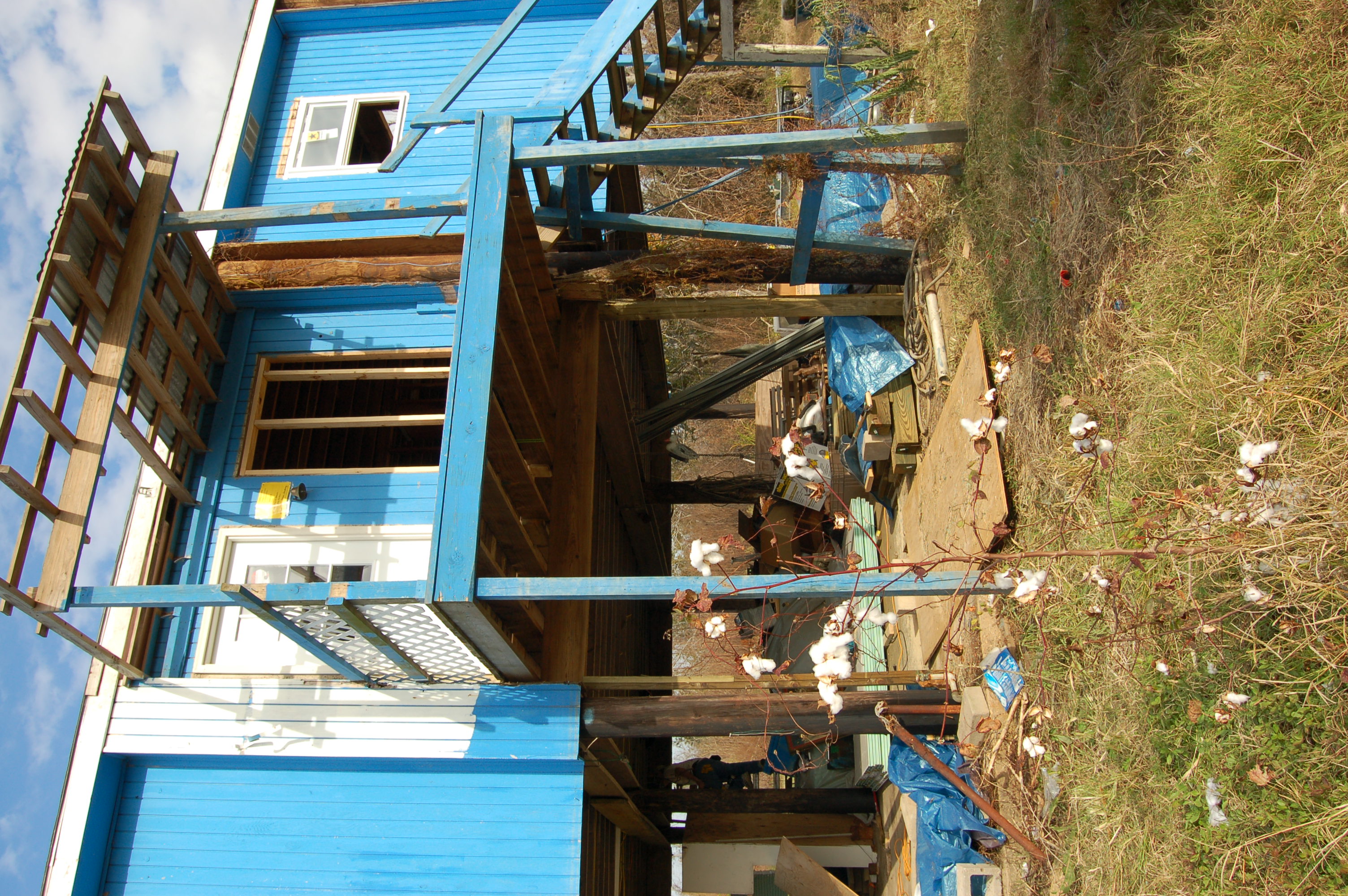
A home damaged by Hurrican Katrina in Boothville, LA was repaired under the direction of Mennonite Disaster Service.

Amish even travel far from their geographic area to put their faith into action. After Hurricanes Katrina and Rita, scores of Amish assisted in the Gulf States cleanup and reconstruction. So many helped, in fact, that Mennonite Disaster Service set up an Amish only camp where the volunteers could live according to their normal lives without the influence of distractions like television and the Internet.

Locally, the auctions for the county home and the Training Center raise operating funds. The county home has some Amish residents, and Amish make up a good percentage of the population at the Training Center, which works with developmentally challenged students and adults.

Another way of contributing to the common good for some Amish is to join the local volunteer fire department. Several area departments have Amish on their rosters as firefighters and emergency medical technicians.

True to their desire for modesty, the Amish want no recognition or publicity for their kind efforts. Their satisfaction comes from the simple act and ability to help others.

Amish help by Bruce Stambaugh
Amish quickly helped their neighbors have a severe thunderstorm hit near Charm, Ohio in July.

Of course, the iconic images of Amish helping at a barn raising are conjured up as the ideal way to help their neighbor. But their generous participation in the community and world at large clearly shows that the Amish think and act out of thankfulness far beyond their own immediate area.

To be sure, most Amish families embrace Thanksgiving as a day of joyous celebration of community, bountifulness and life itself. Even then many Amish approach the day piously, fasting in the morning prior to the feast that includes all the traditional trimmings.

The Amish mark Thanksgiving Day as a pinnacle to a lifestyle of serving. Fittingly, they would be too modest to acknowledge that fact.

Amish farm fall by Bruce Stambaugh
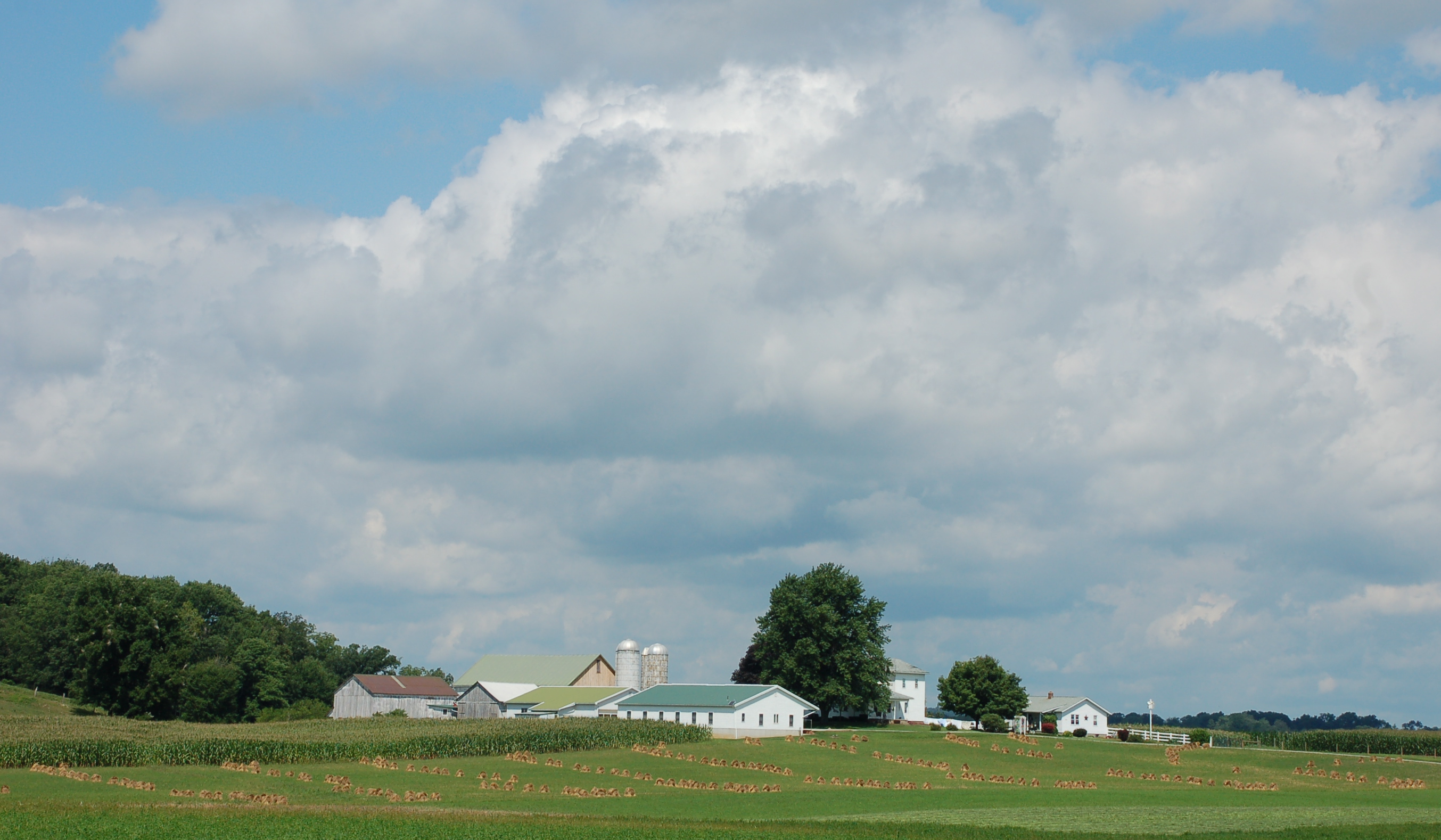
A typical Amish farm in the fall in Holmes County, Ohio.

This article appears in the November 2011 edition of Ohio’s Amish Country magazine.

A change of plans for Mil Agnor

By Bruce Stambaugh

Mil Agnor is returning to Romania, but not to continue her Peace Corps service.

“I wanted to go back to say goodbye and thank you,” Agnor said.

Mil Agnor by Bruce Stambaugh
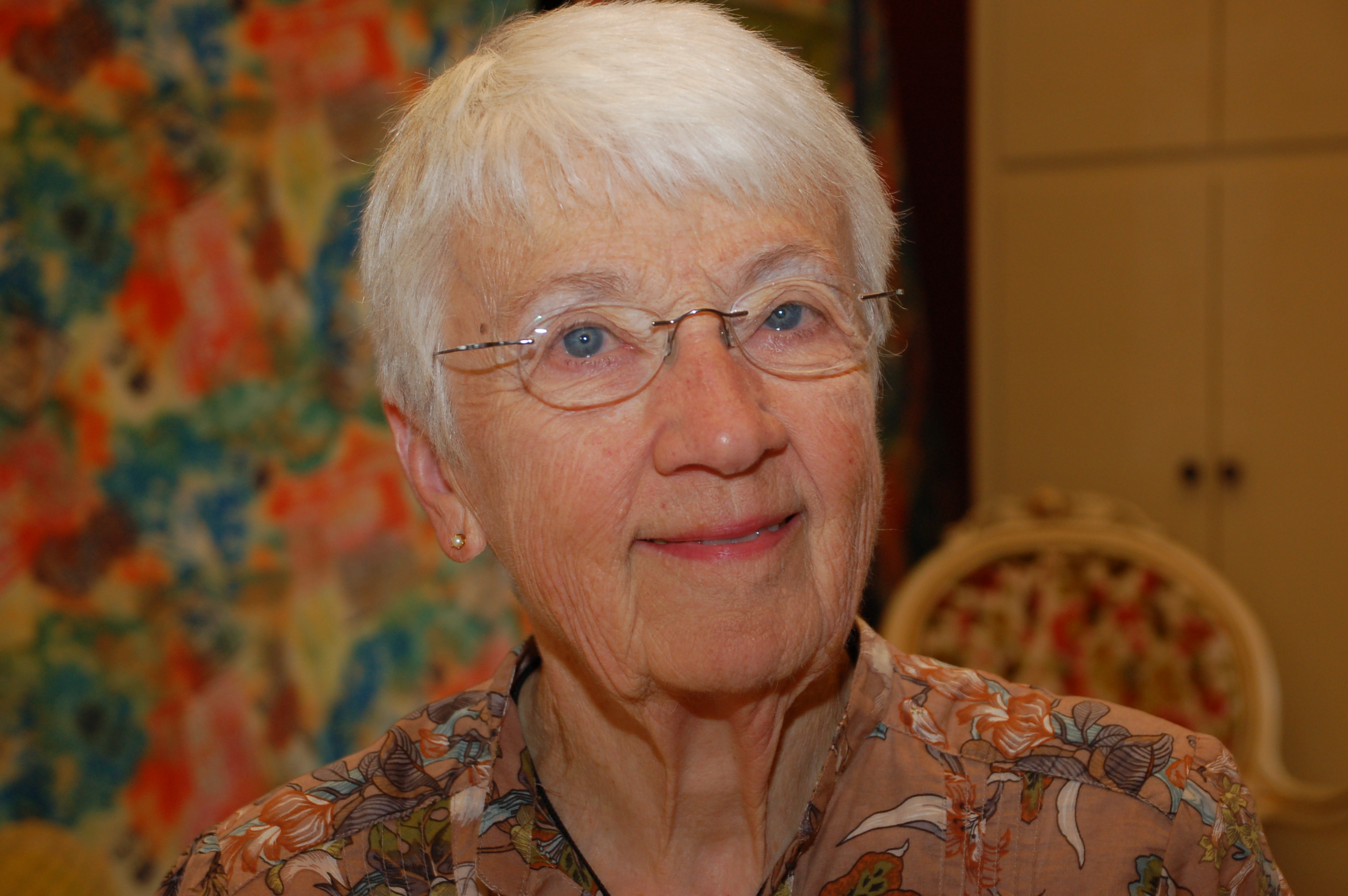
Mil Agnor

The gregarious Agnor had an unexpected change of plans. Earlier this year during an annual physical exam, the doctor found something she didn’t like.

The Peace Corps flew Agnor back to the United States via Medevac. She underwent a thorough exam and was diagnosed with a bladder cancer.

That changed everything for the adventuresome Agnor.

“When the Peace Corps flies you back for medical reasons, you have 45 days to get things in order,” Agnor explained. “If you can’t, your term is completed.”

That is exactly the scenario that played out for Agnor. She was unable though not unwilling to complete her two-year term. She was officially discharged from the Peace Corps August 3.

“I had my things all packed up before I had to leave,” Agnor said, “because I planned on moving to another house, not returning to Ohio.” The ever-dedicated Agnor knew she had to go back to Romania for more than her belongings.

“Life is all about relationships,” Agnor said. Though her volunteering was cut short, she made wonderful friends in the school and community of Palanca. Agnor needs this trip as much for them as for herself.

Agnor taught conversational English to 184 students in grades three through eight.

“These students live in the poorest part of Romania,” Agnor said. She said otherwise they would have very little exposure to the English language.

“The kids there have no organized activities,” she said. “We started after school programs and camps for them.”

When asked about someone her age going into the Peace Corps, Agnor just smiled and said, “I want to be remembered for something other than my age.”

Agnor said the Peace Corps actually markets to older people who have finished careers. Agnor had a quilting business in Holmes County for 28 years.

“I always admired the Amish in how they lived their lives,” Agnor said. She worked with several Amish women over the years to create custom quilts.

Agnor said she will spend two weeks in Romania bidding farewell and saying thanks. She will also do some traveling prior to returning to her new home in Stow, Ohio. Her son, Ross, lives in nearby Hudson.

“My intention was to at some point live close to him,” Agnor said. “It just got speeded up a bit.”

Agnor found what she called “a wonderful house at the end of a cul-de-sac.”

“There are lots of trees,” she said. “I have birdfeeders out, and I get to watch a Cooper’s Hawk chase a fox squirrel.”

Agnor said the surgery to remove the cancer was a success and that, other than losing some weight, she has no side effects from the immunotherapy treatments. She said she gets the treatments every six weeks initially, then every month for a year. After that, she will be monitored for the rest of her life.

The spunky senior made it clear that she has had no discomfort. Agnor said her situation is quite manageable and that she feels very fortunate and thankful that the Peace Corps doctors caught her cancer in an early stage.

“I have some good years yet,” she said. When she returns to Ohio at the end of the month, Agnor said she plans on volunteering at a library or in a park system.

“I love to sing,” she said, “so I’ll probably join a church choir, too.”

Volunteering is nothing new for Agnor. While in Millersburg, she served many years with the Holmes County Habitat for Humanity.

For now, Agnor will focus on revisiting her friends in Romania.

“I want to see the science lab that was started while I was there,” she said.

No doubt Agnor’s brief reunion with her former students and staff will be an emotional one. Agnor said the students made a quilt for her when they learned of her illness. The quilt had a cutout of each of their handprints on it.

There can also be no doubt that the effervescent Agnor will have lots to share about her goodbye tour of Romania once she returns home. That, of course, will be another exciting story in the energetic Agnor’s life.

Mil and Maric by Bruce Stambaugh
Mil Agnor and Romanian artist Ion Maric at an exhibit of his paintings in Palanca, Romania.

Reactions to earthquake many and varied

Amish farm Ohio by Bruce Stambaugh
Life in Holmes County, Ohio went back to normal right after the earthquake on August 23.

By Bruce Stambaugh

The reactions to the reverberations of the 5.8 magnitude earthquake that was felt in the Holmes County, Ohio area on August 23 varied according to individual circumstances. The quake was centered near Mineral, Va., but was felt more than 400 miles away.

Many in the area thought they were experiencing a sudden illness. Some weren’t sure what to think. A few knew that the shaking shortly before 2 p.m. was an earthquake. Others, especially those in vehicles, felt nothing at all.

It didn’t take people long to realize that the shaking was much more than something they felt personally. Some figured it out on their own, while others tuned to TV news, received text messages or saw it posted on social media.

Tim Roth, of Millersburg, said he was sitting in his recliner watching the Cleveland Indians baseball game when he felt the chair shake and the house creak. He wasn’t sure what was happening at first.

The press box at Progressive Field in Cleveland swayed east and west for 30 seconds, stopped briefly, and then shook again, but not as long or as hard. Fans in the upper deck sensed the shaking, too, but were reassured by ushers. The baseball game between the Indians and the Seattle Mariners continued uninterrupted.

Greta Monter, of rural Millersburg, was lying on her couch and suddenly felt her heart race. A registered nurse, she at first thought she was having a medical health issue, but then realized it was more than just her heart.

Lora Stackpole Erclauz, of Lakeville, said she felt just a slight shaking. She said at first she thought it was vertigo, called her husband and he had felt it, too.

Rita Baughman-Dawson said she thought a train had wrecked and fell off of the tracks. She said it was a very eerie feeling.

Mike Pacula, the band director at West Holmes Middle School, said he was at his desk in his office and noticed his chair rocking and his computer monitor wobbling.

Karen Reitz Miller was in her home in Millersburg when the windows began to rattle a little and the house creaked. She said it sounded like someone was on her roof. She turned on the TV and learned of the earthquake.

Joe Heatwole, who lives in Dalton, was on the second floor of Valley View Oak near Mt. Hope when he felt the floor begin to shake. Another employee yelled that his computer monitor was shaking and the floor was moving. Heatwole said it was an exhilarating feeling to experience an earthquake for the first time.

Arlene Yoder, a nurse from Baltic, was at the doctor’s office where she works in Dover. Yoder said their patients were relieved to know that the medical staff also felt the floor shake, too.

Dana Ely-Keiffer reported that it felt like someone was shaking the recliner she was in at the Smith Ambulance office in New Philadelphia.

“I accused my partner of it until I realized he was on the other side of the room,” she said. “He was thinking I was shaking him.”

The Commercial and Savings Bank four-story building in Millersburg was evacuated as a precaution. Employees and customers were allowed back in after a brief wait outside.

Across the street at the Holmes County Education Foundation, Anna Patton reported that the window blinds moved back and forth.

Some buildings in Columbus were also evacuated as a precaution.

The Holmes County Sheriff’s Office reported receiving a few calls from around the county about the trembler. No damage was reported.

August is the quiet month

August sunset by Bruce Stambaugh
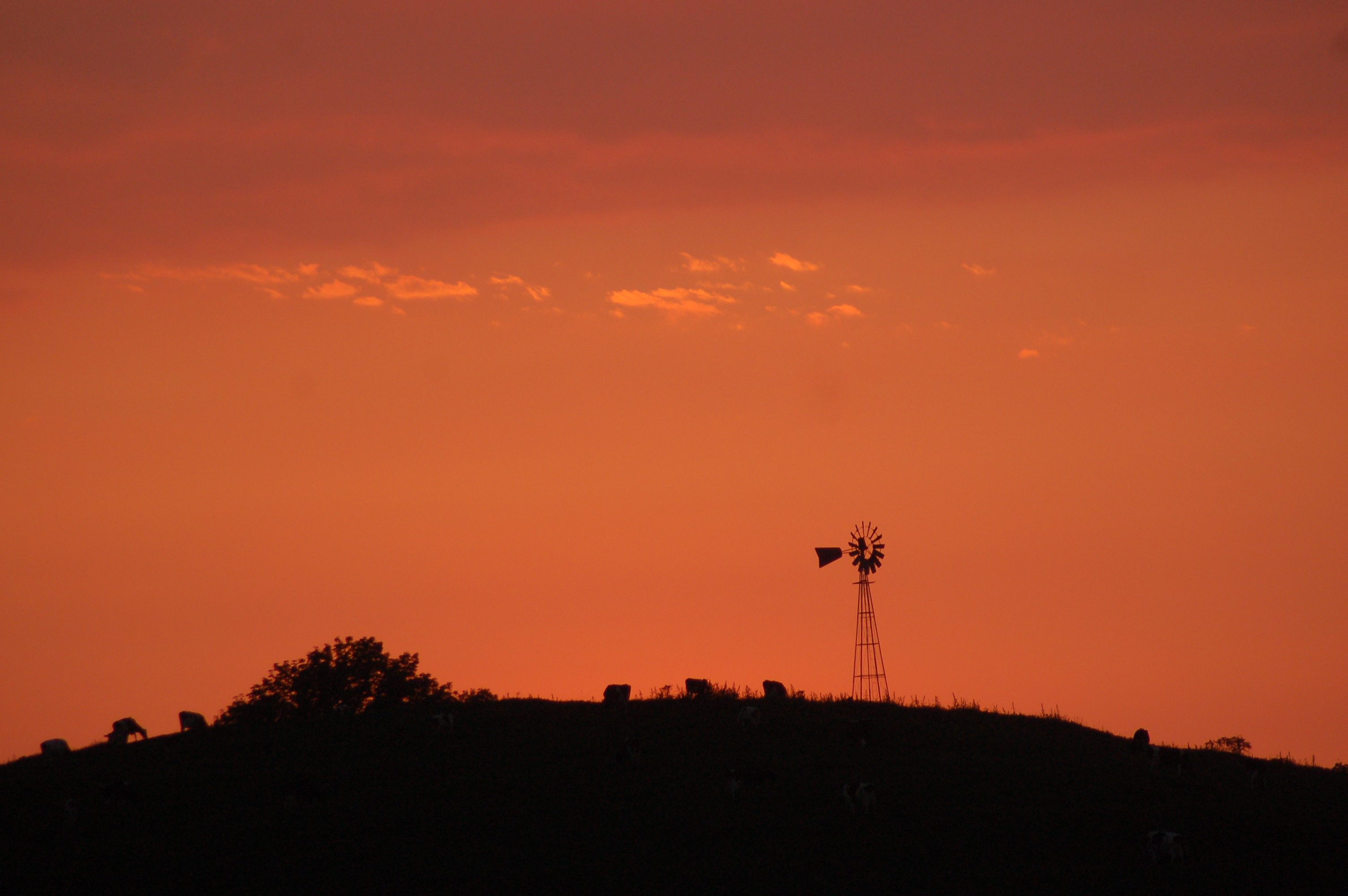
A typical August susnet in Ohio's Amish country.

By Bruce Stambaugh

I have always thought of August as a transitional month, the days between busy, boisterous July and the revitalizing September.

August is the stepping-stone from summer’s onslaught of activities into a pre-fall mentality. Vacations wind down for most people. It’s back to school and back to work.

If we take time to halt our busyness, our clamor to re-ready ourselves for the new school year at hand, we can take note of this calendar bridge from tilling to harvest, from clamor to order. In its intermediary mode, August seems to quietly take it in stride.

The songbirds no longer need to announce their territory or impress their mate. The young have flown the coop, or more properly stated, the nest, and bird life has returned to seeking daily subsistence. The American Robin precisely models the point.

From April to July, the Robins paired off, warbled their luxurious choruses almost continuously sunup to sundown. They pecked on windows, noisily flitted off their nests when disturbed and faithfully fed their young.

The Robins were ubiquitous in both presence and song. People often comment when they see their first Robin of the spring.

First Robin by Bruce Stambaugh
People often remark when they spot their first Robin of the spring.

Now, in late August, the Robins have all slyly retreated to their preferred nomenclature. They are more than content to while away the day searching for food deep in the recesses of the shade and forest.

Think about it. When was the last time you either heard or saw a robin? They simply and silently slipped away unnoticed.

If they haven’t already, other bird species will soon be disappearing from the area altogether. The Purple Martins, Barn Swallows and Common Nighthawks all heed their interior instinctive urgings and vanish unseen much like the Robin. We under-appreciate their massive consumption of insect protein until it’s too late to thank them.

Just as quietly, the multiple greens of fields and pastures have grown taller, richer. Chameleon-like, they have morphed into emeralds, tans and russets with hardly a rustle.

August harvest colors by Bruce Stambaugh
The colors of August change from day to day.

Farmers have taken in their wheat and most of their oats matter-of-factly, and now tolerantly wait the drying of the later cash crops, corn and soybeans. There is no mechanized clanking in patience.

Song Sparrow by Bruce Stambaugh
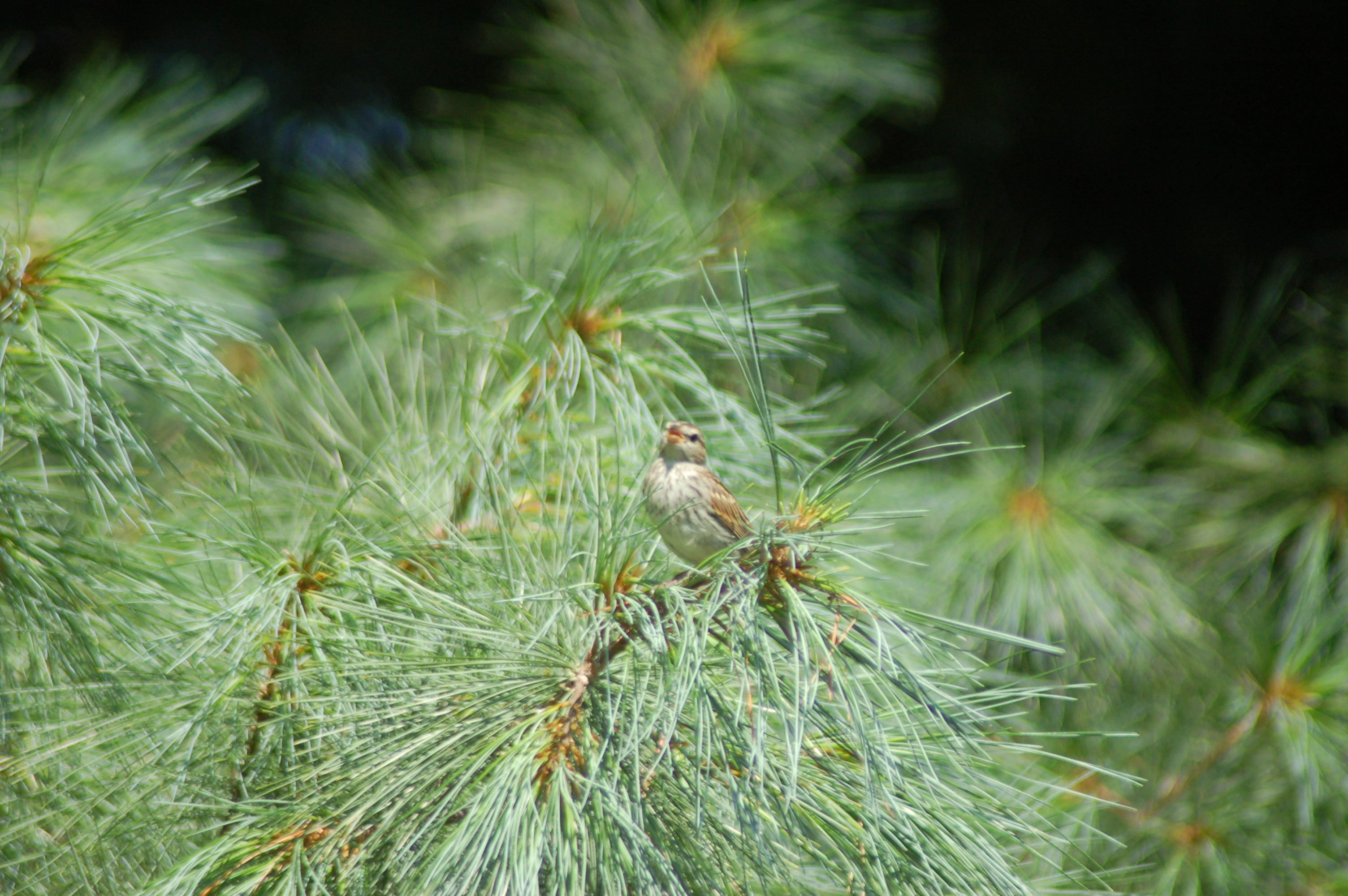
A Song Sparrow sings away.
The Song Sparrow still belts out an occasional composition, but nothing as regular as it had been earlier in the season. The House Wrens, once so noisy they approached annoyance, have taken to the underbrush, giving their last brood endurance lessons.

August’s atmosphere also has been quieter than the previous months, save for a couple of late night thunderstorms. The brilliant flashes and deep, rolling booms shattered my sleep like Civil War cannon fire might have. Midnight imaginations run wild when deafeningly jolted.

The few sounds of August we can count on are more monotonous and so commonplace we may not even notice their calls. Cicadas and crickets signal day and night. With windows thrown open to catch the unusual August twilight coolness, the insect symphony has helped humans settle in for sound sleeping.

Every now and then a ranging coyote howls from atop the neighbor’s pastured hill, if for no other reason than to drive the tethered neighborhood canines crazy. The feral call is one thing. The domesticated is another.

Now that school years in most locales begin well ahead of September, the playful echoes of children rollicking at recess again fill the air. It’s a timbre I love to hear over and over again, even if it does break August’s amazing silent spell.
Amish school by Bruce Stambaugh

From book seller to book author, Wesner connects with the Amish

By Bruce Stambaugh

Erik Wesner, 33, went from selling books to the Amish to writing one about them. It was an unexpected but enjoyable trek for the Raleigh, North Carolina native.

“I kind of stumbled into it beginning in Arthur, Illinois,” Wesner said.

Erik Wesner by Bruce Stambaugh
Erik Wesner
Wesner went door-to-door selling books for nine years. His job took him to many communities around the country where Amish had settled.

“The kind of books I was selling were appropriate for them,” Wesner said. He explained that they included sets of family Bible study books.

Whether he spent five minutes or 20 minutes with each household, he liked what he saw and heard. He was impressed with the inquisitiveness of the Amish, their resourcefulness and friendliness.

Wesner graduated from the University of North Carolina with a double major of English and economics. It was that knowledge that caused him to take notice of something else that he found common among the Amish.

“Everywhere I went in the Amish communities,” Wesner explained, “I saw successful businesses.” He said he was intrigued with that pattern, especially since most of the entrepreneurs were self-taught and didn’t have either high school or college degrees.

“While visiting in Amish-owned businesses, I saw customers who had driven three hours from Indianapolis and Chicago to make purchases,” he said. “I figured that was a sign of quality and honesty.”

Wesner couldn’t help but notice the continued success of these businesses in each Amish community he visited, even given the down economy.

“From Iowa to Illinois to Lancaster, Pennsylvania to Holmes County, Ohio, I found many success stories to share,” he said. That instilled in him a desire to learn about how they were able to not just survive but thrive when other businesses were not.

That intrigue lead to his book, Success Made Simple, an extensive review of Amish-owned businesses and what makes them consistently tick and click. His book is based on many interviews with Amish business folks across the country.

Wesner said though the book didn’t make the best-seller list, he gained something even more rewarding.

“Through all of this, I have made many friends among the Amish,” he said. That is what brought him back to Holmes County recently. He was visiting some New Order Amish in the Shreve, Ohio area.

In addition to his book, Wesner started a blog called “Amish America” right after the Nickel Mines incident in Lancaster County, Pensylvania in 2006. A gunman shot several Amish schoolgirls. The story made headlines worldwide.

“I didn’t like some of the things I saw and heard following that tragic situation,” Wesner said. Since he enjoys writing, he began the blog at http://amishamerica.com/.

The blog features stories and photographs of various Amish communities. He said he writes about and shows examples of everyday Amish life without trying to glorify it.

“I really enjoy the immediacy of the blog,” Wesner said, referring to the immediate posting of comments by some of his many followers. “I find that very rewarding.”

Wesner said there have been unexpected benefits to his blog.

“I mentioned an Amish business on my blog,” he said, “and the owner thanked me. She had customers who said they heard about her business by reading the blog.”

Wesner said he is working on a second book about the Amish. He said it would focus on the lesser-known things about the Amish lifestyle.

When he is not visiting Amish communities during the summer months, Wesner spends eight months out of the year teaching English in his parents’ home country of Poland. He said his students are mostly adult professionals who need to learn English for their jobs.

“I guess I feel a sense of obligation,” Wesner said about living in Poland. “My grandmother still lives there, and I didn’t want her to feel alone.”

That kind of dedication to family would resonate well with the Amish culture, too.

Corn and grandchildren are both Incredible

Husking corn by Bruce Stambaugh
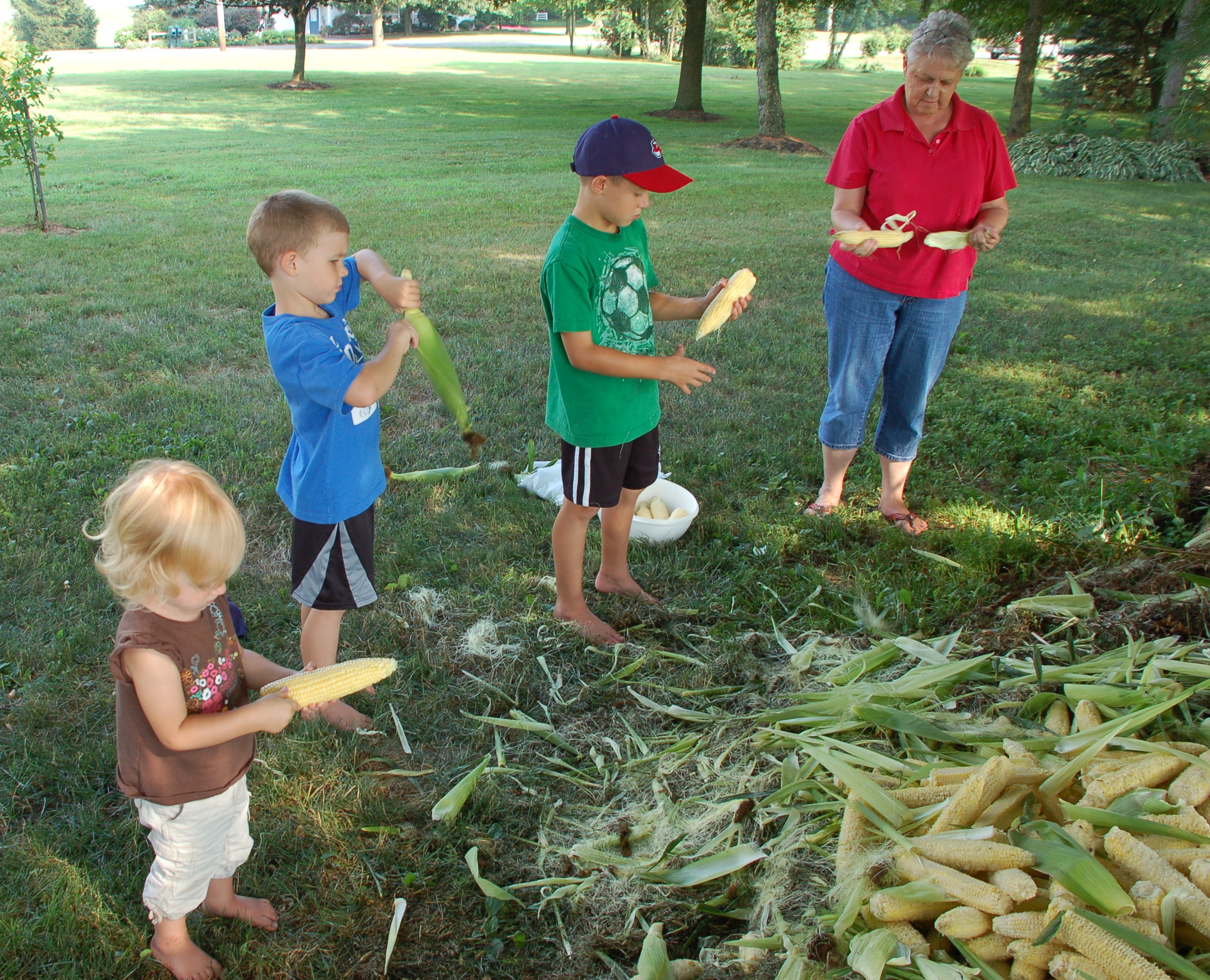
Everyone pitched in to help husk the sweet corn.

By Bruce Stambaugh

We have begun a corny, new tradition in the family.

In June 2010, our daughter and her family moved from their beloved Austin, Texas to Harrisonburg, Virginia in the lovely Shenandoah Valley. As much as we enjoyed visiting them in the Lone Star State, we were thrilled that they would be much closer to us geographically.

True, driving the 350 miles across eight mountain passes approximated the flying time to Austin. The cost, however, was much less to travel overland than in the air, and more convenient, too.

My wife and I liked to visit Carrie and her family in Texas in late fall when the weather there was more favorable than the ever-changeable stuff of Ohio. On those autumn excursions, we often packed an extra suitcase, not for us but for them. It was filled with nothing more than several containers of frozen Incredible sweet corn. It was their winter supply of vegetable sweetness.

Slider and grandsons by Bruce Stambaugh
Slider teased our grandsons at a Cleveland Indians game last summer.

Last August our daughter and her three children drove from their Virginia home to ours in Ohio to help with the corn preservation process. Their extended stay gave us a chance to do up the corn and for them to explore the germane niceties of our area. Carrie returned home with the corn and the youngest, Maren, a few days later, leaving us with the two boys, Evan and Davis.

This year they repeated the process, only this time our wise and cunning daughter escaped with the Incredible and in appreciation for the golden gift left us with the trio of grandchildren, ages seven, five and 22 months. We couldn’t have been happier.

Last year, Nana and I took the boys to their first Cleveland Indians game. The highlight of the evening occurred off the field. Slider, the Tribe’s mascot, pounced on the boys, teasing them with hugs and tweaking their ball cap brims.

Last week, we repeated that experience, only with Uncle Nathan, our son, pinch-hitting for Nana, who was home entertaining toddler Maren. Unlike the perfect evening of a year ago, we witnessed two innings of baseball and two hours of drenching rain.

Corn silk by Bruce Stambaugh
Our granddaughter, Maren, was pretty picky when it came to removing the corn silk.

The baseball games were rewards for everyone pitching in to help with the corn process. Evan and Davis helped husk. Even little Maren joined in by removing the tickly corn silk from several cobs. She was meticulous in her task, determined to get every last strand.

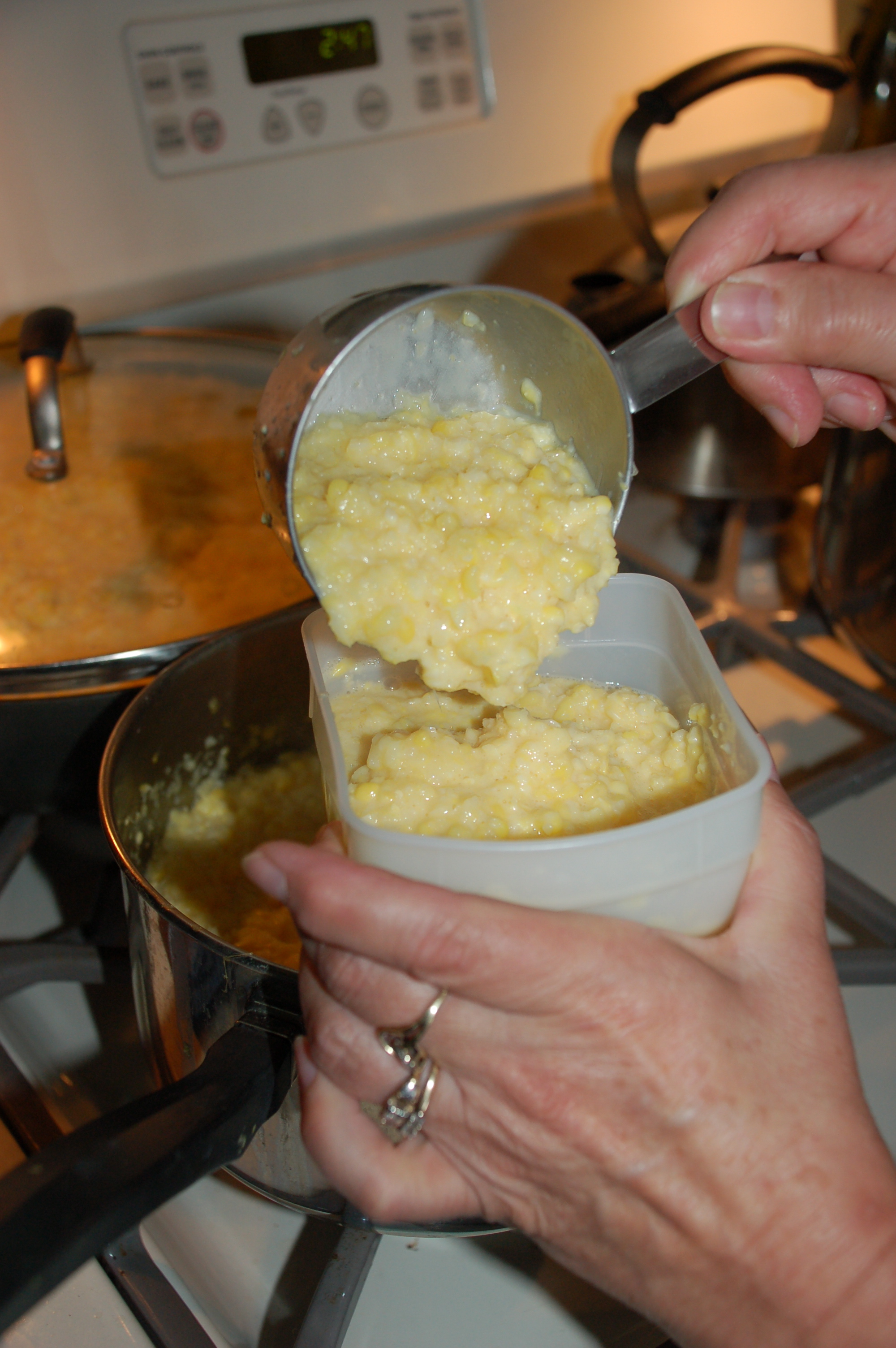
Nana, of course, coordinated the corn coronation. She prefers to cut the kernels from the cobs before cooking it. She says it goes a lot faster. Once the cooking is completed, it’s simply a matter of finding enough containers to cache the corn.

We were amazed at Maren’s vocabulary and inquisitiveness, which included willingly participating in the corn fest. Her long sun-bleached curls matched the shade of the corn’s yellowy ears.

Cooked corn by Bruce Stambaugh
After the corn is cooked, it is ladled into containers to be frozen.

Evan and Davis had grown, too. Lanky and imaginative, they had no trouble keeping busy without getting into too much trouble. Of course, at mealtime, locally raised corn on the cob was a favorite.

At week’s end, we met their mother halfway in southwestern Pennsylvania to return the children to their rightful owner. That’s one of the advantages of being grandparents.

All in all the mix of grandkids and corn made for an Incredible time together. It’s a sweet, new tradition that I hope lasts longer than the frozen corn usually does.

Response to disaster defines community

Buggy charm by Bruce Stambaugh
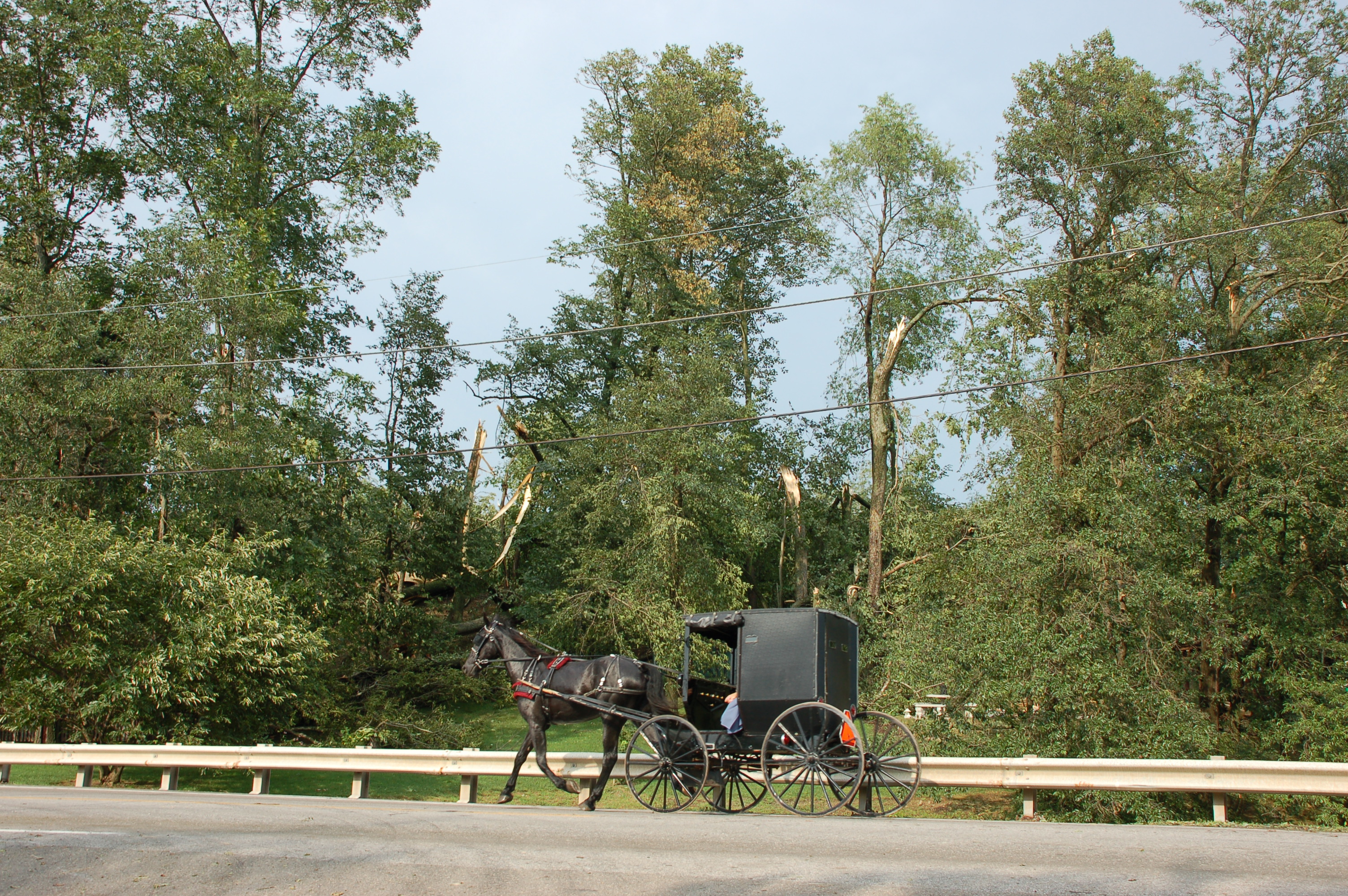
A horse and buggy rolled by some snapped off trees north of Charm, Ohio.

By Bruce Stambaugh

If anyone ever wanted a snapshot of what defines this community, the beehive of activity in the aftermath of the storm that recently hit the Charm, Ohio area would perfectly frame that picture.

No sooner had the trees plummeted onto homes, buildings and roadways, than residents were out and about checking on one another. With the good fortune of finding no injuries, the cleanup began in earnest.

Helping hands by Bruce Stambaugh
Neighbors pitched in immediately to help clean up the debris left by the severe thunderstorm.

Four-wheelers, tractors, Bobcats, track hoes, and even monster skid loaders ran up and down skinny township roads. Their drivers and passengers stopped to assist wherever help was needed.

A man driving through the area just happened to have his chain saw in his pickup. With trees in his way, he did the logical thing. He cranked up his chain saw and began cutting. Drivers of a trio of semitrailers lined up behind him exited their cabs and joined in. He sawed. They pulled the limbs aside.

That proactive scenario was repeated a multitude of times throughout the Charm area. The volunteers weren’t asked to do this important work. They simply did so because it needed to be done, and they had the tools and the talent to do it. More than that, the desire to assist their neighbors in need drove them into action.

This was no time to feel sorry for yourself. Those receiving the aid worked side-by-side with the volunteers.

The response to this latest calamity in Holmes County was immediate and spontaneous, as it always seems to be no matter where the misfortune happens. Whether it’s a fire, devastating illness, serious flood or a severe thunderstorm, citizens come to the aid of others. Time and again people automatically go above and beyond the call of duty.

Barn destroyed by Bruce Stambaugh
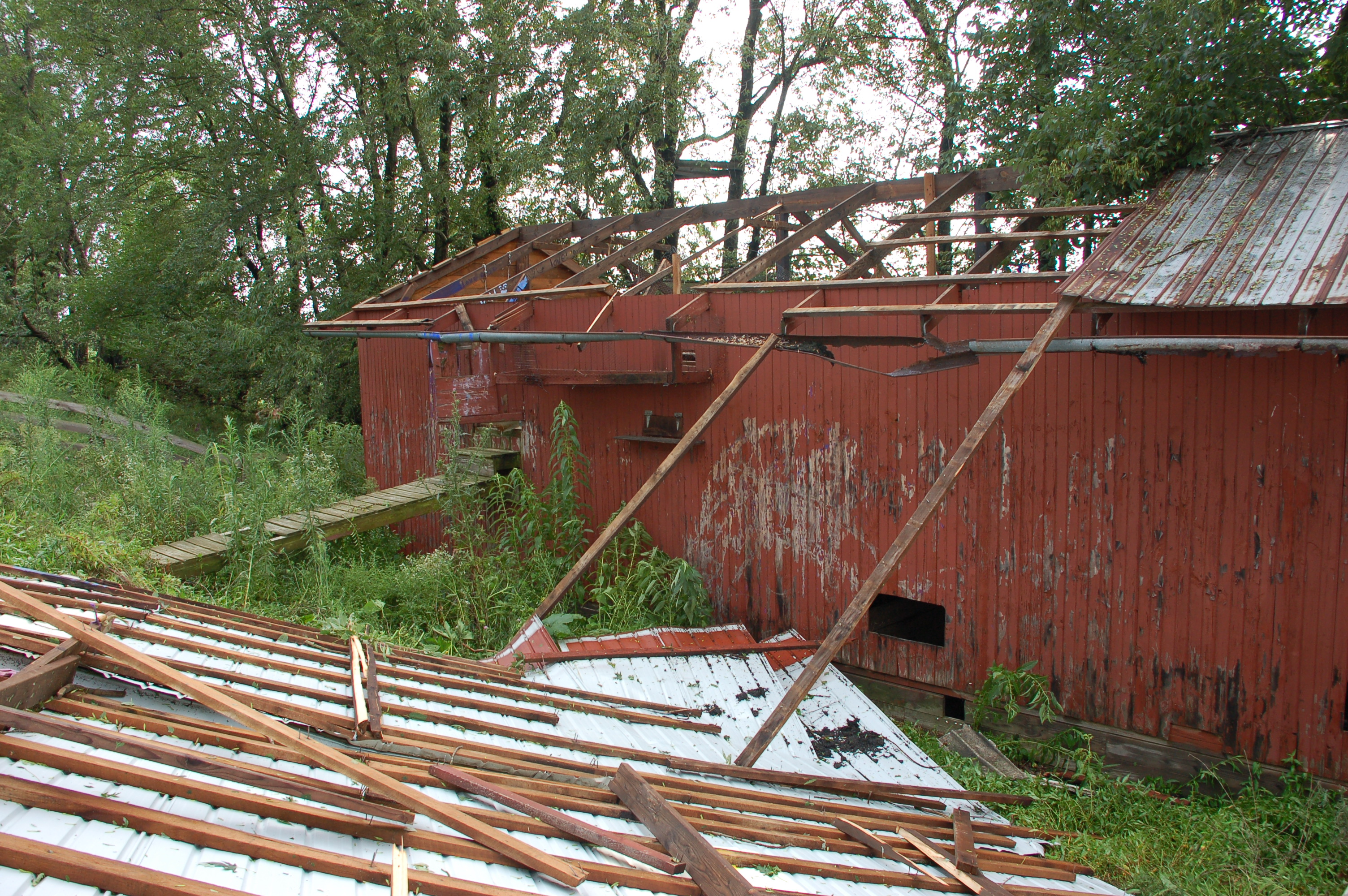
My friends' barn roof was ripped off by the microburst.

My wife and I got caught up in the flurry of activity in Charm. We went to check on the property of friends who live near Charm but were on vacation. The 80 mph microburst winds ripped the roof off their small barn and scattered anything not nailed down for hundreds of yards.

What we witnessed as we made our way to and from the farmstead was truly amazing, though not unexpected. In disasters like this, citizens in Holmes County by and large do the right thing. No police supervision was needed.

Road crews by Bruce Stambaugh
Residents, neighbors and road crews pitched in to clear roadways.

An hour and a half after the storm, roadways had been cleared of giant trees and other debris strewn by the incredible hurricane-force, straight-line winds. Houses, too, were already being repaired.

Everywhere we went people and machines were working to clean up the mess. They didn’t call the fire department. They didn’t wait on road crews, though at least one township had its personnel out clearing roads.

People saw the needs, and their inherent work ethic simply kicked in. The cleanup was on. Strangers helped strangers. Friends helped friends. It was a marvelous operation to observe and be a part of.

House damage by Bruce Stambaugh
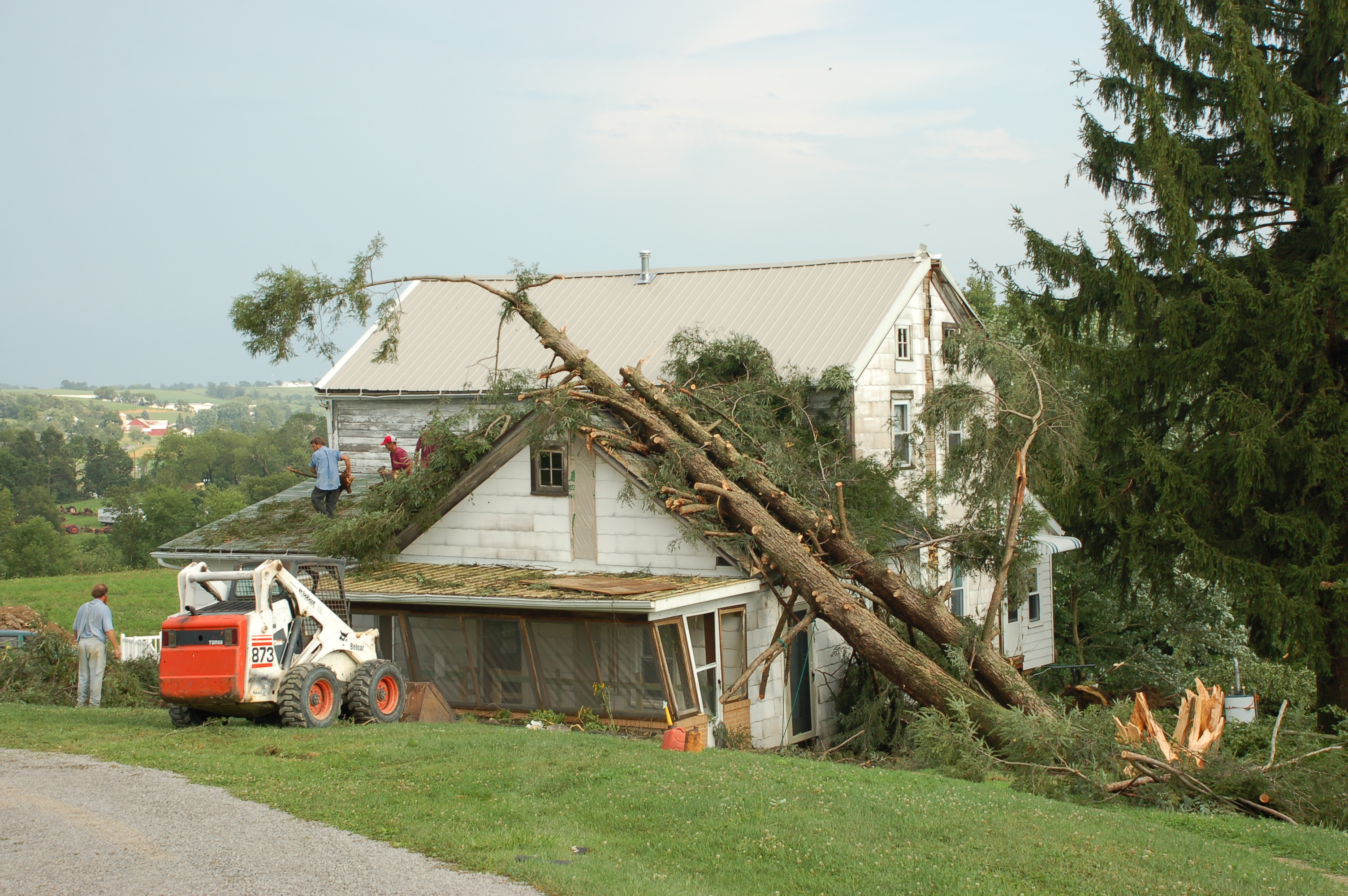
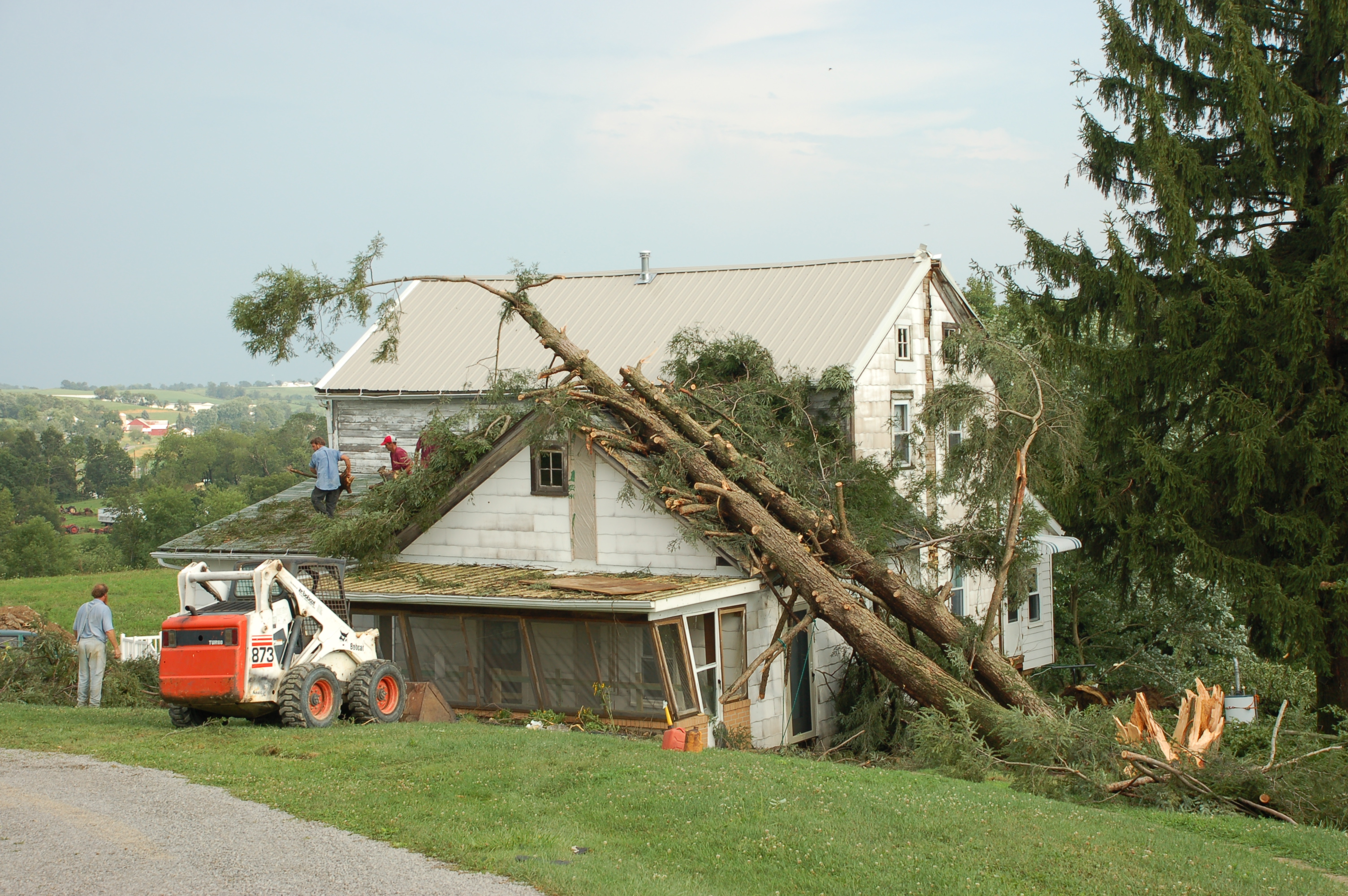
This house sustained heavy damage from the large pines blown onto it.

One particular setting ideally modeled both the community spirit and gracious gratitude. Hands that had cut up a large severed pine gathered around a picnic table. Grateful hands placed offerings of nourishing food for the thoughtful helpers. Together they shared a simple meal. Kindness is contagious.

By any definition, that is how a community is supposed to work and commune. That scene has been duplicated many times in the past, and most likely will be again in any future adversity that hits our rural haven.

Walking a very special walk

By Bruce Stambaugh

To be honest, it wasn’t a walk I thought I would ever make, especially just five weeks out from my robotic prostate surgery.

But when my friend, Kim, a prostate cancer survivor himself, suggested we participate in the Survivor’s Walk at the recent Relay for Life rally for Holmes County, Ohio, I couldn’t say no. I knew I needed to be there. Kim’s encouragement gave me courage.

However, Kim and I each had our own personal reservations about walking. I guess I just hadn’t fully comprehended the meaning of being a survivor while so many others struck with the dreadful disease could no longer say that. Walking together was an incentive to get involved.

When I learned that he, too, hesitated, I relaxed and realized that it was all right to be uncertain. My good wife, who has been an incredible companion throughout my journey with prostate cancer, went along, too.

Though ever supportive of the cause, I had never attended a Relay for Life gathering. I wasn’t sure what to expect. I thought you had to be part of a team to help raise funds. I was wrong.

When we arrived at the high school football stadium, it looked more like a small tent city. We registered at the survivor’s tent, which just happened to be the largest one there. That should have been a big hint to me.

Other tents hosted auction items, groups, games, sponsors, organizations and several cancer information stations. Still others were for campers who intended to overnight for the 18-hour event.

We found a place in the bleachers opposite the main stage. The co-coordinators reviewed the program schedule for those assembled, and the entertainment committee did their job well. They humorously energized us.

After the relay teams, all attired in color-coordinated T-shirts, were announced, the survivors took to the track. Survivor supporters could also walk if they wanted.

Blue Cure by Bruce Stambaugh
Kim Kellogg (right) and I wore our Blue Cure T-shirts in the Survivor's Walk at the Holmes Co. Relay for Life held recently.

Kim and I, both dressed in our Blue Cure T-shirts, began the walk near the front of the line. The Blue Cure Foundation (www.BlueCure.com) was founded to specifically bring awareness about prostate cancer.

As we began our walk, emotion stirred within. Soon though smiles replaced any doubts we had. Just ahead of us, a man pushed an older woman in a wheelchair. Scores of people lined the sides of the oval track and clapped and boisterously cheered us on.

I looked back, and was shocked to see so many people behind us. I told Kim that for a small-populated, rural county, there were a lot of cancer survivors. We guessed this group represented only a fraction of those affected by some sort of cancer.

Our encouragers included young children, senior citizens, strangers and friends. Yet we were all there for the same reason. We wanted to do something to find a cure, and I concluded that walking the walk I never thought I would make was the least I could do.

As we approached the finish line, the horizon darkened. A rainbow appeared, not in the sky, but on the field. The array of colors was itself bathed in an overarching purple, the universal color designated for every kind of cancer.

This walk I was initially hesitant to make turned out to be one I would not wanted to have missed. In this fight against cancer, none of us were walking alone.