Response to disaster defines community

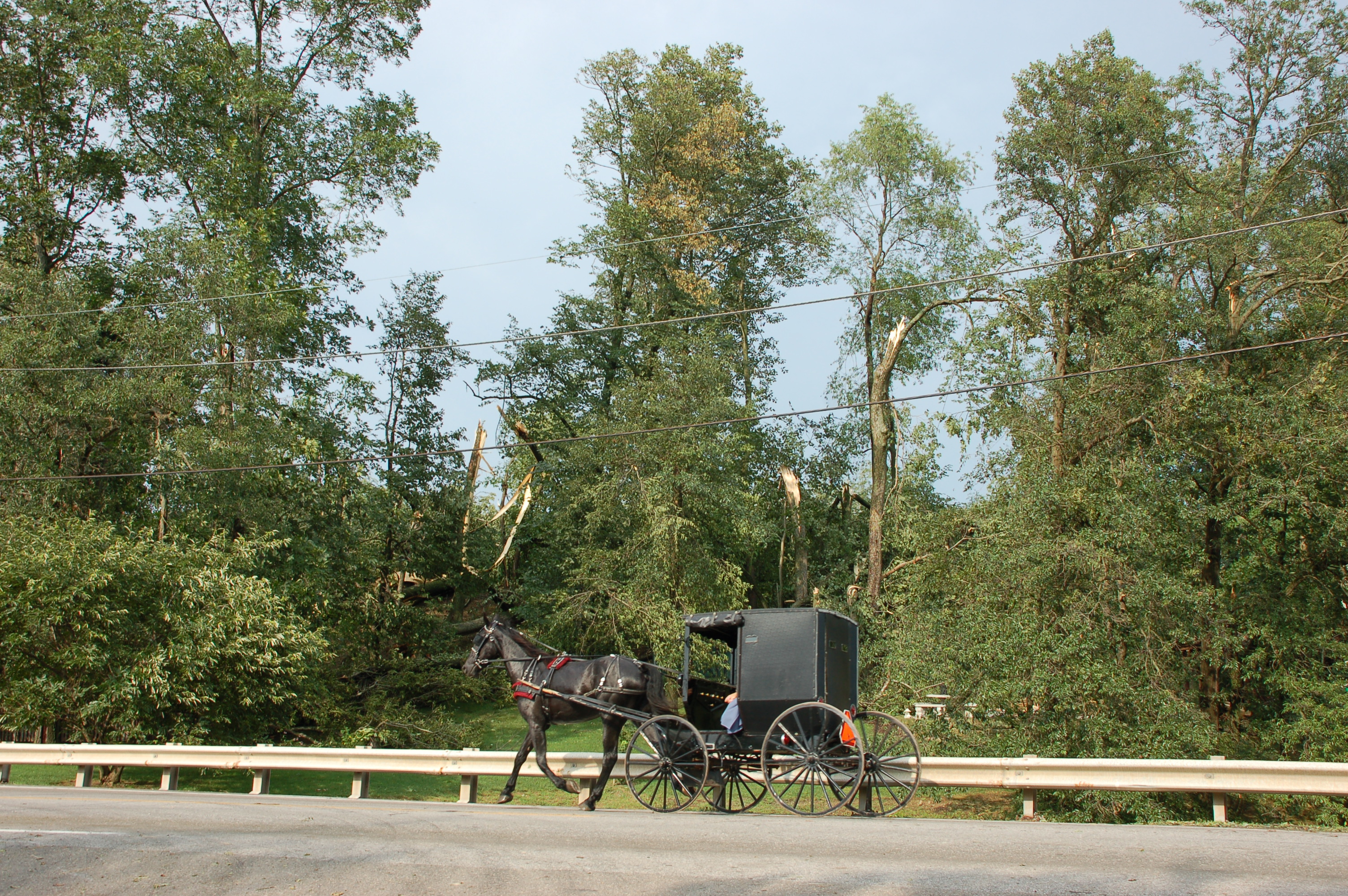
Buggy charm by Bruce Stambaugh
A horse and buggy rolled by some snapped off trees north of Charm, Ohio.

By Bruce Stambaugh

If anyone ever wanted a snapshot of what defines this community, the beehive of activity in the aftermath of the storm that recently hit the Charm, Ohio area would perfectly frame that picture.

No sooner had the trees plummeted onto homes, buildings and roadways, than residents were out and about checking on one another. With the good fortune of finding no injuries, the cleanup began in earnest.

Helping hands by Bruce Stambaugh
Neighbors pitched in immediately to help clean up the debris left by the severe thunderstorm.

Four-wheelers, tractors, Bobcats, track hoes, and even monster skid loaders ran up and down skinny township roads. Their drivers and passengers stopped to assist wherever help was needed.

A man driving through the area just happened to have his chain saw in his pickup. With trees in his way, he did the logical thing. He cranked up his chain saw and began cutting. Drivers of a trio of semitrailers lined up behind him exited their cabs and joined in. He sawed. They pulled the limbs aside.

That proactive scenario was repeated a multitude of times throughout the Charm area. The volunteers weren’t asked to do this important work. They simply did so because it needed to be done, and they had the tools and the talent to do it. More than that, the desire to assist their neighbors in need drove them into action.

This was no time to feel sorry for yourself. Those receiving the aid worked side-by-side with the volunteers.

The response to this latest calamity in Holmes County was immediate and spontaneous, as it always seems to be no matter where the misfortune happens. Whether it’s a fire, devastating illness, serious flood or a severe thunderstorm, citizens come to the aid of others. Time and again people automatically go above and beyond the call of duty.
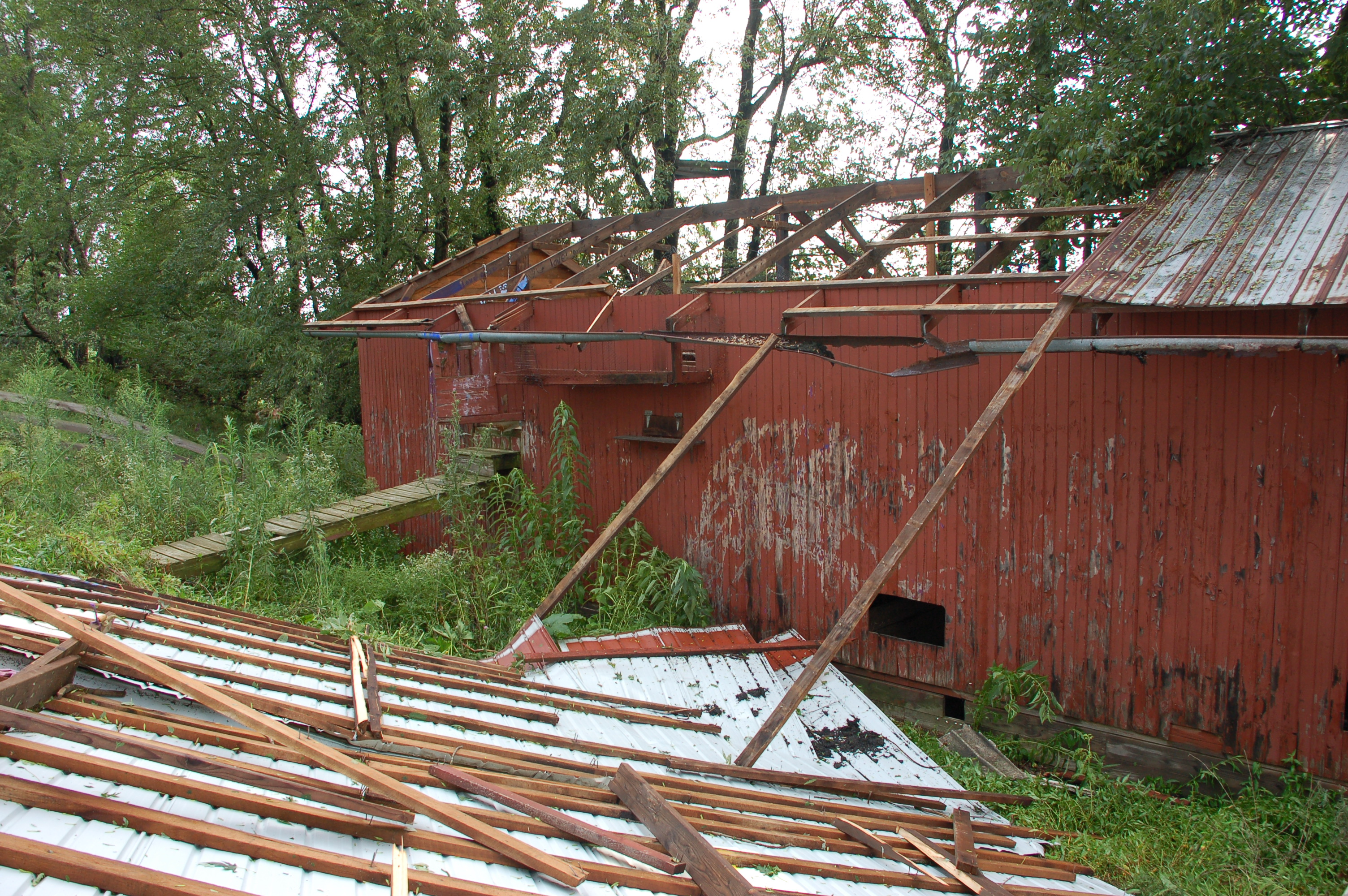
Barn destroyed by Bruce Stambaugh
My friends' barn roof was ripped off by the microburst.

My wife and I got caught up in the flurry of activity in Charm. We went to check on the property of friends who live near Charm but were on vacation. The 80 mph microburst winds ripped the roof off their small barn and scattered anything not nailed down for hundreds of yards.

What we witnessed as we made our way to and from the farmstead was truly amazing, though not unexpected. In disasters like this, citizens in Holmes County by and large do the right thing. No police supervision was needed.

Road crews by Bruce Stambaugh
Residents, neighbors and road crews pitched in to clear roadways.

An hour and a half after the storm, roadways had been cleared of giant trees and other debris strewn by the incredible hurricane-force, straight-line winds. Houses, too, were already being repaired.

Everywhere we went people and machines were working to clean up the mess. They didn’t call the fire department. They didn’t wait on road crews, though at least one township had its personnel out clearing roads.

People saw the needs, and their inherent work ethic simply kicked in. The cleanup was on. Strangers helped strangers. Friends helped friends. It was a marvelous operation to observe and be a part of.
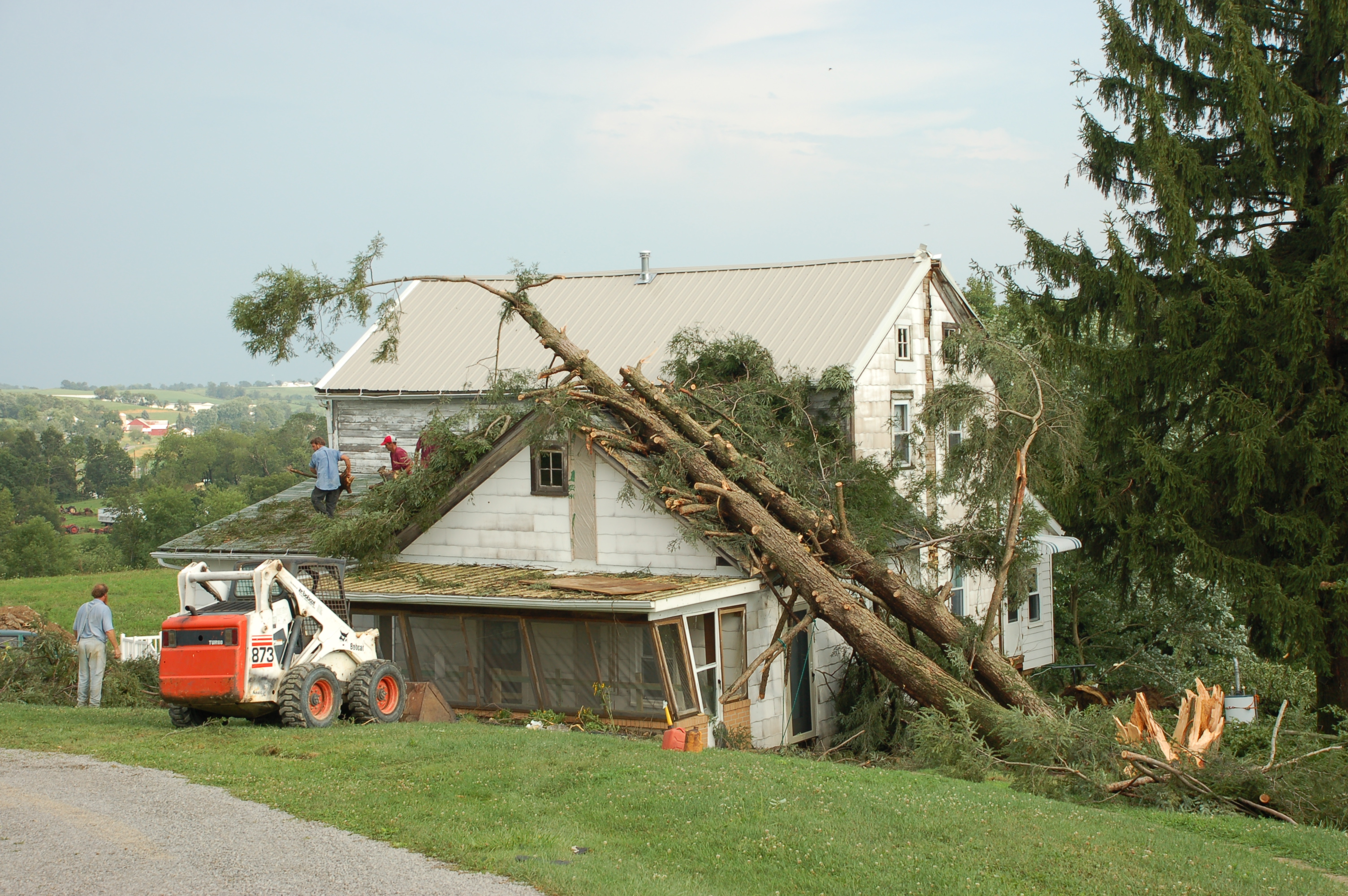
House damage by Bruce Stambaugh
This house sustained heavy damage from the large pines blown onto it.

One particular setting ideally modeled both the community spirit and gracious gratitude. Hands that had cut up a large severed pine gathered around a picnic table. Grateful hands placed offerings of nourishing food for the thoughtful helpers. Together they shared a simple meal. Kindness is contagious.

By any definition, that is how a community is supposed to work and commune. That scene has been duplicated many times in the past, and most likely will be again in any future adversity that hits our rural haven.

A love affair with baseball

Slider with grandsons by Bruce Stambaugh
When Slider, the Indians maskot, hammed it up with our two grandsons, the score of the game became insignificant.

By Bruce Stambaugh

Baseball and I go way back.

I can’t remember exactly when I saw my first major league baseball game. But I do recall attending several as a youngster, often with my family.

I also recollect one of my first Little League games as a player. I was 7 years old, the youngest and smallest kid on the team. The coach put me at second base, possibly thinking that was the safest spot on the field for me. It didn’t work out that way.

Grandsons by Bruce Stambaugh
Our grandsons share my enthusiasm for baseball.

Those were the days when real baseball rules were followed no matter how young you were. The pitcher pitched, not the coach. The batters batted. T-ball was unheard of.

One hallmark of baseball is its pithy clichés. One axiom says put an inexperienced player on the field and “the ball will find him.” Well, it did me that day.

A batter lashed a one hopper right at me. The hardball jumped off the compacted all dirt infield and smashed right into my mouth. I walked to the bench with loose front teeth, bleeding gums, a fat lip and a bruised adolescent ego.

That should have been an omen. As much as I loved the game, I really wasn’t a very good player. Maybe that’s why I focused so much on my favorite team, the Cleveland Indians. I got my baseball fix by dreaming of playing third base for the Tribe.

In those days, before our home had a television, I listened to the games on the radio. I loved the cadence and opinionated passion that Jimmy Dudley, the Indians play-by-play announcer, put into calling the games. Each play came alive in my mind.

In the 1950s, the Indians were consistently good with great, inspiring players. Some made the Baseball Hall of Fame. Paige, Doby, Lemon, Wynn, Feller, Minoso, Score, and Colavito were just some of my idols.

Because we lived 60 miles south of Cleveland, we could only go to a couple of games each year. It was just too far and too expensive.

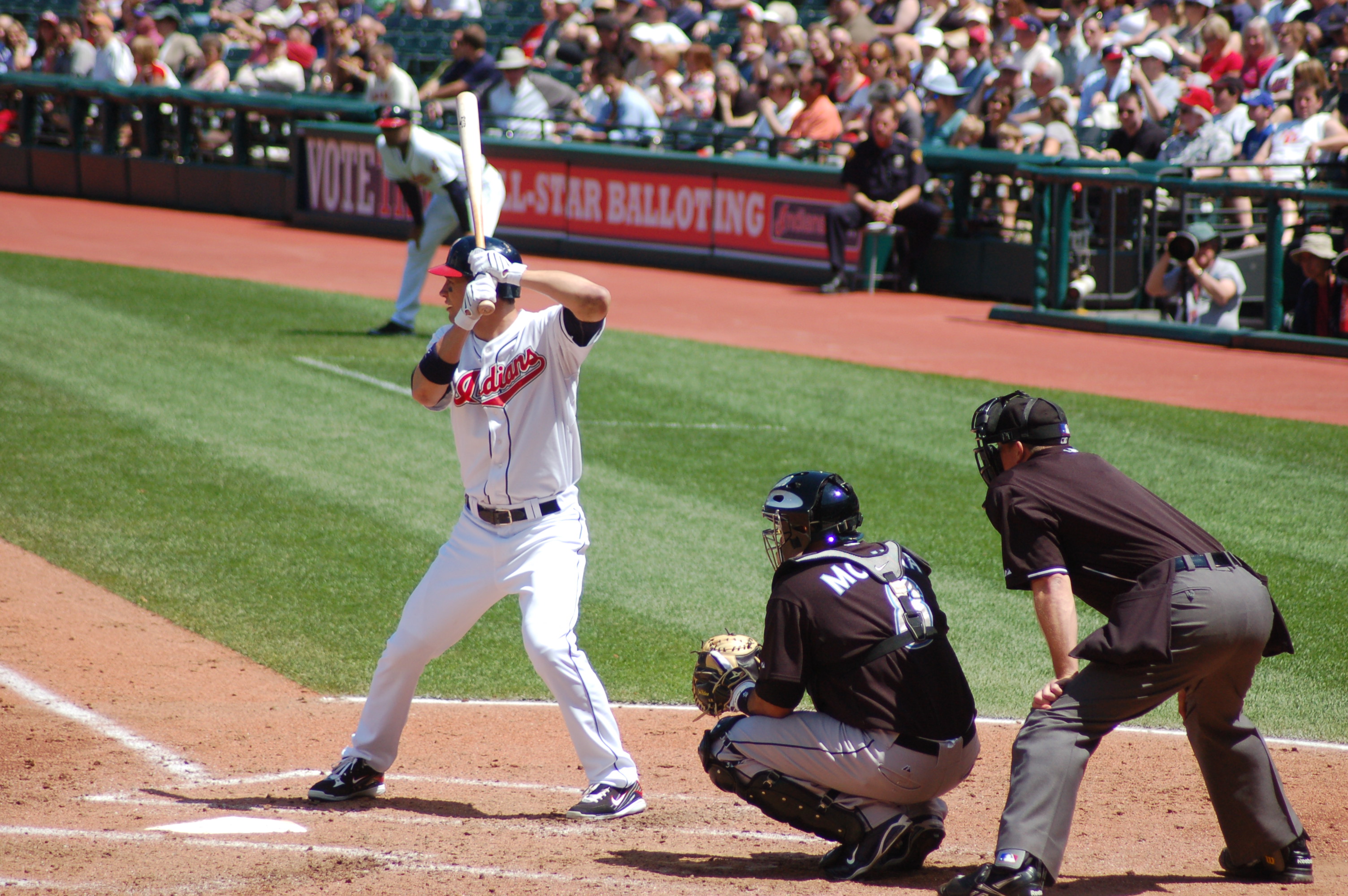
Grady at bat by Bruce Stambaugh
Excellent players like Grady Sizemore continue to be the exception rather than the rule for the Cleveland Indians.

But because he loved baseball, too, Dad made every effort to take us to a game or two when time and cash allowed. To get his money’s worth, we often went to doubleheader games. Dad reveled at seeing two games for one price. Those were the days when doubleheaders were played 20 minutes apart, not as two separately ticketed games like they are today.

You could take coolers and thermoses into the ballpark then, too. We must have been quite the sight with five children in tow carrying a big, red, metal cooler into the stadium. Dad wasn’t about to pay for food and drink when you could take your own.

Just as I was entering my formative years, a life-changing event occurred for the Indians and me. They traded my favorite player, Rocky Colavito, the previous year’s homerun champ, for Harvey Kuenn, the previous year’s batting champ.

The team’s fortunes soured after that. The players’ names changed, too. Tasby, Latman, Mahoney, Phillips, Klimchock and Kirkland were the regulars to root for, although there really wasn’t much to cheer about. The teams often started out well, but usually faded by late summer.

Baseball friends by Bruce Stambaugh
Enjoying a baseball game with friends is always a treat.

I still love our national pastime and attend as many games as I think I can afford. Despite my nostalgic affection for baseball and the cost of ballpark food, I am glad for one 21st century policy. Big red coolers are prohibited.

Bay Photos by Donna

Wildlife photos from the Chesapeake Bay region

ROAD TO NARA

Culture and Communities at the Heart Of India

K Hertzler Art

Artist and nature journalist in the Shenandoah Valley of Virginia.

Maria Vincent Robinson

Photographer Of Life and moments

Gabriele Romano

Personal Blog

Jennifer Murch

Art is the only way to run away without leaving home. -Twyla Tharp

Roadkill Crossing

Writing generated from the rural life

ANJOLI ROY

writer. teacher. podcast cohost.

Casa Alterna

El amor cruza fronteras / Love crosses borders