Ready for another stroll? Millersburg’s candlelight church walk set for Dec. 9

Nativity scene by Bruce Stambaugh
Millersburg, Ohio, Christian Church held a live nativity scene at last year's church walk.

By Bruce Stambaugh

The initial Millersburg, Ohio, Candlelight Church Walk last year was so successful the event’s planners decided to make it an annual affair.

The 2011 church walk will be held on Friday, Dec. 9, from 6-8 p.m. in Millersburg, according to Kate Findley, who coordinates the event. Millersburg is located in the center of Holmes County at the intersections of US 62 and SR 83.

“We had so many compliments on it last year,” Findley said. “The participants made the decision for us to hold it again.”

Similar to last year, five Millersburg churches will be featured in the tour. They are Faith Lutheran, First Presbyterian, Millersburg Christian, Millersburg Mennonite, and St. Peter’s Catholic Church.

“People can either walk or drive to the churches,” Findley said. Maps will be available at each church, and participants may begin and end their self-guided tour at any church they choose.

Findley encouraged people of all ages to come to the walk.

“It’s an event for the entire family,” she said.

The five churches, which were chosen for their close proximity, will be open for visitors to tour. Representatives from each participating church will be on hand to explain the history of their church.
Church walk by Bruce Stambaugh
In addition, the churches will be decorated for the holidays and music will be provided during the visitations. Refreshments will be served at each church.

This year the walk will conclude with a special program provided by the Walsh University Chamber Singers at 8:15 p.m. at the Faith Lutheran Church.

The walk is free and open to the public. Last year, several persons from outside the Holmes County area attended along with many county residents.

Amish show their thanks through service to community

Amish harvest by Bruce Stambaugh
During harvest, the Amish literally pitch in to help one another.

By Bruce Stambaugh

Once the floodwaters of the historic July 1969 flood had receded, the residents of Killbuck, Ohio were in shock. Homes and businesses were either destroyed or severely damaged by the record high water levels. Townspeople were ready to give up, the cleanup looked so daunting.

Then something amazing and unexpected happened. Scores of Amish and Mennonites arrived from the eastern section of the county, home to the world’s largest Amish population, to help. No one had asked them to come. They just showed up.

The volunteers waded in and did the absolute hardest, dirtiest jobs, clearing out mud and muck with no complaints. They did it all out of a basic foundation of thankfulness.

Helping in times of need affords the Amish a method of connecting with the community. It is their personal and active way of expressing their appreciation for community and country, and the cherished ability to worship freely.

Church buggies by Bruce Stambaugh
Gathering the buggies before church at an Amish home in Holmes Co., Ohio.

Amish do not normally participate in organized governmental positions. They do not take oaths, which such positions often require. Consequently, when opportunities to assist others arise, the Amish respond.

The Amish do not always wait for disaster to strike either. They are proactive in helping the less fortunate.

Donating blood is one of those opportunities. It’s not unusual for a local blood drive to collect 100 or more units every 56 days.

The Amish also show their thankfulness by helping with numerous annual benefit auctions that are held locally. A short list would include The Rainbow of Hope auction, The Ohio Mennonite Relief Sale, the Holmes County Home and the Holmes County Training Center.

Hitching rail by Bruce Stambaugh
The hitching rail at the Mt. Hope, Ohio, Auction is lined with horses and buggies on sale day.

Supporting such causes is borne of a two-fold purpose for the Amish. They recognize the importance to help those who have particular needs, and they also accept that they could possibly be in that situation themselves. They are grateful for whatever happens.

To briefly identify the purpose of the aforementioned benefits helps to understand the depth and breadth of the Amish aid. Funds from the Rainbow of Hope auction assist children with major medical bills. The Relief Sale raises funds for worldwide projects under the direction of Mennonite Central Committee.

MDS house by Bruce Stambaugh
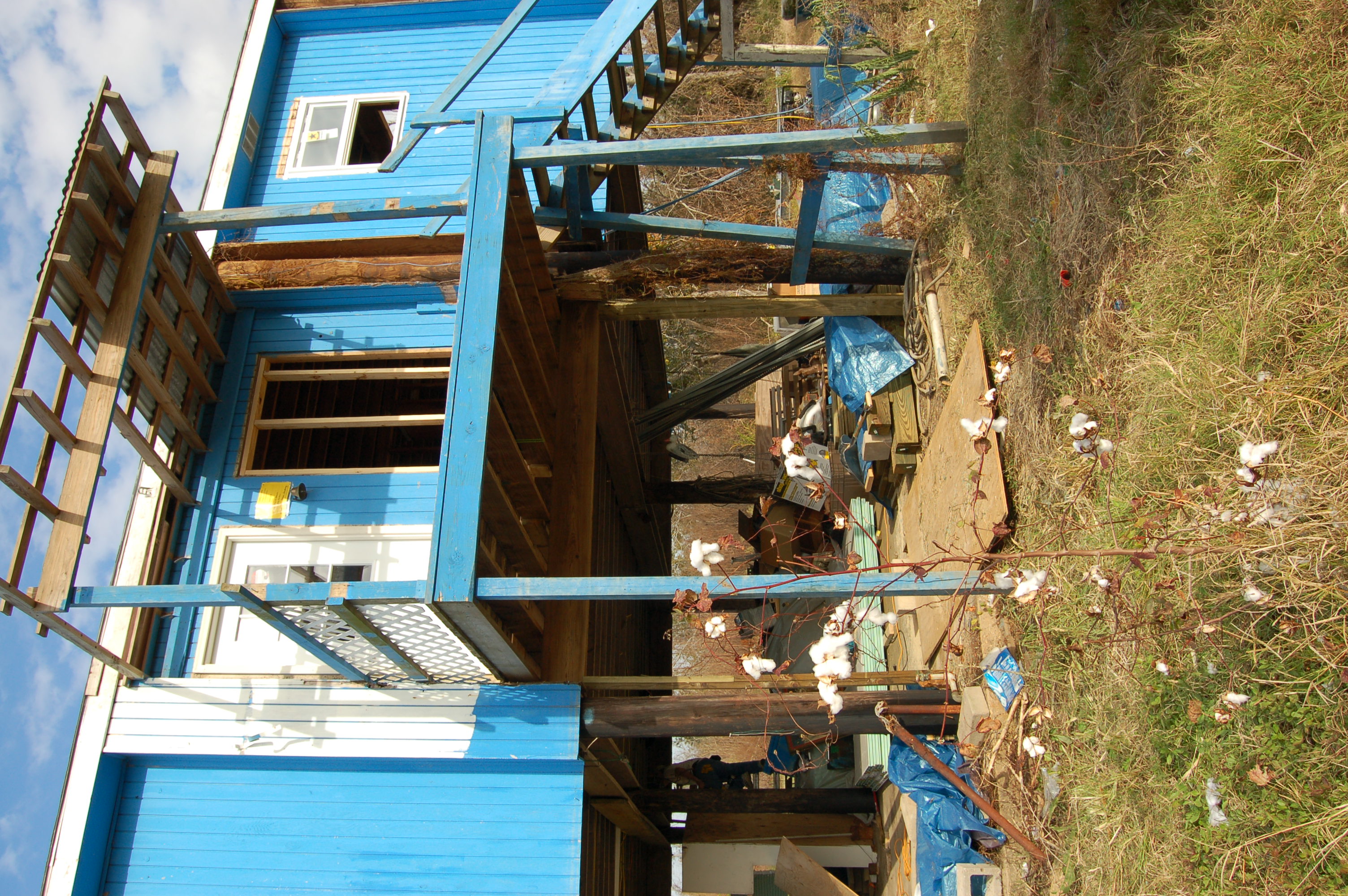
A home damaged by Hurrican Katrina in Boothville, LA was repaired under the direction of Mennonite Disaster Service.

Amish even travel far from their geographic area to put their faith into action. After Hurricanes Katrina and Rita, scores of Amish assisted in the Gulf States cleanup and reconstruction. So many helped, in fact, that Mennonite Disaster Service set up an Amish only camp where the volunteers could live according to their normal lives without the influence of distractions like television and the Internet.

Locally, the auctions for the county home and the Training Center raise operating funds. The county home has some Amish residents, and Amish make up a good percentage of the population at the Training Center, which works with developmentally challenged students and adults.

Another way of contributing to the common good for some Amish is to join the local volunteer fire department. Several area departments have Amish on their rosters as firefighters and emergency medical technicians.

True to their desire for modesty, the Amish want no recognition or publicity for their kind efforts. Their satisfaction comes from the simple act and ability to help others.

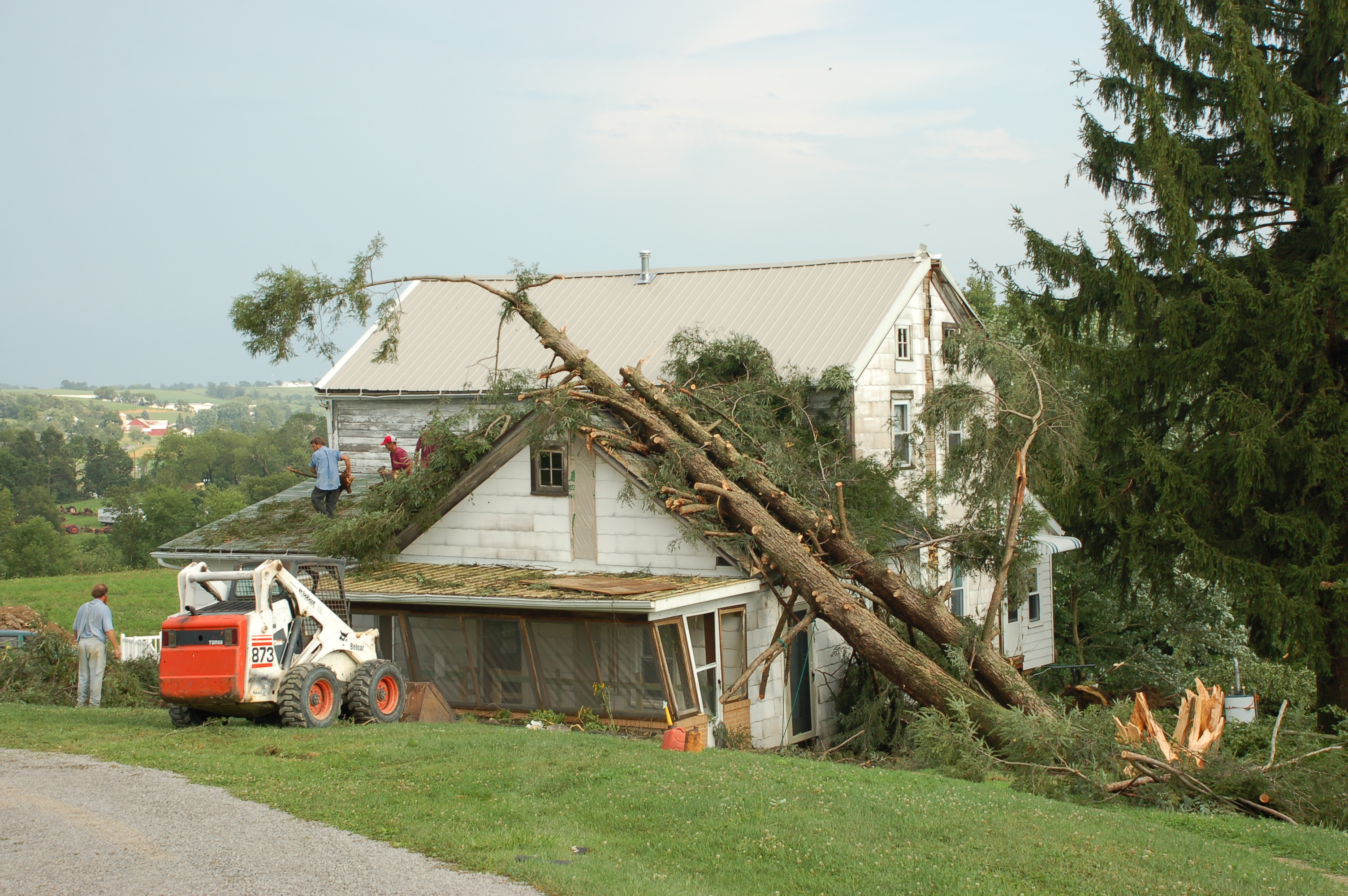
Amish help by Bruce Stambaugh
Amish quickly helped their neighbors have a severe thunderstorm hit near Charm, Ohio in July.

Of course, the iconic images of Amish helping at a barn raising are conjured up as the ideal way to help their neighbor. But their generous participation in the community and world at large clearly shows that the Amish think and act out of thankfulness far beyond their own immediate area.

To be sure, most Amish families embrace Thanksgiving as a day of joyous celebration of community, bountifulness and life itself. Even then many Amish approach the day piously, fasting in the morning prior to the feast that includes all the traditional trimmings.

The Amish mark Thanksgiving Day as a pinnacle to a lifestyle of serving. Fittingly, they would be too modest to acknowledge that fact.

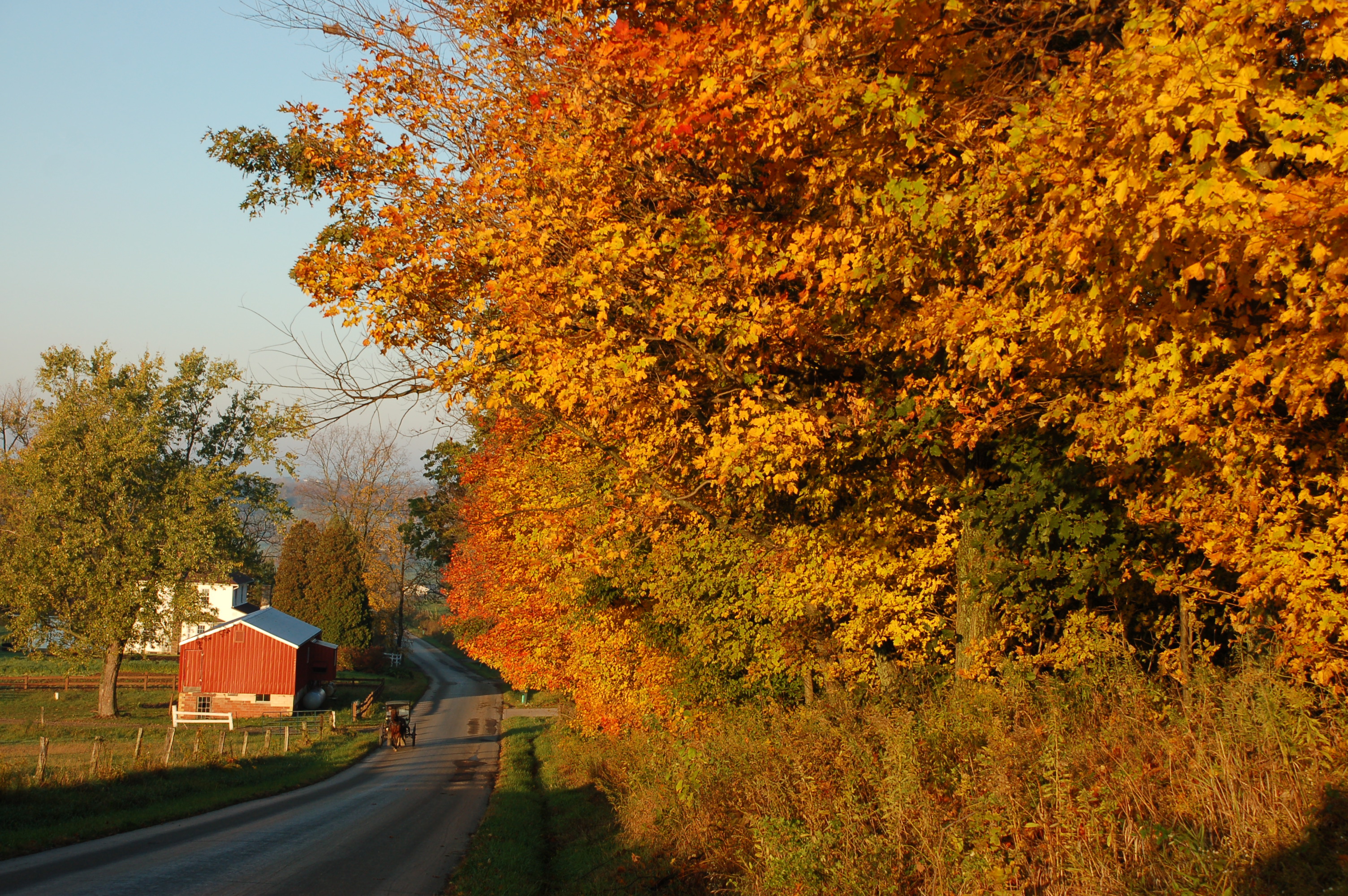
Amish farm fall by Bruce Stambaugh
A typical Amish farm in the fall in Holmes County, Ohio.

This article appears in the November 2011 edition of Ohio’s Amish Country magazine.

Whatever happened to the Halloween I once knew?

Amish country fall by Bruce Stambaugh
By Bruce Stambaugh

Halloween didn’t use to have such a bad reputation.

When I was growing up, us post-World War II youngsters looked forward to this benign, unofficial holiday. We just had fun.

Sure. There were mischief-makers, roughnecked teens that crossed the line. But they fortunately were in the minority. They certainly didn’t exhibit the violence and gore that we too often see associated with Halloween today.
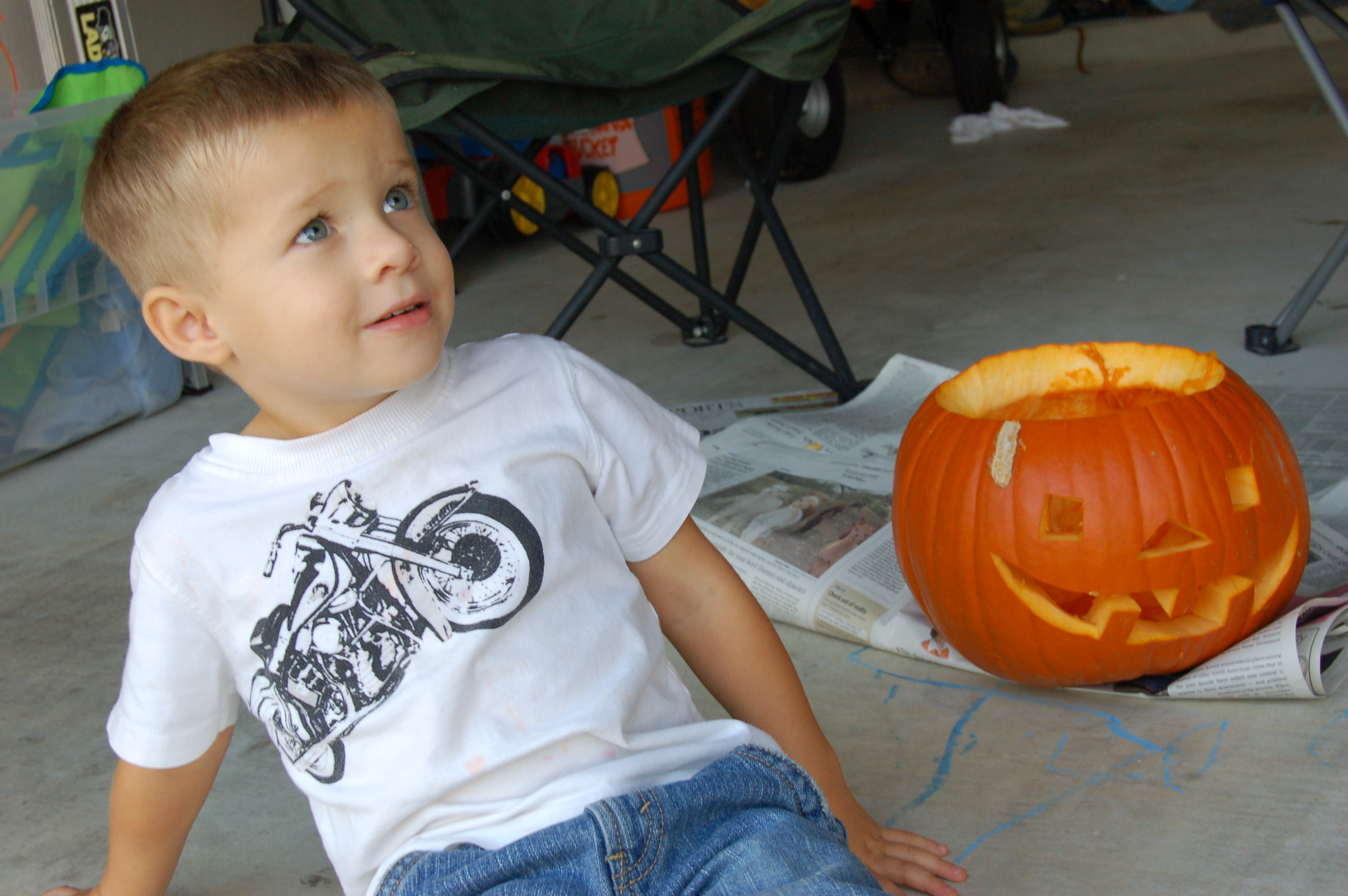
Jack 'O Lantern by Bruce Stambaugh
I remember some bully stealing our carefully carved jack-o’-lantern off our front porch. When I spotted the costumed thief running away with our pumpkin, I yelled at him. The much bigger boy responded posthaste by threatening me. Fearful, I said nothing more. I didn’t want to lose my bulging bag of candy that I had so carefully gleaned from our burgeoning neighborhood.

Other Halloween hooligans would soap windows. The really nasty ones would use paraffin, which was much harder to get off the glass. A silly prank was to throw a handful of shelled corn against someone’s windowpane. That trick was used if you got no treat at the front door, which seldom happened.

Of course there were the unfounded scares of razor blades in apples and tampered with candy. We just took precautions and had a good time.

At school, Halloween parties were held in each classroom. All the kids would dress up, many in mundane outfits like cowboys, ghosts, witches, pirates, and princesses. Homeroom mothers would prepare snacks that usually included punch and homemade cookies.

Even our parents got caught up in the fun. I distinctly remember Mom and Dad going to a Halloween party dressed as outhouses, hers and his of course. They won a prize, which I think was a bag of corncobs.
Trick or Treat by Bruce Stambaugh
My wife and I wanted those same experiences for our own children as they grew up. However, living in the country is much different than living in a suburb. There was and continues to be no Trick or Treat night in our sparsely populated neighborhood.

Local towns held Trick or Treat night, but we never felt comfortable having our children beg for candy at homes where they were not known. Fortunately, local civic groups, including the volunteer fire department, hosted a Halloween parade and a party with judging, games and treats for all area children at the elementary school.
Betsy Ross by Bruce Stambaugh
Our son and daughter went one year dressed as a tube of toothpaste and a toothbrush. Maybe they thought that would counter the cavities they would develop devouring all of that sugary candy.

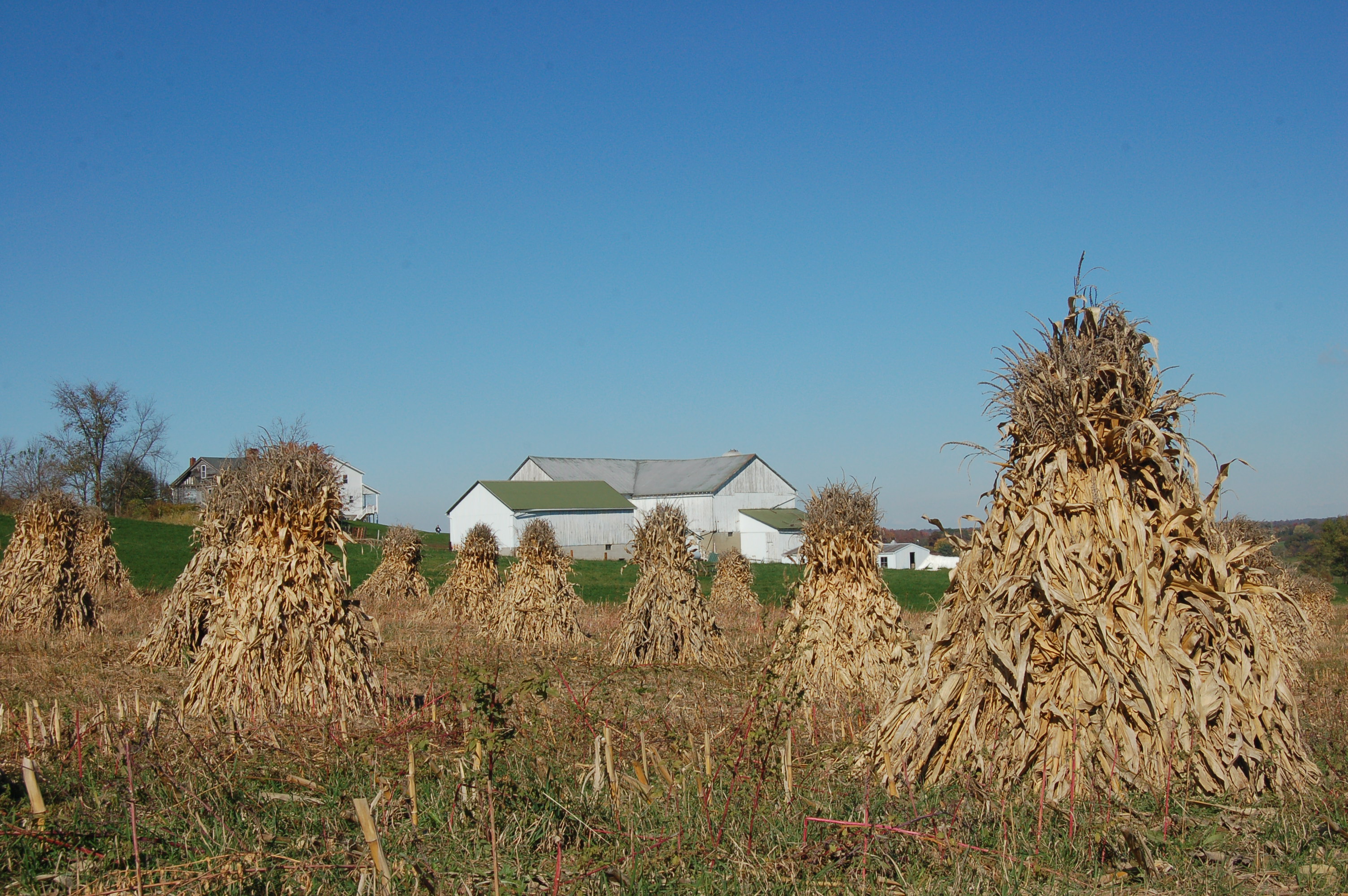
To be sure, there were and still are other downsides to Halloween in rural America, including Amish Country. Pranks include corn shocks burned or moved into the roadway, and extensive toilet papering. Dozens of rolls of toilet paper are unfurled on trees, utility lines, in yards and on town squares, creating a TP style blizzard.
Cornshalks by Bruce Stambaugh
In our hectic world, with an unlimited stream of electronic information vying for our attention 24/7, my nostalgic description of Halloween seems pretty blasé. People today seem to have the desire to be scared out of their wits and often pay good money for the privilege.

In this age of skepticism and trepidation, some see Halloween as a demonic plague on society. They claim there is just too much evil and violence connected with the frightful celebration.

Since I tend to avoid malevolence, I’ll not quibble with that assessment. I do wonder, however, whatever happened to the Halloween that once focused on fun instead of fear.
Fog and trees by Bruce Stambaugh

Holiday haiku

Holidays all done,
Save two in one, Old Christmas
With Epiphany.

Bruce Stambaugh
Jan. 2, 2011

Christmas isn’t about hustle and bustle

Snowy decorations by Bruce Stambaugh
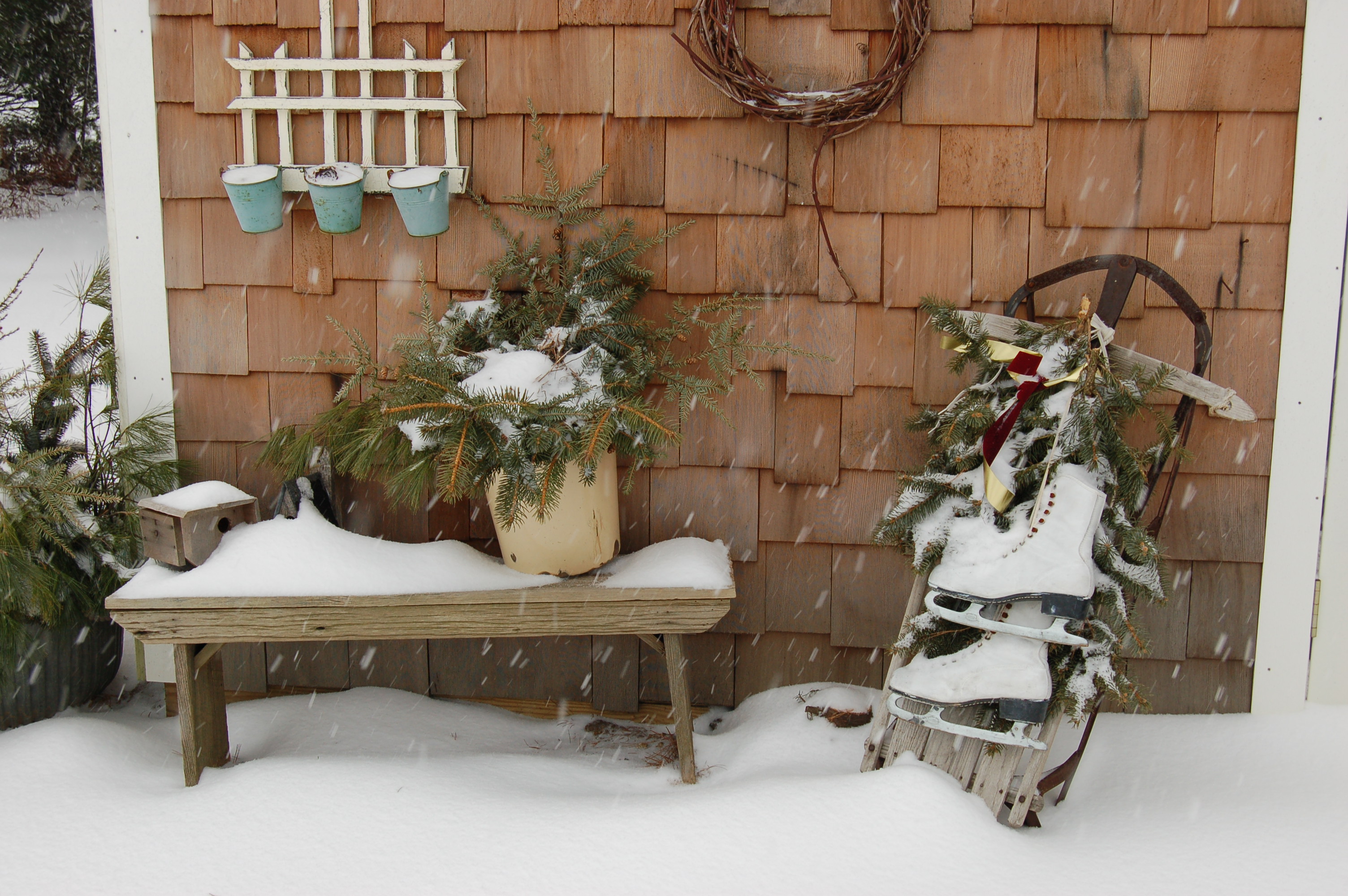
Snowy decorations always add to the Christmas celebrations.

By Bruce Stambaugh

I don’t watch much television. But what little I do, I can’t help but notice how the torrent of holiday-oriented commercials focuses on the urgency of buying something really nice for that special someone in your life.

Celebrating Christmas in our advanced society seems distorted. A brand new car wrapped with a huge red ribbon and bow sitting in the driveway, a sparkling diamond ring and a gold necklace cannot supersede the original gifts of the Magi.

Eager for customers, the ads have managed to push their way to the forefront of the holiday season much too early. Growing up, the countdown to Christmas started the day after Thanksgiving, now known as Black Friday. Today, it seems to start the day after Labor Day.

Watching for buggies on Christmas Day by Bruce Stambaugh
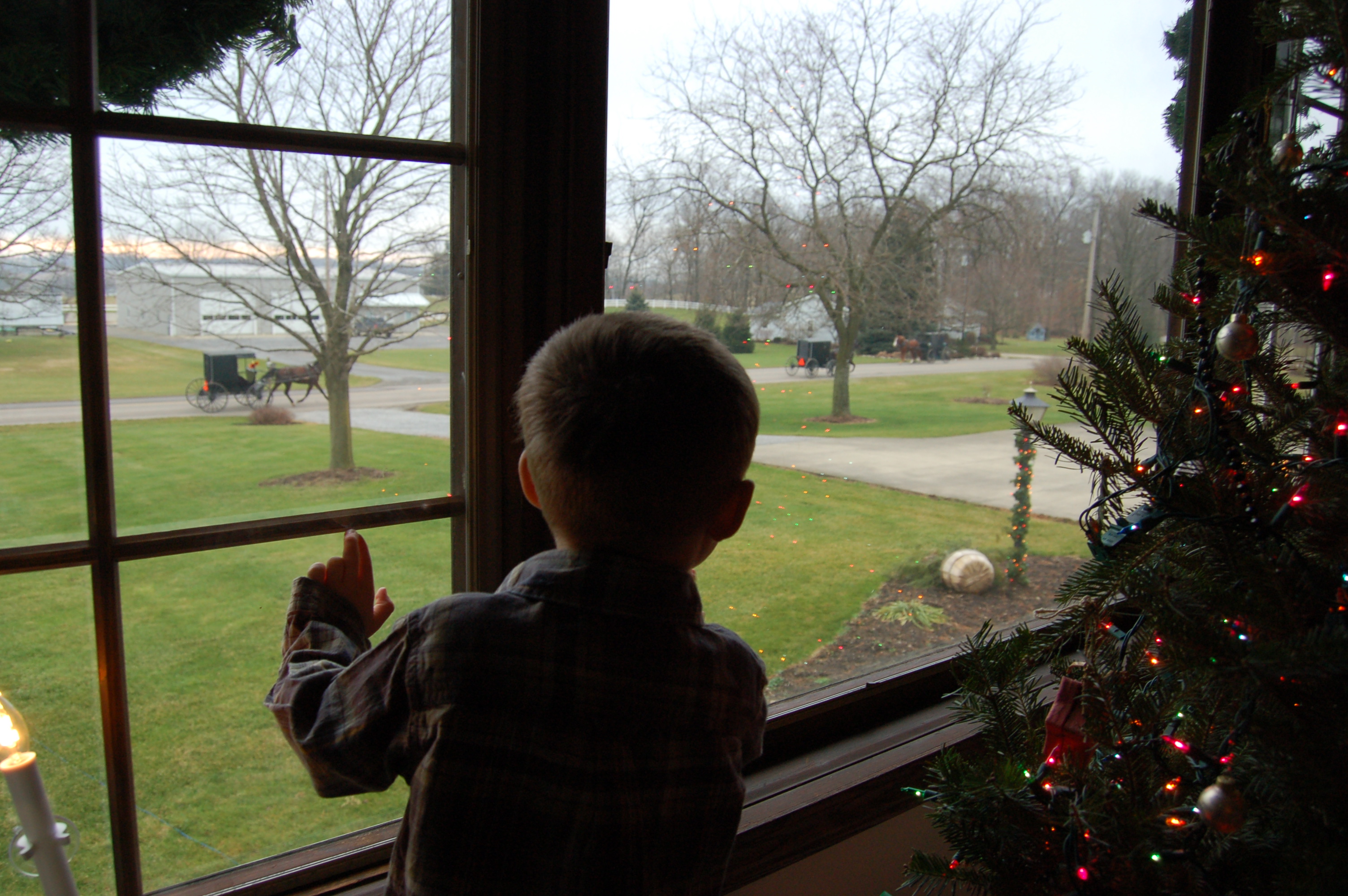
Watching for buggies on Christmas Day.

Even here in the heart of Ohio’s Amish country, we feel the hustle and bustle of the season. Without admitting it, we might even add to it. It’s always easier to see the fault of others than your own.

Wreath on frosty window by Bruce Stambaugh
A frosty holiday decoration.

I don’t want to be negative about Christmas. It’s my favorite holiday of the year.

I just think that given all the commercialization of Christmas, we need a different approach. As I reflect on the historical account of the Advent season that I learned early in life, it seems more and more obvious to me that Christmas really is more about patience than it is presents.

I have many fond childhood memories of readying for Christmas, and the excited anticipation of Christmas morning. My brothers and sisters and I couldn’t wait to raid the pretty packages strewn beneath the tree on Christmas morning. That scene was not the model of patience.

Mom and Dad had stayed up late assembling and wrapping the gifts for us kids. We always pushed our luck at getting up before the crack of dawn to undo what it had taken Santa and our folks hours to prepare.

But what a happy morning it was, with the excitement of surprise with every unwrapping. Those days were simple compared to what passes as season’s greetings today. I find the entire holiday hubbub of shopping, buying and spending exhausting.

Opening gifts by Bruce Stambaugh
Exchanging gifts at Christmas is part of the family tradition.

I long for the true peace and quiet of Christmas, with the family gathered, the fireplace blazing, the tree’s lights sparkling. Of course, we maintain the gift-giving tradition. We have just toned it down so that reason rules. We want the gifts to represent personal quality instead of absurd quantity.

The stockings hang by the chimney with care. They are filled on Christmas Eve, and emptied on Christmas morn. Just like when I was a child, an orange will be the last to tumble out of each.

The grandkids will watch The Polar Express over and over until the DVR wears out. We’ll play games, eat, and bask in the glow of the moment and the season.

Decorating the tree by Bruce Stambaugh
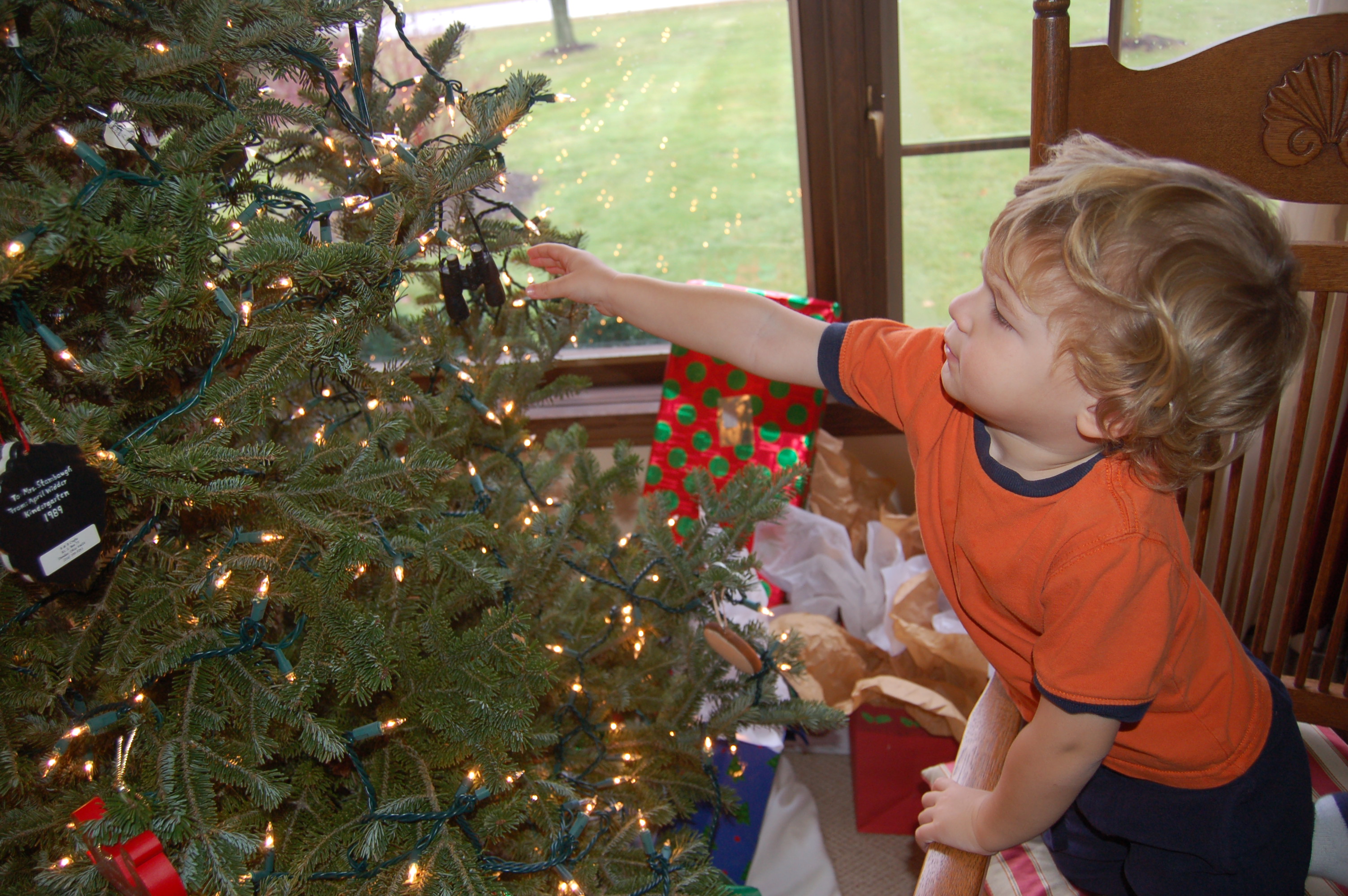
The grandchildren enjoy helping to decorate the Christmas tree.

Our modern society may rush the Advent season and judge it by its economic success. But as for me and my family, we will enjoy each others company, joyously share our humble appreciation and rejoice that it is Christmas once again.

Those are Christmas gifts worth waiting for.

A survival story for the season

By Bruce Stambaugh

The story didn’t get much play in the mainstream media of the United States. But I found it incredibly noteworthy if not uplifting, especially during this Advent season.

If you missed it, here’s what happened.

Sometime in late September, three teenage boys slipped into a 12-foot boat and headed to one small Pacific island from another. Unfortunately, their outboard motor ran out of fuel before they could reach their destination, the atoll island of Tokelau.

If you have never heard of it, don’t feel bad. I hadn’t either. Curious though, I looked it up. It’s part of an archipelago many miles northwest of Samoa.

Samoa I had heard of. As a child, I perused the many shiny black and white photographs that my late father had taken when he had visited Samoa and surrounding islands during his stint on the U.S.S. San Diego during World War II. The water buffalo and the thatched roof huts of the Polynesian island natives fascinated me.

Maybe it was that bit of sentimentality that drew me to the story initially. Once I read the first few sentences, however, I had to know the full story.

With no oars and no fuel, the boys and their tiny boat drifted far away from any land. Soon they were deep in the expansive Pacific, adrift with only a handful of coconuts they had thrown into the “tinnie,” the colloquial tag for their vessel.

The blazing sun beat down on them, and they parceled out the coconuts, the only food they had. The boys floated aimlessly for days, parched without vital drinking water.

Day after day they sat helpless in the tropical sun searching the horizon for signs of land or other boats. A series of fierce storms cropped up at night, nearly capsizing the boat. The boys hit the boat’s bottom and clung to the sides to steady their small vessel.

The storms provided an upside, however. The boys lapped at puddles of the fresh rainwater left by the downpours. Once, at night, a ship passed close to them, but because they had no light of their own, the boys could only watched in despair as the big ship glided by.

Once the coconuts were gone, their only food came in the form of small, flying fish that happened to jump into their boat. Another time, a bird landed on their boat and one of the boys managed to grab it. They devoured it raw.

Again desperate for water, the boys began drinking small amounts of seawater. Near the end of November and some 50 days after they had left their little atoll, a deep sea fishing boat approached them. This time it was during the day, and they and their little boat were rescued 800 miles from where they had originally launched.

The boys spent a few days in the hospital to regain nourishment and strength, but it would be more than two weeks until a boat would take them back to their small country of 1,500 residents.

Fascinated by this amazing story, I typed in Tokelau into Google Earth. I wanted to get a visual on their tropical homeland in the middle of the Pacific.

Sure enough, the program took me right to it. I zoomed in to see the series of small islands, all formed from volcanoes. The residents lived on the rims of the inactive craters. Amazingly, picture icons were posted. I clicked on them, and shots of a tropical paradise emerged. Swaying palm trees, pristine beaches, and deep blue bays beckoned.

I mentally kept connecting this joyous, improbable survival story with the one on which the Advent season is based. Like the Bethlehem account from long ago, with its unlikely cast of characters, this miraculous tale had to be shared, too.

All dressed up for the holidays

By Bruce Stambaugh

If you ever wondered what an old-fashioned Christmas really looked like, the Victorian House in Millersburg, Ohio will let you cure your curiosity.

Victorian House Millersburg Ohio
Each holiday season the Victorian House in Millersburg, Ohio is beautifully decorated inside and out. (Photo provided by the Victorian House.)

Every year local businesses, organizations and individuals spend two weeks transforming the historical, 6,000 square foot Victorian House into “Holidays at the Mansion.” The 28-room, three-story mansion comes alive with Christmases gone by.

Area decorators create holiday splendor as it once was by decorating multiple Christmas trees, window decorations and decorating several rooms with authentic and festive period accessories. Displays of lights and garland will festoon the exterior.

Victorian House Christmas Tree
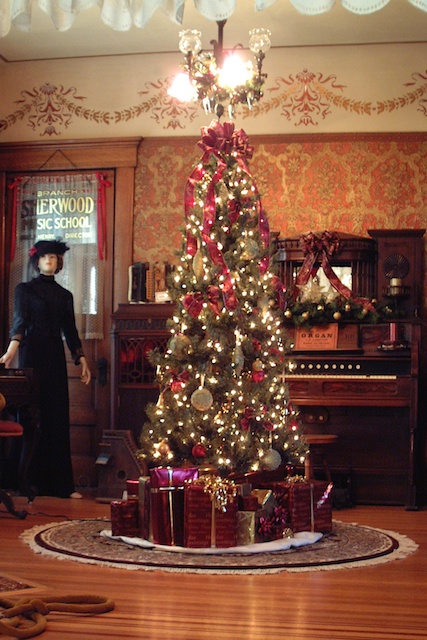
The holidays are celebrated in every room of the Victorian House in Millersburg, Ohio. (Photo provided by the Victorian House.)

“This year we will have several new room sponsors that will add a fresh new look to this year’s decorations,” Mark Boley, Director of the Holmes County Historical Society, announced.

“In addition,” Boley continued, “a special holiday exhibit will be on display in our ballroom.” Harry Wilson, of New Philadelphia, will have several of his one-of-a kind egg art on exhibit. Wilson is affectionately known as “The Egg Man.” Wilson uses the natural color of the eggs from ostriches, emu, geese and chickens to create unique works of art.

The Victorian House will be open for holiday tours Monday through Thursday, 1 to 4 p.m., and Friday through Sunday, 1 to 8 p.m. through December 31.  The Victorian House will be closed both Thanksgiving Day and Christmas Day.

The Victorian House has been featured in Victorian Homes Magazine, and on the Home and Garden TV show Victorian America.

You can take your time enjoying the Victorian House holiday decorations since the tours are self-guided. Costs are $8 for adults, $7 for those 65 and older, and $3 for students. Children are also welcome to check out the holiday flare since some of the rooms are dedicated for kids. The kids can look for Santa in an old bathtub. Every woman’s House will sponsor a special room just for the kids. There is no charge for children 12 years old and younger.

Besides the holiday decorations, the Victorian House showcases the historical collection of the Holmes County Historical Society. The mansion is listed on the National Register of Historical Places.

L. H. Brightman, a wealthy industrialist from Cleveland, built the Victorian House in 1900. It is located at 484 Wooster Road in Millersburg. The Holmes County Historical Society uses the mansion as its headquarters

To arrange a group or bus tour, call 330-674-0022 or email the Victorian House at info@holmeshistory.com.